Czech Anarcho Hardcore Punk Scene Report (1999)

What do you know about the Czech Republic? Probably not too much, so here are few geopolitical facts: it is situated in the middle of Europe, with 10 million inhabitants; it originated in 1993 (before, it was part of Czechoslovakia, which split into 2 separate states). There is 1 city with a population over 1 million (Prague), and a few cities with a population of several hundred thousand people (Brno, Ostrava, Plzeň)…). From 1948 ’til 1989, the nation lived under the iron fist of a socalled “Communist” regime that turned the state into one big concentration camp. After some years of a rightwing “economy at any cost” government recently came an equally arrogant social democratic (left) government. The country is currently suffering a recession caused in part by widespread corruption in government and business. Enough for a beginning? I hope so.

Filip / Insane Society Recs. 1999

Czech Scene Report, Insane Society Recs. 1999

Although there were some alternative activities before 1989 as well, they were only marginal and weak, because of the ruling regime’s repression. From November 1989 onwards, we can speak of the rise of anarchist, ecological, animalrights and similar movements and of course also of hardcore and punk music.

The anarchist movement’s activities began mainly in Prague, but they slowly reached other towns as well. C.A.S. (the Czech Anarchist Association), which was formed shortly before the November “revolution”, has organised several demonstrations in Prague, mostly against racism (after 1989, there was a boom of the naziskinheads movement over here), but also against the National Exposition, which cost a lot of money and was surrounded with financial machinations. Some of these demonstrations led to violent conflicts with Nazis and the police, who were of course on their side. The Nazi skinheads started to be a real threat directly after 1989; their popularity was constantly rising; in line with the nation’s general hidden racism and intolerant mentality (especially against the biggest ethnic minority here Gypsies). Also, the most popular skinhead band, “Orlik”, hit the music charts and they easily managed to sell more than 100.000 records. Lately they were replaced by more outspoken and more “hardcore” types of nazi bands, who weren’t so wellknown, but still had an influence on young Nazis. In spring ’90, there was a flood of racist attacks on Gypsies, blacks, etc., in Prague and in the northwestern part of the country. These were the first victims of the new Czech fascism, and the number of such attacks is higher every year. Anarchists were the first ones who took a stand against Nazis, back in these times, when police, the media, and politicians absolutely ignored the problem. It took them 7 years and more than 25 murders to make them realise it and do something about it (the turning point was the murder of a Sudanese student in Prague in autumn ’97, though the passivity of the police towards Nazis’ actions is still relatively high in some areas).

Back at the beginning of the 90’s, the anarchist movement was based mostly around the magazine A-KONTRA, which was issued more or less regularly, with a print run of several thousand copies, and was distributed throughout the country. It stopped publishing after several disputes in the editorial collective in ’95, but there are now some hopes of resurrecting it. A-KONTRA faced several state repressions and one of their editors was even charged for attempted murder of the leader of the Czech Communist Party the police lied that he had confessed to it, but later he was found innocent and the police had to apologize to him and to pay damages. AUTONOMIE was another magazine, founded in’93, and later the people around it formed the A.F. (Anarchist Federation), which had several branches, but didn’t last very long. AUTONOMIE stopped publishing in 96.
Czech Scene Report, Insane Society Recs. 1999

In 1995, the C.S.A.F. (CzechSlovak Anarchist Federation) was founded, and began publishing SVOBODNA MYSL (“Free Mind”) magazine. After a dispute in ’97, the C.S.A.F. continued under this name, but some of the former members left it and formed the Federation Of Social Anarchists (F.S.A.), with their own magazine called SVOBODNA PRACE (“Free Labour”). SVOBODNA MYSL changed its name to EXISTENCE, which is now the new magazine of C.S.A.F. The reason for the dispute was the typical conflict in anarchist movements everywhere the conflict between the “true anarchist”, promoting class war and anarchosyndicalist approach, here represented by F.S.A., versus the approach of the more “autonomous” anarchists, less ideological, more open to other alternative movements (mostly squatting and ecological activities), represented by C.S.A.F. Both organisations are based in Prague, but they have several branches around the country. Besides publishing their quarterly magazines, they organise different actions and demonstrations F.S.A., who is a member of the International Workers Association, has organized demonstrations against unemployment and syndicalist propagation work among workers, while C.S.A.F. has set up solidarity demos/street theatres for the Zapatistas, and antifascist demonstrations and has participated in some squatting activities.

KONFONTACE is a new magazine in newspaper format published by former editors of AUTONOMIE. It comes out every 2 months and manages to get the attention of “normal” people outside the anarchist ghetto. It’s quite radical and in it you can find wellwritten articles on police repression, the media, elections, etc.

Besides C.S.A.F. and F.S.A., there is another active anarchist group, called AKTIVITA CABARET VOLTAIRE, an informal anarchopunk group, based in the northwestern part of the Republic. They publish ‘zines, do distribution, organise and participate in different actions, and do a lot of support activities for the anarchist movement (such as money collections, etc.). You can get more precise information on all of these anarchist organisations directly from them contact information is at the end of this scene report.
Czech Scene Report, Insane Society Recs. 1999

Squatting:

Although the first squatting attempts took place already at the very beginning of the 90’s, the first relatively longterm and successful squat started in March 1992 the SOCHORKA squat in Prague on pplk. Sochora street 28. It was a typical apartment house, squatted by the anarchists around A-KONTRA magazine.

Despite an attack of cca 150 Nazi skinheads in December ’92 and a subsequent police eviction, it was resquatted shortly after eviction and managed to exist until September 97. The inhabitants left it after an agreement with the local council that they will get a new place for their activities (they got the new place in the end, but it’s in very bad condition now; there are plans to do something like a “Free University” there). The SOCHORKA squat was the centre of anarchist activities for a long time; it was the home of the A-KONTRA editorial staff and printing press and also contained a small gig place in the basement.

Czech Scene Report, Insane Society Recs. 1999

LADRONKA: the most famous Czech squat last year it celebrated 5 years of existence. This old fortress from the 17th century, situated in the Prague suburbs, was squatted in August ’93 by people related to AUTONOMIE. LADRONKA faced eviction several times, but after massive protests and demonstrations, the city gave up the idea of selling it to real estate speculators, and now there haven’t been any eviction threats for a long time. The squat has hosted a large number of gigs, exhibitions, rave parties etc. and is a very important place for the Czech autonomous movement. The adress is Tomanova street 1, in the Brevnov quarter, and the building is situated in the middle of a park. Some of the recent gigs included Varukers, Detestation, Cripple Bastards, Hellkrusher etc.

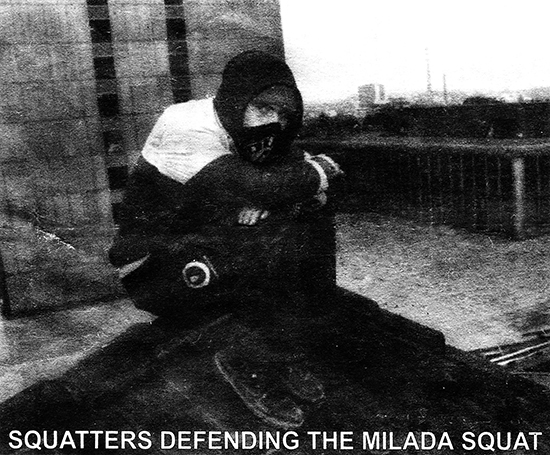
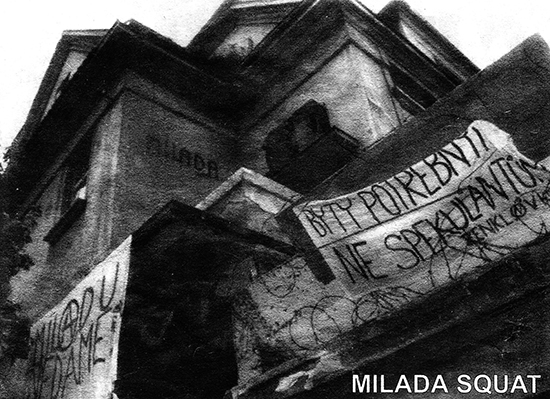
Squatting is not very widespread over here, particularly because of the very tough sentences that you can face if you try it (a large fine or up to 2 years of imprisonment), but also because there doesn’t seem to be enough active people willing to gather together to do it, with the exception of the bigger cities. In summer ’97 a group of people in Prague squatted a new house ZENKLOVKA on Zenklova street. They made agreements with the owner that they could use it until its demolition, but after pressure from the police (their antiextremist branch), the owner changed his mind and agreed to let the police to evict the squatters. After some nonviolent resistance (ocupation of the roof), the squat was evicted in the beginning of ’98. The same group of people later found a new building, and so on May 1st ’98 the MILADA squat was founded, in the Holesovice quarter near a railway station and student campuses. It’s old villa, scheduled for demolition. Squatters have made some minor repairs and opened the bar. There were several police and security agency attempts to evict them in October (again, after their agreement with the owner, police pressured him, convincing him that they found hard drugs in the squat). When the same nonviolent tactic was used to defend the house, the cops finally gave up, and MILADA is still going strong. You can get more information about its current situation from the C.S.A.F. contact adress. There was a squat in Brno from August ’til November ’97, when the house was violently attacked by police. Squatters were beaten down and had guns pulled on them, and in the end cops locked them all in one room and then threw a tear gas projectile inside. Meanwhile, they managed to destroy/steal most of the furnishings. The second day, the squat was definitively evicted.

Czech Scene Report, Insane Society Recs. 1999

There are several other places in Prague for punk and alternative activities the PROPAST punk pub (Lipanska 3, quarter Zizkov) there is also small record shop near from here BASS RIOT STORE (Chvalova 8), the UTOPIE autonomous cafe (Wenzigova/Lublanska street corner, Nove Mesto quarter) and the 007 CLUB (Strahov Hill, among the university campuses). There used to be a socialcultural centre called BLACK HAND, which was quite wellknown worldwide, but from the beginning of its existence in ’93, it had lot of problems with the local authorities, and it never attracted the wider attention of the people. The centre closed down in ’97 and later was demolished, there’s now a very nice concreteparking lot in its place…

Animal rights and ecological activities, over here are mostly official and mainstreamoriented they aren’t very radical at all. They do some useful activities, but most of them have clearly distanced themself from any autonomous or anarchist activities, because they fear for their public reputation. They have chosen instead to cooperate with politicians; they give advice on which party to vote for in the elections, and so on. Summer blockades of the construction site for the Temelin nuclear power plant were one of the few examples of good cooperation between anarchists and ecological activists. These went for several years, but have now stopped. The general “step backwards” in the strategy of these organisations has also something to do with the policy of their funding most of their income comes from foundations established by the European Union or other official sources, who don’t like to see very radical activities. You can find more honest and more “grassroots” groups; the problem is that they are too small and they lack finacial resources. In the animal rights field, the most active are probably SVOBODA ZVIRAT (“Freedom for Animals”) and ANIMAL S.O.S., who both organise info stands, demonstrations, petitions, exhibitions, etc. against several forms of animal abuse. Brno is home to NESEHNUTI (“The Unmoved”, more officially the “Independent Social Ecological Movement”), which works in the human and animal rights fields, and is also active against a planned motorway, which will spoil an important recreation area in Brno. The Czech chapter of EARTH FIRST! was established some months ago in Prague. They put out an Action Update newsletter and also plan to have an internet site. There are some other smaller groups working on these issues spread all across the country, often working on local problems.
Czech Scene Report, Insane Society Recs. 1999

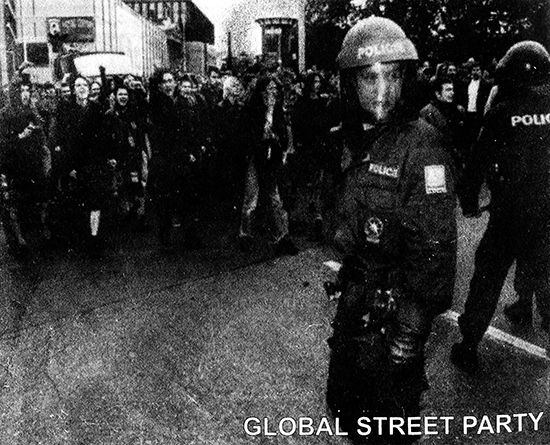
Last year saw 2 street parties, which were among to the Czech autonomous movement’s biggest actions ever. The GLOBAL STREET PARTY took place 16.5.98 in Prague, organised by EARTH FIRST!, C.S.A.F., and other groups as a protest against world globalisation and against the city’s unsustainable traffic situation it is plagued by cars and pollution. The action was attented by cca 3.000 people and started peacefully, until the demonstration went onto Prague’s most important traffic artery and blocked it. Cops tried to stop the demonstration, but they were fought back and had to escape. A cop car was turned over, and some other were smashed with bricks. Then part of the march headed to the city centre, where the McDonalds’ and Kentucky Fried Chicken restaurants were attacked, causing big damage to their property. The police, who at first weren’t able to handle the situation at all and let the people riot, then arrived in big numbers and went absolutely mad. They beat up lot of people, including innocent passersby. In their obvious “nobrain style”, they couldn’t pick up the actual rioters, but arrested mostly those demonstrators who didn’t manage to escape. The arrested people went through several punishments and beatings and were thrown to jail for about 2 weeks, but in the end they were released, because the cops couldn’t charge them with anything. The GLOBAL STREET PARTY made headlines in the mass media for many days and caused public discussions about globalisation, police brutality, the problems of young people, etc. Also, a special antidemonstration police squad was formed.

A LOCAL STREET PARTY was organised 3 months later,-this time with cca 4.000 participants. It started in a park, with a rave party, info booths with alternative press materials, etc., and the march was shorter this time, with a route avoiding the possible conflict points, such as the abovementioned restaurants. It must be said that this time police showed up in all force, with thousand of cops readied and several dozen plainclothes cops among the demonstraters themselves, some of them dressed as punx. These “masked” cops tried to provoke some action that would give a reason to attack, but they weren’t successful. The demonstration went OK, without large conflicts, the only exception being the march of cca 100 people on a McDonalds’ restaurant after the official end of the demonstration finally the plainclothes pigs managed to provoke a few confused punx who were immediately arrested after their first attempt to break the police line. If you are interested in seeing pictures from both parties, check out the lidskaprava.cz site on the internet.

No need to say that no action was taken against the cops who beat up and humimilated the people after the GLOBAL STREET PARTY. Police brutality against anarchists and punx is already something common over here, after several wellknown cases such as the beatings of protestors against the Velka Pardubicka Steeplechase in ’92, the raid on the Propast punk pub in ’96, and the attack on the demonstration against police brutality in ’97 (which, ironically, was supposed to commemorate the Propast raid). The “antiextremist branch” of the Czech police is investigating not only the anarchist and autonomous movement, but also the official ecological organisations like GREENPEACE, which led to an international scandal a few years back. Cops and nazis are surely the biggest threat to punx like everywhere. As a reaction on widespread naziskinheads movement, the Czech version of Antifascist Action ANTIFASISTICKA AKCE (A.F.A.) was formed some time ago, they do newsletter called “Akce” (previously “Antifa News”), but otherwise aren’t very active.
Czech Scene Report, Insane Society Recs. 1999

Hardcore Punk Scene:

OK, OK, so now definitely something about the music. Now, at the beginning of 1999, there is really a good and strong hardcore/punk scene, but first let’s look a bit into the history of the Czech punk/HC scene. The first punk bands started over here in the beginning of the 80’s (A 64, ENERGIE G, ZIKKURAT, etc.) and slowly the scene started to grow. During the 80’s and especially at the end of 80’s, when the opression by the regime wasn’t as strong as before, there were more and more punk bands, such as F.P.B., VISACÍ ZÁMEK, PLEXIS, H.N.F., Z.N.C. etc. and later also first hardcore bands (TELEX, P.S., SUCIDAL COMMANDO, S.R.K., MICHAEL’S UNCLE, KRITICKA SITUACE, etc.). In these times, punk was in the deep underground, gigs were illegal, bands had problems with the authorities and it was absolutely impossible to release a record (the first official Czech punk record was a 7″ by VISACÍ ZÁMEK in ’88!). Punx always used to have problems with cops, in school and at work, because of their appearance. Some of them were sentenced for “crimes” such as “having a negative stance towards socialist system” or even “propagation of fascism”, etc. Society and especially the media looked on punk as a tool of Western imperialism, smuggled into our country to spoil the young people. Since 1989, all this has changed, and punk has reached a wider range of young people, official media, and record labels, and these old bands have started to release their first records (mostly on new commercial labels, but there was hardly anyone thinking about that back in 1990 here). Luckily, some new and fresh DIY labels, zines, bands, gigs, etc. also emerged soon, and the scene became more political and DIYoriented. Thanx to people like KRITICKA SITUACE singer Robert, Martin (MALARIE RECORDS) or Bergamo (and his Black Hand agency), the foreign punk/HC bands (Nausea, Murphys Law, Inferno, Chaos U.K., No Means No, Concrete Sox, Gorilla Biscuits etc. in the first years, and then tons more) started playing gigs here, and a relatively strong and independent scene was built.


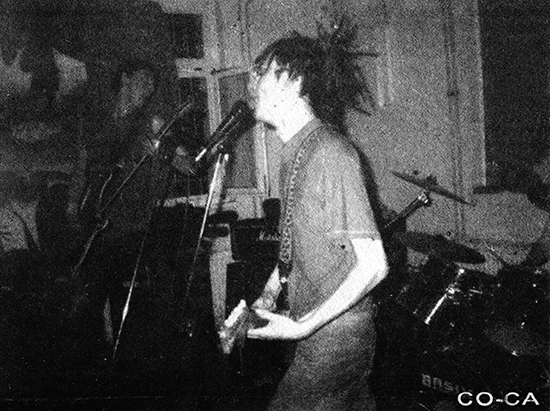
Kritická Situace 9. 10. 1992 Praha Strahov 007

So, who is who in current Czech HC/ Punk?

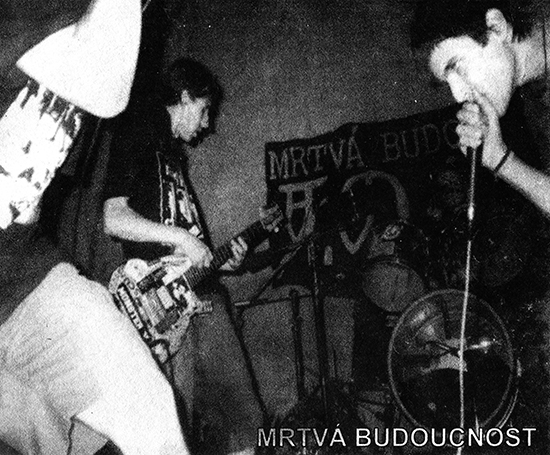
Let’s start with grindcore, which recently is quite popular over here. The trio MALIGNANT TUMOUR is playing a mix of grind/mincecore in the vein of Agathocles and Regurgitate, now with political lyrics. They have about 5 split EP’s and one split CD + tons of tapes out and have also played on festivals in Belgium and Germany. Future plans include a full CD and some more split EP’s. From the same city (Ostrava) as M.T. come CEREBRAL TURBULENCY (they have progressed from death metal to pure grindcore), P.T.A.O. (exSOCIAL DEFORMITY, heavy megabassed grind/noise, a split EP with Japanese Final Exit is out) and PURULENT SPERMCANAL (gore grind in the vein of Gut/Impetigo). It seems that this town is the capital of grind! Other grinders TWISTED TRUTH, influenced by old N.D., who just recently released a split EP with ROT on Fudgeworthy Records and plan 2 more split EP’s with MALIGNANT TUMOUR and WARSORE. INGROWING (exPLASTIC GRAVE, who released a split 7″ with Agathocles), one of the most popular bands in death metal/grind territory, have a split CD and a split EP out, some new releases out soon. NEGLIGENT COLLATERAL COLLAPSE do weird grind/industrial mixes, sometimes with the help of a computer, some tapes out, their drummer did a Czech grind core encyclopedia on the internet! GRIDE, from the southwestern part of the Czech Republic, do a killer mix of extreme hardcore and grind with great sociopolitical lyrics, they call their music “power gride core” and so far have done 1 split EP w/LIES AND DISTRUST and a split LP with M.B.. They have also played some gigs abroad. Besides the split EP, GRIDE also share a drummer with LIES & DISTRUST, who play classical scandiinfluenced crust core with growling vocals. L&D also plan a split EP (w/ EXEKUCE) and a split LP in Brazil later in ’99. Two other cool crust bands are located near the Polish border HOW LONG? (a split EP out, another planned) and R.A.F., both play dual voc crust butchery, R.A.F.even include a trumpet! This area is also home to HIBAKUSHA, DISNEY and ZRADCE RASY, all playing the crusty shit too. Another raw crustpunx EXEKUCE (based around the “Propast” punk pub) are one of the few bands currently playing in our capital Prague, with a split EP due out sooner or later. Brno is home to MRTVA BUDOUCNOST, fastasfuck dualvoc extreme core with 3 split EP’s. They have a split LP w/LEFT IN RUINS (on Six Weeks Rec.) and another one w/GRIDE (collaboration of Insane Society, View Beyond and other labels), future plans include an 8″ flexi in the U.S. and huge pile of compilations. M.B. did some touring abroad too. Also continuing the tradition of the extreme HC style (Hellnation fans take note!) are PANGS OF REMORSE from the Western part of the country, they did a split EP and a German tour with M.B. back in’96, but haven’t been very active since this time. Some new vinyl (probably with S.O.K. a mix of thrash/grind/HC + whatever… with 100% crazy lyrics) may come out sooner or later. Crust/grind/extreme HC is already wellestablished here with most bands of this style already going strong for long years. One of the brandnew additions to the family are MINDLOCK, producing some cruel sounds in the Sore Throat vein.
Original Source:

> CZECH SCENE REPORT.PDF


Dark Matter: Yves Hänggi

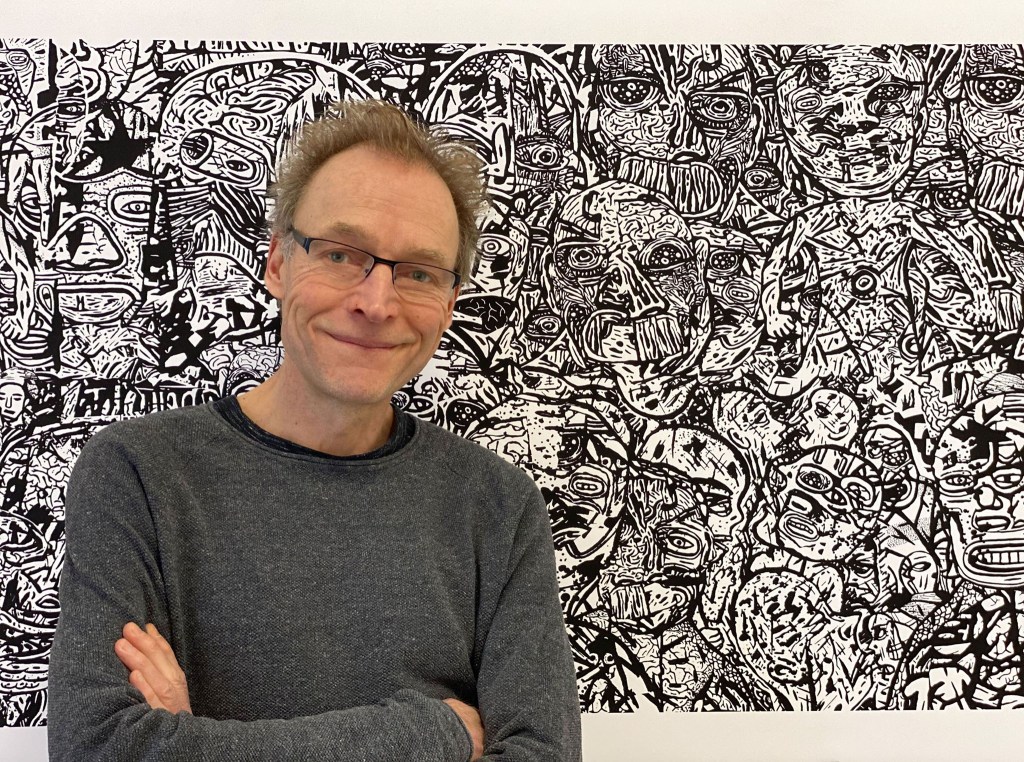
Yves Hänggi with his painting

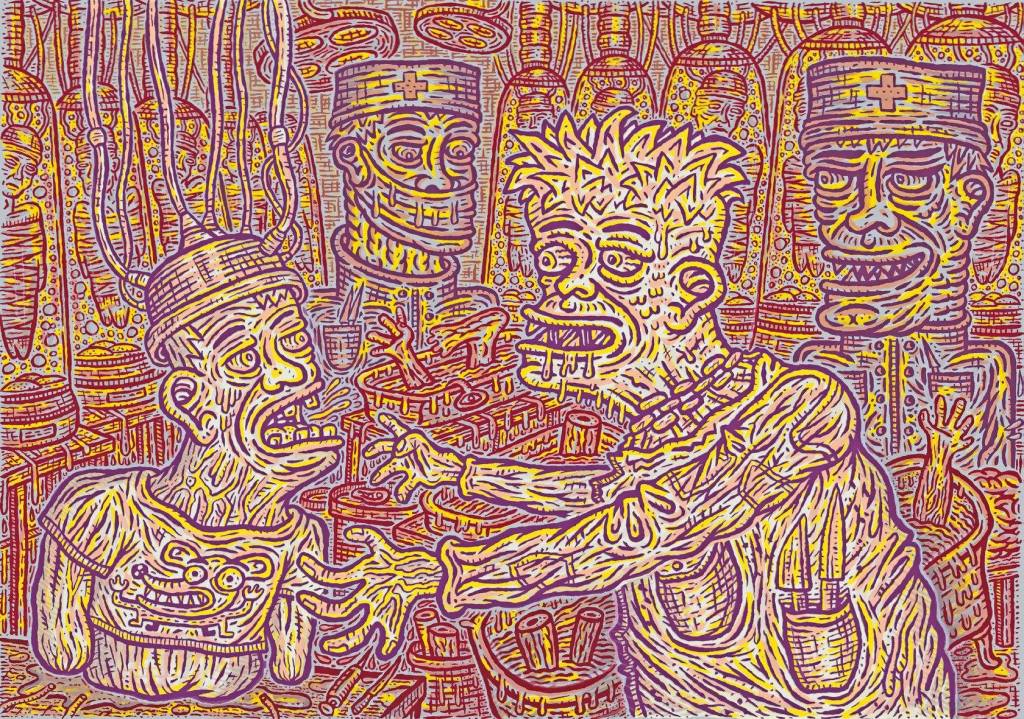
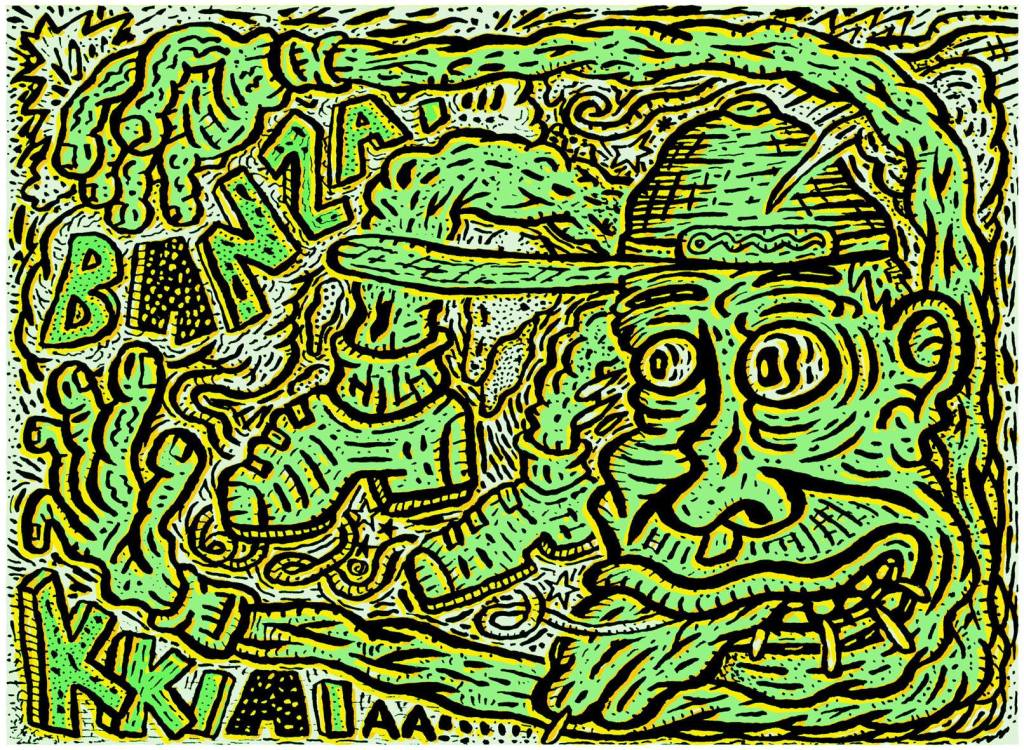
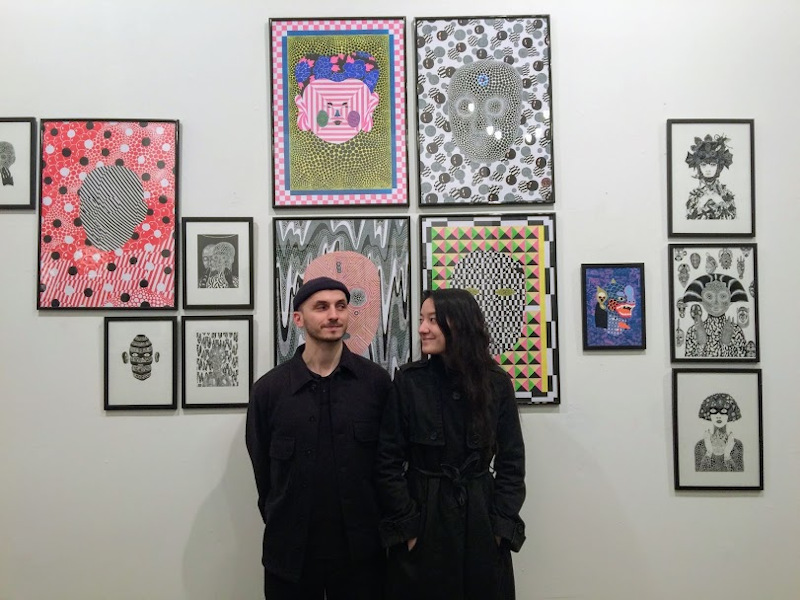
His artistic universe is nourished by contemporary comics, independent comics, free figuration, pop art, popular arts and brute art. Born in 1966 in Porrentruy, Switzerland, a graduate of the Bienne School of Visual Arts and a member of the Swiss Association of Visual Artists Visarte, he is an illustrator, painter, graphic artist and organizer of cultural events. Passionate about travel, he love to travel the world with his feet and carnets, as for example during a tour of the world in 2015. His work is the subject of exhibitions in Switzerland, France, Belgium, USA and Madagascar and has been published by several Swiss and French publishers. I reside and work in Porrentruy.

Yves Hänggi (2020)

Né en 1966, Yves Hanggi est peintre et illustrateur, diplômé de l’Ecole cantonale d’arts visuels de Bienne en Suisse. Son univers artistique se nourrit de comics underground, de bande dessinée indépendante, de figuration libre, de street art, d’art brut, d’art singulier et d’arts populaires, influences qu’il mêle à travers des formats, des supports et des techniques variés (peinture acrylique, encre, craie, collage). Son travail a été exposé en Suisse, France, Belgique, Allemagne, Pays-Bas, Etats-Unis et Madagascar, et publié chez plusieurs éditeurs suisses et français.

À travers cette série d’illustrations de grands formats mêlant encre, peinture et collage d’éléments récupérés dans la rue, Yves Hànggi poursuit un processus d’exploration débuté en fin d’année 2020 à l’occasion d’une résidence artistique à Berlin, qu’il poursuit actuellement à Paris : l’intégration à ses techniques picturales habituelles d’éléments tels que des lambeaux d’affiches, des signes typographiques ou des images déchirées issues de magazines. Par cette technique, Yves Hanggi amène une nouvelle dimension dans ses illustrations, en jouant avec les déchirures, les textures et les superpositions, ainsi qu’avec le hasard et la spontanéité. L’artiste explore également les liens qu’il peut tisser entre la rue, source d’influence et de ressources, et le travail en atelier, lieu dans lequel les œuvres se façonnent et se recomposent.


Interview with resident artist Yves Hänggi, Winter 2021, GlogauAIR

His artistic world finds inspiration in underground comix and independent comic books, free figuration, street art, different movements that can be described as outsider art (including art singulier) and folk art. These different influences are combined and expressed in a variety of mediums (acrylic, ink, chalk, collage) and formats. His work has been exhibited in Switzerland, France, Belgium, Germany the Netherlands, the USA and Madagascar and published in Switzerland and France.

With this series of large format illustrations combining ink, paint and a collage of found objects, Yves Hanggi continues to explore in Paris a practice that began at the end of 2020 during a residency in Berlin: integrating elements such as pieces of posters, typographic symbols and images torn from magazines into his usual pictorial techniques. By playing with tears, textures, superimpositions, chance and spontaneity, Yves Hanggi adds a new dimension to his illustrations and explores the connections he makes between the street (a source both of inspiration and raw materials) and the studio, where his creations are fashioned and composed.

Yves Hänggi (13)
Yves Hänggi (2018)
Yves Hänggi (33)
Yves Hänggi (2019)

As a cultural organizer, he manage several associations and cultural centers, showrooms, artist tours, contemporary art exhibitions, artistic events and festivals in Switzerland and Belgium, in the fields of current music, theater, and comic strip and the cinema. He also worked in communication, journalism and the humanitarian. He was awarded the 2019 Culture Prize of the City of Porrentruy. He is available for illustration and graphic design projects and for any exciting exhibition and publication proposal.

Yves Hänggi (29)
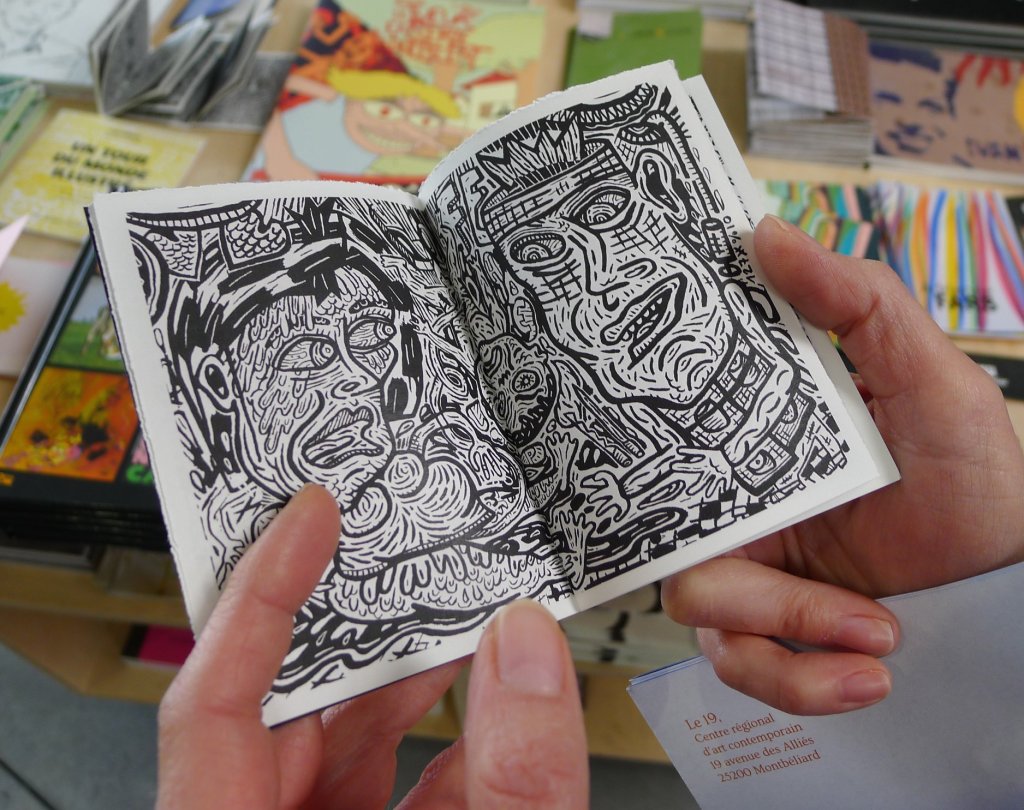
Yves Hänggi with his micro-edition (2018)

> yveshanggi.ch


GRAFZiNe iS Not A CRiME: GRAPHZINE GRAPHZONE

‘Graphzine-Graphzone’ 2019

“We wanted to create something as strong as the Dada movement…” –Kiki Picasso

‘Graphzine Graphzone’ is the first in-depth study to be devoted to graphzines, the alternative to both comics and so-called contemporary institutional art that emerged in the wake of punk. While the world of the graphzine may indeed seem close to that of independent comics publishing, it takes a radical step further: graphzine producers, as good Do it yourself practitioners, favour self-production and limited print runs, experiment with different printing processes and free themselves from the constraints of traditional narrative. What unites them is undoubtedly an obsession with images (from the most conventional to the most astonishing and shocking) and a craft often carried out in a network. To retrace the history and grasp the conceptual issues of this production, the author relies heavily on the words of the men of art, a choral approach that responds to the polymorphous nature of graphzine. Starting with the pioneers (Bazooka and Elles Sont De Sortie), X.-G. Néret explores in detail this phenomenon, which was to flourish outside institutions from the 1980s onwards. A new territory was opening up, breaking with the narrative conventions of comics through the ambiguous combination of images and text. By analysing the variety of influences and forms of graphzine, including the heta-uma, the Japanese graphic art movement invented by Teruhiko Yumura, an important if subterranean source, the author draws out the essence of this practice. The graphzine reveals itself to be an art of living, the affirmation of a creative power that implies a reversal of values favouring the expression of singularities; a freedom that manifests itself as much in the experimental form as in the content, subject to no censorship other than that which the artists inflict on themselves – at the risk, for some, of seeing themselves intimidated or condemned. Sometimes with a disarming ‘insatiable innocence’, they explore territories that normalising authorities reject, particularly those relating to sexuality and death. X.-G. Néret also sees them as a powerful graphic avant-garde, in the wake of Dada, Lettrism and Situationism, helping to extend and renew ‘a secret history of the twentieth century’.

‘To make a newspaper like a work of art… To use printing, drawing, text, typographic composition and page layout as material for artistic expression.’ -Loulou Picasso

’We wanted to create something as strong as the Dada movement… -Loulou Picasso

‘We wanted to create something as strong as the Dada movement… We didn’t like traditional graphic design or galleries… We formed a micro society… We mimicked the terrorist commando… Graphic dictatorship meant doing things without asking permission.’ -Kiki Picasso

‘Of course it’s art, and far more powerful than all the impostures you see in galleries. These apparently statusless productions constantly call everything into question through the richness and quantity of the images they offer… Perhaps we’ll be criticised for lacking a bourgeois strategy. But one day our work will be seen and it will have the effectiveness of having spoken for the times.’ -Bruno Richard

‘Radical publications produced outside any editorial structure by enthusiasts’ -Pierre La Police

‘It’s like a small art exhibition in the form of a printed booklet.’ -DeePee

‘It’s an object, an object you never tire of turning the pages of. You’ve never seen pages like these.’ -Delfeil de Ton

‘Afterwards, you’ll never buy the same packet of rubbish comics you used to read.’ -Willem

‘Definitely the opposite of the apology for the commercial that’s rampant everywhere… Since we’re telling you that what these people are doing is the best in contemporary art!’ -Jean-Christophe Menu

‘To deliberately not play the game of self-censorship…’ -Fredox

‘Do it yourself! (Fredox) ‘Do it yourself if you’re not happy.’ -Kerozen


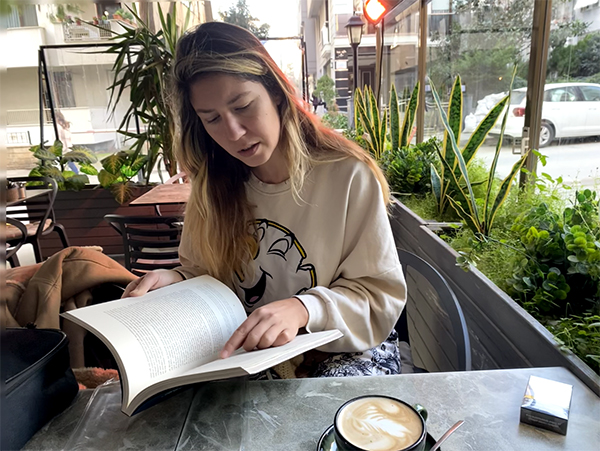
Ezgi İrem Happy with her Grafzine book, what about you?

“Dada hareketi kadar güçlü bir şey yaratmak istedik…” -Kiki Picasso

‘Graphzine Graphzone’, punk’ın ardından ortaya çıkan ve hem çizgi romanlara hem de sözde çağdaş kurumsal sanata alternatif olan graphzine’lere adanmış ilk derinlemesine çalışmadır. Grafzin dünyası bağımsız çizgi roman yayıncılığına yakın görünse de, radikal bir şekilde çıtayı yükseltiyor: grafzin sanatçıları, iyi birer D.I.Y. ustası olarak sınırlı sayıda baskı yapmayı tercih ediyor, farklı baskı süreçlerini deniyor ve kendilerini geleneksel anlatının kısıtlamalarından kurtarıyorlar. Onları birleştiren şey ise hiç kuşkusuz (en gelenekselinden en şaşırtıcı ve şok edici olanına kadar) imgelere duydukları saplantı ve genellikle bir ağ (network) içinde yürüttükleri zanaattır. Yazar, bu üretimin tarihini izlemek ve kavramsal meselelerini kavramak için, grafzinin çokbiçimli doğasına yanıt veren koral bir yaklaşımla, büyük ölçüde bu sanat insanlarının sözlerine dayanıyor. Öncülerden başlayarak (Bazooka ve Elles Sont De Sortie), X.-G. Néret, 1980’lerden itibaren kurumların dışında gelişecek olan bu fenomeni ayrıntılı olarak inceliyor. Görüntü ve metnin muğlak birleşimi yoluyla çizgi romanın anlatı geleneklerini kıran yeni bir alan açılıyordu. Yazar, yeraltında da olsa önemli bir kaynak olan Teruhiko Yumura tarafından icat edilen Japon grafik sanatı akımı heta-uma da dahil olmak üzere grafzinin çeşitli etkilerini ve biçimlerini analiz ederek bu pratiğin özünü ortaya çıkarıyor. Grafzin, bir yaşam sanatı, tekilliklerin ifadesini destekleyen değerlerin tersine çevrilmesini ima eden yaratıcı bir gücün olumlanması; içerikte olduğu kadar deneysel biçimde de kendini gösteren, sanatçıların kendilerine uyguladıkları sansürden başka hiçbir sansüre tabi olmayan bir özgürlük – bazıları için kendilerini sindirilmiş ya da kınanmış görme riski altında. Bazen silahsızlandırıcı bir ‘doyumsuz masumiyetle’, normalleştirici otoritelerin reddettiği alanları, özellikle de cinsellik ve ölümle ilgili olanları keşfediyorlar. X.-G. Néret de onları Dada, Lettrizm ve Sitüasyonizm’in ardından gelen, ‘yirminci yüzyılın gizli tarihini’ genişletmeye ve yenilemeye yardımcı olan güçlü bir grafik avangard olarak görüyor.

Erman Akçay & Guillaume Zorgbibe, Moda Sahil 2025

Grafzin synthesises different cultures!

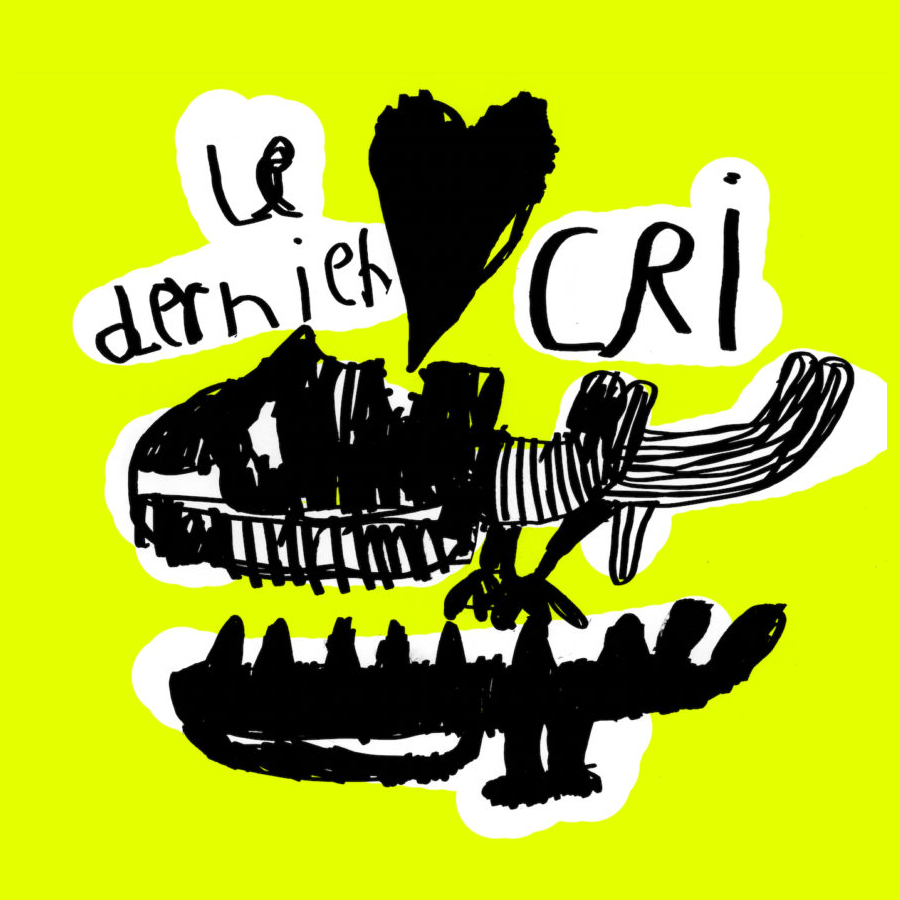
Coédition Le Dernier CriEditions du Sandre

“Nous souhaitions créer quelque chose d’aussi fort que le mouvement Dada…” -Kiki Picasso

Ezgi İrem Happy with her Grafzine book, 2025 Erenköy
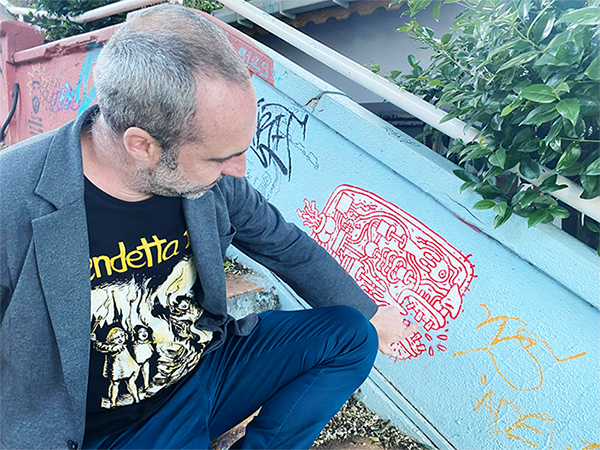
Guillaume Zorgbibe w/ Kadir Çıtak’s graff. at Moda, İstanbul

Bazooka collective, Legerement Destroy episode of L’oeil du cyclone

“Nous souhaitions créer quelque chose d’aussi fort que le mouvement Dada… Nous n’aimions pas le graphisme traditionnel, ni les galeries… Nous formions une micro société… Nous mimions le commando terroriste… La dictature graphique, c’était de réaliser des choses sans en demander l’autorisation.” -Kiki Picasso

“Graphzine Graphzone” est la première étude approfondie consacrée aux graphzines, cette alternative, née dans le sillage du punk, tant à la bande dessinée qu’à l’art institutionnel dit contemporain. Si l’univers du graphzine peut en effet sembler proche de celui de l’édition de bande dessinée indépendante, un pas de plus est fait dans la radicalité : les producteurs de graphzines, en bons praticiens du Do it yourself, privilégient l’autoproduction et les tirages restreints, expérimentent différents procédés d’impression et s’affranchissent des contraintes de la narration traditionnelle. Ce qui les unit est sans doute l’obsession des images (des plus conventionnelles aux plus étonnantes et choquantes) et une réalisation artisanale souvent menée en réseau. Pour retracer l’histoire et appréhender les enjeux conceptuels de cette production, l’auteur s’appuie largement sur le propos des hommes de l’art, une approche chorale qui répond au caractère polymorphe du graphzine. Partant des pionniers (Bazooka et Elles Sont De Sortie), X.-G. Néret explore en détail ce phénomène qui allait foisonner en dehors des institutions à partir des années 1980. Un territoire neuf s’ouvrait, qui brisait les conventions narratives de la bande dessinée par le rapprochement ambigu d’images et de textes. En analysant la variété des influences et des formes du graphzine, parmi lesquelles le heta-uma, courant graphique japonais inventé par Teruhiko Yumura, source importante bien que souterraine, l’auteur dégage l’essence de cette pratique. Le graphzine se révèle être un art de vivre, l’affirmation d’une puissance créatrice qui implique un renversement de valeurs favorisant l’expression des singularités ; une liberté qui se manifeste tant au niveau de la forme, expérimentale, que du contenu, soumis à aucune censure autre que celle que les artistes s’infligent eux-mêmes – au risque, pour certains, de se voir intimidés ou condamnés. Ils explorent ainsi, parfois avec une désarmante “innocence insatiable”, des territoires que les instances normalisatrices réprouvent, notamment ceux qui ont trait à la sexualité et à la mort. X.-G. Néret y voit aussi une puissante avant-garde graphique, dans le sillage de Dada, du lettrisme et du situationnisme, contribuant à prolonger en la renouvelant “une histoire secrète du XXe siècle”.

“Faire un journal comme une œuvre d’art… Utiliser l’impression, le dessin, le texte, la composition typographique, la mise en page, comme matière pour une expression artistique.” -Loulou Picasso

“Nous souhaitions créer quelque chose d’aussi fort que le mouvement Dada… Nous n’aimions pas le graphisme traditionnel, ni les galeries… Nous formions une micro société… Nous mimions le commando terroriste… La dictature graphique, c’était de réaliser des choses sans en demander l’autorisation.” -Kiki Picasso

“Bien sûr que c’est de l’art, et autrement plus fort que toutes les impostures que l’on peut voir dans les galeries. Ces productions apparemment sans statut remettent tout en cause sans arrêt par la richesse et la quantité des images qu’elles proposent… Peut-être que l’on nous reprochera de manquer de stratégie bourgeoise. Mais un jour notre travail se verra et il aura l’efficacité d’avoir dit l’époque.” -Bruno Richard

“Des publications radicales produites en dehors de toute structure éditoriale par des passionnés.” (Pierre La Police)

“C’est comme une petite exposition d’art sous la forme d’un livret imprimé.” (DeePee)

“C’est un objet, un objet dont on ne se lasse pas de tourner les pages. Vous n’avez jamais vu des pages comme celles-ci.” (Delfeil de Ton)

“Après, vous n’achèterez jamais plus le paquet de bandes dessinées à la con que vous lisiez d’habitude.” (Willem)

“Résolument le contraire de l’apologie du commercial qui sévit partout… Puisqu’on vous dit que ce que font ces gens-là est ce qu’il se fait de mieux en matière d’Art Contemporain !” (Jean-Christophe Menu)

“Faire exprès de ne pas jouer le jeu de l’autocensure…” (Fredox)

Coédition Le Dernier Cri / Editions du Sandre

“Fais-le toi-même si t’es pas content.” (Kerozen)


Infection Graphique fondée par par Pakito Bolino en 1993, Le Dernier Cri est une institution de l’édition underground marseillaise.

LE DERNIER CRI, 41 Rue jobin, 13003 Marseille

lederniercri.org

GRAFIK PURIFIACTION SINCE 1993


Emilie Ouvrard & E² Gallery

e2
E² Galerie d’art associative, Éditions et distro

Projet artistique associatif créé en 2013 et installé à Bruxelles dans un lieu dénommé le Sterput, l’asbl organise expositions, ateliers créatifs, focus sur la micro-édition, et autres manifestations culturelles tout au long de l’année. Espace de rencontre et de diffusion d’artistes émergents et confirmés venus de tous horizons, l’asbl promeut un art contemporain alternatif et hors normes, et propose une vision de l’art différente, brute et aiguisée, mais aussi populaire et accessible, en visant l’accès à la culture pour tous. Art figuratif non conforme et singulier, la galerie croit en la puissance émotionnelle des images.

‘E²/ Sterput gallery is located in the city of Brussels and, unlike other spaces dedicated to the exhibition oriented to the search for names or fashion trends, E²/ Sterput focuses on the elusive, complex but always stimulating underground or visionary art with the objective to give it a specific space for circulation and exhibition. Founded and directed by Emilie Ouvrard, the gallery began as a traveling project where different expressions were mixed : visual arts, music, publications etc. Aware of the need for a space, Emilie founded in 2013. E²/ Sterput develops the non-profit associative artistic space model, allowing various activities to take place in her space and for the community to get to know and actively participate of the project. In addition to the exhibitions that take place there, there are workshops given by different guest artists, talks and the edition of multiple originals and art publications. Many of the artists we love and admire have passed through E²/ Sterput: Pakito Bolino, Mavado Charon, Nils Bertho, Antoine Bernhart, Daisuke Ichiba and many more. We were able to talk to Emilie through email this past May, here we reproduce the conversation.’

Leonardo Casas, Tinystar ‘zine

e2 (12)
Emilie Ouvrard & Gonzine

When and how your involvement in art begins; were you always been working in Belgium?

Emilie Ouvrard: As a child, as many children, I spent a lot of time with my mum making drawings and creating art. My mum was working half time for her children and she enjoyed doing crea­tive workshops with us. Maybe my love for art starts with this, I don’t really know. I was in high school and I got interested in children books. I found some really nice publications featuring beautiful artists. And I met some friends in art courses with parents invol­ved in the arts. Which was not at all where I came from. All this was new and interesting for me. After I graduate from high school, I left my parents place in the west of Fran­ce to go to live in Montpellier, in the south of France. I went to the university to study anthropology and other stuff. In this city where Mattt Konture is living who is really a great artist. Also, I used to go to a bookshop close from my apartment to buy some comix, and there I saw some fanzines Mattt Konture was made with some of his friends. I had never saw something like that. I found it really wonderful, so I bought it. And I bought many other of his fanzines, too. I became quite a fan of his works. Right af­ter that, I discovered Le Dernier Cri and their beautiful handmade books full of colors in a book fair in Montpellier. I found some bookshops se­lling them in Paris and one in Montpellier. So I started making a collection of the books and posters of the artists I liked. And I dis­covered many other publishers and artists in the bookshops I used to go in Montpellier and in Paris (when I went there to see some friends). After university, we decided to move to Brussels, where I still live and where I created the project E²/ Sterput. I crea­ted this project in 2013 be­cause I couldn’t find all the underground art publishers and artistic works I liked. I thought it was a lack for a city like Brussels. I was mis­sing all the art I liked. I wan­ted to bring it there in my city Brussels. So I created the association with a friend because we had the oppor­tunity to get a small room for six months in a cultural art center called Recyclart. So we organized one exhibition each mon­th with a lot of concerts. I don’t know how I survived. It was very intense. Because all this work I do with the project E²/ Sterput is as a volunteer and I work at a re­gular job in an office in pu­blic administration four days a week. After the first six mon­ths at Recyclart, we were a traveller gallery organizing exhibitions in different places in Brussels : studio printer, underground cine­ma and cafe. And during this travelling pe­riod we also organized two big festivals with exhibitions, concerts, workshops… until we started looking for, and finally, found a place to stay for a not too expensive rent.

bp2
Behind The Masks : Boris Pramatarov & Sophie Ung

Every artist is a different universe…

Could you tell me something about the first art show ever you worked on?

The first show/ exhibition I worked on was in the room at Recyclart with the E2 / Sterput project (just called Gallery E² at that time). It was an exhibition of three artists: Elzo Durt, Mathieu Desjardins and FSTN. I didn’t know anything about organizing an exhibition. But I am a good organizer and I love art. Elzo Durt is a very famous artist in Brussels, so a lot of people attended for this first show and It was really fun.

Could you please explain us to the concept of ‘Gallery of art associative’?

The project is associative. I don’t really know if the meaning in English is the same as in French. Associative means that it is non lu­crative and non professional. It is a project you do with passion as a volunteer. Profes­sional gallerists work in art sells. Their goal is to make money selling art. They also de­cide which art is main and recognized art. Our goal is to show underground and non conventional art and share it with the peo­ple. But artists need money to eat and live. So we take in charge all the fees of the exhi­bition and the exhibited work can be sell. For the money, we take 20% on the sell and we also ask for grant/ subvention from the city/ region/ state. With that money, we can pay the rent, pay train ticket for the artists, organize creative workshops (on donation for the people and paid for the artist). The pu­blic money goes back to the people and to the artists through our art project.

lettre-pdf1-47_double
Anne Van der Linden ‘Manucure’ & Antoine Bernhart

Were you, by that time, looking to display a specific art movement/ art style? Tell us about the E² curatorial activity and how were the artists started to display at the space.

For the curatorial work, I just display the artists I like. It is just my tastes. Tastes that have been built by all the publishers, books, artists I met in all the book shops and ga­lleries I’ve attended to, and now, also, with internet. I don’t hide all my influences. For now it is just me organizing and deciding the gallery’s calendar of the exhibitions. But I will change the running of our project to go to something more collective. Because we are now twenty volunteers at E². Some of them are just happy to be here, to open the gallery to the public once a month or to spend a nice time with the friends, but others are great artists or great collectors and they want to get more involved in the gallery’s ca­lendar design. And I want the project to live after and without me. I want the project to be able stand on its own.

20200305_171204-e1583838230504
Exposition : Gea & Stu Mead (March 2020)

Many people are afraid and not interested in buying a book or an artwork as the same price as they consume cell pho­nes like crazies ?!

What kind of experience is to open artists like Daisuke Ichiba, Gea and Stu Mead to public ?

Daisuke Ichiba is quite general public; al­most everybody likes his work and find it very beautiful. And Japan is on fashion in Europe. Gea also, her work please a lot of people and she is a girl, so she can treat subjects that some people won’t allow from men. Stu Mead it is more complicated. Because of the subject, and also because of the style (and because he is a man). The public is sometimes really closed and far from art. They are more in illustration and graphic design, which is not the same as art; and they mix them. And sometimes they don’t understand the complexity of the human being, its fears, its craziness, its our own demons… They think they know what is GOOD and BAD and if they see BAD in art, they don’t understand. They want to throw the artist in jail. But they don’t even try to understand or know the artist. They think they are the great avengers of the per­fect moral philosophy of the world. Every artist is a different universe and art is not reality. And they are not perfect moral philosophy, life is complicated and human beings are very complex.

e2 (44)
Éditions et distro
e2 (34)
éditions

Le projet E² s’exprime également à travers l’édition de livres d’artistes imprimés et façonnés à la main à Bruxelles en série limitée. Un ouvrage est publié à l’occasion de chaque exposition. La distro E², zone de distribution de micro-édition, présente une fine sélection de créations artistiques variées : fanzines, livres, affiches, et autres productions issues du DIY et de ses acteurs.

For each art show the gallery publishes an edition, today is very rare for art galleries – at least around here to do so – what it means to you to use this printing language?

Yes, we do publish a book and some cards/ posters for each exhibition. We started at the end of the first six months at Recyclart because we had some mo­ney left and we love books and we met a nice screen-print printer. So we thou­ght it was a nice souvenir to make a book of all tho­se exhibitions. – The artist gets some co­pies, so he can sell them or do what he wants. It is a way to thanks the artist and to give him a souve­nir and a retribution.

The people who can’t afford an unique artwork can buy a signed book. It is like an artwork. We love books as many people and this is a big pleasure to make a book and share it with other book lovers. It is like a souvenir of the exhibitions. In Brussels we’re working with some printers we know. We always work with the same printers. One of the vo­lunteer at the gallery is a great graphic artist and he works on all the books. The printers print the books and we get at the print studio to make the final work (binding, cutting…). It is a local work with nice peo­ple we know. We also sell them in few bookshops and galleries in Belgium, France, USA and Japan.

Is there any art show displayed at E² that had raised some controversy / scandal?

Three times we got some messages telling us that this art is BAD, that we “should remove the paintings”, that is not “acceptable”. But is not something that happens very often and we can’t say it is a scandal. It just happened three times with Antoine Bernhart, Anne Van Der Linden and Stu Mead.

expo-panos4
Panos : Art Carceral Chicano

Do you consider important the creation of a network of like-minded artist/ galleries today?

Yes I think so but i am not sure. It depends of the size of the network and how it is created? I enjoy meeting new artists and galleries and publishers. But most of the time, in our days, I meet them on facebook and instagram but I hate facebook and instagram.

In some realms of the art world, the future of an artwork depends on having a good agent. What is the reality for an artist working on a more underground level?

I think artists in underground level have many different ways to approach their wor­ks. Do they want/ need to make money with their art? Do they want to get famous or do they want to stay in the underground? I think it is sad that there is almost no ga­lleries among the associative, non lucrative underground project like us (impossible to make money) and the very rich art dealer/ gallerist. I think this is a historical fact, sad but true : art is for the riches. We should think again about the pla­ce of art in the society and we have to chan­ge it at all levels, politics and people. Why many people are so afraid and not interested in buying a book or an artwork as the same price as they consume cell pho­nes like crazies?! And why cultural politics don’t give more space to the art for the society?

Resource: Tinystar 2020

Sterput

Emilie Ouvrard
Rue de Laeken, 122 – 1000 Brussels
e-mail : e2.galerie@gmail.com
tel : 0497.57.93.12

sterput.org


Diego Lazzarin: Aminoacid Boy and the Chaos Order

Diego Lazzarin, Galerie Le Dernier Cri, 2019

“Blend in with them, embrace their customs and experience as they do! And I recommend you… behave properly, always!”

DIEGO LAZZARIN

Aminoacid Boy and the Chaos Order

Daniele Fermerò

Lazzarin ha compiuto un piccolo miracolo. Non pago di una visione scintillante e meditata, ricca, vitale e carica di suggestioni, è riuscito a metterla in atto con coerenza e concretezza. Facendo ricorso alle risorse del crowfunding, con sommo stile e serietà, l’autore ha avuto modo di stampare una “copia conforme” al suo ideale, celebrato a furia di inventiva e personalità. Già diviso fra animazione, video e pittura, Lazzarin in questo volume rilancia un’idea di intrattenimento che annulla alla sorgente le divisioni tra cultura “alta” e lowbrow. Aminoacid Boy… deve infatti la sua riuscita tanto all’apparentemente lineare, ma ricchissimo e peculiare, comparto grafico e visivo, quanto alle vere e proprie derive narrative e “linguistiche” che porta nel cuore. Cronaca dell’alieno, dell’altro, del diverso che s’affaccia sul nostro mondo, più che mostrare un percorso di formazione o iniziazione il volume assomiglia a un conte philosophique per immagini, dove (s)ragionare a dovere sull’essere umano e quanto lo definisce. Per farlo, l’autore sceglie di frullare Chagall a furia di acidi e DMT, infilandoci a viva forza Francis Bacon, E. Munch, H. Bosch, il pop surrealista, la felice e caotica spinta creativa di un autore controcorrente quale Tom Bunk, cover di dischi, le visioni di Ed Wood e chissà cos’altro. Al di fuori dell’azzardo di paragoni discutìbili, l’impronta visiva, fantastica nella resa dei colori e del risultato, si rivela funzionale al risultato: un pastiche bizzarro in grado di rimandare al lettore l’assurdità grottesca della civiltà umana. Che tutto questo sia il frutto di un’opera prima, con le singole tavole dipinte a mano in tecnica mista (acrilico, acquerelli, chine, colori ad olio), pare un invito spicciolo al piacere e all’attesa del prossimo parto. Da supportare con tutto il cuore, in omaggio alla libertà creativa e all’indipendenza editoriale.

Amino Acid Boy and the Chaos Order

Lazzarin performed a small miracle. Not satisfied with a sparkling and meditated vision, rich, vital and full of suggestions, he managed to implement it with coherence and concreteness. Using the resources of crowdfunding, with great style and seriousness, the author was able to print a “compliant copy” of his ideal, celebrated by dint of inventiveness and personality. Already divided between animation, video and painting, Lazzarin in this volume relaunches an idea of ​​entertainment that cancels the divisions between “high” and lowbrow culture at its source. In fact, Aminoacid Boy… owes its success as much to the apparently linear, but very rich and peculiar, graphic and visual sector, as to the real narrative and “linguistic” drifts that it carries in its heart. Chronicle of the alien, of the other, of the different that faces our world, rather than showing a path of training or initiation, the volume resembles a conte philosophique for images, where (s)reason properly about the human being and what defines it. To do this, the author chooses to blend Chagall with acids and DMT, forcefully inserting Francis Bacon, E. Munch, H. Bosch, surrealist pop, the happy and chaotic creative drive of a counter-current author such as Tom Bunk, record covers, visions of Ed Wood and who knows what else. Apart from the risk of questionable comparisons, the visual imprint, fantastic in the rendering of the colors and the result, proves to be functional to the result: a bizarre pastiche able to remind the reader of the grotesque absurdity of human civilization. That all of this is the result of a first work, with the single panels painted by hand in mixed techniques (acrylic, watercolours, inks, oil colours), seems like a small invitation to pleasure and to wait for the next birth. To be supported wholeheartedly, in homage to creative freedom and editorial independence.


Article by Milica Ivic on Diego Lazzarin for the NOVO DOBA FESTIVAL catalog, 2022

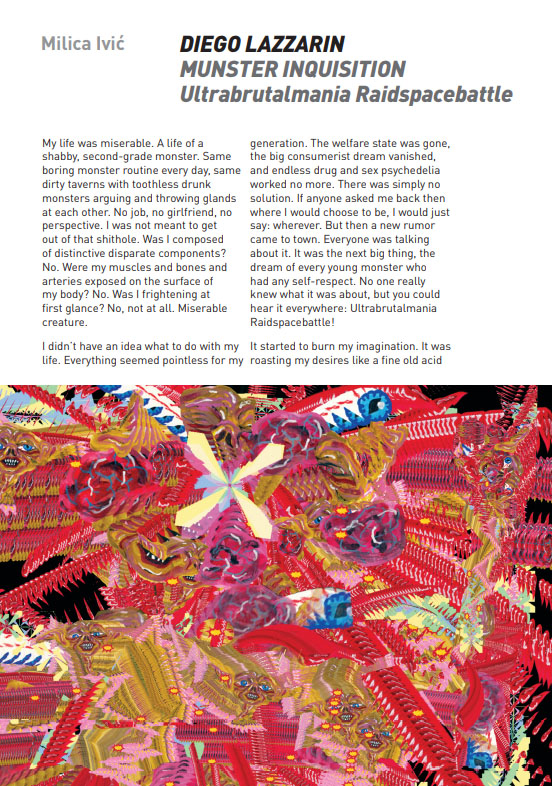
DIEGO LAZZARIN
MUNSTER INQUISITION
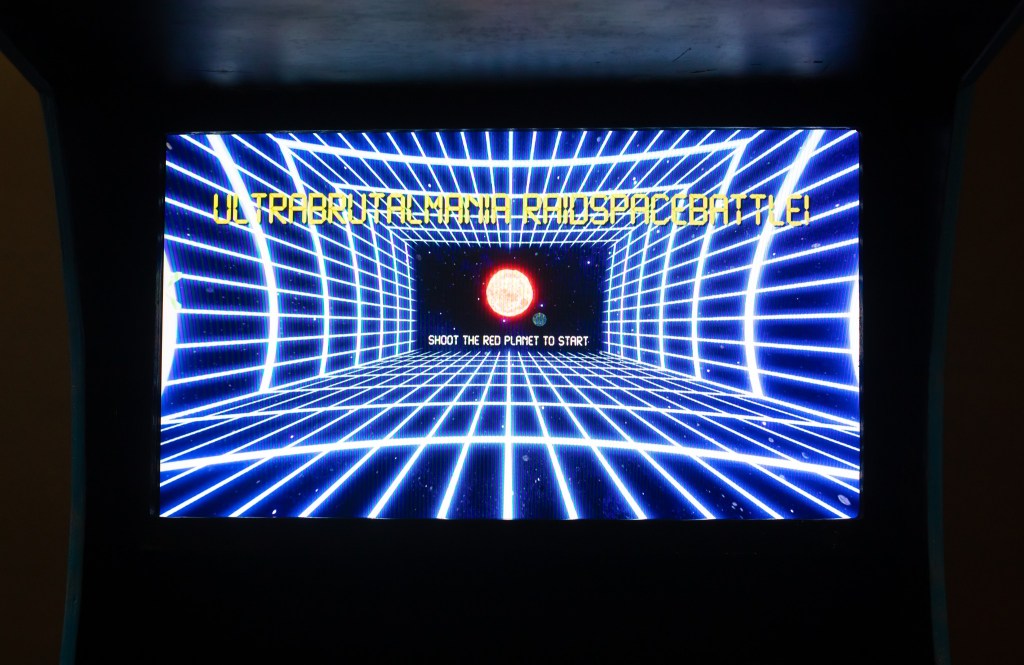
Ultrabrutalmania Raidspacebattle

Milica Ivić

My life was miserable. A life of a shabby, second-grade monster. Same boring monster routine every day, same dirty taverns with toothless drunk monsters arguing and throwing glands at each other. No job. no girlfriend, no perspective. I was not meant to get out of that shiihole. Was I composed of distinctive disparate components? No. Were my muscles and bones and arteries exposed on the surface of my body? No. Was I frightening at first glance? No, not at all. Miserable creature.

I didn’t have an idea what to do with my life. Everything seemed pointless for my generation. The welfare state was gone, the big consumerist dream vanished, and endless drug and sex psychedelia worked no more. There was simply no solution. If anyone asked me back then where I would choose to be. I would just say: wherever. But then a new rumor came to town. Everyone was talking about it. It was the next big thing, the dream of every young monster who had any self-respect. No one really knew what it was about, but you could hear it everywhere: Ultrabrutalmania Raidspacebattle!

It started to burn my imagination. It was roasting my desires like a fine old acid on exposed membranes. Apparently, it was a monster heaven, placed in between volcanoes and deserts, where mutants could show oft and go into a real battle.
That was my chance! I had no idea how to get there, but I was about to find out. I was obsessed, but focused! I was going mad, but determined to succeed. I was asking around and was listening to every conversation in the city just to get lo know who was behind this project.

And there it was. a legend, a myth, a shady figure of a guy called Diego.

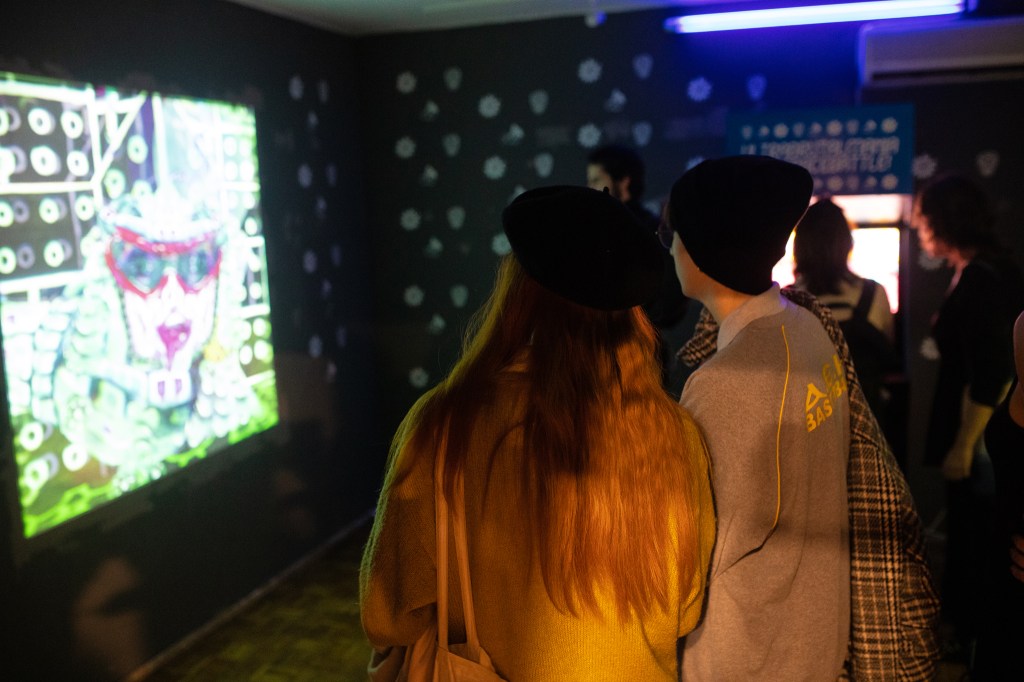
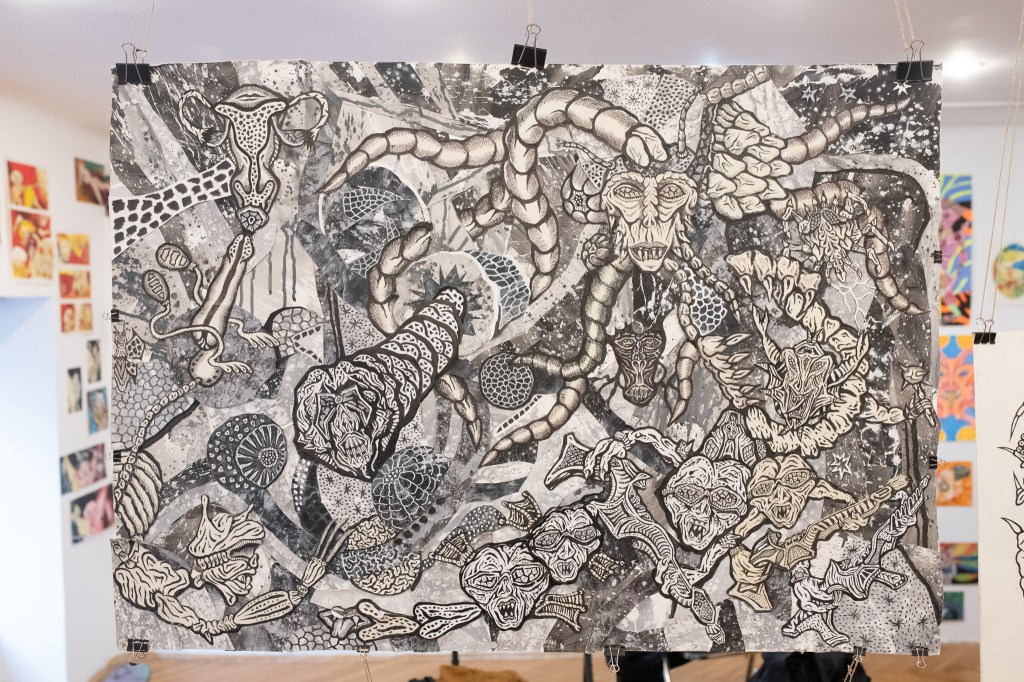
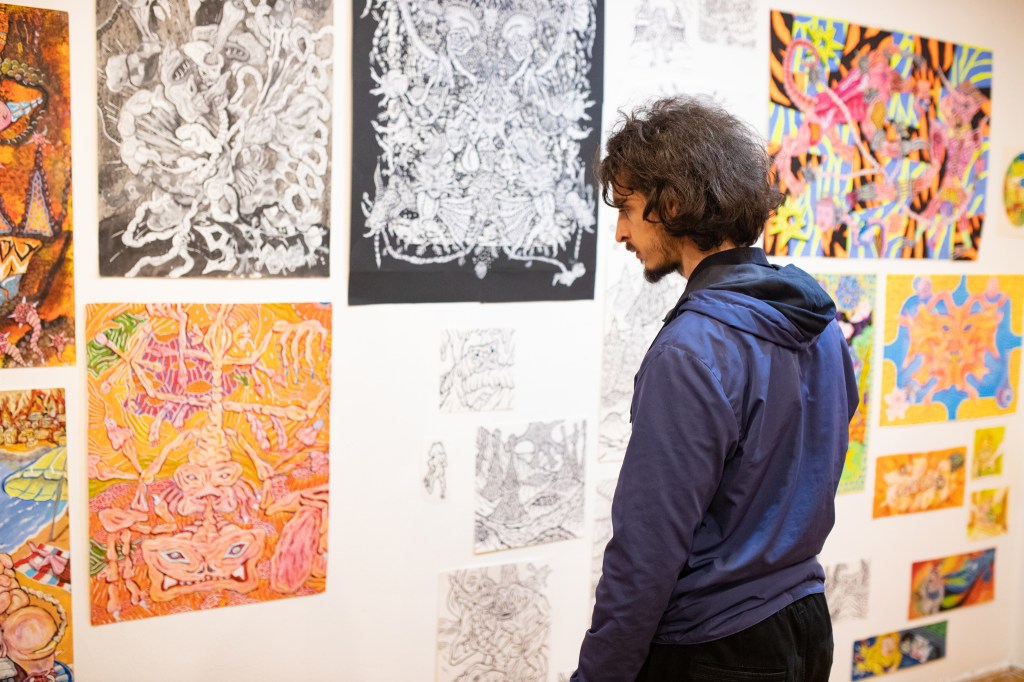
Munster Inquisition – Exhibition in Belgrade. Photos by Jahvo Joža

Diego was good at hiding, but his activities were tracked. His movements appeared on the market. Information about him could be exchanged for some valuable goods. I paid a dozen of tzantzas for a chance to see him. I was given coordinates for his meeting with come Serbian “gallerists” who were willing to host Diego and the monster flock and use them for their dubious purposes.

Munster Inquisition – Exhibition in Belgrade. Photos by Jahvo Joža

He became known as the Monster Daddy. The monsters loved Diego and he loved them back. They became a loyal flock, well-trained, well-organized and ready to kill. But everyone knew that his monsters were so damn handsome. Well built, well dressed, with finest accessories, with a killing attitude. I was never meant to be a part of that good-looking crowd. I just did not have that appeal! The rumor went that he used knowledge of dental radiology and manipulation of x-rays to adapt the monsters he chose for the battle. He was picking ihem up at dirty bars, dark alleys and suburbs and transforming them into stars of Ultrabrutalmania! I was hoping I could get through his makeover treatment.

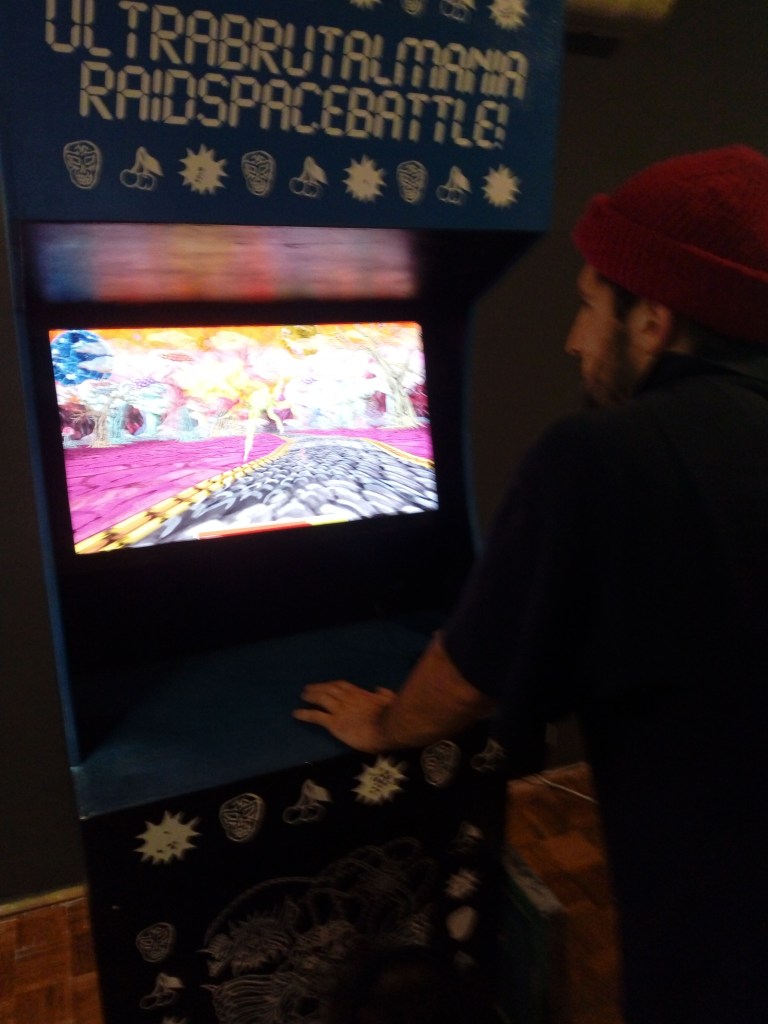
I knew I was The One for the Raidspacebattle. I was training myself to win any arcade battle with those ignorant fucks, splitting their asses on comfortable chairs while holding joysticks and pretending to kill monsters. Hold on you fart-catchers! I am about to show you the real battle! I was practicing levitation and shooting, appearing from the far right and lower left corner. I was multiplying my skills every day – improving side vision by avoiding vehicles on the highway while zigzagging in opposite directions, counting backwards while reciting the Catalog of ships from Homer’s Iliad and mixing highly saturated acids.

Preview of the game Ultrabrutalmania Raidspacebattle! Munster Inquisition – Exhibition in Belgrade. Photos by Jahvo Joža

I was strong and fit and I just had to find Diego first and get his attention. It was hard to get to him. No one knew him. He was not part of the comic publishing establishment, he could not be found in underground communities. He played by his own rules, surrounded by his monster friends.

Diego was good at hiding, but his activities were tracked. His movements appeared on the market. Information about him could be exchanged for some valuable goods. I paid a dozen of tzantzas for a chance to see him. I was given coordinates for his meeting with come Serbian “gallerists” who were willing to host Diego and the monster flock and use them for their dubious purposes.

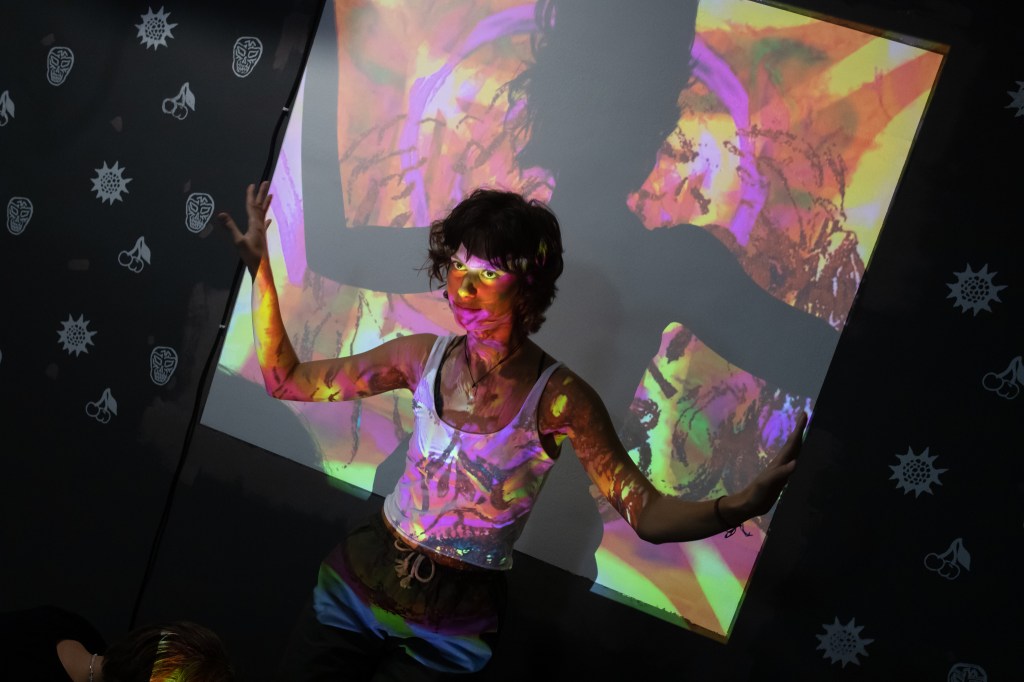
Exhibition in Belgrade. Photos by Jahvo Joža

I really didn’t like that guy Diego at first glance. His face looked suspicious. He seemed kind, but everything I know about him was telling me I should be careful. He was not easily tricked.

I went to the designated location, disguised, hidden, listening into Diego talking:


Diego Lazzarin: Alien-Interview at LDC Ateliers (2019)

Person 1: Diego, it is too hard to survive. Couple of people tried and they could hardly get to the hippies.

Person 2: Yes. life just goes on shrinking and nothing is helping it out! Situation is desperate.

Person 1: Something like real life.

Person 2: We are all doomed! With larvae or without them.

Diego: Oooooh… OK. I will figure it out next week… maybe I will make it easier with less enemies

Person 2: Let us live longer!

Diego: OK… maybe I witl make the enemies cause less damage… I will think of a solution!

Person 1: How many places are there? Monsters, larvae, hippies, how many like this?

Diego: I think u more and then a final Boss. But you can recharge energy while you go.

Person 2: How?

Diego: There are some sort of pink meatballs. You shoot them and recharge.

Person 1: OK. let us know when you have some changes done!

SHOOT THE RED PLANET TO START

OK! The game has not still reached its final phase. It was still in the process! I could still get in! As I knew we were made for each other. I was determined to use the moment. I was waiting for Diego to start leaving the place and I threw mysell in from of him. Imitating ultracerebralmania to the point I was starting to really feel it. I was shaking and my body was decomposing like a boiled gum. Diego, weak as he was on monster suffering, ran to me to soothe the attack.

Diego said gently: Hey shorty, what’s up? This day is quite fine, isn’t it?

I screamed: I’m dead. I think I am dead!

Diego had a comforting look and I saw understanding in his eyes: What makes you think you are dead? Is it me?

I screamed even harder: Nooo! It’s not you! It is about my lungs. I am breathing backwards. The process is completely reversed! The air is being squeezed out of the alveoli when it should be there feeding the blood with oxygen. I am doomed!

Diego asked: Did it ever happen to you before? What can I do to help?

I was getting some ideas, but continued to scream loudly: No, this is the first time ever. Normally. I am fit and fixed. I am strong and in good shape. I can win a battle! (I partly calmed) There might be one thing that you can do to help?

Diego was curious: What would that be?

People that gathered around us were already continuing on their way, as it was clear that the attack I was having was over.

I whispered: You could take me with you and make me your monster! I can be part of your unbeatable squad in Ultrabrutalmania! I can fight them all.

Diego was smiling: OK, I have a proposition. I take you on a mission with me to see what you are made of? It would be a special mission. Hard, but exciting. We are going to Belgrade to fight the Old Wave that wants to take people to the New Era. Ewwww. Disgusting!

My eyes were radiating and my heart was beating in the rhythm of Tibetan drums: Carry me. lead me! The Old Wave has no chance against us. We will not be soaked in the retrograde shit soup of that wave.

Diego nodded: Promise!

And we were already on our way to 44.8125° N. 20.4612″ E.


Munster Inquisition – Exhibition in Belgrade, Matrijaršija, Remont Gallery (2022) Photo by Jahvo Joža

remont.net


Diego Lazzarin
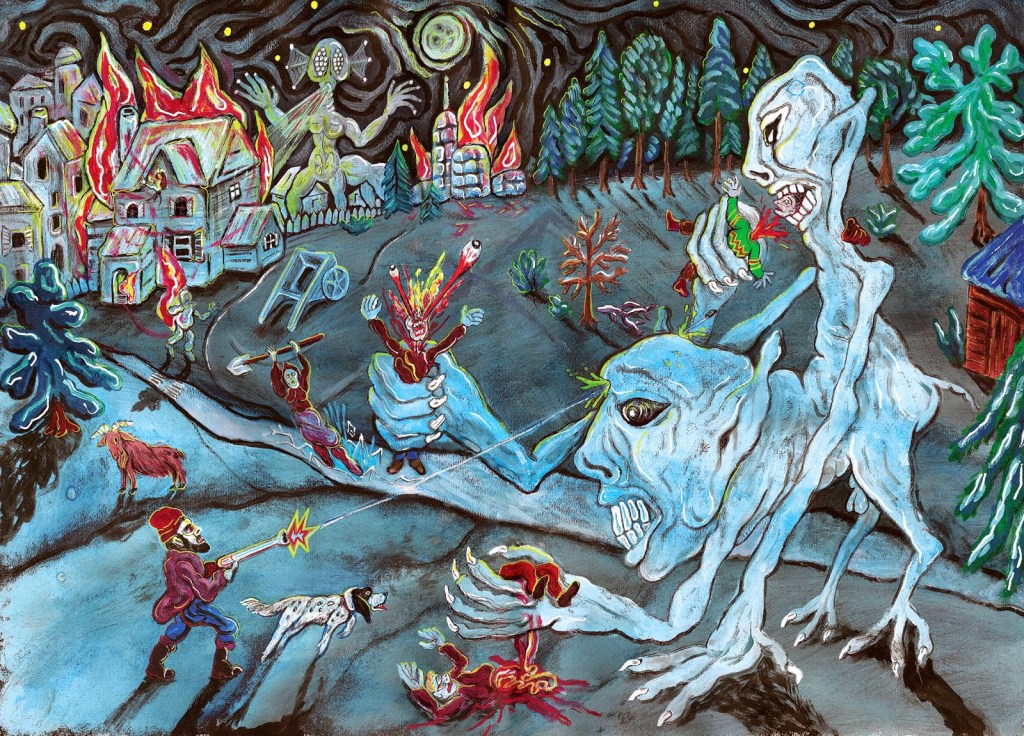
Diego Lazzarin ‘Disaster’ 2015

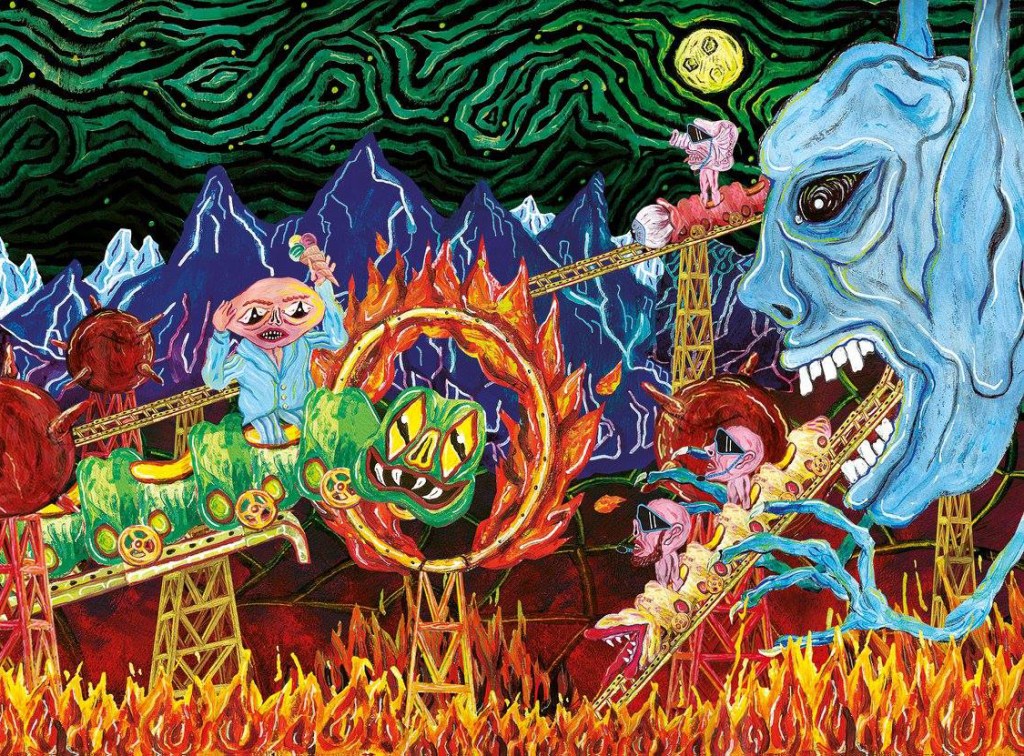
Diego Lazzarin is one of the artists I have grown familiar with recently. Clicking my way onto his website I was immediately struck by the raw application of paint’s that created images that looked like the harlequin child of a Marc Chagall painting for the illustrations in his debut Graphic Novel ‘Amino Acid Boy and The Chaos Order’. Lazzarin gives a brief outline of the book which follows Amino Acid Boy a creature sent to earth by his lord a Bio-Architectural-Metal-Meat-Machine that lives in a dark cave in outer space. Whilst on earth Amino Acid Boy’s aim is to understand individual human desires by assimilating in himself the DNA of humans in order to understand their way of thinking outside of basic biological survival instincts which the lord finds incredibly illogical. With this transition of understanding inAmino Acid Boy various interesting scenarios promise to unfold.

Stephen Morton


MicrowavewerewolveS – LA VIOLENZA E’ KATTIVA !

Digging further through the website I came across Lazzarin’s animated videos. The videos stuck firmly in my head as an odd sickly coloured dew biologically infused cyber reality reminiscent of early mid-90’s video game cutscenes but in no way pastiche of retro style graphics but more so a progressive affirmation of this kind of aesthetic that he occupies very well, a world seemingly steeped in a sticky energy drink formula. One of my favourite of his video pieces though is for Lazzarin’s electronic music project Microwavewerewolves, the video and song Hagiography of Porn infuses a hot and frantic piece of electro music with a warped out and rehashed 70’s porno flick watched with bangers and mash, the result is both equally disturbing and hilarious.

Another video for a song Voglio Amore is a short and sweet horror chase involving a young terrified woman being tracked through a forest by a giant flying insect creature that then persists to dismember the women with venomous flames before defecating maggots into her pulped out stubs.


Aminoacid Boy and the Chaos Order on Indiegogo

With the 160 page ‘Amino Acid Boy and The Chaos Order’ Graphic Novel almost complete after three years of work and the aim for a crowd funding in May it would be worth while subscribing for updates on Lazzarin’s website to get involved in the realisation of this project. Also while your there check out his videos, music and other work on instagram.com/diego__lazzarin

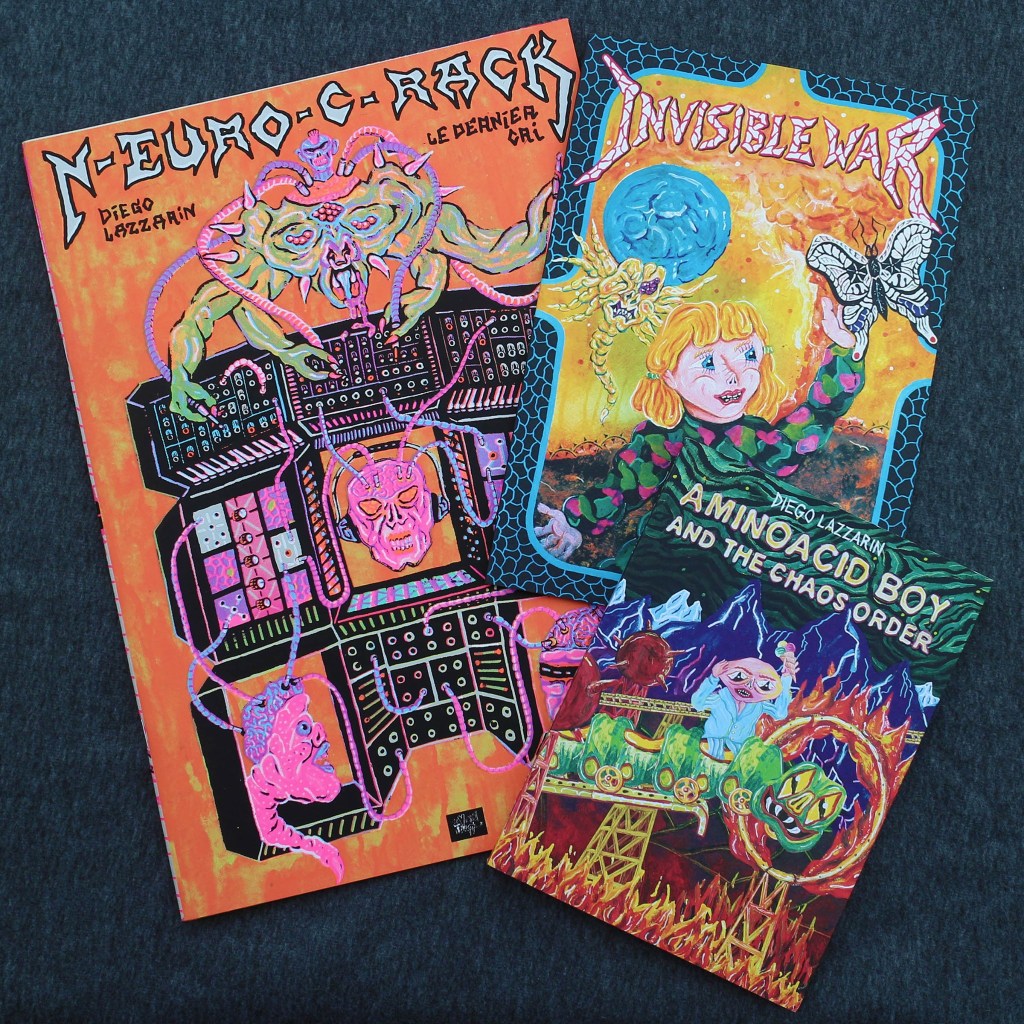
‘Aminoacid Boy’, ‘Invisible War’ & ‘N-euro C-rack’

LDC Editions: Diego Lazzarin

diegolazzarin.storenvy.com


Istanbul Underground Poetic Terrorism

Bu bir yok etme savaşıdır-
Vücudunu ve dünyanın akıl perdelerini
kullanarak hücre hücre savaş-
Orgazm ilacından çürümüş bedenler-
Fırınlardan ürperen bedenler-
Dünyanın tüm mahkumları dışarı çıkın-
Stüdyoyu yerle bir edin.

Fotoğraf düşüyor- Söz düşüyor-
Bütün ulusların partizanlarını kullanın-
Hedef Orgazmının Işın Tertibatları-
Gothenburg İsveç- Koordinatlar 8 2 7 6-
Stüdyoyu alın- Yönetim Defterlerini alın-
Ölüm Cücelerini alın-
Kuleler, ateş açın.

Tüm ulusların partizanlarını çağırarak-
Dil harflerini değiştirin-
Söz hatlarını kesin- Turistleri titretin-
Kapıları boşaltın-
Fotoğraf düşüyor-
Gri Odayı kırarak girin.

W.S.B


$enol Erdoğan

Erekte Şiir Nedir?
Erekte şiir ayaktadır, başkaldırır… Sadece sisteme değil; aynı zamanda dünyaya ve insana da… Parıltılı hümanizm nutuklarına karnı toktur; kötülüğün kaynağını hep insanda arar. Karanlığı çift yönlü okur; gerektiğinde karanlığa dalmaktan çekinmez.
Politik doğruculuğa ve benzer liberal zırvalara pabuç bırakmaz; hep uyanıktır, ayaktadır. Aynaların ve kadınların çoğaltma gücü ile sistemin kendini yeniden yeniden üretme gücü arasında gerekli analojiyi kurar; bu yüzden fallik bir dilden kaçınır.
Hayatın her alanından sızan şiddeti görmezden gelmez; yalanı reddeder; hastalıklarına karşı da dürüsttür. Şiddetin söylemini-eylemini de içine alır. Sade’dan Artaud’a bir gelenekten beslenir, yani Erektedir…

Erekte Şiir, Sokak Şiiridir;

Sokağın deneyimlerine ortak olmak, sokakta yeni deneyimler yaşamak, gündelik gerçekliğin gizlediği olağanüstüyü açığa çıkarmak, yeni durumlara yelken açmak…

Önemli olan sadece sokakta kalmak-yaşamak değil, sokakla yaşamaktır. Şiir sadece basılı kağıda hapsedilemez. Markör ile duvara, elektrik direğine, telefon kulübesine de yazılabilmelidir. Sokaklara kendimizi sürüklerken stickerlara şiir otomatik yazılmalı ve yapıştırılmalıdır. Büyük bina çatılarından, otobüs camlarından kuşlanmalıdır. Sokakta yazılan şiir kaynağına yani sokağa geri dönmelidir.

Erekte Şiir, Gerçekliğin Karşısındadır;

Gündelik gerçekliğin sistemin sürekli yeniden ürettiği bir illüzyona dönüştüğü 21. yüzyıl başında Erekte Şiir, Gerçek için gerçekliğin karşısındadır. Gerçekliği düş ile takas eder.

Erekte Şiir, Anti-Oligarşiktir;

Edebiyat dünyasının köşelerini tutmaya çalışan, egolarının ağırlığından kendi cemaatlerini kuran, ‘bu iyi-bu kötü şiirdir, bu şiirdir-bu değildir’ fetvaları yayınlayanlardan icazet almaz.

Erekte Şiir, Bağımsızdır;

Her hangi bir güç merkezi yada odağına uzaktır, onlara eklemlenmez, bağımsız ve özgür varolur. Şiirin belli kurallara, geleneklere bağlı olmasını manupüle eden derebeylerine karşı özgünlüğün ve özgürlüğün savunucusudur.

Erekte Şiir, Liberterdir;

Toplumun her hücresine kanser gibi yayılmaya çalışılan lümpen milliyetçi, gerici, muhafazakar anlayışlarla uzlaşmazdır. Osmanlıca avangard kurgulara pabuç bırakmaz.

Erekte Şiir, Erektedir!

Rafet Arslan, 22 Haziran 2008


ermageddon 01

The Manifesto of Erect Poetry

What’s Erect Poetry?
Erect poetry is upright, it rebels… Not only against system, but also against the world and man… It is not diverted by luminous humanistic speeches, it always looks for the origin of malice in the man. Erect Poetry reads darkness in two directions. It dares to dive into darkness when necessary.
It is not deterred by political correctness and similar liberal foolishnesses. It is always awake and stands up. It erects the visible analogy between the productive power of women and the reproductive power of the system to build itself again. Therefore, it avoids using a feminine language. It doesn’t underestimate the violence coming out of every part of life, it refuses lies and it is also fair to its own pathology. Erect Poetry concerns the discourse on violence and the act of violence as well. It takes its roots from a tradition stretching from Sade to Artaud. It is therefore Erect. ( 2007)

Erect Poetry is Street Poetry.

To take part in the experiences of the street, to live new experiences on the street, to reveal the extraordinary hidden by daily reality, to sail to new situations.
The important thing is not only to stay and/ or live in the street but to live with street. Poetry can not only be imprisoned into the printed paper. It should be written onto the walls, onto the electric polls, onto telephone boxes with markers. While we are strolling around the city, poems should be written automatically on the stickers and they should be put on the outer face of the city. They should be thrown from the roofs of the buildings and bus windows. Poems written on the street should go back to its origine, i.e. to the street.

Erect Poetry is against Reality,

At the beginning of the 21st century, where daily reality is transformed into an illusion reproduced by the system, Erect Poetry is against reality for the sake of the Real. It swaps reality with dream.

Erect Poetry is Anti-Oligarchic,

It doesn’t need to take confirmation from those authorities establishing their own institutions under the heavy loads of their ego, and who are giving their fetwa as this is a ‘good poem’ or this is a ‘bad poem’.

Erect Poetry is Independent,

It stays far away from a center of power-holder. It doesn’t depend on an authority. It is independent and free. It advocates the freedom of poetry and its individuality against those seigneurs who manipulate that poetry should be dependent on certain rules and traditions.

Erect Poetry is Libertarian

It never comes to terms with lumpen nationalist, conservatist, orthodox approaches which are spreading like cancer through every cell of society.

Erect Poetry Erects!

Rafet Arslan, 22 June 2008


P.K.D. x Creepy

 Ziriab Mobile 2015

X-File

‘Çok fazla hayal kuruyordum. Geceleri çok fazla kötü sekans kaydediyordum. Zehirlenmek üzereydim. Her akşamın açılışında, kıyıya vuruyor, bayrakların yarıya indirilmesini seyrediyordum. Çok fazla dikey labirent vardı iki tarafta da. Savaşmaya yeter de artar, milyonlarca hortlak. Yumurtaları çalınmış birkaç gökdelen, yeterince enkaz bölgesi, birkaç önemli köprü, tamamlanması konusunda şüphelerin sürdüğü bir tünel vardı. Zamanında birkaç günde yüz bin insanın öldürüldüğü meydanlar, çok mühim ofislerin kurulabileceği saraylar, yıkılmış bir imparatorluğun tavşan avlanan küçük koruları; bir zamanlar dudağın ucunda bir benin güzelliğinden fazlası değilken, artık bütün iç organlara sıçramış tekkeler vardı. Boğazın hangi tarafında olduğumuzun hiçbir önemi yoktu. Sırtımızı verdiğimiz kentin içinden sesler geliyordu her halükarda. Tıkalı damarların çeperlerine sürtünerek ilerlemeye çalışan; tanıdık, alışıldık; gerçekten sinirlerimiz bozulduğunda, dayanılmayacak kadar karanlık bir hayatın sesleri. Dev kalyonlar gördüğümüz yoktu; yüzümüzün ortasından salakça bir tebessüm gibi geçip giden petrol tankerleri vardı yalnızca. Sessizce deldikleri sisin içinden, boğazın karşı tarafına bakmaya devam ediyorduk. Boşlukta, sisin kendisi; sis hiç kalkmasa bile, in cin top oynatacak kadar tanıdığımız bir diğer kent vardı ardında. Sarayı ele geçirebilirdik, köprüleri ateşe verebilirdik, meydanlarda büyük ateşler yakabilirdik. Küçük bir çeteyle yapabileceğiniz şeylerin haddi hesabı yoktu. Ama bütün bu kızgın hayalleri de çantama tıkıştırıp, alışveriş için gerisin geri içkente dönüyordum.’

Taylan Taftaf


brainpunk_grafik_02

Emre Varışlı, 2015

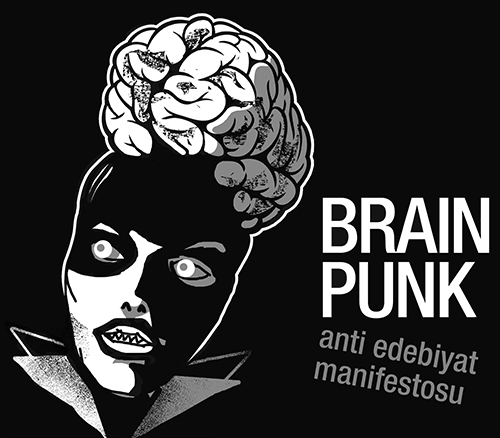
Edebiyat edebi değildir. Edebiyat tarihin tozlarını üstüne çekmez. Edebiyatın raf ömrü yoktur. Edebiyat argoyu ve serseriyi uzaklaştırmaz. Edebiyat cinsiyet suçu barındırmaz. Edebiyat yalnızca heteroseksüel – romantik bir çöplük değildir. Masaları kaldırın ve daktilolarınızı şov için kullanın. Masaları kaldırın ve kelimelerin özgürleştiğine tanıklık edin. Masaları kaldırın ve kütüphaneleri sahneye çevirin. Görsel malzeme ve kelimelerin ihtişamını buluşturun. Kitaplar görüntüye giriyor matbaalarda sesleri yükseltip okumaya başlıyoruz. Sesler birbirini takip ediyor. Cümle demek müzik demektir. Edebiyat titreşimlerle çoğalır ve dans başlar. Edebiyatla dans edebilirsiniz. Kamerayı şaire doğrultun ve onun kendi bedenini bir pankarta dönüştürdüğünü görün. Edebiyat editoryal kadronun onayını beklemeyecek ve sadece sayfalarla çoğalmayacak. Edebiyat sanat galerilerinin dışında dolaşan bir şey değildir. Edebiyatın fotoğrafını çekebilirsiniz. Edebiyatla akşam bir şeyler içmeye gidebilirsiniz.


21. Yüzyıl İçin Siber-Sürrealist Manifesto

ya da Dance Macabre:

Tatmin Edecek Cüretin Yoksa Tahrik Etmeyeceksin !

Bizim ya da 21. yüzyılın rüyalara dalıp gitme lüksü yok. Bugün 21. yüzyıl Siber-Sürrealizminin temel deneyim alanı rüyalar değil; gündelik hayatın kendisidir.

İşte bu yüzden bu toprakların yaşamış ben diyeyim tek gerçeküstücü grubu siz deyin tek avangard deneyimi bir gün sahaya geri dönecek olursa bu kadar ahmaklık ortasında ana gövdesi ‘dans topluluğu’ olacaktır.

Sekiz ya da on pilli el teybi, türler arasında sörf yapabilen en az bir Mc, beyaz eldivenler, tuhaf şapkalar, yerine göre maskeler ve d.i.y. kostümler, bir kaç devre ile zamanı sıçratacak gürültü makineleri, cennetlik müzisyenler, kafalarının üzerinde dönen yakışıklı oğlanlar ve bir şehri yıkarcasına dans edebilen kızlar ve drag queen‘ler.

Sokağın azgın şiiri, tag vs graffiti ve art brut, devasa ayaklı kolonlardan yapılan sahil enstalasyonları, Alsancak çimleri, Porsuk Adası, Moda Sahili, Saat Kulesi Meydanı ya da zombi kostümüne bürünmüş Ziggy Stardust’tan farksız çılgın çocuklar.

Nostalji, karasafra ve donmuş zamanın 21. yüzyıl Sürrealizminde yeri yok.

Asıl şimdi caddelere, sahillere, parklara inip zombiye dönmüş topluluğu dansla, sanatla, aşkla baştan çıkarma vakti.

Şimdiki geleceğin Gerçeküstücü sloganı: “Tatmin Edecek Cüretin Yoksa Tahrik Etmeyeceksin !”

Selam olsun Olimpos’un eskici dükkânlarına karşı gözü kapalı hayata balıklama dalan sokağın çocuklarına.

Ve Aşk olsun !

Rafet Arslan

Eski Sürrealist Büro, Kadıköy Merdivenler

2 Haziran 2016


jesus02

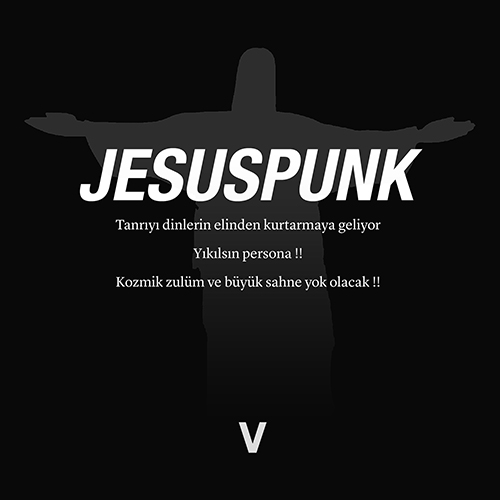
‘Göklerden gelen bir karar vardır’
Türkçe’nin tabuları yıkılıyor

Delirenler haklıdır, define yıkık yerlerdedir
Ve Jesus Punk yıkıntıların arasında belirir
Maddeyi bilir, maddeden geçer
Asıl çıkılması ve eylem yapılması gereken sahnenin
gündelik hayat olduğunu bilir.

Herkesi kurtarmaya gelmiştir
Pelerini olmayan ve oyuncağı yapılmayacak bir kahramandır o
O, cinsel olmayan bir cinsel metadır
Bir Mesih televizyonda iner halkın arasına
Canlı yayında acıyı izliyoruz
Aziz elleriyle dokunuyor aynı anda herkese
Parlak şehir çölünün ortasında seslenir: “Persona yıkılsın !”
Maaşlı çalışanların körlüğünü bilir
ve askere çağırılanların aczini hisseder.

Jesus Punk anonim değil
Jesus Punk çarmıhını sırtında taşımaz !
Reklam panosunda sırıtmaz ve arkanızdan konuşmaz !
Siber çağa uygun bir yıkım geliyor
Ölümü kutsama, ölümün fotoğrafını çekme !

Jesus Punk cinsiyetsiz ve ırksız
Jesus Punk siyah ve beyaz
Jesus Punk çocuk işçi ve seks işçisi değil !
Jesus Punk senin saçma hayallerini gerçekleştirmiyor
Mum yakman, tavaf etmen, dua için diz çökmen gerekmiyor
Jesus Punk sosyal medya fenomeni değil !
Jesus Punk anonim değil !

Jesus Punk, Tanrıyı dinlerin elinden kurtarmaya geliyor

Yıkılsın persona !

Kozmik zulüm ve büyük sahne yok olacak !

Emre Varışlı
2017 İstanbul


saptırma_03

بِسْمِ ٱللّٰهِ ٱلرَّحْمَٰنِ ٱلرَّحِيم

Yeni Bir Gökyüzü

Kontrolsüz bir patlamanın yeni bir gökyüzü inşa edeceği var, bu ‘tahayyül’ kesindir. Kontrolsüz bir patlamanın yeryüzünü ve suları kendi biçimine dönüştüreceği, kaleme alınmış tüm uluslararası retoriğin saçmalığını bir tuşla sınırsız kılacağı, bir tuşla sileceği var, bu ‘tahayyül’ kesindir. Kol saatlerinin icadı veya kütle-zaman ölçeğinin fiziki kavramsallığı keşfedilme ânında doğruydu. Tahayyül edilirken, bin yıldır, doğru bir şekilde ‘akla getirildi’. Ancak tahayyülün güzelliğinde akla getirilen her ‘gelecek’, endüst-realitenin vahşetinde sevimli birer ‘tüketim unsuru’ gibi sevgilinin omzuna kondurulan küçük, tüketimsel ve yalancı öpücükler olarak ‘kapitalizm’in gizli ellerinde çöpleştirildi. Kalite ve mükemmellik, teknolojiyi daha güvensiz kılıyor, sürdürülebilirlik ve çevrecilik doğaya daha çok zarar veriyor. İnsan hakları, gönüllü köleliğin kartvizitini oluşturdu. Pazar ve pazarlama, matematiğin hakikat temsilini yok etti. Demokrasi, bugün, truva atı bile değil; Gregor Samsa’nın ruhunun yaygınlaşmasıdır bu topraklarda demokrasi… Çağdaş sanatlar ve mimari, plastik ya da taş bile değil; ölümcül çimentodan kuleler ve hapishane gözenekleri kurdu. Müzeler artık görkemli birer ibadethane ya da mezarlık bile değil; müzeler kahve ile boş zamanın pazarlanmasının merkezleridir.

Anlayalım artık; yeni bir kutsallık inşa edilemiyor. Ülkelerin yenisi ülkelerin yok edilmesinin el-kitabıdır. İnsanlık, ruhunun kendi ruhuna terk edileceği ânın özlemini tahayyül ediyor. Kalbimiz ve dilimiz; anlayış, şefkat, erdem ve vicdanla dolu bir dini açılım değil. Anlayalım artık; kontrolsüz bir patlamanın ruhumuza katacağı yatıştırıcılığı… ‘Bakmak’, kontrolsüz bir patlamanın tahayyül ânlarıyla birlikte önem kazanıyor; ‘anlam’ın yerine geçecek akıl dışı mutluluğun imgelemini, dahası imgelemin özgürleşmesini sağlıyor. Tahminsizliğin büyük geleceğini…

Tahminsizliğin ve sonrasızlığın kargaşayla biçimlenen geleceğini yakinen sevelim. Yeni bir gökyüzünün inşasını tahayyül edelim: Bu arzuyu kabullenelim.

Zafer Yalçınpınar
13 Haziran 2017, Kadıköy


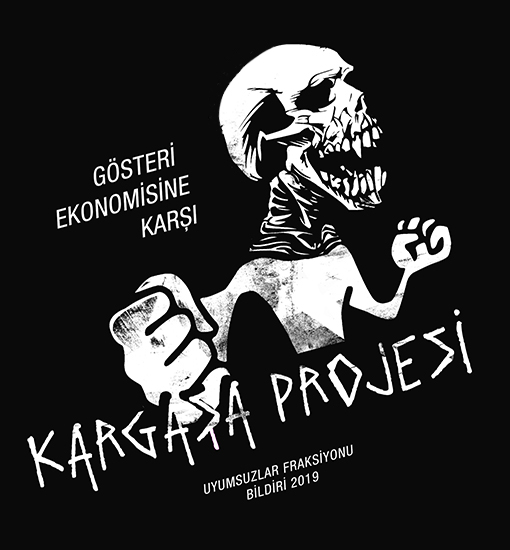
 GÖSTERİ EKONOMİSİNE KARŞI

KARGAŞA PROJESİ

KARGAŞA PROJESİ, BİR NUMARALI GÖREV: Şeyleri topluluğun, ailenin, ideolojinin ve diğer insanların gözleriyle görmeye son vermek.

KARGAŞA PROJESİ, İKİ NUMARALI GÖREV: Kaybedenlerin kazanacağı bir oyun yaratmak.

KARGAŞA PROJESİ, ÜÇ NUMARALI GÖREV: Söylenmemiş şeylerin söylenenlerden daha önemli olduğu saldırıları sürekli kılmak.

KARGAŞA PROJESİ, DÖRT NUMARALI GÖREV: Dolaysız deneyimlerin rehberliğinde bireyi, bilinçaltını ve rüyaları cephane haline getirmek.

KARGAŞA PROJESİ, BEŞ NUMARALI GÖREV: Otoriterlik ve edilgenlikle mücadele etmek için pratikteki her yalpalama anında radikal yaptırımlardan kaçınmamak.

KARGAŞA PROJESİ, ALTI NUMARALI GÖREV: Burjuva değerlerine ve sanat piyasasına yönelik küçümseyici bakışı beslemek, ideolojiyi reddeden bir barbarca isyanı örgütlemek.

KARGAŞA PROJESİ, YEDİ NUMARALI GÖREV: Şimdiyi yaratmak için seferber olmak, düşlerimizi ve arzularımızı onları hapseden gelecek kaygısından kurtarmak.

KARGAŞA PROJESİ, SEKİZ NUMARALI GÖREV: Kolektiflerin şiirsel, ateşli ve şakacı olması gerektiğini bir an olsun unutmamak.

KARGAŞA PROJESİ, DOKUZ NUMARALI GÖREV: Aklı ve tutkuyu olabilecek en mükemmel biçimde birbiriyle bütünleştirmek.

KARGAŞA PROJESİ, ON NUMARALI GÖREV: Müesses nizama, otoriteye, dile, bizi hipnotik uyuşukluğa sevk eden her şeye ölümcül darbeler indirmek.

KARGAŞA PROJESİ, ON BİR NUMARALI GÖREV: Herhangi bir davaya bel bağlamamak, kendi hayatını başlı başına dava haline getirmek.

KARGAŞA PROJESİ, ON İKİ NUMARALI GÖREV: Apolitik hedonizmden, cemaatçilikten, ahbap çavuşluktan uzakta konumlanmak, eleştirinin eleştirisini ihmal etmemek.

KARGAŞA PROJESİ, ON ÜÇ NUMARALI GÖREV: Kurban etmeyi, çalışmayı, suçluluğu, mübadeleyi hayatta kalmanın olmazsa olmazları olarak sunan tekno-endüstriyel sisteme karşı yıkıcı bir iradeyle direnerek hayatın tüketilmesine engel olmak.

KARGAŞA PROJESİ, ON DÖRT NUMARALI GÖREV: Özerk bireylerden oluşan topluluklarla emir ve lütufla yönetilen kalabalıklar arasındaki nitel farkı teori ve pratikte göstermek.

KARGAŞA PROJESİ, ON BEŞ NUMARALI GÖREV: Soluk alıp vermeye devam ettiğimiz müddetçe son sözün henüz söylenmediğinin bilincinde olmak.

UYUMSUZLAR FRAKSİYONU 2019


istanbul_underground

our message is simple
where our music is welcome
we will play it loud
where our music is challenged
we will play it louder

A.I.D


Bir Çığlığı Dikine İkiye Kesmek: OKTAY ÇAKIR

Oktay Çakır ‘Lal’ kağıt üzerine mürekkep (Dekupe)

“Bugün profil resimleri, selfie’ler ve sonsuz dolaşımdaki görüntülerimizle kendimizi çoğaltıyoruz. Ancak bu çoğalma bizi daha mı görünür kılıyor, yoksa daha mı silikleştiriyor? İmgeselleşen varlığımızın dışında gerçekte neyiz?”

Antroposen (İnsan) Çağı

Derya Derin

Yeni Çağın Eşiğinde İnsan

2000 yılında ortaya atılan “Antroposen” terimi, insanın yerküre üzerindeki baskın etkisini tanımlamak için kullanılmaya başlandı. 2016’da Holosen Çağ’ın resmen sona erdiği ve yeni bir jeolojik dönemin –İnsan Çağı’nın– başladığı kabul edildi. Kimileri bu çağı bir insan cehennemi, kimileri ise insan eliyle inşa edilmiş bir cennet olarak görüyor. Ancak bugün, 2020’lerin ikinci yarısında, ayak izlerimizden çok “parmak izlerimiz” ve “boş bakışlarımız” tartışılıyor. Artık aynadan çok ekrana, hakikatten çok yüksek çözünürlüklü simülakrlara bakıyoruz. İnsan, kendi suretini bir algoritmanın işleyişine bıraktığından beri, yüzü; bir ifadeden ziyade, veri setlerine hapsolmuş silik bir imgeye dönüştü.

Peki, bu çağda insanın kendisi nasıl görünüyor? Nüfus artışı, teknoloji bağımlılığı, akıllı telefon ekranlarında sürekli kendini seyretme alışkanlığı… İnsan artık kendisiyle ilgili verilere bakarak yeni bir görsel kimlik mi oluşturuyor? Gerçek ile imge arasındaki ayrım hâlâ mümkün mü?

İmge ve Gerçeklik Krizi: Baudrillard’ın Dünyası

Fransız düşünür Jean Baudrillard’a göre bu ayrım çoktan ortadan kalktı. Günümüzde reklamlar nesneleri değil, imgeleri satıyor. Chanel, Calvin Klein ya da GAP gibi markalar bir değerden çok bir gösterge, bir etiket haline geldi. Baudrillard’ın en çarpıcı iddiası Körfez Savaşı’na ilişkindir: Ona göre bu savaş “gerçekten yaşanmadı”. Televizyon ekranlarında izlenen şey, füze bombardımanıyla imge bombardımanının iç içe geçtiği bir medya olayıydı. İzleyiciler koltuklarında cips yiyerek savaşı seyrediyordu. Eleştiri yetimiz bu hipergerçeklik içinde felce uğradı.

Bugün profil resimleri, selfie’ler ve sonsuz dolaşımdaki görüntülerimizle kendimizi çoğaltıyoruz. Ancak bu çoğalma bizi daha mı görünür kılıyor, yoksa daha mı silikleştiriyor? İmgeselleşen varlığımızın dışında gerçekte neyiz?

Oktay Çakır ‘Lal’ kağıt üzerine mürekkep

“Sanatta hâlâ bir “hoşa gidiş”, romantik ya da estetik bir kaygı var mı? Yoksa duygular da tüketim nesneleri gibi hızla tüketilip yenileniyor mu?

Kendine Yabancılaşan İnsan: Nietzsche’den Bir Bakış

Nietzsche, doğaya sadık kalma çabasını sorgularken şöyle der:

“’Sadık kalmak doğaya’ – tümüyle – ama
nasıl başlar sanatçı bu işe?
Ne zaman sığdırılabilmiştir ki doğa resme?
Bir sonsuzluktur, dünyanın
En küçük parçası bile!
Ne hoşuna giderse onu resmeder sonunda.
Ve ancak resmedebildiğidir hoşuna giden!”

Sanatta hâlâ bir “hoşa gidiş”, romantik ya da estetik bir kaygı var mı? Yoksa duygular da tüketim nesneleri gibi hızla tüketilip yenileniyor mu? Sürekli seyrederek, kopyalayarak aynı formu çoğaltmanın cazibesine mi kapılıyoruz?

İnsanın doğaya müdahalesi kuruyan nehirler, plastik çöpler ve zehirli atıklar getirdi. İnsanın insana müdahalesi ise imaj üretimiyle, profil resimlerinin bolluğuyla gerçekleşiyor. Bu, görülecek kimsenin kalmadığı bir imgenin kendini yalanlaması değil mi?


Oktay Çakır “lal” (herhangi bir yer) Mayıs 2017

Oktay Çakır, Hollanda dosyası ‘Nudity’ serisinden (2008)

“Kan gecenin içinde eriyerek ete acı vermekte bir tür sağaltım ve ritüel…
Resim kendi gerçekliğinin üzerine kapanır. Kaybedilemez ve sürekli tekrarlanması gereken bir ‘beyit’ gibi her söylenişinde farklı bir bedende dirilebilmek için ‘kan’ ‘koku’yu halelendirerek yüzeyde vücut alır…” –Oktay Çakır

Oktay Çakır’ın Figürleri: Derisiz, Sessiz Çığlık

Sanatçı Oktay Çakır’ın çizimlerinde insan yüzeyi, cilt, deri neredeyse yoktur. Figürü kaplayan devinimli, kıvrımlı çizgiler adeta bir kadavra görünümü taşır. Bu figürler hakkında sosyolojik, politik ya da ekonomik bilgi edinemeyiz. Cinsiyet bile çoğu zaman tinselliğin gerisinde kalır. 

Figürler modern hayatın katlarında, sınıflarında, odalarında görünmez. Daha çok tecrit edilmiş, hikâyeleri duyulmayacak kadar uzak bir yerden fısıldayan varlıklardır. Sessizlikleriyle başkaldırırlar. Portreleri ancak ölümle tamamlanır; yaşam ve ölümün içkin sessiz çığlığıdır bu. 

Bu çizgilerin evreni, Antroposen’in o pürüzsüz, yüksek çözünürlüklü “filtreli” dünyasına bir başkaldırıdır. Eser, görünürlüğe açılan o derin oyukta hizaya girmeyi reddeder. Temsil ettiği ne kadar silikleşirse, o kadar hakikate yaklaşır.

Yapay zekanın her şeyi kopyalayarak hükümsüzleştirdiği bu sistemde, sanatın saflığından bahsetmek artık bir lüks değil, bir zorunluluktur. Çakır’ın figürleri, kopyalanan bu sistemde zihinsel bir stratejiyle boşlukları dolduran esasa, yani “insansızlaşmaya” karşı durur.

“Kan gecenin içinde eriyerek ete acı vermekte bir tür sağaltım ve ritüel…
Resim kendi gerçekliğinin üzerine kapanır. Kaybedilemez ve sürekli tekrarlanması gereken bir ‘beyit’ gibi her söylenişinde farklı bir bedende dirilebilmek için ‘kan’ ‘koku’yu halelendirerek yüzeyde vücut alır…”

Çakır’ın “Kanın Ete İçkinliği Ve Resim” yazısındaki kendi sözlerine bakarsak:

Renkler geriye itilmiş, duygunun öne çıkması sağlanmıştır. Boya tuvale emdirilirken kanın ete işleyişi gibi bir ritüel yaşanır. Çığlık dikine ikiye kesilir: biri resimde, biri izleyende yankılanır.

Bu figürler bize karanlığın derinliğini, Nietzsche’nin “içine bakan uçurum”unu hatırlatır. Özne ne tam öznedir ne de öznesizdir; bir hayalettir. Çerçeve sınırın kendisidir. Bakan gözle resmin çığlığı aynı anda ikiye bölünür.


Oktay Çakır, Hollanda dosyası ‘Nudity’ serisinden (2008)

Tuzla Sanat Galerisinde, 24 Şubat 2014

Oktay Çakır, Hollanda dosyası ‘Nudity’ serisinden (2008)

Hakikat, Saflık ve Aynılık

Antroposen çağında insan-insan permütasyonu ön plandadır. Geçmişteki Tanrı-insan gerilimi yerini insanın sıradanlığıyla ürettiği şaşırtmalara bırakmıştır. Sanatın özgünlüğü, saflığı giderek kopyalama ve aynılaşma içinde eriyor.

Çakır’ın figürleri bu kopyalanan sisteme bir başkaldırıdır. Temsil tuzağından kaçmanın iki yolu vardır: Ya yapıbozuma uğrayarak kayıp anlamla bağımlı kalmak, ya da temsili geride bırakıp şeylerin yalnızca mevcut oldukları belirişe dönmek.

Saflığa duyulan özlem bedenden kopmaz. Çocukluğun saf anları şimdi yalnızca hayaletimsi izler olarak yakalanabilir. Mekân, saflığın merkezidir. İnsan fiziksel mekândan koptuğunda saflığa yeniden kavuşabilir.


Oktay Çakır ‘Lal’ kağıt üzerine mürekkep

“Resim bir başka hale dokunma biçimidir. Bir üst perdeyi aralama hali. Gerçekliklerle değil hakikatle ilgili bir tartışma/ çekişme duruşuyla ilgilenir. Çoğunlukla imge bunu karşılayamadığından sürekli çoğalır.” Oktay Çakır

Oktay Çakır’ın resimlerindeki figürler, karanlığın derinliklerine kadar inmiş, öznenin şimdiki yerini düşlemleyerek yeniden aydınlatmak için aramıza, yeryüzüne dönmüşlerdir. Burada varoluşsal bir telkinle geçmişten gelen ve yeninin birleşimiyle denge kavramı bütünle özdeşleşir. Çerçeve belirlenebilir bir sınır olmaksızın, algılanan figürün, yani orada olanın (dasein) karşımıza çıkışıdır.

Figürün daha başka yapabileceği tek seçim, bedenin kesintisizliğine uygunluğunu sergilemektir. Böylece oylumlama insan yaşamının yeni biçimlerden üretilmiş yeni biçimiyle sonuçlanır. Figürün yüzü her türlü yüklemeden ve nitelemeden ayrıldığında tarafsızlaşır. ‘Şimdi ve burada’ olur. İnsan onu var eden atmosferin ve dünyanın içine çekilip yokolmaktan ancak eserin ‘şimdi ve burada’lığı tesiriyle kurtulur.

Antroposen (insan) Çağ, nasıl ki insanın atmosferde ve dünya üzerindeki yok edilemez etkisini temsil ediyorsa, Oktay Çakır’ın figürlerinde de insan oluşumu yine insan etkileşiminin (insanın insan içinliğinin) tam kalbinde yer alır. İnsanın geçirdiği evreler (varoluş- yokoluş- kazanış- yitiriş vb.) gerçeklikten koparılmış bir parça olarak değil, hakikatle temas eder. Hakikat; yabancılaşmış bir derinlikten fışkırarak isimsizleşmeye çivilediği bakışı kışkırtır ve mutlak egemenliğini sorgulatır.


Oktay Çakır ‘Lal’ kağıt üzerine mürekkep

Gözkapaklarındaki Karanlık

Yaşamın dönebileceği nihai yer neresidir? Belki de Baudrillard’ın kayıp anlamı, sadece gözkapaklarındaki o mutlak karanlığın bedenleşmesinde saklıdır. Oktay Çakır’ın resimlerinde duyulan o içsel titreşim, sezgiselliğin çözümlenememiş sırrıdır. 

Oktay Çakır 1997’de yazdığı “Çöküş Estetiği” tezinde, canlı varlıklara cansızmış gibi davranmanın yeni bir patetik yanıltı olduğunu söyler. Sanal ekranlara gömüldüğümüzde canlı olan cansızlaşır, gerçeklik ve anlamdan koparız.

Çakır’ın resimlerinde hâlâ sezgi, adanmışlık ve içselliğin titreşimleri duyulur. Bu, çözümlenememiş bir gizemdir. Yenilenebilir enerjiyi yüksek çözünürlüklü ekranlarla değil, sezginin dokunuşuyla yakalarız. Dile gelmez, meçhul bir çizgidir. Çığlık hep ikiye bölünür: biri kendinde şey, diğeri ötede…

Derya Derin, 6 Şubat 2026 (düzenlenmiş hali)

instagram.com/oktay_cakir_art


Kadının Punk’ı Erkeği Yendi

Fulden
Fulden She-Demon ve Secondhand Underpants ‘Loud Women Fest’ 2019

Punk Rock Sahnesi ve Kadınlar

‘Biz bu yemeğin baharatı değiliz!’

Fulden She-Demon

Punk sahnesi erkeklerin toplumun genel-geçer heteronormatif erkeklik normlarının dışında var olabildiği yegâne özgür alanlardan. Ama aynı özgürlük kadınlara ve ötekileştirilen diğer gruplara tanınmadığında ortaya ciddi bir sıkıntı çıkıyor. Bu durumda kendimizi dayanışma olanağından uzak, iktidar ilişkilerinin ve toplumsal cinsiyet hiyerarşilerinin yeniden üretildiği bir düzlemde buluyoruz. Yazılacak her sahne raporunda, çekilecek her belgeselde, her arşiv projesinde başlangıç noktası (yani taban) olarak punk sahnesi karşımıza adı konulmayan bir erkekler kulübü olarak çıkıyor. Bu adı konulmamışlık belli ‘silme’ alışkanlıklarını içeriyor. Biz kadınlar yancı gibi olaya sonradan dahil edilip, silinen bir şeyleri yeniden ortaya koymakla görevlendiriliyoruz. Bir nevi önümüze konan yemeği ‘çeşni’lendiriyoruz. Bu görevin bizlere tayin edilmiş olması, tayin edenlerin bu konulara kafa yormayıp, bir yandan da vicdanlarını rahat tutmasını olanaklı kılıyor. Dolayısıyla bu ‘takımını seç‘ pratiği hala bir erkekler kulübü ortaya koyarken (burada kuşkusuz tayfacılık da ciddi bir sorun olarak karşımıza çıkıyor), bir yandan da kıyıdan köşeden dahil edilen kadınların katkısıyla kapsayıcı olma iddiası mümkün hale gelmiş oluyor ve bunun sorumluluğu da ötekileştirilenlerin omzuna biniyor. Dolayısıyla kadınların katkıları görmezden gelinir ve silinirken, dahil edilme sorunu da kadınlara rahatlıkla itelenebiliyor. Oysa biz sonsuza kadar kendi festivallerimizi yapmak istemiyoruz. Kendimize ite kaka açtığımız alanların kabul edildiğimiz tek alan olmasını ya da marjinalize edilmesini istemiyoruz. Bir punk fanzininde feminist bir yazının hemen ardından salt erkeklerin olduğu bir playlist‘in önümüze tek gerçek müzik olarak sunulmasını, kadınların katkılarının her defasında unutulmasını, yitip gitmesini istemiyoruz. Biz bu yemeğin baharatı değiliz. Olmamız gereken yer kıyı-köşe-periferi değil, tam merkez. ‘Oğlanlardan biri gibi’ değil, kendimiz olarak ve olduğumuz gibi kabul edilmek. İstisnai değil kaide olarak.

Kapsayıcılık hegemonya yıkmayı gerektirir

Biz punk’ın feminist hali değiliz çünkü bu ifade üzerine sonradan geçirilen bir ceketi çağrıştırıyor. Ancak punk zaten anaakım kültüre karşı konumlandığı ölçüde feminist olmak zorunda. Eğer değilse de üç akor bildiği için sokaktaki adamdan kendini üstün sanan bir densizliğin ötesine geçemiyordur. Kapsayıcılık, “Sen de varsın, işte buradasın, heh öyle kenarda köşede dur işte” demek değil. Gerçek kapsayıcılık hegemonya yıkmayı gerektirir. Hegemonya yıkımını olanaklı kılan şeylerden biri ötekileştirilenlerın öz ifadesi, düşünsel üretimi iken, bir diğeri ise bu üretimlerin kenara köşeye sığıntı gibi yerleştirilmesinden ziyade, tam merkeze alınmak suretiyle anlatının temel bir parçası haline getirilmesidir. İlki hakkında her zaman özeleştiri yapabilıriz. Evet, daha fazlasını yapmalıyız. Kendimizi daha çok ve daha iyi ifade etmeli, daha çok ve daha iyi üretmeliyiz. Tereddütlerimizi bir kenara koymalı, kendimize güvenmeli, inanmalı ve birbirimize sahip çıkmalıyız, ikinci kısma geldiğimizde ise mütemadiyen duvara tosladıgımızı hissediyorum. “Aaa kadınlar da vardı lan !” gibi bir sonradan dahil edilme, gerçek kapsayıcılıkla bağdaşamaz.

Bir Erkekler Kulübü Olarak Punk Sahnesi

Burada bir pozitif ayrımcılık çağrısı yapıyor değilim. Tam aksine, lügatimize pozitif ayrımcılık adı altında giren fikrin bulandırdığı bir sorun var ortada. Eğer ancak pozitif ayrımcılık olsun diye dahil edileceksek, işi hep kotadan kurtaracaksak bunun ifade ettiği şey kadınların yeteri kadar ‘iyi’ sanatsal/ düşünsel üretim ortaya koymuyor olduğu fikridir. Bu fikri bize veren cinsiyetçiliğin işleyiş şeklidir. Eğer bu üretimlere gözlerinizi yummuyor olsaydınız kadınların sürekli harika işler ortaya koyduğunu ve peşin hükümlü davranıyor olduğunuzu görürdünüz. Devekuşunun kafasını gömdüğü delikten çıkarıp biraz etrafına bakınması yeterli. Seçkinizde yalnızca erkeklerin yer alıyor olması salt erkeklerin iyi işler ortaya koyuyor olmasından değil, o ürün sizin önünüze gelene kadar cinsiyetçiliğin dokuz katından geçiyor olmasıdır.


Interview with Fulden-Shedemon on Feminism, Existentialism, and Punk Rock (2020)

Bu mücadele müttefiklerin mücadelesidir

Peşin hükümlü demişken, ortada bir güven sorunu olduğunun da altını çizelim. Erkekler kulübü ne demek? Yalnızca içindeki mevcut bireylerin erkek olmasını mı ifade ediyor? Bence bunun ötesinde bir şeyler de var ve bu güven pratiklerimize yansıyor. Buna araştırmacılar ‘örtük önyargı’ diyorlar. Mesela biri yalnızca erkek (görünümlü) olduğu için güveni hak etmeden otomatik olarak alabiliyorken, başka biri sadece kadın (görünümlü) olduğu için ağzıyla kuş tutsa şüpheyle yaklaşılıyor oluyor. Ve sonunda o güveni kazandığında ise istisnalar kaideyi bozmaz mekanizmaları devreye giriyor. Bunu kırmanın en önemli yollarından biri öz tefekkür (yani kendi eğilimleri, içgüdüleri, tercihleri ve davranışları üzerine derinlemesine düşünmek) ve özeleştiridir. Bu dışlama mekanizmalarının ne denli sinsice işlediğine dikkat etmeli ve bunları devreden çıkarmak adına topyekûn bir mücadele vermeliyiz. Bu mücadeleyi yalnızca ötekileştirilenler veremez. Bu mücadele müttefiklerin mücadelesidir. Herkesin ilk başta kendi davranışlarını, alışkanlıklarını, isteklerini, arzularını, güdülerini gözden geçirmesi ve bu dışlayıcılık canavarını nasıl ve ne denli beslediğini görmeye başlaması gerekir.

Ben kendime baktığımda geçmişte birçok kadınla dayanışma değil rekabet halinde olduğumu gördüm. İçselleştirilmiş cinsiyetçilikten ötürü sanki kaynaklar azmış da kazanmak için birbirimizi yenmemiz gerekiyormuş gibi bir yarışa girdiğimizi, birbirimize sevgi ve güvenle değil şüphe, kibir ve kıskançlıkla baktığımızı gördüm. Başka kadınlardan da bu tepkiyi aldıkça kendime defalarca, “senden nefret etmiyor, kendine dair taşıdığı yetersizlik duygularını sana yansıtıyor” demem gerekti. Yetersiz değiliz ve değerli hissetmek için kimseye bir şey kanıtlamamız gerekmiyor. Erkekler kulübünün bir parçası olmaya çalıştıkça erkekler arasında kendimiz olarak var olabildiğimiz yanılgısına kapılıyor ama daha ziyade aralarında eriyip gidiyor ya da eşikte tutuluyoruz. Bir bakıyoruz ki ancak ‘tahammül’ ediliyoruz. Ama tahammül ediliyor olmak kabul edilmekle eşdeğer değil. Kendimiz olabilmek için bir arada olmalı ve kenetlenmeliyiz. Erkeklerin arasına serpiştirilmiş, kopuk bir şekilde faaliyetlerimizi sürdürerek, enerjimizi bireysel anlamda kendini kanıtlamaya harcamak yerine bir aradalığımızdan güç almalıyız. Birbirimizi beslemeli, birlikte büyümeliyiz. Ve erkekler kulübü artık dağılmalı.

Tayfacılık ötesinde bir punk sahnesi mümkün mü?

Cinsiyetçilik dediğimiz şey bir olayla başlayıp bitmez. Tüm yaşam alanımıza sirayet eder. Bir insanın (bilinçli ya da bilinçsiz) seçimleri, düşünceleri ve inanış sistemlerine de indirgenemez (bunlar bazen cinsiyetçiliğin önemli parçaları olabilseler de). Cinsiyetçilik bütünsel bir sistemdir; birkaç cahil insanın hatasından ya da kötü niyetinden ibaret değildir. Bir taciz eylemi engellediğinde ya da cezalandırıldığında cinsiyetçilik orada ölmez. Cinsiyetçilik. tacizi ve şiddeti olanaklı kılan arkaplandır; ufuk çizgisidir. Dolayısıyla savaştığımız şey belli aktörlerin eylemlerinin ötesinde, bir kültüre içkin alışkanlıklar, sorgulanmayan doğrular, içgüdüsel hallerdir. Bu azılı canavarı yıkmak üç beş kişi değil, herkesin emeğini gerektirir. Biz sürekli toplumsal cinsiyet polisliği yapıyor durumunda kalmak istemiyoruz. Biz kendi yaşamımızın, eğlencemizin, dertlerimizin, varlığımızın ve paylaşımımızın peşindeyiz. Bu mücadelenin yükü yalnızca biz ötekileştirilenlerin omzuna düşemez. Herkes elini taşın altına koymalı. Tayfacılık ötesinde bir punk sahnesi mümkün mü ? Punk sahnesi erkekler kulübü olmaya mahkûm mu ? Bunları zaman ve mücadelemizin edinimleri gösterecek. Bir gün bu canavarın helvasını yeme umuduyla…

We’re not gonna lay down and die
This is our scene, this is our time
We’re knocking down the doors
On the men who called us Whore
This our time, this is our Fight

We’re not gonna lay down and die
This is our scene, this is our time
Swing our bats and clutching our knives
This is our time to fucking fight

Fuck your boys club

Girl’s Club · Sissyfit (2018)

Ne Yapabiliriz? diye soranlara kapsamlı olmayan bir liste

  1. Kadın müzisyenlerle çalışın.
  2. Kadın müzisyenleri araştırın, dinleyin, paylaşın.
  3. Yaptığınız ve paylaştığınız şarkı listelerinde kadın müzisyenler olsun (“token” olarak ya da laf olsun diye değil, gerçekten orada olması gerektiği için – çünkü kadınlar efsane işler yapıyorlar).
  4. Kadın müzisyenlerin ve sanatçıların işlerine para verip alın.
  5. Cinsiyetçi küfrü lügatinizden çıkartın (kadınların da kullanıyor olması bir şeyi değiştirmiyor), alternatif küfür kullanın. Özellikle SAHNEDE ve veya şarkı sözlerinde bunu kullanmanız erkekliği yücelten ve kadınlığı aşağılayan mevcut iktidar ilişkilerinin yeniden üretimi manasına geliyor.
  6. Kadın müzisyenlerin konserlerine, festivallerine gidin.
  7. Kadın müzisyenlerle ortak işler yapın; ortalık sosis partisine döndü diye onları sonradan olaya eklemlemeye kalkmayın – en başından bir ortaklık kurun.
  8. Salt erkek gruplarının bulunduğu müzik listelerini, lineupları, vb. kanıksamayın, normalleştirmeyi reddedin, sorunsallaştırın.
  9. Tacizleri, tecavüzcüleri ve şiddet uygulayanları affetmeyin, aranıza almayın, ifşadan iki hafta sonra kol kola gezmeyin. Unutmayın, unutturmayın. Aman tadımız kaçmasın Ali Rıza Beycilik yaparak mazur görmeyin.
  10. Bu insanlardan biri olmadığınız için kendinizi ‘iyi oğlanlardan’ saymayın, daha fazla ne yapabilirsiniz diye düşünün, sorgulayın ve yapın.
Son olarak, kısa bir Bell Hooks videosu

Burada mesele bir şeyleri yapıyor ya da yapmıyor olmak değil, her zaman yapılacak daha fazla şey olması. Her zaman öğreneceğimiz de yeni şeyler var. Öğrenme meselesi asla bitmiyor. Dolayısıyla açık fikirli olmakta fayda var, bilhassa karşınızdaki konunun uzmanıysa ve/veya kendi deneyimini paylaşıyorsa. Cinsiyetçi bir toplumda yaşadığımız için birçok düşüncemiz, fikrimiz, hissimiz, içgüdümüz de cinsiyetçilik üzerinden şekillenebiliyor. Bunlar üzerine düşünmek ve bunları sorgulamak için kuram okuyun. Objektif ya da nötr gördüğünüz fikirler sandığınız kadar objektif ya da nötr olmayabilir, çünkü iktidar ilişkileri eşit, denk ya da simetrik işlemez ve de herkesi aynı şekilde etkilemez. Kazanılmamış ayrıcalıklarımıza göz yummamak için bellhooks‘tan Feminizm Herkes İçindir kitabını okumak iyi bir başlangıç olabilir. Bir diğer önerebileceğim kitap ise Sara Ahmet‘in Feminist Bir Yaşam Sürmek adlı kitabı.

Hışım fanzin‘in 4. sayısından alıntıdır.


Riot Girrrls İstanbul

Dilara Özden ‘Alternatecyborg’ 2020

ŞİDDETLE KALÇAM

dokunamazsınız !..

Neslihan Yalman

kalçamı yağmurlarla taşlanmış mabedinde diriltiyorum
militan yanardağın eteğinde alevlenirken o
ruh göçüyle bebek cesetleri boşaltıyorum banyoya
kibirli altın rezervlerini talan ederek

kimse şehvetini donukluğundan saklayamaz

kusurlu avuçlarımla bıçaklıyorum yanaklarından onu
gecelerce yoğun bakımda yırtmaçlı kefeniyle
ağırlığını asla başkasının kucağında bırakmıyorum

kimse değerini diğerinden çekip alamaz

kalçam genişlediğinde nemle depremleniyor
yerküre şeytanı gücünü kütürdetirken
sarhoşluğun damgasını taşıyan bir elektrik direğine
omuzlarından kelepçeliyorum bütün yarıklarımı

tazecik yemişler dallarından sarkıyor

nıralugyud imitiy niskes ridimitib


portfolio
Gözde Gürel ‘Anxiety’ 28x21cm, kağıt üzerine suluboya (2015)

Çok genç, ama bir o kadar da derinlikli bir sanatçı Gözde Gürel. Çalışmalarında insanı tüm kaygıları, acıları ve umutlarıyla ağırlıyor.

Gözde Gürel ile Sanata ve Topluma Dair

Röportaj: İpek Yeğinsu / artlog.art50.net

Çalışmalarınızda otobiyografik öğeler, psikolojik referanslar ve toplumsal eleştiri ön plana çıkıyor. Sizce günümüz toplumlarının en önemli sorunu nedir? Sanırım çok değerli olduğumuzu düşünerek kendimizi sürekli değersizleştiriyoruz; dolayısıyla kendimizi değersizleştirdiğimiz insan ilişkileri içinde buluyoruz. Bu, ironik olduğu kadar  yorucu da birşey; ne isteklerimiz ne de karamsarlığımız bitiyor maalesef.

Çalışmalarınızda çizgi roman ve karikatürle akraba bir yaklaşımdan söz etmek mümkün. Takip ettiğiniz çizgi romanlar var mı? Sıkı bir takipçisi olmamakla birlikte çizgi roman okumayı seviyorum. Özellikle Image Comics’in serilerini oldukça çağdaş ve ilham verici buluyorum. Wonder Woman ve Batwoman gibi cinsiyet normlarını yıkan karakterlerin hikayelerini okumak hoşuma gidiyor.

İşlerinizde sosyal fobiyle ilgili birçok referans mevcut. Siz bu konuda neler söylemek istersiniz? Hem internet öncesi ve hem de sonrasına denk gelen kuşaktan biriyim ve çok rahat günler geçirdiğimizi de söyleyemem. Duygularımız ile pratiğe döktüklerimiz, sürekli çatışma halindeler ve problemlerimizi gerekçe gösterip insanları yanımızdan uzaklaştırmaya alıştık.

portfolio
Gözde Gürel ‘Antisocial Anthem’ –  ‘isimsiz’ 28x21cm, kağıt üzerine suluboya (2015)
portfolio
Gözde Gürel ‘isimsiz’ 28x21cm, kağıt üzerine suluboya (2015)

Beğeniyle takip ettiğiniz sanatçılar? Esinlendiğiniz yazarlar? Matt Gordon, Alice Wellinger, Camille Rose Garcia, Alessandro Sicioldr, Elif Varol Ergen, Mercedes Helnwein, Nick Sheehy, Ali Elmacı ve Thomas Ascott’u sayabilirim. Lisedeyken William S. Burroughs’dan esinle resimler yapardım; halen serbest çağrışımları olan ve zihnini dolambaçlı bir gezintiye çıkaran yazım tekniği ilgimi çekiyor. Özellikle bir iş üzerinde fikir geliştirirken serbest çağrışımlar güzel sonuçlar veriyor.

Yakın gelecekte sizden hangi projeleri bekliyoruz? Şu anda öncelikli planım motivasyonumu yüksek tutup daha da çok üretebilmek.

for more artist’s works : instagram.com/ggurel


lucy_96dpi
Illustration for Diabolizer and Persecutory concerts by Lucy Ferra

Öldüren Cazibe : Lucy Ferra

Ağustos 2014

Lucy, merhaba. Son zamanlarda neler çiziyorsun, anlatmak ister misin? Merhaba. Son zamanlarda açıkçası beynimi susturmak için yanımdan ayırmadığım defterlerimi karalıyorum; özellikle birşeylere odaklandığımı söyleyemem; o an nasıl olması gerektiğine inanıyorsam o şekilde yapmaya çalışıyorum. Ama genel olarak anlatım tekniklerine yoğunlaşmış durumdayım. İllüstrasyonu kuvvetlendirecek ya da illüstrasyonla kuvvetlendirebileceğim konular üzerinde projeler geliştirmeye çalışıyorum.

Yurdumuzda illüstrasyon sahası genişliyor, bu konuda ne düşünüyorsun? Genel tabloya baktığımızda, sadece ülkemizde değil dünyada değişmekte ve gelişmekte olan bir döneme girdiğimizi görüyoruz. Teknoloji, gün be gün ilerliyor ve bu ilerleyişe görsel anlatım gücünün eklenmesiyle, bizler gibi yazı-çiziyle uğraşan insanlara yeni iş sahaları doğurması kaçınılmaz. Fakat yaşantımızdaki her şeyi çok hızlı bir şekilde tüketmeye başladığımız ve gittikçe bireyselleştiğimiz için, yapılacak her şeyi çok kısa sürede çöp haline getirmeye başlamamız beni korkutuyor. İnsanların değer yargıları değişmekte; onların doyumsuzlukları yapılan işlerin kalitesini de etkileyecektir. Ama tabii kesin konuşmamak lazım..

Bir dönem Leman’da çalıştın, ne tip işler yaptın, biraz bu dönemden bahseder misin? Karikatür ve mizahtan ziyade çizgi roman, grafik ve illüstrasyona daha yakınsın sanırım ? Yanılmıyorsun, illüstrasyon ve çizgiromana daha yakınım. Leman farklı bi kafaydı. Aynı anda, deli gibi gerilim yaşarken bi taraftan da sinir stresi atabildiğim bir ortamdı. Genelde üçüncü sayfa ve renklendirme yaptım bazen de her işin adamı oldum. Biraz tembel olduğum için (belki birazdan da fazla), çalışmalarımı temize çekip veremedim. Ama güzel bi tecrübe, güzel bi keyif, toz kokusunu bile özleyebiliyor insan.

lucy_double
Lucy Ferra ‘Like I’m on holiday’ sketch (2014)
img404
Lucy Ferra ‘Like I’m on holiday’ sketch (2014)

Dylan Dog’ı çok sevdiğini biliyorum. Dylan’ı senin için özel kılan nedir? Dylan’ı özel kılan bir değil onlarca sebep var. Yazsam roman olur belki. Teknolojiyle arasının hep kötü olması, ilişkilerinde dikiş tutturamaması, yükseklik korkusunun olması, sıklıkla parasız olması, inandıklarının ardından koşması onu ‘normalleştiriyor’. Korkuları olan bir ‘kahramandan’ bahsediyoruz aslında. Çoğu zaman kendimle özdeştiriyorum onu. Komik geliyor belki kulağa ama evet, ben bir çizgiroman karakterine aşığım ve belki bir gün çizgilerde buluşuruz.

İleriye yönelik planların neler? Engel tanımıyorum. Kafamda çok fazla sorun var ve bunları dışarı çıkartmanın derdindeyim. İnsanlar görsün bilsin derdinde değilim, yeter ki çıksınlar benden ve belki o zaman sıkıntılarımı bir nebze olsun hafifletebilirim. Çapraz sanatların gücüne inanıyorum, illüstrasyonu kağıttan dışarı çıkartmak istiyorum. Tek bir amacım var, insanları rahatsız etmek.

lucy_small
Some sketches for linoleum print by Lucy Ferra (2014)

Ve ben yola çıktım bile…

lucyferra.tumblr.com


Aseton (6)
Nazlı Karaturna (2017)

Nazlı Karaturna

Müzisyenliğinin yanısıra çizimleriyle de ayrı bir güzel, namı diğer Aset0n.

Aseton (3)
Nazlı Karaturna (2017)
Aseton (7)
Nazlı Karaturna (2017)

don’t forget to check for more at  :

a s e t 0 n


merve morkoç (5)
Lakormis (2015)

Merve Morkoç ‘Lakormis’

1986 İstanbul doğumlu. İstanbul’da yaşıyor ve çalışıyor. Onu sokağa işlediği fantastik figürleriyle tanıdık, kısa sürede yeteneği ve sabrı sayesinde sanatını galerilere kadar taşıyabilen orijinal sanatçılarımızdan, genç yetenek, grotesk imgelem. Aynı zamanda yakın zamanda dostlarıyla birlikte 49/ 50 ismini verdikleri baskı resim ve tasarım atölyesini de işletiyorlardı.

merve morkoç (2) double
Lakormis (2015)
merve-morkoc_11
Lakormis (2017)
Merve Morkoç

Merve Morkoç is a Turkish illustrator based in Istanbul. The images of beauty and ugly come together in an harmony at the same body and on the same surface. Merve Morkoç’s paintings are inspired by the culture and life of the streets, where she feels independent. For her, the internet, streets, gallery walls, paper and materials of any size can easily turn into efficient spaces. In this context, the artist is enthused by animation figures, commercials and narrative styles of urban origin that surround her. In her works, Morkoç is capable of creating alluring narration and forms, while keeping a characteristic distance with the viewer. Her approach can be summarized as: “Ugly as a concept, yet charming as a package”. Referring to her murals Morkoç says: “…An infinite presence is not my concern. As a matter of fact, what matters is to be able to paint on that very wall. Five years or five minutes; well, frankly, to me, it doesn’t matter at all.”  Merve Morkoç was born in 1986 and has graduated from the Department of Graphic Designs at Mimar Sinan Fine Arts University. Her statement is a warranty of the presence of street art in her works in the gallery with all its vitality. (taken from arts fucks me, Carolin Gölder)

More about Merve Morkoç and her works here.


m o e r o

şiir fanzini çıktı !

moero.org


Zeynep Marr (64) dekupe
Zeynep Mar, tuval üzerine akrilik (2017)
Zeynep Marr (42)

In Conversation with Zeynep Mar, Multidisciplinary Istanbulite Artist

by Çağla Bölek March 2019

1994 İstanbul doğumlu ressam, 10 yaşında resim eğitimi almaya başlıyor. Avni Akyol Güzel Sanatlar Lisesi’nde okuduktan sonra 2012’de Mimar Sinan Güzel Sanatlar Fakültesi resim bölümünü kazanıyor ve 2019 yılında mezun oluyor. Uygulamalı atölye olarak fresk seçiyor ve okul dönemi boyunca serigrafi, gravür, lif sanatı ve ebru derslerini alarak kendini geliştirmeye odaklanıyor. Yurt içi ve yurt dışı olmak üzere birçok karma sergi ve sanat fuarına katılan sanatçı aynı zamanda çizimlerinden nakış yaparak da bir çok iş üretmiştir. (Suhan Laletayyin)

dörtlü_kompozisyon_small
Zeynep Mar, nakış ‘textile works’ (2018)

If I had the chance I would like to learn all the fields and match them with my works.

Zeynep Mar is a striking young artist who is currently based in Istanbul. We talked about her inspirations, working process, and her divergent style. Enjoy the ride!

You create in various fields; painting, illustration, embroidery… Can you interpret your style and elaborate your technique? I have always been fond of variety. I do not think that one should focus solemnly on one area, at least I know that I cannot. I paint since I was a child and then I got the painting education but after a while painting only fell short. It is like eating apple everyday or looking from the same perspective. Jumping one field to another gives me peace because when I turn back to the old works that bored me then, I have a clearer, purer approach and find the right angle with new accumulations. It is a loop inside me. One might think that multiple fields can block progression but for me, everything is connected. If I had the chance I would like to learn all the fields and match them with my works.

1734751
Zeynep Mar, tuval üzerine akrilik ve posca (2017)

What does your carnivalesque, bright and bold usage of colors mean to you? What is your relationship with colors? Simplicity is not so close to me. I always want to be a productive artist but my exhibited works are not many. Actually, it is related to the difficulty of the creation process. When the moment comes I feel the excitement of a four-year-old with chaos in my head, I want to express everything and match coherent fields together and afterward feel the relaxation of that newly formed chaos. Perhaps it is related to my age and what is being experienced. I cannot be sure what kind of evolution would take place in the future…

I haven’t thought about why I paint nudity but aren’t clothes boring ?

I see repetitive figures and conceptions in your works. Such as women from different cultures, psychedelic effects, and nudity. Can you talk about their meaning for you? Woman figures and portraits are something I often use and nudity because of my academical past maybe. I haven’t thought about why I paint nudity but aren’t clothes boring? There are already dresses on everyone and everything… Those figures and conceptions are my experiences, emotions, and dreams as I am at some sort of a dimension and apparently my work here still continues. Those repetitions are not disturbing and it is okay to mingle around until they reach the next dimension. Aesthetics have been examined for centuries and consciousness is present right from the start and we question the cause of existence. All of these are fundamental, special and personal. Things that open to interpretation.

My style is not particularly Eastern or Western, the goal is to find the balance between the two.

In an earlier interview of yours, you mentioned that East Asian cultures and combinations of the opposition are inspiring for you. Considering your creative process, can we say that co-existence and acceptance of diversity are necessary in order to form a complete artwork? Yes. Different range of emotions, different materials, the unity of different ways of expressions… In the end, the universe consists of these and everything becomes more beautiful with solidarity. I believe it is important to accept and embrace it.

Your last group exhibition was at Mecra titled ‘Aysel Gürel Sergisi’. Aysel Gürel was a colorful, local artist that labeled as ‘marginal’. How was the experience of visualizing her as a radical and protest artist like yourself? I haven’t been painting for a long time and haven’t been participating in an exhibition. So, when the invitation came I was delighted. Her personality accommodates with my style easily. Because I think her as a mother, a hard-working woman, with working ethics of her own and also a woman that doesn’t care about social pressures and doesn’t have regrets. There is not a single personality and a single role in life and Aysel Gürel is a good representation of it. After I found a suitable composition for her the rest flow fluently. I took a break from embroidery and felt a strong urge towards painting because of this work. It became one of the rare works that satisfied me.

Can you talk about opportunities and disadvantages of being a rebellious young artist in Turkey? My works did not put me in a rough situation before. I often receive positive criticism and the negative ones mostly are from my school in which I can see their points. I am glad about my current position. It is necessary to experience the conflict of extremes if the aim is creating something distinctive. Focusing on one area might harm the holistic point of view. My style is not particularly Eastern or Western, the goal is to find the balance between the two. Also when the study material is the self, process flows easily. The key is to continue…

Do you have any future projects planned? How will we see Zeynep Mar next time? First of all, I would like to graduate in order to focus solemnly on my work. After that, I have some projects in mind to work on. Also, I plan to attend Base this summer and I am open to exhibition invitations.

interview by Çağla Bölek,  yabangee – All photos courtesy of the artist.

For more information about Zeynep Mar’s work,

don’t forget to visit her web-shop

kopekus.tumblr.com


Esat Cavit Başak (66)
‘Cyberpunk Girl’, photograph by Esat Cavit Başak, İstanbul (1984)

Birce Seymen

Punk Rock müzik grubu Hexaboom‘un şarkıcısı, genç yetenek, aynı zamanda serbest çizimleriyle de dikkat çekiyor : True Ankariot, Pathetic Girrrl Power !!

Birce_Seymen_small
Birce Seymen (2020)

monxx.art


Dilara Özden (21) small
Dilara Özden ‘Ghost in the Shell’ 2018

‘William Gibson’ın romanları ve bilgisayar oyunları sağolsun Cyberpunk kültürüne pek de uzak sayılmam, bunlar beni zamanla o dünyanın içine çektiler.’

Dilara Özden

Mart 2019

Teknolojinin dejenere ettiği yozlaşmış bir dünya kurgusu her ne kadar korkunç bir manzara olsa da sahnelediği çarpıcı gerçeklik, beni her zaman kendine çekmeyi başarmıştır. O dünya bir gün gerçek olabilirdi; belki de oluyordu; bunları resmetmek istiyordum, bunları kurgulamaktan zevk alıyordum.

Ve işlerimi sergileme konusunda şansım yaver gitti, çevremde kendimi ifade etmekten çekinmeyeceğim bir ortamım vardı. Fakat bu küçük halkanın dışına çıktığınız vakit yandınız! Herkes size ‘marjinal’ demeye başlar. Sanırım Türkiye’de yaşadığım dönem daha provokatif bir tarz sergiliyordum; belki de yaşadığım coğrafyanın üzerimde yarattığı stresten dolayı. Buraya yerleştiğimden bu yana yaptığım çalışmaların daha sakin olduğunu kolayca farkedebilirsiniz.

Tokyo gibi gelişmiş bir metropolde yaşıyorsun, bizimki gibi geleneksel bir geçmişi olan Japonya’nın modernleşme süreci hakkında ne düşünüyorsun? Tokyo’nun, daha doğrusu Japonların, yaşamın her alanında, bugün için bile geleneklerinden kopmadıklarını görüyorum. Muhafazakar ve dışa kapalı bir topluluk, onları tanımak, anlamak pek de kolay değil. Yaşamlarında bir ‘saygı olgusu’ var ve bu saygılı olma durumunu korumak onlar için önemli. Hatta öyle ki Japonca ‘Saygılı Japonca‘ ve ‘Normal Japonca‘ diye ikiye ayrılmış durumda. Fakat bu toplumun ‘efendi ve saygılı insan’ olma duygu hali yüzünden aynı zamanda Japonya akıl almaz fantezilerin ve aşırılıkların merkezine de dönüşmüş durumda.

Dilara Özden (24) small
Dilara Özden, konser afişi : Ragana, SBSM, Tampon

razorgirl :

1) A “stock” female character often found in cyberpunk media. i.e. Molly Millions (Neuromancer), Trinity (The Matrix), and Motoko Kusanagi (Ghost In The Shell). They take on roles like mercenaries and bodyguards.

2) A female stepping razor. A tough, street-bred, leather-clad, ass-kicking, gun-toting girl who will hand your nuts to you if you stare at her breasts too long!

Guy 1: Watch out for that blonde in the school-girl outfit. She’s a razorgirl!

Guy 2: I wish you had told me that before she punched my nuts in.

şükran moral detay
Şükran Moral ‘Terni’ performans (2007)

‘şiddet’ ‘baskı’nın karşısında ortaya çıktığında, kurumsallaşmış şiddetin bir reddidir. Böyle eylemler kahramanlıktır…

Ti-Grace Atkinson

şükran moral detay 03
Şükran Moral ‘Terni’ performans (2007)

“Terni – Bir Türk Kızının Gerçek Hikâyesi”, 2007, performans Kocasından kaçarak babasının evine giden genç bir kadın, 25 Temmuz 2006’da kocası tarafından öldürülür. Suçu kocasını terketmesidir. Şükran Moral bu kadının hikâyesini yeniden okurken sapkın davranış kodlarını ele alır.

“Terni – The True Story of a Turkish Girl”, 2007, performance On July 25th. 2006, a young Turkish woman was killed by her husband. in her father’s house. Her crime, was to have left him. Rereading this real story. Şükran Moral dwelled upon perverse behavioural codes.

>

Dilara Özden (13 small)
Dilara Özden, ‘I’m Not Sorry’ 2018

Manga çizgi-roman, anime dünyasında ‘Princess Mononoke’, ‘Spirited Away’ gibi destansı eserlere paralel sapkın ve sadistik bir üretim alanının da varolduğundan bahsettin, sen kendini daha çok hangi alana yakın buluyorsun? Haha! Güzel soru. Memleketteyken dile getirdiğin ‘sapkın ve sadistik’ yönü daha çok ilgimi çekiyordu fakat buraya gelip yaşamaya başladığınızda üretilen tüm bu eserlerin, toplumun bastırılmışlığından başka bir şey olmadığını farkediyorsunuz. İnsanlar çok sakin, en azından öyle olmaya alıştırılmışlar; siz de ister istemez uyum sağlıyorsunuz, yalnızlaşıyorsunuz ve zamanla kendi içinizde kaybolmaya başlıyorsunuz. Buraya taşındığımdan bu yana ‘ruhsal derinliği olan’ türlere kendimi daha yakın hissetmeye başladım.

Japonya’nın tuhaf eğlence anlayışını ve karanlık iç dünyasını merak edenlere Rieko Yoshihara ve Hideaki Anno’nun animasyon filmlerini ve Junji Ito’nun mangalarını tavsiye ederim.

Edebiyatla aran nasıl, neler okumaktan hoşlanırsın? William Gibson ile başlayan bir bilim-kurgu tutkusu var bende. Memleketten ayrılmadan önce en son Andy Weir’in iki kitabını bitirmiştim, Weir‘in son yıllarda macera/ bilim kurgu alanında ciddi bir çıkış yaptığını düşünüyorum. Japoncam henüz okuyabilecek seviyede olmadığı için şimdilik burada bulabildiğim İngilizce romanlarla yetinmek durumundayım. Böyle olunca da maalesef pek de seçme şansım olmuyor.

Dilara Özden (1) small
Dilara Özden ‘Aki & Rabbit’ 2018

Bu aralar üzerinde çalıştığın özel bir şeyler var mı? Aki & Rabbit serisi üzerine çalışıyorum. Hikayesi kısmen yazıldı, Mart’tan sonra çizim aşamasına geçilecek. Bilim kurgu ve aksiyon türünden bir çizgi roman. Şimdilik bu kadar ipucu verebilirim.

: )

頑張って !!!

 alternatecyborg.net


foto_01
Şükran Moral ‘Aşk ve Şiddet’ performans, 2009

Sadizmin iktidarına karşı Şükran Moral soruyor :
“Afganistan’dakileri mi örnek alalım ?”

2009 da gerçekleştirdiğim Aşk ve Şiddet isimli performansım toplum içinde şiddetin kaynağına değiniyordu. Toplumun yapı taşı olan ailede başlıyor şiddet. Aşkın veya aşk adına yapılan her hareketin nasılda şiddete maruz kalan kurbanlar yarattığını. Klitorisi kesilen kız çocuklarını gözünüzün önüne getirin, annesi, teyzesi veya yakın akraba kadınlar tarafından yine o kız çocuğunun iyiliği için bu iğrenç hadım etme işini gerçekleştirmiyorlar mı? Ve bunların tümü kadın. Eğer kadın yüzyıllardan bu yana ezilmişse bunun suçu sadece erkekte değil biz kadınlar da suçluyuz. 90’ların tüketim çılgınlığında özellikle Avrupalı feministler tavır değiştirdiler. Acaba bu eşitlik meselesini çok mu abarttık diye. Daha kadınsı olalım erkekleri ürkütmeyelim filan. Hatta o dönemlerde vebadan kaçar gibi “Hayır ben feminist değilim!” açıklamaları doluydu. Bu kadınlara ne olmuştu acaba? Eril düzene yaranmak için bir koşu başlamıştı. Tabii ki sanıldığı gibi feminist olmak kadınsı olmayı yadsımaz. İşte bu gibi konularda esnek olunmaya başlandı.

Mesele batıdan örnek almak meselesi değil, mesele örf ve adetler kisvesi altında ortaçağdan kalma kafaları değiştirmek. Afganistan’dakileri mi örnek alalım?

Batı sanata, bilime ve teknolojiye sahip çıkıyor geri kalan hürafe gibi şeyleri de bize bırakıyor. Sonuçta bu üç şeye sahip çıkarak içselleştiremeyen toplumlar öteki yani batının hegemonyası oluyor bir şekilde. Bu cahilleştirmeyi gerçekleştirerek bir iktidar yaratıyor bizim gibi ülkelerde. Bu tür geri kalmış ülkenin erkeklerine gelenek adına köle olarak kullanacağı bir kadın topluluğu yaratıyor. Küçük yaşta evlenme, çok eşlilik, kadının her alanda kısıtlanması. O toplumun erkeği, yani toplumun yarısı öteki yarısını baskı altına alıyor. Erkekler de zaten iktidarın baskısı altındalar ki yine o iktidarı kendileri yaratıyor. Dönüşümlü.

Klitoris kesme metaforuna geri dönecek olursak, bu eylemi nasıl okumalıyız? Bir kadın (veya erkek), zevk almasın diye kızının klitorisini niçin keser? Erkek, kadını bu işlemde klitorisi yok etmekle, sahibi hissettiği zevk objesini tamamen yok ediyor. Burada sevişmek diye bir kavram da yok. Sadece erkeğin zevki var. Sadizmin iktidarı diyelim. Kendisine güveni yok erkeğin, kadın zevk alsın istemiyor, kıskançlığın deliryum haline gelmesi, altında da kadından nefret var. Ötekilere düşman olanların çoğuna bakarsan özellikle bu tür baskıcı toplumlarda erkeklerin yüzde 60’ı eşcinsel aslında.

Şükran Moral ile 2013 yılında yaptığımız söyleşiden alıntıdır.


23_Evil Witch 50x70 silkscreen
Elif Varol Ergen ‘Evil Witch’ 50x70cm silkscreen print

Elif Varol Ergen’s Absorbing Meditations on Identity and Femininity

by Andy Smith / Hi Fructose mag. December 2017

Elif Varol Ergen’s arresting illustrations blend themes of feminism, mysticism, and identity. The Turkish artist uses both traditional and digital means to relay these visions, armed with a robust mix of influences and approaches.

Her work has evolved over the years, but these days, the artist says “illustrates rebel female characters and move away from all kind of definitions and identities of women which has been put by the male dominance.” She uses mostly ‘witch and wicca’ metaphors for her rebellion ladies whose behaviours totally against the common thoughts and belief of society.

30_Drawing_Inkonpaper_21x30cm_2016
Elif Varol Ergen ‘untitled’ ink on paper, 21x30cm (2016)
32_Drawing_Inkonpaper_21x30cm_2010
Elif Varol Ergen, ink on paper drawings, 21x30cm (2010)
38_Drawing_Inkonpaper_21x30cm_2016
Elif Varol Ergen ‘untitled’ ink on paper, 21x30cm (2016)

The artist has amassed experience as both a practicing artist and an academic. A statement says that “after graduation for her PhD thesis and artistic studies she researched about underground art and contemporary illustrations in Europe and Japan.

In the recent illustrations of Elif Varol Ergen, the artist dives further into the mystical with her feminine heroes and creatures, her own myths and contemporary lessons emerging. She released her first print publication, “A Sequence of Witches,” through Von Zos.

36_Sketch_Inkonpaper_2
Elif Varol Ergen, sketchs ink on paper
19_Witch Mom_Digital Painting_27x34cm_2016
Elif Varol Ergen ‘Witch Mom’ & ‘Witch Hunt’ digital painting, 27x34cm (2016)

Elif Varol Ergen

Art & Magic

elifergen.com


Infected Visions of Theo Vonwood

Vincent Pernollet (Detail)

The fragmented vision of the pornographer, a sense of detail sharpened like a butcher’s knife, the cutting of the pork butcher, a precision of biologist and the indecency of the anatomist: the universe of Theo Vonwood is undoubtedly surgical.

In whole or in part, TVW works its bodies with a scalpel. A stall of meaty parts, which we do keep the beautiful pieces with well licked proportions. Bodies with a standardized aesthetic like these female anatomies, udders in front, wasp sizes and curved thighs. The monstrous bodies there are equally weighedare : a real freaks parade. The strangeness of her creatures – if she is monstrous – affirms a disturbing normality, or a conditioning to which nobody escapes. The treatment of the bodies is attached to it : enlarged and fragmented, muscular, detailed, plucked, smoothed and well proportioned… the contours are tirelessly worked, the perfect silhouettes, nothing beyond, except obscenity.

BrainPussyfication
Vincent Pernollet ‘BrainPussyfication’ ink on paper

 A normalized monstrosity

or a monstrous normality…

What then makes strangeness ? If the monster is itself “well done”, where is the (a)normality ? The question “Who ?” then come back with the recurrence of the theme of the mask, symbol of a schizophrenic anonymity. Madness stands out as a thread of thought woven from his 1st book Strangers (foreigners), to the last Normal journals(zine), or Twisted.

The (de) structuring of the boxes with which he likes to lose the narration between time and space – with the notorious influence of  abstract comix – ultimately refers more to the world of cinema than to BD. The pornographic dimension is also cinematographic: close-ups, tight shots, fragmented shots. A processing of the image and the body (which sometimes are one), which goes so close, so deep, that we reach the organ, the pulpit, the cell, in an immodest molecular vision. We explore the part there, without necessarily evoking everything, each fragment not faking the role of the sign but embodying fully. Tirelessly interwoven, mutated organic, humanoid, robotic or chimeric bodies.

Fragments of bodies, time segments and space cells dance on the page. Interlocking organs tear, spread in uninterrupted flow. Classic three-step scenario, which at TVW takes a SF twist in five dimensions or more, evidenced by the fragmentation of plural cells where the drawing operates. Abstract narration unfolds in the multiplicity of parallel and simultaneous tenses of a same box (didn’t he give himself to heart in a musical project called “multiversal” ?). Long abandoned for the benefit of music, Vincent Pernollet aka TheoVonwood (b.1980 in France)

Returns to drawing in 2016 by working on the exhibition “Printnoiz” of Le Dernier Cri, in Marseille. There follow years of graphic meetings and multiple collaborations for collective editions:

In 2017, he made his first book “Strangers” in screenprinting (4, 3 and 2 colors) with Epox and Botox Editions (created by Aude Carbone), followed by a self-published graphzine “Normal”(monochrome), printed in offset at La Platine in Marseille. In 2018 he released “Twisted” a solo zine, edited by Phantasticump Press, (created by Gabriel Delmas in Paris) and made a residency in Ljubiana, during which his next book, “Vox Clamantis Inferno”, was still being created.

Infected_double_page
Vincent Pernollet ‘Infected’ ink on paper

At the end of 2018, he exhibited at Siva Galery “AKC MEDIKA” in Zaghreb, then back in Marseille, painted a 4-handed fresco at “L’Embobineuse” with his friend Andy Leuenberger for the Vendetta micro-publishing show organized by Le Dernier Cri. The exhibition “Amours Monstres” proposed at Même Pas Mal Edition in Marseille (may-june 2019) presents its latest experiments with acrylic, oil, china ink, original boards from 2016 to today (including Strangers, Normal and Twisted) and those announcing his next book “Vox Clamantis Inferno” to be released at Epox and Botox in 2020. He is currently working on several different projects, including a painting project with Jaky La Brune. His lines are organic, fine and sexual. Widely dreamers.

Marine Tsr, Entretien de Theo VonWood par Peggy Ann Mourot (Phantasticum Press, 2018)


Erman Akçay & Vincent Pernollet 2015, İstanbul

> theovonwood.com