Ten years after, skateboarders, photographers and an architect return to Mongolia to marvel at its landscapes, cities, and drainage ditches. With skateboarding as an uncanny reading grid, the disorientated transplants experienced the creeping westernization of a once powerful Empire.
Skateboarding the urban revolution in Mongolia
THREE SPOTS UNDER THE SCOPE
GINGGIS SQUARE
TENGIS CINEMA
5TH SCHOOL
IDEAS AND PROCEDURE
By Nicola Delon, Tsolmon Sergelen
and the Mongolian University Science and Technology students
Does the City make the skateboarder, or does the skateboarder make the City? Through the protocol of a collective exploration in Ulaanbaatar, we tried to decode the relationship between public/urban space and its inhabitants, through the prism of skateboarding.
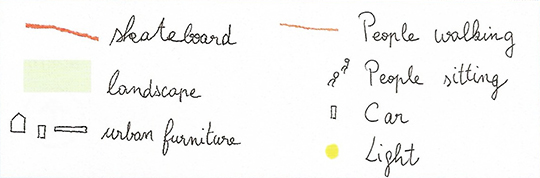
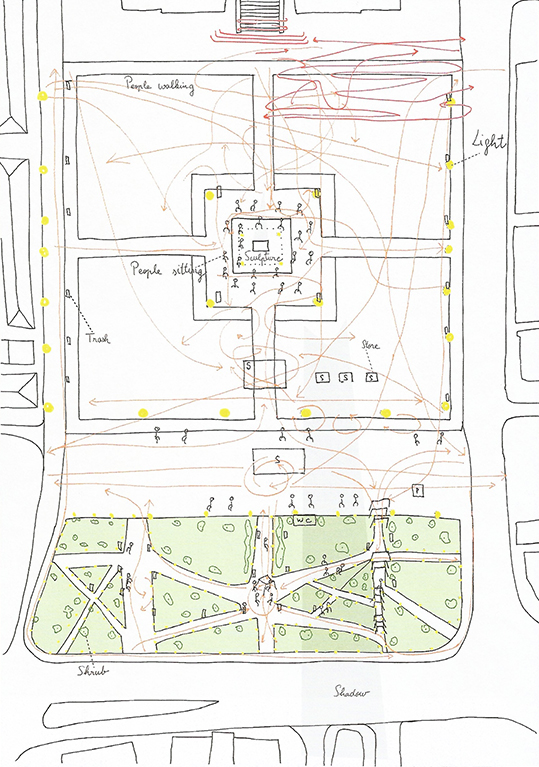
In order to draw “sensible portraits” of the three main places of skateboarding’s appropriation in town, we decided to lay on paper both space and time. By “space,” we mean the cartographic/aerial representation of a terrain—a fascination we had developed from 2009 on, when we flew to Ulaanbaatar compare reality to what Google Maps seemed to clue us to. By “time,” we mean a drawing of paths, usages, fluxes coexisting on the same given spot over one July afternoon in the Mongolian capital.
Lead by a group of students from the MUST architecture school (Ulaanbaatar University), this analysis is a tool that helps understanding what we had vaguely seen, but that we had perhaps failed to look at, so far.
To look at the act of skateboarding, from an architect’s point of view, gives an angled pretext to discuss ground, its resistance, its grit, its potential of minimal friction. It’s a way to corner a specific space of action and analyze, in one sitting, movements, stairs, inclines, curves and formal accidents that all can turn into a potential encounter.
As a fisherman would do, the skateboarder reads his own river, its currents, its shaded patches, feeding off any available hint to achieve his fish-catching goal. Public space is the skateboarder’s river, the lieu de vie where he knows, familiar paths, favorite places.
To pin it all down, we picked three emblematic public spaces used by skateboarders in Ulaanbaatar, drawing their buildings (existing, or under construction), their street furniture (lights, benches, shrubs, trash cans, etc.), as well as the paths taken by vehicles, pedestrians, bicycle users, skateboarders. Revealing differential densities and representing territorial occupations, these drawings ultimately offer an unique look at the unfolding mutation of Mongolia’s capital, a City re-inventing itself through its discoveries, influences and cohabitations.
All of the three places chosen for our study each tell the tale, in their own way, of a City changing so fast that it’s barely recognizable from a stay to the next—even if they are only six months apart. These places also inform us about what’s happening on their grounds, what’s at stake, and what these few pioneers on their wooden boards, by creating their own collective and free playground, have to say about Ulaanbaatar.
Gingiss Square, Ulaanbaatar
GINGGIS SQUARE
Ginggis Square is symbolically and literally the City’s central plaza, the hub for power, festivities, not to forget any folkloric, commercial and political gathering.
Bordered by Peace Avenue and the Parliament, as well as a symbolic garden on its south end, Ginggis Square is Ulaanbaatar’s focal point. Initially named Sükhbaatar Square, it took in 2013 the moniker of the illustrious Mongolian Empire founder, as did dozens of beer companies, vodkas, cigarette brands and real estate complexes.
Covering over 7 hectares, this square hosts, at its center, a gigantic statue of one of the leaders of the 1921 revolution, Damdin Sükhbaatar.
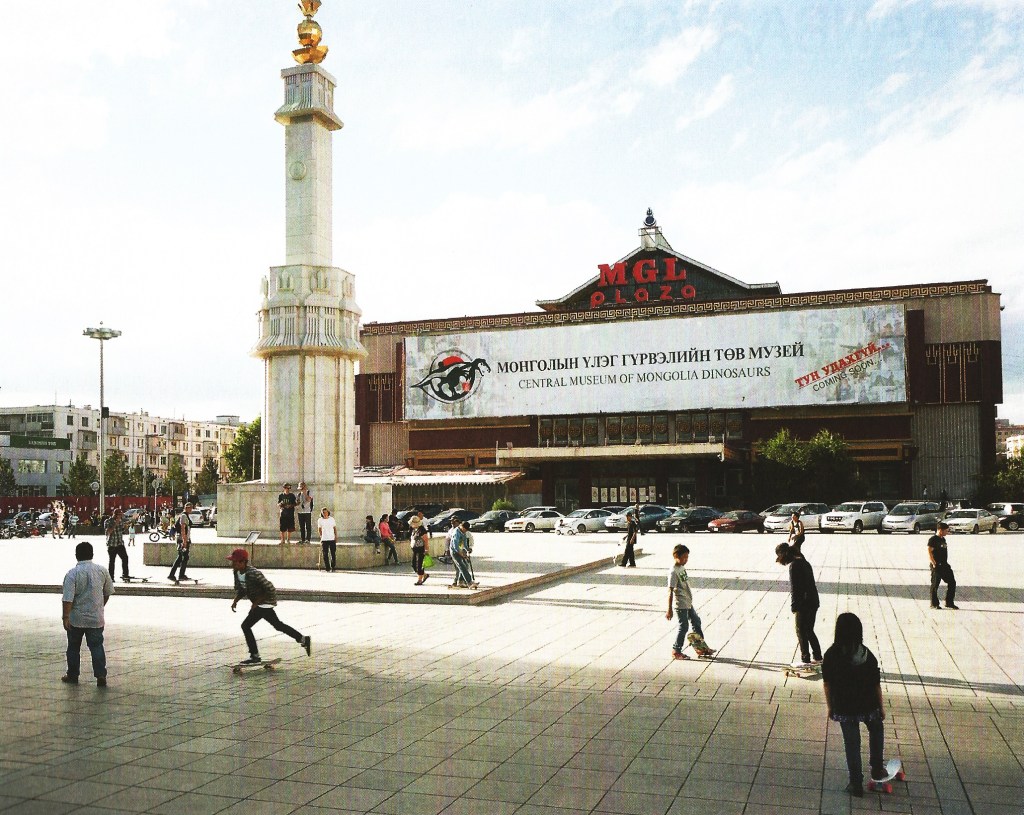
Ginggis Square’ surface is made of smooth stone, with a giant grid drawing the four cardinal points. Skateboarders typically meet on its North-East end, at the bottom of the Parliament. A relatively unpractical gathering point (sitting on the official building’s steps is forbidden, and armed guards make sure to enforce this law), this specific area is favored by skateboarders because of the tiny stone curb it hosts, where one can discreetly sit down on.
The lack of obstacles make Ginggis Square a monotonous space for skateboarders, who limit their movements to East-West oscillations, and use it more as a meeting point than a “spot”. Not a true skateboarding hub per se, it would be comparable to a forest clearing from which skateboarders scope future summits to climb.
The portrait of this space sheds a light on Ulaanbaatar’s strong sense of centrality: forced out of their steppes, nomads gather to a capital that’s growing at an unimaginable speed. In turn, the capital itself converges to Ginggis Square’s central statue— a metpahor of the city as a magnet, of its vertiginous economic growth and its attraction power that keeps creating inequity.
On the fringes of this symbolic black hole, young people gather to ride wooden boards, as the visible emergence of some sort of sense to imagine for the next steps of the Mongolian adventure. “Riding,” here, is the perfect word to synthetize the past and the present of the country: the word is shared by Genghis Khan on his horse, and the local crew’s sessions.
Tengis Cinema, Ulaanbaatar
TENGIS CINEMA
The Tengis Cinema spot lies between Ginggis Square and the hill of Gandan Temple, where Ulaanbaatar was founded. Over the years, this plaza has become the symbol of the post-Soviet mutation of the City.
Besides the Tengis Cinema giving it its name, it is bordered by a building celebrating Stalin (it hosts a giant bust of the Russian leader), currently in the process of becoming a museum dedicated to the T-Rex dinosaur.
A gathering place for families, a meeting point and a place for various festivities and games, Tengis is the quintessential skateboard spot. The plinth of its central statue constitutes the main influence zone of skateboarders, whose circular moves concentrate on the plaza’s upper deck, separated from its lower deck by a six-stair staircase.
As everywhere else in the City nowadays, cars’ presence is undeniable here—a mixture of neo-millionaires’ dark Hummers, 1960s’ Russian UAV vans and Japanese cars with the steering wheel on the right-hand side.
An interesting fact from analyzing Tengis reveals a seasonal appropriation of the space: it changes according to the current weather and the time of the day. For instance, the shadow cast by a 25-fioor building (under construction for a few years) on its West end has modified how the public uses the place: in the Spring and in the Winter, the public escapes it, while seeking it during the hot summer days.
In fine, drawing a shadow amounts to drawing the vertical element that generated it, the same way an arrow symbolizes the axis of a movement, a gesture, a sound. A rapport to time and space that skateboarders jealously treasure as its unbeknownst sentinels.
5th School, Ulaanbaatar
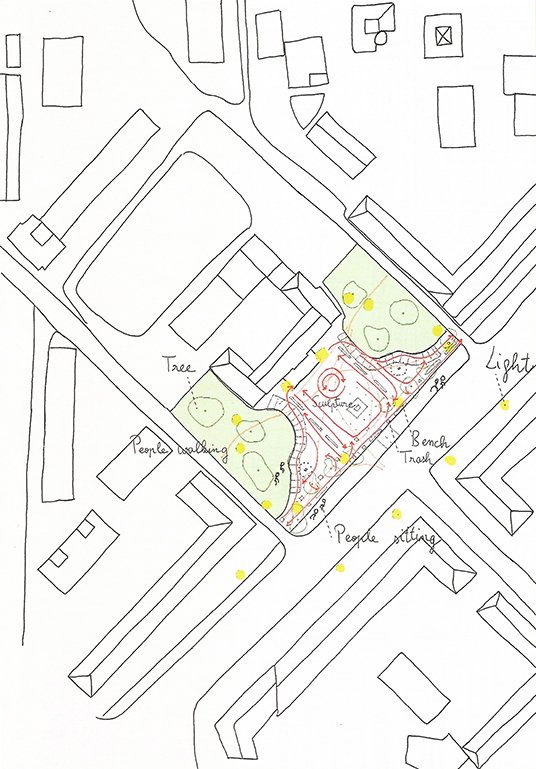
Located at the North end of the circular Maga Toiruu boulevard, 5th School is more confidential of a spot than Tengis Cinema and Ginggis Square. Another specific: unlike both the other places, its public space is largely unused, save for North West-South West crossings. Yet, it still is local skateboarders’ favorite spot, because of the perfection of its smooth stone ground and its recently installed obstacles. Namely, contemporarily designed wooden benches, ending by an incline—the perfect “natural” spot, as exhibited by our drawings.
Another peripheral bench space, shadowed by pergolas, also offers a privileged space for rest and observation. Incidentally, this analysis reveals that a third parameter (besides the ground’s quality and the “urban accident” constituted by the skateboarder), is pivotal to generate -a good skateboard spot’s genetics: the relationship between action and inaction—effort vs. rest.
The distance between these two influence zones seems crucial, as skateboarding also exists because of who is watching it happen. In skateboarding, the actor perpetually becomes the spectator, and vice versa, creating a never-ending ballet where time disappears and even the wait is lived as an intense experience.
Resource: From dirt to dust / Skateboarding the urban revolution in Mongolia, 1980 Editions
Interview by Sergio Franco, Portrait and Photos by Choque Photos
I BECAME ACQUAINTED WITH PIXAÇAO DURING ADOLESCENCE DUE TO THE MANY PIXADORES IN MY NEIGHBORHOOD. I USED TO LIVE ON THE NORTH SIDE OF SAO PAULO, AND WHEN I STARTED GETTING CLOSE TO IT AROUND 2001 AND 2002 THE PIXAÇAO SCENE WAS PARTICULARLY STRONG THERE. I WAS ALWAYS IMPRESSED BY THEIR ORGANIZATION AND THEIR DARING ATTITUDE.
Choque Photos
INTERVIEW BY SERGIO FRANCO PORTRAIT AND PHOTOS BY CHOQUE PHOTOS
Photography came long after that, by about 2006. I first came close to pixação by collecting the folhinhas (“leaflets,” the signatures they exchange among themselves) and ended up owning a whole collection of them. From the moment I got involved with photography I had an instant interest in capturing their actions and began studying this theme, because practically no material existed on the subject. Pixação in São Paulo isn’t new; it has been around for about 30 years but it hasn’t been studied thoroughly so I aim to pioneer material in the field of photography, because no one has ever photographed the pixadores in action. Society knows pixação on the walls, but the act itself, the backstage, no one has knowledge of because access is very restricted. It’s a tittle complicated being accepted among these guys. —Choque Photos
Sergio Franco: What elements do you consider make up pixação? How does pixação differ from graffiti, and what makes pixação different from other forms of intervention in the city?
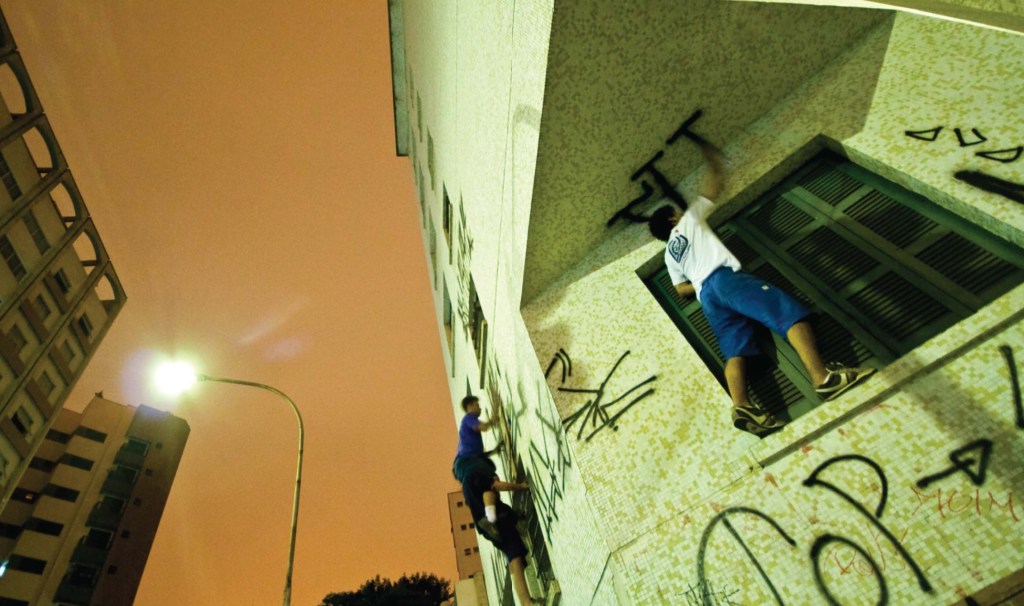
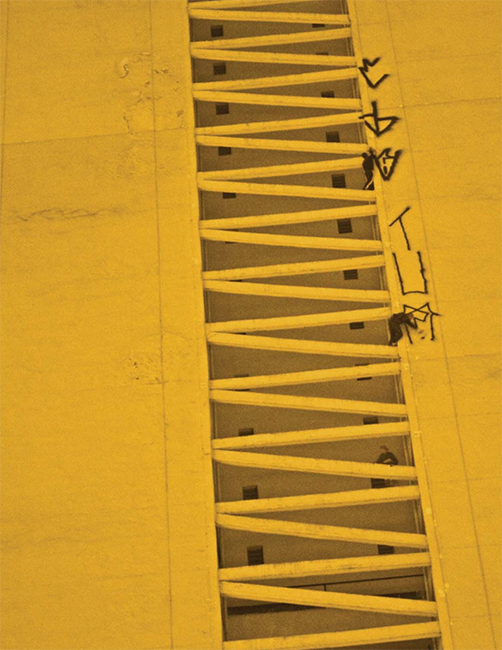
Choque Photos: The aesthetical attitude, which broke away from the New York tag and graffiti sensibilities. São Paulo has created its own modality. For those who live outside São Paulo, it’s known as tag reto, “straight tag.” Pixação has also established a more strict relationship with the city’s architecture; it occupies the verticality of the urban landscape due to the great preponderance of buildings. For that matter, pixação occupies the space a lot more efficiently than any other form of street language. It has veiticalized itself as writing.
What I find impressive in pixacao is that it occupies every abandoned space, and not just the subway and trains as has occurred in NYC. You’re able to find pixação that has been there for 20 years through these abandoned spaces. Thus, they utilize space more efficiently, from the ground to the top. They’ll climb buildings and do the pixos on rappel. São Paulo is a giant calligraphy book: the pixadores will fill it in so nothing will be left blank. I believe that the spaces left blank in the city awaken in the pixadores the same feeling as a blank canvas to an artist. When the pixadores see these spaces, they’ll project in their minds how that place will look with their imprint on it.
Choque Photos, juxtapoz mag. 2009-07 pg.97
Choque Photos, juxtapoz mag. 2009-07 pg.98, 99
How is this search done for taking over the entire city with pixo interventions? What are the principles that move it? How do the pixadores mobilize themselves so that they will have an amplified circulation throughout the city?
There are three basic things that lead the guys to pixação; first is the social recognition; second is the entertainment and adrenaline; and third is the protest.
The vast majority of the kids are from the periphery and what are their options for entertainment where they come from? A small soccer field, a bar in every corner, and a crack house. Those guys don’t have a lot of options; there isn’t a public policy of recreation aimed at this public. For this reason, pixação became a way of recreation for the periphery, or the outsiders; it’s the greatest option for these kids. Relating this to social knowledge, I would say that these guys, in their majority, have problems with their families. Parents are absent from their upbringing so they look for a second family in the streets. They refer to their pixo group as family. Since the guys don’t have recognition at home, they look for it in the street, and it’s the alternative they find.
But such social acknowledgement is internal, because they are the only ones that understand the letters; the writings are so sophisticated that they are the only ones who can read them. To society it’s an indirect recognition, once it sees pixo as an aesthetic aggression against their bourgeoisie standards of beauty. They say that through their actions the bourgeoisie won’t be able to have the spotless white buildings as they wish. The guys are questioning the concept of private property with the act of pixação; they take the space symbolically, then. They are symbolically appropriating when they paint on the top of the building, making the building their own space.
Choque Photos, juxtapoz mag. 2009-07 pg.100
But what is the degree of protest in the manifestation?
It’s an indirect protest, not as it occurred during the dictatorship years. The pixação works as a symptom of a much larger social problem in São Paulo. It isn’t meant to be read or understood directly. It’s an aggression, not a form of communication for the society.
Pixação is a closed community and form of communication for the members of the manifestation, but it pops in the city as if it were a disease. When the guys are doing the pixo, destroying the city, they are digging out the insides of the city, all of its pressure cooker problems: drug traffic, criminality—everything helps create pixação. Each year the letters become more and more aggressive. From the beginnings of Pixação to today the letters became more illegible. There are letters that even the pixadores can’t read.
What’s your relationship with the people held responsible for the attacks to the University of Fine Arts, the Choque Cultural Gallery, and the Biennial of São Paulo?
I learned about it only a few hours beforehand; I don’t participate in the debates or confabulations to elaborate such attacks. I want to stand as an observer without interfering with their decisions, registering what I find relevant.
The matter of the Biennial is delicate because when the rumors about the attack were passed, Ana Paula Cohen, the curator, made a very polemical declaration, which was, “Those people from the periphery don’t know what they’ll find here.” Therefore it was seen as a comment charged with prejudice; it provoked the pixadores. Actually, the Biennial wanted the event to be occupied under the theme “in live contact” since they were searching for a public intervention and participation. But when the pixação came about—seen as the number one public enemy of this city—the Biennial couldn’t not react. If they let pixação be part of the Biennial they would be legitimizing the manifestation as art. But society isn’t prepared to receive pixação as legitimate art.
Choque Photos, juxtapoz mag. 2009-07 pg.102,103
Do you see the relevance of your work as construction of knowledge?
To speak of pixo as something unique is one of the key factors making pixação so interesting. It’s a marginalized form of urban language. Historically, it came out of people who didn’t possess a vast repertoire of knowledge.
The pressure cooker has exploded, and it’s the marginalized screaming, making themselves present in the entire city. You won’t see a single street of São Paulo that doesn’t have any pixação. It’s the entire city, and a city the size of a country; it’s 20 million people. It’s their city, but society hasn’t taken that into account yet. The pixadores already do the walls, roofs, and windows of the buildings; next thing you know they will be having breakfast with the property owners. Sometimes they will invade the apartments, do pixos everywhere and not steal a thing, only terrorize the psychology of the bourgeoisie.
PIXO: a film by João Wainer and Roberto T. Oliveira
THERE’S NO USE PUTTING A WALL UP;
THEY’LL DO AS THE RATS AND ENTER THROUGH THE CRACKS.
Knowing the procedures for subverting security systems in a society is valuable, isn’t it?
Certainly. The guys see each action as military tactic. They study, plan, and go for the action. It’s a matter of subverting the entire security system. In pixação, as in graffiti, it’s a matter of vandalism. They face it as a military mission because there’s a life at risk in the action. You have a goal and you may die on the way. Many guys have died. A kid falls and dies every month. I even stopped accompanying them.
Here in São Paulo, who reports this?
Last year I learned about five guys falling and dying. Many guys fall and no one even knows about it. Several have died, many permanently injured. I’m sure that each month one will fall. I’ve seen some data from the mayor’s office stating there are five thousand active pixadores in the city. Five thousand young people is a whole generation that’s abandoned on the streets. The guys are screaming out their existence every moment. They climb on top of buildings and no one gives them attention. It will come to a point where they will no longer be able to remain ignored.
Choque Photos, juxtapoz mag. 2009-07 pg.104,105
What does this knowledge of the procedures for subverting security systems show? What’s its utility?
It shows that everything is fragile. It reveals how we live under a false sense of security inside luxury condos. People pay exorbitant sums of money so they will have security guards, vigilance cameras, and sophisticated locks. Along comes a kid, a bum, madness, and that kid can subvert everything with a screwdriver. Even if you try to stay behind the wall, they know how to break it. You aren’t completely safe in a city like São Paulo. So long as there are absurd social contrasts there will be no way of remaining safe. There’s no use putting a wall up; they’ll do as the rats and enter through the cracks.
When we discuss the graphic composition of pixação, we find plenty of sophistication. The runes are the fruit of the first European alphabet; it’s very old calligraphy, probably over 12,000 years old. What’s interesting is that something so ancient came to surface in São Paulo, within a marginalized culture of people who didn’t possess any access to quality education that would offer such a reference. Society sees it as scribble, but it’s actually something quite sophisticated. And each pixação is unique. When the guys create their letters they seek originality, and still go head to head with other outdoor advertisements and graffiti, thus having to create something dramatically different. They need to stand out on the walls.
What have you got to say about graffiti photography today?
It’s much more like an aesthetical jerk off, which doesn’t contextualize with the city; it’s just a reproduction of the work. But there are photographers who stand out in the middle of it. The work of Martha Cooper and Henry Chalfant in the 1980s is also good, and they held the role of dispersing graffiti around the world. The history of any expression only reaches the world after it has official documentation.
Pixação in São Paulo grew independently and without any external reference because they didn’t have access to such material. There was no Internet, books didn’t arrive, and the films didn’t arrive, either. That’s why it grew apart from NYC. Only rock bands’ logos arrived. São Paulo has developed itself as if it were an island.
In Francois Chastenet’s book, Pixação: São Paulo Signature, I read that pixação is a translation from the word “tag” in Portuguese. But it isn’t. It’s a movement that’s grown apart from all this. The term is Brazilian. And it’s the latest trend in the art world.
Choque Photos, juxtapoz mag. 2009-07 pg.106
My essay about the action of pixo took me two years. It was two years in the street, overnighting and being in several critical situations, risking my life, running from bullets, and all the mishaps faced by pixadores. There were nights I couldn’t imagine coming back home.
Street art is the division in art history, because for the first time an entire generation of adolescents who have been forgotten and treated as outsiders have appropriated the city illegally to realize their work. On a global scale this has never happened before. The importance of pixação to São Paulo is equal to the importance of graffiti in NYC, and in my opinion, a much larger and more important phenomenon than anyone has yet to witness.
For more information about Choque Photos, contact Flickr.com/choquephotos.
Hätte Marc Caro im 19. Jahrhundert gelebt, er wäre ein bombenwerfender russischer Nihilist geworden. Erfreulicherweise ist Marc Caro ein zeitgenössischer französischer Comiczeichner, wobei wir die Gegenwart aus gegebenem Anlaß 1976 beginnen lassen. Was sich 1976 andernorts in der Rockszene manifestierte, veränderte in Frankreich das Aussehen der Comickunst nachhaltig.
1975 gründeten Olivia Clavel, Christian Chapiron, Loulou Picasso, Lulu Larsen und Bernard Vidal — größtenteils ehemalige Studenten der Kunstakademie — die Gruppe Bazooka. In einer Mischung aus teilweise gewolltem Dilettantismus und hochgradiger Perfektion zertrümmert Bazooka voll anarchistischer Freude die Selbstverständlichkeiten des klassischen Comic. Ihren ausgeprägten Gefallen am Schockierenden, Abseitigen teilen sie mit vielen der gleichzeitig oder nach ihnen erscheinenden Comicschaffenden, die neben nervöser Grafik auch Fotos verwenden (Polizistenfotos, Leichenfotos, etc.).
“(Diese Richtung) ist gekennzeichnet durch einen schmutzigen, rohen, unfertigen Strich und durch die gewollte Obszönität einer morbiden und/oder sexuellen Thematik.” Aus der nachfolgenden Generation seien genannt: Matt Kon-ture, der gelegentlich an den frühen Caro erinnert, La Casinie-re, Mokeit, J.C. Menu, der auch das hervorragende LE LYNX (nach 7 Nummern leider eingegangen) herausgegeben hat, Jocelin, der vor allem im eigenen AMTRAMDRAM seine kubo-expressionistischen Bilderserien abdruckt. Hingewiesen sei noch auf SEDUCTION, hervorragende Fanzine-Zeitschrift, die in Troyes herauskommt. Hier, wie in den zahllosen Graphzines und 30-Exemplare-Produkten trifft man immer wieder auch Bruno Richard, Placid, Muzo, Marc Caro, gelegentlich auch Gotting und Loustal. Viele der Genannten arbeiten zugleich auch in der Malerei, in der Musik (was man halt so nennt) und im Trickfilm.
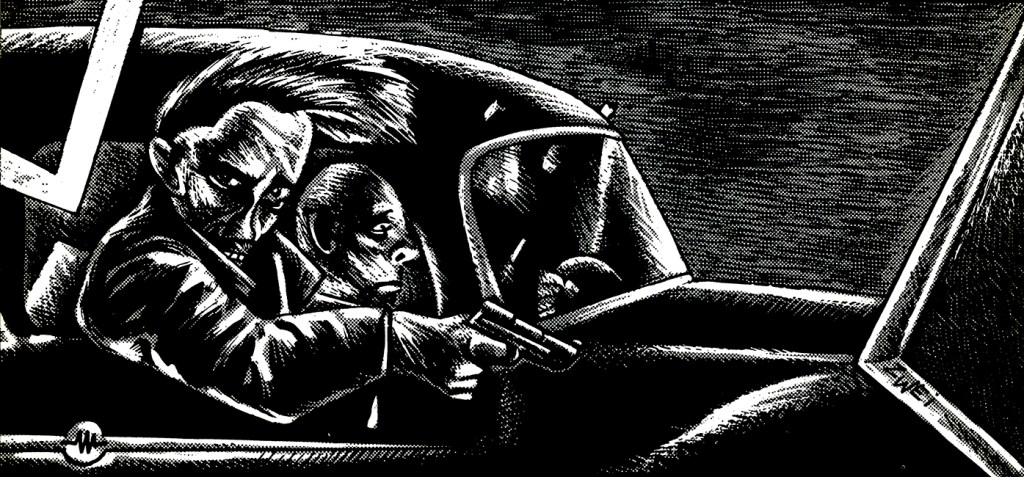
Nach ersten Veröffentlichungen in Fanzines kam Marc Caro 1976 aus Avignon nach Paris und begann recht bald, einzelne Arbeiten und kurze Comics (eine Geschichte von Caro ist lang, wenn sie 4 bis 6 Seiten umfaßt) in Comiczeitschriften zu veröffentlichen. 1981 erschien TOT, eine Sammlung bis dahin veröffentlichter Comics. Mit Jean-Pierre Jeunet, für dessen Animationsfilme er bereits früher Trickfiguren gebaut hatte, drehte er 1981 den Kurzfilm Le Bunker de la derniere rafale. Er beginnt, die Möglichkeiten der Computergrafik zu benutzen, interessiert sich für das Video. Er produzierte Musikvideos für Jean-Michel Jarre (Trickfiguren für Zoolook) und die erfolgreiche, aber nicht weiter bemerkenswerte Popgruppe Indochine (Les Tsars). 1987 erschien mit IN VITRO eine Sammlung seiner späteren, holzschnittartigen Comics. Heute zeichnet er fast gar nicht mehr, produziert gelegentlich Musikvideos. Die frühen Sachen, in Fanzines wie FALATOFF, Keimzelle des Kleinverlags Artefact, und ab 1976 auch in Metal Hurlant, Charlie, BD-Hebdo erschienen, erzählen von Selbstverstümmlern, Elektroschock-Rollkommandos, Kannibalismus im Bunker, von Rockmusikern, welche sich auf der Bühne Gliedmaßen abschneiden. Es ist bereits die Zeit der Indu-strial-Tendenz, mit der Caro die Faszination für Gewaltsysteme, das Verstümmeln und sonstige Pathologien teilt.
Marc Caro and Jean-Pierre Jeunet “Bunker of the Last Gunshots” (1981)
Marc Caro sagt, seine früheren Sachen seien realistischer. Die Bildflächen sind mit verschiedenartigen Schraffuren und darüber hinaus mit dunkleren oder helleren Rastern fast vollständig bedeckt.
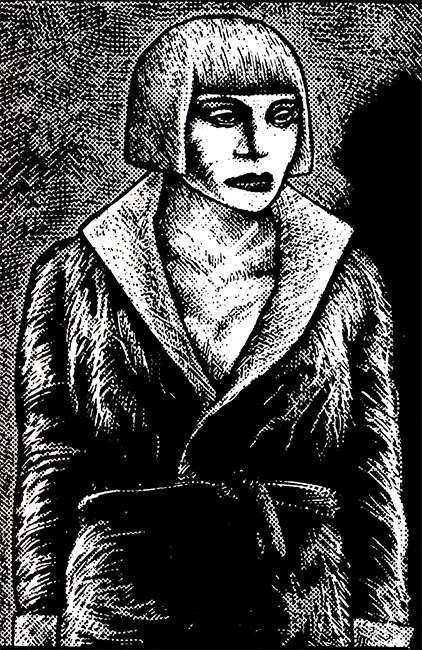
Die menschlichen Figuren sehen ungefähr menschlich aus, meist etwas deformiert. Etwa an George Grosz erinnernd, nur mit den Mitteln der realistischen Illusion dargestellt, die Zeichnung ist körperlicher. Ich kenne 27 Geschichten von Marc Caro, nur in dreien sind Sprechblasen mit erzähltechnischer Bedeutung, in den übrigen gibt es einen Text über dem Bild. Man dächte, daß der Text unter solchen Bedingungen eine doppelt große Erzähllast tragen muß, in der Tat erzählt uns der Text aber oft etwas anderes als das Bild. In TOT ist eine Geschichte, worin der Text die Briefe eines US-Soldaten aus Vietnam an seine ‘liebe Louisa” wiedergibt, er berichtet von der zweifelhaften Kampfmoral seines Mitsoldaten. Die Bilder sagen, daß er “verrückt” wird und vietnamesiche Leichen schändet. Vielleicht ist dies auch eine der “anthropologischen” Geschichten, die Caro im Gespräch meint.
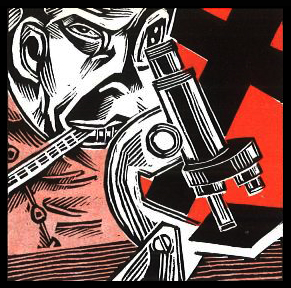
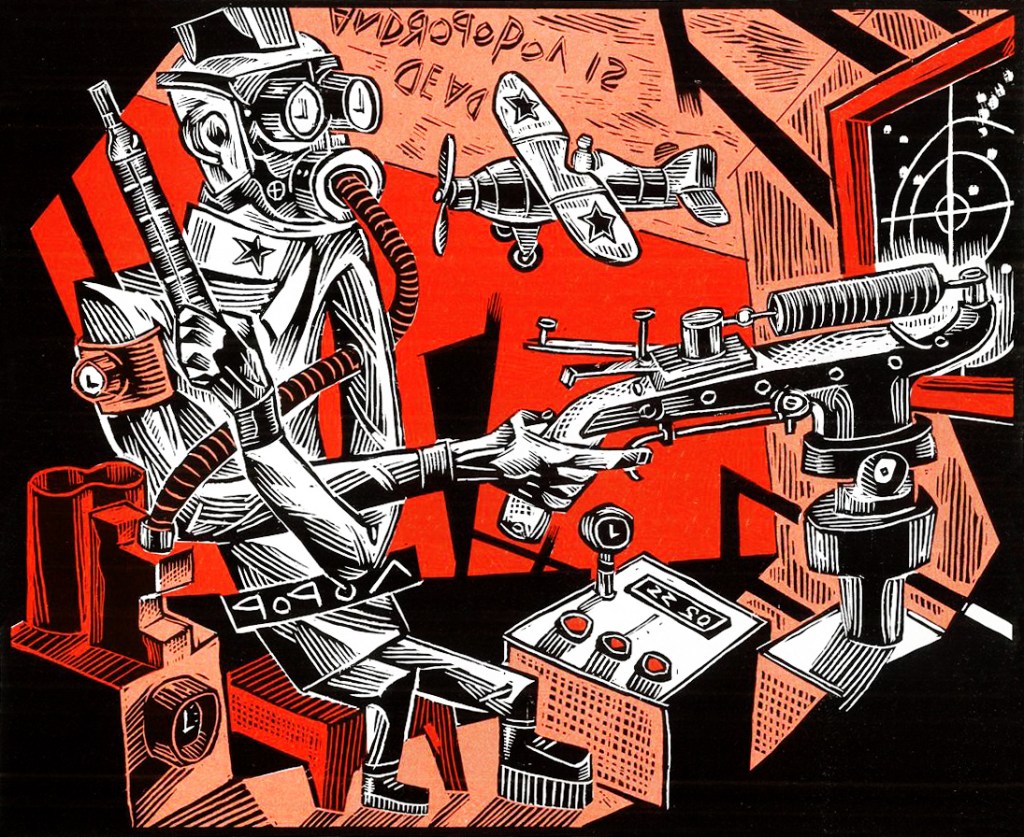
Die späteren Comicgeschichten, gesammelt in IN VITRO, verwenden häufig den Holz- oder Linolschnitt. Ein Übergang, der gröbere, eckige Linien, aber auch eine größere Klarheit des Bildes bringt. Diese Geschichten sind vierfar big, gelegentlich sogar ziemlich bunt, und vom Inhalt auch fröhlicher: eine Sommer-Sonnen-Strand-Geschichte mit lustigen (der junge Mann klebt sich Toastbrot auf die Ohren um der jungen Frau zu gefallen) und kaf-kaesken Elementen (2 Meter große Fliege).
In diesen späteren Geschichten wird fast ausschließlich die Halbtotale benutzt, die filmischen Mittel der Bilddramaturgie nur wenig verwendet. Die Geschichten sind daher weniger eindringlich, weniger “realistisch”. In den früheren Geschichten gibt es oft den acteur-narra-teur- einen, der erzählt oder sonstwie den Text liefert und zugleich die Hauptfigur ist. Diese Figur besitzt selten ein entwickeltes Innenleben, dafür sind die Geschichten auch zu kurz. Oft ist die Hauptfigur, am Ende der Handlung tot, denn er kann so ja eigentlich nicht mehr die Geschichte erzählen.
Ich glaube, es wäre falsch, das Schockierende in den Geschichten Caros übermäßig zu betonen. Er betreibt kein epater le bourgois, seine “Geschmak-klosigkeiten” sind nicht dazu da, moralisch empfindenden Menschen Alp-träu- me zu bereiten. Auch geben seine Geschichten, trotz düsterer Bunkerwelten, nur wenig zu einer emphatischen Apokalyp-sensentimentaliät her. Es ist geschrieben worden, Marc Caro betreibe Schwarzen Humor. Vermutlich sind seine Comics humoristisch, schwarz sind sie sicher. Das Interview mit Marc Caro fand am 8. Mai 1989 in Paris statt, wir danken Thierry Groensteen für eine freundliche Hilfeleistung.
Heinrich Raatschen
JP Dionnet interviews Eberoni, Max, Caro and Placid & Muzo
Wann hast du angefangen zu zeichen?
Als Junge, aber angefangen… ich mag das Wort Professioneller nicht, aber angefangen, in Zeitungen zu publizieren, 1976, 1977. Kleine Arbeiten, Zeichnungen…
Für die Zeit fällt mir als erstes Bazooka ein…
Das waren schon ein wenig die Vorreiter, aber eigentlich gab es eine ganze Bewegung, eine ganze neue Generation von Zeichnern. Neben Bazooka gab es “Elles sont de sortie”, mit denen ich mehr zu tun hatte… Das war eine ganze Strömung, die ein wenig vom Punk [sprich: pönk] herkam. Es gab viele neue Leute, die in der Zeit herausgekommen sind.
Am Anfang eines Comic, steht da ein Bild, oder gibt es erst die Geschichte, den Text?
Nun, zuerst gab es diese kleinen Texte, die ich geschrieben und dann illustriert habe. Die Geschichte mit Zeichnungen erzählen. Wie kann man eine Geschichte mit möglichst wenig Bildern erzählen. Für die späteren Geschichten in IN VITRO ist es die Geschichte, die dominiert. Die Bilder sind wichtig, und die Geschichte ist auch wichtig, es sind ja keine Gemälde.
Du gebrauchst, wie z.B. im chinesischen Comic, fast nie Sprechblasen.
Nein, ich habe nie Sprechblasen verwendet. Der Text ist immer oben drüber. Man kann das vergleichen mit dem, was im Film die Off-Stimme ist, so eine Erzählweise… Da sind diese kurzen Texte, Textfragmente und dann, tad, ein Schnappschuß. Was mich interessiert, ist so eine kleine Verschiebung, eine Differenz zwischen dem Bild und dem Text. Die ist aber nicht unbedingt absichtlich hergestellt. Ich mag es, wenn das Bild etwas unbestimmt ist, damit ich hineinlegen kann, was ich Lust habe, darin zu sehen. Was ich den Leuten gebe, was die Leute sehen, wenn sie meine
Sachen anschauen, weiss ich nicht genau. Aber Comics, das ist für mich eigentlich ziemlich alt, das ist eine abgeschlossene Periode. Den größten Teil der Comics aus der Zeit habe ich irgendwann zerrissen, die gibt es nicht mehr.
Das war wichtig für die Zeit damals, aber heute interessieren mich andere Sachen. Wieviel hast du publiziert?
So viele Comics habe ich gar nicht gemacht, und fast alle sind in den beiden Alben. Da fehlen vielleicht 4,5 Geschichten die nirgendwo veröffentlicht worden sind. Ich habe viele Zeichnungen gemacht, kleine Illustrationen, aber nie eine 60-Seiten Geschichte.
War es für dich einfach, deine Sachen in Zeitschriften unterzubringen?
Ich glaube, im Comic ist das ziemlich einfach. Na ja, jetzt gibt es nicht mehr soviele Zeitschriften, wie vor 5,6 Jahren… Ich hatte Glück, eines Tages bin ich zu Metal gegangen und habe ihnen Zeichnungen gezeigt. Sie mochten es, dann wollten sie noch eine haben und später auch Comics-Geschichten.
Hast du auf Bestellung gearbeitet ?
Ja, sicher. Für die Sondernummern. Das meiste in TOT war für METAL Special Rock, METAL Special Guerre, METALSpecial Irgendwas. Ich mußte die dann, innerhalb eines Monats abliefern. Das hat mich ganz schön ins Schwitzen gebracht. Ich bin ein ziemlicher Faulenzer, eigentlich, he he…Nachdem Metal 36000 Mal den Besitzer gewechselt hatte, habe ich das irgendwann fallen lassen, weil ich mich mehr zum Video etc. oriehtiert habe. Die Zeitschriften sind normaler geworden, das ist wirklich eine Rückkehr zum alten Comic.
Diese Katholiken, die jetzt all die Comicverlage aufkaufen, findest du das beunruhigend?
Ach, das möchte ich so nicht sagen: Seit ich angefangen habe, selbst zu zeichnen, hat mich das alles nicht mehr so interessiert. Ich weiß nicht…
Hast du viel in Fanzines veröffentlicht?
Nein, nein, ich habe überall veröffentlicht. Ich finde es gut, in Sachen wie Telerama zu arbeiten, Marie-Claire sogar, jetzt erscheine ich gerade in einem deutschen Blatt [Boxer no. 1 ], in Italien (FRIGIDAIRE)… Da erreiche ich ganz verschiedene Leute. Wenn du immer in den selben Graphzines erscheinst, dann erreichst du immer nur die selben Leute. Ich zeige das lieber Leuten, die darauf nicht gefaßt sind, die das noch nicht kennen.
Dann denkst du also an das Publikum?
Wenn ich an etwas arbeite, geht es mir nicht um das Publikum, sondern mehr um mich, daß ich sagen kann: Ah, da ist mir etwas gelungen, das mir gut gefällt, wofür ich mich nicht schämen muß.
Hinterher mögen es die Leute oder sie mögen es nicht, es erscheint oder es erscheint nicht. Findest du, daß man sich beim Comicmachen Beschränkungen auferlegen muss, weil man ja z. B. verständlich bleiben will?
Ich versuche natürlich, den Zusammenhang zu wahren. Aber man kann nicht unbedingt sagen, daß die Geschichten tatsächlich immer ganz verständlich sind, hebe… Das sind keine Schulaufsätze. Diese ganzen späteren Sachen in IN VITRO, das sind für mich eher so eine Art Aphorismen, so kleine Blödheiten. Viele kleine Bilder, und am Ende steht eine kleine Moral von der Geschichte.
Die früheren Geschichten sind da, glaube ich, anders. Die sind meist ziemlich grausam und bizarr…
Sicher, ich zeige ekelhafte Sachen, ich muß den Leuten aber nicht sagen: Schaut, wenn man dies oder das tut, das ist böse. Das ist mehr ein Art Anthropologie… Ich sage: Seht her, das existiert. Es gibt nichts in TOT, was es nicht wirklich gäbe. Gut, es ist ein wenig wahnhaft und phantastisch, es ist nicht dokumentarisch. Aber das alles gibt es ja, es ist nur in den Vordergrund gestellt. Trotzdem, glaube ich, gibt es da keine Faszination für das Morbide. Ich sage ja nicht: Schaut mal, wie lustig! Schaut, die schneiden sich in Stücke, wie lustig! Und nun gut, die netten kleinen Geschichten, wo alle glücklich und zufrieden sind, ich meine, ich habe nichts dagegen, daß es das auch gibt.Den Vorwurf, den man mir vielleicht machen kann, ist, daß das ein wenig pessimistisch ist. Das ist keine sehr angenehme Beurteilung des menschlichen Wesens.
Machst du noch Musik?
Nein, ich mache keine mehr, nicht in der Gruppe. Was mich eigentlich interessiert, ist nicht die Musik allein, sondern eher eine Verbindung. Im Comic ist es eine Verbindung von Text und Bild, im Video ist es eine Verbindung der Wörter, des Textes mit dem Ton und dem Bild. Immer so eine Art Ganzes. Du mußt etwas herstellen, wo man weder die Musik, noch die Wörter, noch das Bild entfernen kann.
Glaubst du, du wirst irgendwann wieder Comics zeichnen?
Es interessiert mich, Sachen zu machen, die ich noch nicht gemacht habe. Eine Serigraphie? okay. Eine Serigraphie in Plexiglas mit einem Wecker drin? Oh ja, das wäre lustig. Oder ein Flaschenetikett für die Leute von Papiers Gras? Ist okay, obwohl ich eigentlich keinen Wein mag.
Ein Medium, eine Technik, die mir noch nicht vertraut sind, das interessiert mich. Auch als ich noch Comics gemacht habe, hat mich Animation schon sehr interessiert, ich habe Trickfiguren für Kurzfilme gebaut… Es ist eher so: Du schaust dich um, findest gute Ideen. Ob das Zeichnungen sind, oder etwas Filmisches… Für mich ist es ungefähr das gleiche, ob ich einen Film mache oder einen Comic. Aber beim Comiczeichnen fehlte mir immer etwas. Du sitzt da ein wenig allein in deiner Ecke, es fehlen die Eindrücke, die Bewegung. Beim Video bist du ausgefüllter, du mußt ein Story-board machen, du mußt zeichnen… Es gibt da viele unterschiedliche Aufgaben, das gefällt mir. Ich arbeite auch gerne mit Leuten zusammen. Und außerdem, mit Papier als Träger, wen erreichst du… Wenn du eine kleine Videosache machst, erreichst du 10 mal mehr Leute, als wenn du ein Album machst, das gut läuft.
Weißt du, wieviel Exemplare von deinen Alben gedruckt und verkauft wurden?
Gedruckt, weiß ich, aber verkauft, das war immer etwas matt, hebe… Also ich glaube, jedes Album ist in ungefähr 5 000 Exemplaren gedruckt worden. Das ist nicht viel. Es verkauft sich nicht besonders gut. Ich glaube, eine Zeitlang wurde ein Exemplar im Monat verkauft. Ah nein, eins pro Tag, immerhin, eins pro Tag, hebe… Das ist trotzdem nicht gerade viel. Aber, wenn es noch in 50 Jahren verkauft wird – das wäre doch nicht schlecht?
Strapazin No. 1, June 1984, Art work by Pierre Thomé
Strapazin is in Munich founded and today in Zurich sedentary comic – magazine . The quarterly magazine offers a platform primarily to independent artists.
In 1984, employees of the city newspaper Blatt founded the Strapazin in Munich. According to co-founders Herbert Meiler and Pierre Thomé, one of the role models was Art Spiegelman’s magazine RAW. Strapazin was “intended as a podium in a comics scene from the start”. The first number with contributions from, among others, Poussin , Muñoz – Sampayo and Ralf König appeared at the first comic parlor in Erlangen and was subtitled “Magazine for Durable”. After that there was nobody in Munich who could guarantee regular publication of the magazine, which is why the Swiss comic publisher and aficionado David Basler began to publish Strapazin from Zurich. In Zurich, illustrators from the so-called “Zurich School” such as Thomas Ott , Ursula Fürst, Andrea Caprez and Peter Bäder were associated with the magazine. From the 1990s onwards, many artists from the former GDR were there in Germany.
In 2010 the 100th edition appeared, with contributions from Chinese comic artists. At the same time, the Chinese publisher Special Comix published a strapazin special with contributions from many well-known Swiss illustrators and a cover photo by Kati Rickenbach . In the same year, according to David Basler, “almost half of the audience […] was female.”
In 2018, the City of Zurich awarded the Strapazin a cultural award in the field of literature : “Founded in 1984 by Swiss and German publishers, it has since had the wonderful variety of picture-narrative formats in large, lush, colorful, wild, and sometimes explosive formats demonstrated and pioneered the establishment of the ‘comic’ as the ‘ninth art’. “
In 2019 the Strapazin celebrated its 35th anniversary with the June issue. The edition is 2000 copies (also as of 2019). The offices in Zurich and Munich still exist today.
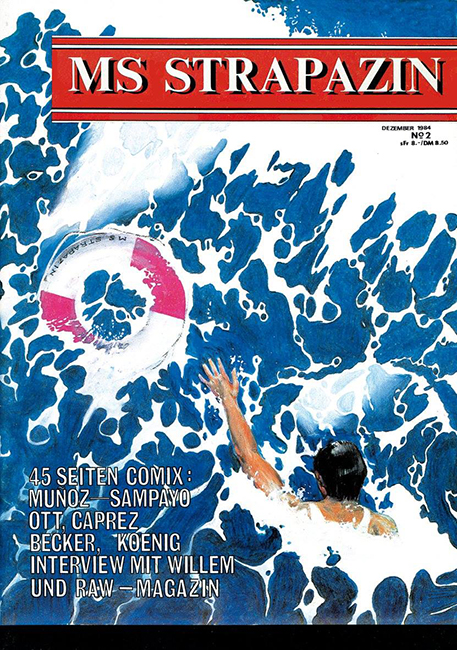
Strapazin No. 2, September 1984
The Strapazin prints comics by, in some cases, little-known and often avant-garde comic artists. The aesthetics of the Strapazin comics are shaped by punk and Dadaism, among other things, the draftsmen have often studied at art schools. Ralf König , ATAK and Thomas Ott published here before their breakthrough.
From number 37 ( L’ASSOCIATION ) onwards, the editions were increasingly, later continuously, under a certain topic appearing in the title with a geographical allocation (e.g. Scandinavian comic world , comics from Tel Aviv ) or a common content (e.g. instructions for use , Comics without protagonists ). A number can also be dedicated to outstanding illustrators such as George Herriman (2002). Every time there are “interesting texts on the meta level” for the comics.
LA SCIENCE-FICTION RUSSE N’A PAS TOUJOURS ETE CHIANTE. AU DEPART, MEME, ELLE ETAIT REVOLUTIONNAIRE, REVOLTANTE ET INCROYABLEMENT FOLLE… C’EST CE QUE L’ON DECOUVRE AVEC LE LIVRE D’OR DE LA SCIENCE-FICTION SOVIETIQUE, EN PRESSE-POCKET.
DANS CETTE ANTHOLOGIE DE LEONID HELLER, IL Y A SURTOUT MOT SOUS PRESSE D’ALEXEI GASTEV QUI NOUS RACONTE EN VRAI REVOLUTIONNAIRE COMMENT ON PEUT FAIRE DE LA BEAUTE EN EMBRASANT DES VILLES. CARO, CE VIEUX FUTURISTES IMAGE LE TOUT. JOE STALINE
P.S. : HIER SOIR, A LA TELEVISION, SERGE GAINSBOURG PARLAIT DE LA RUSSIE ET IL NE DISAIT PAS QUE DES CONNERIES. APPELE A COMMENTER LE REPORTAGE HABITUEL SUR : «DIEU QUE LES RUSSES SONT BETES ET DIEU COMME ILS MANQUENT DE LIBERTE », IL RE-PONDiT QUE NOUS AVIONS ETE AUSSI GRANDS QUE LES RUSSES AU TEMPS DE NAPOLEON MAIS QUE MAINTENANT NOUS RESSEMBLIONS A UN ROQUET QUI MORD LES CHEVILLES D’UN GRAND ETAT IMPERIALISTE QUI PENSE A SES ENFANTS ET A L’AN 2000. DONT ACTE.
Marc Caro, dans Metal Hurlant n°98
Mode d’ emploi
« La liasse des ordres » doit se lire en extraits d’égale longueur comme si on en alimentait un appareil.
Faire cette lecture sans manifester la moindre expression ni le moindre sentiment, sans hausser ni baisser le ton, de manière pseudo-classique ou pathétique. Mots et phrases doivent se succéder à un rythme égal.
Acte pesant, la « liasse » doit se présenter à l’auditeur comme le livret des événements matériels.
L’ordre 05 pourra être lu par un second récitant, parallèlement aux autres ordres ; ses phrases, entrecoupées de longues pauses, couvriront le temps de lecture des ordres 01 à 09.
L’ordre 10 sera lu en guise de conclusion par le premier récitant.
L’Auteur
LIASSES D’ORDRES
ordre 01
Quarante mille, sur un rang ! Repos. Les yeux fixés sur le manomètre : souder. Regards fixes alignés. Vérification de la ligne : salve. Tir le long de la ligne. Obus à dix millimètres des fronts. Trente fronts effleurés : au rebut. Régiment A à l’Est. Colonne 10 à l’Ouest. Vingt-neuf mille : sur place.
ordre 02
Chronomètres en marche Aux métiers ! Debout. Pause. Attention maxima. Présentation. Branchement. Automoteur. Stop. Trente secondes de pause. Commutateur. Opération B. Procédé deux, procédé quatre. Six. Série 20, au travail.
Marc Caro, dans Metal Hurlant n°98
ordre 03
Médecins, auprès des rangs. Augmenter la température. L’élever de neuf dixièmes. A la première dizaine Petite pause. Augmenter à cent. Grande pause. A mille E. Aux métiers, aux truelles, aux microscopes ! Augmenter encore. A cinq dizièmes. Au million C. A trente villes. A vingt gouvernements. Agit-canonnade. Attaque-travail-extra.
ordre 04
Immeubles-prismes. Liasse de vingt appartements. Mise sous presse. Écraser en parallélogrammes. Serrer de trente degrés. Roues et vis. Quartier-tank. Mouvement en diagonale. Couper les rues sans dévier. Mille calories supplémentaires aux ouvriers.
Marc Caro, dans Metal Hurlant n°98
ordre 05
Office des morts dans le cimetière des planètes. Clameur dans les catacombes des mondes. Par millions, dans les trappes du futur. Par milliards, renforcez vos armes. Bagne de l’esprit. Cœur dans les fers. Ingénieurisez les bourgeois. Enfoncez la géométrie dans leurs crânes. Les logarithmes dans leurs gestes. Gâtez leur romantisme. Des tonnes de mécontentement. Normalisation des mots d’un pôle â l’autre. Phrases selon le système décimal. Salle des machines des discours. Détruisez la littérature. Gutturalisez les tunnels. Contraignez-les à parler. Ciel peint en rouge pour créer l’excitation. Roues dentelées : vitesse supérieure. Cerveau-machine : changement. Œil-caméra : mise au point. Nerfs-électricité : travail. Artères-pompes : pompez.
ordre 06
Asie : entièrement en ré. Amérique : un accord au-dessus. Afrique : en si bémol. Radio-maître-de-chapelle. Violoncelle-cyclone en solo. Sur quarante tours : archet en mouvement. Orchestre le long de l’Equateur. Symphonie le long du septième parallèle. Chœurs le long du sixième méridien. Cordes électroniques au centre de la terre. Maintenir le globe terrestre dans la musique pendant les quatre saisons. Quatre mois de jeu pianissimo sur orbite. Quatre minutes de volcan-fortissimo. Interrompre une semaine. Éclater en volcan-fortissimo-crescendo. Maintenir six mois sur volcan. Atténuer jusqu’au zéro. Terminer le concert.
ordre 07
Bureau de répartition sur le Mont-Blanc. Commutateur Washington commandant l’Amérique. Radio-Calcutta pour le continent oriental. Télégraphistes : dormir pendant deux heures. Réveiller les opératrices pour cinq heures. Réhausser les plates-formes aériennes tous les dix mille kilomètres. Réparer vingt millions de culs-de-jatte. Chevaliser les habitants de l’Australie. Rajeunir de trente ans les Canadiens.
Erman Akçay ‘Alien Fetus’ 42x30cm, Digital Painting, 2022
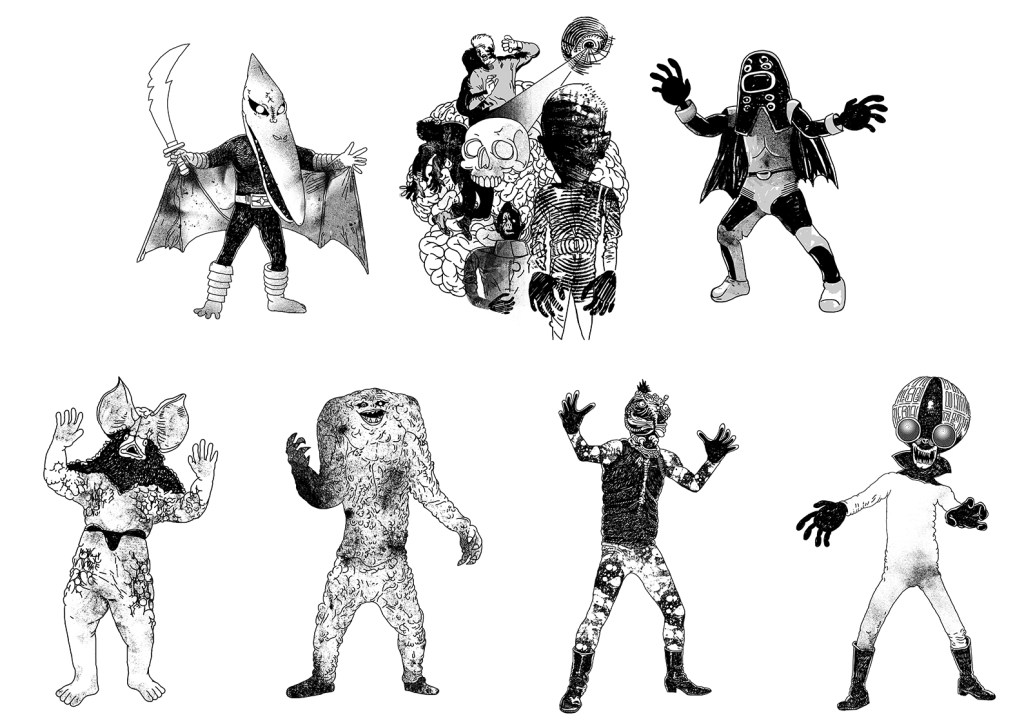
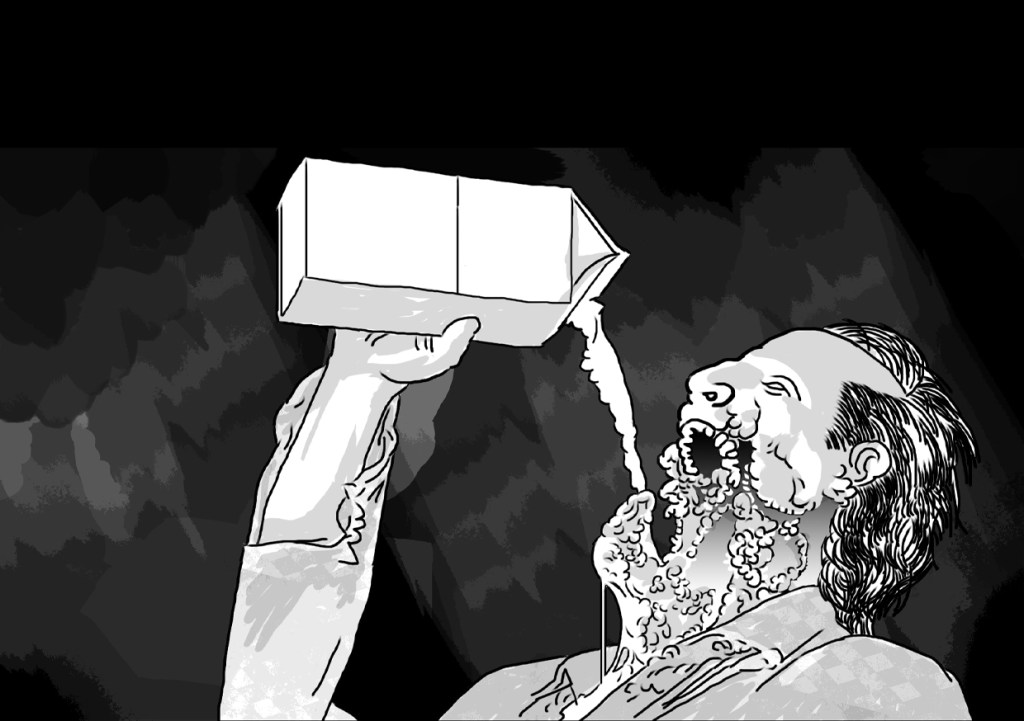
Çizgiler uyumsuza seslenir. Çizgi bir sınır talebidir. Uyumsuzluğun sınır kaldıraçları renkleri, duyumları karıştırır. Erman Akçay’ın işleri de bu uyumsuz çizginin sınırlarını yokluyor. Onun dünyasında nefessiz kalmak mübah. Çünkü dünyayla cebelleşirken, dünyaya sataşırken aynı nefesi bırakamayız. Akçay’ın çizimlerinde bir korku geleneği hakim. Çağın sesini bu korkudan alıyor. Korku yerleşik bir sonuç olarak değil Munch’un çığlığını güncelleyerek bugüne geliyor. Ölü sesler, iskeletler, kuru kafalar, yarılmış bedenler, metafizik ve maddenin içinde sürüklenen özne sesini imgelerin korkusuyla birleştiriyor.
Bir uçta kendi yarattığı dünyanın sınırlarına hapsolmuş bir özne, diğer yanda bütün kayboluşlara rağmen yaşamda ayak direten bir sesleniş.
Dolunay Aker
Erman Akçay, Alien Portrait, 42x30cm, Charcoal/ Digital Painting, 2022
Erman Akçay, 1982 İstanbul doğumlu, Marmara Üniversitesi Güzel Sanatlar Fakültesi mezunu (2004), birçok farklı disiplinde işler üretmiş grafik sanatçısı, okur-yazar, eleştirmen, artizan.
Erman Akçay, born 1982 in Istanbul, graduated from Marmara University Fine Arts Faculty (2004), lives and works in Istanbul. He is a multi-media visual artist making paintings, artist books, zines and art prints. Akçay’s continuous artistic output began in 1990s, making punk-rock zines and graphic art.
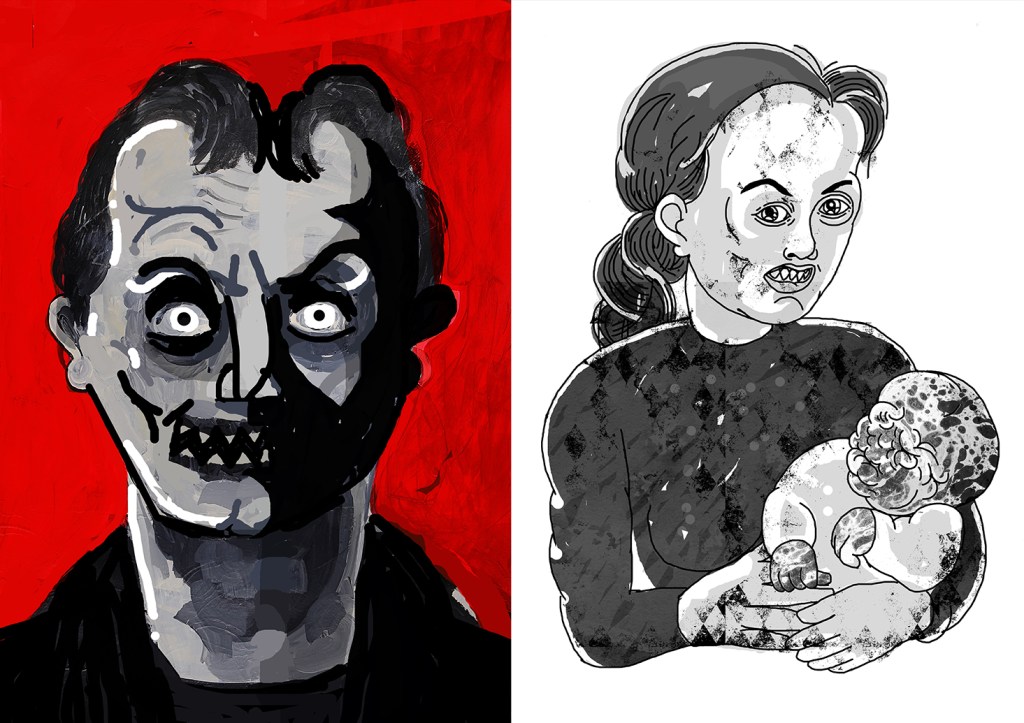
Erman Akçay ‘Yamyam’, ‘Anne ve Çocuk’ mixed media, 2017Sketches: Erman Akçay, charcoal on paper, 2021
Erman Akçay’s Delicious Disasters
Cemal Akyüz
Erman was born twenty four years ago. It was 80s and Mae West was dead. 20th century art history adore to classify all the modernists as post war babies driven by optimism (their parents at least) and had an illusion of progress. Which war? I don’t know, there were so many.
Artists who were born in 80’s clearly belong to 21st century. Allen Ginsberg already said it : America after all it is you and I who are perfect not the next world! Be in love with your life and let’s welcome them as creative and self-conscious artists of Generation Y.
Kids create in a kaleidoscopic reality, their country and their world – be it real, be it virtual – which is coming apart. He can link with his surroundings comfortably to colour it up and with same ease can contribute to an idea which can be as far as Holland. They question.
Erman is involved in a surreal Istanbul/ Izmir fanzine called Düzensiz or Disordered. It stroke the attention of the latest Portuguese surreal movement and he is invited to bless the exhibition with his youth along with his gang in an exhibition in Estremoz, a posthumous homage to all time great Portuguese surrealist, none other than Mario Cesariny. Quickly reshaped and put all his act together to wave his goodbye with a selection of dadaist collages and subhuman portraits.
More than anything Erman is a street producer. Cooperative soul of the street combines with his formal art training. Constant craving for decorating the streets of anonymous ugly metropols, sole efforts to give dynamism to the city without asking anything back, street artist is a street hero.
Sketch by TURBO, 2006
Erman Akçay ‘Alien Syndrome’ 2016
His series of black and white hand made large collages, surprisingly against the nature of famous collages we all are used to, consists only his own original work. Minimalist details of texture breath. Repetitive points, strikes, cloudy blurry images which are cut into perfect rectangular shapes and montaged to dada perfection. Rare colour assemblages dares to camp it up. Mother and child series consist picture perfect water colours which dash a tang of surrealist incapability. His Mona Lisa series are Marilyn Manson meets Condoleeza Rice, how scary can one get? Porcelain doll like faces with flies and insects coming out from the eyes, or is it just imagination? From streets to grotesque, from dada to pointism he is the perfect collage of his own persona, a strong but sentimental representation of phantasmagoria.
His youth attacks all intellectual creativity, that young man can make dada look fresh 90 years after, streets can be enjoyable playgrounds, and the dull old world an open air exhibition, you are all invited to take a piece with you from his artistic dandy.
Reproduction: Erman Akçay ‘Night of the Living Dead’ 21x15cm, digital painting (2015)
“Bir elinin hala çocukluğunun kalbinde olması seni diğerlerinden ayıran nokta. Löpçük bana, asansör müziği eşliğinde çirkin bir çocuğun aynaya bakarak işlediği cinayetleri itiraf ettiği bir yayın organı gibi geliyor…” -Tan Tolga Demirci
Retina Decadence, Group Exhibition curated by Erman Akçay in İstanbul, 2020 (Poster Art by Zigendemonic) Right Wall by Cins
“Bu gece tesadüfen okudum çok başarılı buldum. Tabii ki sivri yanları var tartışılır yanları var provokatör dili var ama çok başarılı.” Bedri Baykam
Erman Akçay ‘Cemetery Flowers’, bitmap graphic (14,8x21cm) – ‘Anxiety’ ink on paper (50x70cm) 2016
Evolution of Consciousness
The ways of seeing and perception in Art are various and imply vast imaginativeness and hallucination of humankind as well as reality. All opens its door to creativity, freedom, soul and mind etc. under society until Universe’s expansion become universal under minor and major entities and identities. Therefore I would say herein Retina Decadence Exhibition which is curated by Erman Akçay gathering international and Turkish artists all around world to take public attention differently on one of those vision of our times called Graphic Art. It is enigmatic, bizzare, sluggish, histeric and evilsake mixed in all and more under(upper)world which underlines/ minds/ pins the artificial being of human soul, its bizzare, absurd and discordant existance and sub-concious inbetween pain and passion meanwhile trying to find an exit through its striving illumination. This is what we should expect and except as well as include and tolarate and finally put into our mosaic of art-world in İstanbul or elsewhere in World to broaden our view of conciousness as implied by ist name Decadence is on continue in this World now and then Retina observes it by narrow and wide blinked mind and eye side from dark to light and from light to dark but in the end openness is everything in Contemporary World and its Art. Retina Decadence keeps this secret to whisper your perception by its sickness inside to be healed asif in effect of dark hole after Big-Bang occured out of scattered scene of existance.
Erkut Tokman, October 2020 Osmanağa, Kadıköy – İstanbul
Sketch by TURBO, 2006
KHAS VCD – OCULUS VCD Talks – Erman Akçay ile Sokak Sanatı ve Fanzinler (Moderatör: Yunus Emre Öztaş)
İstanbul’un en turistik yerlerinden biri olan Galata Kulesi ve çevresindeki eğlence mekânları, özellikle yaz aylarında cıvıl cıvıldır. İstanbul’a gelip de Galata’da eğlenmeyen yoktur herhalde. En azından arkasına Galata Kulesi’ni alıp fotoğraf çektirmeyen yoktur.
Galata’ya yolu düşenlerin son günlerde uğrak bir mekânı var. Çünkü yaklaşık iki aydır Galata’daki Barnathan Oteli’nin lobisinden çok özel bir sesin şarkıları, Beyoğlu’nun ışıkları arasından müzikseverlerin kalbine işliyor.
İşte o sesin sahibi, 9 yaşından beri solist olarak sahneye çıkan ve müzik deneyimini Sorbonne Paris 3 Tiyatro Bölümü’ne kadar taşıyan, ardından da lisans ve yüksek lisans programından yazar ve yönetmen olarak mezun olan Ezgi İrem Mutlu.
2007 yılından beri kendi bestelerini de seslendirmeye başlayan ve ses tasarımında kendi melodilerini yaratırken vokallerde synthesizer, akustik piyano ve yarı dijital ve analog enstrümanlara ses kaydı yapan Ezgi İrem, Sorbonne’daki eğitimini tamamladıktan sonra 2016 yılında davet aldığı İstanbul Devlet Tiyatrosu’nda yeteneklerini sergilemeye başlamış. İki yıl boyunca “Çehov Makinesi” ve “Narnia Günlükleri”nde oyunculuk, Tiyatro 9 tarafından sahneye konulan “Eksiği Var Fazlası Yok” oyununun ise solistliğini yapmış. Çeşitli dizi, film ve reklam filmlerinde oyunculuğunu sergileyen Ezgi İrem, halen birçok farklı projede şarkıcı, söz yazarı, oyuncu ve dansçı olarak çalışıyor.
Ezgi İrem Mutlu ‘Darağacında Eldivenler’ One woman project
Haziran ayında Fête de la Musique’in 40. yıl dönümü Edith Piaf, France Gall, Gainsbourg, Boris Vian, Charles Aznavour ve Enrico Macias’ın Fransızca şarkılarını seslendiren Ezgi İrem Mutlu, salgın döneminde de boş durmamış. Pandemi nedeniyle çevrimiçi olarak yapılan Akbank Kısa Film Yarışması’nda jüri, “Birbirinden farklı sinemasal anlatıların gücünü başarıyla harmanlayarak sadece ama sadece bugüne ait bir film ortaya koyması sebebiyle” değerlendirmesini yaparak 429 eser arasından Ezgi İrem Mutlu’nun “Darağacında Eldivenler” adlı kısa film çalışmasını ödüle layık bulmuş.
Global Chillers (küresel üşütenler/bir sanat ve sanatçı eleştirisi)
Saint Joseph’e giderken tiyatro kulübünde Antigone sahneleyip aynı zamanda dans ederken, yarı zamanlı müzikal eğitimine başlayan Ezgi İrem Mutlu, Haldun (Dormen) ustanın “Amphitryon” oyunu ile profesyonel olarak sahneye adım atmış. Fransa’da tiyatro yazarlık ve yönetmenlik okurken, le Trac Café de “Cabaret Barré” isimli bir oyun ile kabare de yapan genç sanatçı, aynı oyunu Sorbonne’daki sınıf arkadaşlarıyla birlikte yazıp sahnelemiş. Oyunculuğun yanı sıra canlı müzik ve çeşitli elektronik müzik performanslarında sahne alan Ezgi İrem, 2019 senesinde elektronik müzik üzerine mod synth çalıp ve üstüne söz yazıp şarkı da söylemiş.
Genç sanatçının o kadar anlatılası yeteneği var ki, hani gerçek anlamda “10 parmağında 10 marifet” derler ya, işte öyle. Tiyatro, resim, fotoğraf, sinema filmleri, sosyoloji ve tıpla ilgilenen ve bu alanlarda kendini geliştirmeyi hayat felsefesi haline getiren Ezgi İrem, Barnathan Oteli’nin lobisinde müzikseverlere muhteşem bir müzik şöleni sunuyor.
Fransızca, Türkçe, İspanyolca ve Yunanca şarkılar seslendirirken aldığı tiyatro ve oyunculuk eğitimiyle de kendisini dinlemeye gelenlerle müthiş bir bağ kuruyor. Müziğin ritmiyle dansçılığını da birleştiren genç sanatçı, Galata Kulesi görüntüsüyle süslenen sahnesini müzikal bir kabareye çeviriyor. Sahne aldığı iki saat boyunca izleyicilerine bir yaz gecesi rüyası yaşatıp Galata’dan Dünya turuna çıkarıyor.
Ezgi İrem Mutlu ‘Hey Woman!’ 2011
Şu sıralar da “Baraka” adlı yabancı bir filmde savaş muhabiri rolünü canlandırıyor Ezgi İrem.
Böylesi eşsiz bir sesi ve yeteneği izleme fırsatını kaçırmayın derim.
Bizon Murat, Devrim Ck. ile beraber 1995 ilkbaharında bir proje olarak Siya Siyabend’i kurmuş, sonraları Murat, Ahmet, Memduh, Okan, Pascal, Garbis, Orçun, Ferhat, Hakan ve diğer pek çok müzik adamıyla çalışmışlardır.
Siyasiyabend 90’larda başlayan, çeşitli enstrumanlardan ses çıkarmayı seven ve bunu birlikte yapmaktan hoşlanan bir grup insanın uzun, derin ve badireli bir yol arkadaşlığının; temelde köklü bir müzik sevgisine ve insanlığın bilgi-kültür mirasını özümseme ve yaşama arzusuna dayalı bir yolculuğun ürünü olarak ortaya çıktı.
Birçok farklı stüdyoda farklı sound denemelerine girişip değişik tarzlarda ürünler verdiler. Bunun yanında kısa filmler için müzik yaptılar. Fatih Akın’ın yönetmenliğini yaptığı Sound of İstanbul / Crossing The Bridge, köprüyü geçmek adlı belgeselde yer aldılar.
SSB ayrıca sokağı da önemli bir sahne olarak gördü. Türkiye’de sokaktaki müziğinin öncülerinden oldu. Bu konuda şu söylemleri ilgi çekicidir: “Sokak müziği yoktur, müzik sokakta olmalıdır”
SSB 2008’den beridir Erdem Göymen, Hakan Özboz, Murat Toktaş ve Devrim Ck, 2010’da Cansun Küçüktürk’ün katılımıyla oluşan çekirdek kadrosuyla, diğer müzisyenler ve görsel sanatçılarla ortaklaşarak, kayıtlar yapmaya konserler vermeye devam ediyorlar.
Yaşamın İzinde programı: Bizon Murat (Nûve Medya) 2021
“There is no street music,
the music should be on the street”
Bizon Murat, Devrim Ck. together with Siya Siyabend as a project in the spring of 1995, they later worked with Murat, Ahmet, Memduh, Okan, Pascal, Garbis, Orçun, Ferhat, Hakan and many other musicians.
Political friendship of a group of people who started in the 90’s, likes to make sounds from various instruments and likes to do it together; basically emerged as the product of a journey based on a deep-rooted love of music and the desire to absorb and live the knowledge-cultural heritage of humanity.
They experimented with different sounds in many different studios and produced products in different styles. Besides, they made music for short films. They took part in the documentary Sound of Istanbul / Crossing The Bridge, directed by Fatih Akın.
Recorded in Kadikoy Sahne, Murat Bizon With wonderful band.
The SSB also saw the street as an important stage. Murat Serhaşi Toktaş became one of the pioneers of street music in Turkey. The following statements on this subject are interesting: “There is no street music, music should be on the street”
Since 2008, SSB has been continuing to record and give concerts in partnership with other musicians and visual artists, with its core staff formed with the participation of Erdem Göymen, Hakan Özboz, Murat Toktaş and Devrim Ck, and Cansun Küçüktürk in 2010.
Varolan çerçeve, teknolojinin karşı konulamayan gelişimi ve bunun toplumsal yaşamımızdaki anlamsız olası kullanımlarının [yarattığı] hoşnutsuzlukla birlikte, gün be gün artan yeni beşerî kuvveti boyunduruk altına alamaz. Bu toplumdaki yabancılaşma ve tahakküm, bir kısım değişkenler arasında dağıtılamaz; lakin yine aynı toplumun kendi içinde, hep birlikte reddedilebilir yalnızca. Bugünkü çok-biçimli krizin devrimci çözümüne kadar tüm gerçek ilerleme açıkça askıya alınmıştır.
Gerçekten de [özgün bir şekilde] “üretimi, üreticilerin özgür ve eşit birliği temelinde yeniden örgütleyen” bir toplumdaki yaşamın örgütsel perspektifleri nelerdir? Çalışma, bireye nihayetinde tam bir özgürlük veren yaşamsal maddelerin sosyalizasyonu ve üretimin otomasyonu aracılığıyla dış bir ihtiyaca indirgenebilir. Böylelikle, tüm ekonomik sorumluluklardan, öteki insanlara ve geçmişteki dair tüm sorumluluklarından ve borçlarından azat edilerek insanlık, borçlu iş ölçüsüne indirgenmesi imkânsız olduğu için parayla ölçülemez yeni bir artı-değer çıkaracaktır. Herkesin ve her bir kimsenin özgürlüğünün garantisi, özgürce inşa edilen yaşamın, oyunun değerinde bulunmaktadır. Bu oyunsal (karnavaleks) zeminin yeniden yaratımının uygulaması, insanın insan tarafından sömürülmesinin son bulmasıyla güvence altına alınan yegâne eşitlik çerçevesidir. Oyunun özgürleşmesi, yaratıcı özerkliği, dayatılan çalışma ve zevk arasındaki eski (ancient) işbölümünün yerini alacaktır. Kilise zaten popüler şenliklerde ihtiva edilen ilkel gülünç yönelimleri baskı altında tutmak için sözde cadıları yakmıştı. Katılımı olmayan, yalancı, berbat oyunlar üreten, hâlihazırdaki egemen toplumda gerçek sanatsal bir etkinlik, bir suç olarak sınıflandırılır. Bu, yarı gizli bir durumdur. Skandal şekline bürünerek ortaya çıkar.
Peki, durum ne kadar gerçektir?
Daha çok insan varlığınca kışkırtılan daha iyi bir oyunun gerçekliğidir. Bütün ülkelerin devrimci oyuncuları, gündelik hayatın tarih öncesinden ortaya çıkışını başlatmak üzere Sitüasyonist Enternasyonalce birleşebilirler. Bu nedenle, şu anda var olan sendikal, politik örgütlenmelerden bağımsız, yeni kültürün üreticilerinin özerk bir organizasyonunu tavsiye etmekteyiz, ilk halk hareketi, öncü deneysel aşamasını bu organizasyona bıraktığı anda, bizim atfettiğimiz en acil hedef UNESCO’nun ele geçirilmesidir. Bu durum dünya çapında birleştirilince, sanatın ve tüm kültürün bürokratizasyonu, geçmişin yeniden üretimi ve eklektik konuşma temelinde dünyada var olan sosyal-sistemlerin derin ilişkilerarasılığını açığa vuran yeni bir olgudur. Bu yeni koşullara, devrimci sanatçıların müdahalesi, yeni bir eylem türü olmalıdır. Tek bir yapı içerisinden yönlendirilen kültürün bu yönetimsel yoğunlaşması, komplocu ele geçirmeyi tercih ettiği için, onun tam kendi varlığı da darbe yoluyla ele geçirilebilir. Ve kurum, bizim yıkıcı perspektifimiz dışında herhangi bir anlamlı kullanımdan yoksun olduğu için, bu aygıtın ele geçirilmesini çağdaşlarımız önünde meşru görüyoruz. Ve onu ele geçireceğiz. Art arda gelen taleplerin açığa kavuşturulmasında en önemli olduğunu kanıtlayan işi çabucak yürüteceğimizden emin olduğumuz için, UNESCO’yu kısa bir süreliğine de olsa ele geçirmemiz gerekli.
Yeni kültürün ilkesel karakteristiği ne olabilir? Ve eski sanat ile nasıl karşılaştırabilir?
Belirli bir zamana hapsedilmiş sanata karşıt olarak, doğrudan yaşanılan anın örgütlenmesini içerir.
Özelleş(tiril)en sanata karşıt olarak, her an bütün bir halde kullanılabilir eylemleri içinde taşıyan küresel bir uygulamayı içerir.
Doğal olarak bu, şüphesiz ki anonim olan kolektif üretime meyilli olacaktır (en azından emeğin artık metalaşmaması ölçüsünde, bu kültür arkasında izler bırakma gereğinin hâkimiyetinde olmayacaktır). Bu deneyimin asgari önerileri bütün yaşanılabilir gezegenlere genişletilebilir olan ve bütün gezegeni kaplayabilecek ölçüde birleşik, dinamik bir kentleşme ve davranışta bir devrim olacak. Tek yanlı sanatın aksine, sitüasyonist kültür bir diyalog, bir etkileşim sanatı olacak. Bugün görülebilen bütün kültürlerin sanatçıları toplumdan tamamıyla kopmuşlardır. Tıpkı rekabet dolayısıyla birbirlerinden ayrıldıkları gibi. Fakat kapitalizmin bu kör düğümüyle yüz yüze kalınınca, sanat da esas olarak bunun karşılığında tek yanlı kalmıştır, ilkelliğin (primitizm) bu kapalı alanı, tamamlanmış bütünlüklü bir iletişimle alt edilmeli ve yerine konmalıdır.
İleri bir aşamada herkes, -mesela, ayrılmaz bir biçimde total kültür yaratımının üreticileri/tüketicileri olarak- yeniliğin çizgisel kriterinin hızlı bir şekilde çözülmesine yardımcı olacak olanlar birer sanatçı olacak. Herkes yönelimlerin, deneyimlerin çok yönlü patlamasıyla ya da radikal olarak farklı ‘okullarla’ art arda olmayan, fakat anında olan durumlarla birlikte, konuşmak üzere bir sitüasyonist olacak.
Biz zanaatların tarihsel olarak sonuncusu olacak olanı takdim edeceğiz. Amatör-profesyonel sitüasyonist’in rolü -uzmanlık karşıtı olarak- yine, herkes kendi yaşamlarının inşasına iliştirilmeyen sanatçılar anlamında bir sanatçı olduğu zaman, ekonomik ve zihinsel bolluk noktasına değin uzmanlaşmadır. Fakat tarihin son zanaatı, yani SİTÜASYONİST ENTERNASYONEL arasında göründüğü ve zanaat olarak statüsü genelde inkâr edildiği zaman, kalıcı bir iş bölümü olmayan topluma çok yakındır.
Bizi doğru anlamayanlara, indirgenemez bir küçümsemeyle sesleniriz ki, sizin kendilerinizin yargıç olduğuna inandığınız sitüasyonistler, bir gün sizi yargılayacaklar. Bütün biçimleriyle dünyanın özelleş(tiril)mesinin kaçınılmaz tasfiyesi olan dönüm noktasını beklemekteyiz. Bunlar bizim hedeflerimizdir ve bunlar insanlığın gelecekteki hedefleri olacaktır.
ali rıza t. , ayça a. / tesmeralsekdiz için çevirildi. şubat 2006
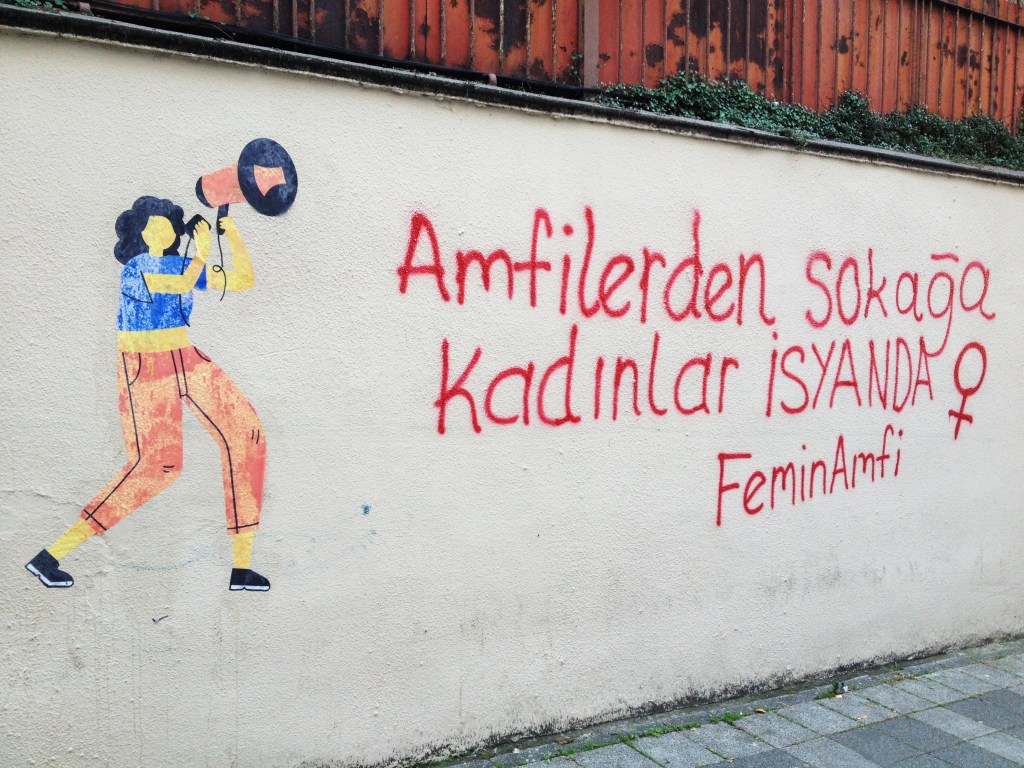
FeminAmfi, Yeldeğirmeni,, 2022
FeminAmfi, Yeldeğirmeni,, 2022
Kırkyama FeminAmfi, Yeldeğirmeni,, 2022
Önce toplumsal çoğunluk patriyarkal, homofobik değerlerinden kurtulmaya çalışsın, AVM lere, kent mekanlarının ticarileştirilmesine karşı çıksın, üniversitelerin bilimsel özerkliğine sahip çıksın. Toplumsal çoğunluk muhafazakar ve konformist; onu “aydınlatmak” isteyenlere seçimlerde darbe üstüne darbe indiriyor.
-Yaşar Çabuklu, 2014
Evrenselliğe inanmıyorum. Evrensellik denilen şey genellikle batının evrenselliğidir. 18. ve 19.yy batı evrenselliği ötekileştirmeye dayanıyordu. Kadınlar, siyahlar, sakatlar, eşcinseller, etnik azınlıklar vb. ayrımcılığa uğruyordu.
Geçmişte Yunus Emre, Karacaoğlan, Pir Sultan Abdal gibi büyük şairler yetiştirmiş bir toplumuz, şu an böylesi gönül erlerine rastlayamıyoruz, geçmişle övünüyoruz; bu durumu nasıl değerlendirirsiniz?
Bugünün toplumu geçmiştekinden farklı. Halk kültürü denen şey zayıflıyor, ana akım medyanın, televizyonun biçimlendirdiği ticari bir pop kültür öne çıkıyor ve halk bu yeni kültürü tüketiyor. Tasavvufun sosyal-kültürel koşulları giderek ortadan kalkıyor. Halk kültürü denilen şey batıda folklorik bir öğedir artık, yerel bir çeşnidir.
Bugün bilimin, teknolojinin nimetlerinden başta parası olanlar olmak üzere birçok toplumsal kesim farklı ölçülerde yararlanıyor. Dünyada görece daha demokratik kültürler de var daha otoriter kültürler de. Patriyarkayı sadece devlet yaratmadı, toplum gündelik hayatı içinde patriyarkal ilişkileri bizzat üretiyor. Önce toplumsal çoğunluk patriyarkal, homofobik değerlerinden kurtulmaya çalışsın, AVM lere, kent mekanlarının ticarileştirilmesine karşı çıksın, üniversitelerin bilimsel özerkliğine sahip çıksın. Toplumsal çoğunluk muhafazakar ve konformist; onu “aydınlatmak” isteyenlere seçimlerde darbe üstüne darbe indiriyor. Cioran’ın şu minvalde sevdiğim bir cümlesi var: “halk için üzülmeyi bırakın: meselesi çözümsüzdür”
Hayata karşı hep mesafeli bir tavrınız oldu, her zaman böyle miydiniz, karamsar biri misiniz?
Mesafeli olmak eleştirel olabilmenin önemli koşullarından biri. Yakınlığı dışlayan bir şey değil bu hatta yakınlığı daha değerli kılan bir şey.
Kötümserlik/iyimserlik gibi karşıtlıklar sorunlu ve göreceli. Karamsarlık genellikle topluma ilişkin bir umuda bağlı olarak düşünülüyor ki bence bu yanlış. Toplumsal çoğunluk genellikle egemen söylemin farklı biçimlerini içselleştirir. Eleştirel birinin zaten topluma ilişkin fazla bir umut beslememesi gerekir.
Toplumsal durum şöyle ya da böyle olabilir, iç karartıcı olabilir. Ulus denilen şey devletin yukarıdan aşağıya kurduğu, sınırlarını, yasalarını, ulusal bayramlarını, resmi dilini belirlediği, farklı etnik, dinsel vb. topluluklar arasında bir hiyerarşi ilişkisi kurduğu, homojenleştirmeye çalıştığı bir yığındır. Birey bu yığınla bir kader ortaklığı içine girmek zorunda değildir. O , imkanları çerçevesinde kendi istediği gibi yaşamaya çalışır, kendi çevresi içinde kurar mutluluğunu ya da mutsuzluğunu.
Yaşar Çabuklu 1955’te İstanbul’da doğdu. Boğaziçi Üniversitesi’nden siyaset bilimi yüksek lisans derecesi aldı (1983). Türk ve Dünya Ünlüleri Ansiklopedisi’nde metin yazarlığı yaptı.
Kitapları: Kovulanın İzi (2001), Özgürlükçü Düşüncenin Peşinde (2003), Postmodern Toplumda Kriz ve Siyaset (2004), Toplumsalın Sınırındaki Beden (2004), Uzam ve Kötülük (2005), Bedenin Farklı Halleri (2006), Toplumsal Kurgular ve Cinsiyetçilik (2007), Toplumsal Performanslar (2009), Postmodern Toplumdan Kesitler (2010), Kültürün Karanlığı (2012)
Rakunart, Yeldeğirmeni,, 2022
Yaşar Usta Emek Portalı, Kadıköy, 2022
Antisilence ‘Kesme Sesini!’ 1999
2021, Kadıköy, İstanbul
Alakır Nehri Kardeşliği
Sivil İtaatsizlik Alanları Bildirgesi
15 Mayıs 2014
Bizler için, insanlığın ve onu besleyen doğa’nın katili olan bu kapitalist sisteme, her ne bahaneyle olursa olsun, kıyısından köşesinden, gönüllü ya da gönülsüz içinde yer alarak ona hizmet etmenin, artık ne ahlaki, ne ideolojik, ne felsefi, ne fiziksel ne ruhsal ne de vicdani anlamda katlanılabilir bir hali kalmıştır.
Elimizin değdiği, gözümüzün gördüğü, yaşamımızın her alanında ve an’ında yer alan ‘şeylerin’ üretim ve tüketim aşamalarında, köle gibi, sağlıksız ve adaletsiz koşullarda çalıştırılan insanların ve doğa’da katledilen milyonlarca masum canlının vebaline daha fazla ortaklık edebilecek halimiz de kalmamıştır.
Karşı durduğumuz her şeyi, heran, devamlılığını besler halde davranmayı isteyebilecek bir yaşam düşümüz de yok bizim.
Artık bu kirli oyunu oynamıyoruz.
Tüm ürünlerinizi, sunduğunuz, dayattığınız her şeyi, her kullanımında kan, vahşet ve zulüm kokan tüm bu yarattıklarınızı istemiyoruz artık.
Almıyoruz. Kullanmıyoruz.
Toprağımıza ve doğamıza çekilip tamamen, sadece onun bizlere emeğimiz karşısında sunduklarıyla yaşıyoruz.
Sivil itaatsizlik alanları yaratıyoruz.
Toprağa gireceksek elbet birgün hepimiz, bizler, bu topraklarda, bu şekilde yaşayıp gitmek istiyoruz.
Batuhan Dedde, yeni kitabıyla farklı bir dil deneyimini sunuyor hepimize. Kitabın akışı adeta bir ruhun pusulasını da okuruna sunuyor. Şairin, yazarın üzerinde durduğu benliği, cinneti, karanlığı, rüyaları adeta onun bir taraftan ruhsal fırtınalara diğer yandan tarihin derinliğe ve mitolojik göndermelere de zemin hazırlıyor. Antik dünyada karanlığın yaratılıştan önce geldiğine inanıyorlardı. Modern zamanlarda “gece” sözcüğü ağırlığını hissettiriyor, sanki bireyselliğe ulaşmak için karanlığın ve de gecenin dünyasıyla yüzleşmek zorundadır günümüz insanı.
Batuhan Dedde- Beykent Üniversitesi RTS Öğrencileri ile Röportaj (2014)
‘Down the lengths of the Bosphorus runs two currents: One on the surface and the the other deep below They run in opposite directions. And here in the strait which divides the city into two lies the perfecf metaphor for the city. For its residents too push and pull each other in different directions, seemingly contradictorily but vital for tha other’s survival.’
Batuhan Dedde was born in Istanbul in 1987. He has published several books, including the poetry collection Morfinsiz Çekilen Düş Sancıları, in 2013. His work brings together the sensibilities of the American Beats and the Turkish Second New.
‘Boğazin dibinden iki akıntı geçer ilki yüzeye yakın, diğeri çok daha derinden, birbirlerine zıt yönde akıp gider. Şehri ikiye ayıran bu boğaz ona en cok yakışan mecazın ta kendisidir. Zira bu şehrin sakinleri de birbirlerini farklı yönlere iter ve çeker. Tutarsız bir gayret gibi gözükse de hayatta kalmalarını sağlayan bu cekişmedir.’
Recluse
Batuhan Dedde
translated by Donny Smith
I come from a patriarchal solitude
I am the last hero remaining from a tribe whose reclusiveness extinguished it.
I run like a street dog after a dream that went too far
While all the conjurers are jumping off the tightrope I stretched across my heart.
God’s suffering drips on my face from the grayest of heavens
While a high-decibel symphony of separation claws at my ears:
The idiots call it rain.
I loved you in a way no human being should
I loved you with inhuman clarity and purity
I was so unrealistic I could have painted all the bloody tanks left over from the cold face of
war with pink dreams
Leaving all this step-eroticism at the door of an orphanage;
Looking right into the eyes of the greatest sufferings, and those sufferings’ good credit;
With the apprehension of an excommunicated Catholic;
Against all religious duties and the Prophet’s teachings, I loved you.
Saltuk Erginer & Seni Görmem İmkansız ‘Yalnız’ca’ 2013
‘Hep sevmekten kaybettim ben, Hep severek kaybettim. İçimi eze eze, avuçlarımı tutuştururcasına… Eğer şahitse şu kentin asfaltlarına düşen yağmur damlaları, Suyun intihar ettiğini düşündün mü hiç? Ben bu kente ne zaman ayak bassam bir başıma, Ağaçlar, yapraklar bile yalnızlığı öğretiyor, Yalnızlığın lisanını konuşuyor; “Yalnızca.” Yalnızca, salınıyor dallar Yapraklar yalnızlık kanamış, ölüyorlar, Sonbahar bahane…‘
Blood of a Poet: Batuhan on instagram live
Münzevi
Batuhan Dedde
Ataerkil bir yalnızlıktan geliyorum
Münzevilikten helak olmuş bir kavmin
Kalan son kahramanıyım.
Çığırından çıkmış bir hayalin arkasında koşarken
sokak kopekleri gibi
Kalbimde gerdiğim telden aşağı atlıyor bütün hokkabazlar
Tanrının acısı damlarken yüzüme göğün en grisinden
Yüksek desibelli bir ayrılık senfonisi kulaklarımı tırmalıyor;
Aptallar yağmur diyorlar.
Bir insana yakışmayacak şekilde sevdim ben seni
Bir insana yakışmayacak kadar duru ve net
Savaşın soğuk yüzünden kalan kanlı tankları
Pembe düşlere boyayabilecek kadar idealisttim
Bütün üvey erotizmleri bir yetimhanenin kapısına bırakarak
Tahsili yüksek acıların gözünün içine baka baka
Aforoz edilmiş bir Katolik kaygısıyla
Farzlara, sünnetlere aykırı sevdim ben seni.
Sanatçılar, şairler, yazarlar, yaratıcı süreçler için kolektif bilinç dışında kök salmış zihinsel ve yaratıcı formları kullanırlar. Sanatsal yaratım sürecinde bu zihinsel imgeler zihnin bilinçli katmanlarına ulaşır ve yapıtı ortaya çıkartır.
“Yazık Yenilenlere” kitabı çok zor bir yaşam deneyiminden süzülerek biçim bulmuş. “Corona” ve “karantina” günlerinin şiire, sanata, edebiyata nasıl yansıdı sorusunun da bir nebze yanıtıdır bu kitap. Tüm zorluklara rağmen “umut” sözcüğünün örtülü biçimde de olsa şairlerin yüreğinden yükselmesi önemlidir. Özellikle günümüzün kritik dünya koşullarında ve insanlık tarihinde eşi benzeri olmayan Corona denen bir olguyla yüzleşmede umudun yeri, insanı ve insanlığı kurtarabilecek tek ışık penceresidir. Umut ise, şiirin, öykünün, sanat yapıtlarımızdan başka bir şey değil. Batuhan Dedde’nin zengin dili, bakış açısı ve şaşırtıcı derecedeki yaratıcılığı okuruna yol fenerdir.
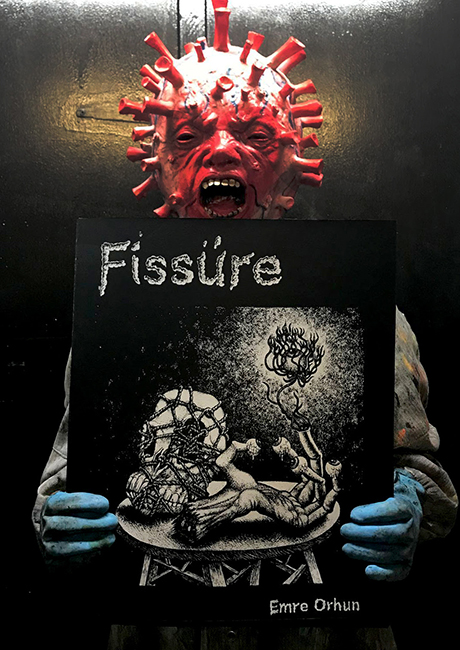
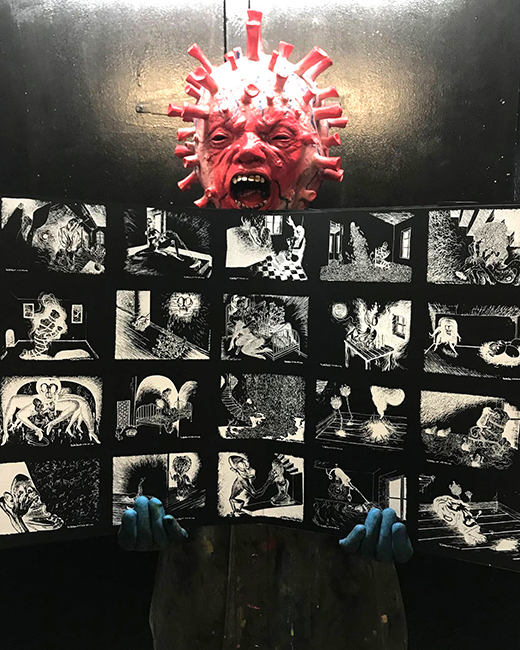
All silkscreen/ 22 pages / 35,5 cm– 44 cm/ white ink on black paper/ fedrigoni black 350 gr.
Emre Orhun ‘Fissure FOLIO BOOK’
Emre Orhun ‘Fissure FOLIO BOOK’
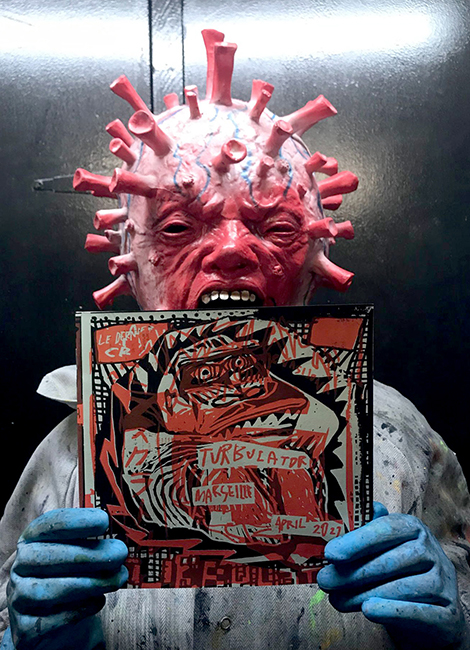
VASIJONA ‘Maskulator’
25,00€
22 cm- 22 cm/ 26 pages / 9 colors all sickscreen paper fedrigonni 260 gr./ cover black 320 gr./ 150 copies
VASIJONA ‘Maskulator’
VASIJONA ‘Maskulator’
Laetitia Brochier ‘Tarot de Marseille’
Tarot de mars / 20 x 12,5 cm / 22 cartes / 4 pass. couleurs offset tons directs papier 260 grm + boîte sérigraphiée 1 couleur papier noir 320 grm / 500 ex
Laetitia Brochier ‘Tarot de Marseille’
Laetitia Brochier ‘Tarot de Marseille’
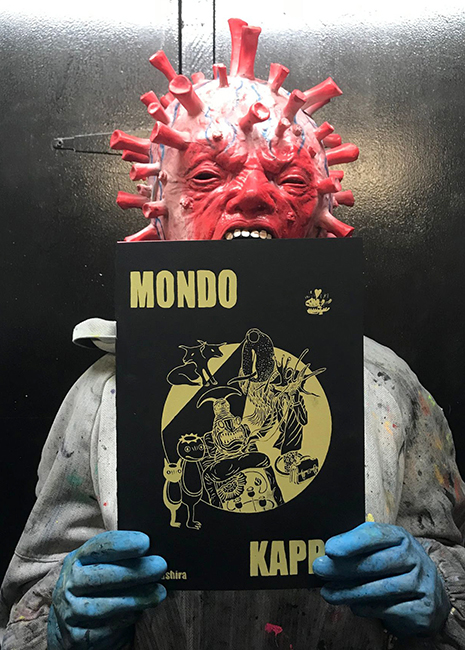
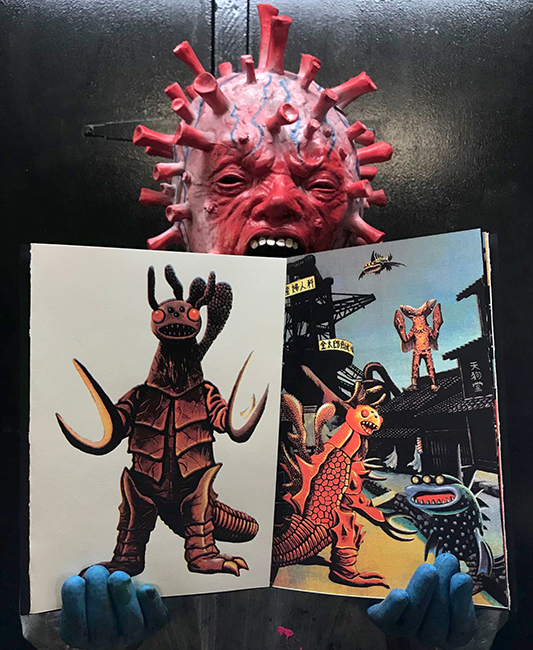
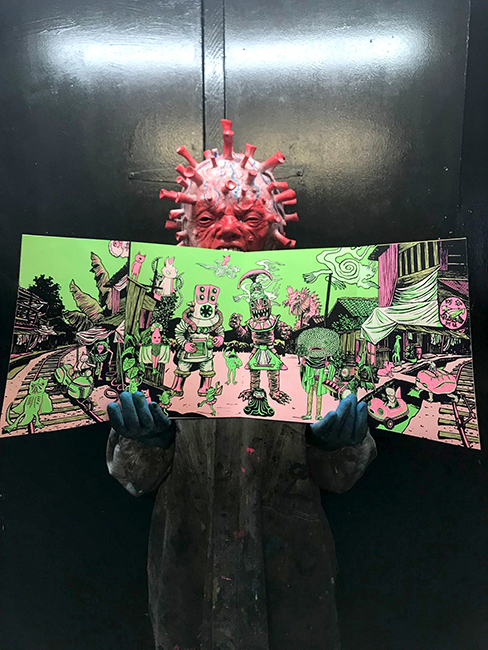
SAKABASHIRA ‘Mondo Kappa’
TOTAL SICKSCREEN loporello book 20 pages / 22- 30 cm / 8 colors / 150 copies / paper fedrigonni 260 grm + Cover black 350 grm / 30 euros
SAKABASHIRA ‘Mondo Kappa’
SAKABASHIRA ‘Mondo Kappa’
SAKABASHIRA ‘Mondo Kappa’
EXPOSITION
le mauvais oeil 61
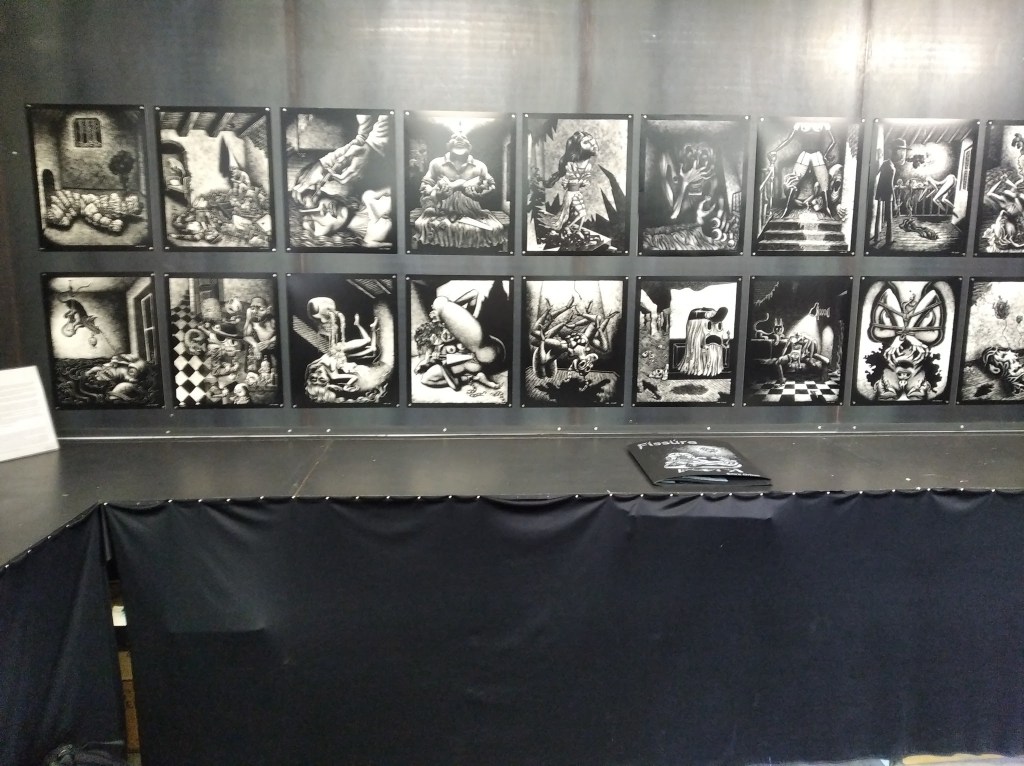
Emre 0rhun ‘Fissure’
du 22 Juin 2022 au 9 Septembre 2022
Atelier du Dernier Cri
EXPOSITION: Emre 0rhun ‘Fissure’ Atelier du Dernier Cri
Fissure :
Ce projet est né de l’envie de retranscrire le rêve récurrent que je fais depuis des années. Un rêve en huis-clos, dans des maisons et des appartements délabrés et lugubres, qui ont des portes, des pièces et des couloirs qui apparaissent et disparaissent, qui se multiplient à l’infini alors que je me perds dans les méandres de ces lieux mouvants. Je croise souvent des personnages dont je n’arrive pas à distinguer clairement les visages en raison de l’obscurité des pièces. Puis leurs traits changent en un clin d’oeil sans que je puisse les saisir. Pour retranscrire ce rêve récurrent, j’ai d’abord réalisé une série de 25 dessins automatique où j’ai laissé errer ma plume au gré de mon inconscient, un trait amenant un autre, un dessin appelant le suivant. Ces encres m’ont servi de base pour les vingt grands dessins en carte à gratter que j’ai dessinés par la suite et qui m’ont pris pas moins de trois ans à réaliser : au vu du format plutôt grand pour cette technique longue et exigeante qu’est la carte à gratter, chaque dessin me prenait à peu près trois semaines pour les finir et pour donner vie aux personnages étranges qui les habitent. Véhicules de mon exorcisme.
EXPOSITION: Emre 0rhun ‘Fissure’ Atelier du Dernier Cri
Emre Orhun est un illustrateur de nationalité turque, né en Chine, lyonnais d’adoption depuis 1993, formé au dessin à l’Ecole Emile Cohl (Lyon) d’où il a été diplômé avec félicitations en 1998. Depuis 2005, il est retourné à l’Ecole Emile Cohl, cette fois-ci pour enseigner la bande-dessinée et l’illustration.
Pour ses illustrations et dessins, il utilise le plus souvent la technique de la carte à gratter qu’il a vu pour la première fois dans une bd du dessinateur underground Thomas Ott. Il n’hésite pas à varier les plaisirs en utilisant des techniques plus traditionnelles comme le crayon, la plume, l’acrylique et la gouache, mais aussi l’informatique pour des peintures numériques.
Préférant l’art populaire et sans frontières, il a travaillé pour différents supports comme l’illustration jeunesse, le dessin de presse, la bande-dessinée, des affiches, des couvertures et des pochettes d’albums… Mais aussi, toujours et régulièrement, en produisant des dessins dans le seul but de les exposer.
Il a publié un grand nombre d’albums pour l’édition jeunesse comme Dr Jekyll et Mr Hyde (Grimm Press – Taïwan), Le Chant des Génies (Actes Sud) ou Pierre Noël (éd. Sarbacane) mais travaille aussi régulièrement pour la presse nationale (Le Monde, XXI, Libération…). En parallèle de son travail d’illustrateur, il aime produire des séries de dessins personnels en vue de les exposer.
Il a fini en 2010 un projet de bande dessinée, Erzsebet, en collaboration avec Cédric Rassat, pour les éditions Glénat.
En 2011, il a été en résidence pendant 6 mois à la Maison des Auteurs d’Angoulême pour travailler sur son projet de bande-dessinée Medley.
Toujours chez Glénat, il a sorti un nouvel album avec le même scénariste : La Malédiction du Titanic en Mars 2012.
A paru en Juin 2013: un livre d’image, Les Vies Imaginaires chez Le Dernier Cri / Marseille.
Derniers ouvrages, paru en 2016 : Medley, bande-dessinée de 150 pages aux éditions Même Pas Mal / Marseille et en 2018, la version illustrée du roman Kinyas ve Kayra de Hakan Günday, auteur turc ayant reçu le prix Médicis Etranger en 2016.







































 LÖPÇÜK