The uneasy spring of 1988. Under the pretext of drug control suppressive police states have been set up throughout the Western world. The precise programing of thought feeling and apparent sensory impressions by the technology outlined in bulletin 2332 enables the police states to maintain a democratic facade from behind which they loudly denounce as criminals, perverts and drug addicts anyone who opposes the control machine. Underground armies operate in the large cities enturbulating the police with false information through anonymous phone calls and letters. Police with drawn guns irrupt at the Senator ’s dinner party a very special dinner party too that would tie up a sweet thing in surplus planes.
Mavado Charon: About my artwork, I’m making comics and drawings since I’m a child, and I always wanted to express violent and sexual scenes… but didn’t really succed for many, many years. I’ve got thousands of bad drawings that I won’t show to anybody, because they’re awful. I was using the classical technique teached by comic artists: first you draw with graphit pen, then you ink with china ink and a (plume), but I was not comfortable with this technique. Then, five years ago, I started to (improviser mes dessins) with a rollpoint pen, on small sheets of bad paper. I was very happy with the result that make the drawing much more (vivant)! It was the begining of Mavado Charon’s career!
About publication, I first started to port my drawings on a blog, and was spotted by Billy Miller, the editor of the famous american gay magazine ‘Straight-to-hell’. He encourages me to show my artwork, and then I’ve started to publish here or there.
Mavado Charon, ballpoint pen on paper, 2013
“We been tipped off a nude reefer party is going on here. Take the place apart boys and you folks keep your clothes on or I’ll blow your filthy guts out.”
Could you tell us about the resources feeding this imagination?
I’ve got, of course, numerous ressources of inspiration for my artwork, that are mixed togheter! There is childhood inspiration like Hokuto No Ken, the post-apocalyptic manga i was watching at TV when i was a kid, violent video games like Mortal Kombat or Final Fight, or even pro-wrestling! I can mention all the gay porn that i watch since i’m a teenager: from Treasure Island Media films (bareback movies focused on sperm) to the classical Falcon studios movies. The first John Waters movies!
I can of course mention the international weird graphic i love: the japanese Ero-Guro (the great Maruo) and Uta-Hema styles, italian 80′ violent and porn comics loke Ranxerox or Necron, and of course fanzines and graphzine, Le Dernier Cri and United Dead Artists at the first place!
One of my main graphical ressources is Henry Darger, the fabulous american artist! Of course because he made huge drawings with thousand and thousand characters that kill and torture each others, but also because he is talking about vengeance: the Vivian Girls are avenging themselves against adults, that kill children. I oftent think about this idea of “vengeance”, and my drawings can also express the vengeance of queer people (gay, trans, bi, weirdos, creeps…) against normality.
But my main source of inspiration come from litterature! I read a lot, and (l’oeuvre) of William Burroughs, D.A.F. de Sade, Pierre Guyotat,… this is where i find myself!
I love the idea that when you express something in artwork (drawings, texts…) you make it live, you make it happen. If Sade, Burroughs or Guyotat didn’t write what they write, I would be absolutly lost in this world! There is a place for me to live here because of there words, that create places to live for people like me. I just trying to make differents places where different people can live and (trouver refuge).
Mavado Charon, ballpoint pen on paper, 2013
We put out false alarms on the police short wave directing patrol cars to nonexistent crimes and riots which enables us to strike somewhere else. Squads of false police search and beat the citizenry. False construction workers tear up streets, rupture water mains, cut power connections. Infra-sound installations set off every burglar alarm in the city. Our aim is total chaos.
We trace distinctive a way longing from the Surrealists to Bataille, then to Sade in French Literature. Where do you think this tradition is attached to; can we explain it as results of the effects of heterodoxal religions within that geography?
It’s true that, like many others, religions were very important for French culture, and I don’t know if it’s still that important. I think this tradition is also attached to (l’hérétisme) that mean “freedom of toughs” in Greek. The “Pilosophes des Lumières” form the French 18e centuries, the René Descartes was very important: It was a begining of an era where you can think the world without any god. Of course, the whole oeuvre de Sade was a war declaration against god, and it is fondamental for me. He was also one a the first writer to talk about homosexuality, sodomy… My drawings refer a lot to Sade!
Mavado Charon, ballpoint pen on paper, 2013
Loft room map of the city on the wall. Fifty boys with portable tape recorders record riots from TV. They are dressed in identical grey flannel suits. They strap on the recorders under gabardine topcoats and dust their clothes lightly with tear gas. They hit the rush hour in a flying wedge riot recordings on full blast police whistles, screams, breaking glass crunch of nightsticks tear gas flapping from their clothes. They scatter put on press cards and come back to cover the action. Bearded Yippies rush down a street with hammers breaking every window on both sides leave a wake of screaming burglar alarms strip off the beards, reverse collars and they are fifty clean priests throwing petrol bombs under every car WHOOSH a block goes up behind them. Some in fireman uniforms arrive with axes and hoses to finish the good work.
Mavado Charon, ballpoint pen on paper, 2013
In Mexico, South and Central America guerrilla units are forming an army of liberation to free the United States. In North Africa from Tangier to Timbuctu corresponding units prepare to liberate Western Europe and the United Kingdom. Despite disparate aims and personnel of its constituent members the underground is agreed on basic objectives. We intend to march on the police machine everywhere. We intend to destroy the police machine and all its records. We intend to destroy all dogmatic verbal systems. The family unit and its cancerous expansion into tribes, countries, nations we will eradicate at its vegetable roots. We don’t want to hear any more family talk, mother talk, father talk, cop talk, priest talk, country talk or party talk. To put it country simple we have heardenough bullshit.
Interview with Mavado Charon 09, 2015 / Segments in italics excerpted from WSB ‘Wild Boys’
‘William Gibson’ın romanları ve bilgisayar oyunları sayesinde Cyberpunk kültürüne pek de uzak sayılmam, bunlar beni zamanla bu dünyanın içine çektiler.’
27 Aralık 2018
Dilara merhaba, seni tanımayan okurlar için kısaca kendinden bahsetmeni istesek!?
Merhabalar! Mimar Sinan Güzel Sanatlar Üniversitesi Grafik Tasarım bölümü mezunuyum. Üniversite döneminde, yaklaşık beş sene boyunca farklı tasarım ajanslarında çalıştım fakat istediğim hep daha özgün şeyler üretebilmekti. Çocukluğumdan beri çiziyorum ve hiç bırakmadım, fakat bunun ofislerde harcadığım vakitle birlikte yitip gitmesinden korkuyordum. Sanırım bu yüzden okulu bitirdikten sonra kendimi tekrardan çizime verdim. İstanbul’da bir kaç karma sergiye katıldım, dergilere, kitaplara bir çok şey çizdim ve pek çok mekan için illüstratif afişler yaptım.
Tokyo’da yaşadığından bahsettin, bunun senin için özel bir nedeni var mı?
Okulu bittikten dört gün sonra Tokyo’ya yerleştim. Evet, biraz hızlı oldu belki ama olması gereken de buydu. Erkek arkadaşım orada yaşıyor ve çalışıyordu, benim için de Tokyo’ya gitmek hep bir hayaldi, ta ki erkek arkadaşımın patronu, çalışmalarımı görüp, beni de ekibine dahil edene kadar. Şanslı olduğumu söyleyebilirim. Yapacağım iş yine grafik tasarım elbette ama daha fazlasını istiyordum. Tokyo’ya taşındığımdan bu yana hem çalışıp, hem de buradaki manga festivalleri ve küçük çaplı sergilere katılmaya başladım. Tokyo’da yer aldığım uluslararası sanatçılar platformu sayesinde çalışmalarımla neler yapabileceğimi keşfettim.
Bundan sonrası için hangi alana ağırlık vermeyi düşünüyorsun?
Bunu ben de kendime pek çok kez sordum; eğitim aldığım bıranşın benim için yeterli olacağını düşünmüştüm fakat sektördeki deneyimlerim bunun pek de böyle olmadığını kısa zamanda ispatladı ve kendimi yine en rahat ifade edebildiğim alanın çizgi alanı olduğunun farkettim, bundan sonrası için de pek değişeceğini sanmıyorum.
Dilara Özden ‘Don’t Wake Up’ 2016
Erotizm ile bilim-kurgunun harmanlandığı provokatif ve cesur bir stilin var…
William Gibson‘ın edebiyatı ve sci-fi video-oyunları sağolsun Cyberpunk kültürüne pek de uzak büyümedim ve bunlar beni zamanla o dünyanın içine çektiler. Teknolojinin dejenere ettiği yozlaşmış bir dünya kurgusu her ne kadar korkunç bir manzara olsa da sahnelediği çarpıcı gerçeklik, beni her zaman kendine çekmeyi başarmıştır. O dünya, bir gün gerçek olabilirdi; belki de oluyordu; bunları resmetmek istiyordum, bunları kurgulamaktan hoşlanıyordum.
Ve işlerimi sergileme konusunda şansım yaver gitti, çevremde kendimi ifade etmekten çekinmeyeceğim bir ortam vardı. Fakat bu küçük halkanın dışına çıktığınız vakit yandınız! Herkes size ‘marjinal’ demeye başlar. Sanırım Türkiye’de yaşadığım dönem daha provokatif bir tarz sergiliyordum; belki de yaşadığım coğrafyanın üzerimde yarattığı stresten dolayı. Buraya yerleştiğimden beri yaptığım çalışmaların daha sakin olduğunu kolayca farkedebilirsiniz.
Tokyo gibi gelişmiş bir metropolde yaşıyorsun, bizimkisi gibi geleneksel bir toplumsal geçmişi olan Japonya’nın modernleşme süreci hakkında ne düşünüyorsun?
Tokyo’nun, daha doğrusu Japonların, yaşamın her alanında, bugün için bile geleneklerinden kopmadıklarını görüyorum. Muhafazakar ve dışa kapalı bir topluluk, onları tanımak, anlamak pek de kolay değil. Yaşamlarında bir ‘saygı olgusu’ var ve bu saygılı olma durumunu korumak onlar için önemli. Hatta öyle ki Japonca ‘Saygılı Japonca’ ve ‘Normal Japonca’ diye ikiye ayrılmış durumda. Sanırım toplumun ‘efendi ve saygılı insan’ olma tahakkümü yüzünden günümüzde Japonya akıl almaz fantezilerin ve aşırılıkların merkezine dönüşmüş.
The third episode of AnsweRED is here! We turned to our Brand Creative team and invited Gabi Pešková and Dilara Özden to tell us more about their work at CD PROJEKT RED. Apart from that, we discussed game dev myths, video game quotes, and what it’s like to draw all day for work.
Dilara Özden was born in Istanbul in 1993, She’s a graphic designer and illustrator based in London. After studying graphic design at the Faculty of Fine Arts, Mimar Sinan University, she has worked for several design studios and companies in both Tokyo and Istanbul. Her works are based mostly on creating colorful, futuristic worlds with compelling stories. She has worked on titles like Cyberpunk 2077 and The Witcher Franchise with Cd Projekt Red and she is currently working as a Senior Illustrator at Ghost Story Games.
Dilara Özden ‘Ghost in the Shell’ 2018
Oyunlarla Dans / Dilara Özden / Cyberpunk 2077
Dilara Özden ‘Sexotheche’ 2016
Manga çizgi-roman, anime dünyasında ‘Princess Mononoke’, ‘Spirited Away’ gibi destansı eserlere paralel sapkın ve sadistik bir üretim alanının da varolduğundan bahsettin, sen kendini daha çok hangi alana yakın buluyorsun?
Haha! Güzel soru. Memleketteyken dile getirdiğin ‘sapkın ve sadistik’ yönü daha çok ilgimi çekiyordu fakat buraya gelip yaşamaya başladığınızda üretilen tüm bu eserlerin, toplumun bastırılmışlığından başka bir şey olmadığını farkediyorsunuz. İnsanlar çok sakin, en azından öyle olmaya alıştırılmışlar; siz de ister istemez uyum sağlıyorsunuz, yalnızlaşıyorsunuz ve zamanla kendi içinizde kaybolmaya başlıyorsunuz. Buraya taşındığımdan bu yana ‘ruhsal derinliği olan’ türlere kendimi daha yakın hissediyorum.
Japonya’nın tuhaf eğlence anlayışını ve karanlık iç dünyasını merak edenlere Rieko Yoshihara ve Hideaki Anno’nun animasyon filmlerini ve Junji Ito’nun mangalarını tavsiye ederim.
Edebiyatla aran nasıl, neler okursun?
William Gibson ile başlayan bir bilim-kurgu tutkusu var bende. Memleketten ayrılmadan önce en son Andy Weir’in iki kitabını bitirmiştim, Weir‘in son yıllarda macera/ bilim kurgu alanında ciddi bir çıkış yaptığını düşünüyorum. Japoncam henüz okuma yapabilecek seviyede olmadığı için şimdilik burada bulabildiğim İngilizce romanlarla yetiniyorum; böyle olunca da maalesef pek de seçme şansım olmuyor.
Löpçük’ü nasıl buldun?
Löpçük gibi bir zine’i ‘ekstrem underground annual’ formatında raflarda görmeyi çok isterdim, şöyle en kalın siyah ciltlisinden. Çizerler olarak Löpçük’e daldığımızda dünyadan haberimiz yokmuş diyebiliyoruz. Orada, her zaman bilmediğimiz, anlayamadığımız bir sanatçı bulabiliriz. Dahası Löpçük, bu işlerin çözümlerine ve sanatçıların iç dünyalarına da yolculuk ediyor. Güzel bir sığınak diyebilirim.
Dilara Özden ‘Aki & Rabbit’ 2018
Bu aralar üzerinde çalıştığın özel bir şeyler?
Aki & Rabbit serisi üzerine çalışıyorum. Hikayesi kısmen yazıldı, Mart’tan sonra çizim aşamasına geçilecek. Bilim kurgu ve aksiyon türünden bir çizgi roman. Şimdilik bu kadar ipucu vereyim.
ADOLF HIBOU : Gaël Magnieux, Bruno Ducret & Nils Bertho. Photo by Arbre Payday (2021)
Here is the occasion to discover Bertho’s monstrous bestiary, his hybrid world in which he enjoys playing with a confusing humour.
Based in Montpellier, France, Nils Bertho is a young artist exploring the confines of artistic expression around drawing, painting, comics, illustration, collage and music.
Nils Bertho’s paintings and illustrations are packed with information: each piece created by the artist simoultaneously display different plots, references and characters. Although both expressive and spontaneous, the work pays great attention to detail and the spaces of each work are meticulously worked. Thematically we see a universe populated by fabulous beings, with equal doses of tenderness and repellency, if we look more carefully these creatures are in the middle of some dialogue, an adventure. Different interactions seem to be happening simultaneously and intertwining. In the referential field of Nils, television characters and mythological figures occupy the same space of alchemical energy, after all the electronic monsters of today come to fulfill the same expectations and emotional effects that the gargoyles, the dragons or the mermaids played at their respective genesis and time. In addition to addressing a wide iconographic universe, Nils Bertho expands his vision to different supports and media. For example the “Passion Cheval” series, where the artist plays with the Dada principle of embarrasment: posters and printed images of horses are covered with paint, word games and clichéd thoughts reinforcing its own absurdity. Music also occupies a significant place in the world of Nils Bertho. Adolf Hibou, formed along other individuals is noise emsemble described by the artist himself as “a noise punk powerful tender and brutal boys-band”. In the following conversation the artist tells us about his beginnings, interests and A.H.
Resource: Leonardo Casas / TINYSTAR Nº2 oct 2020
Nils Bertho ‘Mascotte Celebration Futur Trepas’ ink on paper, 2016
Nils Bertho ‘Yokai Arena’ 2021
In his drawing work, representing his own themes and obsessions. The artist shows us in different sizes and supports various things, switching from a style to another through graphic improvisations with meticulous and mastered lines with the finest Rotring pen or big felt pen that stains. The pleasure of surprising leads Nils Bertho, and for him, artworks bring about pure emotions. Punk, underground comics, raw art, cinema bis, all in reference to bad taste make the net of his own universe. Here is the occasion to discover his monstrous bestiary, his hybrid world in which he enjoys playing with a confusing humour.
Nils Bertho, ink on paper, 2016
Genç Fransız sanatçı Nils Bertho, Güney Fransa’da, Montpellier’de işlettiği galeri Le Mat’ın yanı sıra Rifuel-Fanglant dergisinin de yaratıcısıdır. Bertho aynı zamanda şarkı söylüyor, erkeklerden oluşan gürültülü rock’n roll grubu Adolf Hibou’nın bir parçası olarak performanslar sergiliyor ve farklı sanatsal disiplinlerde aktif. Bertho, çizimlerinde kendi temalarının ve saplantılarının peşinden gidiyor. Sanatçı, bizlere farklı ebatlarda eserler sunuyor ve farklı sanatsal disiplinlerle ilgileniyor. Grafik doğaçlamalar üzerinden Rotring kalemlerle ya da fırçayla yarattığı dikkatli ve ustalıklı çizgilerle stilden stile geçen Bertho’yu, izleyicileri şaşırtma güdüsü yönlendiriyor ve Bertho için sanat, saf duyguların aktarımı anlamına geliyor. Punk müzik, yeraltı çizgi romanları, ham sanat, cinema bis, her kanaldan ‘kötü zevk’e referansta bulunarak Bertho’nun kişisel evreninin yekününü oluşturuyor.
ADOLF HIBOU “Roum Roum Ah” 2021
Meetings with other artists who have chosen the same way since we often speak the same language and collaborations are a way to meet and share our passion.
Drawing the Rock’n Roll
TINYSTAR: How did you get involved into the arts? Could you describe a little the context where you created your first pieces?
NILS BERTHO: I’ve been drawing since I was a kid, from what I remember I always kept in mind that I wanted to do this. There are a lot of things to discover in this world and sometimes it’s strange to think that I follow my way just drawing all night long in a cave, but to be a cave draftman it’s basically the thing that makes me the happiest. My father was a scenographer and my brother was interested in comics, graffitti and 3D, it probably played a role. My passage through the School of Fine Arts confirmed this feeling that I wanted to live from my passion. That’s where I created my first pieces which were spotted and exhibited by galleries and I exhibited in France and abroad. When I got my diploma and I opened a gallery-concert space: “Le Mat”, that’s where I started in this way.
At your website there are so many art pieces displayed. You put a lot of attention to detail and there are many references to pop culture and current affairs can be seen besides I have seen videos, performances, How do you describe your artistic process?
I work essentially on feeling in everything I do and I chose to go in all directions, all at the service of a creative energy and drawing is the backbone in all that.
How do you define “underground art” in these days?
I think it will always be defined by the concept of DIY.
How important to you is the collaborative creation process?
Fanzine art, silkscreen printing, illustration or punk rock are not the easiest ways to earn money, but living from what you love remains a luxury for me and one of the positive points of this life is the meetings with other artists who have chosen the same way since we often speak the same language and collaborations are a way to meet and share our passion.
Is there any particular artist that deserves your attention these days?
Yes a lot. I particularly admire the compulsive artists whose profusion of practice is steadily like the French artist Stephane Blanquet or the Japanese Shintaro Kago and I take this opportunity to pay tribute to the work of Daniel Johnston who died this year.
Tell us about the witchcraft tutorials codex
“Les Tutos Sorcellerie, Le Codex” (witchcraft tutorials, the codex) is a project started last year. The starting idea is to create drawings “with 2 hands” in collaboration with cartoonists and artists that I like, some known, some not, some are also friends. The goal is to develop an artistic collaboration and a meeting around the esoteric theme. The codex compiles 66 artists: 66 collaborations: 66 pages. The book will take the form of a large ancient grimoire, beautiful paper, a leather cover… It will be released in January 2021 edited by Sarah Fisthole and Le Mat.
ADOLF HIBOU – “Indochine j’ai demandé halal” (Official Music Video) 2022
AxHx photo : Arbre Payday
From Jazz to Noise
With Bertho: ADOLF HIBOU
TINYSTAR: What about Adolf Hibou, how long you been playing? Who are the band members?
I scream in Rock bands since I’m 20. With the guitar player Bruno Ducret, we’ve been playing together for ten years now, in various bands, but Adolf Hibou as it is with the drummer Maël Gagnieux exists since 2014.
Describe Adolf Hibou musical approach? How many recordings do you have?
Adolf Hibou is a noise punk powerful tender and brutal boys-band We’ve put out our first joke album in 2015, entitled “Deep inside your eyes”, with Linge records. Some of it can still be found on Youtube, and the label’s page, but all that’s left of it are mainly jokes. After that we made à 3 track LP with Ascèce Records in 2018 called “Satan II”, that is still available on tapes and vinyls. The first real Adolf Hibou’s record “Princess Barely Legal” will be out next fall, thanks to Head Records. It will be about 12 tracks long, with a few jokes left in it. Videoclips are on the way too!
Is there any concept of the band linked to your artistic approach? If any would explain it?
In the end, this band is a merger between our 3 different universes. We mostly want to play loud walls of sound, and have a whole lotta fun. We all met in fine arts school, this band’s identity is thought through as an artistical concept that unites all of our savoir-faire and medium: Bruno has a lot of bands, maybe 15.. from jazz to grindcore.
Maël is a contemporary performer, a video editor and a musician in traditional music ( Medieval and Cajun) and me, I have absolutely no musical education, but who cares. For the band it kind of works, Bruno takes care of sound, band practice and logistics, Maël takes care of vidéo clips and trailers, and I’m in charge of booking and visual identity. And with all of this organisation, we still manage to fuck up everything we do.
ADOLF HIBOU – “Dreamland” (Official Music Video) 2021
Keiichi Tanaami ‘Ghost Pass Through the Wall’ 2017
Hava saldırısının olduğu gece, çorak dağ tepelerinden insan sürülerinin kaçışını seyrettiğimi hatırlıyorum. Fakat sonra bana bir şey oldu, tüm bunlar gerçek miydi?!
Keiichi Tanaami, Tokyo’da bir tekstil işçisinin en büyük oğlu olarak 1936 yılında dünyaya gelir. 1945’de İkinci Dünya Savaşı’nda Büyük Tokyo Hava Saldırısı sırasında Tokyo bombalanırken dokuz yaşındaydı. Sanat eserlerindeki ana motiflere dönüşecek imgeler bu dönemde zihninin derinliklerine dağlanır : Gümbürdeyen Amerikan bombardımanları, gökyüzünü tarayan projektörler, uçaklardan atılan yangın bombaları, ateşten bir okyanusa dönüşen şehir, kaçışan insanlar, babasının akvaryumundaki Japon balığı ve bombaların etkisiyle suya yansıyan ateş parıltıları.
“Yiyip içip, oyun oynamakla dolu olması gereken çocukluğumdan savaşın esrarengiz canavarlığı tarafından uzaklaştırıldım; rüyalarım öfke ve tevekkülün, korku ve endişenin girdabıydı. Hava saldırısının olduğu gece, çorak dağ tepelerinden insan sürülerinin kaçışını seyrettiğimi hatırlıyorum. Fakat sonra bana bir şey oldu, tüm bunlar gerçek miydi?! Belleğimde rüya ve gerçeklik karman çorman oldu, kalıcı olarak belleğime bu müphem halleriyle kaydoldular.”
Keiichi Tanaami ‘The Laughing Spider N’ 2017
Tanaami erken yaştan beri çizime düşkündü, ortaokuldayken savaş sonrasının önde gelen karikatüristi Kazushi Hara’nın stüdyosunda bir karikatürist olma niyetiyle sıkça zaman geçiriyordu. Amma velakin Hara’nın ani ölümünden sonra, çizgi roman mangalarının öncü alanına yöneldi ve Musashino Sanat Üniversitesi’nde profesyonel bir sanatçı olmaya çalışarak buna devam etti. Burada geçirdiği zaman süresince yeteneği kulaktan kulağa hızla yayıldı ve 1958’de ikinci sınıfta okurken, dönemin saygın bir illüstrasyon ve tasarım grubu tarafından düzenlenen bir sergide özel ödülüne layık görüldü. Mezun olduktan sonra bir reklam ajansında iş buldu fakat aldığı sayısız özel komisyondan ötürü bir yıl dolmadan işten çıktı. 60’lar boyunca başarılı bir illüstratör ve grafik tasarımcısı olarak kendini oyalarken aynı zamanda savaş sonrası Japonya’sının belirleyici sanat hareketlerinden birisi olan Neo-Dada örgütlenmesine aktif olarak iştirak ediyordu. 60’ların ikinci yarısında, dönemin sanat sahnesindeki en yeni mecralardan biri olan video sanatına da kendini kaptırdı.
“1960’larda Akasaka’daki Sogetsu Sanat Merkezi, düzenli aralıklarla birçok değişik janrı kateden etkinlikler düzenliyordu. Yoko Ono’nun happeningleri, Nam June Paik’in videoları ve Amerika’dan gelen deneysel filmler sahneleniyordu burada. [Sogetsu] Animasyon Festivali’nden (1965) o zamanlar haberdar olmuştum. Bir animasyon yapmayı fena halde istiyordum bu yüzden ‘Marionettes in Masks’ı (35 mm, 8 dakika) üretirken bana yardım etmesi için Yōji Kuri’nin Deneysel Animasyon Stüdyosu’nu ikna ettim. Bundan sonra, ‘Good-by Marilyn’ (1971), ‘Good-by Elvis and USA’ (1971), ‘Crayon Angel’ (1975) ve ‘Sweet Friday’ (1975) gibi yapıtlarla animasyon yapmaya devam ettim.”
1967’de Tanaami New York City’e ilk yolculuğunu yaptı. Başarılı giden Amerikan tüketimciliği kasırgasının ortasında ışıl ışıl parlayan Andy Warhol’un yapıtlarıyla burada yüz yüze geldi; Tanaami ayrıca tasarım dünyası içerisindeki sanatın yeni olanaklarından da etkilendi.
“Warhol ticari illüstratörlükten sanatçılığa geçiş sürecindeydi, onun sanat dünyasını deşme yöntemine, taktiklerine ilk elden şahit olmuş ve onları deneyimlemiştim. Onun stratejileri, reklam ajanslarının kullandığı stratejilerden farksızdı. Yapıtlarında çağdaş ikonları birer motif olarak kullandı, diğer faaliyetlerinde de filmler, gazeteler ve rock grupları gibi mecraları bir araya getirdi. Diğer bir ifadeyle Warhol’un yalnızca varlığı, işlerini sanat piyasasına satmaya yetiyordu. Bu beni sarsmış, aynı zamanda onu kendim için mükemmel bir rol modeli olarak benimsemiştim. Warhol gibi kendimi sadece güzel sanatlar ya da sadece tasarım olarak tek bir mecrayla kısıtlamamaya, bunun yerine çok farklı yöntemleri keşfetmeye karar verdim.”
Keiichi Tanaami ‘The Laughing Spider G’ 2017
Saykodelik kültür ile pop sanatın doruğundaki Tanaami’nin kitsch, renkli illüstrasyonları ve tasarım işleri hem Japonya’da hem de yurtdışında büyük övgüyle karşılandı. AVANT-GARDE Dergisi’nin düzenlediği 1968 savaş karşıtı poster yarışmasında ödül kazanan “NO MORE WAR” eseri, The Monkees ve Jefferson Airplane gibi efsanevi müzik gruplarına yaptığı albüm kapakları ve buna benzer diğer çalışmaları, saykodelik ve pop sanatın Japonya’ya tanıtılması yolunda önemli ayak izleri bıraktı. Dahası, 70’lerin başında yaptığı Hollywood aktrislerinin yer aldığı erotik resim serileri Tanaami’yi, Amerikan kültürüne dair nükteli bir göze sahip Japon sanatçı olarak ilan eden önemli çalışmalar bütünüdür.
1975’de Tanaami, Playboy’un Japon edisyonunun ilk sanat direktörü oldu ve Playboy’un genel merkezini ziyaret etmek üzere bir kez daha New York’a gitti. Buradaki editör onu Andy Warhol’un Fabrika’sına götürdü. Bu dönemden itibaren Tanaami’nin bilhassa film ve baskı mecralarındaki çalışmaları provokatif ve deneysel oldu. Özellikle filmleri Almanya’daki Oberhausen Uluslararası Kısa Film Festivali’nde (1975, 1976), New York Film Festivali (1976) ve Kanada’daki Ottawa Uluslararası Animasyon Festivali’nde gösterildiğinde eleştirmenlerden büyük övgü aldı. Eserlerinin sıradışı ve öncü doğası, 1976 yılında Nishimura Galeri’deki “Super Orange of Love” sergisinin polis tarafından denetleme amacıyla açılış gününde kapatılmasına yol açtı.
1981’de kırk beş yaşındayken akciğer ödemiyle mücadele etti ve bir müddet yaşam ile ölümün sınırında gezindi. 80’ler ve 90’lar boyunca Tanaami, yaşadığı deneyimde temellenen “Yaşam ve Ölüm” temasını merkezine alan çok sayıda eser üretti. Örneğin Tanaami’nin çalışmalarında sıkça görülen çam ağacı formu, hastalığı sırasında yaşadığı bir halüsinasyondan gelir. Benzer şekilde, spiraller ve minyatür bahçemsi mimari formların yanı sıra görülen vinçler, filler ve çıplak kadınlar bu dönemdeki çalışmalarının ayırt edici özelliğidir.
1999’da Tokyo’daki Galeri 360°’de Tanaami’nin 60’lardaki eserlerinden oluşan bir retrospektif düzenlendi. Sergi, 60’lardan sonra doğmuş yeni jenerasyonun kültürel liderlerinden, Yamataka Eye (Boredoms) ve KAWS’dan büyük övgü aldı ve sonuç itibarıyla Tanaami’nin çalışmaları bir kez daha gençlik kültürü içinde popülerleşti. Tanaami 2005’den beri, güzel sanatlar alanına denk düşen yeni çalışmalar ortaya koymaktadır. Bu eserlerde kişisel belleğinden ve rüya dünyasından gelen imgeleri –kişileştirilmiş süs balığı, deforme karakterler, ışık demetleri, helezoni çam ağaçları, fantastik mimari, genç kızlar– resmin, heykelin, filmin ve mefruşatın çeşitli mecraları vasıtasıyla açıkça göstermeye devam ediyor.
Tanaami 1991’den beri, Tabaimo gibi yeni sanatçıların yetişmesine yardım ettiği Kyoto Üniversitesi Sanat ve Tasarım bölümünde profesör olarak çalışmaktadır. Yakın zamandaki sergileri Cenova’daki Art & Public’deki “Day Tripper” (2007), Berlin’deki Galerie Gebr. Lehmann’daki “SPIRAL” (2008), NANZUKA UNDERGROUND’daki “Kochuten” (2009), Frieze Sanat Fuarı’ndaki “Still in Dream” (2010) ve Art 42 Basel’deki “No More War”’ı (2011) kapsamaktadır.
Tercüme: Onur Civelek
Keiichi Tanaami ‘Eyeball Moves in the Twilight’ 2017
On the night of the air raid, I remember watching swarms of people flee from bald mountaintops. But then something occurs to me: was that moment real?
Keiichi Tanaami (田名網 敬) was born in 1936 as the eldest son of a textile wholesaler in Tokyo. He was 9 years old when Tokyo was bombed during the Great Tokyo Air Raid of World War II in 1945. Images seared into the back of his mind at this time would become major motifs in his art works: roaring American bombers, searchlights scanning the skies, firebombs dropped from planes, the city a sea of fire, fleeing masses, and his father’s deformed goldfish swimming in its tank, flashes from the bombs reflecting in the water.
“I was rushed away from my childhood, a time that should be filled with eating and playing, by the enigmatic monstrosity of war; my dreams were a vortex of fear and anxiety, anger and resignation. On the night of the air raid, I remember watching swarms of people flee from bald mountaintops. But then something occurs to me: was that moment real? Dream and reality are all mixed up in my memories, recorded permanently in this ambiguous way.”
Keiichi Taanami ‘Walking Nude Figure’ 2019
Tanaami took to drawing from a young age, and as a junior high school student he often spent time at the studio of leading postwar cartoonist Kazushi Hara with the intention of becoming a cartoonist himself. After Hara’s sudden death, however, he turned to the pioneering field within manga of graphic novels, and went on to study to become a professional artist at Musashino Art University. Word of his talent spread quickly during his time there and in 1958, as a second year student, he was awarded the Special Selection at an exhibition held by the authoritative illustration and design group of the time. After graduating he took a job with an advertising agency, but quit before one year was up due to the numerous private commissions he was receiving. During the ‘60s he busied himself as a successful illustrator and graphic designer while also actively participating in the Neo-Dada organization, one of the defining art movements of postwar Japan. In the latter half of the ‘60s he immersed himself in making video art, the newest medium in the art scene at the time.
“In the 1960s, the Sogetsu Art Center in Akasaka regularly held events that traversed many diverse genres. There were happenings staged by Yoko Ono, videos by Nam June Paik and experimental films from America. It was around that time that I heard about the [Sogetsu] Animation Festival (1965). I wanted so badly to make an animation, so I convinced Yōji Kuri’s Experimental Animation Studio to help me create ‘Marionettes in Masks’ (35 mm, 8 minutes). I continued to make animations after that, with works such as ‘Good-by Marilyn’ (1971), ‘Good-by Elvis and USA’ (1971), ‘Crayon Angel’ (1975) and ‘Sweet Friday’ (1975).”
In 1967, Tanaami took his first trip to New York City. There he came face to face with the works of Andy Warhol, shining brightly amidst the whirlwind of prospering American consumerism, and Tanaami was struck by the new possibilities of art within the world of design.
Keiichi Tanaami ‘Jakuchu: Birds and Flowers’ 2015
“Warhol was in the process of shifting from commercial illustrator to artist, and I both witnessed and experienced firsthand his tactics, his method of incision into the art world. His strategies were identical to the strategies employed by advertising agencies. He used contemporary icons as motifs in his works and for his other activities put together media such as films, newspapers and rock bands. In other words, Warhol’s sole existence was selling his works to the art market. I was shocked by this, and at the same time I embraced him as the perfect role model for myself. Like Warhol, I decided not to limit myself to one medium, to fine art or design only, but instead to explore many different methods.”
At the height of psychedelic culture and pop art, Tanaami’s kitschy, colorful illustrations and design work received high acclaim in both Japan and abroad. “NO MORE WAR”, his prize-winning piece from the 1968 antiwar poster contest organized by AVANT-GARDE Magazine, in addition to his album cover art for legendary bands The Monkees and Jefferson Airplane and other such works left a major footprint on the path to introducing psychedelic and pop art to Japan. Furthermore, his series of erotic paintings featuring Hollywood actresses done in the early ‘70s became an important body of work that declared Tanaami as the Japanese artist with a witty eye on American culture.
In 1975, Tanaami became the first art director of the Japanese edition of Playboy, Monthly Playboy, and went to New York once again to visit Playboy’s head office. The editor there took him to Andy Warhol’s Factory. Tanaami’s works from this period, mostly in the mediums of film and print, were provocative and experimental. His films in particular received wide critical acclaim, appearing in the International Short Film Festival Oberhausen in Germany (1975, 1976), the New York Film Festival (1976), and the Ottawa International Animation Festival in Canada (1976). The vanguard nature of his work led the police to shut down his 1976 exhibit “Super Orange of Love” at Nishimura Gallery for inspection on the opening day.
In 1981, at the age of 45, he suffered a pulmonary edema and for a time hovered at the edge of life and death. Throughout the ‘80s and ‘90s, Tanaami created many works centered around the theme of “Life and Death” based on the experience. For example, the pine tree form that appears frequently in Tanaami’s works comes from a hallucination he experienced during his illness. Similarly, the cranes, elephants and naked women that appear along with spirals and miniature garden-like architectural forms are characteristic of his works from this period.
In 1999, a retrospective of Tanaami’s works from the ‘60s was held at Gallery 360° in Tokyo. The exhibit was praised highly by Yamataka Eye (Boredoms) and KAWS, cultural leaders of the new generation born after the ‘60s, and as a result, Tanaami’s works once again became popular amongst youth culture. Since 2005, Tanaami has been presenting new works that fall in the realm of fine art. In these works, he continues to manifest images from his personal memories and from his dream world — personified goldfish, deformed characters, rays of light, helical pine trees, fantastical architecture, young girls — through the various mediums of painting, sculpture, film and furniture.
Tanaami has worked as a professor at Kyoto University of Art and Design since 1991, where he has helped bring up young new artists such as Tabaimo. Recent exhibits include “Day Tripper” at Art & Public in Geneva (2007), “SPIRAL” at Galerie Gebr. Lehmann in Berlin (2008), “Kochuten” at NANZUKA UNDERGROUND (2009), “Still in Dream” at Frieze Art Fair (2010) and “No More War” at Art 42 Basel (2011).
“I am only a catalyst. All obsessions have already existed in the space. I only make the effort to improve accuracy as the receiver.”
Nobu=Wataru Kashahara is a Japanese noise musician, but if he authored a 900-page book, I’d read every word. And put every single sentence on its own t-shirt. Or make them the answers on a Magic Eightball. Q: Is So-and-So cheating on me? A: I am only a catalyst. All obsessions have already existed in the space. Q: What career should I switch to? A: The animal carcass and junks are gathered.
He’s a good-looking guy—I’m guessing. Because you can’t see him in any of his photos, and the handsomest ones always obscure themselves. Like Jared Leto, right? Plus he told me that he hates what he does. That’s how you can tell who is the most passionate dreamer: by their self-hatred. Nothing actualized can fill the space their ideals create, and so always falls short, always pushes them harder. –February 2010 / VICE Magazine
Wataru Kasahara ‘MADhole’ Two Colors Sickscreen, LDC Edition (2025)
After I wrote the above intro, Nobu changed his mind and emailed me again to retract his hate statement: “I am not to dislike drone/harsh noise—I do not like ‘stylized’ easy drone/harsh noise made for meditation or paralysis. A lot of they are! I want to pursue pure feeling of quality and movement of sound.” No hobgoblins of consistency calcifying anyone here!
Not only do I still not know what Nobu looks like, I don’t exactly know, even after weeks of asking follow-up questions, what the man does or thinks. I don’t really care what he does, frankly—I’ve sat through enough experimental music live shows to last nine lives. But his ideas are so stimulating! I think. I wish I were fluent in Japanese so I could know for sure, but actually, I bet I like it better with this pause, this limp of translation. His chunkily expressed shards of beliefs are like those bullets that explode when they enter the body instead of passing clean through. Hollow point Nobu Kasahara.
Bin no Naka no Jinzouningen/Seishinhoikuki≓N.E108H.a.T.S.S.W.(1991)
壜の中の人造人間
“Reality is the one formed with the chain of fantasy imperfectly achieved.”
VICE: What should I call you? Nobu or Wataru or Kasahara?
NOBU KASAHARA: Nobu Kasahara or Wataru Kasahara/Nov Embudagonn, Embudagonn108. I write this word by a strange spelling, and am using it for its alias. It’s shady name.
Do you have any obsessions? Something you think about all the time?
Myself as mass of organ that exists in the middle of the past and the future. It receives the wave from the space and the work is made. I am only a catalyst. All obsessions have already existed in the space. I only make the effort to improve accuracy as the receiver. Therefore, I am related with lunatic and eccentric. And, the animal carcass and junks are gathered. The purpose is to make a stronger magnetic field. If someone was asked, “Reality that you believes or fantasy that you believes?” I answer, “It’s a fantasy.” Reality is the one formed with the chain of fantasy imperfectly achieved. The fantasy is necessary for us. I will want to have make the VTR or Film works some time. These will become the patchwork of sample of human’s karma by sounds and visuals.
簡易剖検を伴
うハリボテエクソシズム
ThERRORPY no.9 Exorcism with Autopsy, Out-Lounge Otsuka, Tokyo 2005
薔薇色の糞蟲御殿
The idea conceived first is the one all belonging to the fantasy that has not been realized.
People adjust it with the reality to make the feasible vision. However, I often omit adjusting, and try to realize the idea suddenly. As a result, various inconvenient things happen, and then sounds turn to go to the inscrutable way.
Wataru Kasahara ‘MADhole’ Two Colors Sickscreen, LDC Edition (2025)
Barairo no kusomushigoten/Wataru Kasahara(2006)from CD-R Album “Blues,aruiwa ochiteita koe”
GROUP ThERRORPY with Yuki Obara (2004)
“For me, to make things is a fight with karma.”
What do people think of you?
I think myself to be commonsense man. However, neighbors seems to think me to be strange man. Why they think me so is not understood.
How do you know they think you’re strange?
There is what is said by them: “You are strange.” My speaking like the strange sound, mimicking the madman, are strange for them. They seem not to understand that I enjoy a clear error. Neighbors before ran away. Because she was very annoying, I does many offense to she. I goes well with present neighbors. I am a thing of feeling it funny, and becoming happy when there is much failure of small communications and inconvenience at life, accidents. I in childhood associated with the mentally deficient person, the elderly person, who lived close by. I mimic the word, the voice, and the behavior of madman, eccentric, and intelligence handicapped person heard in the town. Their words are strong, and it is suitable for expressing the absurdity of life. The person who has been suppressed, it is because feelings of gloom that they mope appear to the sound sometimes. Moreover, their words are fantastic. I absorb their karma like this. It seem surface. But it become self-discipline when I do it again and again. It is discipline to confront of my life. I’m intending the occurrence of these errors by intention. And, I face to the realization. But the sound created as a result exists. This is a wounds of the grapple of the fantasy and the reality. For me, to make things is a fight with karma.
“Mahoujin no KishimiⅠ” Wataru Kasahara
“I gathered the animal carcass and was rearranging it. Corpse that tied and was suited was decorated with a small stone and the flower, and I stuffed the bottle. Colored water dyed to thinness was put in the bottle. I was looking at every day until they rotted.”
What did your parents or friends think about you collecting bodies in bottles?
I was diplomatic. Friends had connived at this. Parents worried about me. I was taken to the psychiatrist several times. This eccentricity ended when I reached puberty. In childhood I was sickly. And, a mysterious illusion was always seen.
What kind of sickly?
Autointoxication, autonomic imbalance, gastritis, sleep terror, high fever…
Autointoxication… you ate your own shit?
No. It’s acetonemic vomiting or cyclic vomiting syndrome. It’s vomiting by the stress.
How do you earn money?
I have been making the sound since the 1980s. I did it while working. It hardly announces. However, I have been concentrating on music and the painting for five years now. My wife works and the cost of living is obtained. Moreover, friends support me.
WATARU
神の具現
In order to dissect and reconstruct the human being invaded by ‘Embodiment Of God’
I make a reality collide with a fantasy
Fresh wound is made to appear as a result of the collision
By the actuality of the wound, it closes in upon human’s figure injured by ‘Embodiment Of God’, and tries to accomplish the likeness
Killed, dissected and discarded drawing and painting,
Killed, dissected and discarded music
In order to drive out embodiment of God
As I want to be myself
Further when or I am disassembled and I becomes a part of universe…
After I had destroyed it several times on the site of my performance, these paintings was composed again in my room. These paintings is drawing of this act repeatedly. These paintings are the one drawn repeating cruelty and treatment.
I can’t believe you don’t Skype! Are you afraid or disgusted by new technology?
I am interested in a new technology. However, I’m not interested in the technology for only pursuing convenience so much. After all, it is troublesome. I like to do a seemingly foolish thing. I like to misuse a new technology. However, human thinks that he loses primitive intuition when becoming convenient too much.
Have you ever lived outside of Japan?
I stayed in Bali for one month at the beginning of one’s twenties. I went there for myself experiment of the use of magic mushroom. In 2005 I stayed in Switzerland for one month.
How was Switzerland different from Japan?
A lot of old things had been left in Switzerland. In the city part of Japan, an old town is always lost. Switzerland was clean and elegant. Switzerland might be safer than Japan. It is a place that doesn’t suit me. I like more sordid place.
Are you glad you’re Japanese?
Japan lives for me and is painful. However, the culture and the climate in Japan are loved.
If the culture and climate are loved, then what part of Japan is painful for you?
There are a lot of people of the culture of Japan who think that it attaches importance to the spiritual aspect. However, it is one side, and there is a materialistic/sordid side in the culture of Japan, too. The tradition of a hell picture, pornographic, and a cruel picture proves it. These influenced me.
There is pornography and cruelty in every culture. What is special or unique to Japanese pornography and cruelty?
Japan is the same as various foreign countries in such a meaning. However, Japan is shame-sensitive society. Traditional. Pornography and cruelty always introverts. Many of people concealed and had them for a long time. A moping sexual simile is put in a lot of festivals and the craft goods. No location of clear Hays Code in Japan. It is the one by the self-imposed restraint by the caller. Media of Japan are lasciviousness, and the people also are requesting these kind of things in reality. I think that Japan is a place where it doesn’t live easily for the artist. Neither the country nor the municipality have the system that supports the artist. Or, the system is insufficient. In this country, the one connected directly with money is justice.
What kinds of sounds interest you?
Voice of living things. Stridulation of living thing. Slurping noise as for food. Person’s strange speech and behavior. Supernatural voices. The sound of word. Children’s term of sound. Madman sound. Woof. Water sound. Bone of chorus. Accident that a crowd sound. Molluscous to be able to play cat’s voice. Bubble rubs against each other. Fails rings. Singing of insects. Noise of radio… these bionic sounds are my obsessive sounds. Sound of broken machine. And the shock sound because it peels off and bloody accident is associated—it is suitable for my favor. The sound that the smell of blood does gives a comfortable tension to my life. Sign and fear of the death considers the life more strongly, and tries to unsettle to the intellect. These are indispensable senses to the life.
I agree! And what music do you like?
I listen to various music. I am not so interested in a lot of stylized drone music and the harsh noises. These sounds are agreeable. I keep away ease. I want to stimulate the sense by uncomfortable. I am not basically interested in drone music and the harsh noises though there is exceptions such as Hermann Nitsch and I.Dumitrescu. These are music that pierces, is moved to karma, and purifies it and is repeated. However, I like music that the uniqueness of the brain of the person who makes the sound can be looked and know. They think that they fight unconsciously against karma by the peculiar brain. Selten Gehorte Musik. Caroliner Rainbow. Psycodrama. Suckdog. Costes. Sarenco. Wolf Vostell. Wild Man Fischer. J.S. Bach. Colette Magny. The Ritualistic School Of Errors. Hovlakin. Zurich 1916. They are making the work that demonstrates the primitive magic of music though music is dismantled. And, they are a one and only people not to flatter nobody. Their music gives me courage.
Resource: Vice Magazine / Lisa Carver, February 2010
簡易剖検を伴うハリボテエクソシズム ThERRORPY no.9 Exorcism with Autopsy,, Out-Lounge Otsuka, Tokyo 2005
腥身保育器
Tanrının bedenleşmesinin aczine düşmüş insanı parçalayıp, incelemek ve yeniden inşa etmek için fantezi ile çarpışan farklı bir gerçeklik yaratıyorum.
Bu çarpışmanın sonucu taze yara açığa çıkar.
Bu yara, kapanıp tamamlanmaya çalışır.
Katledilmiş, parçalanmış ve yerinden sökülmüş resim; katledilmiş, parçalanmış ve yerinden sökülmüş müzik.
Tanrının bedenleşmesinden kurtulmak için;
Kendim olmak istediğim için.
Sonrasında parçalara ayrılarak evrenle birleşeceğim.
Ruhumuz baskıya maruz kalıyor. Bu baskıcı sistemi karıştırmak ve yıkmak istiyorum; ‘belirsiz bir varoluşa’ biçim veriyorum.
“Gerçeklik dediğimiz berbat bir fanteziler zincirinden başka nedir ki !?”
Nobu’nun nasıl biri olduğunu bilmediğim gibi günlerce ekstra sorular yöneltmeme rağmen adamın ne düşündüğü veya ne yaptığını da hala tam olarak anlayamamıştım. Deneysel müziğe meraklı biri olarak Wataru’nun müziğinden çok, zamanla düşünceleri daha çok ilgimi çekmeye başlamıştı.
Size nasıl hitap etmemi tercih edersiniz? Nobu, Wataru veya Kasahara?
Nobu Kasahara veya Wataru Kasahara/ Nov Embudagonn, Embudagonn108. Bu kelimeyi tuhaf bir imla ile yazıyorum, gizli bir isim.
Saplantılarınız var mıdır, sürekli üzerine kafa patlattığınız şeyler?
Ben geçmiş ile gelecek arasında varolan organik bir yapıyım; dalgayı uzaydan alan ve işi bitiren. Ben sadece bir katalizörüm. Bütün saplantılar zaten uzayda mevcuttur, yaptığım şey sadece dinleyicinin en doğru şekilde bunu algılamasına yardımcı olmak. Bu yüzden akıl hastalarına ve dışlanmış insanlara daha yakın görüyorum kendimi. Tam da bu yüzden hayvan cesetleri ve çer çöp toplamakla uğraştım; amacım daha kuvvetli bir manyetik alan oluşturmaktı. Eğer bana “Gerçekliğe mi yoksa hayâle mi tutunursunuz?” diye sorulsa kesinlikle “Hayâle.” derdim. Gerçeklik dediğimiz, berbat bir fanteziler zincirinden başka nedir ki ! Hayâller olmadan yaşayamazdık. Bir ara vidyo-film işlerine de girişmek istiyorum, insan Karma’sının değişik örneklerini ses ve görüntülerle birleştirmeyi düşünüyorum.
Nasıl?
İlk akla gelen fikirler, gerçekleşmemiş fantezilere dair fikirler. İnsanlar makûl olan bir görü yaratmak için gerçeklikle oynuyorlar. Halbuki ben çoğu kez ayarlamalara girmeden fikirleri anında gerçekleştirmeyi severim. Neticede birçok beklenmeyen durumla karşılaşılır ve sesler anlaşılmaz yönlere doğru gitmeye başlarlar.
İnsanlar sizin hakkınızda ne düşünüyorlar?
Kendimi aklı selim biri olarak görüyorum ama komşularım tuhaf biri olduğumu düşünüyorlar; neden böyle düşündüklerini anlamak güç.
爆発する薔薇フォン君に捧げる 準備をする私 – Wataru is preparing to action (2004)
Sizce neden tuhaf biri olduğunuzu düşünüyorlardır?
Bana hep “Sen tuhafsın” diyorlar. Garip bir sesle konuşmam ve kaçık biri gibi davranmam onlara tuhaf geliyor. Sanırım bariz ve berrak hatalardan hoşlanıyor olmamı anlayamıyorlar. Önceki komşum kaçtı; çok uyuz bir kadındı ve ben de onun canını sıkacak çok şey yaptım. Şimdikilerle iyi geçiniyorum. İletişimde yaşanan ufak pürüzlerden ya da istemsizce oluşan uygunsuz durumlardan keyif alan, mutlu bir varlığım ben. Çocukluğumda hep civarda yaşayan zihinsel engellilerle ve yaşlılarla arkadaşlık ederdim. Halen zihinsel engellilerin, garip tiplerin ve kaçıkların sözlerini, çıkardıkları sesleri ve hareketleri taklit ediyorum. Kullandıkları kelimeler güçlüdür ve hayatın absürtlüğünü son derece iyi ifade eder. İmkanları kısıtlı kişilerin içine düştüğü kasvet zaman zaman seslerine yansır. Bunun da ötesinde, seçtikleri kelimeler fantastiktir. Onların Karma’sını bu şekilde özümsüyorum. Basit ve yüzeysel görünebilir, ama tekrar tekrar yaptıkça zamanla kişisel bir disipline dönüştü. Hayatımla yüzleşmemde uyguladığım bir disipline. İsteyerek bu hataların meydana gelmesini engellemiyorum. Böylece gerçekle yüzyüze kalıyorum. Neticede ortaya çıkan ses varolmaya devam ediyor. Bunlar, gerçeklikle fantezinin boğuşmasından geriye kalan yaralar. Benim için bir şey yapmak Karma ile kavgaya tutuşmak demektir.
Çocukluğunuz nasıldı?
Hayvan cesetleri toplar ve farklı anatomilerde yeniden dizerdim. Cesetleri bağlar, süsler, ufak taşlar ve çiçeklerle donatırdım. Şişeye koyar, az bir miktar boya ile renklendirilmiş su ekler, her gün yavaş yavaş çürüyüşlerini izlerdim.
Aileniz veya arkadaşlarınız şişelerde hayvan cesedi biriktirmenize bir şey demiyor muydu?
Diplomatik bir şekilde arkadaşlarımı da dahil ederdim fakat ailem bir süre sonra benim için endişelenmeye başladı. Birkaç kere psikiyatriste götürüldüm. Bu acaiplikler ergenliğe girdiğimde sona erdi. Çocukluğumda hep hastaydım. Hep tuhaf sanrılar görürdüm.
Ne gibi hastalıklar geçiriyordunuz?
Otointoksikasyon, otonom dengesizlik, gastrit, karabasan, yüksek ateş…
Otointoksikasyon mu? Kendini dışkınızı mı yediniz?
Hayır. Asetonemik kusma veya döngüsel kusma sendromu bu. Strese bağlı kusma.
Nasıl para kazanıyorsunuz?
80’lerden beri Sesle uğraşıyorum. Çalışırken de devam ettim. Ama son beş senedir müzik ve resme odaklanmış durumdayım. Karım çalışıyor, aylık gelirimizi o sağlıyor; dahası arkadaşlarım da zaman zaman bana destek oluyor.
A Dissected Painting by Wataru : 母子像
Ai no moujyuugari(Beast Hunting Of Love) by Trio the Amanita (G, lovetoshiya/ B, Wataru Kasahara/ Dr, Ichiro Kawamoto) 199?
Kasahara painting
“Hayatı kolaylaştırma/ basitleştirme amacıyla geliştirilen teknolojilerle pek ilgilenmiyorum. İlk etapta aptalca gelen şeyler yapmayı, yeni teknolojileri yanlış kullanmayı seviyorum. Ayrıca insanın kolaylığa ve pratikliğe alıştıkça ilkel sezgilerini kaybedeceğine de inanıyorum.”
Resimlerinizle ne alıp veremediğiniz var?
Performanslarımda birkaç tanesini yokettikten sonra kendi odamda yeniden oluşturmayı denedim. Bu resimleri sürekli yokedip yeniden yapıyorum. Acımasızlığa maruz bırakıyorum ve ardından tedavi ediyorum.
Skype’tan görüşme yapmamanız beni şaşırttı. Yeni teknolojilerden çekiniyor musunuz, yoksa itici mi buluyorsunuz?
Yeni teknolojiler her ne kadar ilgimi çekse de, sırf hayatı kolaylaştırma/ basitleştirme amacıyla geliştirilen teknolojilerle pek ilgilenmiyorum. İlk etapta aptalca gelen şeyler yapmayı, yeni teknolojileri yanlış kullanmayı seviyorum. Ayrıca insanın kolaylığa ve pratikliğe alıştıkça ilkel sezgilerini kaybedeceğine de inanıyorum.
Hiç Japonya’nın dışında yaşadınız mı?
Yirmilerimin başında Bali’de bir ay kaldım. Sihirli mantarları deneyimlemek için gitmiştim, ayrıca 2005 yılında İsviçre’de bir ay kaldım.
İsviçre ile Japonya arasında ne tip farklılıklar dikkatinizi çekti?
İsviçre’de eski ve tarihi birçok şey halâ ayakta. Japonya’nın şehirlerinde eski bölgeler hep yok olmuştur. İsviçre temiz ve zarifti. Japonya’dan daha güvenli bir yer olabilir ama bana göre bir yer değil, ben daha berduş yerleri seviyorum.
Japon olduğunuz için memnun musunuz?
Japonya’da yaşam benim için acı verici. Ama kültürü ve iklimini seviyorum.
Madem kültürünü ve iklimini seviyorsunuz, Japonya’da acı verici dediğiniz şey ne?
Japon kültürünün, maneviyata çok önem verdiğini düşünen birçok insan var. Halbuki bu kültürün sadece bir yönü, bir de materyalist ve açgözlü yanı vardır.
Pornografi ve şiddete her çeşit toplumda rastlıyoruz, Japonya için ne söylersin?
Bu anlamda Japonya da diğer ülkelerden pek farklı değil. Ama Japonya adaba ve utanca duyarlı bir toplumdur, gelenekseldir. Pornografi ve acımasızlık, her zaman içe dönük kişilerde ortaya çıkıyor, çoğu bunu uzun süre saklı tutuyor. Mutsuz bir pornografik anlatıma günümüz festivallerinin çoğunda ve hatta ürünlerde bile rastlamak mümkün. Sansür kurallarının burda pek yeri yok. Ancak okuyucunun kendi kendine uyguladığı bir otosansürden bahsedebiliriz. Japon medyası şehveti körüklüyor ve insanlar gerçek hayatlarında bu tarz şeyler ister hale geliyorlar. Bence Japonya bir sanatçının yaşaması için zor bir coğrafya. Devletin yahut yerel yönetimlerin sanatçıyı destekleyen bir sistemleri de pek yok ya da yetersiz. Bu ülkede adalete doğrudan bağlanan tek şey ise para.
Nov Embudagonn108 Hypnodelia and ThERRORPYec So_wOUND SYSTEM WARCHESTRA(1988&2015)
Ne gibi sesler ilginizi çekiyor?
Yaşayan şeylerin sesi. Yemek yerken şapırdayan ağzın sesi. İnsanların tuhaf konuşmaları ve davranışları. Doğa üstü sesler, kelimenin sesi, çocuklardaki ses, delilerin çıkardığı sesler. Hava ve su sesi. Koro sesleri, tesadüfen oluşan kalabalık sesler. Yumuşakçaların çıkardığı kedi benzeri sesler, köpüklerin birbirine sürtünmesi, böceklerin şarkı söylemesi, radyodan yayılan gürültü… Bu biyonik sesler benim takıntılarım, bozuk makinelerin çıkardığı sesler, tesadüfi bir yapıya sahip şok edici sesler. Kan kokusunu çağrıştıran sesler, bunlardan tatlı bir gerginlik alıyorum. Ölüm düşüncesi bizleri her ne kadar huzursuz etse de yaşantımıza anlam katan yegane unsur, yaşamın esası.
Katılıyorum! Peki hangi müziklerden hoşlanırsın?
Çeşitli müzikler dinlerim. Harsh Noise veya çok fazla stilize edilmiş Drone müzik ile ilgilenmiyorum. Herkesin hoşuna giden müziklerden uzak duruyorum. Rahatsız edici şeylerle duyuları uyarmak istiyorum. Hermann Nitsch veya I.Dumitrescu’nun işleri haricinde harsh noise veya drone ile pek ilgilenmiyorum. Onların insana dokunan, tekrarlayan, Karma’yı hareketlendirip temizleyen işlerini seviyorum. Müzisyenlerin kendilerine özgü eşşiz yönlerini ispatlayan çalışmalarını seviyorum. Özgün beyinlerin, Karma ile bilinçaltı düzeyde mücadele ettiğini düşündürüyor. Selten Gehörte Musik, Caroliner Rainbow, Psychodrama, Suckdog, Costes, Sarenco, Wolf Vostell, Wild Man Fischer, J.S. Bach, Colette Magny, The Ritualistic School Of Errors, Hovlakin, Zurich 1916. Müziğin ilkel sihirini açığa çıkaran işler yapıyorlar. Ayrıca onlar kimseye övgüler düzmeyen yegane insanlar. Onların müziği bana cesaret veriyor.
Kaynak: Vice Magazine / Lisa Carver, Şubat 2010, Türkçesi: Erman Akçay
detail: Marine Perraudin ‘Invasion Junk’ ink on paper, 2018
‘Black Artery’, bir mahlastan ziyade sanat projelerine verdiği genel bir isim. Siyah’ın tutkunun rengi olduğunu, Atardamar’ın ise ruhumuz ve karanlığımız arasındaki organik bağ olduğunu dile getiriyor,gotik bir kız olduğuna dikkat çekiyor ve ekliyor:
Üç sene boyunca Georges Méliés’de 3D çizgi film okudum, ancak sonunda bölümümü değiştirdim ve pasta şefi oldum. Birkaç sene boyunca pek bir şey çizmedim ancak ardından yarı-zamanlı çalışmaya ve tekrardan sadece kendi zevkime göre sanat yapmaya karar verdim. Ünlü olmak, zenginlik ve pahalı şaraplar içinde boğulmak hiçbir zaman umrumda olmadı. Sadece çizmek istiyorum, bazen de yayınlanmak ve eğer mümkünse bir yerlerde sergilenmek. İşimi (şu anda barista olarak çalışıyorum) seviyorum ve sanat için bu işi bırakmak niyetinde değilim. Ayrıca bu iş benim insanlarla ve gerçeklikle bağlantı kurmamı da sağlıyor. Biraz utangaç olduğum için sosyalleşmeye ihtiyacım var.
Marine Perraudin ‘Vestige’ ink on paper, 2018
‘Black Artery’ is more the name of her global project than a pseudonym. She says: “Black is the color of passion and Artery, the organic link between our darkness and souls.”
she also points out that she is a gothic girl and adds:
“I studied 3D cartoon motion at Georges Méliés school for three years but finally I changed and became a pastry chef . I couldn’t draw seriously for a few years then I decided to work partially and make art again for my own pleasure. I don’t want to be famous and drowning in money and expensive wines. I just want to draw, be published in somewheres and exhibit my works where they’re possible. I really like my job (as a barista now) and I don’t want to quit everything for art (also… I have bills to pay huhu!). This job helps me to stay connecting with people and reality. I need social stuff because I’m very shy.”
Marine Perraudin ‘Alien 002’ ink on paper, 2018
Sanatıma gelirsek, soyut çizgi romanlar, ezoterizm ve düşler arasında gidip geliyorum. Tam olarak nasıl tanımlayacağımı da bilmiyorum. İnsanların beni çizimlerim aracılığıyla görmelerini; kendilerini bu organik, düşsel manzaralarda kaybetmelerini ve yeniden bulmalarını istiyorum. Benim için çizmek açıklanamaz bir şeyin cevabı. Birileri sanatımı ‘hissettiğinde’ gerçekten mutlu oluyorum. Ortak bir gerçekliği paylaşıyoruz ve bu harika bir şey.
Mitoloji, Simya, Anatomi, Doğa ve İnsan Zihni’nin başlıca ilham kaynaklarım olduğunu söyleyebilirim.
Gençken Stéphane Blanquet’in sanatını keşfettim ve aklımı başımdan aldı; bana gerçekten ilham verdi. Bir şeyleri algılamamda yardımcı olmasının yanı sıra kağıt üzerindeki hislerimde de belirleyici oldu. Zihnimi besleyen diğer sanatçılardan bazıları ise Moebius, Druillet, John Martin, Gustave Doré ve William Blake. Son zamanlarda Kilian Eng ve Denis Forkas’ı da bu listeye ekleyebilirim.
Marine Perraudin ‘Alien’ ink on paper, 2018
About my art, I think it swims between abstract comics, visions, esoterism and dreams… I don’t really know how to define it. I want people to see me with my drawings and also I want them to project themself in my organic, fluffy googly landscapes. For me, drawing is an answer to something we can’t explain. I’m so glad when someone « feel » with my art. We’re sharing a sort of reality. It’s a sort of connection and It’s wonderful!
Mythology, Alchemy, Anatomy, Nature, Human mind are my main sources of inspiration usually. I discovered Stéphane Blanquet’s art when I was younger and it completely blew my mind. He influenced me a lot. He was like, an answer to my perception of things and it helps me a lot to be more specific about my feelings on the paper.
Others great artists feed my brain like Moebius, Druillet, John Martin, Gustave Doré or William Blake and so many more. Recently Kilian Eng and Denis Forkas bring their own stones to my creativity .
Sergiler / Exhibitions
Journée Internationale de la gravure, 2017 Cantada Bar, Solo Show « Black Artery » 2017 Bar Planéte Mars, soirée de lancement festival Bdciné, duo show « Noyade Nocturne »2018 Solo Show, « Météore », à l’Openbach, 2018 Print is Bach, prints market, collective, galerie de l’Openbach, 2018 Marché des Créateurs, galerie de l’Openbach, collective, 2018
Yayınlar ve fanzinler / Books & zines…
Le Bateau « Cuir », 2017 Dead Panini Cards numero 97, pack 9, 2017 Banzai- Horror, Mad Série, 2017 Mélancolie Musculaire zine, auto édition, 2017 Peau, Croûte et zone humide, Chambre pâle n°4, 2018 Le Bateau « Vices », 2018 Apocalypse, Karbone Collective, 2018
detail: Marine Perraudin ‘Vestige’ ink on paper, 2018
Beni dövme sanatçısı olmaya teşvik eden, punk rock ve grafiti kültürüne olan ilgimdir. Ortaya çıkardığım işler deriye mürekkep uygulamanın ince detaylarını çalışmış olmanın doğrudan bir sonucu olarak ortaya çıktılar.
Türkçesi: Işıl Karaçalı
Dasetatoo
Gerçek ismim Roman Shcherbakov fakat çalışmalarımın altına çoğunlukla Dase veya Dasetattoo imzasını atıyorum. Dase mahlası 2003 senesinde şehirde attığım ilk tag‘lerle beraber ortaya çıkmış bir isim.
Dövme sanatçısı olmadan önce marangozluk yaptığımdan dolayı sıklıkla ahşap malzemeyle çalışıyordum. Marangozluk dışında vaktimi grafiti ve resim yaparak geçiriyordum.
Beni dövme sanatçısı olmaya teşvik eden punk rock ve grafiti kültürüne olan ilgimdir. Ortaya çıkardığım işler deriye mürekkep uygulamanın ince detaylarını çalışmış olmanın doğrudan bir sonucu olarak ortaya çıktılar. Dövme yapmaya 2009 senesinde başladım ve o zamandan beri tutkum.
Bu benim için verilmesi kolay bir karardı. Geleneksel dövmelere kendi dokunuşumu katarak modern çağ ile bağlantı kurmak ve geleneksel dövmeye yeni bir perspektif getirmek istedim. Kişisel tarzımı geliştirirken belirli renk şemalarını da içeren soyut ve deneysel unsurları birleştirmeye başladım. Bunun sonucu olarak da bugün yaptığım özgün dövme tarzı ortaya çıktı
Eski hapishane dövmelerini ve geleneksel tarzda yapılmış dövmeleri çok beğeniyorum. Bu tarzda yapılmış dövmeler senelerdir ilham kaynağımdır. Kendime yakın bulduğum diğer bir tarz da oldschool ve grafik dövmelerdir (siyah- beyaz dövmelerden bahsediyorum). Deneyselliğe olan cesaretim kendi tarzımı geliştirmemde yardımcı oldu ve bu tarzı kendime özgü soyut dünyam ve çizgilerimle harmanlamaktan hoşlanıyorum.
Çizimlerimi soyut gerçeküstücülük olarak adlandırmayı tercih ediyorum fakat belli bir noktada realizm olarak da adlandırıyorum. Gerçek obje ve formlarla çalışırken bir süre sonra onları iki boyutlu akışkan imgelere ve uzayın dengesiz formlarına dönüştürdüm, çünkü içinde yaşadığım zamanın ruhunu ve etrafımda olan bitenleri de yansıtabilmek istiyorum. Ben sadece yaratıyorum. Tuval üzerinde sprey boya ve akrilik boyayı yüzeye uygularken de çeşitli yöntemler kullanıyorum.
Kendime kalan bütün boş zamanımı vizyonumu geliştirmek için harcıyorum. Şu anda da çoğunlukla bu alanda gelişen dokular ve renk şemaları ile deneyler yapıyorum. Kiev‘de çok güzel anılarım var, beni ve yaptığım işi destekleyen arkadaşlarım burada yaşıyorlar ve bu da bana kendimi geliştirmek için güç veriyor. Bu şehri gerçekten seviyorum. Vize alma zorluğu ve sınırlar nedeniyle Kiev‘de yaşayan insanların dünyayı görmek için seyahat etmeleri çok zor. Yurdumdaki politik durumlar nedeniyle sanatımı burada Ukrayna‘da tanıtmaya çalışıyorum. Sonuçta Ukrayna‘da eski hapishane tarzı dövmelerden farklı bir dövme tarzı benimsenmediği için benim stilimi de burada herkesin alıp bağrına basmasını pek beklemiyorum.
Resimde elimde tuttuğum kitap, 2012 senesinde Berlin‘de Re:Surgo! tarafından basılmış olan soyut grafik deneylerimi içeren MONOCHROME isimli ilk kişisel fanzinim. Christian Feller ve Anna Hellsgaard‘a, çalışmalarımı gurur duyabileceğim bir kitaba dönüştürdükleri için her zaman minnettar olacağım. Ayrıca geçen yıl sevgili eşim Olga Breka ile birlikte ‘Dasetattoo Dijital Sanat Kitabı‘ başlıklı farklı bir kitaba da başladık. Bu kitapta kariyerimin son iki senesinde yapmış olduğum soyut grafik çalışmalarımı ve en iyi dövmelerimi topladık; kitabın bütün düzenlemesini Olga üstlendi. Bu kitap sayesinde dövme yapmaya başladığımdan bu yana işlerimin ve stilimin nasıl geliştiğini görebilirsiniz.
Dasetattoo
– ENGLISH –
It was my love for the punk rock culture and graffiti that evidently inspired me to become a tattoo artist. The majority of the work I’ve done myself is a direct consequence of studying the subtle details of applying ink to skin.
Roman Shcherbakov is my real name. However, many of my works go by the signature of Dase, or Dasetattoo. Dase was my street handle which emerged in 2003 along with the first tags I made in the city. Last year marked my 28th birthday.
Prior to becoming a tattoo artist I spent a lot of time working with wood, making furniture as a cabinet maker. When I didn’t work I spent my time painting graffiti and paintings.
It was my love for the punk rock culture and graffiti that evidently inspired me to become a tattoo artist. The majority of the work I’ve done myself is a direct consequence of studying the subtle details of applying ink to skin. I began tattooing in 2009 and since then it has been my passion.
It was an easy call for me. I wanted to bring a fresh perspective to the traditional tattoos and at the same time apply my own touch, which also relates to these modern times of ours. While developing my personal style, I began to incorporate elements of my abstract and experimental works featuring specific colors schemes. That evidently led to my unique tattoos.
I really like the traditional style tattoos and the looks of local prison tattoos. This is really what inspired me for many years. Other styles close to heart has always been old school and graphical (which is to say, black and white tattoos.) My connection to the experimental led me to develop my own style, in which I am happy to combine my trademark abstract vision of the world but also the classic linear graphic.
When it comes to my artwork and how I would describe it, I would rather call it abstract surrealism. However, at some point it could also be described as just realism. Working with real objects and forms I gradually transform them into two-dimensional measurements of distorted norms of space and fluid images. I do it because I want to capture the time I live in. And a vision of what’s going around. I am merely the creator. On canvas I utilize spray paint and acrylics, using various methods as I apply the paint to the surface.
I use all my spare time to develop new visions. Right now I’m mostly into experimenting with textures and color schemes, developing and improving in this field.
I’ve experienced a lot of good moments in Kyiv. After all, here are all my friends who supports me and what I do. They give me the strength to develop on so many levels. I really love this city.
Our people have a really hard time traveling, to see the world, due to the difficulties of acquiring a visa and our closed borders. The whole political situation in our country. And that is a reason I try to introduce my new style here in Ukraine.
Obviously, it [my style] isn’t always embraced with open arms by everyone here in Ukraine, but only because we never had a tradition of tattooing except for what is known as prison tattoos. Only now people start to develop a sense for it and I hope that more and more will start to consider my style unique.
Dasetatoo ‘MONOCHROME’ Re:Surgo!
The book which rests in my arms on this picture is my very first personal zine featuring experiments with abstract graphics. “MONOCHROME” was printed by Re:Surgo in Berlin in 2012. I am forever grateful to Christian Feller and Anna Hellsgaard for the fact that they incorporated my works into something bigger, something I can be proud of.
In addition, last year we worked on another book under the name of “Dasetattoo Digital Art Book” together with my girlfriend Olga Breka. In this book we gathered my best tattoos and abstract graphical works for the last two years of my career. Olga did the whole layout of the book. Basically, by reading this book you can follow the evolvements and styles of my works since I began tattooing.
interview : Dasetattoo
Fliessende Realitäten
Abstrakte Grafiken von
Dase Roman Sherbakov
Interview: Fabienne Anthes
Wie hast du den für dich typischen, flächigen lllustrationsstil entwickelt? Je länger Ich mich mit Kunstgeschichte und Zeichentechniken beschäftigt habe, umso wichtiger wurde es für mich, die neuzeitlichen und modernen Einflüsse bewusst hinter mir zu lassen und zu ursprünglicheren Darstel-lungformen zurückzukehren. Die primitiven, zweidmen-sionalen Zeichnungen aus der Antike und dem Mittelalter sprechen mich aufgrund ihrer Direktheit und Einfachkelt wesentlich mehr an – gerade wel I die Dimensionen nicht stimmen und keine korrekte Perspektive existi ert. Auch die erfrischende Einfachheit und de Formreduktion von Folk Art und Naiver Kunst haben mich inspiriert, Impulsiv und direkt zu zeichnen. Für mich entsteht die besondere Spannung natürlich auch aus der Kombination dieses Zeichenstils mit den Motiven und Geschichten: Die Darstellung von Gewalt mit einer naiven Linie Ist besonders kraftvoll.
Wie kommt es, dass Comic dir als Medium so viel bedeutet? Ich möchte mit meinen Illustrationen Geschichten erzählen – Ich denke, das sieht man auch an meinen Tattoos. Mein Freund und viele Leute aus meinem Freundeskrels sind zudem Comiczeichner – ihre Arbelten beeinflussen und Inspirieren mich daher ebenso B., Sergio Toppi und Carson BilIs, stellung von Gewalt mit einer naiven Linie Ist besonders kraftvoll.
Dasetattoo (2018)
Wie kommt es, dasa Comic dir als Medium so viel bedeutet? Ich möchte mit meinen Illustrationen Geschichten erzählen – Ich denke, das sleht man auch an meinen Tattoos. Mein Freund und viele Leute aus meinem Freundeskreis sind zudem Comiczeichomi czeichner – Ihre Arbeiten beeinflussen und inspirieren mich daher ebenso wie die von berühmten Zeichnern wie wie die von berühmten Zeichnern wie Mike Mignola, David wie die von berühmten Zeichnern wie Mike Mignola, David Mike Mignolaner – Ihre Arbeiten beeinflussen und inspirieren mich daher ebenso wie die von berühmten Zeichnern wie Mike Mignola, David B., Sergio Toppi und Carson Ellis.
“Oluş diye bir şey yok, ne de devrim, mücadele ya da yol; hâlihazırda sen kendi teninin şahısın– çiğnenmesi mümkün olmayan özgürlüğün tamamlanmak için yalnızca diğer şahların sevgisini bekliyor: bir rüya politikası, göğün maviliği kadar ivedi.”
Litvanyalı genç sanatçı Shaltmira, göçebe bir oyuncu, aynı zamanda kendine münhasır bir kaos büyücüsüdür. Provokatif ve cesur bir estetiğe sahip olan sanatçı, eski uygarlıkların spiritüel çalışmalarından, black metal ve simya illüstrasyonlarından esinlenmiştir. Diskordiyanizm onun için doğaldır; otoriteyi, toplum kurallarını ve normları sorgular. Sergilediği aktivizmin, günümüz dünyası ve insan haklarıyla ciddi bağlantıları vardır. Düalistik olmayan düşünceyi harekete geçirmek amacıyla radikal performanslar sergilemiştir. Kullandığı mecralar, magick dövmeleri için seçtiği kendi bedeninden filme alınmış ritüellere kadar genişleyen koca bir evreni kapsar; sanal uzay onun evidir. Shaltmira yeraltı ve ‘kendin yap’ kültüründe büyümesine rağmen akademik bir birikime de sahiptir. Şu anda Vilnius Sanat Akademisi’nde (Vilnius Art Academy) Grafik alanında yüksek lisansını tamamlamakta ve sonrasında doktorasını yapmayı hedeflemektedir. Sanatçının yaratıcı alanı geniş olup, iç dünyasını ve fikirlerini sergilemek amacıyla farklı araçları, akıllıca kullanmaktadır. Shaltmira, yakın zamanda yaratıcı alanını genişletmiş ve Michael Cashmore ile birlikte Berlin Psychic TV konseri esnasında TRANSFORMATION RITUAL (DÖNÜŞÜMSEL RİTÜEL) ismini verdiği bazı ses mühürleri yapmaya başlamıştır. Duvar resimlerinden post-belgeselciliğe, pentür resminden topluluk önünde yaptığı konuşmalara kadar her eyleminin, derin düşünsel tonları bulunmaktadır. Kaos’un bir yolu yöntemi vardır ve o, bu yolu iyi bilmektedir. Shaltmira, mucizelere fırsat tanımamız için ve rasyonel düşünceyi sarsmak amacıyla bir metropol şamanı rolünü üstlenir. Absürtlükten, karışıklık ve kompleksiteden, rastgelelikten, iddialılıktan ve mizahtan yararlanır ve hayatını, sanat eserinin kendisi oymuş gibi yaşar. Kimine göre melek kimine göre ise bir şeytan olan sanatçı, buna müsaade ederseniz kalp çakranızı açacak ve göz açıp kapayıncaya kadar zihninizi yeniden programlayacaktır. Onun sanatını, boşluğu kucaklar gibi kucaklayın. Her şey Bir’dir, Bir ise hiçbir şeydir! Köprü olun, Shaltmira için Sevgi ve Birlik haline ulaşmaktan daha kıymetli bir şey yoktur. O sakinliğin rahatını kaçırır, rahatsızlığı ise sakinleştirir. Korkmayın, Evren zihinseldir ve oyun oynamak ister. 23.93.666.
Shaltmira ‘I’m a the bridge’ a short post-documentary by dr. Smith, 2019
“There is no becoming, no revolution, no struggle, no path; already you’re the monarch of your own skin– your inviolable freedom waits to be completed only by the love of other monarchs: a politics of dream, urgent as the blueness of sky”
Shaltmira is Lithuanian artist chaote. occultist shapeshifter. nomad and enigma. Provocative, botd and has recognisable aesthetics, inspired by black metal and alchemical illustrations, as well as spiritual studies of ancient civilizations. Discordianism is natural for her, she is always questioning the authority, society’s rules and norms. Her art has connections with human rights activism, radical performances are constructed to provoke the non-dualistic way of thought, the tools she uses involves a wide field of medias, starting with her own body as canvas for magick tattoos and expanding towards the rituals filmed in VR. Virtual space is her home. Shaltmira has risen from the underground and di.y. culture and simultaneously kept one foot in the academic space, at the moment finishing her MA in Graphics in Vilnius Art Academy and aiming for Doctor of Arts degree. Shaltmira’s creative field in wide and she is using different medias wisely to prove her point which is inner monarchy. Recently Shaltmira expanded her creative field and started making sonic sigils with Michael Cashmore, culminating in TRANSFORMATION RITUAL, during the Psychic TV concert in Berlin. From murals to post-documentaries, from canvases to public speaking -everything she does has deep philosophical undertones. There is method to the chaos, and she knows it Shaltmira is functioning as urban shaman, shaking up the rational mind in order to create the space for the miracle. She utilizes absurdity, mess and complexity, randomness, high brow & low brow, and discordian humor and lives her life as if it would be the the piece of art itself. Angel to some, demons to others, she will open your heart chakra if you let her and reprogram your mind in a blink of the eye. Embrace her art as you embrace the Void. All is one and one is none! Be the bridge, there’s nothing more important to Shaltmira. than reaching the state of Love and Unity. She is disturbing the calm, and calming the disturbed one. Dont be afraid, Universe is mental and it wants to play. 23.93.666.
Aglaja Ray performansas “TECHNOTEOLOGIJA”tarptautiniame Klaipėdos teatro festivalyje “The ATRIUM”
Technotheology is an algorithm required to understand the role of humanity in a technological era through the matrix of Imago Dei. Invoking humanity’s ability to ponder, its retribalism in creating and keeping the relationships as the main subroutine, technotheology explores new technologies together with what it means to be a human being in the century of technological progress, revealing new insights and raising theological, social, and ethical questions.
Tetsunori Tawaraya ‘First encounter in the planet of Transkam’ (2018)
俵谷 哲典はノイズパンクバンド2up(アップアップ)のギターリスト、ヴォーカリストとしても知られる日本人ミュージシャン、アーティストである。宮城県に生まれ、現在は東京都を拠点としている。90年代後半にカリフォルニア州サンディエゴにて人々やミュージシャンのポートレートを描き始め、意欲的にSF/実験的なグラフィックノベルを制作した。2upと並行して、2007年までサンディエゴを拠点としてバンドDmonstrations(デモンストレーションズ)の活動を行う。グロテスクかつ色彩豊かな世界観が世代を超えて評価されている。Colour Code、Hollow Press、Le Dernier Criからシルクスクリーンやリソグラフを用いて、アートブックが出版されている。その他、Brain Dead、Element、NTS Radio、RVCA、Volcomとのコラボレーションを発表するなど、多分野において活動している。
TETSUNORI TAWARAYA is a Japanese musician and artist, known as the guitarist and vocalist for the noise rock band 2up and for his graphic art. Tawaraya is originally from Miyagi, currently based in Tokyo, Japan. He started drawing portraits of people and musicians in San Diego, CA in 1999, and prolifically created sci-fi/ experimental graphic novels. His San Diego-based band Dmonstrations was active and toured until 2007 besides 2up. His grotesque and vibrant perspective has been appreciated over generations. Art books and graphic novels have been published on Hollow Press,Le Dernier Cri and Colour Code with using the techniques of screen printing, risograph and offset printing. Braindead, Volcom, NTS Radio, Medicom Toy respectively collaborated, and his works have being active in multiple platforms.
Tetsunori Tawaraya ‘Art for Tetsunorictus’ – ‘One Eye Space Alien’ (2015)
Japonya’dan her zaman iyi sanatçılar ve iyi işler çıkmıştır. Akira Kurosawa, Godzilla, Hayao Miyazaki… Bu topraklardan çıkan sanat, bazen hemen, bazen ise bir süre sonra, fakat eninde sonunda batı sanatını da tetikler ve hayalgücümüzü harekete geçirir.
Japonya, Tetsuori Tawaraya’nın yaşadığı yer ve Lucca Comics & Games’te bu yetenekli illüstratörün çalışmalarını gördükten sonra onunla röportaj yapmaya karar verdim.
MUTANTLAR ÇAĞI
Röportaj: Marco Taddei, D.A.T.E. HUB web magazine Türkçesi: Özgür Kayım
Tetsunori merhaba, öncelikle İtalya tecrübene değinmek istiyorum, Michele Nitri ile tanıştıktan sonra, işlerin UDWFG Magazine’de yayınlandı; İtalya ve İtalyan çizgi romanı hakkında neler düşünüyorsun?
Ben bir film canavarıyım ve Dario Argento hayranıyım. Amerikan Sineması sadece tüyler ürpertici filmler yapmayı beceriyor. Argento ise ölüm konusunda korkutucu olmanın ötesinde, eşine az rastlanır bir gerçeklik duygusu yaratıyor. Bu olağanüstü bir durum, onun filmlerini izlerken bir çok sahneyi dondurup, yaratılan muhteşem kompozisyonları tekrar tekrar gözlemliyorum. Ardından ise Sergio Leone filmleri geliyor; O, sessizliği nasıl kontrol edeceğini çok iyi bilen bir yönetmen. Onun filmlerinde kullanılan müziğin etkileyiciliğini başka bir yönetmenin başarabileceğini sanmıyorum. Evet, Morricone müziği muhteşem kullanıyordu ama Leone, doğru sahne için doğru müzik seçme ustası. Tekrar soruna gelirsem, ne yazık ki bir çok İtalyan çizgi romanı Japonca’ya çevrilmiyor, keşke çevrilse.
Tetsunori Tawaraya | RVCA Shibuya Art Gallery
Yakın zamanda orjinal işlerini Lucca Comics fuarında gördüm; minimal ve obsesif tekniğinle ilgili ne söylemek istersin?
alışmalarımda çok katmanlı bir yapı kullanıyorum; kimi zaman fazla dinamizm yanıltıcı olabiliyor ya da çok fazla detay eklemek bütünü bozabiliyor. Genelde çizimlerim çok sıkışıktır ve bunu arka plana da yansıtırsam, bu her şeyin iç içe geçmiş görünmesine yol açar, bu yüzden kontrastlarda çok dikkatli davranıyorum.
Peki ya ucubeler ve deformasyonlar? Burada zengin ve karmaşık Japon kültüründen etkiler görüyoruz, aynı zamanda batı kültüründen de etkilendiğini söyleyebilir miyiz?
Japon Kültürü beni farkında olmadan etkilemiştir. Bizim kültüre ait çok tuhaf gelenekler, korku masalları ve hikayeler mevcut: Kimi zaman ruhlar diyarına dönmüş hastaneler, mezarlıklar, kazalara yol açan tüneller gibi tüyler ürpertici mekanları kullanıyorum.. Bir bataklık canavarı olan KAPPA, Japon Kültürü’nün bir parçası olan karda yürüyen canavar NAMAHARGE gibi figürler %100 mutant’tırlar. Benim büyüdüğüm Tohoku Bölgesi’nde bu yaratıklar çoğu kişi tarafından bilinir. Öte yandan batı kültürünü de seviyorum; yaratıcı düşüncenin önünü açmak için yerelliğe bağlanmıyor, kendime sınır koymadan her yerden ilham alarak çalışıyorum.
Tetsunori Tawaraya ‘Mutans Ocean’ ink on paper (2015)
Gençken etkilendiğin mangalar hangileriydi?
O kadar çok ki, çizdiğim ilk karakter mesela ana okulundayken Gegege no Kitarou’daki Kitarou karakteridir, bunun dışında Coro Coro Comic, BonBon Comic, Weekly Shonen Jump’tan Osamu Tezuka’nın mangalarına kadar herşeyi takip ederdim.
Japon sanatçılar arasında sevdiklerini öğrenebilir miyiz?
Osamu Tezuka. Olağanüstü bir hikaye anlatma becerisi ve doğuştan gelen bir illüstrasyon yeteneğine sahip, ayrıca tuhaf detayları ve yarattığı mutantlar harika.
Son olarak hayalgücünüzle ilgili bir şey sormak istiyorum. Kafanızın içindekileri merak ediyorum: Bu fantastik dünyayı, gördüğünüz rüyalarla mı canlı tutuyorsunuz?
Yanılıyorsun, çünkü neredeyse hiç rüya görmem; görsem bile çoğu zaman hatırlamam. Fakat çocukken yaşadığım bölgede, bizim okul evden bir hayli uzaktı ve okul yolu da oldukça uzundu ve bu yolu arşınlarken ilginç hayaller kurduğumu hatırlıyorum; belki de bu yüzdendir, kim bilir!
1970’lerin hippie sonrası, punk öncesi Japonya’sında sanatçı Yumura Teruhiko tarafından el yapımı, ham grafik tarzını izah etmek için ortaya atılan bir kavram ‘heta-uma’. Dilimize tercüme edecek olursak ‘beceriksiz ama yetenekli’ veya ‘berbat ama aslında güzel’ gibi tuhaf bir anlama geliyor. Muhteşem sanat kaygısı taşımayan ‘heta-uma’ için Pop Brut Sanatı diyebiliriz. Bu ekolün okuyucuyla buluştuğu en önemli manga dergisi olan Garo, 1964 yılında yayın hayatına başladığında çok seviliyor ve ilerleyen senelerde 80.000 gibi rekor rakamlarda satışa erişiyor. Nemoto Takashi’nin ‘ero-guro’ erotik groteski veya Shiriagari Kotobuki’nin Zen absurdizmi gibi çizgi romancılar zamanla kendi tarzlarını yaratıyorlar. Böylece teknik olarak zayıf olsa bile kendini ifade edecek cesarete ve güce sahip sanatçı ruhlar için yeni bir kapı aralanıyor.
Aradan kırk sene sonra 2014 yılında, Fransız baskı resim militanı Pakito Bolino ve Le Dernier Cri ekibi, Marsilya’da yetmişlerden günümüze Japonya’dan üç farklı jenerasyonu, kırka yakın Japon sanatçıyı bir araya getirerek, MANGARO / HETA-UMA başlıklı, iki farklı mekanda sergilenen baş döndürücü bir sergi gerçekleştiriyor; bizler de dosya kapsamında yaptığımız seçkide az çok bu kriteri göz önünde bulundurduk.


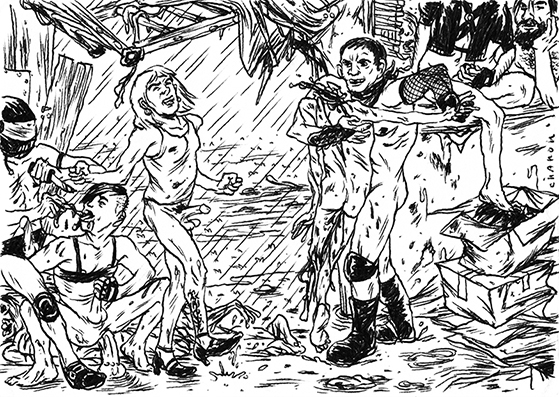


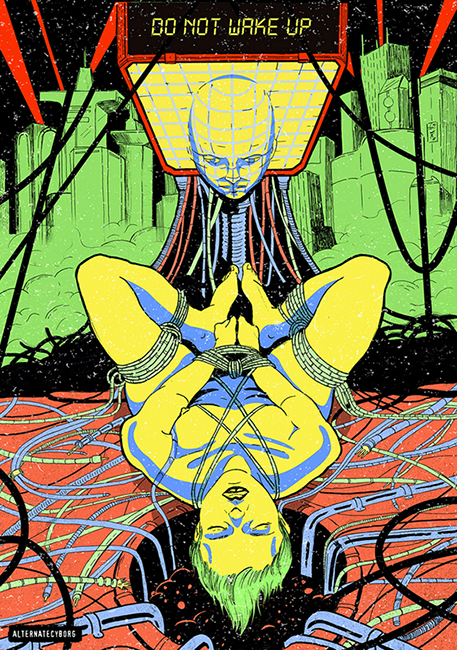
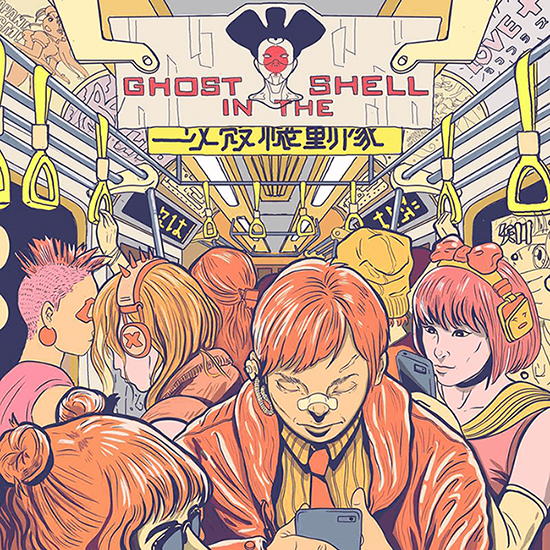


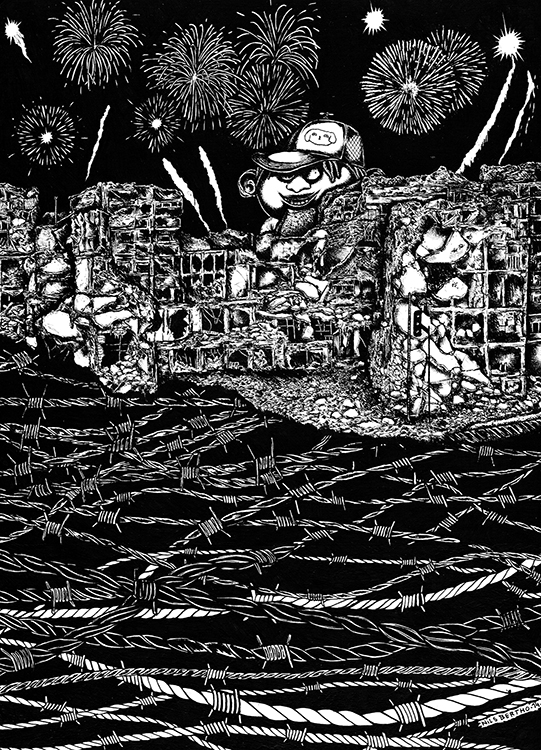


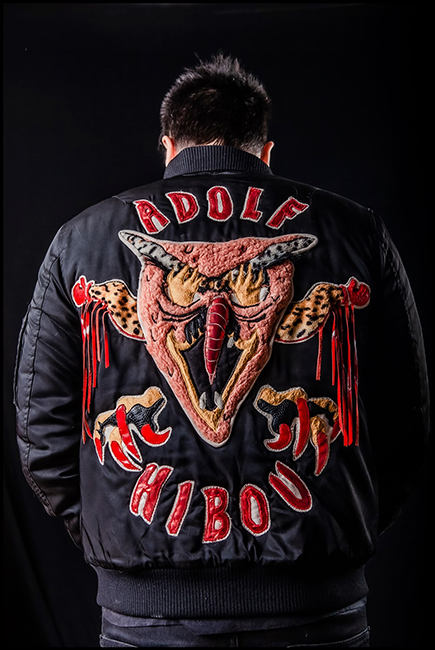

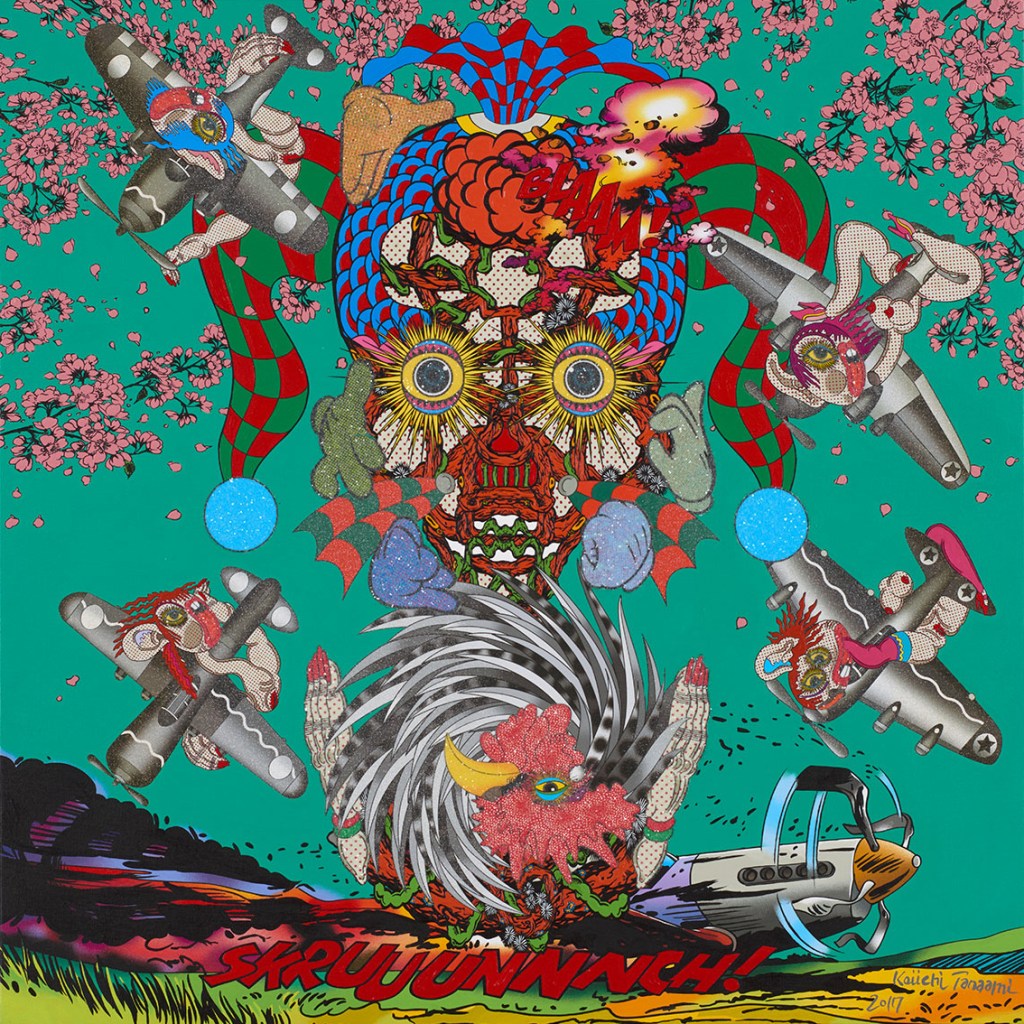
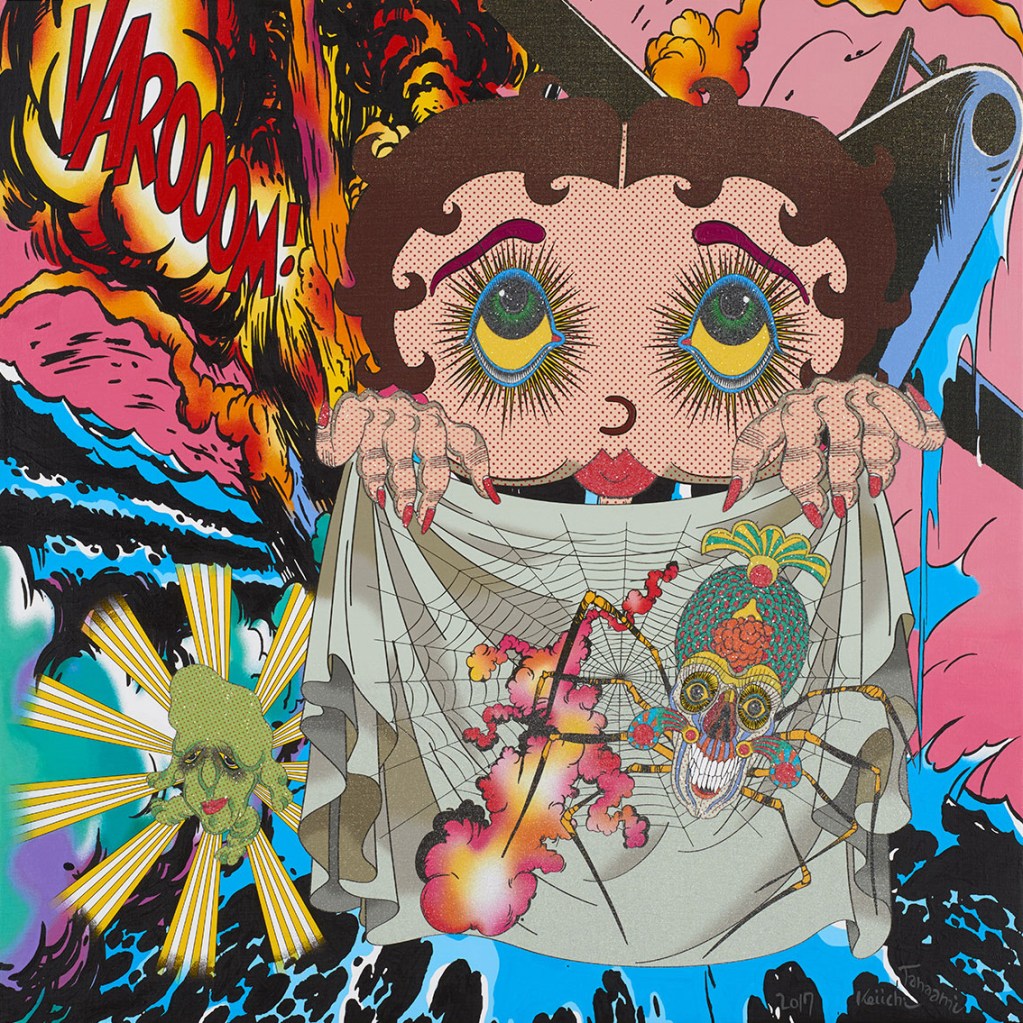
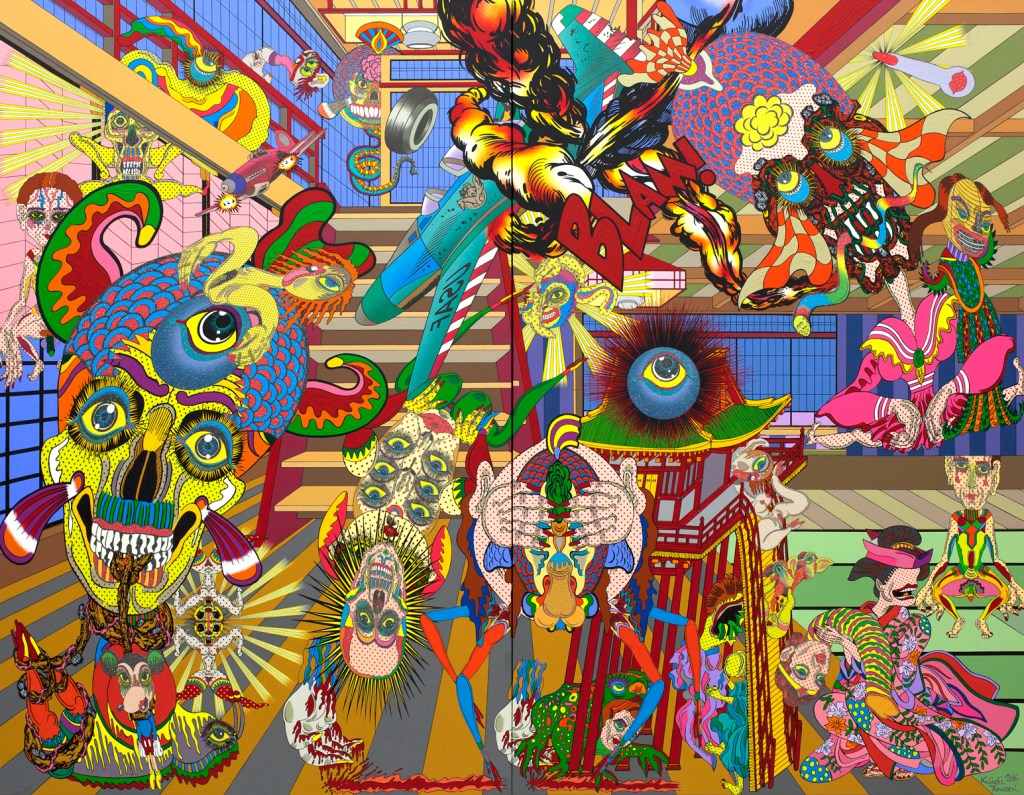
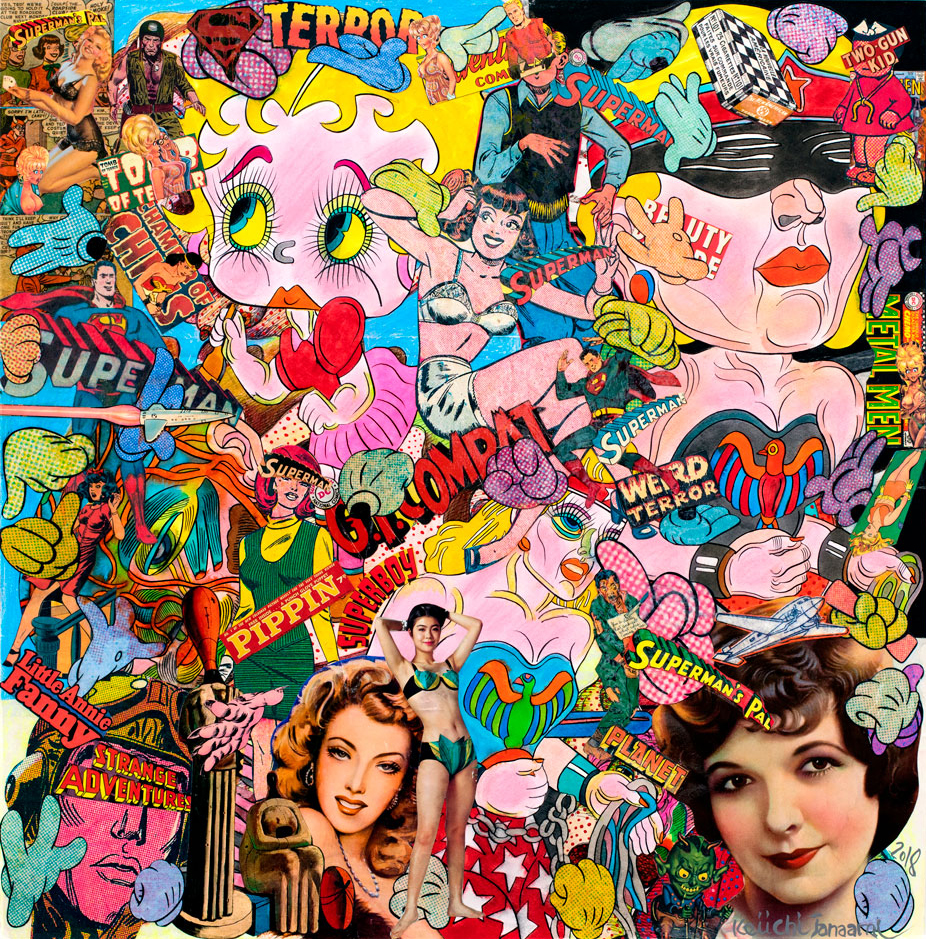
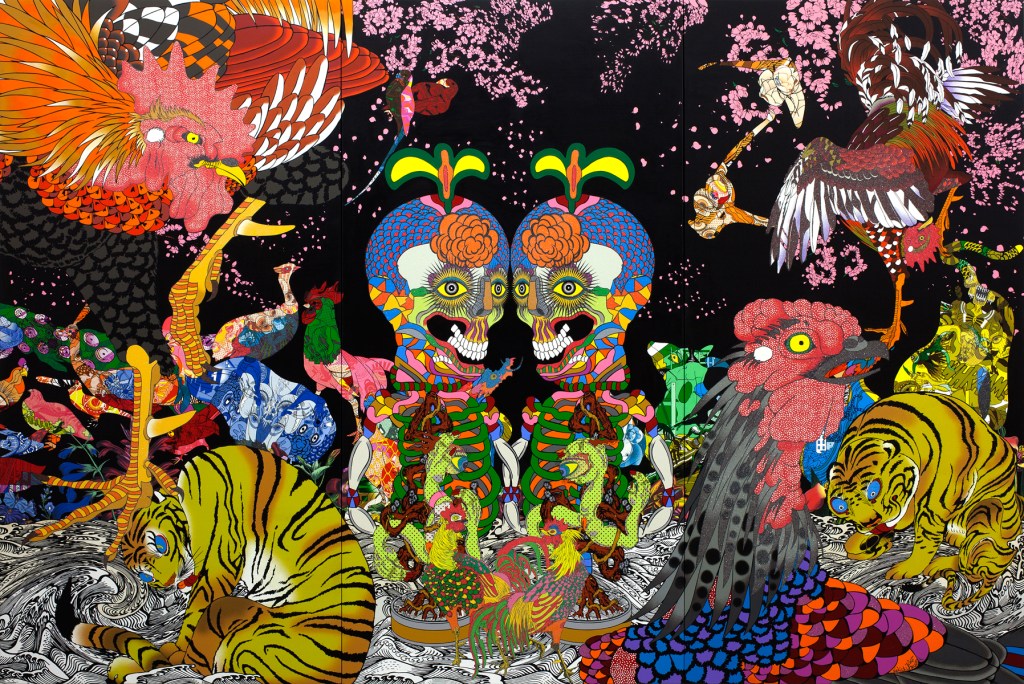


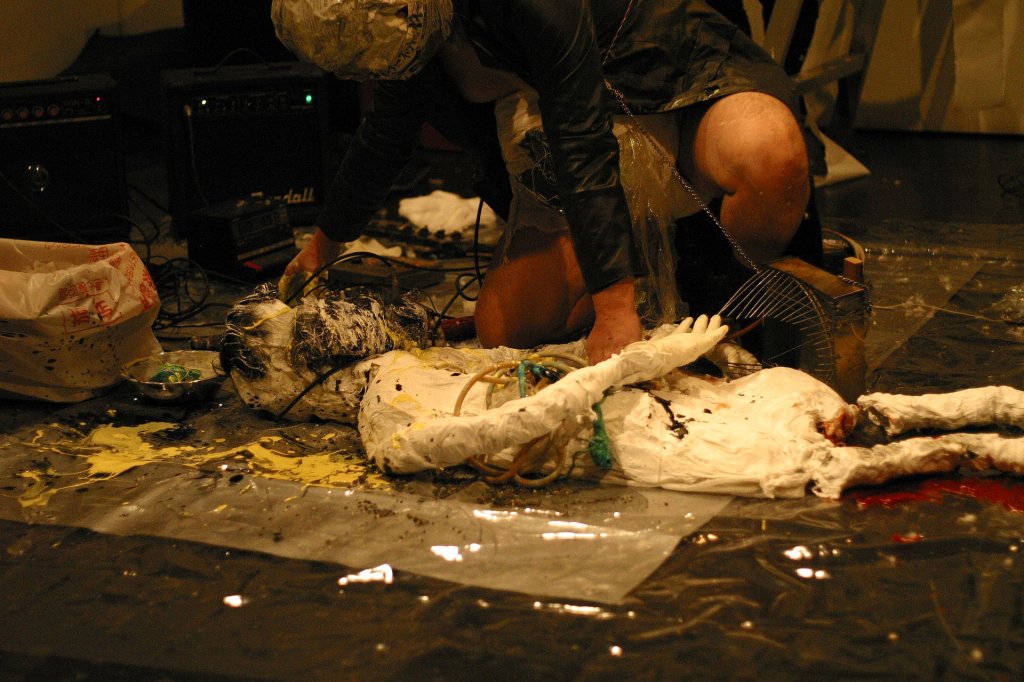

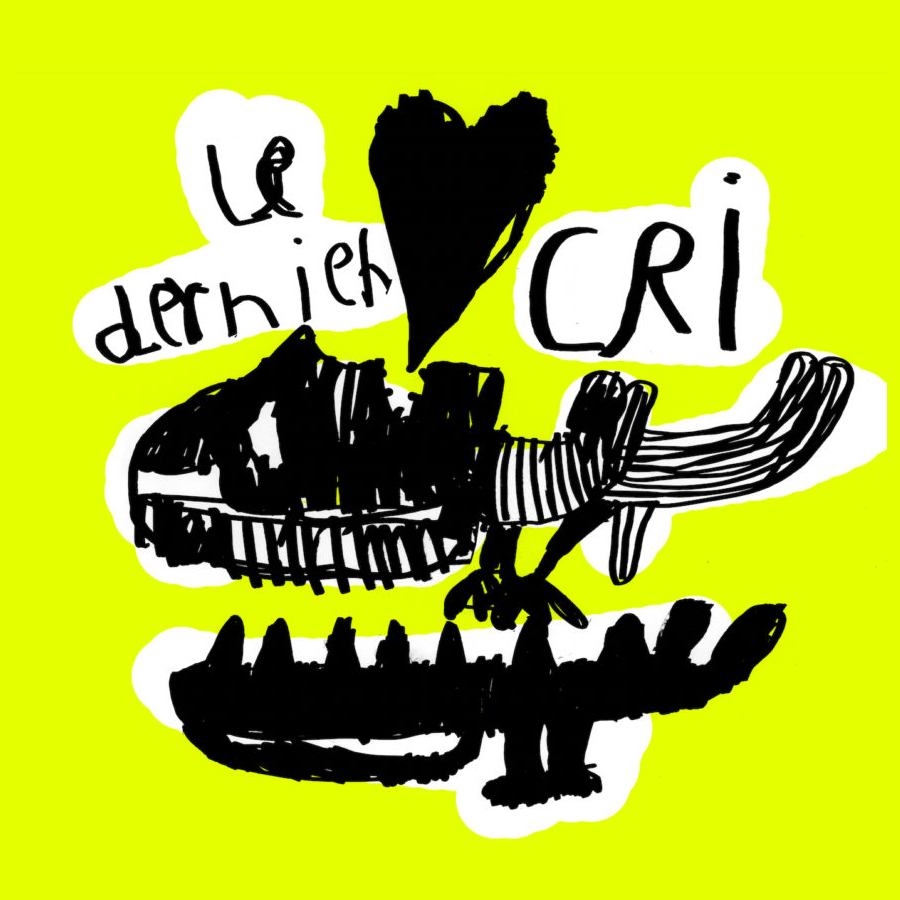

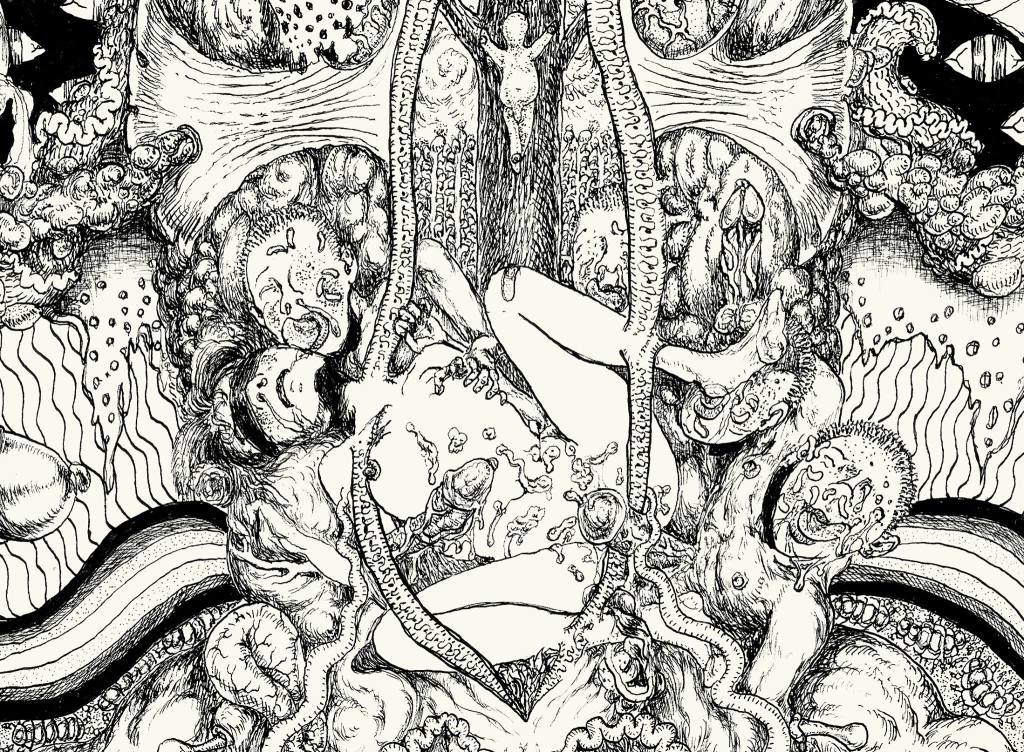


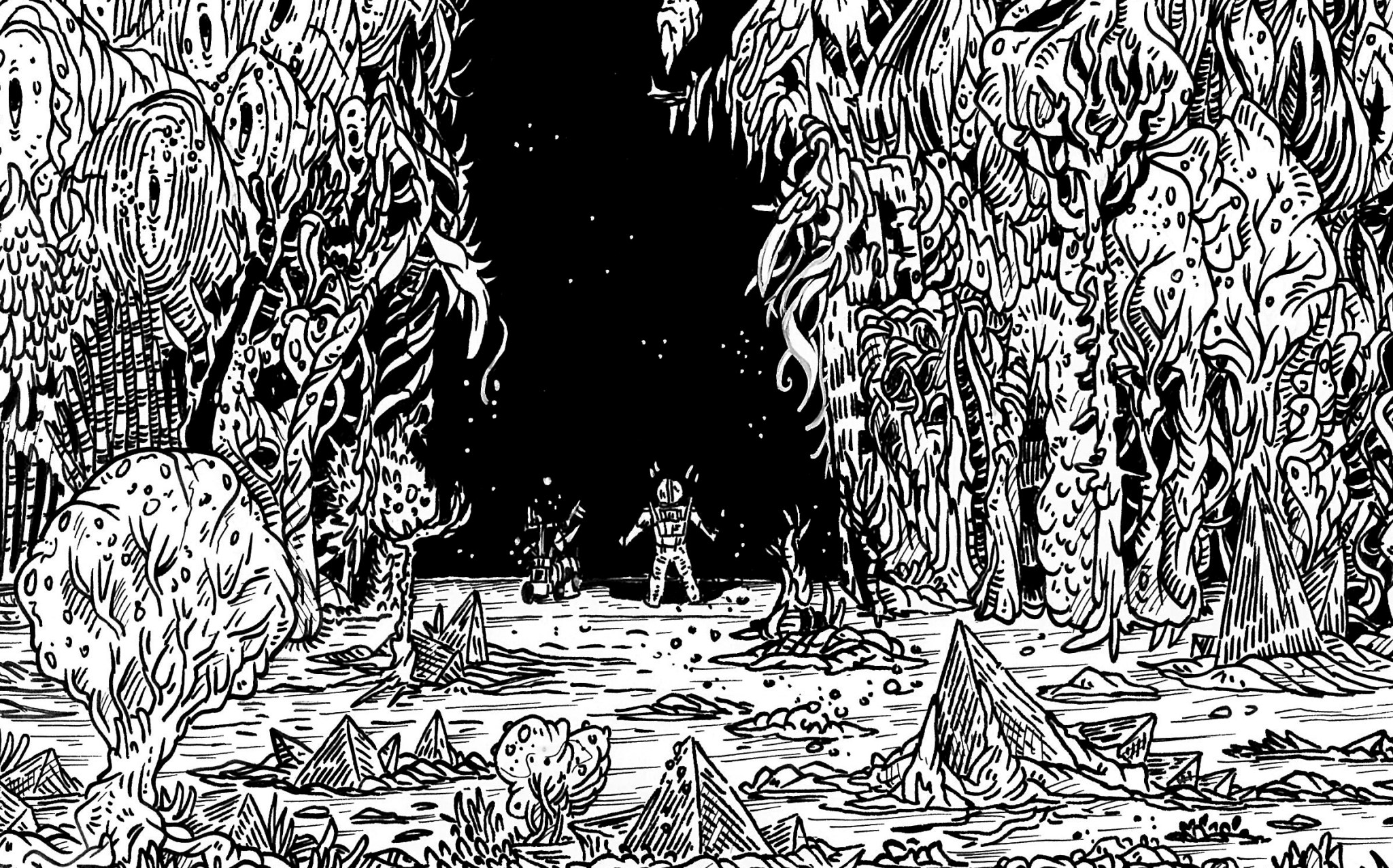
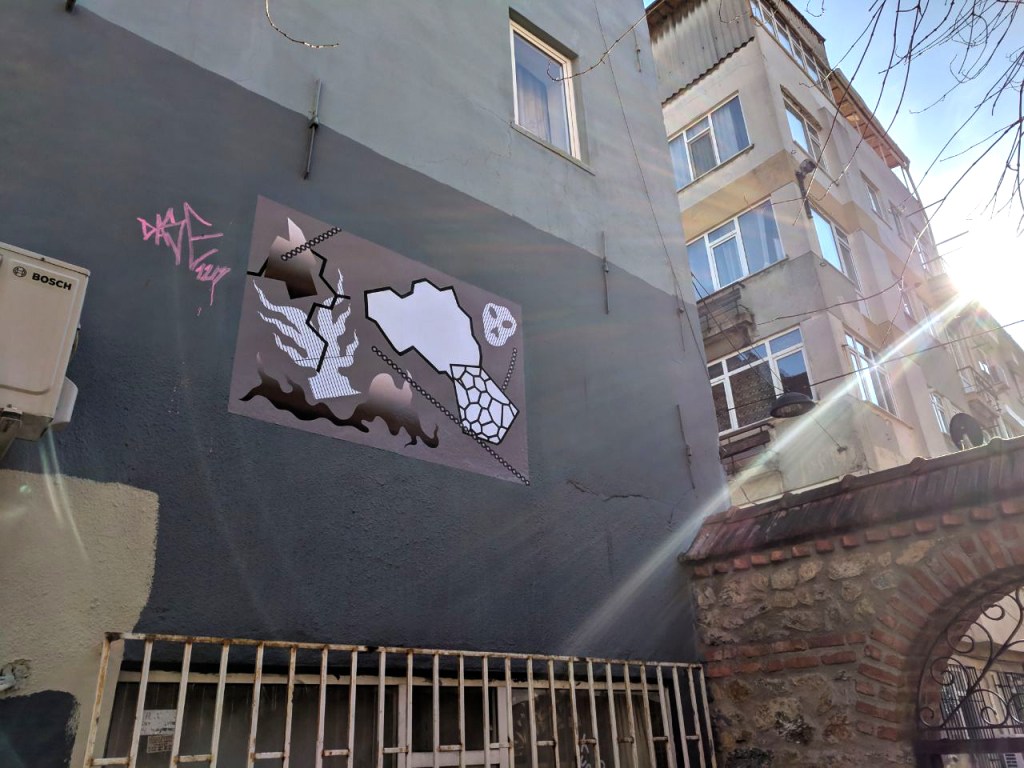


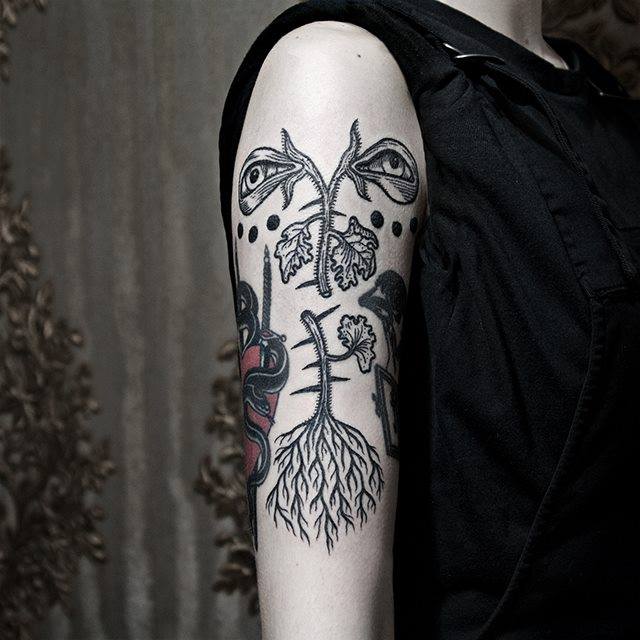
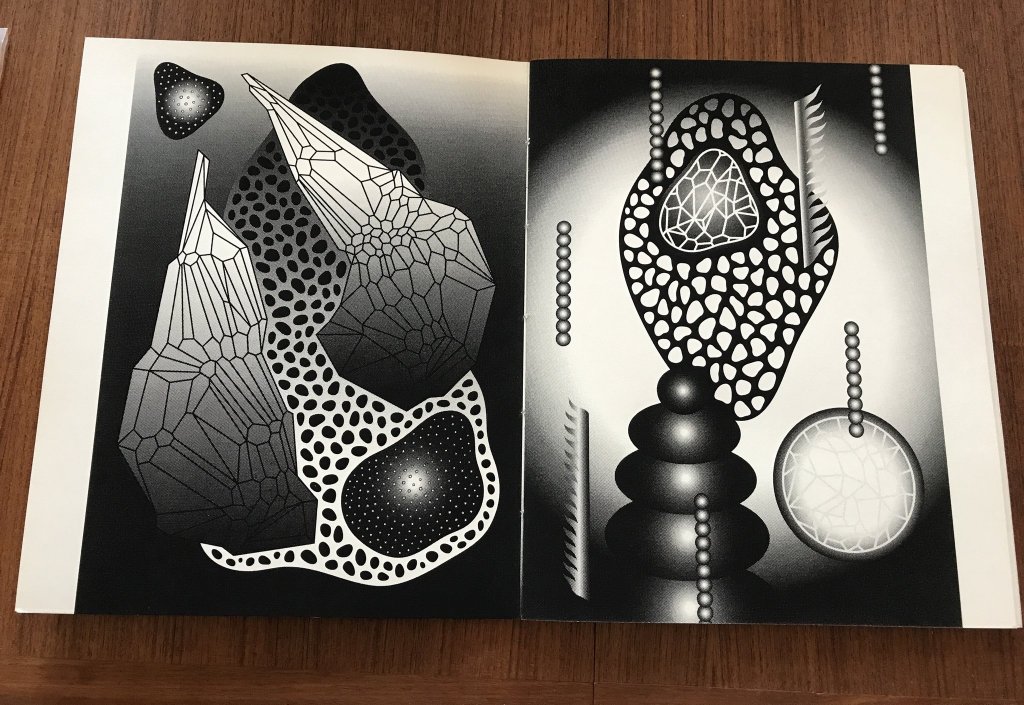


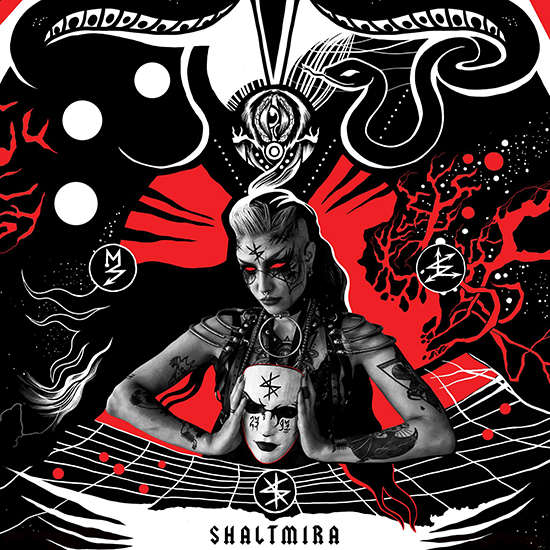


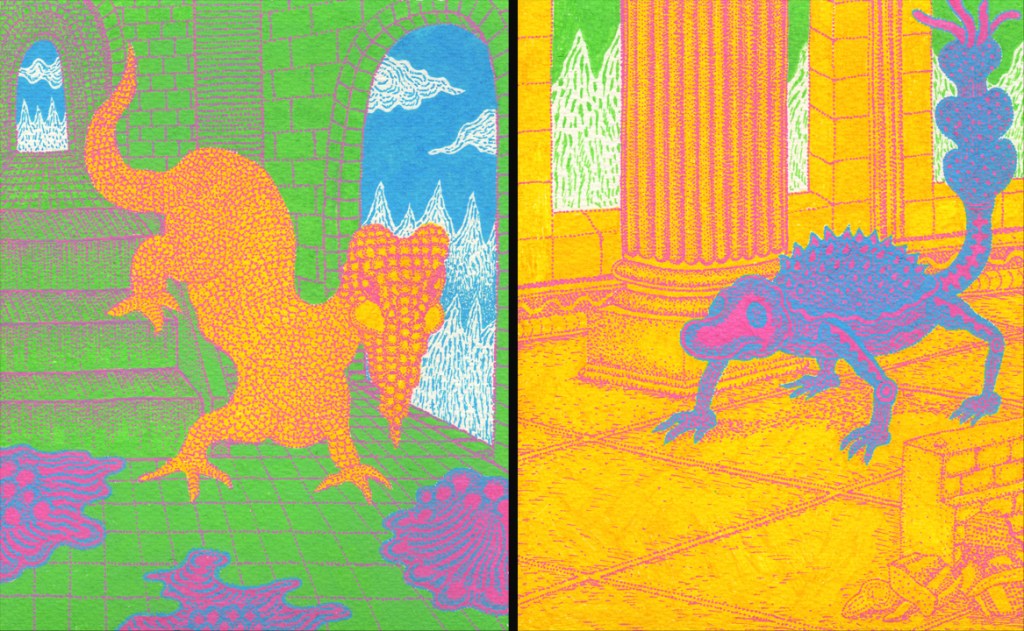
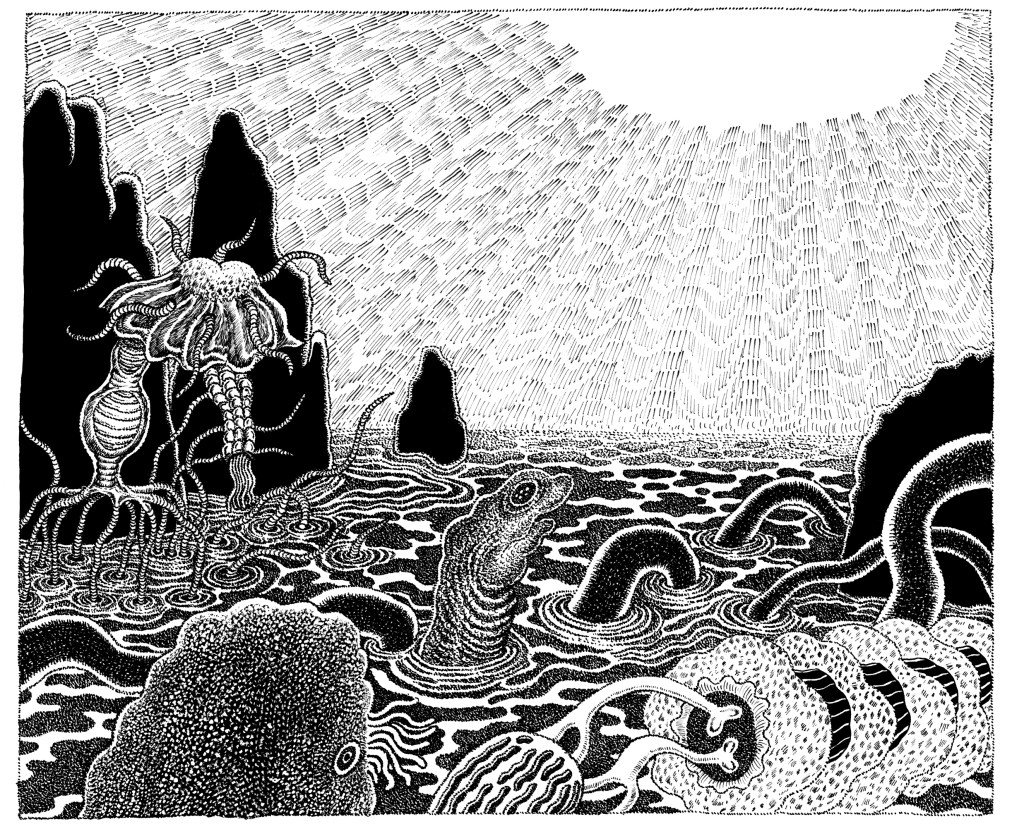
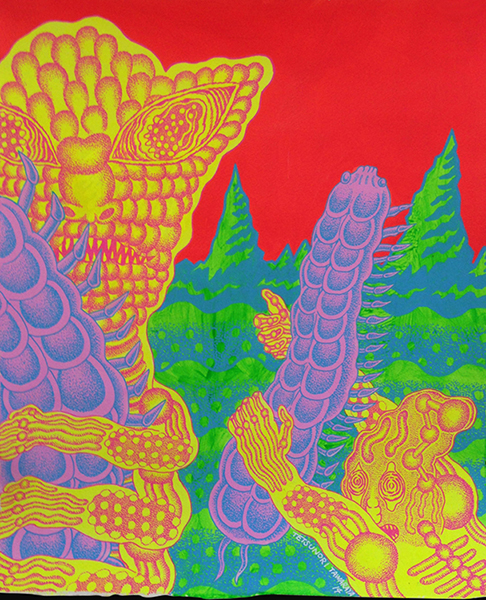
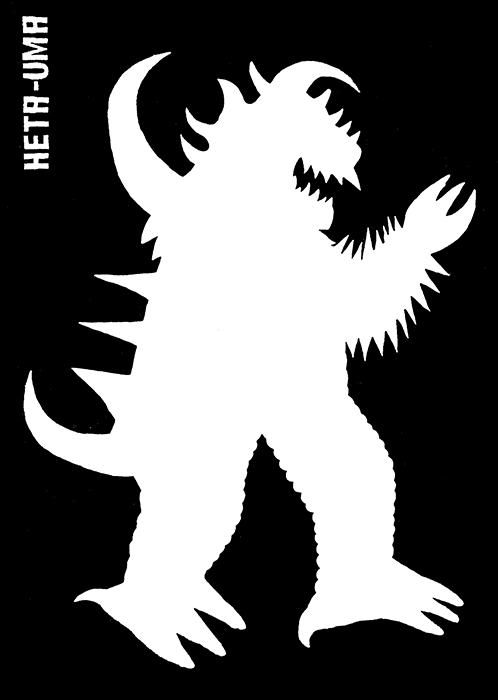

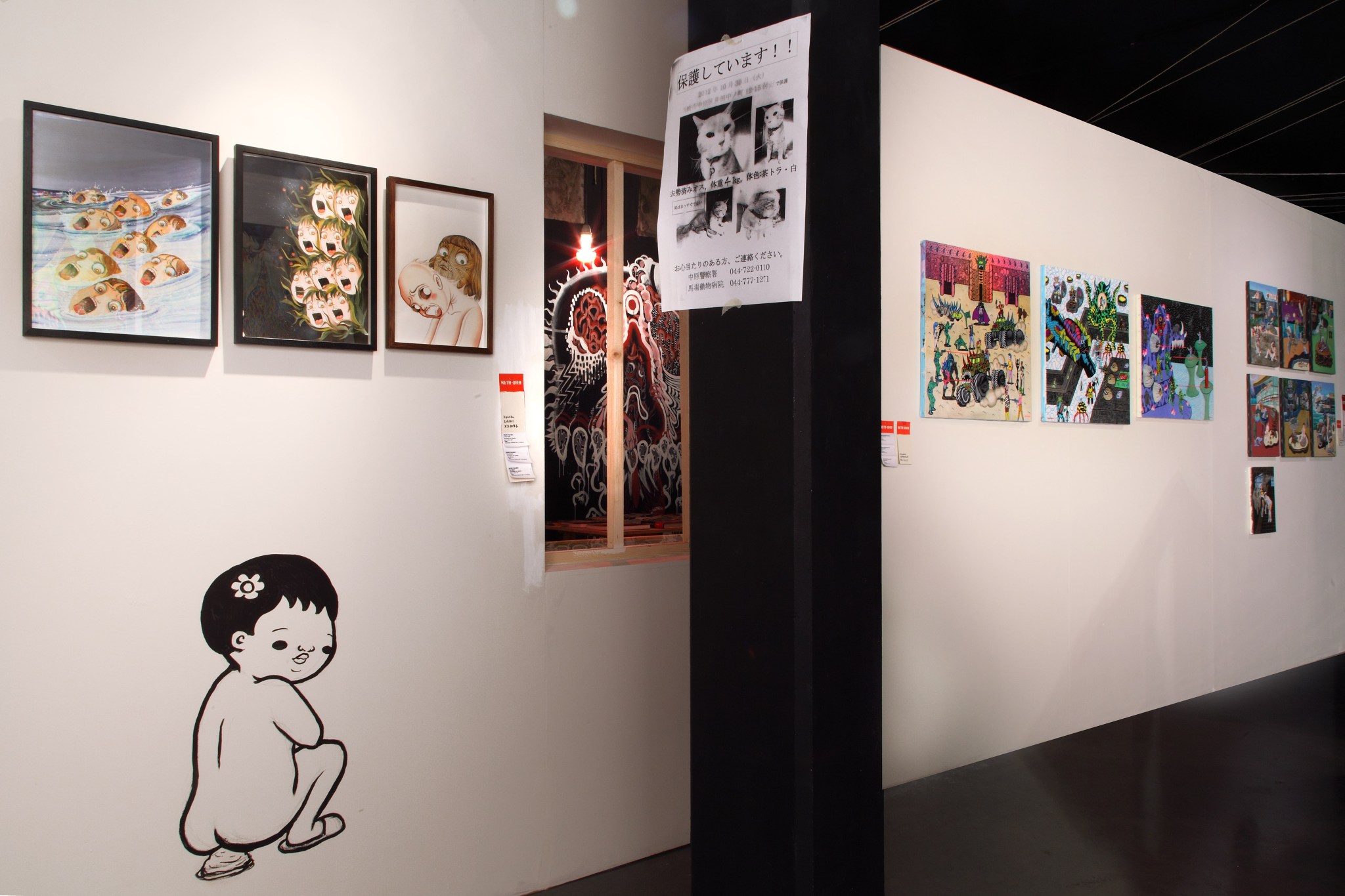
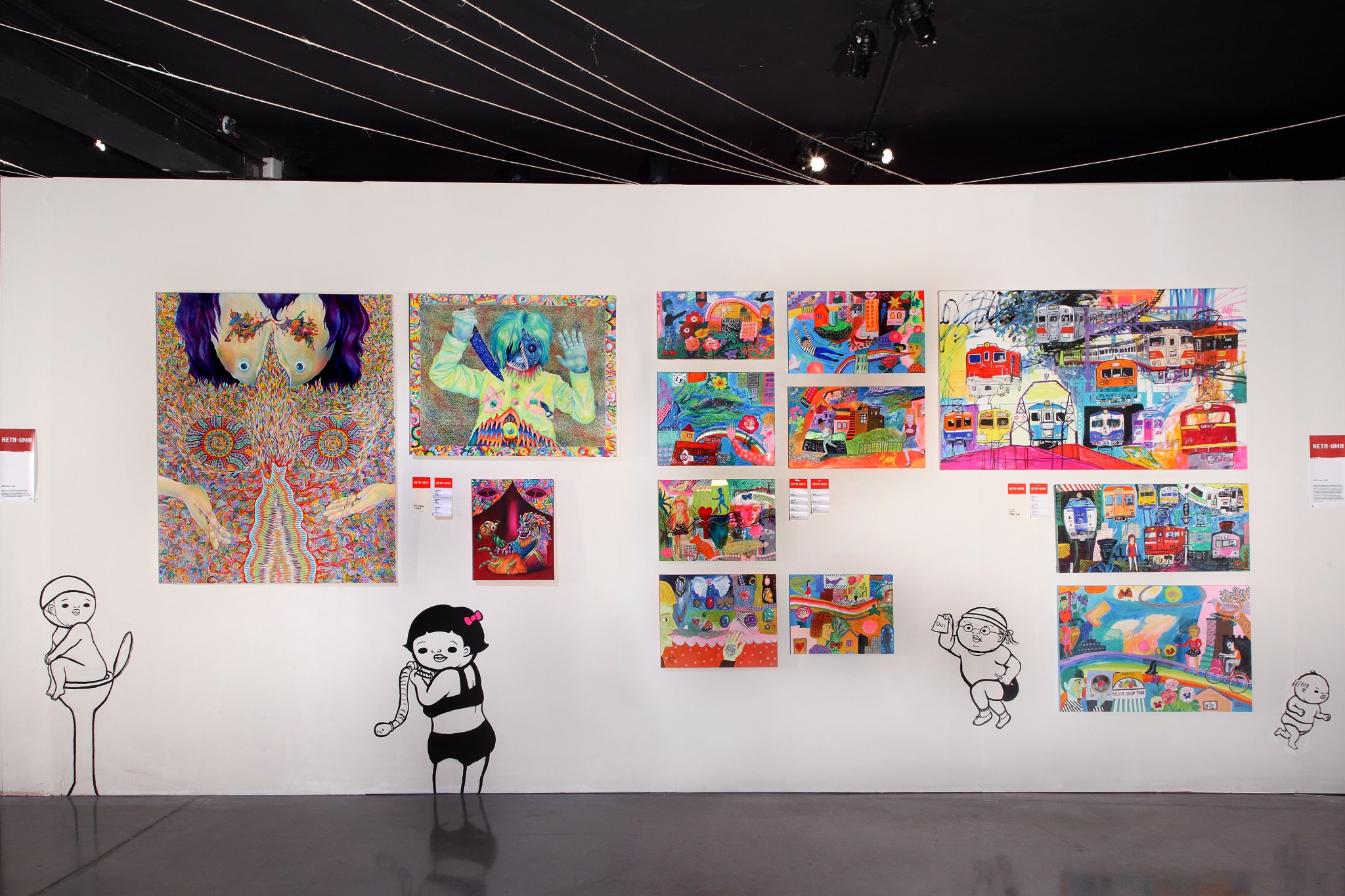
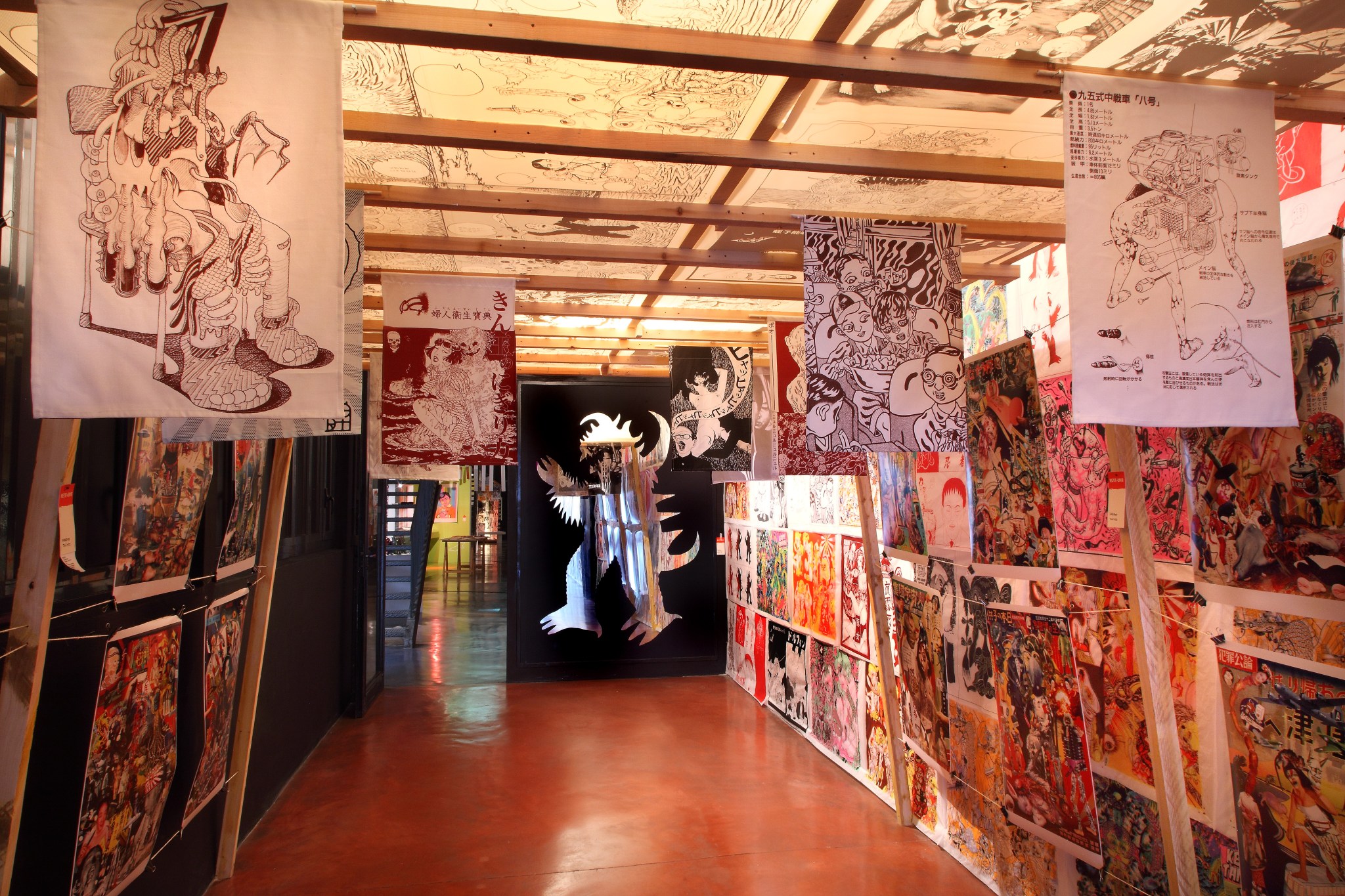
 LÖPÇÜK