son sert dumanı son güçlü çizgiyi otuzumda bıraktım otuzdan düşsün gerisin geriye dünya zamandan çürüyüşümü dikkatle izledim aynamdan ona yanlışlardan bahsettim kıskıvrak yakalanmış kısrakların nasıl ivme kaybettiğini tosba sokakta bir gök yaşar artık inzivasında geçmiş zamanın tıka basa dolu kipleri kirpikler ipek ama evhamlı türk mü bilmem elbette ölçmeden hiç hayallerinden birini kıskanmadım da hiç son sert duman son güçlü çizgiyi otuzumda bıraktım otuzdan düşsün diye volta kesme önümü ölmeden önce kaçıncı gök bu kaçıncı türk yaşar kendinde giderek ölmeden dipdiri yasu dediler mi karşı kıyıdan cevap versem hain olacağım küfür etsem barbar otuzumdan sonra duymayı bıraktım dil bir göğe değse bir yere salya sümük ağlarım yine de anlamam korkma ışıkları bağladım bir makaraya sardırdım elimdeki yumakla yeni günü ördüm kendime otuzumdu bu son
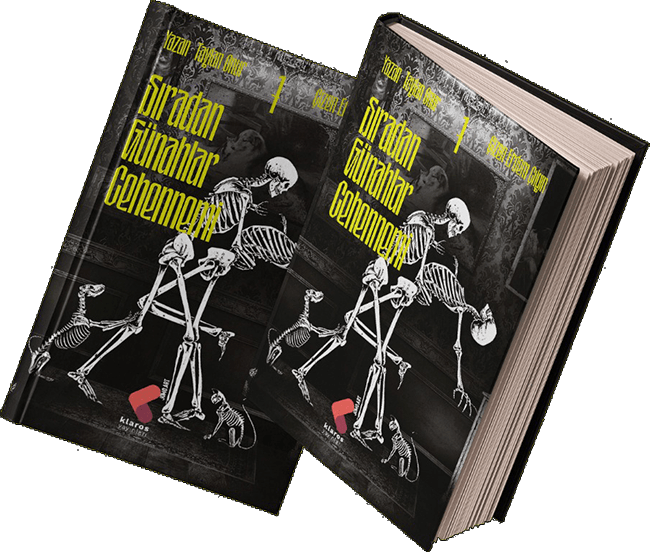
Libidinal cinnetin lirik tezahürü… Ehlileşmiş, düzenliliği kural bellemiş dile, serbest vezin, sağlı sollu girişiyor Taylan Onur. Gökhan Gençay
Bu aşağılık tımarhanede binlerce yıldır tek geçerliliğini koruyan o eski his hâlâ çok taze: İyi bir enstrüman çalabilirsen kapitalizmin zehrini uyuşturma gücü bulursun… Göktürk Yaşar
Kirlenmiş hayatın ilkel aynı zamanda sert anları. Cehennemin sakin izdüşümü ve sözcüklerin yeni başkaldırısı. Taylan Onur ile Erdem Çılgın’dan edebi bir düello… Uğur Karabürk
kafkavâri bir koyuluğu + tam da (en damarın zor x bulun duğu yerden z,erk ediyo) + r = metin: taylan onur çizim: erdem çılgın
Büyükdere35, sanatçı ikilisi Kerem Ardahan ve Bıyıkof’un akrilik ve sprey boya kullanarak, aynı yüzeyde çalışarak ürettikleri resimlerden oluşan “Dysto-daisies” başlıklı sergisini duyurmaktan mutluluk duyar.
“Dysto-daisies”, 5-20 Nisan tarihleri arasında Büyükdere35’te izlenebilir.
Sergiye adını veren “Dysto-daises” kelimesi ideal bir toplum anlayışının anti-tezini tanımlamak için kullanılan “dystopia” ile “daisies” -papatyalar, kelimesinin bir birleşimi olarak karşımıza çıkıyor. İkilinin yapıtlarında keşfedilen bu terim iç içe var olan zıtlıkları, şiddet-dinginlik, hayat-ölüm, melek-şeytan gibi ikilikleri de barındırıyor. Günümüz gerçeklik algısının bulanıklığı ikilinin resimlerinde kayıp ve çaresizlik duygusu uyandıran çorak manzaraların; mutasyona uğramış yaratıkların, üst üste yığılmış gerçeklik katmanlarının imgeleri olarak vücut buluyor.
2017 yılında kurulan Büyükdere35; galeri mekanında farklı disiplinlerden çağdaş sanatçıların sergilerine, çeşitli konulardaki seminerlere, sanatçı atölye ve konuşmalarına ev sahipliği yapıyor.
Kerem Ardahan’ın meşhur ikilisi ‘Moron Brothers’ın Big Baboli Printhouse’daki basım aşamasından enstantaneler.
Ardahan says that he seeks a pure form of expression in his work, and that in his paintings and prints he looks for the purest moments from the basic needs of primitive people and children and the movements and gestures they make to express themselves.
KEREM ARDAHAN X BIYIKOF
Bıyıkof olarak da bilinen Çağlar Bıyıkoğlu (Ankara,1979), lisans eğitimini Anadolu Üniversitesi, Güzel Sanatlar Fakültesi’nde Grafik Tasarım bölümünde aldı. Grey İstanbul, TBWAİstanbul ve Concept gibi reklam ajanslarında illüstratör ve sanat yönetmeni olarak çalıştı. 2013’ten itibaren resim ve illüstrasyon çalışmalarına ağırlık verdi, o zamandan beri hem dijital hem de analog malzemeyle çizmeye, boyamaya devam ediyor.
Sanatçının işleri genellikle zayıflık, çelişki ve çatışma gibi kavramları konu ediniyor. Yeni bir esere başlarken hiçbir plan yapmayan sanatçı, hislerine yoğunlaşarak boş kanvasa boyayla, çizgiyle dokunarak, tuvali kirleterek başlıyor. Bu dokunuşun kendi içinde bir yerlere de değdiğini hisseden sanatçı, bu yolculukta kendiyle bağ kurmaya çalışıyor. Dokunuşları zaman zaman öfke ve şiddet dolu, zaman zaman da sevgi ve şefkat dolu oluyor.
Bıyıkof walking with his painting ‘Sunrise. Nothing will be easy on this day. I know.’ İstanbul, 2023
Çağlar Bıyıkoğlu (Ankara, 1979), also known as Bıyıkof, received his bachelor’s degree in Graphic Design from Anadolu University, Faculty of Fine Arts. He worked as an illustrator and art director at advertising agencies such as Grey Istanbul, TBWAIstanbul and Concept. Since 2013, he has focused on painting and illustration, and since then he has been drawing and painting with both digital and analog materials.
His works often deal with concepts such as weakness, contradiction and conflict. When starting a new work, the artist does not make any plans, he starts by concentrating on his feelings, touching the blank canvas with paint, line, and dirtying the canvas. The artist, who feels that this touch touches somewhere inside hisself, tries to establish a connection with himself on this journey. His touches are at times full of anger and violence, and at other times full of love and compassion.
Kerem Ardahan “Plastic Fantasy” collab w @biyikof, 150 X 150 cm. Acrylic & spray paint on canvas. (2022)
Kerem Ardahan (Ankara, 1983), lisans eğitimini 2005 yılında Gazi Üniversitesi Görsel Sanatlar Eğitimi Bölümü’nde, yüksek lisansını ise aynı üniversitenin Eğitim Bilimleri Enstitüsü’nde 2008 yılında tamamladı.
Sanatçı, bugüne kadar çeşitli sinema ve reklam filmlerinde sanat yönetmenliği yaptı, aynı zamanda 2013 yılına kadar kurucusu olduğu Punta Design’da çeşitli ürün tasarımlarına imza attı. Üç kişisel sergi gerçekleştiren Ardahan, şimdilerde sanat çalışmalarını Kadıköy’deki atölyesinde sürdürüyor.
Yetişkinler olarak günlük yaşantımızda toplumun beklentilerini karşılamayı öncelik edinirken, bir taraftan da birey olduğumuzu hissetmek için özgür alanlara ihtiyaç duyuyoruz. Özgürlüğün reçetesini ise dönüp dolaşıp, koşullandırıldığımız yapının bize sunduğu seçeneklerde arıyor; içimizden gelen seslere kulak tıkıyoruz. Çoğu zaman kendini bu ikilemde sıkışmış hisseden sanatçı, işlerinde bazen bu duruma işaret edip, bazen de çocukluğundan bugüne taşıdığı özgür alanında dans ederek, durumun kendisinde oluşturduğu ruh hâllerini yansıtmaya çalışıyor.
Kerem Ardahan ve Bıyıkof ‘Cry Baby’ sergisinden, Kadıköy Bina, 2021
Kerem Ardahan (Ankara, 1983) completed his undergraduate degree at Gazi University, Department of Visual Arts Education in 2005 and his master’s degree at the Institute of Educational Sciences of the same university in 2008.
The artist has worked as an art director in various movies and commercials, and also designed various product designs at Punta Design, which he founded until 2013. Ardahan, who has realized three solo exhibitions, currently continues his art works in his studio in Kadıköy.
As adults, while we prioritize meeting the expectations of society in our daily lives, we also need free spaces to feel that we are individuals. We look for the recipe for freedom in the options offered to us by the structure we have been conditioned to; we turn a deaf ear to the voices coming from within. The artist, who often feels stuck in this dilemma, sometimes points to this situation in his works and sometimes dances in the free space he has carried from his childhood to today, trying to reflect the moods that this situation creates in him.
Kerem Ardahan ‘Super Cherry Turbo Punch’ sergisi için gerçekleştirilen söyleşi. 22 Ocak 2020
‘Çalışmalarında katıksız bir ifade biçimi aradığını söyleyen Ardahan, resimlerinde ve baskılarında, ilkel insanların ve çocukların temel ihtiyaçlarından ve kendilerini ifade etmek için yaptıkları hareketlerden, jestlerden en saf anları aradığını belirtiyor.’
İşlerin temelinde Bıyıkof ve Kerem Ardahan’ın geliştirdikleri “ortak dil” yatıyor. Zaten Cry Baby sergisi, kolektif bir çalışmanın ürünü. Yani iki ressam sergideki tüm eserleri aynı anda, birlikte üretmiş. “Birlikte çalışırken kollarımız bazen birbirine karışıyordu” diyorlar: Ama bir süre sonra o kadar tek kişi gibi olduk ki birimiz düşündüğüne diğeri çoktan başlamış oluyordu.
Bıyıkof’a göre çalışmalarının en zorlayıcı tarafı bu ortak dili oluşturmak. Ancak, tanıştıkları günden beri Ardahan’la çalışırken “hiç yabancı biriyle çalışıyor gibi hissetmediğini” de belirtiyor.
Sahiden, Cry Baby sergisindeki işlerin iki ressamın kolektif çalışması değil de tek bir ressamın işi olduğu söylense inanılır. Üstelik bu sergideki işleri yaparken önceden uzun uzadıya tasarlamamışlar. “Resmi yaparken duygularımızı takip ediyoruz, hiçbir duyguyu kenara koymuyoruz, ne deneyimliyorsak onu resmediyoruz” diyorlar. (Onur Bayrakçeken’in Independent için yaptığı söyleşiden)
DYSTO-DAISIES
SAVE THE DATE
Opening: 5 April Friday
06:00 PM – 08:00 PM
Büyükdere35 thrilled to announce the duo exhibition titled “Dysto-daisies”, including paintings by the artist duo Kerem Ardahan and Bıyıkof, using acrylic and spray paint on a single surface.
The word “Dysto-daises” appears as a combination of the fictional term “dystopia”, meaning a very bad or unfair society in which there is a lot of suffering, and the word “daisies” – daisies. Although acknowledging the possibility of false hope in a bleak future, the term “Dysto-daises” from the duo’s work provides a sense of consistency and serves as a darkly humorous form of expression.
The exhibition will be on view between 5-20 April at Büyükdere35.
Founded in 2017, Büyükdere35 hosts exhibitions of contemporary artists from different disciplines, seminars on various topics, artist workshops and talks in its gallery space.
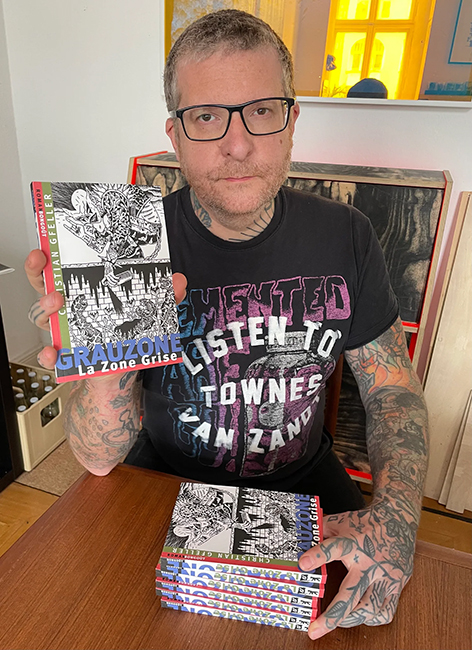
Christian Gfeller with his novel ‘Grauzone’ la Zone Grise (Bongoût) 2024
– Bourgeois de merde ! Vides de sens, vides de substance, résignés dans votre putain de médiocrité !
Henry savait être philosophe. Il attrapa le tube de Liqui Moly, en dégorgea deux noisettes de pâte sur un vieux chiffon qu’il étala et remit au petit Karl.
Henry
Les mains calleuses enduites de cambouis, les yeux gris clair brillaient de satisfaction. Henry s’essuya les paluches sur son froc, cracha au sol, le glaviot ricocha dans la poussière. Le carburateur de la Husqvarna CR250 tournait.
— Passes-moi la clé de onze, qu’il dit en direction du petit Karl.
Le gamin fouilla dans la caisse à outil, sortit la douze, la huit, la seize et enfin la onze. Le môme tendit la clé. Derrière la palissade de bois vermoulu passait un couple de trentenaire à vélos électriques, Henry les suivi du regard jusqu’à ce qu’ils disparaissent derrière la rangée de bouleaux.
— Bourgeois de merde ! Vides de sens, vides de substance, résignés dans votre putain de médiocrité !
Henry savait être philosophe. Il attrapa le tube de Liqui Moly, en dégorgea deux noisettes de pâte sur un vieux chiffon qu’il étala et remit au petit Karl. Le visage du gamin s’éclaira, il connaissait la procédure et se mit au boulot aussi sec. Henry se leva, fixa l’horizon, le ciel s’assombrissait. D’un geste de la main il arrangea une mèche de cheveux gras derrière son oreille, d’un coup de clé à molette décapsula la Berliner Pils tiède qu’il venait de sortir de sa poche arrière. Il faisait lourd en cette fin d’après-midi, lourd comme il peut le faire en été dans la plaine continentale de Prusse. Sur la petite radio portable le bulletin météo annonçait des orages avec vents violents, risque de grêle et d’inondations. Tandis que le speaker invitait les Berlinois à reste au sec, Henry descendit sa bière de trois grandes gorgées et refréna un relent d’écume de houblon. Le petit Karl briquait consciencieusement le réservoir orange de la moto-cross.
In Conversation with: Christian Gfeller and Bruce LaBruce. This interview is intended for adults only.
Christian Gfellerin a dangerous conversation with Canadian filmmaker Bruce LaBruce. They are speaking about LaBruce’s recent works and Death Book II.
John Sinclair “Der Pesthügel von Shanghai” 1983
Those who controlled these units had incredible power over those who had less, who in turn strove to please the powerful even at their own detriment, thus sustaining this pyramidal system of the power of a few…
A long time ago in a galaxy far, far away there lived a species of bipedal mammals, for the most part quite sad-looking specimens with a deficient and complex social system constructed around their apparently built-in bellicose and greedy characters. A tiny fraction of them controlled such a vast portion of food and resources that it forced a large portion of the remaining ones to suffer hunger, misery and often death. Of this tiny group, over half were obese and morbidly continuously craving for always more food. Many of them – although the real number is only subject to speculation – would sniff, inhale, inject, lick, swallow all kinds of more or less dangerous poisons in pursuit of minutes of pleasurable escape from their grim hopeless condition – or perhaps it was only out of boredom. But then again, a behaviour usually uncommon among intelligent animals was alarmingly wide-spread: a self-destructive drive that culminated in killing not only members of their own species, even blood relatives, but also themselves. Perhaps it was the result of their rigid and equally calamitous social organisations: one of its cornerstones was the system of exchange they had established, at first a trade of of physical objects, but then replaced by intangible units whose value was fixed by fantastical agreements, a giant calculus on which the well-being of the entire population depended. Those who controlled these units had incredible power over those who had less, who in turn strove to please the powerful even at their own detriment, thus sustaining this pyramidal system of the power of a few… All this while indefatigably all of them went about the business of destroying as much as they could of their surroundings: piercing holes in the skies, spoiling the waters, massacring the weaker species, ruining most green things which they depended on to breathe… fully conscious of the extent of the effects of their cataclysmic wreckage.
Well, I was telling this tale to my soulmate one day, lamenting the lunacy of mankind. Unfazed, she replied cooly: ” Yeah… anyway, one of these days a huge comet will hit Earth and then it’s all over, end of story.”
Good Lord, what clairvoyance! What a relief. Just the thought of it… I would just sit there peacefully, enjoying the spectacle. And then nothing… Since this would be the end of everything, I would not even miss anything after my death. No regrets.
Anyway. Welcome, sit down, relax and enjoy this first issue of L Y N X.
After strolling through the corridors of the Academy of Fine Arts in Liège during her training in monumental painting, followed by the study of Comics at St Luc in the same city, she left for Brussels to make new experiences. At that point she became active as an event planner in different locations, including the E2 Gallery “Le Sterput”. She became in charge of organizing various types of events, such as exhibitions, concerts, happenings, performances, editions, etc…
From this rich background built through involvement and connections, she aspired to get back to her first discipline, personal and current, the art of illustration. Anka also published a book of Darkam’s illustrations and recorded a very transgressive live performance held as part of the exhibition. Apart from this, we can’t help talking about the artist’s productions for many different collectives and publications such as ‘Gonzine’, ‘Alkom’x’, ‘EpOx et BoTOx éditions’. Also the latest works for the ‘Archives de la Zone Mondiale’ and a punk-rock photography classic ‘Dunkle Bitumen’ are some of Pauline Masha Constant’s remarkable works as a multidisiplinary artist.
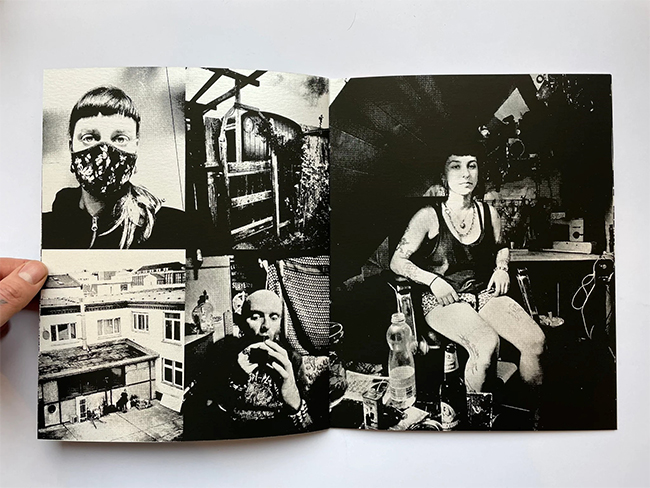
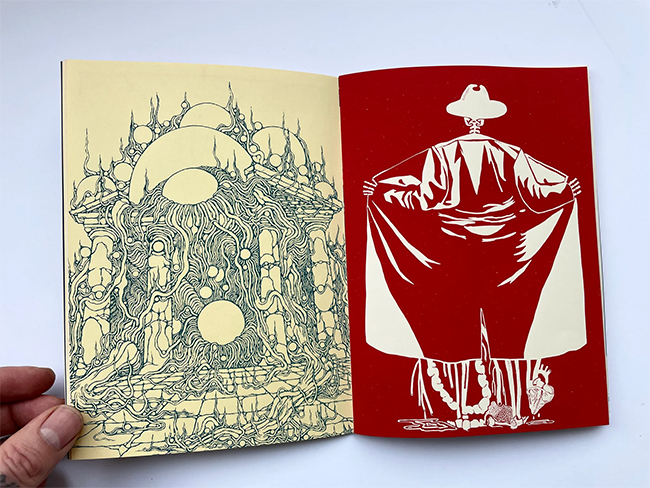
We are back with another Bongoût classic, dear readers. This time Zezeah, one of our local Turkish talents, is on the cover with a grotesque drawing and we are really proud of this. As the fanzine cover suggests, the atmosphere is darkly otherworldly; with freehand drawings by Les Sœurs Siamoises and Joost Halbertsma‘s symbolic narrative accompanied by dense, detailed illustrations by Jurictus, Zezeah and Sam Rictus, and all this chaos is balanced by André Lemos’ structural graphic sense.
Joost Halbertsma x Zezeah, Bongoût n987 (Bongoût) 2024
André Lemos x Jurictus, Bongoût n987 (Bongoût) 2024
Sam Rictus x Les Sœurs Siamoises, Bongoût n987 (Bongoût) 2024
Bongoût n987 (Bongoût) 2024
We were surprised to see the studio, which usually produces works with a rock’n roll spirit, return with a fantastic, grotesque cast straight out of the darkness of Middle-earth. Beside this curatorially, it is a real masterpiece, and we hope you not to miss it.
Derrida’nın sözmerkezci olarak eleştirdiği batı metafiziği, Darkthrone, fanzinler ve fanlar üzerinden (arke-yazı) metafiziksel olarak incelendiğinde büyük bir merkezi yapı oluşturduğu görülür. Ama Darkthrone’un filli eylemleri, her geçen gün değişen müzikal yapısı ve ortaya koydukları çeşitli kavramlar, Derrida’nın tam da ilgilendiği o eşik açısından büyük bir önem atfetmektedir.
Burak Bayülgen
Fenriz ve Nocturno Culto ikilisinin sunduğu ezgiler özellikle bir döneme (80’lere) ve bir yöne (Kuzey’e) atıfta bulunur. Bu 80’ler ve Kuzey merkezli düşünce biçimi değişen sisteme rağmen korunmak istenmiştir. Bundan ötürü “şu an” babında hep “öteki”yle olan ilişkisine bakılır. “You call your metal black? It’s plastic, lame and weak!!!” “Şu an”ın karşısındaki geçmiş mitsel olarak ele alınırsa Derrida’nın yapısökücülüğüne tezat oluşturan tam bir merkezci tuzağa düşer. Nasıl ki siyah ile beyaz birbirlerine bir iz bırakarak anlam kazanıyorlarsa, 80’ler (I am the Graves of the 80’s), 90’larda (plastic, lame and weak) bir iz bırakmıştır ama 80’ler 90’ların içinde anlam-dışıdır. Bu yüzden Batı metafiziği yerine Darkthrone metafiziği demek daha doğru olacaktır. Bu metafiziğin merkezinde neler var? Öncelikle “varlık” var (Şeytani bir Oluş), sonra bu Oluş’a atfedilen Doğa, 80’ler, heavy metal ve yeraltı… Hepsi de bu yapının “Merkez”idir. Tanrı’nın sözleri gibidir. Karşısına ancak bir boşluk koyulabilir. Bunlar Darkthrone metafiziğinde söz’e denk düşer. Fenriz ve Nocturno Culto’yu ele alan fanzinler ve fanlar bu maddelerin karşısına ancak büyük bir boşluk koyabilir. Bu sebeple de Derrida’nın “vahşi” bulduğu bu yapının içinde oldukça sözmerkezci kalırlar. Derrida tam da bu noktada karşısına bir şey koyulamayan Oluş’un yapısökümünün yapılmasını önerir.
Lakin Derrida’yı sevindirecek bir şey varsa o da Darkthrone’un algı-metafiziğiyle örtüşmeyen dönemsel gerçekliğidir. Derrida da Batı metafiziğini sözmerkezci oluşundan ötürü eleştiriyordu zaten. Yukarıda bahsedilen söz merkezci yapı, Fenriz’in öve öve bitiremediği fotokopi fanzinler venostalji düşkünü fanatikler tarafından kabul görmüş bir arke-yazı’dan ibarettir. Zaten bilinen, uygulanan ama yazıya dökülmeyen, dökülmesine de gerek kalmayan, aşkın dilin açıklayamadığı şeylerdir. Ama sözmerkezci metafizik ile dönemsel gerçeklik arasında Fenriz ve Nocturno Culto ikilisinin Oluş’u bakımından çok büyük bir zıtlık vardır. Bu Oluş Tanrısal maddeler karşısında bir hiçlik barındırmamalıdır.
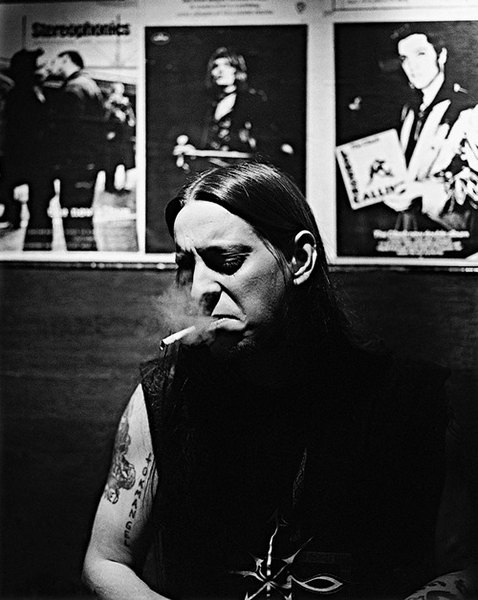
Gylve Fenris Nagell (photo credit: Peter Beste)
Artık Darkthrone basitleştirerek, indirgeyerek yahut hiyerarşik bir düzeyde değil, aşkın bir şekilde Şeytani Oluş’u, yeraltını, 80’leri ve black metal’i anlamlandıracaktır.
Nedir bu dönemsel gerçeklik peki? Bu dönemsel gerçeklik de sözmerkezci midir? Neden Darkthrone’un dönemsel gerçekliği ile metafiziği arasında bir fark vardır? İlk olarak 80’lere eğinen Darkthrone’un dönemsel ve müzikal Oluş’una bakmak gerekir:
Öncelikle, Darkthrone müzik hayatına 90’larda başlamıştır ve tam da Derrida’nın yapısökücülüğünde önem atfettiği eşikte durmuştur. 80’ler ise Fenriz’in bilhassa hayranlık duyduğu müzikal ve kültürel bir dönemdir. Aslında Darkthrone ne 80’ler ne de 2000’lerdir. Bir taraftan da her ikisidir. 90’larda izledikleri müzikal yapı bugün “True Norwegian Black Metal” olarak mottolaşmış ikinci dalga black metal alt-türüne denk düşer. 2000’lerde ise 80’lerin crust-punk’ına yaklaşan, speed metal ile dinamikleşen, tüm kitleler için black metal fikrine karşı çıkan eşiktedir. Burada yeraltı/kitlesel gibi bir hiyerarşik karşıtlık sezilebilir. Ama tam da akabinde New Wave of Black Heavy Metal gelir… Buradaki “black” kelimesi, new wave’den de heavy metal’den de bağımsızdır. Fenriz’in söylemlerinde ne öncül bir müzik türünü ne de “ardıl olarak” resmileşecek bir formu kapsamaktadır. Fenriz ve Nocturno Culto tam da eşikte dururlar. Aksi taktirde ya öncül bir müziği (klişe) ya da form olarak bundan sonra aynen tekrarlanacak bir müziği icra etmek zorunda kalacaklardı. Bu yüzden Darkthrone için “yeraltı” artık bir merkez oluşturmamaktadır. Karşısında bir boşluk yoktur. Yeraltı/kitlesel karşıtlığındaki hiyerarşi, Fenriz’in “direniş” olarak adlandırdığı sınırda (The Underground Resistance), yerine ne koyulursa koyulsun, aynı eğinmeyi barındırmayacaktır. Darkthrone metafiziğinde fanzinler ve fanlar tarafından kabul görmüş olan “yeraltı,” tipik bir sözmerkezcilik idi. Fakat Fenriz yeraltı’na “direniş” kattıkça (yani eşikte durdukça) hem bir yeraltı müzisyeni olacak hem de kitlelere hitap edecektir. Aksi takdirde Fenriz ve Nocturno Culto ya yeraltında hapsolacaklar ya da bir hiç olacaklardı. Şimdi bunu somutlaştırmak gerekir:
Fenriz’in bir internet sitesi olarak başladığı “bandoftheweek” ile speed/heavy/thrash/black türlerinde müzik yapan hem yeni hem eski, hem ikisi hem de ikisi de olmayan grupları tanıtması merkezci yeraltı’nı yok sayar. (Those Treasures Will Never Befall You). Darkthrone metafiziğinde yeraltının ötekisi düşünülemez. Gerek fanzinlerin gerek fanların metafiziksel algısına göre yeraltının karşıtlığı hiçliktir. Halbuki “bandoftheweek” için seçilen gruplar ne yeraltıdır ne de kitleseldir. Aynı zamanda hem yeraltıdır hem de kitleseldir. Tıpkı Derrida’daki gibi farklı kavramlar oluşmaya başlamıştır. Fenriz bu yapıda “hayalet” kavramını benimser ve orada durmasını bilir. “Yeraltını” desteklerken “yeraltından” çıkarır. Bu, kitlesel olduğu anlamına da gelmez ama aslında hem ikisidir hem de hiçbiri…
Fenriz’in ve Nocturno Culto’nun fanzinler ve fanlar tarafından kabul gören metafiziğinde Oluş’un karşısına koyulacak olan şey bir boşluktur. ŞeytaniOluş’un karşısına Tanrı’yı koymak zordu. Doğa’nın, 80’lerin ve yeraltı’nın da karşısına bir “öteki” yerleştirmek mümkün değildi. Eğer konulsaydı, hiyerarşik düzeyde Darkthrone’un yerine başka bir grubun Oluş’undan söz etmek kolaylaşacaktı ve tüm buraya kadar söylenenlerle özdeşleşecekti. Ama Darkthrone’un benzersizliği, Oluş’un karşısına koyulan bir boşluktan kaynaklanmamaktadır. Aksine Darkthrone’un hayalet bir formunun olmasından kaynaklanmaktadır. Artık Darkthrone basitleştirerek, indirgeyerek yahut hiyerarşik bir düzeyde değil, aşkın bir şekilde Şeytani Oluş’u, yeraltını, 80’leri ve black metal’i anlamlandıracaktır.
An introduction to the Black Metal scene of Bergen, Norway.
Fenriz ve Nocturno Culto Doğa’ya aşıktır ama ne Doğa’nın içinde eriyip gitmiştir ne de Doğa’ya egemenlik kurmuştur.
Şimdi de bu eşiği Doğa üzerinden ele almak gerekir. İroni yapar gibi gelecek ama Doğa için de metafiziğe bağlı kalınmak zorunludur ama Fenriz’in fiili eylemleri doğa ile kültür arasında bir eşikte durduğunu kendiliğinden ortaya çıkaracaktır zaten. Doğa, Darkthrone’un hem ŞeytaniOluş’unda hem de liriklerinde aşkındı. Karşısına “kültür” konulamazdı. Yine de Darkthrone’un medeniyet ile olan çekingen ilişkisi hem doğaya olan aşkın hem de müziğe olan içkin bir eşikte durmayı gerektiriyordu (Hiking Metal Punks Forever, Norway in September, To Walk The Infernal Fields). Fenriz ve Nocturno Culto Doğa’ya aşıktır ama ne Doğa’nın içinde eriyip gitmiştir ne de Doğa’ya egemenlik kurmuştur. Doğa’nın aşkınlığı müzik ve liriklerinde ne kadar içkinse, Darkthrone’u çok daha tekil bir gruba dönüştürür. Derrida da hep farklı kavramlar ortaya koyuyordu çünkü aksi takdirde hiyerarşik yapının aynı işlevselliği tekrarlanacaktı. Darkthrone için de Doğa bu yeni kavramlar açısından önemlidir. Derrida’nın yapıbozuculuğunda tek bir Oluş yoktur. Bütün bunların dışına çıkar gibi görünür ama aslında eşiktedir. Darkthrone için de Doğa işte böyle bir yapıdır.
SONUÇ:
Derrida’nın sözmerkezci olarak eleştirdiği batı metafiziği, Darkthrone, fanzinler ve fanlar üzerinden (arke-yazı) metafiziksel olarak incelendiğinde büyük bir merkezi yapı oluşturduğu görülür. Ama Darkthrone’un filli eylemleri, her geçen gün değişen müzikal yapısı ve ortaya koydukları çeşitli kavramlar, Derrida’nın tam da ilgilendiği o eşik açısından büyük bir önem atfetmektedir.
Burak Bayülgen Ph.D at Cinema and Media Research at Bahçeşehir University
Choolers Division feat. Pakito Bolino, Festival Sonic Protest 2024
Choolers Division feat. Pakito Bolino & Boujiki
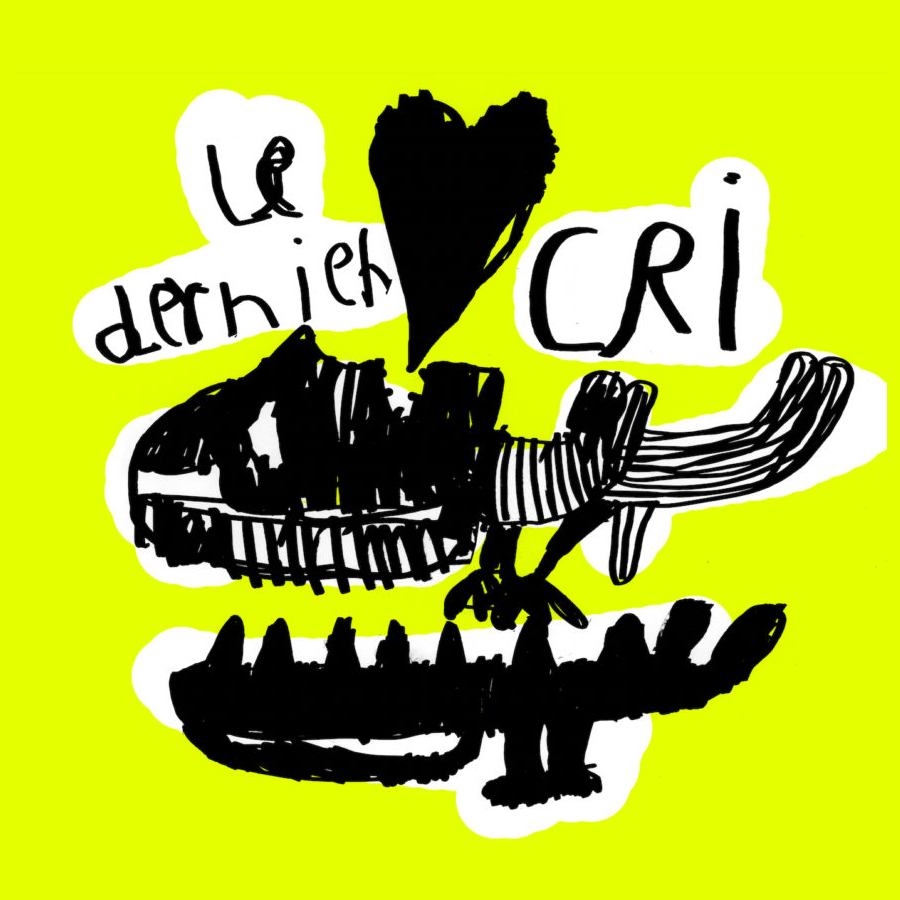
Choolers Division dégainent un rap tordu et qui brille dans le noir, soutenu par les deux docteurs mabouls du son organe-electro : Antoine Boulangé et Jean-Camille Charles. Les deux MCs Kostia Botkine et Philippe Marien se donnent corps et âmes pour leur public en délivrant des textes en forme d’avalanche, d’éruption et de tremblement de ter-ter à la fois. Chaque performance est un bijou singulier qui laissa passer la lumiére. Et cerise au kirsch sur le baba au rhum, le créateur marseillais du Dernier Cri et stakhanoviste de la ligne crade Pakito Bolino et son complice graphique Pascal Leyder aka Boujiki les rejoindront sur scène pour ajouter du gravier dans le moulin de la folie. Plus ils sont vénères, plus on les vénère : Choooooooooolers !!!!
MANIAC, GEEK, DEATH KISS, TALES OF THE XXXPECTED, EXTRA, RAGE, THE LAST SEX ACTION, SAY IT WITH BLOOD, TRUE BORDERLINE
Immagini esplicite, riti pagani e culti post-punk, rumore visivo, art brut e trash-pop, cartoni trasgressivi e corti antidisneyani devianti. 2019
DISORDEAD, OUT OF THE CARNAGE, THE AGONY AND ECSTASY OF YOUNG LOVE, UTOPIA, SAVAGE, PRIEST-SS, EVIL, GORE WEIRD, SATAN SUCKERS, ROMANTIC BLOOD…
Tout commence il y a une dizaine d’années à La Friche de Marseille, bastion de l’underground graphique où Pakito Bolino a planté depuis déjà plus de quinze ans le drapeau noir de sa « structure éditoriale associative indépendante polymorphe, mutante, protéiforme et intrusive ». Alors que leurs parcours respectifs ne les prédestinent pas vraiment à se croiser, Pascal aka Boujiki se retrouve parachuté, à l’occasion d’une collaboration de la S Grand Atelier avec Le Dernier Cri dans la capitale du Pastis. Pascal, jeune artiste trisomique, passe alors une très grande partie de son temps à dessiner frénétiquement tout en matant des films de De Funès et tout en se foutant pas mal de ce qui l’entoure. Pour Pakito, c’est tout de suite le coup de foudre graphique et c’est réciproque. Les deux nouveaux compères se retrouvent complètement en dessinateurs compulsifs et stakhanovistes de la ligne crade.
Le projet mûrit et Pakito et Boujiki se décident à collaborer sur une forme d’étrange et long ping pong, se retrouvant tous les ans et de plus en plus en phase, l’amitié naissante, pour bosser comme des dingues sur ce dialogue graphique. Pakito se nourrit sans cesse pour ces créations d’un gloubiboulga sidérant d’imageries violentes, sexuelles, monstrueuses, issues de tout ce qui lui tombe sous les yeux et ses mains pleines d’encre : sites de série X, films de série Z, bondage, obscures comics de tous les continents : MANIAC, GEEK, DEATH KISS, TALES OF THE XXXPECTED, EXTRA, RAGE, THE LAST SEX ACTION, SAY IT WITH BLOOD, TRUE BORDERLINE, DISORDEAD, OUT OF THE CARNAGE, THE AGONY AND ECSTASY OF YOUNG LOVE, UTOPIA, SAVAGE, PRIEST-SS, EVIL, GORE WEIRD, SATAN SUCKERS, ROMANTIC BLOOD… autant de poésie réunie dans un corps en fusion. Il s’amuse alors à en composer de nombreux collages aussi dingues les uns que les autres qui vont être la genèse du projet « I’m the Eye Climax ».
De ces collages qui font « saigner des yeux » pour reprendre le tendre vocabulaire de Pakito, un dialogue de sourd va se créer entre les deux artistes. Pakito et Boujiki foncent chacun de leur côté et têtes baissées dans une interprétation dessinée des collages originels. D’un côté, on découvre le dessin noir, nerveux et habile d’un Pakito nourri au Bazooka davantage connu comme éditeur et sérigraphe et de l’autre l’impressionnant trait brut de Boujiki qui vient déconstruire au plus haut degré tout ce qu’il va absorber par les yeux. C’est alors que dans un dernier cri jubilatoire, Pakito va venir amalgamer en sérigraphie ces deux visions brutales et incroyablement puissantes.
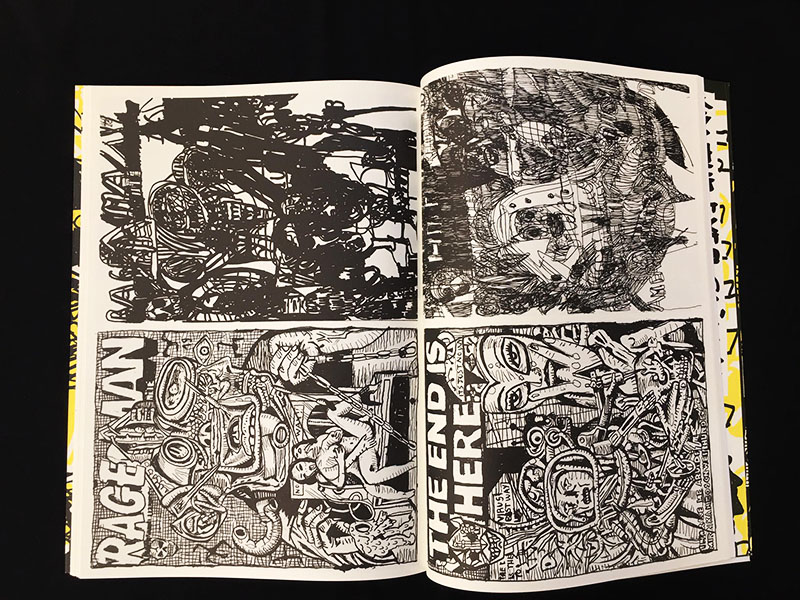
L’édition de 120 pages en format A3 présente le travail dans toutes les étapes de son processus mais dans le désordre puisque c’est le leitmotiv de cette rencontre ! Une déconstruction à la fois spontanée et progressive d’une imagerie déjà digérée et surtout la révélation d’un combo magique entre art brut contemporain et graphisme punk underground.
Le réputé intraitable, farouche et provocateur Bolino joue une fois de plus le passeur de cultures et le briseur de barrières en mettant à l’honneur le talent désormais reconnu de Boujiki. Loin des discriminations positives, Knock Outsider révèle une fois de plus une oeuvre sincère, puissante et infiniment singulière. Un nouveau coup de pied dans l’art brut et dans une expression qui n’a rien à faire dans une boite hermétique.
Paskalito Boleyder / I’m the Eye Climax
A spontaneous yet progressive deconstruction of already-digested imagery, and above all the revelation of a magical combo between contemporary art brut and underground punk graphics.
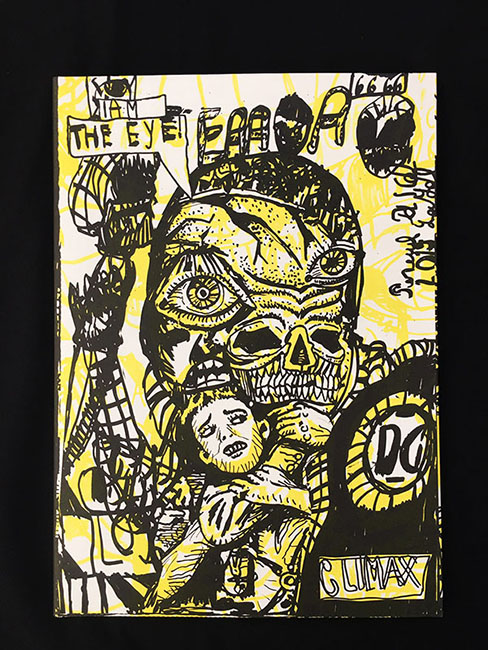
I’m the Eye Climax or the graphic pile-up of two off-track creators. Pakito Bolino, underground publishing figure and creator of Dernier Cri, and Pascal Leyder aka Boujiki, resident artist at S Grand Atelier, an art center for the mentally handicapped. A surprising King Size graphzine (A3 format) with a dark black and bright yellow cover! It’s the forceps birth of this improbable but successful encounter between dripping creatures, Z-series typography and naked women. A spontaneous graphic work reminiscent of the principles of the exquisite corpse and the Arab telephone combined. A palpable 666th degree and an edition that will delight fans of graphic sensations and perhaps even wake the dead. (resource: sterput.org)
Paskalito Boleyder / I’m the Eye Climax
Paskalito Boleyder / I’m the Eye Climax
Paskalito Boleyder / I’m the Eye Climax
The 100-page A3 edition presents the work in all stages of its process, but in no particular order, since this is the leitmotif of the encounter between Pascal Leyder and Pakito Bolino! A spontaneous yet progressive deconstruction of already-digested imagery, and above all the revelation of a magical combo between contemporary art brut and underground punk graphics.
DC MANILA Le Dernier Cri exhibit, 2025
A name that evokes either the very best in a discipline or the last breath before giving up the ghost. A silkscreen workshop born in 1993 from the ashes of the French “undergraphic” movement, and still resisting gentrification in a Marseilles wasteland. Three decades of demanding, uncompromising craftsmanship. A bizarre graphic universe at the crossroads of comics, art brut and horror. A laboratory oozing with the scent of ink, from which hundreds of fanzines, posters and books filled with heterogeneous drawings gush into your face straight from neuronal disturbances all over the world.
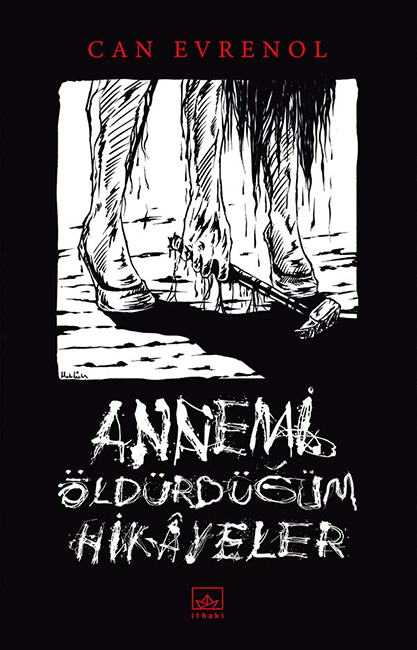
Annemi Öldürdüğüm Hikâyeler gerçekliğin sınırlarında dolaşan ve uçuruma gözlerini dikenlerin ürkütücü anlarına odaklanan sert bir öykü kitabı. Yurtdışı festivallerinde ses getiren Baskın filmi ile Çıplak dizisinin ödüllü yönetmeni ve yazarı Can Evrenol doksanlar Türkiye’sini arka planına alarak tekinsiz köprü altlarında, boş sahil kasabalarında hatta insan beyninin içinde bile en beklenmedik durumlarla yüzleştiriyor okurunu.
Can Evrenol 19 Ağustos 1982, İstanbul doğumlu. Üsküdar Amerikan Lisesi mezunu. University of Kent’ten ‘Sanat Tarihi’ ve ‘Sinema Sanatları’ dallarında çift diploma sahibi. ‘Sinema Sanatları’ gibi teorik bir bölümden mezun olduktan sonra kamerayla tanışmak için NYFA’in 8 haftalık “film yapım” kursuna katıldı. Kursa başladıktan 4 hafta sonra ilk filmi olan Vidalar’ın çekimini tamamladı. Sulhi Dölek’in aynı adlı kısa hikayesinden uyarladığı Vidalar, aynı sene, Boğaziçi Üniversitesi’nin düzenlediği ”Hisar Kısa Film Seçkisi”nde yılın en iyi 10 kısa filmi arasına seçildi. 2007 yazında tamamen kendi imkanlarıyla, doğup büyüdüğü mahallede, arkadaşlarının da yardımıyla çektiği SANDIK adlı kısa film, ”Fantasia Film Festival”, ”BIFFF” ve ”Frightfest” başta olmak üzere, İngiltere, Kanada, Fransa, Avustralya ve Belçika’da, dünyanın en önde gelen korku ve fantastik film festivallerine seçildi. Daha sonra Londra’da Middlesex Üniversitesi’nde ”Moving Image” master’ı yaptıi. 2009 yılında Kanada’da bir dağıtımcı firma ile, Sandık ve My Grandmother adlı kısa filmlerin dünya dağıtım hakları için 3 senelik bir sözleşmeye imza attı. 2009 yılında, ”A Film About Races” adlı Uzun metraj belgeselin montajını üstlendi… (Kaynak: kameraarkasi.org)
Adolf Hibou: Gaël Magnieux, Nils Bertho & Bruno Ducret. Photo by Arbre Payday (2021)
Vous aussi, vous vous complaisez dans vos préjugés ? Vous fuyez comme le Covid les groupes français aux noms à coucher dehors, les pochettes de disques camar-guaises et l’humour franchouillard se propageant dangereusement dans des titres de chansons tels que « Passion Saucisse » ou encore « Indochine, j’ai demandé halal » ?
Ne prenez pas encore vos jambes à votre cou et laissez donc sa chance à ce trio d’hurluberlus surexcités. Non, nous n’avons pas affaire ici à un groupe de rock alternatif. Le plus important, avec Adolf Hibou, c’est d’aller outre les blagues consternantes, d’ignorer les interludes débilisants et d’ouvrir les oreilles en grand. Une fois dépassé le triste constat semblant nous indiquer que « cette musique, c’est avant tout un gros délire entre potes, tu vois ?», force est de constater que non seulement ces mecs ont un sacré niveau technique – le guitariste, en particulier -mais qu’en plus de ça, lorsqu’il s’agit de lâcher la purée, ils ne se font pas prier. Quand le tempo s’élève, Adolf Hibou déclenche la foudre comme un Lighting Bolt partousant avec Boredoms. Ça explose dans tous les sens, ça s’égare pour mieux retomber sur ses pattes. Le groove concassé de « Ladyboys Don’t Cry » (sans surprise, ils brillent également en anglais dès qu’il s’agit de trouver un titre en tout point désolant) impressionne, et si ce long morceau avait été amputé de sa longue et si pénible intro, on l’aurait volontiers comparé à un autre groupe français farfelu et malheureusement quelque peu oublié (même si toujours en activité), j’ai nommé Double Nelson. Dommage, également, que l’on comprenne aussi bien les paroles du refrain de « Va chier dans ta mère », car là encore, la ligne de basse – ou de guitare baryton, plus vraisemblablement – tord le cou, alors que l’envolée free qui suit est digne des plus folles embardées des Molécules, la lourdeur et une louchée de sludge en plus. « Roum Roum Ah » se montre tout aussi euphorique, jovial comme savait l’être le Singe Blanc, un autre adepte de l’onomatopée échevelée. Quand le tempo tombe, Adolf Hibou se montre également capable du meilleur, se vautrant dans un doom dissonant mais tout aussi hypnotique. Le chant, quant à lui, navigue entre le dégueulis le plus total et des vocalises se rapprochant parfois du bramement du grand cerf de Kourgane, comme sur ce « Clodo de Boston » répétitif et prenant. Une reprise finalement pas si inattendue de Sun City Girls, « Dreamland », permet de confirmer que ces types ont baigné dans l’expérimental, la no wave et la freeture des groupes de John Zorn, Marc Ribot et Fred Frith. Et puisqu’on parle de rêve, autant signaler que la fin de cet album volontairement bordélique se montre on ne peut plus cauchemardesque, la mélopée de « dream my dream, my dreamy dream, dream my love, rêve ton rêve, rêve mon amour » pouvant légitimement donner des envies de meurtre. Après un tri sélectif nécessaire, Princess Barely Légal se révèle donc un plutôt bon album pour fouetter le sang et vriller le ciboulot.
Ressource: New Noise Magazine, 2022
Official animated short film directed by Hector Oriol & Thomas Romarin. Drawn collectively by 28 artists at the studio “En Traits Libres” at Montpellier, France, for the band Adolf Hibou. 2024.
ADOLF HIBOU – “Roum Roum Ah” from the album “Princess Barely Legal” – 2021
FREE-DOOM-NOISE
ADOLF HIBOU
‘Princess Barely Legal’
Do you too wallow in your prejudices? Do you shun, like the Covid, French bands with outrageous names, comradely record sleeves and franchouillard humor spreading dangerously through song titles such as “Passion Saucisse” or “Indochine, j’ai demandé halal”?
So don’t get your hopes up just yet, and give this trio of over-excited weirdos a chance. No, this isn’t an alternative rock band. The most important thing with Adolf Hibou is to get past the appalling jokes, ignore the debilitating interludes and open your ears wide. Once you get past the sad fact that “this music is all about friends having a good time together”, you have to admit that not only do these guys have a hell of a technical level – the guitarist, in particular – but when it comes to unleashing the mashed potato, they don’t hold back. When the tempo rises, Adolf Hibou unleashes lightning like a Lighting Bolt mating with Boredoms. It explodes in all directions, goes astray only to land back on its feet. The crushed groove of “Ladyboys Don’t Cry” (unsurprisingly, they also shine in English when it comes to coming up with a title that’s in every way desolate) impresses, and if this long track had been stripped of its long, tiresome intro, we’d have gladly compared it to another wacky and unfortunately somewhat forgotten (though still active) French band, namely Double Nelson. It’s a pity, too, that the lyrics to the chorus of “Va chier dans ta mère” (Shit in your mother) are so well understood, because here again, the bass line – or baritone guitar, more likely – twists the neck, while the free flight that follows is worthy of the wildest flights of Molécules, with the added heaviness and a ladleful of sludge. “Roum Roum Ah” is just as euphoric, as jovial as White Monkey, another adept of disheveled onomatopoeia. When the tempo drops, Adolf Hibou also proves capable of the best, wallowing in dissonant but equally hypnotic doom. As for the vocals, they veer between the most utterly disgusting and vocalizations that sometimes come close to the bellowing of Kurgane’s great stag, as on the repetitive yet captivating “Clodo de Boston”. A not-so-unexpected Sun City Girls cover, “Dreamland”, confirms these guys’ roots in the experimental, no-wave and free-form bands of John Zorn, Marc Ribot and Fred Frith. And while we’re on the subject of dreams, we might as well point out that the end of this deliberately messy album could not be more nightmarish, with the melody of “dream my dream, my dreamy dream, dream my love, rêve ton rêve, rêve mon amour” legitimately giving rise to murderous desires. After a necessary selection process, Princess Barely Légal turns out to be a pretty good album for whipping up the blood and twisting the brain. (Resource: New Noise Magazine, 2022)
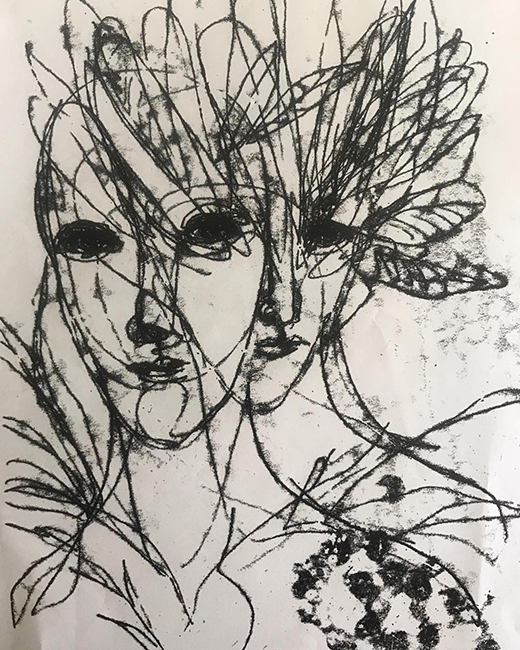
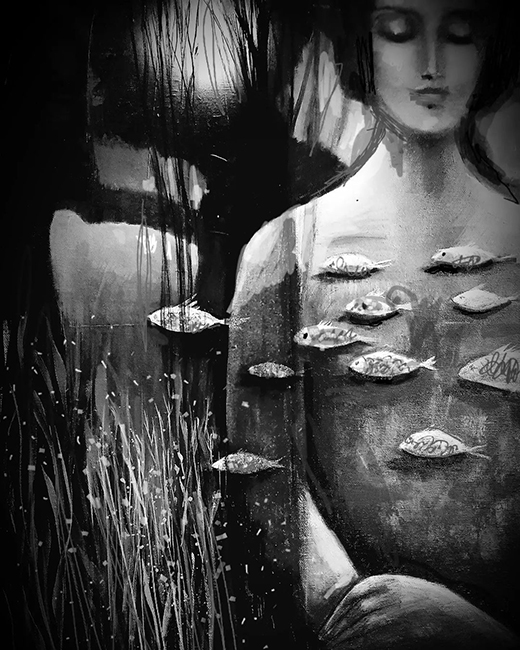
Sanatçılar, tutkulu hatta biraz obsesif kişilikler diye düşünüyorum. Yoksa, kim benzer şeyleri çizip boyayarak bir ömür geçirir? Onları bu uğurda savaşmaya iten ne? Duyguları, farklı bir dünyada yaşama özlemi? Nesnelerin kendi hayal ettikleri biçimde kurgulandığı bir dünya yaratmanın büyüsü? İçinde kaybolacakları gizemli bir dünyanın kapısını açmak? Düşünmek, bazen düşünmeden sadece hissederek, sezerek keşfetmek? Bazen aklın duyguları bazen, duyguların aklı yönetmesi gibi sırlarla dolu bir evrenin dehlizlerinde yol bulmak? Kaybolmak? Sınırların nerede son bulduğunu anlamaya çalışmak? Bütün bildiklerini hem unutmak hem hatırlamak? Zamanın sonsuzluğunda akıp giderken varlığından bir iz bırakma arzusu?
Ne kendine ne de kimseye ait olmayan resimler yapmak. Kendine ve herkese ait olan bir yalnızlığı paylaşmak.
Sema Ilgaz Temel, 2024
Sema Ilgaz Temel ‘Okulda Bir Gün’ Monotype, 2019
Sema Ilgaz Temel, 2019
ÖZGEÇMİŞ
Sema Ilgaz Temel İstanbul’da doğdu. Orta ve Lise Eğitimini Kadıköy Kız Lisesi’nde, Lisans eğitimini İstanbul Devlet Tatbiki Güzel Sanatlar, Grafik Bölümü’nde tamamladı. 1980 yılında açılan sınavı kazanarak aynı okulda Asistan olarak göreve başladı. 1983 ve 1987 yıllarında Avusturya Hükümeti’nin sanat bursuyla Uluslararası Salzburg Yaz Akademisi’ne katıldı. 1986’da Sanatla Yeterliğini ‘Metal Baskıda Anlatım Çeşitliliği Sağlayan Farklı Yöntemler’ konulu tezi ile aldı. 1991 de Amerika’da Simi Valley Career Institute’e devam etti. Aynı yıl Metropolitan Museum of Art ve diğer müzelerde, 1990-1993 ve 1996’da İngiltere’de müze ve sanat kurumlarında inceleme ve araştırmalarda bulundu. 1992’de Doçent, 1996’da Profesör oldu. Akademik hayatı boyunca Lisans ve Lisansüstü programlarında, Yayın Grafiği Tasarımı, Özgün Baskı resim, İllüstrasyon ve Grafik Şekillendirme derslerini verdi. Çeşitli idarî görevlerinin yanı sıra altı dönem (18 yıl) Grafik Sanatlar Bölüm Başkanlığı görevini yürüttü. Temel, asistanlık yıllarından İtibaren devlet sergilerinde yer aldı. Çok sayıda kitap kapağı, sanat dergileri ve çocuklar için illüstrasyonlar yaptı. 1998’de İlk yurt dışı sergisini Roma’da açtı. 100’ün üzerinde karma sergiye katıldı ve 17 kişisel sergi açtı. Uluslararası Plastik Sanatlar Derneği ve İstanbul Exlibris akademisi Derneği kurucu üyesidir. Halen M.Ü Güzel Sanatlar Fakültesi Grafik Bölümü’nde ders vermekte ve sanatsal çalışmalarını İstanbul’da sürdürmektedir.
Sema Ilgaz Temel, 2019
Sema Ilgaz Temel ‘Kendinden Geriye Doğru Say’ 2021
Sema Ilgaz Temel’in eserlerinden bir slideshow, Bilkent University Library Art Gallery
Sema Ilgaz Temel ‘Telph.apl.,34’ 2021
Kişisel Sergiler
1989 Urart Sanat Galerisi, İstanbul 1990 Urart Sanat Galerisi. Ankara 1996 Garanti Bankası, Harbiye, İstanbul. 1997 Vakko Sanat Galerisi, İstanbul 1997 Selçuk Yaşar Sanat Galerisi, İzmir 1998 Falez Sanat Galerisi, Antalya 1999 Galerie Eralov / İtalya 1999 Vakko Sanat Galerisi, İstanbul 2002 Ziraat Sanat Galerisi, İstanbul 2004 Galeri Vinci, İstanbul 2007 Soyut Sanat Galerisi, Ankara 2010 Bilkent Sanat Galerisi, Ankara 2011 CKM Sanat Galerisi, İstanbul. 2011 Vedart Gallery, Sofya / Bulgaristan 2017 CKM Sanat Galerisi, İstanbul 2017 Galeri F, İstanbul 2018 Bilkent Sanat Galerisi, Ankara
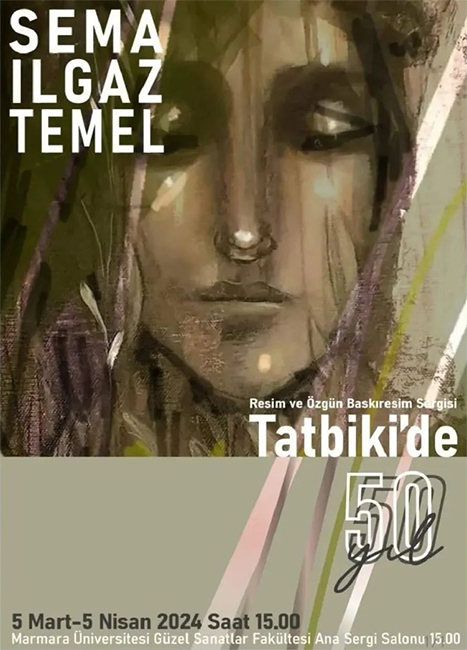
Sema Ilgaz Temel, sergi afiş, 2024
Sema Ilgaz Temel’in resim ve özgün baskı çalışmalarından oluşan kişisel sergisi “Tatbiki’de Elli Yıl” 5 Mart-5 Nisan 2024 tarihleri arasında Marmara Üniversitesi Güzel Sanatlar Fakültesi Ana Sergi Salonu’nda ziyaret edilebilir.
Blood Becomes Water & The Shivas at Mixtape5 in Sofia, Bulgaria (2015) Photo by Robin Renard
Blood Becomes Water is a trio of artists, composed of Raya Boteva, Rosie Eisor and Robin Renard, they are currently active between Sofia and Brussels. The collective works in the field of contemporary art and illustration; graphic design and independent publishing. All of these areas usually merge into a non-periodical, hand-crafted publication that mostly involves a selection of guest artists. The collective also designs limited editions on textiles and sometimes extends their activities to different media, such as murals or installations. The creative approach is characterized by fun and imperfect, yet bold and easy to remember designs, often including optical effects. The themes frequently addressed in their works can vary between symbols and tattoos, hope and failure, future and past, humans and animals with a good touch of nonsense suggesting the viewer’s interpretation. In its hometown of Sofia, Blood Becomes Water’s mission is to contribute to the development of a vibrant arts and music scene, by organizing events and promoting international music groups locally.
Footage from the opening of “Decade Dance” exhibition – 10.IX.2020 at Intro Gallery, Sofia. The exhibition presents the 11th Blood Becomes Water publication “The Bulgarian Issue #2” and original artworks from the artists involved in the occasion of the 10 year anniversary of our collective.
Blood Becomes Water est un trio d’artistes, composé de Raya Boteva, Rosie Eisor et Robin Renard, ils sont actuellement actifs entre Sofia et Bruxelles. Le collectif travaille dans le domaine de l’art contemporain et de l’illustration; du graphisme et de l’édition indépendante. Tous ces domaines se fondent généralement dans une publication non périodique, faite à la main, qui implique la plupart du temps une sélection d’artistes invités. Le collectif conçoit également des éditions limitées sur textile et étend parfois leurs activités sur différents supports, tels que peintures murales ou installations.
L’approche créative se caractérise par des dessins amusants et imparfaits, mais audacieux et faciles à retenir, comprenant souvent des effets d’optiques. Les thèmes fréquemment abordés dans leurs œuvres peuvent varier entre symboles et tatouages, espoir et échec, avenir et passé, humains et animaux avec une bonne touche de non-sens suggérant l’interprétation du spectateur.
BBW zine about the fear of number 4 in Asian countries made during Crystal Ruth Bell / Red Gate Residency in Beijing (2015)
Dans sa ville natale de Sofia, Blood Becomes Water a pour mission de contribuer au développement d’une scène artistique et musicale dynamique, en organisant des événements et en promouvant des groupes de musique internationaux au niveau local.
Kan emici aldı kararı Koparttı attı kalanını Ciğerlerine hava doldu Üfledi yıktı tarafını
Kimse ölümsüz değil Kanadı kırılmaz değil Kanı akmaz gözü çıkmaz Kendine köle değil
Rutubetli oda sancısı Kırk defadan fazla saydın mi Gördüm tanıdım pis çarkını Ezberledim senin adını
Bloodsucker decided Tore off and threw away the rest Air filled his lungs He blew his side
No one is immortal His wings are not unbreakable No blood shed, no eye pops We’re not slaves to him
Damp room pain Have you counted more than forty times I saw your dirty wheel I memorized your name
Die in Vain, Destroy Fest II, 2023
War Machine
War war war machine Take down the enemy War war war machine Save the markets needs
In the name of god And the mighty war machine Exporting building sites Feeding own financial needs
Seeking fresh blood Unstoppable war machine Sucking you alive Exterminate the war machine
Gösteri İçin
Nefes al nefes ver -gösteri için Kandır aldat yoldan çıkar -parası için Kimseyi doğru bilme-gösteri için Sınıftan kaç sınıftan kaç-parası için
Kefenin küçük gelir Kesesini doldurmak için Kanımızı akıtır onlar, onlar mutlu bundan Kaburgamızı saymak için
Tersi değilsin Gösterinin içinde Kaldır kafanı Görmesen de
inhale exhale- for the spectacle fool cheat go astray- for its money don’t get anyone right – for the spectacle escape from class- for its money
shroud small income to fill their purse they make us bleed, they’re happy about it to count our ribs
you are not the opposite inside the spectacle raise your head even if you don’t see
Die In Vain ‘Savage New Times’ E.P. 2023
Savage New Times
where is the wise don’t have to look around where is the trust dont have to look around where is the fair dont have to look around where is the just dont have to look around
savage new times x3 everything is falling apart
where is the sense dont have to look around where is the reason dont have to look around where is the ground dont have to look around where is the route dont have to look around
savage new times x3 everything is falling apart
where is the world dont have to look around where is the class dont have to look around where is defeat dont have to look around where are you now where are you now savage new times x3 everything is falling apart

























 LÖPÇÜK