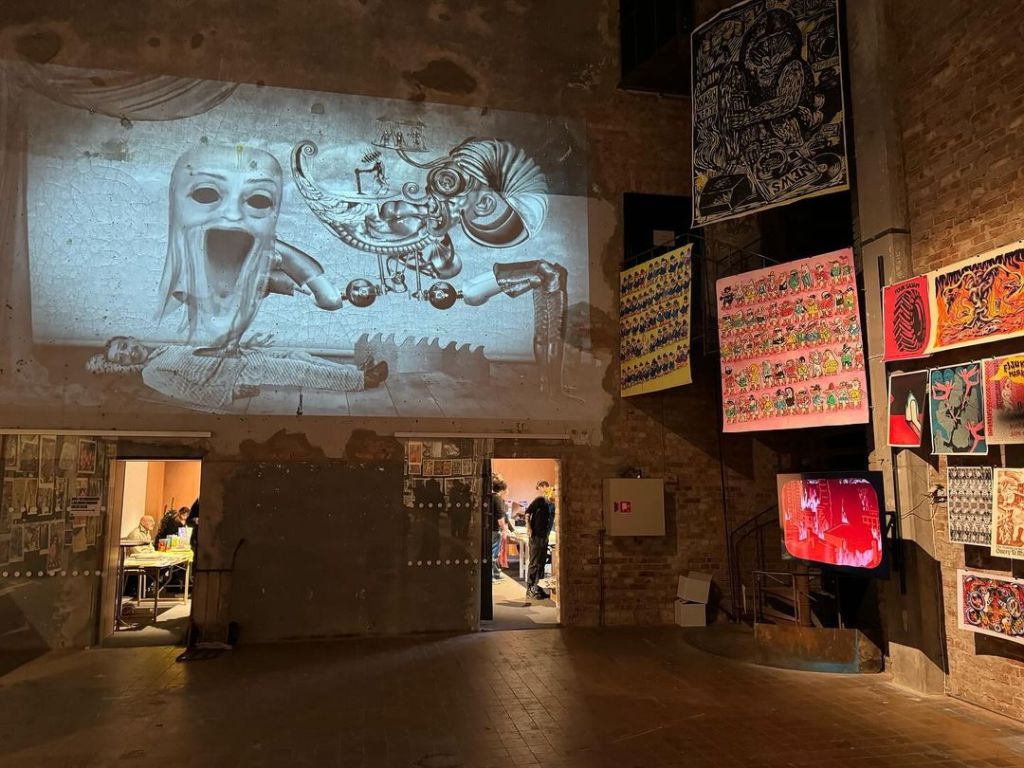
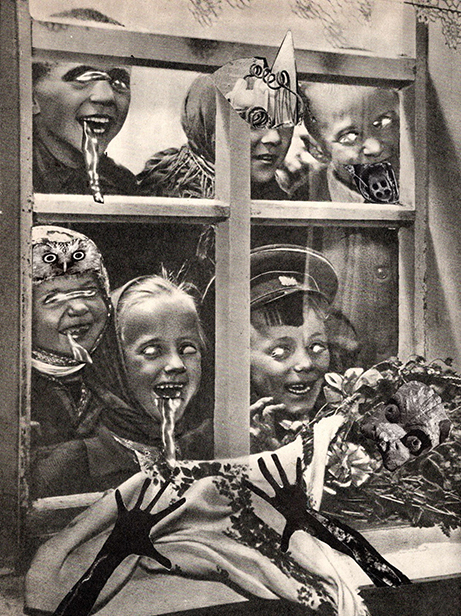
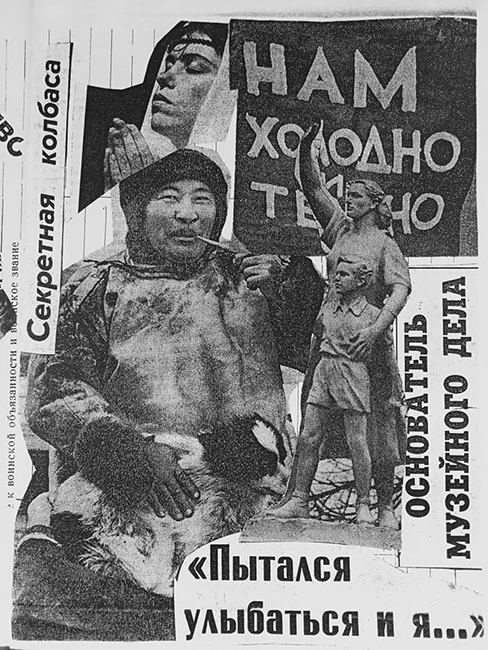
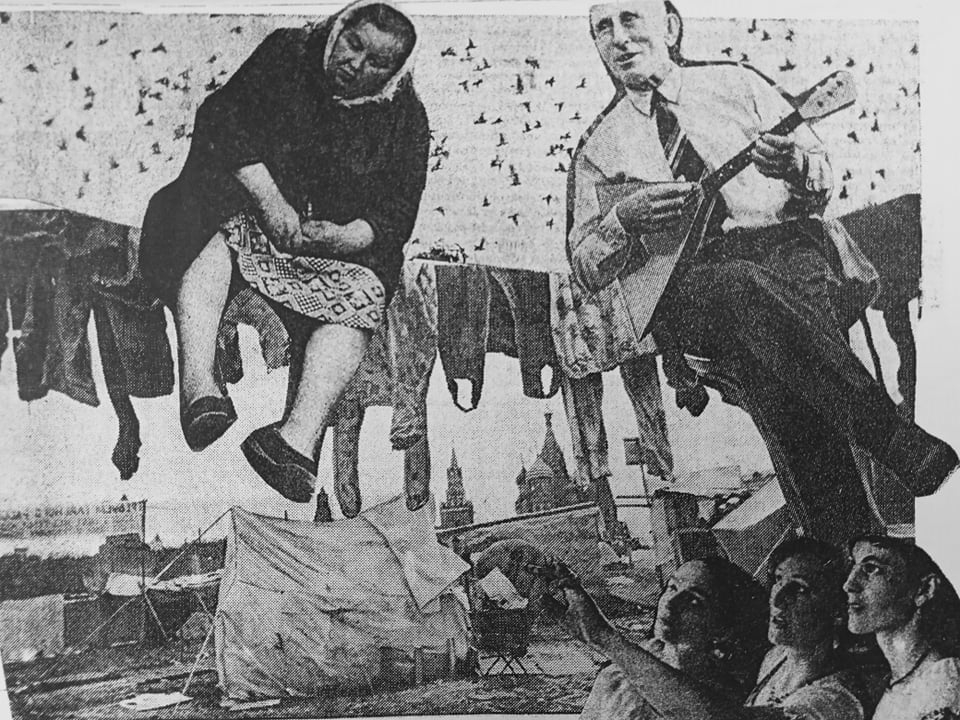
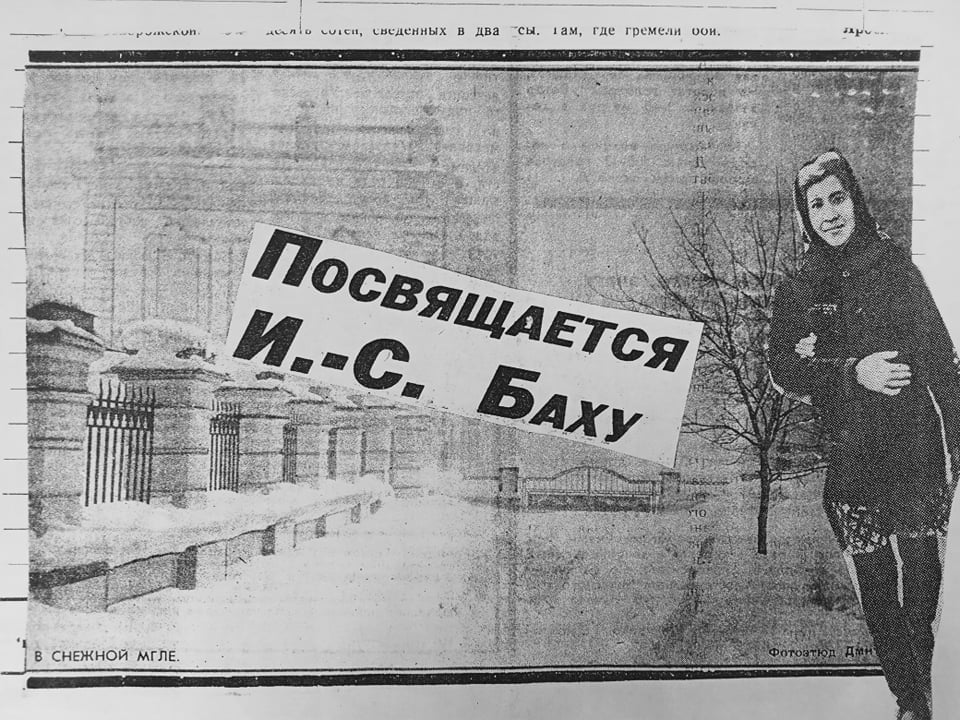
Video animation by Colin Raff (From last days of Longest Night Festival, 2023)
Last days of Longest Night Festival (2023)
Video animation by Colin Raff (From last days of Longest Night Festival, 2023)
NOFEST 2023
TURBULATOR
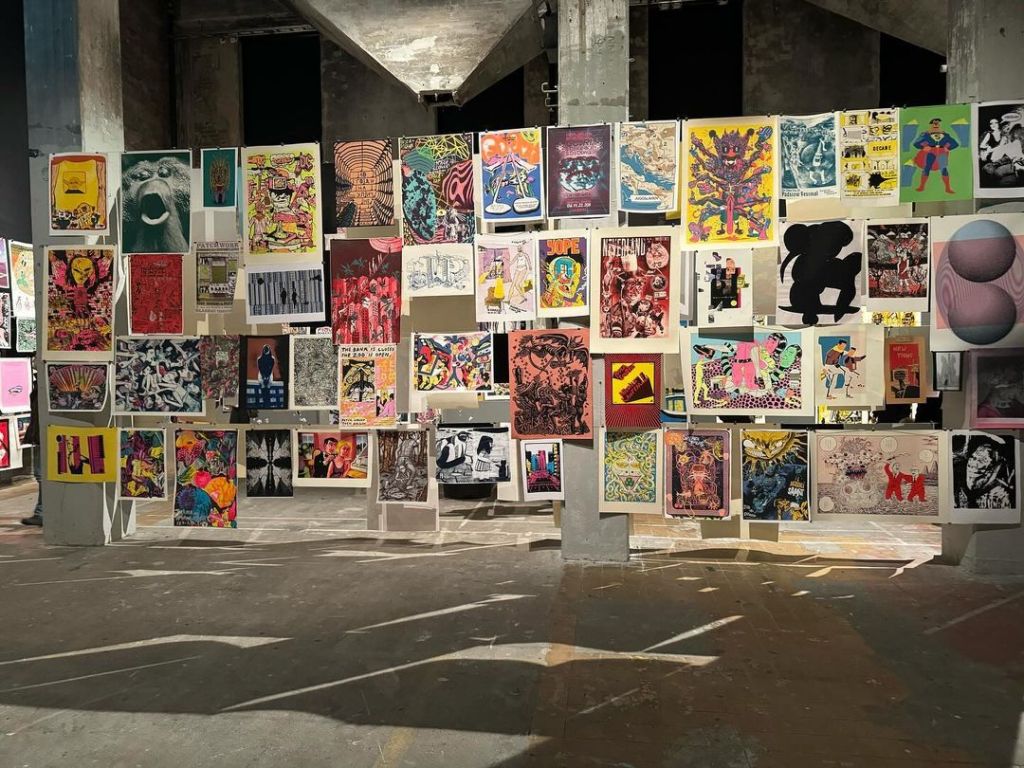
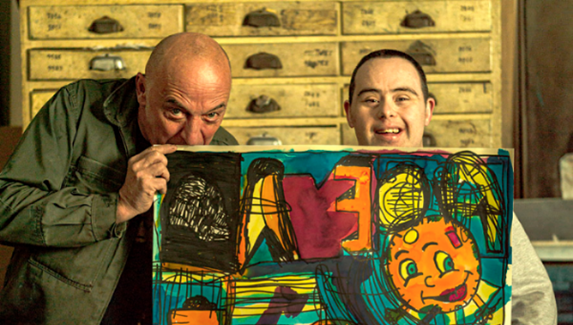
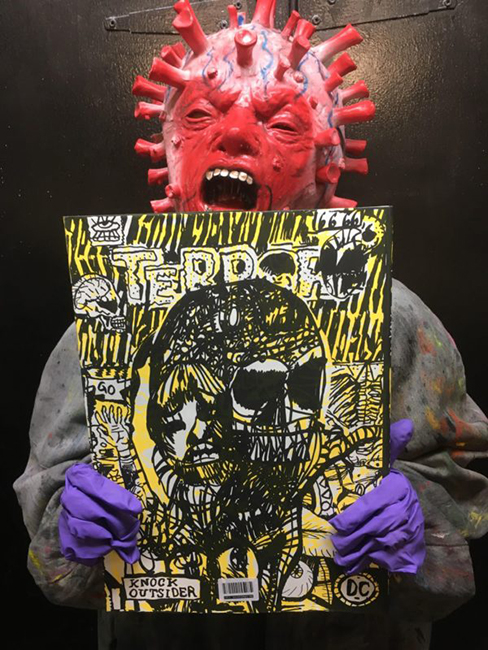
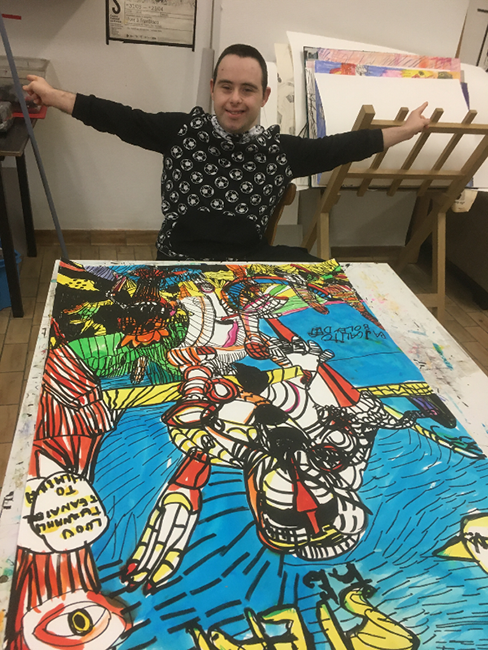
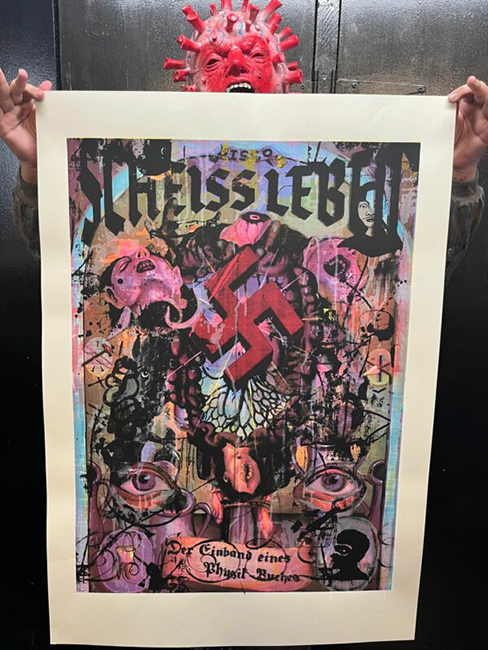
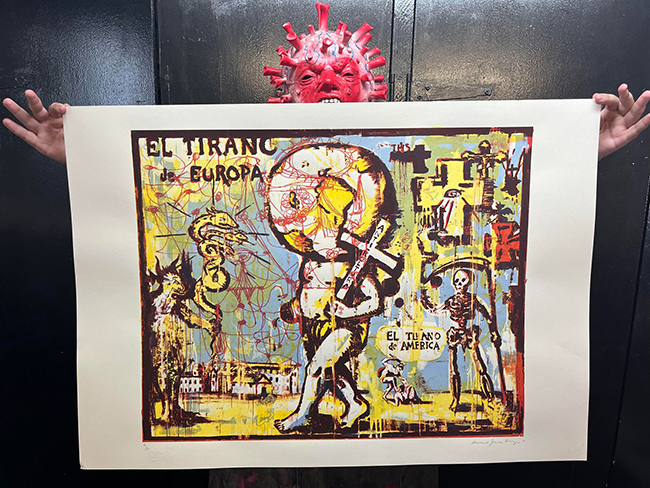
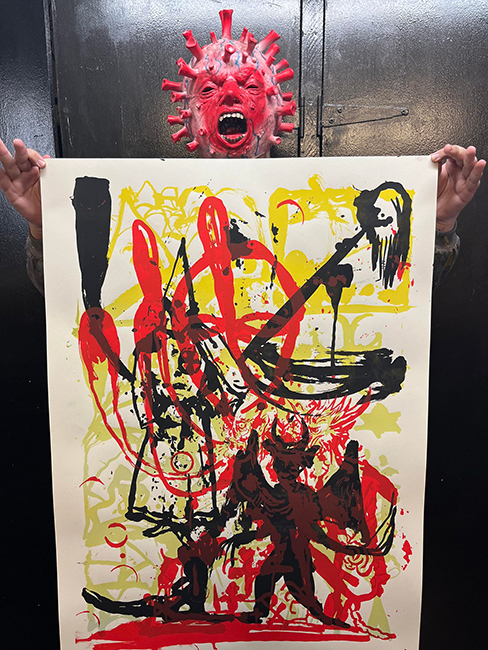
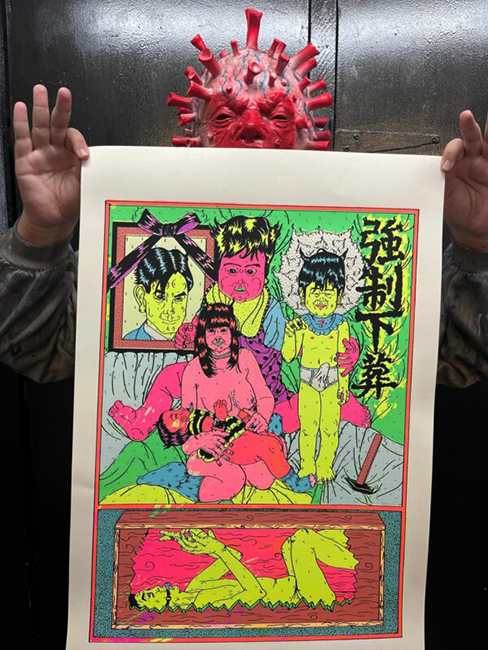
Exposition d’estampes imprimées pendant le projet européen Turbulator dans les différents ateliers partenaires. Un projet européen : Creative Europe Culture « TURBOLATOR » – generator of turbulent art brut practices Le Dernier Cri participe a participé à un programme de coopération et d’échanges européen intitulé « TURBULATOR » qui regroupe quatre structures oeuvrant dans les domaines de la diffusion, création et formation artistique :OFICINA ARARA (Porto, Portugal) / LA S GRAND ATELIER(Vielsalm, Belgique) / NOVO DOBA (Belgrade, Serbie) / LE DERNIER CRI (Marseille, France). Répondant à un concours à échelle européenne, ce projet s’est déployé sur quatre ans à partir d’octobre 2018 / novembre 2023. Dans chaque pays, ont eu lieu des conférences (autour des structures invitées et des échanges réalisés), des ateliers visant à partager les différentes compétences et savoir-faire de chacun et des rencontres qui se sont déroulées successivement souvent au sein de festival de micro édition. Pour clore ces événements, en octobre 2023, une exposition a eu lieu à NOVO DOBA (Serbie), une derniére étape donne à voir certaines de ses productions dans l atelier du dernier cri .
NOFEST 2023
Novo doba festival – Turbulator (Beograd 4. – 8.10.2023.)
NOFEST 2023
NEWS LETTER october NOFEST 2023
BUY BOOKS AND PRINTS !!!
Maki, Sylvain Bureau, Alexio Tjoyas and more…
Fin septembre à la Friche de la Belle de Mai chez l’infatigable Pakito Bolino.
2000 SONRASI TÜRKİYE ÇAĞDAŞ SANATINDA POLİTİK OLMAYANIN POLİTİK OLANA DÖNÜŞÜMÜ
Barış Acar
Fantom’un politikaya dair söyleyecek bir şeyinin olması ve onun dinlenmesi, Arendt’in vurguladığı gibi, özgür ilişkilerden kurulmuş bir kamusal alanın varlığından suyunu alır. “Eşitler cemaati”nde Fantom bir özne kuvvetindedir. Esat Cavit Başak hakkında açılmış kamusal davalar olduğunu biliyorsak, bu da bize politika konusunda nerede olduğumuz hakkında fikir verir.
Herkesin politikaya dair söyleyecek sözünün olduğu bir ülke Türkiye. Rousseaucu düzlemden bakıldığında neredeyse toplumun kendi varlığı üzerine derin tefekkürlere daldığı, politik anlamda mükemmel bir sosyal yapı gibi görünebilir bu durum. Oysa ne yönetimsellik düzleminde ne de gündelik yaşantıda ulaştığımız neticenin bu olmadığını apaçık görebiliriz sanıyorum. Seçim öncesi bir sokak röportajında henüz reşit olmamış bir çocuk “Abi, bizim top oynamamız, yüzmeye gitmemiz, çocuk olarak bu tip şeylerle ilgileniyor olmamız lazım ama biz politika konuşuyoruz.” sözleriyle dile getiriyordu tepkisini. Her şeyin politik olduğunun gündelik bir realite olarak deklare edildiği bir düzlemde politikanın görünmez varlığı üzerine düşünerek başlayalım.
Politikanın Varlığı
Arendt, politikaya ilişkin bir tanımında insanın kendinde apolitik olduğunu söyler. Kişinin tekilliği içinde bulunabilecek bir şey değildir politika; ancak insanlar arasındaki ilişkilerde ortaya çıkar. “İnsani çoğulluk”a dair bir problemdir. Bu tanıma göre her şeyin politik olduğu yolundaki düşüncenin ilk etapta problemli olduğunu söyleyebiliriz. Kişinin bütün davranışını politik bir takım sayıntılara göre düzenleme isteği bizi [doğru yaşama dair önceden hazır olarak verilmiş] ahlâk yasalarıyla kuşatılmış bir nevi fundemantalist yaşam tarzına sürükleyecektir, ki bunun düşünülebilecek en yoğun baskı düzeni olduğunu söyleyebiliriz. Öte yandan, eğer ki politikayı dar anlamıyla yönetilenler ve yönetenler arasındaki ilişki olarak ele alırsak, onun yokluğu da “bizi tam olarak despotizme götürür.” Arendt’e göre, “politika maddi zorunluluklar ve fiziksel şiddetin son bulduğu yerde başlar.” Bu yüzden iki taraftan kuşatılmış zorlu bir denklem kurmayı gerektirir politik düşünce. Bu kuşatma elbette bir mekânda gerçekleşir. Antik Yunan’dan beri bilinen “polis” (kent-devleti) özgürlüğün ve politikanın kesişme alanını belirlemiştir. Bu kesişme bir kentin bir yurttaşı olma kipinde kendini gösterir. Bu yüzden politika öncelikle bir mekân problemidir; mekânda kimin nasıl yer tutacağı ve eyleyeceğini belirleme meselesidir. “Özgür ilişkilerden kurulu bir toplumsallık fikrinin yerleşmediği yerde kamusal mekân da oluşmaz”.“Özgürlük politikanın sonucu değil, başlangıç şartıdır.”
Politikanın varlık alanlarından birisi, yukarıda Arendt’in vurguladığı gibi, “özgürlük” ise bir diğeri “eşitlik”tir. Yasanın sınırı nereye koyduğu kadar kimin için koyduğu da politik mekânın tanımında yer almalıdır. Rousseaucu “toplum sözleşmesi” fikrini eleştirirken Althusser’in çıkış noktası burasıdır. Eşitler arasındaki ilişkiler şeklinde kurulmayan her toplumda, özgürlüğün temeli olacak konsensüsü sağlayan bir sözleşme aslında temel bir uyuşmazlığı, güçler arasındaki dengesizliği ve çatışmayı, örtbas etmek üzerine kurulmuştur. Althusser’e göre burada “uyuşmazlık” ilk olarak “…sözleşmenin iki tarafının kuramsal konumlarının aynı olmamasından ve Toplum Sözleşmesi’nin bir değişim sözleşmesi olmayıp, Sözleşme’nin ikinci Tarafının bir tüzük [anayasa] eylemi olmasından kaynaklanmakta”dır.1 Jacques Ranciere burada vücut bulan oyunu “sesin bedene mesafesi” olarak tanımlar. Yasayı koyan/ söyleyen ses ile yasaya boyun eğen/ onu onaylayan beden, adına özneleşme diyebileceğimiz bir oyun içinde karşı karşıya gelirler. Özgürlük ve eşitlik birer sözcük olarak değil, farklı güçlerin ilişkisi olarak karşımıza çıkar. Eşitlik, farklılıkların fark olarak bir aradalığının onaylanması üzerine kuruludur. Ranciere’e göre siyasetin bir arkhe’si (ilk ilkesi) bulunamaz, fakat onun bir görevi vardır: Uyuşmazlığın (farkı yaratan güçlerin) ortaya çıkarılması. Siyaset mekânı öyle düzenlemelidir ki özneler ve onların eylemleri görünür hale gelsin. Bu ise ancak eşitliğin varsayımsal öncül olarak kabul edilmesinden ve bunun sürekli olarak yinelenmesinden geçer.
2000 Sonrası Çağdaş Sanat
Avangard bir proje olarak yaşamın sanat haline getirilmesi fikri çağdaş sanatın devraldığı en önemli politik mirastır. Eylemleri, durumları ya da kavramları; kişinin özneleşme tarzlarının her birini sanat haline getiren çağdaş sanat devrimci politik bir eylemdir.
Nasıl ki her çağın kendi toplumsal/ politik düzenlenişleri varsa, her çağın sanatının kendi politika anlayışı olduğundan da söz edebiliriz sanıyorum. Belki devrim dönemleri gibi politik dönüşümlerin doruk noktasına ulaştığı dönemlerde sanat-politika ilişkisi korelatif anlamda daha sıcak bir renk verebilir ama neticede Rubens’in Medusa’sının da politik bir içerimi vardır. Phaidon’un Can Art Change the World? kitabının gösterdiğinin aksine sanat-politika ilişkisi sadece duvar resimlerinde ya da “yapıt” ile “halk”ın kesiştiği yerlerde gerçekleşmez. Yazımızın ilk bölümündeki tanımları yeniden gözden geçirecek olursak bu ilişkinin en az buralarda gerçekleşiyor olduğunu bile öne sürebiliriz. Çünkü sonuçlardır bunlar, başlangıçlar değil. Politika sonul içeriklerle değil, özneleşmeleri meydana getiren biçimlerle ilgilidir. Bu anlamda Jacques-Louis David’in Napolyon’undan ziyade Maleviç’in Siyah Kare’sinin devrimci bir politik müdahale olduğunu fark etmek gerekir. Çağdaş sanat adına 1960’lar Yeni Avangard’ının politikanın bu yüzünü en iyi anlayan sanatçılarla ve yapıtlarla dolu olduğunu söyleyebiliriz. Avangard bir proje olarak yaşamın sanat haline getirilmesi fikri çağdaş sanatın devraldığı en önemli politik mirastır. Eylemleri, durumları ya da kavramları; kişinin özneleşme tarzlarının her birini sanat haline getiren çağdaş sanat devrimci politik bir eylemdir. Ranciere’e dönerek “duyuluru yeniden paylaştırma” girişimi olarak adlandırabiliriz çağdaş sanatın varlık kipini.
Bir ütopya olarak avangard proje ölmemiştir; aksine onun çağdaş sanat içinde tam anlamıyla gerçekleştiğini öne sürebiliriz. Ne var ki kendi kavramını terk ederek gerçekleştirmiştir bunu. Çağdaş sanatçı dünyayı ötekine doğru sonsuzca açar. Bu noktada sorun ötekinin duyulurun yeniden paylaşımına hazır olup olmadığıdır. Olayın gerçekleştiği mekân duyulurun bu paylaşımı için yeterince hazırlanmış mıdır? Avangard artık bir ütopya değildir ve gerçekleşen bütün ütopyalar gibi ölümcül derecede sıkıcıdır. Bu sebeple 2000 sonrası çağdaş sanatını Geç-Avangard terimiyle ifade ediyorum. Artık herkes sanatçıdır, her edim sanattır –öyle görülebilir, ama sanat kendi devrimine geç kalmıştır ya da devrimi ona ulaşmayı beklemektedir.
Türkiye çağdaş sanat dünyasında, 1990’lardan başlayarak, bunun pek çok örneğini gösterebiliriz. Nüfus cüzdanının büyütülmüş bir kopyasına fotomontajla yapılan bir müdahale (Halil Altındere – Tabularla Dans) ya da sanatçının bir hip hop grubuyla birlikte hazırladığı, kentsel dönüşüme odaklanan bir video klip (Halil Altındere ve Tahribat-ı İsyan – Wonderland), Atatürk’ün Türban Şoray’la elele bir portresi (Memed Erdener – Extra-Mücadele işleri), İstanbul’da bir apartmanda mahalle sakinleriyle başlayan ve Almanya’ya uzanan bir komünal üretim projesi (Selda Asal – Apartman Projesi)… büyük politika sahnesinde, verili ideolojik kodları tekrar etmek yerine onların yaşamdaki karşılıklarını yapısöküme uğratan ve böylece başka bir politikanın mümkün olduğunu masaya getiren bir dolu iş sıralayabiliriz. Bütün bunlar ütopyanın nasıl vücuda geldiğinin ve aynı zamanda nerelerde tökezlediğinin dört başı mamur örnekleridir.
Esat Cavit Başak ‘Fantom Rules’ Serisi (2015)
Nova Kozmikova
Esat Cavit Başak’ın ya da mahlas ismiyle Nova Kozmikova’nın işlerine olduğu kadar işleyiş biçimine bakarak 2000 sonrası politik olmayanın politik olana dönüşümünü özetleyebiliriz sanıyorum. Başak, benim bildiğim kadarıyla, kendini hiçbir zaman bir sanatçı olarak tarif etmedi; etseydi de bunun bir önemi olmazdı, zira bu ünvanla yaşamadı. Endüstriyel tasarım okumuş biri olarak tekniğe meraklıydı. Onu cezbeden şeyin nesneler ve işlevleri arasındaki ilişki olduğunu söyleyebiliriz; nesnelerin yaşantılara dokunduğu yerlerde geçirdiği dönüşümler, bu dönüşümlerin dilde bulduğu karşılık ve bu ilişkinin yeniden dolaşıma sokulması.2
Başak, 1990’lı yıllarda, Türkiye’de yayımlanmış en dikkat çekici underground yayınlardan biri olan Mondo Trasho adlı fanzini yayımladı.3 Anaakım kültürel değerlerin erken bir ters yüz edilişi olarak düzensiz aralıklar yayımlanan Mondo Trasho, pop kültürün alttan bir okunuşu olarak değer kazandı. Başak’ın çalışmasının merkezini kolaj fikri oluşturduğu için fanzini seçmesi ve fanzinde kalması anlamlıdır. Üst üste gelişlerin, katmanlanmaların birikim olmadığı, kümelenmeler şeklinde birbirine eklemlenerek büyüdüğü ve her zaman yeniden kurulabileceği fikrini taşıyan kolaj, hakikatin biricikliği yerine politikanın oyununu koyar: Kartları her zaman yeniden dağıtabilirisiniz. Küçük yerleştirmeler, buluntu nesnelerle yapılmış çeşitli sanat yapıtları, Erdoğan’ın portresi ile petrolü birleştirerek yaptığı kolajı saymazsak çok fazla sergide yer almadı. Ancak ortaya çıkışından itibaren sosyal medya onun için mükemmel bir sanatsal oyun alanı niteliği oldu. Nova Kozmikova, Fantom başta olmak üzere çizgi roman karakterlerinden yepyeni kolajlar üreterek dolaşıma soktu. Pop sanatçıların miras bıraktığı alanı müze duvarlarından yeniden yaşamın sürdüğü yere (o yer telefon ya da bilgisayar ekranları da olsa) aktarırken felsefeyi, anti-felsefeyi, şiiri ve bunlardan yola çıkan kendi aforizmalarını gündelik yaşantıya bulaştırmayı denedi.
Fantom’un politikaya dair söyleyecek bir şeyinin olması ve onun dinlenmesi, Arendt’in vurguladığı gibi, özgür ilişkilerden kurulmuş bir kamusal alanın varlığından suyunu alır. “Eşitler cemaati”nde Fantom bir özne kuvvetindedir. Esat Cavit Başak hakkında açılmış kamusal davalar olduğunu biliyorsak, bu da bize politika konusunda nerede olduğumuz hakkında fikir verir.
Yazımızın başına dönecek olursak; her şey politik olduğunun dile getirildiği bir ortamda politikanın nereye saklanmış olduğu konusunda uyanık olmak gerekir. 2000 sonrası dünyada politik olmayan şeyler politikanın yeni nesneleri haline gelirken sanat hâlâ özneleşmeleri yeniden düzenleyecek güce sahiptir.4
Louis Althusser, a.g.e., s. 120. Burada sözleşmenin ilk tarafı tekil kişiler iken, ikinci tarafı olarak tanımlanan, “halkın egemenliği” tanımında olduğu gibi, kendisine “halk” adı verilmiş kurgusal bir tüzel topluluktur. Bu uyuşmazlığın kurgusu Ulrich Beck’in Siyasallığın İcadı’nda daha açık olarak şu şekilde vurgulanmıştır: “Siyaset bilimi, bilindiği gibi, siyaset kavramını üç yönde açımlayıp geliştirmiştir: İlkin, toplumun kendini örgütlemesi olarak siyasal kamunun kurumsal düzenini (Polity), ikinci olarak, toplumsal ilişkilerin biçimlendirilmesine yönelik siyasal programların içeriklerini (Policy), üçüncü olarak iktidardan pay almaya ve iktidar konumlanna yönelik siyasal tartışma/çatışma sürecini sorgular (Politics). Burada siyaset yapmaya ehil olarak görülen, birey değildir; siyaset biliminin sorgulaması örgütlü, korporatist, yani kollektif aktörlere dönüktür.” Ulrich Beck, Siyasallığın İcadı, (Çev.: Nihat Ülner), İstanbul: İletişim Yayınları, 2005, s. 159.
Nova Kozmikova’nın yapıtı Heidegger’ın Sanat Eserinin Kökeni’nden yola çıkarak nesnenin teknikle ve hakikatle ilişkisine uzanan politik bir uzamı değerlendirmek için biçilmiş kaftan olabilir. Bu fikri ileride gerçekleşebilecek bir proje olarak burada saklayalım.
Fanzinin Türkiye tarihi hakkında araştırma yapmak isteyenleri yönlendirebilecek iki kaynak olarak, Fanzineist Vienna’yı düzenleyen Deniz Beşer’i ve Löpçük webzine’i (www.lopcuk.org) yayınlayan Erman Akçay’ı gönül rahatlığıyla önerebilirim.
Burada sanat ve politika ilişkisi konusunda kendisine sıklıkla atıfta bulunulan Chantal Mouffe’un görüşlerinden tamamiyle farklı bir sanatsal güçten söz ettiğimizin altını çizmeliyiz. “Sanat pratikleri, duygusal tepkiler tetikleyen kaynaklar kullanarak insana duygulanımsal bir düzeyde ulaşmayı başarabildiği için yeni öznellik biçimlerinin inşasında temel bir role sahip.” (Mouffe, 2015: 116) “[Sanatçılar], yeni pratikler ve yeni öznelikler inşa ederek, mevcut güç konfigürasyonunun tahrip edilmesine yardımcı olabilirler.” (Mouffe, 2015: 124) Bu alıntılarda açıkça görülebileceği üzere Mouffe’un politika bağlamında sanata biçtiği rol basit bir araçsallığı temel aldığı için bizce ne kendi içinde ne de dışarıya doğru bir dönüştürme gücüne sahiptir. Bkz.: Chantal Mouffe, Dünyayı Politik Düşünmek – Agonistik Siyaset, (Çev.: Murat Bozluolcay), İletişim: İstanbul, 2015.
Esat C. Başak’ın 1992 yılında Kent FM’de Okan Bayülgen’in ‘Son Saatler’ programındaki röportajından..
In one of her definitions of politics, Arendt says that human beings are apolitical in themselves. Politics is not something that can be found in the singularity of the individual; it emerges only in the relations between people. It is a problem of “human plurality”. According to this definition, we can say that the idea that everything is political is problematic in the first place. The desire to regulate one’s whole behavior according to some political considerations would lead us to a kind of fundemantalist way of life, surrounded by moral laws [pre-given in advance about the right way to live], which would be the most intensely oppressive system imaginable. On the other hand, if we take politics narrowly as the relation between the governed and the governors, its absence “leads us precisely to despotism.” According to Arendt, “politics begins where material necessities and physical violence end.” Therefore, political thought requires a difficult equation surrounded from two sides. This encirclement, of course, takes place in a space. The “polis” (city-state), known since Ancient Greece, has defined the intersection of freedom and politics. This intersection manifests itself in the mode of being a citizen of a city. Therefore, politics is primarily a problem of space; it is a matter of determining who occupies space and how to act in it. “Where the idea of a sociality based on free relations is not established, there is no public space”. “Freedom is not the result of politics, but its initial condition.
MxNTxR & Rakun, 2023, Bostancı Underground
RAKUN x SOMON x CAPSO / Moda 2019 (Music by Deniz Erdem)
Suadiye, 2021
Suadiye 2022
Feride 2021
Erenköy 2021
Somon 2021
RAD DAR / Throw-up Graffiti / Kadıköy (Music by Deniz Erdem)
Rad Dar (2016)
A.İ.R. No:2 ‘Ütopya’ 2017
Rad Dar, Geiger, İskeletor, Ağaçkakan (2017) A.İ.R. Aksiyon sonrası
Suadiye 2021
Erenköy 2021
Yeldeğirmeni, Kadıköy, 2022
Yeldeğirmeni, Kadıköy, 2022
Yeldeğirmeni, Kadıköy, 2022
Rıhtım, 2023
Tekno-endüstriyel sistemin önümüze koyduklarını tarafsız, istenildiğinde sağlıklı biçimde kullanılabilecek araçlar olarak görmediğimiz ve burayı kimliğimizin asli parçası haline getirmediğimiz için Facebook’tan da özel bir beklentimiz yok.
Herkes “iyi yurttaşlık görevi” kabilinden kopyalayıp kopyalayıp sayfasında paylaşıyor ya, biz de geri kalmayalım bari:
Facebook burada paylaştığımız her şeyi istediği gibi kopyalayıp kullanabilir. Hatta ne kadar çok yerde kullanırsa o kadar memnun oluruz, malûm uyumsuzluğu duruş olarak benimseyen isyancıların sayısı ziyadesiyle az, dolayısıyla Facebook hazretleri sesimizi, sözümüzü, mesajımızı istediği yere taşıyarak bize yardımcı olabilir.
Sosyal medya ortamını bikinili, mayolu fotoğraflarımızı paylaşmak, sağa sola olta atmak için kullanmadığımızdan buraya eklediğimiz her fotoğrafı da istedikleri gibi tepe tepe kullanabilirler, hayırlı uğurlu olsun hepsine. Kontrol ve denetimin sistemin asli vazifesi olduğunun bilincindeyiz ve underground yayıncılık dışında saygı duyduğumuz bir mecra mevcut değil.
Sonuçta Facebook’u Facebook’luk yapıyor diye eleştirecek kadar naif veya salak da değiliz. Onlar kendi işini yapsın, biz de kendimizinkini.
Hem Facebook’a hem demokratik siber âlem yanılsamasına kapılmış “güzide yurttaşlara” selamlarımızı iletiyoruz. –G. Killa
Neon Nexus #02
‘Türkiye’nin ilk ve tek Cyberpunk dergisi’ ibaresiyle yayın hayatına atılan NEON NEXUS dergisi, geçtiğimiz aylarda çıkardıkları deneme sayısının ardından dopdolu bir ikinci sayıyla Ocak ayında kitapçılarda olacak.
Derginin yazar kadrosu bayağı geniş. Kapaktan kimlerin yer aldığını okuyabilirsiniz. Yeni sayının giriş öyküsü olan “Tik Tak!”ı bendenizin kaleme aldığını da belirtir, NEON NEXUS’a kayıtsız kalmamanızı hatırlatırım. William Gibson’a selam olsun! –Gökhan Gençay
Neon Nexus
Ve bir an geldi, şimdiki zaman onarılmaz bir şekilde ruhunu sakatladı. Daha sonra tüm hızımızla geleceği beklemeye başladık. Tahayyüllerimizde geleceği kurgularken, gerçek sıra dışı bir mekanizmaya bağlandı. Medeniyet onarılmaz bir şekilde uçurumun kenarına geldi, Artık geleceği bekleme sporuna katkı sağlamamız gerekti. Geleceğin karanlık sokaklarına ışık tutmak gerekti. Şimdi sizlerin ellerinde bir harita gibi duruyor.. Bir şişenin içine bırakılmış kehanet gibi. Hala aynı dilin konuşulduğunu umarak olasılıklar okyanusunda sallana sallana yol alıyor. Karanlık kurgular ile geleceğin gerçeğini değiştirmeyi umuyoruz. Felaket tebliğimizin esas sebebi budur. Cyberpunk türde ülkenin tek yayını olmamızı işte bu sebebe bağlıyoruz. Umudumuzu yitirdik. Bu sebeple kolları sıvadık. Bu yayın tüm zaman dilimlerinde “Yalnız Değilsin” yayınıdır. Keyifli okumalar dileriz. Gelecekte bol şanslar.
ICAF 2021 (Dave2000, Rafaël Houée, Zigendemonic & Daniel Cantrell)
Erman Akçay & Tunç ‘Turbo’ Dindaş, ICAF 2021
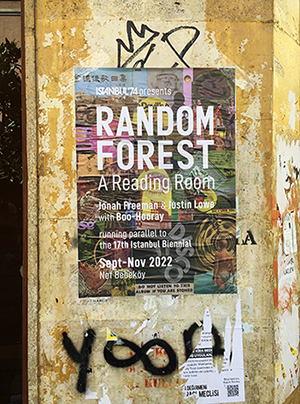
IST’74 Random Forest, 2022
Fanzinlerin Güncel Sanat İle İlişkisi
Fanzinlere Kuşbakışı
Şinasi Güneş,2008
Ticari ve profesyonel olmayan, düzensiz ve küçük miktarlarda çoğalan yayınlardır. Fanzinler, bazen elle hazırlanırken bazen de fotokopi yoluyla çoğaltılıp dağıtılan sınırsız bir ortamda üretilen anarşist bir yapıya sahip yayınlardır. Fanzinlerin birçoğunun üzerinde kimlik bilgileri yoktur. Çok sınırlı sayıda çoğaltılan bu yayınları bulmak kolay değildir. Fanzinler, özel ilgi alanları olan kişi ya da gruplar tarafından, yine bu kişi ve gruplar arasında fiziksel bağ kurmak amacıyla üretiliyor ve genellikle periyodik aralıklarla yayımlanmıyorlar. Fanzinler, alternatif kültür sanat mekanlarında, kitapçılarda, küçük dükkanlarda, kafelerde bulunabiliyor. Genelde kent kültürünün hakim olduğu yerlerde yayımlanıyor. Nitekim Anadolu’da kültür sanat komplekslerinin yoksunluğu ve buna paralel olarak sanatın dolaşımının olmaması fanzinlerin yeterince yayınlanmamasının başlıca sebebidir. Sanat fanzinleri ekseriyetle karikatür, posta sanatı , sokak sanatı, video sanatı gibi disiplinler ile kolaj, yapıştırma, elle çizim gibi tekniklerin kullanılması ile oluşur. Sanat fanzinleri, sisteme entegre olamayan ya da sistemin dışında kalan bireylerin oluşturduğu, popüler kültüre dayalı kurumsal ya da kurumsal olmayan ilişkilere alternatif başkaldırı nesneleridir.
Genç şairlerimizden Sühan Sürmeli
Şevket Akıncı, 2022
Jonah Freeman ve Justin Lowe, bu videoda küratörlüğünü Boo-Hooray’den Johan Kugelberg ile üstlendikleri ve ISTANBUL’74’ün sunduğu Rastlansal Orman: Bir Okuma Odası adlı sergiye ışık tutuyor.
IST’74’ün kurucusu, sinemacı Alphan Eşeli
Zines and Contemporary Art in Turkey
A Bird’s Eye View of Zines
Şinasi Güneş
Zines are non-commercial, non-professional, messy, and generally printed in small runs. Sometimes made by hand, sometimes reproduced by photocopy and distributed, they are publications that possess an anarchist structure, produced in an unrestricted environment. Many zines include no identifying information. Finding these publications is not easy since they are distributed in very restricted numbers. Zines are produced by individuals or groups with very particular interests with the intent of forming physical links between these individuals and groups and generally are not published on a regular schedule. Zines can be found in alternative culture and art spaces, bookstores, small shops, and cafes. In general, they are published in the arts-dominated districts of a city. As a matter of fact, the principal reason that zines are not published as much as they should be is the poverty of the artistic and cultural scene in Anatolia—and parallel to this, the lack of support for art. The majority of art zines are made up of cartoons, mail art, street art, and video art, using techniques like collage, cut and paste, and drawing. Art zines put together by individuals who are not integrated into the system or who remain outside the system are objects of rebellion and alternatives to institutional relationships and to the popular culture supported by institutions.
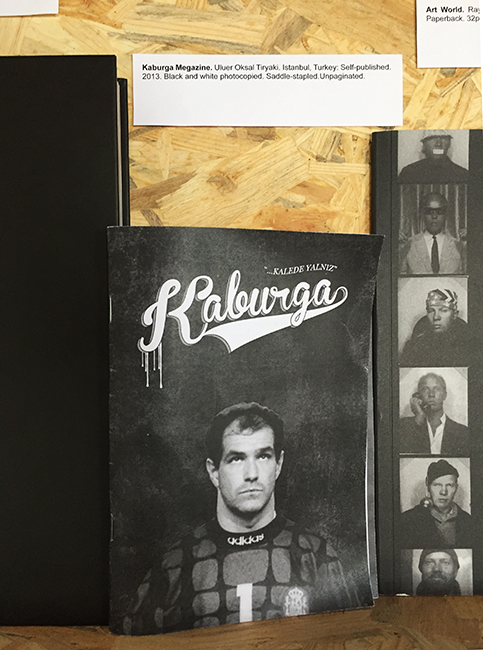
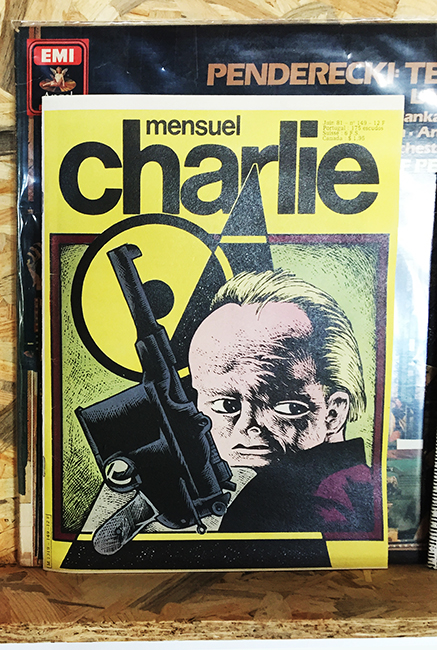
Marc Caro (Special Selections from Random Forest 2022)
Şenol Erdoğan ve Deniz Cansever’den imaj karşıtı bir queer şaheser
Zeynep Toker, yeni kitabı “Yeraltı Kütüphanesi” ile birlikte Koray Sarıdoğan’ı konuk ediyor.
Gizem Yılmaz ‘Kitty the Bitchy’, ve Kütük Fanzin (Random Forest 2022)
Special Selections from Random Forest 2022
Nick Zedd ‘The Underground Film Bulletin’ (Random Forest 2022)
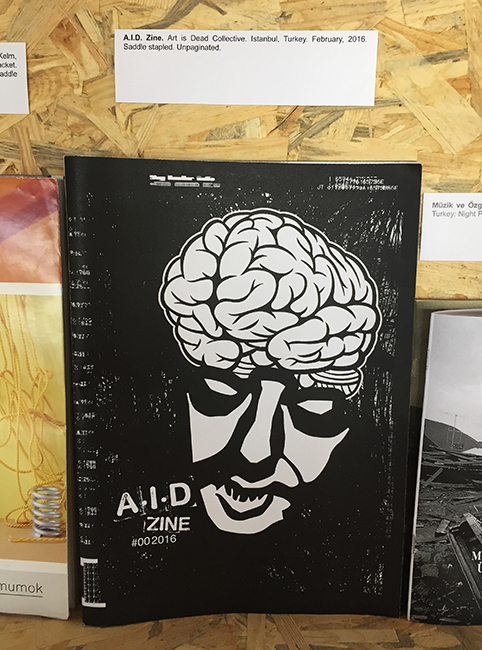
AID Zine 2016
The Brief Turkish Experience
In 2002, an exhibition by Altay Öktem with the title Genel Kültürden Kenar Kültüre: 101 Fanzin (From General Culture to Fringe Culture: 101 Zines) opened in the Kargart arts center in Kadıköy in Istanbul. Many unknown zines were exhibited. This project was later brought out in book form by İthaki Press under the same title. After that, a “zine workshop” was put together by Eren Barış and Selda Tuncer in issue 5 of Siyahi (Negro), with the participation of zines with varying concepts and from various provinces. In 2005, a zine market was put together in Ankara. A similar project was realized in Izmir. Art zines were also displayed in this zine show. From October 7 to 18, 2006, I. Düş Günleri (Dream Days 1) were held in Izmir by the Hayalbaz Art Association. In addition to various exhibitions, performances, and workshops, there was a small zine show. Zines like Benzin (Gasoline), Düzensiz (Messy), Fanzin Fetus, 99KÇ, Albemuth, Tesmeralsekdiz, Psişik Kedi (Psychic Cat), and Çamur (Mud) were included in the zine event put together by Rafet Arslan.
Yeldeğirmeni, Kadıköy, 2022
Yeldeğirmeni, Kadıköy, 2022
Horasan Atölye Ziyareti 2021
Mustafa Hoca’dan inciler, 2019
Kadıköy, 2022
Şaşkın bakkal, 2022
Yeldeğirmeni, Kadıköy, 2022
Suadiye, 2021
Taksim 2014
Özge Ürer’den şehrin kötü çocuklarına
Suadiye, 2021
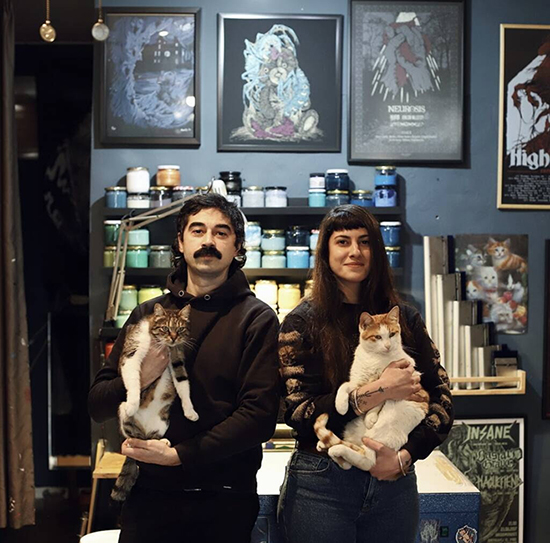
Dans l’atelier de sérigraphie Big Baboli tenu par Zezeah et son compagnon.
Reportage
Les artistes underground turcs ont Istanbul au ventre
par Marie Klock, envoyée spéciale à Istanbul publié le 23 avril 2023 / liberation
Face à une inflation galopante et un pouvoir répressif, nombre d’artistes ont préféré quitter la Turquie. Ceux qui restent ont vu leur situation encore aggravée par les séismes de début d’année, et fondent leurs derniers espoirs sur l’élection présidentielle du 14 mai.
Son crâne chauve happe à merveille la lumière du spot, sa voix théâtrale et puissante magnétise toute l’attention de la petite foule réunie à l’avant-dernier étage de l’immeuble Mısır, sis au centre d’Istanbul. Kübra porte un sobre tee-shirt rose, le même que quand on le rencontrait chez lui, plus tôt dans la journée. De la main droite, il brandit une sérigraphie, dans la gauche, il tient fermement une chaussure de sport. Son récitatif est savamment rythmé, ponctué de cris euphoriques quand une main se lève dans l’assemblée pour surenchérir. L’heureux acquéreur a droit à une ultime bourrasque vocale avant le «Satıyorum !» (adjugé !) qui clôt l’enchère, doublé d’un formidable coup de chaussure sur la table. Applaudissements. La vente est organisée par deux toutes jeunes structures stambouliotes, le collectif Siraen et le label XSM Recordings, en épilogue de plusieurs journées d’événements qui visent à récolter des fonds pour les victimes des tremblements de terre.
Nous sommes début mars, un mois tout juste après la série de séismes qui ont frappé le Sud-Ouest de la Turquie et la Syrie, causant plus de 50 000 morts et ravageant des villes entières – on parle de plus de 200 000 bâtiments à reconstruire rien qu’en Turquie –, pire catastrophe naturelle depuis un siècle dans un pays de la zone européenne. Le drame récent pèse lourd dans les esprits, d’autant qu’il survient dans un contexte d’inflation record – 84 % en un an – et de dépréciation galopante de la livre turque, qui a encore perdu 30 % de sa valeur en 2022. Ajoutez à cela les diverses restrictions qui jugulent graduellement toutes les libertés depuis le mouvement protestataire du parc Gezi, réprimé avec violence en 2013, complétez avec deux ans de Covid, et c’est à peine si vous oserez encore demander aux gens : comment ça va ?
Parmi le public des enchères, ce 15 mars, il y a notamment Zozo, DJ résidente et programmatrice du bar Tavern où mixent tous les jours des artistes invités. «Comment je me sens ? Pour être honnête : comme de la merde», confie-t-elle, la gueule de travers. Après le tremblement de terre, elle a cessé net d’organiser des événements musicaux, «par solidarité, pour participer au deuil». Elle venait alors tout juste de se remettre d’un sérieux burn-out ; depuis le début de la guerre en Ukraine, elle a vu déferler à Istanbul des artistes russes qui ont choisi de quitter leur pays.
Parmi eux, beaucoup de DJ qui la sollicitent pour venir mixer au bar. Elle se sent dépassée, ne peut pas accepter tout le monde mais doit bien répondre à tous les messages qu’on lui envoie, faire preuve de compréhension, dialoguer, accueillir la douleur… Elle ironise : «Je me sentais plus comme une psy dans un camp de réfugiés que comme une programmatrice musicale. Je n’ai pas été formée à ça.» Depuis son craquage en décembre, elle apprend à fixer certaines limites.
«Beaucoup d’artistes ont dû partir»
Depuis Paris, où elle a fui en 2007 après la prise de contrôle par des proches du pouvoir du journal qui l’employait, la dessinatrice Ramize Erer parle d’une «tristesse qui a couvert le pays». Elle a créé il y a douze ans un mensuel satirique entièrement réalisé par des femmes, Bayan Yanı, mais s’inquiète de ce que «beaucoup de dessinateurs et artistes ont dû partir pour des raisons politiques».
L’illustratrice Zezeah est, elle, toujours là. En 2011, cette trentenaire tatouée et son compagnon ont fondé l’atelier de sérigraphieBig Baboli et sont très investis dans la scène metal locale, qu’ils soutiennent en pratiquant des tarifs modiques pour les petits groupes qui leur commandent affiches ou flyers. Mais elle dit souffrir de l’«instabilité émotionnelle» du pays et de difficultés financières de plus en plus grandes qui «affectent sérieusement leur enthousiasme».
Elle constate avec lucidité : «On conjure le désespoir en créant encore et encore, mais le nombre de personnes qui consomment nos créations dans notre propre pays décroît sans arrêt. On a dû ouvrir une boutique en ligne Etsy pour vendre à l’étranger.»
Qui s’offre des sérigraphies quand le salaire minimum, bien que rehaussé à 8500 livres (environ 400 euros) en janvier, reste largement insuffisant pour se loger à Istanbul ? Derrière les quelques belles vitrines qu’offrent des événements médiatisés comme la Biennale d’art contemporain, les scènes musicales et artistiques dites underground tirent sérieusement la langue.
«Donner de l’espoir»
Quand on s’interroge sur les labels indépendants du coin auprès du disquaire Deform, il est un peu désolé – il y a bien tel petit label de K7 basé à Izmir, Vaykorus Tapes, tel autre, Tektosag, mais il a mis la clé sous la porte il y a deux ans… Deform est l’un des seuls magasins de disques indépendants à subsister côté européen, dans les abords ultra-touristiques de la rue Istiklal, chanceux de ne jamais avoir subi aucune augmentation de loyer en vingt ans grâce à une propriétaire bienveillante. Le truculent Kübra, qui habite un deux-pièces dans le quartier pas spécialement branché de Kurtuluş, énumère en comptant furieusement sur ses doigts : «Je vis ici depuis un an et j’ai vécu deux salves d’augmentation. A la base, je payais 3500 livres [170 euros] par mois. Puis c’est passé à 7000 [340 euros]. Maintenant, ils exigent 12000 [575 euros] – mais je m’y oppose !»
Comment s’en sortent ces artistes ? Beaucoup font le choix de partir, ceux qui restent cumulent souvent plusieurs petites sources de revenus, travaillent sans compter leurs heures et sont passés maîtres dans l’art du bricolage et de la jonglerie. Erman Akçay, tenancier d’un blog «qui ne [lui] rapportera jamais rien mais aspire à donner de l’espoir» sur l’underground d’ici et d’ailleurs, s’en sort en vivant toujours chez ses parents – ce brillant dessinateur nous montre une impressionnante série de fœtus malformés, sous le regard désolé de sa maman qui apporte le thé, mais c’est par diverses missions de graphisme qu’il gagne à peu près sa vie.
La chaussure avec laquelle le commissaire-priseur improvisé tapait sur la table a été offerte par Nike à une artiste dans le cadre d’un événement sponsorisé, l’artiste a donné sa paire de chaussures au collectif Siraen, Siraen a pu la revendre, en même temps que les œuvres. Bout de ficelle après bout de ficelle, la série d’événements a permis de récolter 56000 livres, soit près de 2700 euros reversés à trois associations. ♦
Kadıköy 2021
Varteres Durise – Absence (Live)
Engin Saatçılar & Serdar Asker (Radical Noise), ICAF 2021
Suadiye 2021
Suadiye 2021
Ünlü grafitti sanatçısı Turbo’nun bu bölümde konuğu Sulukuleli Tahribad-ı İsyan grubu oldu.
Feneryolu, 2022
Erenköy 2021
Erenköy 2021
Suadiye, 2023
The Little Match Girl – Kibritçi Kız (2004)
Kop-Art (Cop Art or Break Behind)
Began its print life in October 2006 as photocopies by Gamze Fidan, Cansu Aybar, and Zeynep Turuthan. Comes out irregularly. A “street couture” zine that has adopted collage as its mode of expression. A zine platform that brings independent visions to its audience with street art, critical media readings, alternative culture products, and surprise guests/topics.
Cyberpunk 1980’lerin başında edebiyat, müzik, sinema, çizgi roman ve bilgisayar oyunlarında kendini göstermiş bilimkurgu sanatının bir alt türüdür. Gerek edebi çalışmaları gerekse de kuramvari yazılarıyla akımın önde gelen figürlerinden olan Bruce Sterling cyberpunk’ı bilimkurgunun sokağa inmiş hali olarak özetlemiştir.
Cyberpunk ile bilimkurgu yaşama döndüyse, peki öncesinde neredeydi?
Bilimkurgu, post-apokaliptik senaryolarda yıkım sonrası hayatta kalma uğraşında, 1977’de Star Wars filmi ile yine alevlenen uzay operalarında, hard science fiction olarak adlandırılan türün ağır bilimsel detaylarında kaybolmuştu.
Katı mühendis bilimselliği, uzak gezegen ve geleceklerde süren maceralar ve kıyamet sonrası temaları 1970’lerin sonlarına geldiklerinde genç bilimkurgu fanlarını artık kesmiyordu. Tekrar eden, kalıplaşmış temalardan sıkılmışlardı, iş başa düşüyordu. Onlar Nazım’ın o güzel şiirinde dediği gibi “şarkı dinlemek değil şarkı söylemek istiyor”lardı. Ard arda fanzinler çıkardılar, kendileri gibi düşünenlerle bilimkurgu grupları kurdular, dağınıkta olsa örgütlendiler.
Bu gençler punk, post-punk, new wave ve endüstriyel müzik dinleyen sahnelerden geliyorlardı ve punk’ın “kendin yap/D.I.Y” etiği ile büyümüş çocuklardı. Hâkim söyleme karşı manifestosal bir karşı çıkış geliştirdilerse de belli yazınsal ve düşünsel kökler ile bağlar kurdular. Geniş bir esin sahaları oldu: J.G. Ballard, William S. Burroughs, Timothy Leary, Yargıç Dred’in yaratıcısı John Wagner, bilgisayar korsanları, pop sanat, sibernetik üzerine çalışmış bilim adamları, Jean Baudrillard…
Onlar televizyonun, radyonun, atom bombasının değil; kişisel bilgisayarların ve bilgisayar oyunlarının içine büyümüş bir kuşaktılar. Cyberpunk’ın en önemli yazarı William Gibson“sokak, nesneler için kendi kullanım alanlarını bulur” demişti. Cyberpunk’lar da yüksek teknoloji ve kaotik kent hayatının iç içe geçtiği Vancouver, Seattle, Tokyo gibi kentlerde ard arda pörtlediler.
Terim ilk yazar Bruce Bethke’nin öyküsünde geçti ve bilimkurgu editörü Gardner Dozois tarafından yaygınlaştırıldı. Akımın en önemli manifestosu sayılan William Gibson’un romanı Neuromancer 1984 yılında yayınlandı, artık mevzu totaliter devler ve atomize olmuş birey değildi; kurallar yeniden yazılıyordu. Yeni Romantikler genelde synthesizer kullanımını merkeze alan ve entelektüel kökler arayan bir çeşit punk sonrası müzik ve moda oluşumuydu. Duran Duran, Simple Minds ve Eurythmics bu kuşağın önde gelen müzisyenleri olmuşlardı. Punk sonrası glam rock androjen görünümüne ve romantizm akımına bağlanıyorlardı. Öncülleri olarak yıldız adam David Bowie vardı.
Neuromancer ile gelişkin teknoloji, çürümüş kent, yapay zeka, küresel mafya hakimiyeti, varoluşçuları anımsatan melankolik karakterler, insan ve makine arasında geçişkenlikler, dev şirketlerin av sahasında yedek parçaya dönen insan gibi türün abc’si olacak temalar bu romanda belirginleşiyordu. Sinema alanında işaret fişeği iki yıl önce Ridley Scott’ın Blade Runner filmiyle yakılmıştı. Film Amerikalı usta bilimurgu yazarı Philip K. Dick‘Androidler Elektrikli Koyun Düşler mi?’ romanından biraz serbestçe uyarlanmıştı.
P.K. Dick; başta Ubik, Karanlığı Taramak, Çığırından Çıkan Zaman gibi yapıtlarıyla öncül cyberpunk imgeler yaratmış olsa bile 1974 yılında geçirdiği mistik deneyim sonucu teolojiye yönelmesiyle genç bilimkurgu kitlesine biraz yabancılaşmıştı. Ama film genç cyberpunk kuşağının hayalindeki dünyanın ilk görsel tezahürü şeklindeydi. Epik görselliği, yüksek kalite sanat yönetimi ve Vangelis’in başarılı film müziğiyle unutulmazlar arasına giriyordu. İnsandan daha insan ve insanın insanlığını sorgulatan replicant’lar cyberpunk kuşağının ufkunu genişletti.
P. K. Dick bilimkurgudaki geleneksel eğilimlere baş kaldıran “new wave/yeni dalga” bilimkurgu ekolünün önde gelen Amerikan yazarlarındandı. Fakat new wave İngiliz icadıydı, New Worlds adlı bilimkurgu dergisinin etrafında toplanmış yazarlar tarafından yaratılmıştı. Derginin editörü Moorcock 1963’te şöyle yazmıştı: “Birçok bilim kurguda eksik olan şeylere hızlıca bir göz atalım. Kısaca bunlar genel olarak özlediğim niteliklerden bazıları- tutku, incelik, ironi, özgün karakterizasyon, özgünlük ve iyi bir üslup, insani olaylara katılım duygusu, renk, yoğunluk, derinlik ve genel olarak yazarın gerçek duygusu” demişti. Bilimkurguya hâkim olan teknoloji fetişizmi ve uzak gezegenlerde maceralar arayan kurgulara karşıydı. Moorcock yanında Brian Aldiss, J.G. Ballard ve Amerikalı yazar Thomas Disch’i almıştı. Deneysel ve avangard metinlere öncelik veriliyordu ve 60’lar özgür ortamı, Vietnam Savaşı, uyuşturucular, teknolojinin evlere inmesi, cinsellik öne çıkan konular arasındaydı. Aldiss bilimkurguya rock’n roll ritmini kazandırmaktan bahsediyordu; bu ton 70’lerde punk’a evrilecekti.
Cyberpunk’lar için en büyüleyici ve ilham kaynağı yazar J.G. Ballard idi. Gibson onun gibi tek cümle yazmak için günlerce uğraştığından bahseder. Sterling ise aramızda kim daha Ballardvari diye yarışıyorduk diye bu esinlenmenin altını çizer. Ballard bir düşünür, bir sanatçı ve şairdi. Bilimkurgu ile sürrealizm arasındaki özgün sentezinden içuzay, şimdiki gelecek gibi kavramlar türetmişti. Üslupçu bir yazardı ve özellikle kısa hikayeleri olağanüstüydü. Ballard’ın önce fasiküller olarak sunulup, 1970 ‘de kitaplaşan Vahşet Sergisi kitabı punk’ların aradığı sihirli şok imgesini vaat ediyordu.
Ballard yanında cyberpunk kuşağını etkisi altına alan diğer bir İngiliz yazar ise John Brunner’dı. İlk başlarda uzay operası olarak başlayan kariyeri 1968 yılında bambaşka bir yöne evrildi. William S. Burroughs’un cut-up kolaj tekniği, Dos Passos etkisinde deneysel yazım tekniklerini deneyerek kendine has bir tarz yarattı. Stand on Zanzibar, The Jadded Orbit, Koyunlar Hep Yukarı Bakar bu dönemin eserleriydi. Yazarın 1975 tarihli romanı Şok Dalgası Süvarisi ise cyberpunk’ların büyük ilham kaynaklarından biri oldu. Bu romanda kullandığı worm/solucan terimi bilgisayar literatürüne girdi ve ayrıca hacker’ları ilk tasvir edenlerdi.
Yeni Dalga bilimkurgu Amerika da özellikle Harlan Ellison’un editörlüğü yaptığı Dangerous Visions (1967) antolojisi ile fark yaratmıştı. Bu antolojideki otuz üç öykü, Ursula K. Le Guin’den Philip K. Dick’e dönemin bir çeşit ruhu özetleniyordu. Le Guin ilerleyen yıllarda bu antolojinin kıyameti kader gibi gören, karamsar ruh halini eleştirecekti. Antolojide Amerikalı yazarların içinde bir de J.G. Ballard öyküsü bulunuyordu.
Yeni Dalga, savaş sonrası kuşağın umutlarını, çekincelerini, korkularını ve umutları somutlaştırıyordu. Fakat 70’lere geldiğinde zaman değişmişti; kimse babası gibi giyinmek istemiyor, onun dinlediği müziklerden uzak duruyordu. 70’ler ekonomik kriz, 68 yenilgisi, Vietnam savaşının son bulması, kompüterlerin hayata girme sürecinin başlangıcı, yeniden körüklenen soğuk savaş atmosferiyle ilerliyordu. Döneme damgasını vuran nihilizmdi. Fakat bu sefer gençler varoluşçular gibi acı çekmek, eğlenmek istiyorlardı. Hatta isyanı bir eğlenceye dönüştürmek. Bu noktada punk hareketi sitüasyonist devrimcilerin bazı tavırlarını ödünç aldı.
Sex Pistols’un Tanrı Kraliçeyi Korusun çığlığı yeni bir dönemin başlangıcına işaret ediyordu. Ve peşi sıra kalabalık kentlerin varoşlarından cyberpunk’lar gelecekti.
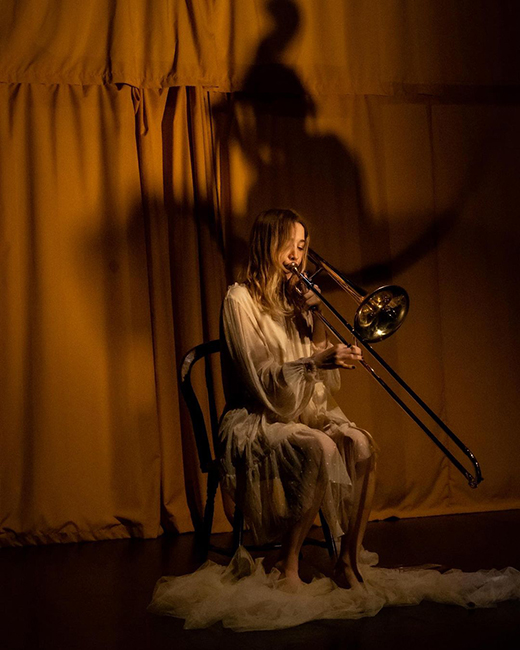
Hazal Döleneken on stage at Zorlu Psm, İstanbul, 2023
Hem enstrüman hem kompozisyon anlamında kendini keşfe çıkmış bir müzisyen Hazal. Geçtiğimiz 16. İstanbul Bienali’nde sahnelediği ışık-ses enstalasyonuyla sadece müzikle değil sanatın pek çok alanında etkin olduğunu ispatladı.
Deniz Ülkütekin‘in Cumhuriyet Gazetesi için 2019 yılında sanatçıyla yaptığı söyleşiden:
Bize kendini kısaca tanıtabilir misin?
Ailem müzik ve sanatla ilgili insanlardı. Yedi yaşımdayken çocuk korosundaydım. Konserlerde sololar söylerdim. Carmen Operası’nda sözleşmeli sanatçı olarak iki sene opera temsillerinde çalıştım. Ortaokulda 9 Eylül Devlet Konservatuarı’nda piyano kursiyeri oldum ve aynı konservatuarın trombon bölümünde liseden mezun oldum. 2010’da Amsterdam Konservatuvarı ve Lahey Kraliyet Konservatuarı’nda trombon bölümlerinde okudum. Bu dönemde caz ve yeni müzik yaklaşımları üzerine çok şey öğrendim ve heyecanlandım. Aynı dönemde beste yapmaya başladım.
Hazal Döleneken on stage w/ Cava Grande at Zorlu Psm, İstanbul, 2023
Hazal Döleneken (photo by zep_offline) 2023
Hazal Döleneken
Magic Itself
Hazal Döleneken was born in Turkey, 1991. Hazal studied High school’s Degree in classical trombone in Dokuz Eylül Conservatory and Bachelor’s degree in Conservatory of Amsterdam and Royal Conservatory of The Hague with Peter Saunders and Raymond Munnecom. She is currently studying composition, production and performance at Bilgi University Music Department where she’s a Full Scholarship.
She’s made several installations that collaborated with Digital Experience Collective and has exhibited them at several museum and galleries including the PortIzmir Triennial (2013), Amber Technology and Art Festival (2014), Contemporary İstanbul (2015), and her own compositions are performed at .Lup, MultiAid Fest, Youth Composition Fest, (2016 İstanbul), 5th Electroacoustic and Contemporary Festival at ‘Conservatorio Di Musica’ (Italy 2015)
The movie that she composed the music ‘Flying to Deep’ which won the ‘Honorable Mention’ at the ‘International Photography Awards’ , United States and ‘ Is Black’s Mourning Blue’ won ‘Incentive Mention’ in Berlin Fashion Film Festival.
She give concerts with with several important musicians, bands and orchestra, such as Koninklijk Orchestra and ensembles, Tolga Tüzün, Şenol Küçükyıldırım ‘scape album’ , improvisation bands.
She is currently working on her own music, improvising with trombone and vocal, composing acoustic, electroacoustic pieces and making installations for multidisciplinary projects by using Max Msp. She is currently member of Digital Experience Collective of Art (new media art collective) and Sonospheria: the acoustic ecology project where she makes a projects based on bio art.
Hazal Döleneken
Recorded on 9th March 2019
Müzikal yolculuğuna şu sıralar Cava Grande ile devam eden Döleneken, solo albüm hazırlığında.
Hollanda’dan geri dönünce ne yaptın?
Hayatımı değiştirme kararı aldım. Klasik trombon okumayı bıraktım. Bilgi Üniversitesi müzik bölümüne birincilikle kabul edildim. Enstrümantasyon, performans ve prodüksiyon üzerine eğitim aldım. 2017’de MIAM bestecilik bölümüne burslu kabul edildim, yüksek lisansımı bitirmek üzereyim.
Cava Grande ile İstanbul Caz Festivali’nde sahne aldınız. Gruptan ve gruba nasıl dahil olduğundan söz eder misin?
Tan Tunçağ benim Portecho zamanlarından beri severek takip ettiğim bir müzisyen. Bir gün “Cava Grande’de trombon ve synth çalmak ister misin?” diye sordu. Ben çok heyecanlandım ve kabul ettim. İlk konserlerimizden biri Tan, ben ve Yağız Nevzat İpek ile beraber çaldığımız, görselleri Miray Kurtuluş’un yaptığı Sonar Festivali’ydi ve harika geçti. O zamandan beri de beraber çalmaya devam ediyoruz. Cava Grande elektronik müzik projesi olmasının yanında, akustik enstrümanları ve uçucu melankolik yapısıyla etkileyici bir proje. Özellikle bu seneki caz festivali harikaydı.
Görüntü ve sesler 2/11/18 tarihli Salon İKSV konserinde kaydedilmiştir.
Aynı zamanda Brek isimli bir grupta da yer alıyorsun…
Brek bestelerin Berk Sivrikaya‘ya ait olduğu solo bir proje. Brek kendi karanlığı ve aydınlığıyla dalga geçmeyi becerebilen synth ağırlıklı bir müzik. Grupta, Deniz Braderin, Yağız Nevzat İpek ve Dehan Kılınçarslan ile beraber çalıyoruz. Hepsi, birlikte müzik yapmaktan heyecan duyduğum çok yakın yakın arkadaşlarım, suç ortaklarım.
“Natura” exhibited by at the -MSGSÜ Istanbul Painting and Sculpture Museum on September 28, Saturday at the 16th Istanbul Biennial “Seventh Continent”
“Kendi dili dışındaki tüm dillere yabancılaşan, doğanın dilini unutan insanlara, doğanın dilinin bir tercümesini sunan bu performans, aynı zamanda anneannelerimizin bitkilerin kendilerini dinlediği, onlarla konuştuğu yönündeki mitlerini de bir anda gerçek bir zemine taşıyordu.”
“Dadans’ın su temelli performansları ve sanatçı Serkan Tarcan’ın Kanal İstanbul rotasında başlattığı İki Deniz Arası çalışması kapsamında başlayan yürüyüş hareketi gibi pek çok paylaşım oldu. Su programının son konuğu ise genç bir besteci ve yeni medya sanatçısı olan Hazal Döleneken idi.
Döleneken, Natura isimli performansına bir masanın üzerine yerleştirilmiş, herkesin evinde bakabileceği birkaç saksı bitkisini sulayarak başladı. Arkasında bulunan ekranda gördüğümüz dijital renk oyunları başlangıçta hiçbir şey ifade etmezken, yavaş yavaş başlayan höpürtü sesleri dikkatleri üzerine çekti. Sanatçı saksıların içine yerleştirdiği minik ses kayıt cihazları yardımıyla saksı bitkilerinin suya kavuştukları anın sesini izleyici ile buluşturuyordu Her biri farklı bir ses veren bitkiler, ses vermeye başladıkları anda adeta can kazanıyorlardı. Doğanın bir parçası olduğunu endüstrileşmeden beri unutan, doğayı karşı bir kutupta algılayarak onunla bir kavga içinde olan modern insanın, ancak kendi varlığını ve canlılığını tanıdığı gerçeğine bir cevap gibi olan performans, şimdi izleyiciyi saksı bitkilerinin sesi yardımıyla, bitkilerin canlılıklarına ikna ediyordu.
Kendi dili dışındaki tüm dillere yabancılaşan, doğanın dilini unutan insanlara, doğanın dilinin bir tercümesini sunan bu performans, aynı zamanda anneannelerimizin bitkilerin kendilerini dinlediği, onlarla konuştuğu yönündeki mitlerini de bir anda gerçek bir zemine taşıyordu. Sanatçı, Natura’da doğayla bütün bağı kopmuş, yeşili ancak kent peyzajlarında dekoratif bir unsur olarak gören kent sakinleri ile, evlerinde biraz yeşil ihtiyacıyla bakmaya başladıkları ev bitkilerinin canlılığı üzerinden ve yaşamın başladığı yer olan su aracılığıyla bağlantı kuruyor. Bitkilerin suya kavuştukları an çıkardıkları sesleri, elektronik müziğe entegre ettiği performansını ise insan ve insan dışını şiirsel bir anlatımla bir araya getirdiği bir müzik kolajıyla (mix) sona erdiriyordu.“
Kaynak: Görünüm 2021, Hazal Aksoy, Kocaeli Üniversitesi GSF Dergisi #10
Trombon, klavye ve synth gibi enstrümanlara ses veriyorsun, ayrıca vokal de yapıyorsun. Profesyonel olarak müziğin bu kadar çeşitli alanlarında yer almanın sebebi nedir?
Müziğe, sanat disiplinlerine, hatta geri kalan bütün disiplinlere bütüncül bir yerden bakmayı, aralarındaki doğal ilişkiyi keşfetmeyi seviyorum. Daha çok profesyonel olmak ve önüne koyulan notayı en iyi şekilde çalmak ile ilgili kişisel bir derdim vardı. Ben en iyi olmak değil, kendim gibi olmayı ve yaratıcı olabileceğim alanlar yaratmayı arıyordum. Özgürce hareket etmek için çocuk gibi basit yaklaşmak gerekiyor, bir taraftan enstrümanına hakim olmak için binlerce şey okuyup kendini teknik anlamda geliştiriyorsun. Hata yapmaya cesaret edip, emek verip, denize bıraktığın her şey bir gün karşına balıklar, sualtı ağaçları gibi türlü türlü güzellikler, fırsatlar olarak çıkıveriyor. Ektiklerimi biçiyorum sanırım.
The Belt: Pluton’ a Ağıt; Pluton’un sürekli sınıf değiştirmesine ve gezegenlikten çıkarılmasına tepki olarak ortaya çıkmış görsel ve işitsel bir performanstır. Uzay boşluğunda başlayıp giderek içselleşerek iç dünyamızda sonlanır. Bu sırada Pluton bizden çok uzakta hala dönmektedir.
Yeni medya içerikli, interaktif yerleştirmelerle, ulusal ve uluslararası sanat organizasyonlarında yer aldın. Bu çalışmalarından da bahseder misin?
Yeni medya adı gibi yeni; bilimin, rakamların, hayal gücünün, teknolojinin, metafiziğin, sanatın ve insan faktörünün bir arada olduğu bir alan.
DECOL sanat kooperatifini; Ahmet Said Kaplan, Cihan Çankaya ve Mert Uzbaşlı ile beraber kurduk. Digilogue’un düzenlediği Alt City İstanbul Residency’e kabul edildim… Şimdi Talin Büyükkürkciyan ve Tolga Tüzün ile doğaçlama bir performans hazırlıyoruz.
HARAKA by Hazal Döleneken Hakan Gündüz Heterotopia Exhibition Contemporary İstanbul 2017
Şu sıralar solo bir albüm hazırlığındasın. Bizleri nasıl bir albüm bekliyor?
Evet, kendimi bildim bileli hayalini kurduğum şey kendi oyunumu yaratmaktı. 2009 yılında bir albüm kapağı çizdim. Bir sürü şey biriktirdim. Disiplinlerarası, bir taraftan hayatta etkilendiğim müzikler kadar basit, öte yandan denemekten korkmayacağım kadar cesur, hiçbir şey olmak zorunda olmayan, dönüşebilen bir yer arıyorum. Elektronikleri ve akustik enstrümanları içeren; benim vokal yapıyor ve muhtemelen bazı enstrümanlar çalıyor olduğum bir proje olacak.
Bu sene İstanbul Bienali’nde de bir işin yer alacak değil mi?
Benim için çok heyecanlı bir olay, İstanbul Bienali “Bir Buçuk Kollektif”in düzenlediği kamusal alan projesi kapsamında bir performans gerçekleştireceğim. Kendi işimi tasarlıyorum; detay veremiyorum ama 28 Eylül saat 13.00’te Haliç Tersanesi’nde sergileyeceğimi söyleyebilirim. İstanbul Bienali’nin bende geçmişten gelen önemli bir yeri var; davet edilmiş olmaktan ve içinde yer almaktan dolayı mutluyum.
“Gibi”nin erkekleri buralılar, bizdenler ama hasar almışlar. Gençlikleri tükenmiş, yaşama dair hevesleri budanmış, “küçük şeylerle mutlu olma” ihtimalleri gasp edilmiş. Mesela Yılmaz, hiç parası olmamasını on lirası olmasına yeğliyor. Ne denir? Her çıkışın bir inişi oluyor. Dolar iki lirayken gidilen Erasmuslar’dan artık sadece yamyamlar geliyor! “Gibi” işte tam da bu yokuş aşağı gidişin dizisi… Ağlanacak halin komedisini kırıp dökmeden yapıyor, bağrımıza saplı tespitleri cımbızla çekip alıyor.
Haydar Ali Albayrak, Mart 2022
“Gibi”, ilk sezonuyla platform komedilerine damga vururken “Exxen’in en iyisi” olarak dikkat çekiyordu. İkinci sezonunda seyircisini artıran, öte yandan çevrimiçinin doğasına aykırı bir biçimde sadakat görüp hatırı sayılır bir “hayran kitlesi” toplayan dizi, entelektüel açıdan tartışılmaya, toplumsal karşılığı irdelenmeye başladı. Bir anlamda “olay haline geldi” diyebiliriz “Gibi” için. Öyle ki geçtiğimiz günlerde siyasi parti lideri Meral Akşener iktidara seslenirken dizinin ilk sezonunda geçen “yılgın hoşgörü” ifadesini kullandı. Bununla birlikte aforizmalarından bölüm öykülerine, “Gibi”nin her yere çekilip her duruma uyarlanabildiğini ve toplumun birçok kesiminde karşılık bulduğunu görüyoruz. Hem genç seyirciyi yakalayıp hem alt metni zengin bir anlatı tutturmak kolay iş sayılmaz; dolayısıyla başarısını salt esprilerine, komedi anlayışına dayandırmak da yetersiz kalacaktır. Bu ilgiyi ilk elden mizahımızda önemli bir eksiğin kapatılmasına, samimiyetin yeniden yakalanmasına bağlayabiliriz. Komedilerin acısı tatlısıyla insanımızı yansıttığı 90’ları anımsattı bize “Gibi”. Soluk renklerine rağmen başardı iletişim kurmayı ve politik özünü satır aralarına saklayan ancak “neysek oyuz” tavrından da milim şaşmayan bir çizgide güldürdü. İçimizi ısıtmasa da hani en azından elini omzumuza attı, yanağımızdan bir makas aldı.
Yokuş Aşağı Yerli ve Milli Ya Da Güngören Düşerken
Peki, “Gibi”yi “Gibi” yapan nedir? Özellikle “toplumsal bir olay” kılan unsurlar neler? Basit görüntüsünün ardında nasıl bir hazine yatmakta? Sonda söyleyeceğimi başta söyleyeyim: “Gibi” başarılı çünkü genç kuşakların enerjisini paylaşırken aynı zamanda Recep İvedik şahsında ifade bulan bir çizginin yenilgisini duyuruyor, “İvedik’in, İvedikler’in devri” kapandı mesajı veriyor. Bu mesajı başka bir boyutuyla “Zengo” filminde de almıştık. “Zengo”, niyetinden bağımsız olarak siyasi iktidarın kendi içindeki dönüşümünü, çekişmesini ortaya koyuyor, İvedikler dünyasında sivrilip zenginleşen Zengo’lara yoğunlaşıyordu. “Gibi” ise meseleyi “taraf hassasiyeti” sergileyerek İvedik söylemi gölgesinde güneşini arayan orta sınıf alışkanlıklar üzerinden yorumluyor.
Recep İvedik karakteri ilk üç filmdeki toplumsallığını serinin devam öykülerinde yitirirken dahası Şahan Gökbakar sembolik olarak bindiği iktidar gemisinden inerken, rüzgârın yönünü doğrulayan “Gibi” de çağı yakalayarak İvedik’te cisimleşmiş “tek adam”ın güçten düştüğünü, aşırı erkekliğin fanusuna kısılıp hamamlarda türkü söyleyebildiğini, en nihayetinde kendi söyleyip kendi dinlediği gerçeğini bildiriyor. Yani kabaca söylersek mizahımızın uzun süre (toplumsal etkisi bakımından) lokomotifi olan İvedik’in gidip yerine Yılmaz ve İlkkan’ın, sonrasında Ersoy’un gelmesi erkeklik sınırlarında dahi olsa çoğulcu bir zemin arayışına yorulabilir. Zira “Gibi” az çok bir çatışmanın ürünü… Belki bir konsensüs karikatürü…
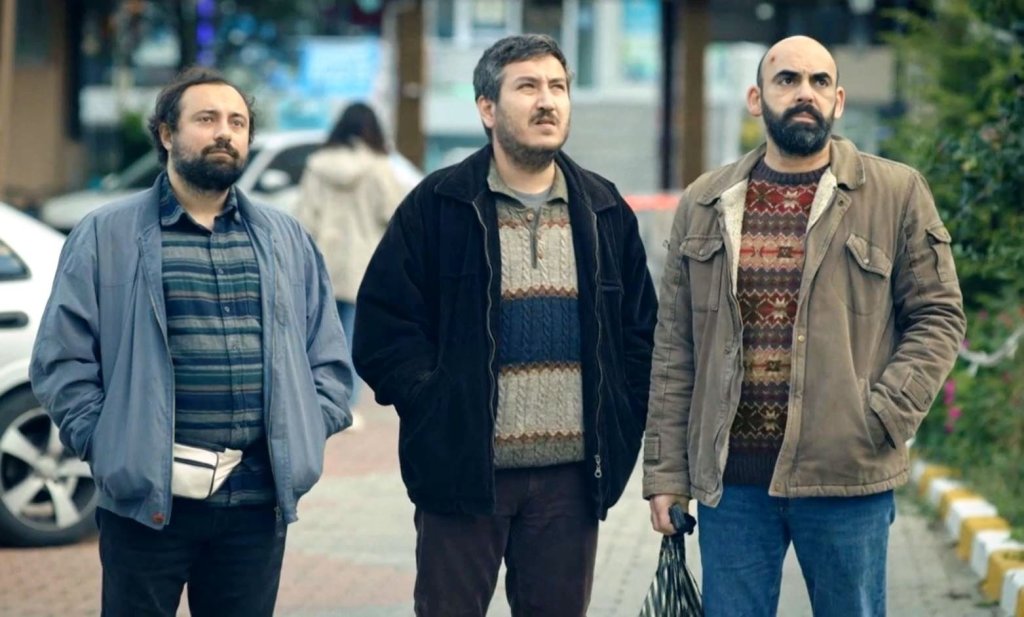
Yilmaz and Ilkkan are two friends who are constantly fighting each other. Their greatest feature is always being able to do something that will turn their ordinary lives upside down.
Peki, “güldürürken düşündürme” efsanesi “Gibi” için geçerli mi? Olaylar, tavırlar akılda kalıyor mu? Bu “biz” vurgusundan öte bizi bize gösteriyor, bir şeyler öğretiyor mu?
Tabii bu noktada dizinin “yerli ve milli” söylemini müthiş bir iştahla parodileştirdiğini görüyoruz. Recep İvedik öykülerinde bir Güngören çocuğu zirveye çıkıyor, badireler atlatıyor, finalde kendi çevresine, yaşam pratiğine kavuşuyordu. Su akıp yatağını buluyordu. Yeşilçam’dan itibaren benimsenen bir olay örgüsüydü bu. Kahramanı yükseltip kazandığı başarının ardından yeniden halkın arasına katan yapımcılar büyük şehirlerde ekmek arayan veya taşrada kaderine razı gelmeyen seyirciyi böyle kavramaktaydı. İvedik de “fakir ama gururlu” delikanlılar gibi yükseliyor, işler başarıyor, tekrar mahallesine, kurulu düzenine dönüyordu. Böylece mahalleler karışmıyor, sınırlar korunuyordu. İlk öykülerinde daha sade ve düzen karşıtı bir tipleme çizen İvedik giderek yerli ve milli bir haset kuşanmıştı. Buna karşın Yılmaz ile İlkkan hamasetin iflasını duyururken yerli ve milli bir yenilgiyi dışa vuruyor, 90’ların spor haberlerine nazire yaparcasına “yenildik ve ezildik” diyorlar. Sınıfsal bağlamda “ezilenlerin zaferi” biçiminde sunulan ve Başakşehir, Çukurambar gibi elit ucubeler yaratan yerli ve milli söylemi bugün üniversite mezunu işsiz gençlerin yılgınlığında, öfkesinde ufalanıyor.
“Gibi”nin erkekleri buralılar, bizdenler ama hasar almışlar. Gençlikleri tükenmiş, yaşama dair hevesleri budanmış, “küçük şeylerle mutlu olma” ihtimalleri gasp edilmiş. Mesela Yılmaz, hiç parası olmamasını on lirası olmasına yeğliyor. Ne denir? Her çıkışın bir inişi oluyor. Dolar iki lirayken gidilen Erasmuslar’dan artık sadece yamyamlar geliyor! “Gibi” işte tam da bu yokuş aşağı gidişin dizisi… Ağlanacak halin komedisini kırıp dökmeden yapıyor, bağrımıza saplı tespitleri cımbızla çekip alıyor.
Ablaklık ile Abdallık Arasında: Yılmaz’ım Ya!
“Gibi”nin topluma açılan bir diğer penceresiyse Yılmaz’ın yüzü! Feyyaz Yiğit herhangi bir kalıba sığmıyor, sığdıramıyoruz. Bizdenliğin temsili… Boş boş bakıyor, yeri geldi mi köpürüyor. Gayet pragmatist bir yaklaşıma sahip ama ilkelerinden ödün vermiyor! Ahlakına düşkün, koşullar aleyhine işlemedikçe… Bir soyunma odasında bir dolu insanla mahsur kaldığında yıllar evvel sattığı kemerin izini sürecek kadar ortamdan soyut, daha doğru bir deyişle gamsız yahut hasta odasında yaşlı kadınlardan meydana gelen bir seyirci kitlesine tekvando gösterisi sunduracak kadar pervasız. Daima burnunun dikine giden, bencillikten öldü ölecek bir adam… Öte yandan gelenekçi: “İbana iban denir” onun kitabında! Flört etmek için kişiliğini ayaklar altına almaz ama gerektiğinde direksiyonu libidosuna bırakır. Takıntılı, şüpheci, patavatsız, harbi delikanlı! Ona (çoğu zaman) sırtınızı dönebilirsiniz fakat fazla yüz göz oldu mu memnun kalmazsınız muhabbetinden! Sıkar, üzer, yorar… Cenazenize gelen bakkal Yılmaz… Bir market kasiyeri adınızı dahi bilmezken ardınızdan dedikodu yapan, sizi sizden iyi tanıyan bir bakkal…
Toplumumuzun zihinsel ve eylemsel ortalamasını yansıtan bu çelişkili karakterinin ötesinde olayları çözmek için hüner sergileyen yine o… Zor durumda kalınca her mimiğine işlemiş ablaklığını ince zekâsıyla aşıyor, her bölüm taşı gediğine koyuyor. Aforizmaları, akıl yürütmeleri genelde ondan duyuyoruz. Hoca da durur mu, yapıştırıyor cevabı!
Gibi ‘Poster’ Exxen
Feyyaz Yiğit ile Aziz Kedi’nin kaleme aldığı, Ömer Sinir’in yönettiği “Gibi” geleceğe taşınacak mı? Bir iz bırakacak mı yoksa dönemini yakalamış, güçlü gözlemlerinin mükâfatını almış bir iş düzeyinde mi kalacak?
Nasreddin Hoca nasıl göle maya çalıyorsa Yılmaz da büyücüye öyle inanıyor! Ya tutarsa! Diğer bir bölümde, bu kez kara büyü fikrine karşı çıkarken “Kimsenin hiçbir şey bilmediği yerde bir insan her şeyi bilebilir” diyerek cehalete savaş açıyor veya “ne düşünüyorsun” sorusuna felsefi çıkarımlarda bulunup çemkirebiliyor. Yılmaz kallavi bir üniversiteden mezun bir moleküler biyolog karşısında yükseldikçe yükselip serbest düşüşe geçeceği sıra İvedikvari bir hüzünle hayat okulundaki başarılarından bahis açan bir adam. Yersiz özgüveninden gayrı kaybedecek şeyi olmayan, küçük hesaplar yapıp büyük oyunlar bozan bu adam “dünyayı beş büyük aile yönetiyor” itirazının nispeten sosyalleşmiş, medeniyete ermiş bir versiyonu ve madalyonun diğer yüzünde sorunları pratik zekâsıyla aşarak yozlaşmış bir bilgeliğin de karşılığı… Kahve köşelerinin, dükkân önlerinin hassas terazisini orta sınıfın masasına çarpan, öte yandan o meşhur Anadolu kerametini mahalle aralarına taşıyan bir az süper kahraman! Tilkiler dönüyor, okey taşları birbirine karışıyor, pelerinini vatkalı diktirmek isteyen Yılmaz’ın kafasında…
Geyikte Yeni Dalga: Çıkılamayan Videolardan Spotlar
“Gibi”nin toplumu yakalamakla beraber genç kuşaklara bu denli hitap edişinin ardında çağın iletişim yöntemlerini kullanması yatıyor. Sosyal medyada zamanımızı çalan videolar, bir dönem okul sıralarında dalgasını geçtiğimiz “bu bilgi gerçek hayatta ne işimize yarayacak” sorusunu boşa düşürdü. Artık “bizi hiç ilgilendirmeyen” zilyon saniye görüntü ile muhatap oluyoruz. Daha acısı bu saçma sapan görüntüler “gerçek hayatımızın bir parçası” haline geliyor, ömrümüzü tastamam dolduruyor. Diş fırçalarken kaybettiğimiz süre “komik video” izlerken kaybettiğimiz sürenin yanında hiçleşiyor. Elbette hesap kitap söz konusu… Videolar öyle yerden kesilip yapıştırılıyor ki art arda defalarca izliyor, izlemek durumunda kalıyoruz. “Gibi”nin aforizma veya geyik muhabbeti içeren videoları da öyle… Dizinin hayranları (yahut reklamcıları) tarafından spota taşınan bu videolar, bu “içerikcikler” sosyal medya kullanıcısını “çıkamadığı” bir video ile, sonsuz bir fragman ile baş başa bırakıyor.
Dizinin diyalogları bu tuzak videolara uyum sağlamakta… Geyik muhabbetini sıradanlaştıran, deyim yerindeyse “halka indiren” bir tarzı var “Gibi”nin. Kaldı ki bu tarzı onu kolay tüketilir ve bir kez daha “bize yakın” kılıyor. Yılmaz-İlkkan-Ersoy triosu bizi temsil ettikleri duygusunu gündelik yaşamda geyik çevirerek pekiştirirken “Gibi” hayatın herhangi bir yerinden başlayıp herhangi bir yerinde devam ediyor ve başa dönüyor. Doğrusu bu durum çağımızın kısırlığı ile bağdaştırılabilir. Hani pencereden baktığımızda göğü görmemiz normal ama gökyüzünden bakınca neden pencereyi görelim!
Hacıyatmaz-Matruşka Koalisyonu İkinci Sezonunda
“Gibi”, ikinci sezonunda da çizgisini sürdürerek yine gündelik yaşamın içinden sesleniyor. Saçma olay ve çıkışları rutine karşı bir itiraz olarak değerlendiren, bu yönüyle dengeyi bozmaya gayret eden dizi diğer taraftan ise ayakların yerde kaldığı hacıyatmazvari bir üslup tutturmuş, kültürel, politik ilişkileri iç içe geçirmişti. Bir açıdan, üslubuyla hacıyatmazı, işlediği temalarla matruşka bebekleri andırıyordu. İkinci sezonda bu anlatısal zenginlik korunurken absürt olayların ilişkilere daha çok yansıdığını ve metinlerin olgunlaştığını, böylelikle “Gibi”nin giderek dizi kimliğine büründüğünü görüyoruz. “Çaça ve Cosplay” bölümü bu değişime iyi bir örnek… Olaylardan ziyade iletişim ve gruptaki sorunlar öne çıkmakta.
Güncellenmiş “Gibi”de Yılmaz’ın vatkalı ceket gibi tuhaf arayışları, arzularından ziyade tuhaf durumlar karşısındaki konumuna şahit oluyoruz. Arada “Gelin Başı”, “Eşref Hidayet Gürdal Kültür Merkezi” vb. çıkışlar gelse dahi ilk sezona göre daha defansif bir Yılmaz ve “Gibi” izlediğimiz söylenebilir. “Vücutçu Yalvaç”, “Kuki”, “Sokak Röportajı” ve “İki İçi Dışı Bir Kişi” gibi bölümler de bu savunma halinin özeti olmuş adeta. Oysa ilk sezon ilk bölümde Yılmaz ile İlkkan zorla “kokariççi” açmanın eşiğine gelirken bile ofansif bir anlayış benimsemiş, “ezik” figürünün altını “sıradan güruhlar”a ve çoğunluğun isterisine karşı koyarak çizmişlerdi. İkinci sezonda yılgın bir hoşgörüyle mağduriyetlerini pekiştirdikleri, sevgiyle karışık acıma duygusunu tatlı tatlı kaşıdıkları bir seyirden söz edebiliriz. Yanı sıra “Gibi” ikinci sezonunda üç mağdur erkek dizisi haline gelirken “çıkıntılık yapan” kadın karakterlerin de -“Resimdeki Ünlü” bölümünü saymazsak- geri çekildiği anlaşılıyor. Hatırlarsanız ilk sezon Yılmaz birçok bölümde kendisiyle (öyküdeki var oluşu gereği) zıtlaşan bir kadın karaktere rastlıyor, yenene veya mağrur bir yenilgi tadana kadar cebelleşiyordu. Hatta her bölüm değişen kadın karakterler ne kadar göründükleri fark etmeksizin bir İlkkan, bir Ersoy kadar ağırlığa sahiplerdi.
Şartlar aksi yöne gelişseydi, Yılmaz (Feyyaz Yiğit) ve İlkkan (Kıvanç Kılınç) rollerini Ersoy (Ahmet Kürşat Öçalan) dışında bir tipleme ile söz gelimi güçlü kadınlarla paylaşsaydı “Gibi” dar bir kitleye seslenmek durumunda kalır, ilk sezon yarattığı cazibeden yeterince verim alamazdı. Çünkü erkeklik, yenik erkeklik gibi meseleler günümüz siyasi koşullarından, toplumsal atmosferinden bire bir besleniyor. Dizi erkeğin kaybını, yenilgisini öne sürdükçe “küskün gerçekliği”ni kabul ettiriyor ve bir anlamda “Recep İvedik”in düşüşünü de temellendiriyor.
Dialogger’ın yeni bölümünde Cem Mumcu’nun konuğu Exxen’in Gibi dizisinin yıldızı Feyyaz Yiğit. Eğlenceli ve tam 41 dakikalık bir sohbet sizleri bekliyor.
Ethemler Arkadaşımız, Kutaylar Yiğenimiz! Bu Mahalle, Bu Çember Bizim!
Yazıyı toparlarken bir noktaya daha değinmek istiyorum. “Gibi” şüphesiz topluma dair bir malzemeden hareket ediyor. Yakası açılmadık deyimler, minibüs arkası yazıları, anlatım bozuklukları dizinin bir nevi cephaneliğine dönüşmüş durumda… “Bizden” meseleleri ele alırken mevcut duruşumuzu, tepkilerimizi “absürt” bulabileceğimiz bir esneklikte, abartarak değerlendiriyor. Dizide kahramanlarımızın başından geçen olaylarla gündelik hayatta sık karşılaşmasak dahi günün sonunda Ethemler bizim arkadaşımız, Kutaylar bizim yeğenimiz… Bu mahalle, bu çember bizim!
Peki, “güldürürken düşündürme” efsanesi “Gibi” için geçerli mi? Olaylar, tavırlar akılda kalıyor mu? Bu “biz” vurgusundan öte bizi bize gösteriyor, bir şeyler öğretiyor mu? Feyyaz Yiğit ile Aziz Kedi’nin kaleme aldığı, Ömer Sinir’in yönettiği “Gibi” geleceğe taşınacak mı? Bir iz bırakacak mı yoksa dönemini yakalamış, güçlü gözlemlerinin mükâfatını almış bir iş düzeyinde mi kalacak? Bu sorunun cevabını elbette zamana bırakmalı fakat mizahın, koşullarından var olduğu ölçüde kendi koşullarını da yarattığını, suyun her zaman dosdoğru akmayıp yatağını değiştirebildiğini unutmayalım. Kim bilir, bakarsınız yirmi sene sonra bir dizi gelir ve “Gibi”deki hisleri uyandırır. O vakit “Gibi” de başlı başına bir samimiyete kavuşmuş olur ve Ethem Whatsapp grubundan ayrılır!
DO NOT GET HOPELESS BECAUSE THAT’S A SIGN YOU GOT BITTEN AND INFECTION IS SPREADING.
TREAT YOUR BITE WITH KINDNESS, HOPE, BEAUTY AND LOVE
THEY ARE LIFELESS BECAUSE THEY HAVE LOST LIFE WITHIN.
DO NOT LET THEM TURN YOU INTO ONE OF THEM. TREAT YOUR BITE WITH INTEGRITY, VISION AND LOVE.
NO MATTER WHAT YOU DO, DO NOT ROT WITHIN.
YOU CAN INSPIRE A ZOMBIE WITH YOUR LIGHT AND BRING THEM BACK TO LIFE. EVERY STEP YOU TAKE HAS AN EFFECT.
AND DON’T FORGET TO TREAT OTHERS INFECTIONS WITH KINDNESS.
byLumineh
2023, İstanbul
Kentsel Dönüşüme Karşı,
Ruhsal Dönüşüm İçin Çağrı!
Rafet Arslan2008
“Kritik bir anda, herkesin dilindeki bir sokak şarkısının biçimlendirdiği bir hayat nasıl bir şey olurdu dersiniz?”
Son yıllarda şehrin horlanmış, kaderine terk edilmiş mahallerinde tuhaf bir şeyler oluyor. Dönüşüm gibi muhalif dilde önemli yer tutmuş bir terim üzerinden resmi otoriteler ve çok-uluslu kapital planlar yapıyor. Tarlabaşı, Sulukule, Balat… Öncelikle, bu mahallerin ne olduğuna kısa bir bakış atalım.
Bu bölgeler; yersiz yurtsuz kökenden beslenen Çingene topluluklarının, Anadolu’dan gelmiş burslu öğrencilerin, muhafazakar toplumsal cinsiyet kod sistemlerinin sapkın ilan ettiklerinin, hayat kadınlarının, çalgıcıların, artık toplayıcıların, hurdacıların, junky’lerin, akademik ya da entel olmayan sistem karşıtlarının, kendini izole etmiş psikotiklerin, gayrı meşrunun ve her türden mülksüzün zorunlu açık mahalle modelleri geliştirdikleri yerleşim alanlarıdır.
Sistem, bu bölgelerin kentsel kibarlaştırılmasını ve ardından soylulaştırılmasını gündeme getirmiştir. Böylece eskimiş, gözden düşmüş bu mahallerin toplumsal bilinçdışında birikmiş enerjileri yok edilecek, sistem dışı gayri meşru oligark trafiğine bağlanacak, kolluk güçlerinin geçmişte tam gözetleme, denetim ve sindirmeyi başaramadığı bu bölgeleri işgal etmesi ve otoritesini mutlaklığını kutsaması sağlanacak, mülksüzlerden boşaltılmış-temizlenmiş-kibarlaştırılmış mahallerin arsaları üzerinden kapitalin üretim-tüketim-yeniden üretim döngüsü hakim kılınacaktır. Kent merkezindeki kara delikler olarak bu alanlar, finans-kapitalin ışıltılı gösterisine dahil edilecek; sistemin doymaz bilmez vampir iştahı kendi hakimiyetinin dışında tek bir var oluş alanı kalmayana dek; kara delikleri yemeye devam edecektir.
Mülksüzler ise, kendi halince bir hayat sürdükleri mutlu olmasalar bile kendilerini huzurlu hissettikleri, bu bildik coğrafyalardan kent dış sınırına doğru sürüleceklerdir. Sistemin yerlerinden edilecek mülksüzleri itaate zorlamak için uzattığı bir parmak bal ise Toki modelinde cisimleşmiş toplu konut alanlarıdır. Yüzyıl başı Amerikan işçi sınıfına düzenlenmiş apartman dizgelerinden ve Le Corbusier’in Birlikçi Kent modelinin yozlaştırılmış ve bir çeşit kara mizaha çevrilmiş planlamalarından yola çıkmış toplu konut anlayışı; insanlara sadece geceyi kendi hücresinde geçirecekleri, toplu hapishane hayatı sunar.
Bu insanları birleştirmeye değil; kitleleştiremeye yönelik bir hamledir. Sonucu özgür bireylerin yan yana gelip toplumsallaşacağı bir kollektivite değil; robotlaştırılmış bir sürünün yalnızlık sürecidir.
DDR -Tanklar ve Yığınlar
Kentin dışında öbeklendirilen toplu konutlar aynı zamanda kenti gündelik yaşamdan ırak eden gettolardır. Bütünsel kent algısının kırılması izole bireyselleşme-yalnızlaşma sürecini arttırır. Gettosuna sıkışan bireyin psiko-patolojisinde bütünsel kente karşı travmatik bir korku oluşur. Kafka fragmanları gibi kent imgesi git gide büyürken, izole birey kendini küçük ve dışında hisseder; bir bakıma ötekileştirilir. Bu da ayrılığın, ayrılmışlığın gücünü arttırırken, Birlikçi ideali dışlar.
Denetimin zayıf olduğu mahallesinden koparılıp, etrafı otoyollar ve hiper marketlerin jungle’ı ile çevrili adalarına hapsedilen mülksüzlere sistem iki yeni hayat seçeneği sunar:
Yoksulluğun doğal dayanışmasından, cemaatsel ilişkilerden soyutlanmış kişinin; sistemin tam denetiminde ve vahşi kapitalizmin bencillik kültürüyle uyumlu, normal bir yurttaşlar haline gelmeleri hedeflenir. Yani kişilerin yaşamı, yaşam alanı modeline uygun olarak rasyonelleştirilir. Kapital kentinin kurallarına uymayanlara yaşam şansı tanınmaz. Artık, yerleştirildiği toplu konutlarda kola kutuları toplayamayacak, serserilik yapamayacak ya da parasız kalınca (ki genelde öyledir) deftere borç yazacak bir Rıza amca olmayacaktır. Hiper marketlerde borçlanmanın tek yolu kredi kartına sahip olmaktır. Kapıcı parası, apartman gideri gibi tanımadığı kavramlarla tanışacak; çocuğunu okula göndermemenin bir suç olacağı gerçeği ile yüzleşecektir. Sürekli sıkıştıran hayat şartları artık sürekli bir iş arayışına yöneltecektir. Sistem bio-politik araçlarla mülksüzlerin bedenlerini de tahakküm altına alacaktır. Mesai saatlerinin robotluğuna teslim rasyonel ve steril mezarlık hayatı, sistemin mülksüzlere sunduğu ütopya; işte budur.
Sistemin sunduğu diğer seçenek ise, dayatılan bu mezarlık disiplinini reddetmek ve kentin büyük suç pazarına eklemlenmektir. Bu yolun son uğrağı da sitemin diğer bir toplu yaşam seçeneği cezaevleri olacaktır. Sistem dışı özgürleşme pratiklerine soyunamayan izole mülksüz bireyleri bekleyen her seçenek; büyük kapatılmalara açılacaktır.
21. yüzyılın başında dünyanın tüm metropollerinde devreye sokulan bu soylulaştırma planına karşı çıkmanın yolu; kuşkusuz alternatif şehircilik modelleri önermekle başlayacaktır. 19. yüz yıl başlarında Charles Fourier’in ilk temellerini attığı, Letteristlerin ve Situasyonistlerin geliştirdiği Birlikçi Kent hedefinin en önemli öznesi, birlikçi bir mimaridir. Yaşam alanlarının kişilerin eğilimlerini, arzularını, düşlerini araştırmak için yola çıkmalarına yardımcı olabilmesi, iş ve eğlence arasında gerekli uyumun sağlanması, tutkuların özgürleşmesine ve iyiye doğru dengelenmesine yardımcı olması, ‘kendini bilen’ bu bireysel bilinçlerden kolektif yaratı ve şenliklerle taçlandırılacak bir toplumsallaşmaya ebe olması beklenir.
Birlikçi Kente giden ışıltılı yolun ilk basamağı, tek tek kişilerin özgürlüğe adım atacakları bir ruhsal dönüşü gerçekleştirmeleridir. Sistemin yapay ihtiyaçlar, sahte arzular yaratarak oluşturduğu sanal hayatlara karşı çıkmanın yolu, bireysel düşü kolektifleştirerek ruhsal dönüşümleri ayaklandırmaktır. Ruhsal dönüşüm ise, toplumsal dönüşümün anahtarlarını kuzey yıldızı gibi göz bebeklerinde barındırır.
On the Passage of a few People through a Rather Brief Moment in Time: The Situationist International 1956-1972
Birlikçi Kent idealinin gerçeklemesi sadece kurumsal çalışmalar ile değil, pratik hayatın içinde olacaktır. Bunun için soylulaştırılan bölgelerde de, getto toplu konut alanları içinde de yapılacak kuşkusuz çok şey var.
Sistemin; sahiplerinin elinden alıp kibarlaştırılmış mahallerde tam da hakim olduğunu düşündüğü anda, mahrem ve steril duvarları sokağın sanatçıları için baştan çıkarıcı tuvaller olacaklardır. Işıltılı yeni kitsch mimari, boya darbeleri ile kirletilecek; sivil itaatsizlik refleksini ortaya koyacaktır.
Kent genelinde kolektif eyleme geçen düş, geçici ve kalıcı özgür bölgeler yaratılacaktır. Gösterinin işleyişi saptırılacak, var olan dünyanın dibine açılacak fare delikleri ile yeni bir dünyanın nüveleri şimdi ve burada oluşturulacaktır. Erekte olmuş şiir kitaplıklardan fırlayacak ve sokakları işgal edecektir. Oyun; şu anki sahibi çocuklardan tüm yaşları ve yaşamı kapsayacak şekilde insan hayatına egemen kılınacaktır. W. Benjamin’in deyişi ile ‘kritik bir anda, herkesin dilindeki bir sokak şarkısının biçimlendirdiği bir hayat nasıl bir şey olurdu dersiniz?’
Özgür düşünceyi ketleyen ahlaki yargı sistemlerini geçersizleştirmek, tüketim köleliğine karşı takas pazarları kurmak, sokakları festival alanlarına çevirmek, otoritenin gücünü ironinin kuvveti ile zayıflatmak, sanat ile hayat arasındaki köprüleri dinamitlemek…
Böylece, özgürleşen arzu ile kenti ilk defa gerçekten keşfetmiş olacağız; fethedeceğimiz günün hayallerini büyütmek için!
Smash Racism ! A Riots Comix
Asena Hayal anlatıyor: Gece hayatı, kulüp kültürü, müzik dinleme eylemi ve koleksiyonerlik.
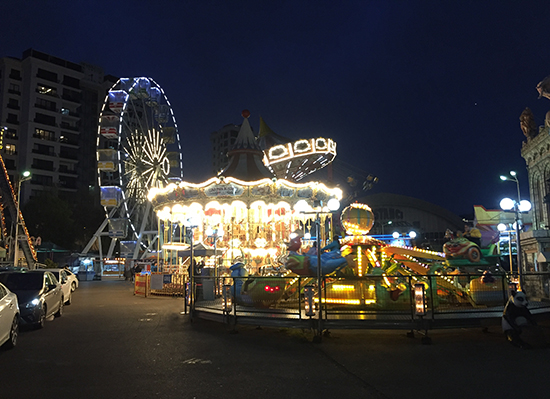
Bostancı Lunapark
Call For a Spiritual Transmutation,
Against Urban Transformation!
Rafet Arslan 2008
“How would be a life that was carved out of a song seng by everybody on the streets, at a critical moment?”
For the last decade something weird has been occuring in the humiliated, forsaken districts of the city. Legal authoroties and multinational capital has plans out of such a term as transformation which has a significant place in a contrary language. First we should tell more about these distincts, namely Tarlabaşı, Sulukule, Balat…
These distincts are places which have been fed by deterritorialized lineage like gypsies, youngsters from eastern Anatolia who came with scholarships, ones so called perverts by conservative social sexual codes (transvestites, gays, lesbians, etc.), prostitutes from both sexes, music players, waste pickers, junkmen, junkies, non-academic, non-entellectual system opposers, where they grow their own models of habitats.
System has brought in urbanization and then aristocratization of these distincts. Therefore, the energy accumulated within social unconscious of these wrecked, discredited distincts would be cleared off, would be bounded to illegitimate traffic of oligarch out of the system, hence the occupancy and absolute authority of police force that could not penetrate into those districts to watch, control and intimidate in the past could be provided. Only then it would be possible to make production-consumption-reproduction cycle of capital dominant over these areas that will have been urbanized and cleaned out of the disposessed. Those regions, those black holes of the city will be involved in the sparkling show of finance-capital, the apetite of system that is never satisfied will go on to eat everything including black holes until no area will be left for existance of any other life form out of its dominance.
The dispossessed will be driven off to outer borders of the city from the places they felt relatively safe and familiar even if not really happy. The only benefit the system offers to these people in return for evacuation of their places are the apartment houses in forms of Toki model. This perspective of cooperative housing derived from apartment series designed for American worker class and inspired by Coopreative City model of Le Corbusier was embodied in such degenerate plans that turned into a kind of sick humour. What is offered by that is a collective prison life in which everybody can pass the night within his own cell. This is a movement to mass people, not to collect them together. And the result will not be a collectivity where free individuals come together and socialize, for it is a process of isolation of a gang that is to be robotized.
Rakun 2022, istanbul
Those apartments grouped out of the city borders are also ghettos whose daily lives are aparted from city. Such a break in total urban conceptualization helps the isolation process of abandoned individual. Then a travmatic fear develops in psycho-pathology of the individual who feels stucked in his ghetto against totality of the city. Just like in the fragments of Kafka, isolated individual feels himself small and excluded while the image of the city increasingly expand. In other terms, he is alienated which enhances the influence of isolation and externalize the Collective ideal.
System offers the disposessed who banished from his weakly controlled distinct and confined into these islands surrounded by autobans and hypermarkets.
The aim is transformation of ones who have been separated from a natural cooperation arised from poverty and all of those collective relationships into normalized people that compete with the culture of the very self dictated by cruel capitalism and under complete control of the system. Any one who does not obey the rules of the city of capital are not let to live. He won’t be able to collect empty cans, walk around adrift, or when he runs out of money (that is the case almost everytime) he won’t be able to find an uncle who has this grocery to be taken haphazardly. The only way of paying later is having a credit card in hypermarkets. He will find out new terms like doorkeper’s remuneration and contribution to building’s expenditures, he will face the fact that it is a crime not to send his child to school anymore. This life will impose him to find a continuous job. The system will dominate the body of the dispsessed by the help of its bio-politic tools. He will soon give up to robot work of the very fixed working hours. A rational and quite sterile cemetery life, this is the utopia system promises for disposessed people.
The other option system offers is to refuse this cemetery discipline imposed and joining into great crime market of the city. But this way will probably end in jail which is another collective life form generated by the system. In short, any option in front of the disposessed who has no way of embarking any praxis of liberation outside of the system, will end up with Great Confinements.
2022, İstanbul
In the beginning of 21st century, the way of opposing this urbanization plan which has been operated in all of the metropolises of the world, will certainly start by offering alternative city plannings. The most significant subject of a Unionist City plan developed by Letterists and Situationists on the basis of Charles Fouriers principals that emerged in the beginning of 19th century was a unionist architecture indeed.
Living spaces that make it possible for people to search their tendencies, desires and dreams, a harmony between work and joy, liberation of passions in order to go towards equilibrium and serving for good was expected, hence the ‘consciouss individuals’ would be able to give birth to a socialization adorned by collective creations and celebrations.
The first step of this way to Unionist City is the emergence of a spiritual transformation each individual will experience to take his freedom over. The way of refusing the virtual lives that system generates by creating artificial needs and imitated desires is inciting a collectivity of individual dreams and arouse the spiritual transformations. This spiritual transformation is what holds the key of a social transform.
Die in Vain ‘Desperate To Piss’ 2022
Emergence of Unionist City is part of practical life rather than theoretical studies. Therefore, there are so much to do in both urbanized regions as well as areas of ghetto apartments. At the very moment when the system has already managed to take those civilized districts over and dominate, the refined and confident walls of saved regions will be nothing but tempting canvas to street artists. The new sparkling architecture of kitch will be spoiled by civil disobedience reflexes.
When dream is in charge all over the city, there will be temporary or permanent free regions. The parody will be distracted, cores of a new world will be created in the rat holes, now and here. Erected poem will get out of libraries and invade the streets. Game will master all people’s lives at any ages, not only children who are the natural owners. Just as W. Benjamin put it; “How would be a life that was carved out of a song seng by everybody on the streets, at a critical moment?”
Invalidating the moral judgements that prevent free thought, setting barter markets against consumption bondage, turning the streets into places of festivals, defeating the power of the authority by the power of irony, dynamiting the bridges between art and life itself…
Then we will have discovered the city for the first time indeed by the help of nothing but liberated desire; just for growing the dream of our invasion.
Berk Karadaş (1989-2023)
Yakın zamanda kaybettiğimiz ‘Maestro’nun anısına.
Kadıköy
Şaşkınbakkal 2023
Bostancı Kasaplar Çarşısı Graff. Zone 2023
Bostancı Kasaplar Çarşısı Graff. Zone 2023
Bostancı Kasaplar Çarşısı Graff. Zone 2023
Özgür aka. Alper Aga’nın hikayesi, 2023
Bostancı Kasaplar Çarşısı Graff. Zone 2023
Bostancı Kasaplar Çarşısı Graff. Zone 2023
Downtown Bostancı 2023
Downtown Bostancı 2023
Suspect – Küreselleşme Dehşeti
Rakunart !!
Erenköy Underground Graff. Zone
Erenköy Underground’a giriş
Erenköy Underground Graff. Zone
Erenköy Underground Graff. Zone 2022
KAN BEBEK !!
Karaköy Underground
Rinx Club Sunar: Kaosun diyarına hoşgeldiniz!
Feneryolu Underground Graff. Zone
Feneryolu Underground Graff. Zone
Feneryolu Underground Graff. Zone 2022
Feneryolu Underground Graff. Zone 2022
Feneryolu Underground Graff. Zone 2022
Feneryolu Underground Graff. Zone 2022
Feneryolu Underground Graff. Zone 2022
Feneryolu Underground Graff. Zone 2022
Feneryolu Underground Graff. Zone 2022
Feneryolu Underground Graff. Zone 2022
Feneryolu Underground Graff. Zone 2022
Feneryolu Underground Graff. Zone 2022
Feneryolu Underground Graff. Zone 2022
Feneryolu Underground Graff. Zone 2022
Feneryolu Underground Graff. Zone 2022
Feneryolu Underground Graff. Zone 2022
Ulu Önder Gazi Mustafa Kemal Atatürk
Beşiktaş Skate Cru., 2022
Haossaa – Ranbo 123 @ Peyote IstanbulMarmaray Güvenlik
Karşı kalem Gökhan Gençay, her zamanki saha çalışmalarında
Gökhan Gençay
‘Benim Kanım’
“Benim Kanım”, 2021 yazının sonunda okurlarla buluştu. Anaakım yayınevleriyle biçim ve sunum hususunda anlaşamadığımız için bir çeşit yeraltı yayını gibi basıldı, kulaktan kulağa duyuruldu, sıfır tanıtımla sınırlı sayıda kitapçıya ulaştı. Aşağılık kompleksinden kıvranan muktedirler bilinçli olarak görmezden gelse de şu veya bu şekilde muhataplarının bir kısmına ulaştı. Punklardan, gençler ve genç kalabilenlerden, skateboarderlardan, her çeşit uyumsuzdan aldığım göz yaşartan dönüşler, mailler de bunun göstergesi oldu.
“Benim Kanım” sadece öykülerden ibaret değildi, underground illüstratörler hiçbir telif talep etmeden destek olarak kitapta çizimlerini paylaştı. Velhasıl, benim kanıma Erman’ın, Cleon’un, Pakito’nun, Nicolas’ın, Fredox’un ve Jeremy’nin kanları da dahil oldu. Akacak kan damarda durmadı ve biz de akıtmaktan zerre çekinmedik. “Benim Kanım” böyle karşınıza geldi.
Aradan geçen süre boyunca kâh Kadıköy sokaklarında stencil olarak belirdi, kâh kitapçıların vitrinlerinde yerini aldı, kâh dünya seyahatine çıktı, Barcelona’yı, Berlin’i, Endonezya’yı, New York’u, Prag’ı dolaştı.
Son olarak da, aşağıda da gördüğünüz üzere, kitabı ithaf ettiğim üstadım Chuck Palahniuk’un kütüphanesinde yerini aldı. “Benim Kanım”ın Portland’a, Chuck’ın eline geçene kadarki macerasını, okurlarının gönderdiği fotoğrafların bir bölümüyle kısaca paylaşayım bu vesileyle.
Destek veren, sahiplenen herkes sağolsun, varolsun. “Benim Kanım”ı beğenenlere artık “Melek Yüz”ün sırasının geldiğini de duyurmuş olayım.
Bir çift dünyayı ürkütür, soyutlamanın çifti. Devletlerin ve orduların, şirketlerin ve toplumların kaderleri buna bağlıdır. Birbirleriyle çekişen bütün smıflar, yönetseler yahut yönetilseler de, buna saygı gösterirler hatta korkarlar. Bizimkisi yeniye -parmaklarıyla X yaparken- gözü kapalı atlayan bir dünya. [001]
Bütün sınıflar kaderlerinin halen bağlı olduğu, dünyanın bu amansız soyutlamasından korkarlar. Sadece hacker sınıfı hariç bütün sınıflar. Bizler soyutlamanın hackerlarıyız. Yeni kavramlar, yeni algılar, yeni duyular ve hacklenmiş ham bilgi meydana getiririz. Hangi kodu hacklersek hackleyelim, programlama dili, şiir dili, matematik ya da müzik, eğriler veya renkler olsun, bizler yenidünyaların soyutlayıcılarıyız. Kendimizi araştırmacı, yazar, sanatçı, biyolog, kimyager, müzisyen, filozof ya da programcı olarak tanıtsak dahi, bütün bu öznelliklerin her biri yavaş yavaş oluşan ve aslında kendisinin farkında olan bir sınıfın parçasıdır. [002]
Ve tam olarak kim olduğumuzu bilmiyoruz. Bu kitabı; köklerimizin, amaçlarımızın ve ilgi alanlarımızın manifestosu yapma arayışı bundandır. Bir hacker manifestosu: sadece hackerın doğası gereği onu diğerlerinden farklılaştıran bir manifesto değil, zamanla kendisinden bile farklılaştıran bir manifestodur. Hacklemek farklı olmaktır. Bir hacker manifestosu betimlemenin kabul etmediği bir şeyi betimleme iddiasında bulunamaz. [003]
Hackerlar dünyaya yeni şeylerin gelmesine imkân yaratırlar. Her zaman büyük şeyler ve hatta iyi şeyler bile değil ama yeni şeyler. Sanat, bilim, felsefe ve kültür gibi bilginin toplanabileceği, çıkarılabileceği ve dünya için yeni imkânların yaratılabileceği, bilginin her türlü üretiminde hackerlar eskiden yeniyi çıkartırlar. Bu yenidünyaları yaratırken, onlara hükmetmiyoruz. Yarattıklarımız, bizim tek başımıza ortaya çıkardığımız, dünyaları yaratan araçları tekelinde bulunduran başkalarına ve onların çıkarlarına, devletlere ve şirketlere ipoteklidir. Ürettiğimize sahip değiliz-o bize sahip. [004]
Hackerlar bilgilerini ve kıvrak zekâlarını ve nüktedanlıklarını kendi özerkliklerini devam ettirmek için kullanırlar. Bazıları parayı alır ve kaçarlar.(Şerefimizle yaşamalıyız.) Bazıları şereflerini tehlikeye atmaktan korkarlar.(Yapabileceğimiz en iyi şekilde yaşarız.) Bu yollardan birini seçenlerimiz sıklıkla diğerini seçenlerimize içerlerler. Bazısı sahip olamadığı refaha içerler, bazısı da dilediği gibi hack eylemi yapabilme özgürlüğüne sahip olamamaya içerler. Hacker sınıfının tehlikeleri atlatmasını sağlayan, bir sınıf olarak çıkarlarımızın daha soyut bir ifadesi olması ve bu çıkarların diğerleriyle dünyada nasıl buluştuğudur. [005]
Hackerlar birleştirici değillerdir. Çoğu zaman tekilliğimize dalmaya istekli değilizdir. Kolektif hack olarak adlandırılan eylem, aslında zorlayıcı bir birlik olmamakla birlikte, farklılıkların aynı hizaya getirilmesine dayanarak bir sınıfın çıkarlarını gözetir. Hackerler bir sınıftır ama soyut bir sınıftır. Soyutlamalar yapan bir sınıf ve soyut bir sınıf. Hackerları bir sınıf olarak soyutlaştırmak aslında öncelikle sınıf kavramını soyutlaştırmak demektir. Hacker sınıfının sloganı, birleşmiş dünyanın işçilerinin değil, çözülmüş bir dünyanın çalışmalarınındır. [006]
Her yerde soyutlama hüküm sürer ve bir somutluk kazanmıştır. Her yerde soyutlamaların düz çizgileri ve kusursuz eğrileri meseleleri karışık ama etkili vektörler olarak düzenler. Ama eğitimin soyutlamayla ne üretilebileceğini öğrettiği yerde, soyutlamaların kendilerinin nasıl üretildikleri bilgisi hacker sınıfı için daha faydalıdır. Deleuze: “Soyutlamalar hiçbir şey açıklamazlar, onların kendilerinin açıklanmaları gerekir.” [007]
Soyutlama ortaya çıkarılabilir ya da üretilebilir, maddi ya da manevi olabilir ancak soyutlama her hack eyleminin ürettiği ve tasdiklediği bir şeydir. Soyutlamak bir düzlem yaratmaktır, aksi takdirde farklı ve ilişkisiz meseleler olası ilişkiler getirebilir. Soyutlamak doğanın gerçekliğini ifade etmek, onun olanaklarının örneklerini göstermek, sonsuz ilişkisellikten bir ilişki çıkarmak ve çeşitli şekillerde göstermektir. [008]
Tarih soyutlanmanın üretimidir ve üretimin soyutlanmasıdır. Hayatın bir çağdan diğerine değişiklik göstermesinin sebebi zorunluluktan özgürlük elde etme işleminin yeni soyutlama şekillerine göre uygulanmasıdır. Tarih birbiri ardına gelen hacklerle, gerçek kılınmış sanaldır. Tarih, hacklendiği sürece doğanın birikerek artan niteliksel farklılaşmasıdır. [009]
Doğanın soyutlamasının akabinde onun üretkenliği ve hayati ihtiyaçların üzerine artı değerin üretimi gelir. Tekrar tekrar ihtiyaçtan daha ileri soyutlamalar, ileri üretkenlik, üreterek -en azından potansiyel olarak-ihtiyaç üzerinden büyüyen bu artı değer, büyüyen bir hack kapasitesi getirir. Ama hacklemenin doğası, artı değerin üretimi bizi rahat bırakmaz. Tekrar ve tekrar, azami ihtiyaçlar üzerindeki artı değeri kontrol eden bir yöneten sınıfı ortaya çıkar ve gözden kaçan ihtiyaç araçlarını üreten bu insanlara yeni ihtiyaçlar getirirler. [010]
Bizim zamanımızı farklı kılan, uzun zaman hayal edilmiş, zorunluluktan uzak bir dünyanın olabilirlilik ufkundaki görüntüsüdür. Soyutlamanın üretimi, hacklemeyi seri bir halden modası geçmiş bir hale çeviren ve sınıf çıkarlarını gerileten, bir kere ve hepimiz için, zincirleri kırabileceği bir eşiğe ulaştı. Debord: “Dünya zaten, yaşaması için halen bir bilince sahip olduğu zamanın hayaline sahiptir.” [011]
Keşif ihtiyaçların anasıdır. Bütün devletler servetlerinin ve güçlerinin üretimi için soyutlamaya bağımlıyken, bu devletlerdeki yönetici sınıfların yeni şekillerdeki soyutlama üretimini hoş karşılamazlar. Yönetici sınıf daima hackerı kendi yaratımının kontrolünden mahrum bırakarak, yenilikleri kontrol etmenin ve onu kendi çıkarlarına çevirmenin bir yolunu arar ve böylece dünyayı tamamen reddederek kendi gelişimini idare eder. [012]
Yeni soyutlamalar toplumdan hack eylemiyle ayrılan kimseler tarafından gerçekleştirilirler. Eskisinden yenidünyalar hackleyen biz diğerleri, sadece uzak yabancılar değil, aynı zamanda mevcut sınıflardan da ayrı olanlarız. Bir grup olarak ya da programcı, sanatçı, yazar, bilim adamı, müzisyen olarak kendine özgü varoluşumuzu tanımlarken, nadiren bu kendimizi gösterme yollarını bir sınıf deneyiminin katıksız parçaları olarak görüyoruz. İnekler ve ucubeler başkaları tarafından dışlanarak negatif bir hale gelirler. Beraber bir sınıf oluşturuyoruz, öyle ki kendisini varoluşun içine yontan ve bunu kendisi için yapan bir sınıf. [013]
Gerçek, soyut aracılığıyla tanımlanır, üretilir ve açığa çıkarılır. Gerçek, maddedeki gizil potansiyel değildir, potansiyelin potansiyelidir. Hacklemek soyutu üretmek ya da bilgiye uygulamak ve böylelikle yenidünyaların olanaklarının, zorunlulukların ötesinde ifade edilmesidir. [014]
Bütün soyutlamalar, doğanın soyutlamalarıdır. Soyutlamalar maddi dünyanın potansiyelini açığa çıkarır. Soyutlama maddesel dünyanın en tuhaf özelliğine, bilgiye güvenir. Bilgi belirli bir maddesel formda bağımsızca varolabilir ancak maddesel form olmaksızın varolamaz. Hack doğanın maddesel özelliklerine dayanır ve gene belirli maddesel bir formun bağımsız birşeyini keşfeder. İşte, maddesel ve maddesel olmayan. Maddenin maddesel olmayan gerçekliğini ve onun bilgisinin özelliklerini açığa çıkarır. [015]
Soyutlanma her zaman doğanın bir soyutlanmasıdır, doğanın çiftini yaratan bir süreç, ikinci bir doğa, ortak hayatın kendi ürünleri arasında ikamet ettiği ve doğal olmak için ürettiği çevreyi almaya geldiği, insan var oluşunun bir alanı. [016]
Toprak doğadan bir kaynak çıkarmadır, mülkiyet şeklinde soyut kılınan doğanın üretken potansiyelinin bir yönü. Sermaye topraktan bir kaynak çıkarmadır, mülkiyet şeklinde soyut kılınan toprağın üretken potansiyelinin bir yönü. Bilgi zaten topraktan kaynak çıkarmış olan sermayeden bir kaynak çıkarmadır. Bu çiftin çiftidir. Soyutlamanın üretimi sermayenin ötesindedir ancak her ikisi de kendi ayrı varoluşlarını mülkiyet şeklinde üretirler. [017]
Toprağın üretken bir kaynak olarak gelişimi, sermaye şeklindeki kendi soyutlanması için tarihsel ilerlemeler yarattığı gibi, sermayenin gelişimi de bilginin entelektüel mülkiyet formunda daha soyutlanması için, tarihsel ilerlemeler sağlar. Geleneksel toplumlarda, toprak, para ve bilgi, göreneksel ya da kalıtımsal bağlarla belli sosyal ve bölgesel güçlere bağlıydılar. Soyutlanmanm eski feodal enkazı hacklemesi, özel mülkiyete evrensel bir hak şeklindeki mülkiyetin daha soyut bir formuna dayanan bu kaynakların liberalleştirilmesiyle olur. Bu evrensel soyut form önce toprağı, sonra sermayeyi ve şimdi de bilgiyi kapsar. [018]
Mülkiyetin soyutlanması üretken kaynaklan serbest bıraktığında, aynı zamanda bir sınıf bölünmesi yaratır. Özel mülkiyet toprağı sahiplenen pastoral bir sınıf ve bundan mahrum bırakılan bir çiftçi sınıfı meydana getirir. Özel mülkiyetin soyutlanması, insanları topraktaki geleneksel ve komünal haklarından mahrum bırakarak, çalışan sınıf olma yolunda yoksun bırakılmış bir sınıf yaratır. Bu çalışan sınıf, imalatın maddesel araçlarını ellerinde bulunduran yükselen sınıf sahipleri yani kapitalist sınıf için çalışmaya koyulurlar. Bu çalışan sınıf ciddi anlamda sınıf kuralını yıkma söyleminde bulunan ilk sınıftır. Ancak bu tarihi görev, mülkiyet şekli soyutlamanın kendi içindeki üretken enerjilerde gizli olan sınıfsızlığın gerçekliğini açığa çıkaracak derecede soyut olamadığı için başarısız olur. [019]
Yeni soyutlamaları her zaman hack yaratır. Hacker sınıfının ortaya çıkmasıyla, yeni soyutlamaların üretilme oranı ivme kazanır. Entelektüel mülkiyetin, mülkiyetin bir şekli olarak tanınması-kendisi bir soyutlama, yasal bir hacktir- bir entelektüel mülkiyet yaratıcıları sınıfı yaratır. Ama bu sınıf halen çıkarları geri plana atılmış diğer sınıfın yararına çalışır. Özel mülkiyetin bilgiye yayılması, hacker sınıfını mülkiyetin bir şekli olan soyutlamada kendi yeniliklerini kendisi üretebilen bir sınıf yapar. Çiftçiler ve çalışanların aksine, hackerlar henüz mülkiyet haklarından tamamen mahrum bırakılmamışlardır, ama yine de kapasitelerini üretim araçlarına sahip olan bir sınıfı -vektörel bir sınıfı, çağımızın ortaya çıkan yönetici sınıfı- soyutlamak için kullanmalıdırlar. [020]
Vektörel sınıf hackerları entelektüel mülkiyetlerinden mahrum bırakmak için şiddetli bir mücadele verir. Patentler ve telif hakları yaratıcılarının değil, bu soyutlamalarının değerlerini paraya çeviren vektörel sınıfının ellerine verir. Vektörel sınıf soyutlamayı tekeline almak için çabalar. Vektörel sınıf için “politika entelektüel mülkiyet üzerindeki iletişim, kontrol ve komuta gibi askeri strateji araçlarının mutlak kontrolüdür.” Hackerlar kendilerini hem bireysel olarak hem de sınıf olarak mahrum bırakılmış bulurlar. [021]
Vektörel sınıf entelektüel mülkiyetin değerini paraya çeviren araçlar üzerindeki tekelini sağlamlaştırdıkça, hackerlar daha çok karşılarına çıkarlar ve sınıf düşmanı olurlar. Hackerlar vektörelistlerin, hackerların ortak olarak üretecekleri bilgiyi kendilerinin sahiplenerek erişim için fahiş fiyatlar istemelerine karşı mücadele etmeye başlarlar. Hackerlar soyutlamanın metalaştırıldığı ve vektörel sınıfın özel mülkiyeti haline getirildiği çeşitli şekillerin karşısına çıkarlar. Hackerlar en iyi ifadeyle, kendi sınıf çıkarlarını soyutlamanın serbest üretimine dayandıran ve bu tarz bir mülkiyetin belirli engellerinden değil de mülkiyetin kendisini soyutlaştıran bir sınıf olma mücadelesiyle biline gelir. [022]
Kıtlık mitinden bu yana gelen üretken ve yaratıcı kaynaklan liberalleştirmek için, hackerların çalışanlar ve çiftçilerle-dünyanın bütün üreticileriyle-bir araya gelmesi gereken zaman gelmiştir. Dünyayı metalaşmış sömürü yoluyla kendi yıkımından kurtaracak, işbirliğinin yeni şekillerinin yaratılmasının zamanı gelmiştir. Çağımızın en büyük hack eylemleri belki de ortak özgür ifadelerin örgütlenme şekillerini ters yüz edebilir ve böylece insanların yönetici sınıfa hizmet etmesindense soyutlama insanlara hizmet eder. [023]
Capital Is Dead | McKenzie Wark in conversation with Verso Books
“First of all, I’m both excited and horrified by the war that’s going on now. Almost every night I hear the sounds of air raids and explosions from Russian missiles being shot down on my city. It’s awful. Last year, not far from my city, on the outskirts of Kiev, there were military operations, explosions were heard day and night, and the whole city was covered in smoke. A couple of tens of kilometers from my city was the city of Irpen, completely bombed and destroyed by Russian soldiers. Today I woke up again from the air raid alarms… This nightmare continues, it is impossible for the inhabitants of Europe to understand and imagine…”
ANDRII STRAKHOV (b. 1973) is a Ukrainian artist who mostly works through the medium of collage. After a childhood spent in the Urals, at the age of 13 he moved to Boyarka, near Kiiv, where he still lives, just in time to be affected by the Chernobyl nuclear disaster. He has since been involved in music and in the Ukrainian underground culture.
Resources: Claudio Parentela, IYE Zine & The Philosophical Research Society
Can you describe your path to becoming an artist? When did you actually enter it?
I created my first visual works in 1989. They are made with the “application” technique (I don’t really like the word “Collage”, this word is too often used by artists). It was the time of the Soviet Union. I created figurative images full of black humor and mockery of Soviet ideology and way of life, using Soviet newspapers and magazines. A frequent element of the image were cuts from the headlines of newspaper articles. These names gave the picture a touch of absurdity and profanation of human ideals and optimism. From a series of paintings, I made art notebooks and then replicated them on a copier in the form of a zine. At the same time, I bought a portrait of the General Secretary of the Communist Party of the USSR Gorbachev and painted him, presenting him as a transvestite. For this portrait I could be arrested, it was a dangerous occupation and the police came to me – someone reported me. I didn’t feel like an artist, just doing what gave me pleasure and enjoyment. In general, my creative position has always been and will be antisocial.
Andrii Strakhov ‘Snow fairy tale “Pumps’ zine (1994)
Andrii Strakhov ‘Snow fairy tale “Pumps’ zine (1994)
Andrii Strakhov ‘Snow fairy tale “Pumps’ zine (1994)
Andrii Strakhov ‘Snow fairy tale “Pumps’ zine (1994)
Andrii Strakhov ‘Snow fairy tale “Pumps’ zine (1994)
Andrii Strakhov ‘Snow fairy tale “Pumps’ zine (1994)
Andrii Strakhov ‘Snow fairy tale “Pumps’ zine (1994)
Andrii Strakhov ‘Snow fairy tale “Pumps’ zine (1994)
Andrii Strakhov ‘Snow fairy tale “Pumps’ zine (1994)
Andrii Strakhov ‘Snow fairy tale “Pumps’ zine (1994)
Andrii Strakhov ‘Snow fairy tale “Pumps’ zine (1994)
Andrii Strakhov ‘Snow fairy tale “Pumps’ zine (1994)
Andrii Strakhov ‘Snow fairy tale “Pumps’ zine (1994)
Andrii Strakhov ‘Snow fairy tale “Pumps’ zine (1994)
Andrii Strakhov
Describe your ideals and how they manifest in your work.
For several years I have been developing my own mythology and demonology. I create thematic series of works dedicated to a single bestiary. These can be images of forest spirits, imaginary creatures, monsters. Everything that is alien to nature and human civilization. At the same time, I am making works dedicated to monstrous robot-human hybrids, giving these images the signs and characteristics of a catastrophic and impossible existence. Motives of decay, trauma, isolation often manifest themselves unconsciously in various art forms. I use old original medical photo archives, 19th century astronomical atlases or mid 20th century matte journals as material for these works.
Andrii Strakhov
I like working with old paper or fabrics. From fabrics, I create works in a style close to folk art with decorative elements. For them I use Ukrainian scarves and suit fabrics, as well as oriental shrouds. In my work there is a remarkable connection with European literary sources and mythological cultural heritage. I want to tell a story using visual methods and techniques and immerse the viewer in a fantasy world.
Andrii Strakhov ‘Textile, Collage’ 2015
Andrii Strakhov ‘Textile, Collage’ 2015
Andrii Strakhov ‘Stavok Press’ 2015
Is music part of your studio time? What are you listening to?
Music is part of my life. I graduated from a music school in the piano class and then continued my education at the Kiev Conservatory in the classical guitar class. Now I am a member of the collective “Svitlana Nianio Band”. In the process of creating visual works, I often listen to music. It can be classicism, baroque, revival or modern neo-folk, dark ambient, noise, drone. I like composers Scarlatti, Lully, Frescobaldi, the modern ones are: Cukor Bila Smert, Olexahdr Yurchenko, Death in June, Lustmord, Blood Axis, Les Joyaux De La Princesse, Current 93, Nurse With Wound, my literary activity is indirectly connected with music.
Stavok Press
Andrii Strakhov with his friends
Andrii Strakhov, 2018
Andrii Strakhov and the friends
Andrii Strakhov and the friends
Lovecraft
I wrote a novel about the musical subcultures of Kyiv in the late 80s and early 90s of the 20th century. This and other books and zines, I publish them in my independent publishing house “Stavok Press”. A group of like-minded people and our club hold regular literary readings which take place in a neo-pagan forest temple. Our training is called “Pamoroka”. At these events, we only read our literary texts.
Andrii Strakhov, 2016
Influences?
It seems to me that I have not been subjected to direct stylistic influences. I like these artists: Lawrence Stephen Lowry; Gustav Adolfo Mossa; Edward Burne Jones; Frank Bernard Dixie; Theodore Severin Kittelsen; Alfred Kubin; Touko Valio Laaksonen. The writers who influenced me the most were:Ernst Theodor Wilhelm Hoffmann, Gabrielle Wittkop (Ménardeau), Robert Walser, Gustav Meyrink, Arthur Machen, Isidore Ducasse. Mircea Eliade.
Graces, 2023
An online event celebrating the solo exhibition ‘Graces’ with Ukrainian artist ANDRII STRAKHOV, gallerist Giovanni Giusti of GalleryX Dublin, PRS Executive Director Dennis Bartok, and translator Olena Zots
“I created the Graces series between 2021 and 2022. It was made in a few days before the Russian full-scale invasion of Ukraine. The last works in the series contain features of disturbance and are filled with melancholy.
The Graces series is part of an archive of my works which was sent, after the beginning of the war, to Ireland to GalleryX and saved by Giovanni Giusti. The series “Graces” is an expression of my ideas associated with the horror of modern life and with the embodiment of mystical aspirations. I tried to transform my nightmares and dreams into weird images touched with visual poetics and sympathy for the grotesque. In this way, the image of the Greek Chimera is close to me. It was not aware of its own ugliness and suffered from the general hatred of others. For me, the image of the Chimera is not just a monstrous creature, but a living, gentle and wonderful being that has no place in this cruel reality.”
Andrii Strakhov, 2022
Describe your process for creating a new job.
The impetus to create new work can be a small sliver or fragment of an image. From this fragment, I gradually form a new image and build a texture. I give the image depth and detail, I create the effect of superimposing different spaces and times, making it voluminous. “I give the image the genre characteristics” as my friend put it well.
What advice do you have for artists who want to showcase their work?
I can advise artists to be very demanding of themselves, be honest with themselves and express what they want. But also following a momentary impulse, inspiration. It is necessary to destroy in oneself all social norms and principles that live in the mind of every person, to make a strategy out of them. In this practice, you get a new experience. The artist himself can create an artistic space where he announces it. The artist needs to get rid of his internal censorship. It may not be easy.
GalleryX
GalleryX is a new gallery in Dublin, Ireland specialising in figurative and surrealist art. Their focus is on the fantastical, the sensual and the macabre; on alternative desire and tormented bodies; on the bizarrely beautiful, the unsettling and the grotesque. Our intent is to facilitate, curate and showcase new alternative work from emerging Irish and international artists and to host visiting artists from the global community.
First of all, I’m both excited and horrified by the war that’s going on now. Almost every night I hear the sounds of air raids and explosions from Russian missiles being shot down on my city. It’s awful. Last year, not far from my city, on the outskirts of Kiev, there were military operations, explosions were heard day and night, and the whole city was covered in smoke. A couple of tens of kilometers from my city was the city of Irpen, completely bombed and destroyed by Russian soldiers. Today I woke up again from the air raid alarms… This nightmare continues, it is impossible for the inhabitants of Europe to understand and imagine…
What do you love most about the place where you live?
Where I live, I like my house and garden. I like walking the streets, looking at the old wooden houses built at the end of the 19th century. I feel good in the forest, where there are no people.
The best way to spend a day off?
For me, every day is a day off; it’s good to get together with friends and have a good glass of alcohol for a pleasant conversation.
Andrii Strakhov as Zeta Reticulan
Upcoming exhibitions/projects?
I don’t know my plans for the next exhibitions and exhibition projects yet. But the artistic process is ongoing. I am very grateful to my Irish friends and curators, from “Gallery X”, who have helped me maintain my art archive out of Ukraine. I am also grateful to the Philosophical Research Society of Los Angeles for organizing my solo exhibition.
Original Italian article by Claudio Parentela at iyezine
Gürültü ve Duman, 50’li yılların başında ortaya çıkan, dönemin estetik algısını merkeze almadan kendi estetiğini oluşturarak alevini, yangınının gürültüsünü ve bu sürecin gökyüzüne yayılan dumanını ele alan bir müzik programı. Özgür caz, özgür doğaçlama ve yeni müziği analitik, tarihsel ve toplumsal bakışla ele alıyor ve özellikle bootleg kayıtlarına veriyor.
Her Salı gecesi 23:00’da
Şevket Akıncı, Can Tutuğ ve Volkan Terzioğlu‘nun sunumuyla
1977 İstanbul doğumlu perküsyoncu Özün Usta, tek başına ve yakın dostlarıyla müzik yapmaktadır. Yurtiçinde ve dışında birçok albüm kaydetmiş, çeşitli müzik gruplarının prodüktörlüğünü yapmış olan sanatçı aynı zamanda festivaller düzenlemiştir.
Özün is an active musician, plays various instruments, alone or with fellow musicians. He gave many concerts in and out of Turkey, recorded several albums, produced bands and festivals. Özün is also a long time hemp lover and supporter. When he first hit the drums and cymbals with a hemp stick and heard the sound, he decided to work with hemp on musical instruments.
Mutumut: Özün Usta e Berke Can Özcan Live at Frasca Gressani – Tarcento 10-9-2015
I due musicisti turchi Özün Usta e Berke Can Özcan suonano insieme da diverso tempo (Özün Usta era contrabbassista dei Konstrukt, mentre Berke Can Özcan è l’attuale batterista della band); al Giardino Commestibile suoneranno due set incentrati su batteria e percussioni: il primo come duo, mentre nel secondo il pubblico è invitato ad unirsi ai due musicisti danzando, battendo le mani o suonando altre percussioni. Özün Usta e Berke Can Özcan sono ancora tra i pochi batteristi ad usare pelli naturali, tradizionalmente usate in Turchia, come quelle di capra e vitello.
Une proposition de Le Dernier Cri Du 23 mai au 21 août 2023
– Entrée libre –
Galerie Le Dernier Cri
Carambolage de deux créateurs hors-piste, entre art brut contemporain et graphisme punk underground.
Pakito Bolino, figure de l’édition underground, créateur du Dernier Cri et Pascal Leyder aka Boujiki, artiste résidant de la « S » Grand Atelier, centre d’art pour handicapés mentaux.
C’est l’accouchement au forceps de cette rencontre improbable et réussie où se croisent créatures dégoulinantes, typographies de séries Z et femmes à poil(s). Une oeuvre graphique spontanée rappelant les principes du cadavre exquis et du téléphone arabe réunis. Un 666ème degré bien palpable et une édition qui va ravir les amateurs de sensations graphiques.
Tout commence il y a une dizaine d’années à la Friche, bastion de l’underground graphique où Pakito Bolino a planté depuis déjà plus de vingt ans le drapeau noir de sa « structure éditoriale associative indépendante polymorphe, mutante, protéiforme et intrusive ».
‘I am The eye Climax’ Pascal Leyder et Pakito Bolino / Knock Outsider – Le Dernier Cri – E2
Pakito Bolino is a French artist, draftsman and publisher, born in 1964 in Nîmes. After studying at the School of Fine Arts in Angoulême, Pakito Bolino moved to Paris where he founded in 1993 the Le Dernier Cri editions in Ris-Orangis after having trained in the screen printing workshop. In 1995 the Éditions du Dernier Cri set up shop in Marseille, at the Friche la Belle de Mai.Pakito Bolino is the author of many works (graphics, sound, animations…) mainly published in Dernier Cri. He is also a musician, videographer and curator. To date, he has published more than 440 artist books, more than 200 posters, two magazines (Le Dernier Cri, Hôpital Brut), records and 5 animated films.
Paskalito Boleyder / I’m the Eye Climax
Pakito Bolino, 1964 Nîmes doğumlu Fransız sanatçı, ressam ve yayıncı. Angoulême Güzel Sanatlar Fakültesinden mezun olduktan sonra serigrafi alanında kendini geliştirir ve 1993 yılında Paris’e taşınarak Ris-Orangis’te atölyesini ve kendi markası olan Le Dernier Cri’yi kurar. 1995 yılında ise Marsilya’da Friche la Belle de Mai’de LDC için bir mağaza açar. Pakito Bolino, ağırlıklı olarak Dernier Cri’den yayımlanan birçok eserin (grafik, müzik, animasyon…) yaratıcısıdır. Aynı zamanda müzisyen, kameraman ve küratördür. Bugüne kadar 440’tan fazla sanatçı kitabı, 200’den fazla afiş, 2 adet antoloji (Le Dernier Cri, Hôpital Brut), bir çok plak ve 5 animasyon filmi yayınlamıştır.
Alors que leurs parcours respectifs ne les prédestinent pas vraiment à se croiser, Pascal aka Boujiki se retrouve parachuté, à l’occasion d’une collaboration de la « S » Grand Atelier avec Le Dernier Cri dans la capitale du Pastis. Pascal, jeune artiste trisomique, passe alors une très grande partie de son temps à dessiner frénétiquement tout en matant des films de De Funès et tout en se foutant pas mal de ce qui l’entoure. Pour Pakito, c’est tout de suite le coup de foudre graphique, et c’est réciproque. Les deux nouveaux compères se retrouvent complètement en dessinateurs compulsifs et stakhanovistes de la ligne crade. Le projet mûrit, Pakito et Boujiki se décident à collaborer sur une forme d’étrange et long ping pong, se retrouvant tous les ans et de plus en plus en phase, l’amitié naissant, pour bosser comme des dingues sur ce dialogue graphique.
L’édition “This is Eyes Climax! “ de 100 pages en format A3 présente le travail dans toutes les étapes de son processus mais dans le désordre puisque c’est le leitmotiv de cette rencontre ! Une déconstruction à la fois spontanée et progressive d’une imagerie déjà digérée et surtout la révélation d’un combo magique entre art brut contemporain et graphisme punk underground.
Le dernier cri joue une fois de plus le passeur de cultures et le briseur de barrières en mettant à l’honneur le talent désormais reconnu de Pascal Leyder (prix du dessin / fondation guerlain 2023 ).
Loin des discriminations positives, Knock Outsider révèle une fois de plus une oeuvre sincère, puissante et infiniment singulière. Un nouveau coup de pied dans l’art brut et dans une expression qui n’a rien à faire dans une boîte hermétique.
Polonya’dan Amerika’ya göçmüş bir ailenin çocuğu olan Ted. Kaczynski 1942’de Şikago’da doğdu. 16 yaşında bursla kazandığı Harvard’ı yirmi yaşında bitirdi. Doktorasını yapmak üzere 1962’de Michigan’a geçen Kaczynski, 1967’de “matematiğin sınır fonksiyonları” adlı doktora çalışmasıyla “yılın en iyi matematik tezi” ödülünü aldı; ardından da Berkeley Üniversitesi’ne asistan profesör olarak kabul edildi. 68 hareketinin önemli merkezlerinden olan Berkeley’de hippi akademisyenler, sütyenlerini yakan feministler, cinsel özgürlüğü savunan isyancı gruplar arasında kendi dünyasında yaşıyordu Ted Kaczynski. Öğrencisinden öğretim görevlisine herkesin rengârenk giysilerle dolaştığı Berkeley’de nerdeyse bir tek o takım elbiseliydi.
Kaczynski, 1969’da hiçbir gerekçe ileri sürmeden öğretim üyeliğini bıraktı. Ailesiyle geçirdiği iki yılın ardından 1971’de, orman içinde bir buçuk dönüm kadar arazi alarak alternatif yaşam arayanlarının akın ettiği Montana’ya yerleşti. On iki metrekarelik bir orman kulübesinde elektrik, su, radyo, televizyon, bilgisayar gibi şeylerden uzak, sâde ve dingin bir hayat sürmeye başladı. Kendi yetiştirdiği sebzelerin yanı sıra, küçük çaplı avcı-toplayıcı tarzla besleniyordu.
Montana ormanlarında gözlerden ırak bir hayat sürdürüyorken nihayet uygarlık gelip kapısına dayandı: Bir otoban yapımı nedeniyle yakın çevresindeki ağaçlar tek tek kesiliyordu. Yaşanacak başka bir yer arayışındansa tekno-sanayi sistemine karşı eyleme geçmeye karar verdi. Böylece 26 Mayıs 1978’de, Montana ormanlarındaki yaşamının yedinci yılında, ilkini Chicago Northwestern Üniversitesi’ne yolladığı bombalı paketler serisine başladı. 18 yıl boyunca FBI’yı peşinden koşturan Kaczynski, Nisan 1996’da kulubesine yapılan bir operasyonla tutuklanıp müebbet hapse mahkum edilmişti. Özgün fikirleriyle anarşizme farklı bakış açısı kazandıran Kaczynski, 27 yıldır hapis yatıyordu.
Theodore John Kaczynski was born the May 22 1942 in Chicago, Illinois. At the age of 6 months he had to be hospitalized due to a severe allergic reaction to medication. His mother was not allowed to visit him during that time, a standard hospital policy in 1943. In his early years Ted Kaczynski was extraordinarily shy. Despite his parent’s encouragements to go out and play with others, he remained aloof and a loner. Having an IQ of 170 (signifying genius intelligence) he skipped two grades going from the 5th directly to the 7th. In 1958 at the age of 16 he was entering Harvard University earning a bachelor’s degree in mathematics in 1962. He then earned a master and a Ph.D in mathematics from the University of Michigan. He had a successful research career here and taught undergraduate for three years though he continued to make few friends. He quit in the fall of 1967 and was hired as an assistant professor of mathematics at the University of California, Berkeley. He resigned without explanation on June 30 1969. In June 1971 Ted and his brother David purchased a 1.4-acre lot in Lincoln, Montana. He built his infamous 10-by-12 wood cabin on the site by hand. In the mid-70s Kaczynski live and work in Salt Lake City.
On May 26, 1978 Professor Buckley Crist of Northwestern University received a package whose return address was not his but he had no recollection of sending the parcel. He became suspicious and called the campus police. When the police officer opened the package it exploded. He received minor injuries. That was the first bomb placed by whom the FBI later called “The Unabomber”. Over the course of 18 years (1978-1995), the Unabomber, generally accepted to be Ted Kaczynski acting alone, placed or mailed 23 package bombs. These bombs killed 3 persons and wounded 16.
On September 19 1995, the New York Time editor received a letter. According to the text, the Unabomber suggest a “bargain”: if his lenghty manuscript was published, he would cease sending bombs. The Washington Post and New York Times split costs and published the Unabomber’s manuscript, known as the “Manifesto”.
In 1996, David Kaczynski, Ted’s brother, began to make connections between his brother’s earlier writings and the manifesto. He contacted the FBI saying that he might know who the Unabomber was. Ted was arrested at his Montana cabin. Bomb-making material was found and a fully-functionnal live bomb was also found under his bed. In 1997 he was diagnosed suffering paranoid schizophrenia. In 1998, during his trial, the defense and the prosecutor reached a plea bargain: Ted would plead guilty to all charge and get a life sentence without possibility of parole, escaping the death penalty he might have received. He is currently serving his sentence at the supermax federal penitentiary of Florence, Colorado.
The Cosmic War: A Study in Non-Catastrophist Interpretations of Ancient Legends by Joseph P. Farrell (2007)
The world was not ready when the Apollo 15 Astronaut Al Worden said in a live interview that humans are the ancient aliens who came down to Earth and started civilization here. He referenced Ancient Sumerian texts for it. More interestingly, according to Dr. Joseph P. Farrell, there have been some kind of intergalactic space battle involving super-advancedextraterrestrials that took place in our solar system millions of years ago.
Vicky Verma,2022 / howandwhys.com
The author of the book “The Cosmic War,” Dr. Joseph P. Farrell says there is ample evidence across our solar system of cataclysmic and catastrophic destruction events. He suggests that two cosmic wars took place, one 65 million years ago, and another 3.2 million years ago.
Joseph Farrell is an Oxford educated historian who specializes in alternative history, World War II, and secret technologies. After a lifelong interest in alternative history, science, and a fascination for ancient texts, Joseph started writing on these subjects in 2001.
Rejecting the naturalist and materialist assumptions of catastrophism forwarded by other researchers, Dr. Farrell says that it is time to take the ancient myths of a Cosmic War in the heavens seriously. Incorporating extraterrestrial artifacts, cutting-edge ideas in contemporary physics, and the texts of ancient myths into his argument, he maintains that ancient interplanetary war was fought in our own solar system with weapons of extraordinary power and sophistication.
Many ancient history scholars and authors have mentioned the so-called “Technology of the gods,” which includes not only the mystical flying machine “Vimana,” but also powerful weapons of the gods, for example, “Vajra,” an artifact of the Anunnaki gods which shoots lightning.
Sumerian god Ninurta wielding a “thunderbolt”
In the book, Dr. Farrell mentions the ancient Sumerian god Ninurta wielding a “thunderbolt” that is a dead-solid ringer for an electrical discharge produced in a modern lab that experiments with plasma physics.
Dr. Farrell asserted that the echoes of this cosmic war are reflected in the ancient texts of the Sumerians, Babylonians, Egyptians, Biblical texts, Vedic tradition, and also New World mythology, from the Maya and Aztecs to the myths of some native North American tribes.
But think about it: the oldest texts from the ancient Mideast are perhaps 4,000 to 5,000 years old. Vedic texts may go back as far as 5,000 or 6,000 years. Besides, purely oral traditions might possibly push the information back a few thousand more years. That’s a long time, but it’s nothing compared to 3.2 million years. It is ridiculous beyond belief to consider a connection between a 6,000-year-old ancient manuscript with events that happened 65 million years ago!
It sounds unacceptable that all of the civilizations, high and low such as the Egyptians, the Mongols, the various Chinese dynasties, the Roman Empire, the Inca, and the Aztecs have come and gone in just the past few thousand years. The Soviets’ period was only 75 years.
It is true that the traces of traditions and mythology have survived thousands of years. British psychologist and author Stan Gooch, who is probably best known as the proponent of a “hybrid-origin theory” of human evolution, makes a rather compelling case that much of our fundamental culture today is underpinned and actually derived from the extinct Neanderthal race, that last of which died out about 20,000 to 30,000 years ago.
Gooch said the modern man is unaware of and/or has forgotten the origins of its primary, fundamental cultural attributes (such as the development of the Zodiac and various god/theological concepts) and so much more.
But it does not help Dr. Farrell. As for him, even 20,000 to 30,000 years is nothing. The Neanderthals had an approximately 250,000 run as a successful species. But it’s nothing for Dr. Farrell.
According to mainstream scientists, the origin of Homo sapiens is about 200,000 years. Yet Dr. Farrell is making the case that legends were handed down by one civilization or another for 3.2 million years.
Though there are alternative archaeology proponents like Michael Cremo and Richard Thompson, who says the human species is actually billions of years old. Unfortunately, such statements are certainly on the fringe, to say the least.
But Dr. Farrell’s cosmic war scenario gets a tremendous shot in the arm from the work of physicist Dr. John Brandenburg (He is a brilliant and accomplished plasma physicist who earned his Ph.D. from the University of California at Davis in 1981).
Dr. John Brandenburg published two controversial books “Death on Mars” and “Life and Death on Mars” in which he makes a highly scientific and rigorously technical case that Mars was destroyed by nuclear weapons millions of years ago as part of some sort of interstellar cosmic conflict.
Brandenburg said Mars was wiped out when some advanced extraterrestrial race dropped two one-million-megaton bombs that exploded in strategic locations about 20 miles above the Martian surface.
If he is correct, that would be a benefit for Dr. Farrell’s theory about an ancient cosmic war, but there is a major problem.
According to Dr. Brandenburg, Mars was nuked 251 million years ago. That does not go along with Dr. Farrell’s timelines of 3.2 million and 65 million years ago. However, Dr. Farrell might be onto something in his book, “The Cosmic War.”
According to late Dr. Tom Van Flandern, an American Astronomer specializing in celestial mechanics for the U.S. Naval Observatory, a planet in between the orbits of Mars and Jupiter was exploded around 65 million years ago or as early as 3.2 million years ago. He finds some way to frame his cosmic war scenario within a time scenario of, say, 10,000 to 15,000 years.
“I suggest that Van Flandern’s Exploded Planet Hypothesis makes sense only if one is willing to entertain a nonnatural explanation. Of course, this is heretical on several levels, as the explanation must somehow encompass the presence of potential artifacts on Mars as well as a presumed high-tech culture on Mars’ erstwhile parent. “Strangely, the revelatory climax from Eando Binder’s Puzzle of the Space Pyramids comes to mind. In Binder’s novel, the asteroid belt was formed by a focused gravity assault that harnessed the energy of the entire solar system. The pyramids of the title were essentially gravity generators used to manipulate space-time,” Dr. Farrell wrote.
Dark Journalist X-93: Dr. Joseph Farrell Deep State X Space Wars!
It is the least to say about Dr. Farrell’s Cosmic War. But in doing so, he offers a solution to an enigma that has long mystified researchers, disclosing the cause of that ancient war, the means by which it was waged, and the real nature of the secret technology behind the ancient “Tablets of Destinies.”