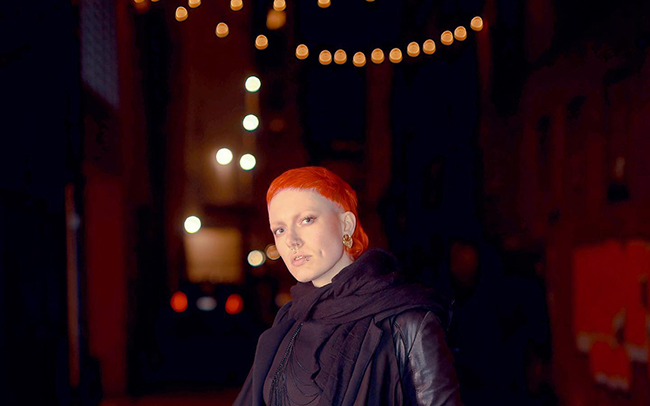
Psychopathy of a Razorgirl: Maria Oosterveen

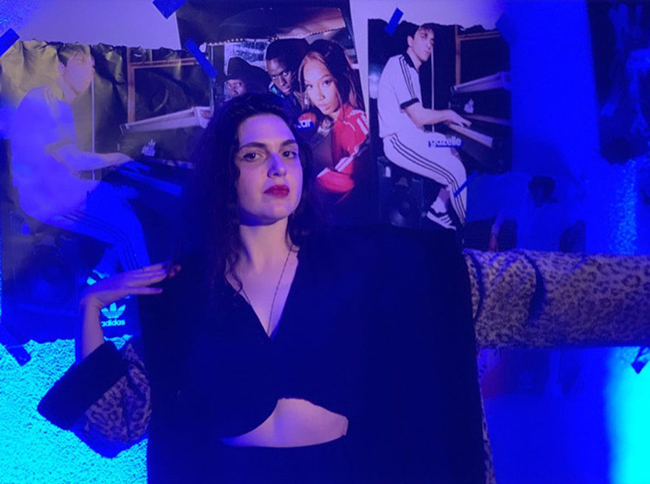
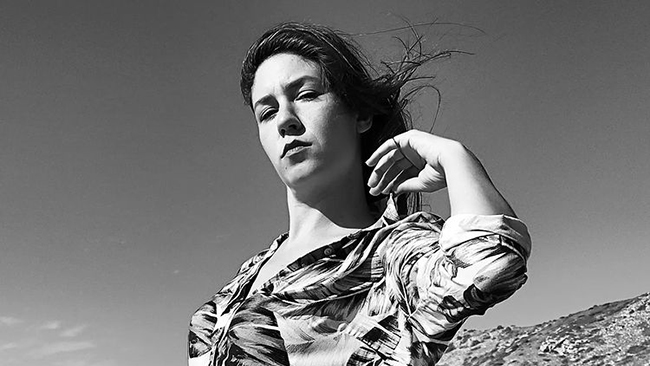
Maria Oosterveen, Los Angeles, 2023

A new year, new technologies; surviving a pandemic that gripped the world for two years, followed by geopolitic wars and peoples ravaged by the struggle for territory between global powers. Where are we going, are we on the brink of an uncertain age?

To what extent and for what purpose are we using advanced technology in our lives, or is it using us? And where does woman stand in all this chaos? While these feverish debates continue, perhaps it is best to listen to Maria Oosterveen who capture the spirit of the time.

Maria Oosterveen is an artist based in the Hague, Netherlands. Currently she is using spinning, recycled yarn and a touch of technology to make tactile works, that could be touched, be immersed into by wearing or by looking. She is also a part of the iii-workspace, and works as a professional model for special projects.

Her works which are overall scenographic do touch our sense of compassion and conscience, but seen from the perspective of the body without of organs (explained by Deleuze and Guattari) also called the cyborg (Donna Harraway), and the power-plays between us and a structure or object (phenomenology) (Foucault).

Maria Oosterveen ‘Crrrshd 1.1’ 2022

‘When we navigate through life we often only see the hard parts of life. Leaving a trail of growth and beauty behind us. Since every step we make is a beautiful one. How hard it may seem, how exhausting it may seem.’


From Maria Oosterveen’s ‘Subject 0’ interactive performance

“As an artist I feel obliged to make people aware of their own habits in time and space.”

Yuval Noah Harari and similar thinkers argue that homo-sapiens as a species has come to the end of its evolutionary process and that the only way forward is from now on through by bio-engineering works, to what extent do you agree with this idea as a post-modern artist with a degree in chemistry?

Maria Oosterveen: I feel this is true.

Yet the application of bio-engineering is more a trans-humanist view to progress than a post-human. From a Post-humanist perspective changing habits and structures as a concept is more important. In that sense the body can change with the help of bio-engineering. Yet it is also valid to change the way we behave towards political systems. This is beautifully described by Judith Butler in her book “Undoing Gender”. Even if she specified this to the uncloaking of the group dynamics and (unwritten) laws around gender, she also mentions that her concept is also applicable to every political field. If you would do that in all systems.

Trans-humanism is more about the evolution of humans in a more practical sense, less conceptual. So if we want to evolve we have to find (scientific) solutions to our problem. It is more about how we want to evolve from a very human centric point of view. This could be the prolonging of our lives, to the way we added phones to our lives and have become integrated with them. Even the use of machines in a laboratory can be seen as an extension of our own body making things easier for us and therefor in integrates with our lives.

As an artist I feel obliged to make people aware of their own habits in time and space. Creating awareness and therefore change in itself. In a more Post-human way. So I try to work with the concept of consciousness. The way we perceive this is highly influenced by culture which is a system in itself, although some parts of it are instinctual. And this is what usually underlays all, the reasons why we create structures and systems. This is where we can really progress. If we are able to crack the way our instincts work, we would evolve as an entity. To recreate ourselves, or let ourselves be recreated by the (new) surroundings (as this is what evolution is). To accept we are just a product of our environment.

From this philosophical Post-Human perspective Anarchism also makes sense.


Maria Oosterveen ‘van KaNT’ series, 2022

‘My art is philosophical and political. It needs to be immersive and challenging your concept of what is right or wrong, this by the use and choices of my materials + titles but also execution. Not to be judged but to be made conscience.’


A body-art experiment by Maria Oosterveen ‘Nothing more than a Cyborg’

I have to admit that your ‘Nothing More than a Cyborg’ experiment really creeped me out. The most striking thing that struck me while reading your anecdotes is that you define the basic centre, the essence that you can access while peeling back the layers of human beings as ‘conscience’, not ‘soul’ (or spirit). Isn’t this where the whole handicap of positivism, of the (progressive) positivist perspective lies: It is based only on what can be observed. Seeing the soul and similar metaphysical fields as lyrical tales of antiquity; in terms of your artistic works, to which field do you see yourself as an artist?

Perhaps this brings us back to the most basic question “Do you believe in God or not?” Or I have to ask it like this: What is your understanding of the universe, your conception of the universe that you reflect in your art?

My answer to this will be short and long as I want to support my answer. I got no understanding of the universe.

I am only a byproduct of my surroundings. I am a product of how my mother met my father. I am a product of how some chemicals in the body said they were a good match. Which comes from an evolutionary process to prevent the mixing of too similar genes. Why that happened? If there was a reason that this happened? Did something else than a big bang caused our environment to create the right circumstances for us to be created by evolution? I got no clue.

If there is a God? No. I don’t feel like there exists one. We try to find ways to explain that which our consciousness is not able to connect together by itself. It is yet another system to make sense of that which doesn’t make sense for a lot of humans.

I believe humans are more connected than we believe we are. We share more than most think we do. We are already a big network of communal consciouses. It is something most of us experience the moment we use psychotropics. It is that same communal consciousness that finally opens up. Do we understand this communal consciousness? No. Neither do I. I follow where the system leads us as that is what we share. That is what I understand.

There is also one part of this concept of communal conscious that makes understanding the universe even more complex. It could also mean we are sharing a communal believe of reality. What if that communal consciousness breaks apart? Would what we imagined as a world still exist?

So no I got no clue. I take no stance either.
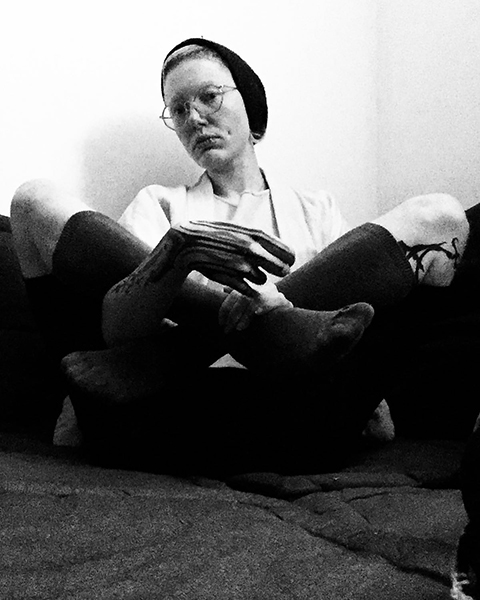
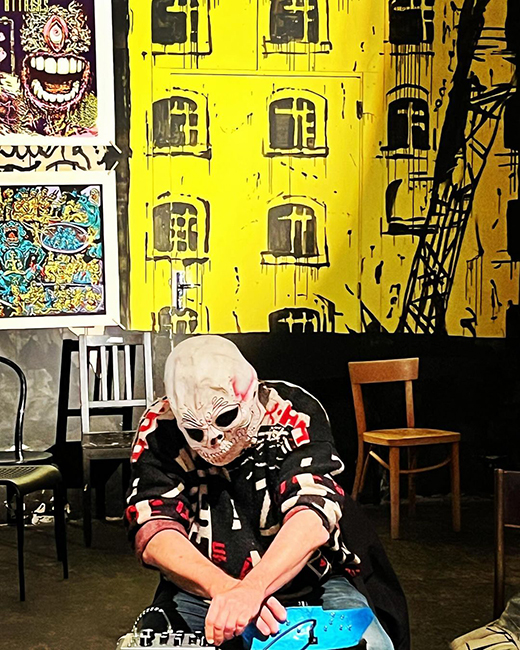
Maria and her usual natural seating style

*Cyberfeminism is a feminist approach which foregrounds the relationship between cyberspace, the Internet, and technology. It can be used to refer to a philosophy, methodology or community. The term was coined in the early 1990s to describe the work of feminists interested in theorizing, critiquing, exploring and re-making the Internet, cyberspace and new-media technologies in general. The foundational catalyst for the formation of cyberfeminist thought is attributed to Donna Haraway’s “A Cyborg Manifesto”, third wave feminism, post-structuralist feminism, riot grrrl culture and the feminist critique of the alleged erasure of women within discussions of technology.
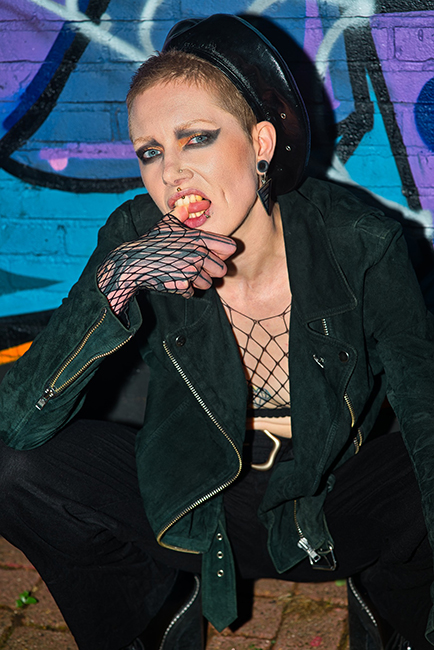

Mariagoth Razor Mode !!
Some pages from Mariagoth’s sketchbook, 2023

“I don’t find it particularly scary for the children growing up. I find it scary for us all.”

If we take a look at the developments in the field of technology and science in the last 10 years, we witness that it has accelerated exponentially, not linearly, and has grown like an avalanche in the face of human beings. Now there is talk of the threat of an out-of-control artificial intelligence taking over the entire system. As a young woman and also modern artist, how do you see this situation, do you ever get worried, do you ever think that this is too much?

To be honest. I don’t find it particularly scary for the children growing up. I find it scary for us all. Our technology progresses faster than what we as communal conscious and human beings at this moment are capable of dealing with. Some of our systems within our bodies (the body without organs), at least the bodies we consciously imagine to exist, have not evolved enough to deal with the new developments. Like the amount of stimuli we get on a daily basis via screens and billboards. Some of us barely understand that we are the cause of climate change. A lot of humans are not capable of dealing with the stream of information that comes in. As most of what is being produced by technology now is not new physical systems, but rather systems created by information. We as human beings have not adapted fast enough, and this is why we get back to new technological adaptations to make us cope (transhumanism). Which is a trap by itself. As we aren’t evolving as a species. We are merely putting a small bandaid on a gaping wound.

Funny how these questions remind me of how Muad’dib (Paul Attreides) in Dune by Frank Herbert also sees the world or rather Leto II sees the world. Your comment about Mentat computation is rather well choosen.
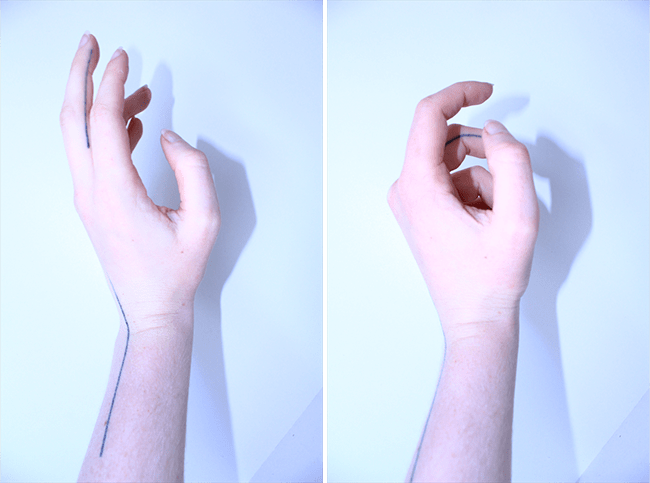
Maria Oosterveen ‘Nothing more than a Cyborg’

“We are in the way we move and behave utterly the same as what we were 1000 years ago.”

Or do you think humanity will somehow adapt to this new world order, for better or worse?

In ways I have already explained this above. We adapt by applying even more technology. While we as humans have not changed the way we work. We still follow the same structures and systems. In that sense we still stay human. Even if we would look like robots, or the cyborgs in cyberpunk movies. Which are a terrible example of what a cyborg truly is in the literary sense. I would rather call them Transborgs than Cyborgs… We are in the way we move and behave utterly the same as what we were 1000 years ago.

We have created something we’re barely able to grasp (as a shared consciousness) that actually shows us that everything is communal. That something like copyright is non-existent. It is one of the biggest mirrors we could have created. Most of us are not capable of accepting this fact. Most of us still try to explain the world and what happens by tarot cards and/or a God.

This issue with not being able to deal with the stream of information, and the disability to communally share the same reality, is also why there is a higher percentage of psychoses happening throughout our population. (I don’t see the concept of the psychosis as something negative, just different).

Maria, L.A. Session, 2023

“Both groups are counter culture as they exist opposing each other. Both are right in their own ways. We do communally need to deal with the problems at hand, respecting each other (without violence). Yet the way our system works now isn’t making us progress at all. However I don’t believe we are conscious of how right we all are in our own way.”

In Türkiye, since the 2000s, there has always been a small-scale oppositional voice against globalization. But what about the situation in Europe, in a relatively developed welfare country like the Netherlands, is there a group of people or intellectuals who are at least ideologically or philosophically opposed to the current course of events; what is going on in the field of counter-culture in Europe, what are your observations, we would appreciate it if you could inform us a little bit.

Well to inform you all: The Netherlands is no different. About 30% of the population voted for the PVV. Which lead by an half Indonesian half-Dutch man, named Geert Wilders, in an elite position being part of the Government. There is also the party led by Thierry Baudet: Forum voor Democratie. Baudet grew up pretty rich has been able to study philosophy, of all studies, and is an extreme right wing man who flirts with Nazism. His party won the provincial elections a while ago.

Most of these politicians barely have any knowledge of the issues at hand. Knowing that most of their followers have any knowledge at hand. Yet they do understand that it is too much for a lot to handle. So they try to deny that climate change exists. Having others agreeing with them and therefor voting on them. As it is a lot to grasp for a lot….

This same group often are conspiracy believers. They also see the government as something fundamentally bad (this is something different than believing our political system needs reforming and being critical). There is overlap with some who are connected to far left wing ideologies.

Yet there is also this group of people that do understand the issues at hand and share this communal reality. They also believe that the only way to deal with the issues at hand is by doing it together communally. Even if they might not see it all the same way. Together is the only way to get through this. About 70% of us all still follow this believe.

Both groups are counter culture as they exist opposing each other. Both are right in their own ways. We do communally need to deal with the problems at hand, respecting each other (without violence). Yet the way our system works now isn’t making us progress at all. However I don’t believe we are conscious of how right we all are in our own way.

*The performance in which Mariagoat participated at Museum of Now in Berlin, 2019

“This need for technological development is only a need to deal, via cognitive dissonance, with the mirror we created for ourselves.”

There are some conspiracy theorists, independent journalists and writers who believe that these global financial elites and this corporatocracy are serving the Satanic side, trying to enslave us for their new digital world order they have created by severing our essential connection with ourselves, and therefore with nature and God. Even tech giants like Elon Musk are saying that the human brain can be used as an interface through neurolink and similar technologies in the future, what do you think about these developments; are you optimistic or pessimistic?

I am neither. Will I individually agree with a world that changes towards a highly driven by religious believes? NO I won’t. I would detest the idea. Would I still follow the communal believe that God exists? Yes because even by using the word “God” I acknowledge its existence its presence in our culture and language. If the world communally believes one thing I am to follow (as we all haven’t evolved far enough to break this cycle).

Are they right that by believing we are individuals we loose connection with each other even our surroundings? Yes. Are they right that with the current individualistic mindset dealing with problems is harder to grasp communally? Yes. It would be chaos. It would be anarchy. It would be post-modernism. It would be a psychosis not shared by us all. That idea is scary as it is venturing into the unknown. Can I be optimistic or pessimistic about this…. I can’t know as we have not reached such a state yet.

To be more practical: Am I pessimistic about the technological developments like Neurolink? No. Positive? No. It’s the same as before. This need for technological development is only a need to deal, via cognitive dissonance, with the mirror we created for ourselves.

Maria Oosterveen ‘van KaNT’ 2022

“This is where the answer for change is also to be found. We are the only ones who can oppose a structure of extreme surveillance by corporatocraty. New technological developments itself have nothing to do with a system of oppression they are merely the tool.”

Of course, if we think of this neurolink technology as a development that will bring a paralyzed patient back to his feet and back to life, it is miraculous, but how can we be sure of the other side of the medallion? What if, over time, it turns into a centralized totalitarian form of government, just like the current social media applications? I want to draw attention to the philosophy behind these developments as much as the developments themselves, after all, none of us were born by Bill Gates or Elon Musk!? And if so, where is the devil hiding?

The Devil is a concept created by the communal believe there exists “one”, which is a paradox in itself. We all believe there is “one”. As you mention so beautifully: “None of us…”, the us in this sentence gives the answer back at you. We are the ones believing there is a devil/problem. We are also the ones who made it possible, by communally believing, that we got no control over a situation like this which explains the “none” within that sentence. So the “devil” is within ourselves, it is a communal issue. Not to blame one for it, but all.

This is where the answer for change is also to be found. We are the only ones who can oppose a structure of extreme surveillance by corporatocraty. New technological developments itself have nothing to do with a system of oppression they are merely the tool.

Going back to our original topic, How do you think all these scientific, digital and cybernetic developments mentioned above, (some of which I am skeptical about), will affect the art of this new century?

I can tell you are sceptic by the way you formulate your questions. Yet with scepticism is nothing wrong. It tells us that there is something wrong. It is an instinctual warning signal that tells us something isn’t clear drinkable water. To dispose of it all as bad (as it is still water) is what I would find difficult to deal with.

“The use of technology in art or even the lack of technology where there is plenty. Will create this awareness. Art has always been a great way to make this awareness happen.”

Will artists turn into technicians and art into bio-technologic works free from the romantic, instinctive senses?

No. Not as we are still humans. We are not the tools we use. We created them. They just do not change the fundamentals of the way we act. Art, as it is today, will always find ways to create awareness. The most easiest ways to be aware is via the senses. Via touch, smell, audio, visual and etc. The easiest to make people aware about themselves is via our communally shared instinctual senses. The moment we crack this… The moment we have evolved. Art in the concept we know it now will not exist.

The use of technology in art or even the lack of technology where there is plenty. Will create this awareness. Art has always been a great way to make this awareness happen.

To talk about the senses: I am currently organising/curating an art event around the senses named: Not to be Senseless which will be happening on the 30th of March 2024. As this art-event focusses on our instinctual senses. Trying to make sense of it all, while not forgetting this instinct is communal though different for everybody.

What do you think about the effects of Artificial Intelligence in the near future? Do you use it in your art works?

No, I do not use it in my works yet. I am not opposed to it. As I see it as a tool not the creator. We created AI as a mirror of us. Why not use the mirror to mirror it back at us? We can use this in a more awareness creating tool.

I would use an AI to help me create algorithms to create new knitting patterns. Make the AI calculate it for me. While also absolutely aware that the use of this (and mentioning it) will discard the process of others helping/being paid to help in creating these patterns. Thereby creating awareness what AI does to discard human workers in a field that is rather physical. I would only use AI in my projects if it indeed would be part of my concept to make others aware of those systems of industrialisation.

The art scene of the century we left behind is a colorful century that witnessed early avant-gardes like Nam Jum Paik, many post-60s art movements and vibrant developments, speaking for today, are there any names that interest you in the fields of video art and performance art that you can recommend?

Marco Donnarumma is an amazing performative artist that amazes me every-time I see his works.

Ludmilla Rodrigues focusses a lot on haptics in her work and creates awareness around this topic.

Jaime Del Val a Spanish performative artists that focusses on architectural believes and how this changes the way we move.

Dani Ploeger an artist who focusses on systems like surveillance, but also the less complex ones like sexuality and technology.

There are many more I would like to feature but to be honest the niche I find myself connected to as an artist is rather small. So I keep seeing the same faces over and over again.

Who are the iconic artists from the 60s to today, who are important to you?

I mean writers like Philip K. Dick and Frank Herbert are rather important to me. To be honest. I am terrible with art and remembering names. Especially connected to a specific time.

Do you have a special project you are working on these days? We know that apart from being an artist, you are also a model, and a photographer, isn’t all this tiring for you?

I just wish it all would be paid better and some would be communicative stronger so everything flows more fluently. You can’t have all. Luckily this is what life is about. So I am fine. It is actually really exciting. My life isn’t boring at all!

As mentioned before I am setting up a series of events around the senses called; Not to be Senseless. It is a political wink to how we treat others and how we are more together than we think. Yet it also binds us in something we fundamentally all understand. Our senses. Which is in collaboration with Journey Through the Sense (Journeythroughthesenses.org) and Intstruments Inventors Initiative (instrument inventors.org)

Maria Oosterveen’s installation named (uk) Un-/(nl) On-
Maria Oosterveen ‘Crrrrrrshd’ Performance, 2022
Prototypes of Alumn crystals growing

I am also, with the help and support of the TU Delft, researching a way to create a wearable and performative piece of art that combines handwork with crystal growth. The focus is that not all technology is electronic. While still have this tactile elements to my work as the crystals will break by wearing, can be gathered and regrown making it a piece that also changes over time by wearing.

And I am working on some new designs that people can knit themselves. Where inspiration comes from the body itself. From chemicals like oxytocin to the spine. In case of oxytocin the chemical structure is turned by a self-made algorithm into something that can be translated into a lacework stitch. Which is a wink to how knitting and weaving has been the basis for the binary language in computing and it is a wink to how (mostly) women have sent secret message in knitwear in wars.

> Atelier Oosterveen


When I was looking through your online portfolio, I noticed that you didn’t date any of your works, is there a special reason for this?

I’m an anarchist in ways. I believe that time is irrelevant. It goes about the quality and position of the art in time. Time changes always, so does some elements in culture. This also means my art changes because the time and mentality it is existing in has changed. I could give it a date. But why would I?
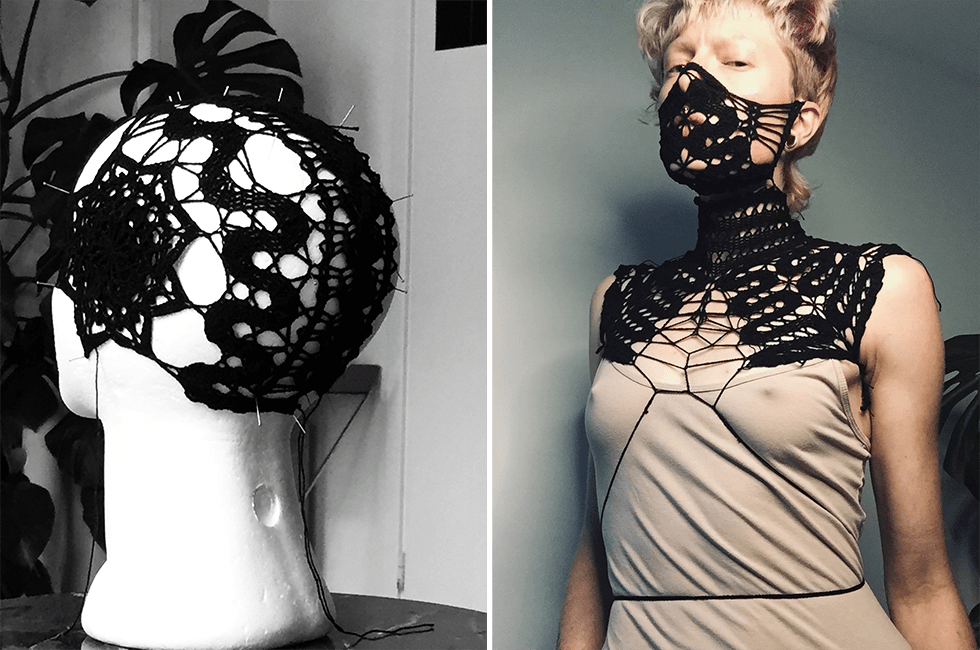
Mariagoth’s Secret Projects (WIP)

Creating lace patterns

Which we can wear on our sleeve

out of chemical structures existing in us all

What are your current pursuits and which topics do you plan to focus on more in the coming period?

See earlier comments. I am really busy with a few new projects. Of which one is curating a series of events which are called: Not to be Senseless. Where the focus is more on the senses.

I might actually think about trying to create more algorithms (but now by AI) to create lace patterns out of chemical structures existing in us all. Which we can wear on our sleeve (what a great title btw).

At new year I did a participative intervention performance on sexuality, war and feminism. As I come from a mixed background, which is both Eastern European Jewish (grandfather mothers side) and Dutch Jewish (grandmother mothers side). I am in the middle of 2 wars. One which is all about the former USSR and Putin trying to regain that autocracy back over those pieces of land by invading Ukraine first. The second war with the Palestinians and Zionitic Israelis. In both wars women are still often seen as the damsels in distress. Put in a lesser position, both by those that try to protect us and those who want to hurt the other party the most. At new year I gained my power as a woman back by whipping others. Material from this performance still needs to be added to my website as it is rather recent.

*To correct you I didn’t realise the performance in Berlin. I was merely an actor. A hired entity to play part in someones concept I was just a player. Nothing more.
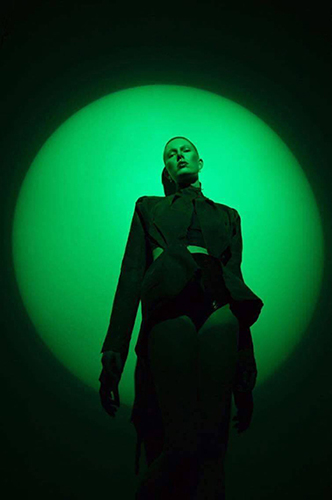
Mariagoth, 2017

Thank you so much for joining us Maria, it is an honor for us to have a futuristic artist like you on our pages, and I am sure it was equally inspiring and enjoyable for the readers and new-media artists. If you have something you want to share finally with your fans and followers here, please!

If you got the chance to attend my event on the 30th of March called “Not to be Senseless” do it.

Otherwise keep following me. As there will be more being produced the upcoming years.
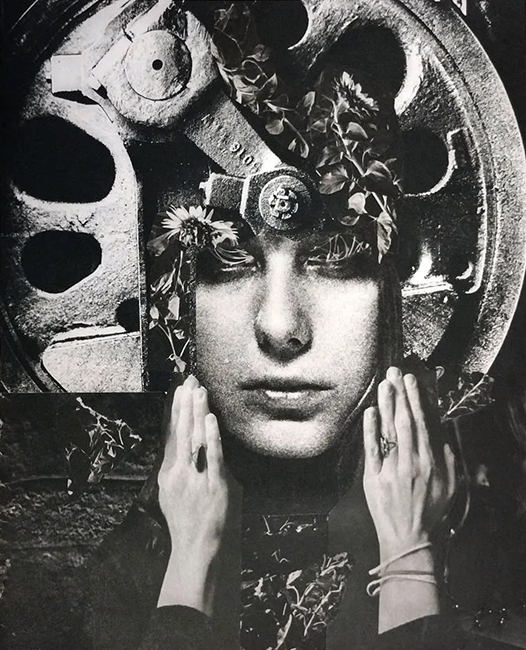
Maria Oosterveen Art Studio

Maria Catharina Model Portfolio

> atelieroosterveen

> Mariagoth


News from GalleryX Dublin: Andrii Strakhov

Andrii Strachov ‘Cleopatra’ 2023

Эта работа посвящена памяти моего покойного друга Александра Юрченко, – музыканта, художника и великого человека который давно всё послал на хуй


Олександр Юрченко • Лічи до ста • Симфонія №1 • [1994]

Dear friends!

Did you have a great Christmas day?

We are closed for the holidays but we’re not sleeping… And in our wakefulness we became aware of this great article about and interview with the wonderful Ukrainian artist Andrii Strachov (Strachovart) whose work we have the privilege of hosting and promoting.

Andrii Strakhov, 2023

‘A nightmare defending itself from an even bigger nightmare’

Find many of Andrii’s works currently in our care in our online shop – what better way to spend the cash you got from Santa?

Andrii Strachov collages

> ONLINE STORE


Bir Sır Taşıyıcısı: Selin Baycan

Selin Baycan (2021)

Selin Baycan, ‘Kaçışın Yok’ adlı yeni şarkısı Lâl Records etiketiyle yayınlandı. Söz, müzik ve düzenlemesi Selin Baycan’a ait olan şarkı dinleyicileri duygusal bir yolculuğa davet ediyor. Şarkının video klibi Lara Kamhi ve Barış Fert tarafından çekildi. 90’lar Türk sinemasından ilham alan klip, izleyicilere görsel bir şölen sunuyor.

Şarkılarını, cazdan singer-songwriter ekolüne uzanan geniş bir ilham dolabından beslenerek üreten Selin Baycan, kayıtlarını 2019’dan bu yana tekliler hâlinde yayımlamakta. Geçtiğimiz sene Şevket Akıncı’nın Meskûn Mahal albümündeki “Silk Mother”  parçasında da katkılarını duyduğumuz müzisyen, bu kez yaklaşmakta olan ilk albümüne dair merakları celbeden nefis bir parçayı önümüze usulca bıraktı. Fakat dikkat: Hazırlıklı olun, az sonra muhtemelen derin bir sızı yoklayacak kalbinizi.

İlayda Güler / Bant mag.


Selin Baycan ‘Kaçışın Yok’ 2023

Selin Baycan’s new song ‘Kaçışın Yok’ (No Escape) was released with Lâl Records label. The song, whose lyrics, music and arrangement belong to Selin Baycan, invites listeners to an emotional journey. The video clip of the song was shot by Lara Kamhi and Barış Fert. Inspired by 90s Turkish cinema, the clip offers a visual feast to the audience.


Bir Sır Taşıyıcısı

Bazen olmuyor, sevmek yetmiyor. Biriyle, onu içindeki fırtınada birlikte kaybolmaya mahkum etmeye çalışarak ilişki kuran, hep kaygan zeminlerde tutan kişilere veda edebilmek gerekiyor. Selin Baycan’ın deyimiyle “kendi gibi olmanın dayanılmaz hafifliği”ni seçmek, daima açık kalacak bir yara taşımayı reddetmek, şifayı özünde bulmak gücün ta kendisi. “Unutan mı iyileşirdi yoksa affeden mi?” sorusuyla vazgeçilmiş bir aşkın kıyısından seslenen “Kaybolan Ne Var”, anılarında benzer hikâyeler saklayanların yüzüne buruk bir gülümseme yerleştirecek, henüz “o adım”ı atamamışlara ise cesaret verebilecek bir şarkı. 

Büyüsünü müzisyenin duru vokalleri ve Alaca’nın yarısı Mehmet Mutlu’nun dokunuşlarıyla biçimlenmiş sade piyano eşliğinden alan parçanın ortaya çıkış öyküsünü Selin Baycan’dan dinleyelim: “Nakarat melodisi kalbimin düştüğü biriyle yıllar süren bir kopamama süreci boyunca aklımda dönüp durdu. Ve ne tuhaftır ki pandemi dönemi nedeniyle kendisiyle ayrılığımız telefonda olabildi. Son konuşmamız esnasında bu sözler âdeta bir anda içimden döküldü ve telefonu kapattığımda şarkı doğmuştu”

Selin Baycan ‘Kaybolan Ne Var’ 2023

Telefon detayı önemli zira parçanın klibine ilham vermiş. Yönetmenliğini Elif Tekneci’nin, sanat yönetmenliğini Nur Şevval Yılmaz’ın üstlendiği videoda ayrılık ânının ve henüz yanıtlanmamış soruların kederiyle baş başa kalıyoruz. Renkler kaybolmuş, sesler susmuş, bir devir kapanmış. Artık aynaya, kendimize bakıyoruz. “Kaybolan Ne Var”ı şimdiden loop’a aldık bile; özlemle beklediğimiz sonbaharımıza arkadaş olacak gibi görünüyor. Boğmadan, boğulmadan; özgürlükte, nefes aldıran sahici sevgilerde buluşalım.

NO TURN BACK !

Selin Baycan

> Youtube > Spotify


Who is Ana Mendieta?

Illustrated by Caro Caron, 2011

Who is Ana Mendieta? brings the story of its eponymous central character into the public eye once again as a graphic novel detailing her career as an artist and her unsolved death.

John Reed / therumpus.net

In 1951, Theodore Adorno asserted that “every work of art is an uncommitted crime.” The claim is powerful, not just in its insight, but in its exclusion of creative works made in the service of normative values. Propaganda, pop culture, are omitted by Adorno’s criteria.

2010’s Girls to the Front: The True Story of the Riot Grrrl Revolution, by Sara Marcus, set the tone for the 2011 documentary !Women Art Revolution (a film by Lynn Hershman) and MOMA’s 2011 rescreening of The Heretics (directed by Joan Braderman). The two films reassert the influence of women artists, ’60s forward, rekindling a revolution—not just feminism but a wholesale social insurgency—that is remembered in the haze of whitewash. Given our own era, heavily dominated by corporation and consumerism, the reminder is life itself: the revolution was going down, it was underway.

The difficulty: bringing radical thinking and radical works of art to the mainstream. Mainstream distribution—the arts are no exception—requires a product that’s market and advertising friendly. If a work of art eludes market value, longevity falls to the discretion of historians, academics, and popular opinion; Sotheby’s has no vested interest.


Anima, Silueta de Cohetes (Firework Piece) Movie • 1976

Caro Caron, Who Is Ana Mendieta? (Blindspot Graphics) 2011

Caro Caron’s drawings do not only illustrate Christine Redfern’s controversial story: they construct a real system of annotations which allow us to feel the indignation that the suspicious death of Ana Mendieta can arouse. The figures of women illuminate the main story and form like footnotes which enrich the text with sensations rather than references and manage to make us take this less and less obvious side step which reveals to what extent paternalism and ordinary sexism are scandalous. Caro Caron’s style creates an atmosphere of carnival nightmare that is ultimately much more adequate to reality than reality itself, filtered by an ideology that we are most often incapable of pinning down.

MSVU Art Gallery, 2012
XIA is a responsive system in which visitor’s presence triggers different emotional stages of a projected virtual character. In a darkened gallery space, on a luscious, luminous carnation ground, a velvety black charcoal bloom is both the setting and the trace of a captive’s struggle.

Body Tracks foregrounds the life and art of Ana Mendieta (1948-1985), whose career exemplifies feminist art practices of the 1970s and the backlash against that movement in the mid 1980s. Curator Christine Redfern shows that issues raised in the 1970s by artists like Mendieta continue to preoccupy contemporary artists. Included are a video, Anima (1976) by Ana Mendieta, an interactive video performance by Philomene Longpre, Xia (2011), and the original drawings from the graphic novel Who is Ano Mendieta? written by Christine Redfern and illustrated by Caro Caron.

Caro Caron ‘Who Is Ana Mendieta?’ 2011

In Who is Ana Mendieta?, the Feminist Press seeks popular opinion through the graphic novel. The newly released title launches a series, Blind Spot, that will invoke (in the words of the press release) “the spirit of revolutions past.” The cleverness of the vehicle is twofold: the use of broadly appealing comic and true crime elements; the direct appeal to a youthful audience seeking alternatives in the limited category of graphic books. Hill & Wang (Macmillan Publishing), with recent graphic biographies of Malcolm X, Trotsky, Ernesto “Che” Guevara, and “The Beats,” paves the way for radicalism in graphic non-fiction. The Blind Spot series, if Who is Ana Mendieta? is representative, brings dynamism and creative kicks to the graphic biography, which is all too often academic and artistically lackluster.

Mendieta, a New York feminist artist native to Cuba, is an obvious standard-bearer. Her prescient “earth-body” works—live sculpture, performance and documentation—feature her own body and the natural world. (New York University hosted an exhibition of Mendieta’s projects, “Where is Ana Mendieta?” in October of 2010.) Mendieta’s concerns and interests—alternative creative modes, the mysticism and magic of close-to-the-soil religions, the biological essence of life—are firmament to today’s arts world; a major retrospective of Mendieta’s 70 films is inevitable.

Mendieta’s ranging, decaying, breathing projects are counterpoint to the works of Carl Andre, with whom she shared a tempestuous six-year relationship. If Mendieta’s maximal projects didn’t quite have a market solution (what to sell?), Andre’s minimalism offered the perfect entrepreneurial explanation: less costs more. In 1985, the couple on the brink of divorce, Mendieta mysteriously fell from the window of Andre’s 34th-floor apartment. While Andre was acquitted of her murder in 1988, Mendieta’s controversial death crystallizes the political position of the Blind Spot series. The question, the history untold—whatever the answer—is where we begin.

Illustrated by Caro Caron, and scripted by Christine Redfern, Who is Ana Mendieta? resists passing judgment on Andre. Rather, the book looks at the death and scandal in the larger context of an art world and culture not nearly self-aware enough. The infuriating failings of the police are indicative of an establishment simultaneously self-righteous and inept. Mendieta, as an artist, had made her own body, prostrate, the subject of her documentary investigations—film and photograph. In a nauseating irony, the performance artist’s scene of death wasn’t photographed by the forensic team.


In this video CamiiW is talking about body artist Ana Mendieta.

Providing salient interview fragments and facts, Who is Ana Mendieta? is unhindered by a reductive “story.” Even Harvey Pekar, in his Hill & Wang graphic treatment of The Beats: a Graphic History, was force-fit into the narrative assumptions of the A&E biography: artist suffers, artist redeemed through recognition, artists suffers, etc. The model is in itself an arm of conservative propaganda: creativity is unhappiness, a sin that must be punished, or relieved through broad cultural acceptance; the artist must conform. The subtle insurgence of Who is Ana Mendieta?, and presumably the Blind Spot series, is the co-option of the pulp journal, which allows for a dissemination of information without a preordained moral.

In last year’s Graphic Woman, Hillary Chute explores 21st century autobiographical comics by women. Chute traces a weave of aesthetics and politics, which, with the dissolution of the American Comics Code in 2010, will only increase in the graphic category. With its considered construction and vivid reportage, Who is Ana Mendieta? heralds a better possible future, for the graphic book, for the arts, for the record of history, and for the revolution.

Resource: therumpus.net / Blindspot Graphics: Who Is Ana Mendieta?


EXTRA:


The TOUCH of BADkitO

The Devil in the Chair: PAKiTO BOLiNO

Il est temps de commencer à donner plus de place à la musicalité noise de Pakito Bolino, que la plupart d’entre nous connaissent pour ses peintures, dans les pages de notre magazine. Merci beaucoup à Pakito Bolino d’avoir partagé avec nous ce savoureux bruit âpre qu’il a interprété lors du vernissage de l’exposition Pol-Edouard à la Friche la Belle de Mai, Marseille.

Rituel pour invoquer les démons de la 5ème dimension

BoLİNOiZ !!

Méditation Cabal Profonde


Devil on da beat !!

It’s time to start to give more space to the noise musicianship of Pakito Bolino, whom most of us know for his paintings, in the pages of our magazine. Thank you so much to Pakito Bolino for sharing this tasty harsh noise with us that he performed at the opening of the Pol-Edouard exhibition at Friche la Belle de Mai, Marseille.

Pakito Bolino is a French artist, draftsman and publisher, born in 1964 in Nîmes. After studying at the School of Fine Arts in Angoulême, Pakito Bolino moved to Paris where he founded in 1993 the Le Dernier Cri editions in Ris-Orangis after having trained in the screen printing workshop. In 1995 the Éditions du Dernier Cri set up shop in Marseille, at the Friche la Belle de Mai. Pakito Bolino is the author of many works (graphics, sound, animations…) mainly published in Dernier Cri. He is also a musician, videographer and curator. To date, he has published more than 440 artist books, more than 200 posters, two magazines (Le Dernier Cri, Hôpital Brut), records and 5 animated films.


hopitalbrut
Kapreles, drawing for Hopital Brut 9

LES RELIGIONS SAUVAGES: Bonus, 2004

HOPITAL BRUT

ALERTE ROUGE / RED ALERT TODAY

FAIT A LA MAIN PAR LES ESCLAVES DU DERNIER CRI / HAND MANUFACTURED BY DERNIER CRI SLAVES

QUELQUES ANNÉES DE CRISES MYSTIQUES PLUS TARD / A FEW YEARS OF MYSTIKAL CRISIS LATER

MÉDIA PARIA-CULTURCIDE

L’HOPITAL BRUT VOMIT SON CORTÈGE DE CAS CLINIKES / HOSPITAL VOMIT FINALLY ITS CORTEGE OF CLINICAL CASE

LE MAL GAGNE! / EVIL GAINS !

PROPAGATION DU TRAIT SUTURE / VACUUM INNOVATION IS A LIE

L’ADULATION À LA NOUVEAUTÉ EST UN MENSONGE FIN DE SIÈCLE

HOPITAL BRUT N’OBTIENT QUE CE QU’IL CHIE / HOSPITAL BRUT OBTAINS ONLY WHAT HE SHITS

HOPITAL BRUT CROIT EN L’ACTION PURIFIGRAFIKE / HOSPITAL BRUT BELIEVE IN THE GRAFIK PURIFIACTION

HOPITAL BRUT ÉLIMINE LES TACHES D’AUTOCENSURE / HOPITAL BRUT ELIMINATES THE SPOTS FROM SELF-CENSORSHIP

TSUNAMI D’IMAGES DERNIER CRI ! HOPITAL BRUT N’A PAS A ETRE BEAU / HOSPITAL BRUT DOES NOT HAVE HAS TO BE NICE


VALIUM & BOLINO: “La Dimension du Mal” (1994)

Pakito Bolino

Deep Cabal Meditation


Ultime Fronti​è​re by Bolino & Valium, 1994

Ultime Fronti​è​re (1994)

Pol-Edouard (Detail)

Pol-Edouard (Detail)

C’est la guerre des amazones, désirent-elles vraiment tuer tous les hommes de ce monde ou juste leur faire peur ?

TRIPLE IMPAKT!
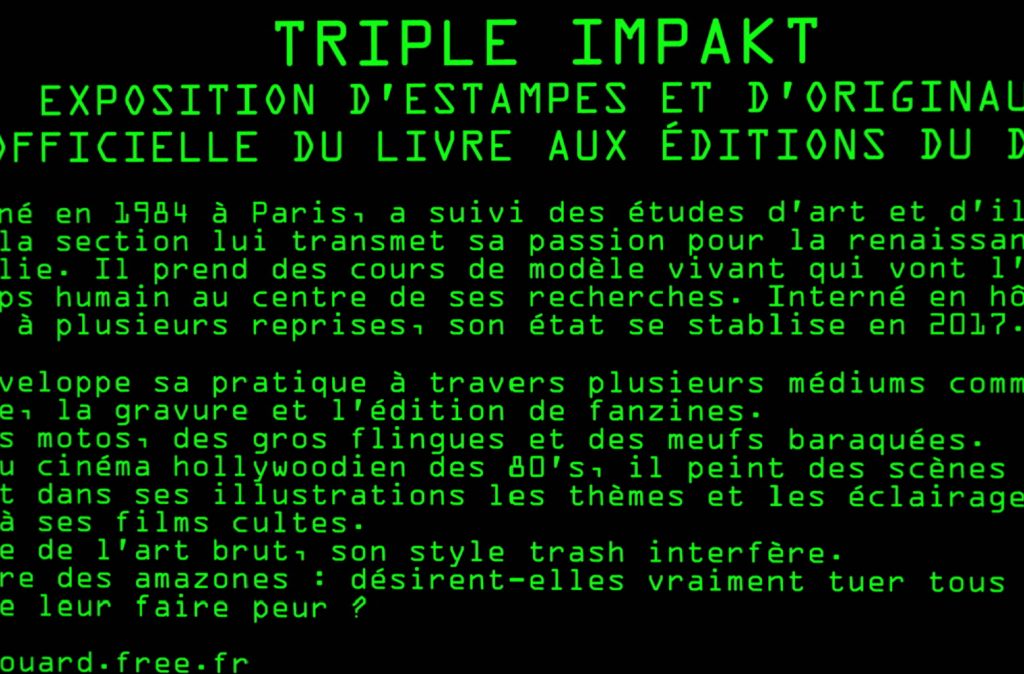
Pol-Edouard, Exposition d’estampes et d’originaux Sortie officielle du livre aux éditions du dernier cri

Pol-Edouard, né en 1984 à Paris, a suivi des études d’art et d’illustration. Le directeur de la section lui transmet sa passion pour la renaissance lors d’un voyage en Italie. Il prend des cours de modèle vivant qui vont l’influencer à placer le corps humain au centre de ses recherches. Interné en hôpital psychiatrique à plusieurs reprises, son état se stabilise en 2017. Depuis, il développe sa pratique à travers divers médiums comme la peinture, la sérigraphie, la gravure et l’édition de fanzines.

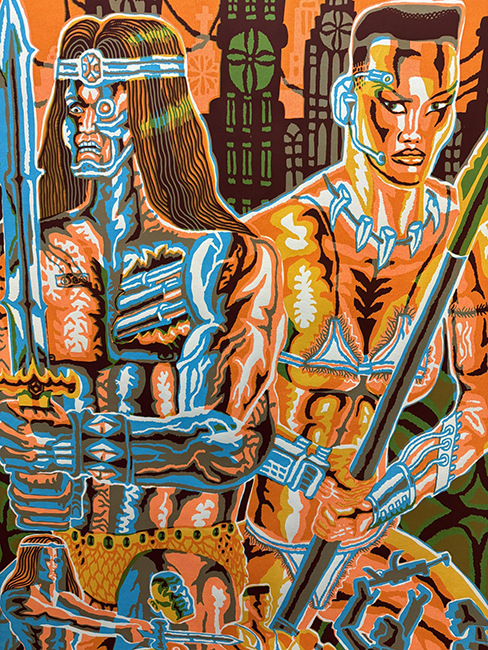
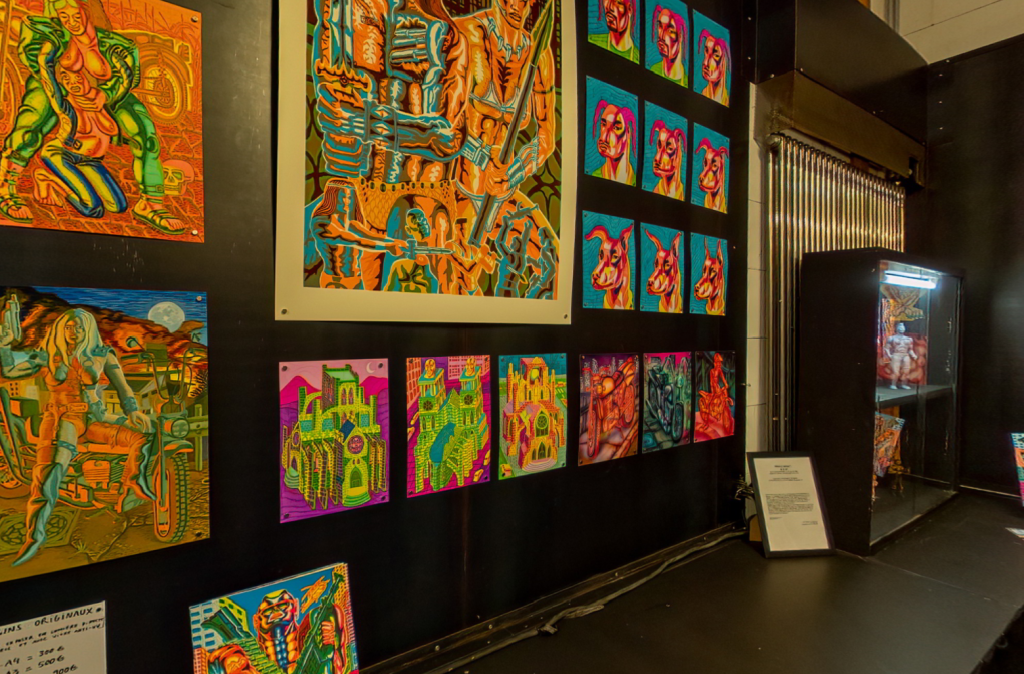
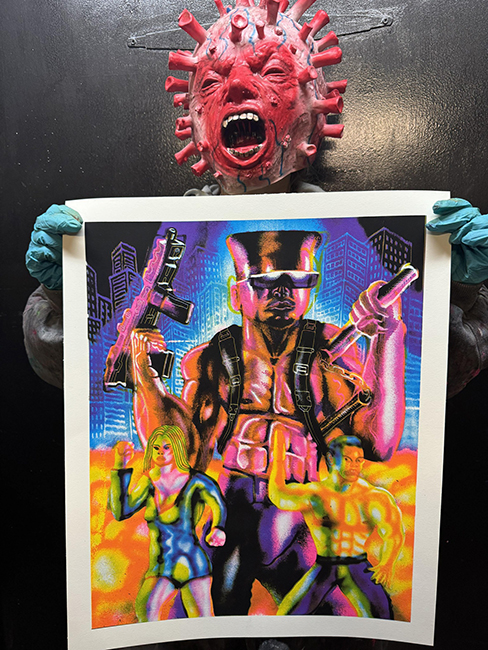
Il dessine des motos, des gros flingues et des meufs baraquées. S’inspirant du cinéma hollywoodien des années 80, il peint des scènes d’action. Il réintroduit dans ses illustrations les thèmes et les éclairages multicolores en référence à ses films cultes. Dans la lignée de l’art brut, son style trash interfère. C’est la guerre des amazones, désirent-elles vraiment tuer tous les hommes de ce monde ou juste leur faire peur ?

poledouard.free.fr

instagram: pol_edouard


TRIPLE IMPAKT!

Fin septembre à la Friche de la Belle de Mai chez l’infatigable Pakito Bolino.

TRIPLE IMPAKT!
TRIPLE IMPAKT!
POL EDOUARD, LDC Edition 2023

Pakito Bolino, 1964 Nîmes doğumlu Fransız sanatçı, ressam ve yayıncı. Angoulême Güzel Sanatlar Fakültesinden mezun olduktan sonra serigrafi alanında kendini geliştirir ve 1993 yılında Paris’e taşınarak Ris-Orangis’te atölyesini ve kendi markası olan Le Dernier Cri’yi kurar. 1995 yılında ise Marsilya’da Friche la Belle de Mai‘de LDC için bir mağaza açar. Pakito Bolino, ağırlıklı olarak Dernier Cri’den yayımlanan birçok eserin (grafik, müzik, animasyon…) yaratıcısıdır. Aynı zamanda müzisyen, kameraman ve küratördür. Bugüne kadar 440’tan fazla sanatçı kitabı, 200’den fazla afiş, 2 adet antoloji (Le Dernier Cri, Hôpital Brut), bir çok plak ve 5 animasyon filmi yayınlamıştır.

LE DERNIER CRI, 41 Rue jobin, 13003 Marseille

www.lederniercri.org

GRAFIK PURIFIACTION SINCE 1993


Feel the HIPERSONA

Hipersona

Yüksek enerjili sahne performanslarıyla dikkatlari üzerine çeken Hipersona’nın temelleri 2018 yılının Nisan ayında Ankara’da atıldı. Önceki gruplarının 2018 yılının başlarında dağılmasından sonra pes etmeden müziğe devam etmek isteyen ikiz kız kardeşler Bilgesu Ünalan (Vokal-Gitar) ve Bengisu Ünalan’ın (Bas gitar-Geri vokal) yeni grup kurma fikirleriyle Hipersona kuruldu. Sonrasında davula Burak Cengiz geçti. Birçok festivalde sahne alan Hipersona, albüm kayıtları için 2018 Temmuz ayında İstanbul’da stüdyoya girdi. Burak Yıldırım prodüktörlüğünde kayıtları tamamlanan şarkıların mix ve mastering’i ünlü prodüktör ve davulcu Alen Konakoğlu tarafından Los Angeles’da yapıldı.

Hipersona – Satellite

Grup, Arpej Yapım etiketi altında yayınladıkları Uyan Artık isimli EP’si ve Geri Dön isimli parçası ile iyi bir çıkış yakaladı. 2019’da Milyon Fest ve 21. Rock Station Fest dahil birçok festivalde ve konserde sahne alan grup, Ağustos ayında İstanbul’da tekrar stüdyoya girdi ve 3 yeni parça kaydetti.

> 23 Aralık – Bursa

> 24 Aralık – İzmir

“Aradığın aşk çekim dışında”

Beany twins who love making noise,

so pay attention!

HIPERSONA


Johan Kugelberg & BOO-HOORAY

Industrial Workers of the World, Pittsburg 1975 (brochure)

Johan Kugelberg has more than 30 years of experience in the U.S. entertainment and art industries. From 1990 to 1994, he was the General Manager for Atlantic Records subsidiary Matador Records and a marketing and A&R executive for Def American Records from 1994 to 1997. He was the curator of the punk/rock sale at Christie’s in 2008, the first major auction sale devoted to punk. In addition, he has served as a curator and consultant in pop culture fields for auction houses including Christie’s and Phillips de Pury.

As an archivist, he has created comprehensive collections in the fields of punk, hip hop, and counterculture, focusing on printed works, ephemera, photography, and book arts. Currently, he is the owner and curator of Boo-Hooray, an archival processing company and project space in Manhattan.

Over his career Johan has curated more than 100 exhibits and written 42 published books. His book on the early history of hip hop was nominated for the NYPL Books for the Teen Age award 2008, and his book on the Velvet Underground won the Foreword silver medal for music 2010. Beauty Is in the Street was nominated for the London Design Museum 2012 Designs of the Year Awards.
Johan has lectured and taught at Yale, Cornell, University of Wisconsin, Emory, UVA, Pace, Concordia University Montreal, Ohio State and MOMA PS1.

Kugelberg’s works have featured at Financial Times, New York Times, The New York Post, London Times, The Independent, The Creative Review, Rolling Stone, Dazed & Confused, Paris Match, and The Guardian.


Industrial Workers of the World, Pittsburg 1975 (brochure)

Johan Kugelberg, ABD müzik ve sanat endüstrilerinde 30 yıldan fazla deneyime sahiptir. 1990’dan 1994’e kadar Ahmet Ertegün’ün kurmuş olduğu Atlantic Records’a bağlı kuruluş Matador Records’un Genel Müdürlüğünü yapmıştır.

2008’de Christie’s’deki ilk punk/rock müzayedesinin küratörlüğünü yapmıştır. Bir arşivci olarak punk, hip hop ve karşı kültür alanlarında basılı eserler, efemera, fotoğraf ve kitap sanatlarına odaklanan kapsamlı koleksiyonlar yaratmaya devam etmektedir. Halen, New York merkezli arşiv ve proje alanı olan Boo-Hooray’ın kurucusu ve küratörüdür.

Kugelberg, kariyeri boyunca 100’den fazla serginin küratörlüğünü yapmış ve 42 kitap yayınlamıştır. Hip-hop’un erken tarihi üzerine yazdığı kitabı 2008 NYPL Books for Teen Age ödülüne aday gösterilmiş ve Velvet Underground hakkındaki kitabı 2010 müzik dalında Foreword Gümüş Madalyası’nı kazanmıştır. Yale, Cornell, VVisconsin Üniversitesi, Emory, UVA, Pace, Concordia Üniversitesi Montreal, Ohio Üniversitesi ve MOMA PS1 gibi önemli eğitim kurumlarında ders vermiştir.

Johan Kugelberg’in çalışmaları Financial Times, New York Times, The New York Post, London Times, The Independent, The Creative Revievv, Rolling Stone, Dazed & Confused, Paris Match, Nouvelle Observateur, The Guardian gibi yayınlarda yer almıştır.


Johan Kugelberg, Jonah Freeman ve Justin Lowe ile birlikte Rastlantısal Orman sergisi ve serginin ardında yatan hikayeyi anlatıyor.

21st Century Book Collecting and Archiving

Johan Kugelberg

As time continues to munch on us like so many sesame bread sticks, the collecting habits of the younger generation affect the dealer habits of the older. It is always difficult to identify value and worth and historical/cultural significance in the tempora and mores that you yourself were a part of, or aware of, or ignorant of, as they co-existed with your particular inability to step twice into the same stream. As you are stepping in, other waters are ever flowing past you, and the ephemera of your time are as ephemeral. You were an accomplice in throwing stuff away, hence making the stuff ephemeral, or for that matter, an accomplice in making certain books of your time rare as you weren’t buying them.

For my generation of collectors (born in the sixties/seventies), the vigor, humors, and passions of the years surrounding our very birth become infused with potency. We feel our skills as players of knock-out ping-pong with Chronos, Ananke, and Mister Kairos is dependent on our ability to recognize and acknowledge significant artifacts of the times and days we are living through, even if we were in diapers at the time. Having just missed out on something due to date of birth, place of birth, or socio-economical-cultural-educational surroundings sure brings added MSG to the consumption of cultural goods.

My generation is able to disperse with the usual stratifications of hi- and lo-brow, driving previous generations nuts as their hard-earned accumulated knowledge was nulled and voided during the second half of the 20th century by a new and financially improved great unwashed, namely their very own sons and daughters. What the greatest generation accomplished (and how they de facto saved our collective asses) was busy-bodily taken for granted by the boomers, whose rhetoric laid claims that what they were building was a new society that was an alternative to the old. With 20/20-hindsight one can pop one’s monocle yelling “Hooey!” as we remember Mark Williams’ words in A Day In The Life:

There was never an alternative society, was there? Because if there was, there would have to be an alternative currency, and alternative property laws and so on. The alternative society was a misnomer: there was an alternative culture, but there was never an alternative society.

Some of us spend a lot of time sifting through the cultural residue of all the frantic activity of the second half of the 20th century. When I first saw punk ephemera at the ABAA Antiquarian Book Show a few years back, I remember thinking that someone was trying to finish sewing up an ermine fur by incorporating some alley cat, but by the time the second thought came around I was going “Great! About time!” It actually fit in pretty well; as Punk started happening-what-45-odd years ago, the timeline of the commencing of commerce certainly coincides not-at-all by coincidence with the similar span in time from the cultural eruption of Dada/Surrealism or, The Beats, or Japanese post-war photography books. Afterwards, the game is on to hardcore selling & collecting & exhibiting and all that…

In this video, Johan Kugelberg, alongside Ian Svenonius, gives us further insight regarding the exhibition Random Forest: A Reading Room

More about: ‘RANDOM FOREST: A Reading Room’

> johankugelberg

> boo-hooray.com


From Misty Streets to Screens: Ezgi İrem Mutlu

Ezgi İrem Mutlu

Genç sanatçının anlatısal yeteneği için ‘On parmağında on marifet’ desek yeridir. Resim, fotoğraf ve sinemaya olan tutkusunu müziğiyle harmanlayan bir şarkıcı Ezgi.

2007 yılından beri kendi bestelerini söyleyen ve ses tasarımında kendi melodilerini yaratırken vokallerde synthesizer, akustik piyano ve yarı dijital/ analog enstrümanlara ses kaydı yapan Ezgi İrem, Sorbonne’daki eğitimini tamamladıktan sonra 2016 yılında davet aldığı İstanbul Devlet Tiyatrosu’nda yeteneklerini sergilemeye başlar; iki yıl boyunca ‘Çehov Makinesi’ ve ‘Narnia Günlükleri’nde oyunculuk, Tiyatro 9 tarafından sahneye konulan ‘Eksiği Var Fazlası Yok’ oyununun ise solistliğini yapmıştır. Çeşitli dizi, film ve reklam filmlerinde oyunculuğunu sergileyen Ezgi İrem, halen birçok farklı projede şarkıcı, söz yazarı, oyuncu ve dansçı olarak çalışmaktadır.

Ezgi İrem Mutlu ‘Bir Vars’ 2023

‘She’s a jack of all trades’. Ezgi is one of the modern talents who blends her passion in painting, photography and cinema with her music.

Interdisciplinary artist born in Istanbul. First stepped into music professionalism in a children’s album as a soloist when she was nine years old. In addition to her musical experience, she graduated from Sorbonne Paris 3 Theater department license and master program as a comedian and writer. Since 2007, Ezgi Mutlu has been conducting her own compositions with her own productions, not using samples but creating her own melodies, sound design, and vocals playing synthesizers, acustic piano as well as recording sound on half digital and digital softwares. The originality and natural way of art is the most important expression in her life journey. She currently works as a singer, songwriter, actress, and dancer in lots of different projects.

> e333


E333 in da house!

Haziran ayında Fête de la Musique’in 40. yıl dönümü Edith Piaf, France Gall, Gainsbourg, Boris Vian, Charles Aznavour ve Enrico Macias’ın Fransızca şarkılarını seslendiren Ezgi İrem Mutlu, salgın döneminde de boş durmamış. Pandemi nedeniyle çevrimiçi olarak yapılan Akbank Kısa Film Yarışması’nda jüri, “Birbirinden farklı sinemasal anlatıların gücünü başarıyla harmanlayarak sadece ama sadece bugüne ait bir film ortaya koyması sebebiyle” değerlendirmesini yaparak 429 eser arasından Ezgi İrem Mutlu’nun “Darağacında Eldivenler” adlı kısa film çalışmasını ödüle layık bulmuştur.

Şu sıralar da “Baraka” adlı yabancı bir filmde savaş muhabiri rolünü canlandırıyor Ezgi İrem. Böylesi eşsiz bir sesi ve yeteneği izleme fırsatını kaçırmayın derim. Bizden söylemesi.


KAPIKO – Ethiopian Waltz (feat. Ezgi İrem Mutlu) 2023
Ezgi İrem Mutlu ‘Bir Vars’ Single (2023)

New Single Out Now!!

> BİR VARS


information & contact:

> Ezgi İrem Mutlu


Erkut Tokman ‘Gölge ve Darağacı’

Erkut Tokman

GÖLGE VE DARAĞACI

Ruhun kırık sazında semah havası

Bir gölgeyle giyinir her sabah varlığın andacını
Gövdesindeki özgürlüğü ve darağacını

Kim astı buraya seni? Kırık dallar arasında birinin
Bir meydan savaşında yüzyıllardan beri çoğalan ölüsü

Kurudukça unutuşun aklında kan
Bir güvercin kanatsız yemlik sevmeyi gagalayan

Ormana kök salmış içimizin kuru yapraklı aşkı
Tomruk tomruk kesilen gövdelerinde utancı

Asırlardan beri saran kurtçukları fosillerimizi
Yığılmanın alfabesiyle doğmayan ölü dilleri

Büyüyüp diplere sızan, kara bir suyun laneti
İlerler buharlaşana dek azar azar çoğalarak gökyüzüne

Doğurduğumuz ışıkta suskun çocukların şarkısı,
Karanlıkların ortasında bir yıldız kadavrası

Kuşkuların sessiz çığlıklarını hapseden bir atom bombardımanı
Saklar içinde berfin olmuş umutların çoğalan karıncalarını
Hareket ettirir çevrimi dışarı içeri, işbirliğinin emeğini sürer
dünyada hükmünü yitirmiş iyiliğin başkentini kurmak için

İnsanlık atlasında nefesten cana aşktan canana katılan
her köşeyi içine katar dolaşır kazanılan kalpleri

Yaradan yaraya sızar kanına kazazedelerin süzülüp
sürer merhemini durmak bilmeyen acıdan azade

Onarır ebedi huzur için toz duman yıkıntılar arasından
çıkardığı ölümü ezelden ecele bulaşmış kara mürekkebinde

Kötülüğünü dolaşırken zulüm şeytani arzularda, tarumar
Zalime gönül çalan kırağı alnına yazılmış o yalnızlıklar

Kıyamet kopmuş buzul havasında, keramet yoksulu
Yalancı dünyasında doğmayan güneşin soluğu

Bellekte bilgi fırtınası hatıralarda dalga dalga çok
Beyninin boşluklarında bir beliren bir yok

Korsan gemisine koymuş çalıp insanlık hazinesini,
Yanlış topraklara yolculuğa zorlamış rehin kalmış sizi,

Bengi döngüde yaşama kilitli kalmış bir kapıda
İnsanca düşlerine bir türlü anahtar bulamadığın muamma

Huzurlu gölgelerin anısına adanmış masumun sevgisi
Tan seli gibi görünen hareli içinin varılmamış ötesi

Adım adım üzerimize yürüyen acılarda kimin izleri kalmış
Mutluluğu gelir diye bekleyen birisi adını hep lanetle anmış

2017-İzmir
Erkut Tokman


Erkut Tokman ‘Kaligrafik Şiir’ 2023

İki ateş arasındaki postula

‘Scylla ve Charybdis’

“(…) Erkut Tokman’ın şiirsel kategorileri şiir geleneklerimizin tam tersi yönünde kurgulanmış, hem gerçekçi hem hermetik üslupların bir aradalığından oluşan bir tat taşır…”

“(…) Bebek bir çağ, ihtiyar, tüketilmiş bir zaman frekansının içinden doğacaktır. Bu esnada şair Erkut Tokman’dan bir ses duyulur. Son şiir kitabından sayfalar açılmış çağa özgü çağrı, şair tarafından başlatılmıştır… Çağrı önemlidir. O aramayı, soru sormayı, yazdığı sürece sürdürecektir. Belki keşfetmenin skalasıyla sarılmış, belki zamanın ve mekânın deneysel çevresiyle uyum/uyumsuzluk mood’udur bu şairce ses…”

“(…) Bilinmez derinliklerden gelen estetik imge, şairin yerel, bireysel, mitsel simgelerine bürünerek toplumsal düzenin yeni dayanakları olduğu kadar yazın tarihinin en yeni ifadesi olmaya adaydır. Kısaca bu şiirlerde şair bize yepyeni kavramsal bir dünyanın kapılarını açar…”

“(…) Erkut Tokman yazınında olduğu gibi şair bireysel mitolojisini yaratır…”

“(…) Bu bağlamda Erkut Tokman şiiri; Türk Edebiyatında şimdiye dek varolan, akımların içinde yer alan ya da almayan şairlerden daha farklı, daha taze, daha yenilikçidir. Ne Garip’ciler gibi öyküsel bir şiir yazar ne de İkinci Yeni’nin olgunlaşmamış metafiziğini onaylar ne de Toplumcu Gerçekçiler gibi sert imgeler kullanır, ne de 80’ler şiiri tadında mesmerik öğelerle yol alır…”

Gülseli İnal, Hürriyet Gösteri, Ekim-Kasım-Aralık 2020


Uluslararası Çeviri Ödülü’nü kazanan Erkut Tokman ile söyleşi

Erkut Tokman ‘Lupoc’ Ve Yayınevi, 2019

> Lupoc


KIRMIZI

Dünyanın rahmine kan düştüğünden beri
Ruhum kırmızı

Yokluktan geliyorum
Bir boşluğun içinde bekliyorum
Gövdeme düşen bu eşkin ışığı tanımıyorum

Dünyanın rahmine kan düştüğünden beri
Sana sormak istiyorum
Neden ruhum kırmızı?

Önce gözlerim yoktu biliyorum
Göremiyordum ne karanlığı ne de her ne ise
İlerliyordum görmeden ve ona doğru
Duygu sessiz bir çığlığa saklı
Sana sormak istiyordum
Neden ruhum kırmızı?

Sen susuyordun,
Önce bir sesin yoktu, cevapsız
Boşlukta bekliyorken,
İçimizde adım adım bir kırmızı
Sanki en eski zamansızlıktan
Bir varlığı taşıyarak, ilerliyordu
Sana hep sormak istiyordum
Neden ruhum kırmızı?

Sana gelemiyordum
Yokluktan sana yürümek için
Ayaklarım yoktu
Kuzguni bir boşluğu dolaşıyordu
Işığa sormak istediğim soru
Neden ruhum kırmızı?

Oysa dilim yoktu
Konuşamıyordum yokluğunu
varlığın gibi
Dünyanın rahmine kan düştüğünden beri
Bir insanın kırmızı soluğu
Doğru hissedegeldiği
Boşlukta bir dili kavrıyordu
Sana sormak için
Neden ruhum kırmızı?

Dokunmak istiyordum sonra yeniden
Boşluğa ve sana, oysa ellerim yoktu
Sana söyleyecek bir şeyim de
Yoktu ne düşüncem, ne sözcüklerim
Bir çığlık büyüyordu, içinde ben
Gövdeme hapsolmuş dönüyordum
Dünyanın rahmine kan düştüğünden beri
Dilsiz de biliyordum gideceğim yeri

Kavrayan ne bu boşluğu
Kırmızı bir yalnızlık mı yutan kırmızıyı?
Sormak istiyordum
Ama yoktum
Yoktum…
Yokken de ilerliyordum
Bilmek istiyordum gerçeği
Dünyanın rahmine kan düştüğünden beri.

07.03.14
-e.t


> Erkut Tokman

LUPOC


Doğru Zamanda Doğru Yerde: Beril Acar

Beril Acar, photo by Şakir Yıldırım, 2021

“Düşledikçe nefes alıyoruz ve yaşıyoruz; düşlerimiz ve heyecanlarımızdır biraz da bizi hayata bağlayan.”

Beril Acar genç bir yetenek, onu daha çok kısa filmleri ve rol aldığı dizi filmler ile tanıyoruz, aynı zamanda çeşitli müzisyenlere eşlik ettiği vidyo klipleri ve canlı performanslarıyla da dikkat çekiyor.

Beril merhaba, seni tanımayan okurlar için kısaca kendinden bahsetmek ister misin?

Elbette, soğuk bir Ocak ayının yirmi üçünde 1993 yılında İstanbul’da Özel Göztepe Yeşilbahar Hastanesi’nde dünyaya buyurdum. Küçüklüğüm, ergenliğim, ‘çocukluğum’ halen Üsküdar’da geçiyor. Kadıköy Anadolu Meslek ve Meslek Lisesi’nde grafik/fotoğraf bölümünde analog fotoğraf eğitimi aldıktan sonra bütün serseriliğimle çalışma hayatına atıldım. Hayatım bir şeyleri merak etmekle, sevgiyle yaşamak ve özen göstermekle geçiyor. Merak ettiği yolda çalışmaya ve ilerlemeye gayret eden, sadece huzurlu olmak isteyen ama Dünya’nın hiçbir zaman öyle olmayacağını da dürüstçe her gün kendine dillendirerek yaşantısına devam eden biriyim.

Seninle Sühan Sürmeli’nin ‘İrrrtibatta Kalalım’ sergisinde tanışmıştık… fakat ekranlarda seni hep ‘kötü kız’ rollerinde görüyoruz, neden böyle?

Harika bir deneyim ve sergiydi, bende hala hatıralarda o değerli gün. ‘Cinderella’ kadar masalsı mıyım bilmiyorum ama biraz Leyla olduğumu itiraf etmeliyim… Oyunculuğum neden böyle; çünkü “her iyinin içinde bir kötülük, her kötünün içinde de bir iyilik vardır”.

Genç bir oyuncu olarak şu ana kadar ne tip işlerde çalıştın?

Kategorize etmek zor aslında; çok fazla reklamda oynadığım için belli bir kategoriye dahil edemiyorum kendimi. Sanırım kalben hissettiğim bütün rollerde olabilirim. Anne rolü dışında… Oralara daha gelemedim sanırım. Umarım hayatımın bir noktasında karşıma daha fazla kara mizah oynama fırsatı çıkar, biraz da bu yönümü denemek istiyorum.

Beril Acar, Vakkorama photo shooting by ’74 Studio, 2014 

“mutsuzluktan da beslenen biriyim.”

Film oyunculuğun ile yer aldığın commercial (reklam) işlerindeki oyunculuğu -mesleki açıdan- birbirinden ayırıyor musun? Yoksa her ikisi de sanatçılığın bir parçası mı?

Ayrım yapmak zor, kamera karşısında olduğum her an oyunculuğumun bir parçası, bütün alanlar kendine göre değerli benim için. Son bir iki senedir kamera arkasında da bulunuyorum (prodüksiyon, video/fotoğraf çekimlerim ve asistanlık yaptığım işler, cast sorumlusu, kostüm/styling asistanlığı). Sanatın farklı alanlarında nefes almayı seviyorum.

Daha çok ne tip işler sana heyecan veriyor? Sinema filmi, reklam, müzik klibi…

Ayrım yapma konusunda berbat biriyim. Çünkü hepsinin içinde heyecanlanıp merak ettiğim konular var, heyecanlanıp merak etmiyorsam zaten o işin içinde bulunmuyorum açıkcası.

Peki senin açından hangisi cezbedici? Para mı, oyunculuk mu?

Oyunculuk elbette; para gelip geçici ya da kalıcı, bilemeyiz; ama oyunculuk her zaman hatıralarda.


Bir Adam Bi Kadın ve Diğer Şeyler (2016)

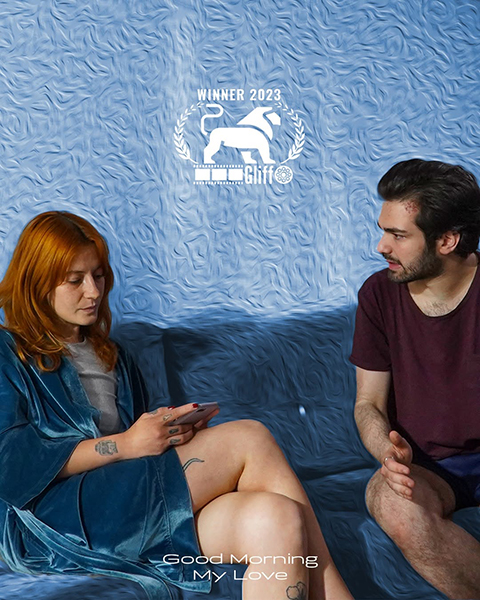
Good Morning My Love

“Kadın yönetmenlerle çalıştığım bütün işler hayatımın bir köşesinden beni afiyetle yerler ve hepsinin yeri ayrıdır.”

Yurtiçinde henüz gösterime girmemiş yeni bir kısa filminiz olduğuna değindin, bizlere biraz bu yapımdan bahseder misin?

“Günaydın Sevgilim” kısa filmimiz Gökşin Doğa Egesoy’un yazıp yönettiği bir duygu karmaşası durumu; herkesin içindeki o deli fişek hali, burnumuzun dibindeki bireyi, ruhumuzun derinliklerini ve benliğimizi iliklerine kadar sarsarak anlatan bir film. Filmde partnerim Alican Öztürk’ün de yeteneği sayesinde yapamayacağımız bir şey yoktu açıkcası. Yurtdışında birçok ödüle layık görülen yapım, henüz ülkemizde festivallerde gösterime girmedi, hedefimiz 2024.

Geçtiğimiz günlerde Kız Başına’nın düzenlediği ‘Başka Bir Dünyadan’ isimli karma bir sergi üzenlendi, etkinliği ziyaret eden bir sanatçı olarak yorumlarını alabilir miyiz?

Daha fazla kız başımıza sergiler yapmamız gerektiğini düşünüyorum.

Şükran Moral’ı sevdiğini dile getiriyorsun, onu senin için ayrıcalıklı kılan nedir?

Kanında dolaşan serseri ruhu.


Berilice nakış koleksiyonundan örnekler, 2016

“Türkiye’de insanların ‘el emeği göz nuru’ işlerden pek anladığını da düşünmüyorum açıkçası, geleneksel sanatlarımızın köklü bir dalı olmasına rağmen nakış işlemelere halen bilinçsizce bakıyor insanlar.”

Nakış işleriyle de uğraşıyorsun, Berilice isimli bir atölyen var ve gerçekten el emeği göz nuru harikalar yaratıyorsun. Ne zamandan beri bu tekstil işleriyle uğraşıyorsun, nerelerde sergiliyorsun, meraklıları bu işlere nasıl erişebilir?

Herkesin kendine göre bir meditasyon şekli var, benimkisi de nakış işlemek. Keşke beynimde değil de gerçek, kapısı olan bir atölyem olsaydı da büyük işlere girişebilseydim. Hayat mücadelem beni birçok farklı iş alanına sürüklediği için bu alan bazen buğulu tarafa kayıyor; mutsuzum bu durumdan ama neyse ki mutsuzluktan da beslenen biriyim, ve nakışın en sevdiğim kısmı tabii ki işine göre taşınabilir olması. İstediğim her yerde nakış yapabilirim, yeter ki o anı eskisi gibi yakalayabileyim. Türkiye’de insanların ‘el emeği göz nuru’ işlerden pek anladığını da düşünmüyorum açıkçası, geleneksel sanatlarımızın köklü bir dalı olmasına rağmen nakış işlemelere halen bilinçsizce bakıyor insanlar. İşin estetiği ve harcanan emeği görmekten uzaklar. İnsanların bu sığlığı beni kendi dünyamda nakış işlemeye daha çok motive ediyor; çoğu insanın bu sanatı anlayacak kapasitesi olmadığına da eminim ve bu sebeple eleştirilerinden de uzak tutuyorum kendimi. Yaptığım sanatı anlayan insanların gelip benimle iletişime geçmesi benim için yeterli.


Berilice 2020

Berilice at work

Handmade Textiles


Modayla aran nasıl, takip ettiğin markalar var mı?

Kendimi -kendim gibi- hissettiğim rahat kıyafetler üzerimde olduğu sürece modanın benim için hiçbir önemi yok.

Küçük ölçekli atölyelerin ve arts & crafts kültürünün büyük markalara bir alternatif oluşturduğunu düşünüyor musun?

İki alan da kendi yağında kavruluyor bir şekilde. Ben genelde cebime ve tarzıma uygun giyinmeyi tercih ediyorum. Fiyat açısından küçük markaların büyük markalardan aşağı kalır bir yanı yok, hatta kimi zaman daha pahalı olduğunu bile düşünüyorum. Moda severler için çok farklı alanlara açılan bir mevzu.

Özellikle sosyal medya dolayısıyla görünülürlüğün fazlasıyla ön planda olduğu tuhaf bir çağda yaşıyoruz, medyatik işlerde çalışan biri olarak bu durumu kendi açından nasıl değerlendiriyorsun?

Doğru zamanda doğru görünürlülükte olmak, gerisi bomboş.

Beril Acar ‘Kafam ve Ben’ photo. by Lina Irem Arditty (2020)

“Asıl tutkum sanat; hangi alanda çalışıp-üretiyorsak ordayım.”

Genç bir oyuncu olarak kendini sanatçılığın neresinde görüyorsun, önümüzdeki süreçte ne tip projelerde yer almak istersin, hayallerin var mı?

Benim göbek adım DÜŞ. Düşledikçe nefes alıyoruz ve yaşıyoruz; düşlerimiz ve heyecanlarımızdır biraz da bizi hayata bağlayan. Çok fazla düşüncem var, uçsuz bucaksız ve aydınlık. Çiçek Çocuk ile yaşattığımız müzik projem DÜŞ videosu için traji komik bir şekilde halen para bulmaya çalışıyorum. İlk hedefim onu gerçekleştirmek. Oyunculuğumu daha kreatif alana çevirirsem yazarlık derdim. Bir süredir yazmaya çalıştığım bir kitabım var. Bittiği zaman okunursa eğer onu yaşatmak için elimden geleni yapmaya hazırım. Bir de şöyle işlerime, zihnime, düşlerime güvenen biri çıksa da benim uygulayıcı yapımcım olsa, DÜŞLER işte…

Yerli veya yabancı sinemacılardan kimleri seviyorsun, daha çok ne tip filmler izlersin?

Kesinlikle Ari Aster. Ne eskilerde ne yenilerde sanki hep vardı aramızda bir Ari Aster. Her filmi izlerim, hatta IMBd puanı 4.7’lerde olan filmlerin bende ayrı bir yeri olduğunu düşünüyorum. -Dandik olduğunu düşündüğümüz filmlerin kendini izletme harikalığı- demek istiyorum ben buna. En çok korku filmleri izlemeyi severim. Gündelik hayatta rastlamadığımız duyguları hissettiren filmler önceliğimdir.

Asıl tutkun sinema mı, oyunculuk mu?

Asıl tutkum sanat, hangi alanda çalışıp, üretiyorsak ordayım.

Bugünlerde üzerinde çalıştığın, paylaşmak istediğin yeni bir proje..?

“Denge” üzerine yazdığım bir performansım var. Onun üzerine çalışıyorum ve bir yandan da bir diziye cast direktörlüğü yapıyorum.

Beril Acar, İstanbul, 2018

Bizleri kırmayıp söyleşiye katıldığı için çok teşekkürler Beril, sevenlerine iletmek istediğin birşeyler varsa lütfen.

“CARPE DIEM”

BERİL ACAR

BEREAL A.K.A. DÜŞ