Maybe we are still living in that trance in which we do not want to see what it is in front of our eyes, opting to live a life of ignorance and blindness under the protection of the few neon lights bulbs glowing from our smartphone. Ilaria Novelli is one of those few and outstanding artists that dare to turn off the illusion and tune in the now.
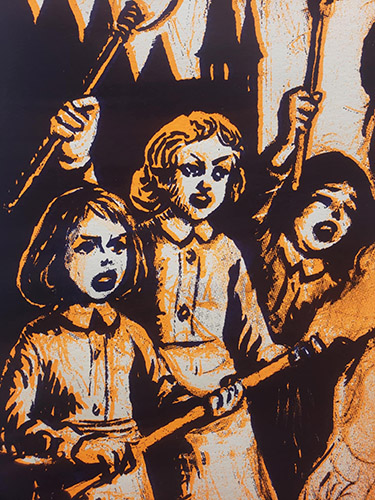
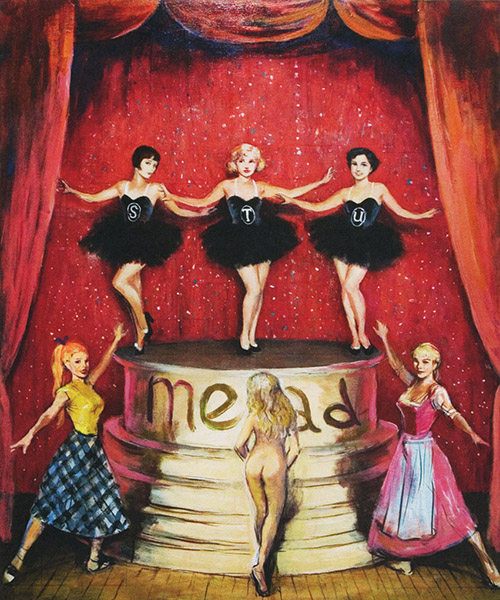
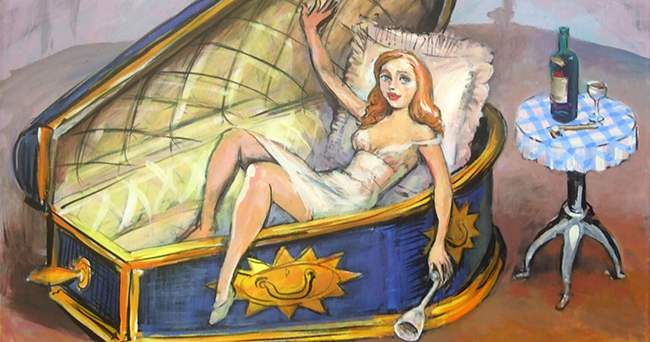
Ilaria “Ila Pop” Novelli is an Italian multi-disciplinary artist; she uses different media, from oil painting to digital techniques to create a dollesque and disturbing universe. In the line of those visions developed by those hidden creators such as the late Henry Darger or Stu Mead, Novelli unfolds to us a colorful world inhabited by willowy and doe-eyed figures who exchange roles from victim to perpetrator in a constant play that inspires on classical and modern art compositions. Ilaria is aware the world we live immersed in: an ever-lasting sense of screened future, full of information and constant visual stimulus. Many of the characters of her pieces represent the delirious extreme of such premises. Songs’ lyrics and heroes/villains from underground literature and cinema play an important role as inspiration too. Through Ilaria Novelli’s art is an ongoing project generating a private mythology and language, for some dark and magical reason it become universal, forcing the viewers to develop a critical analysis of the cultural and social values that the modern human condition is offering to the new and old generations.
Ila Pop, 2020
“I consider eroticism allegorical and symbolic, it leads to our nature both in a human and in an eternal/ethereal form, my take on the erotic element is always innocent and spontaneous rather than sexualized and uninhibited. Eroticism and obsession in art are always metaphors, they are part of an intimate and private mythology. I should write an excruciatingly long list of my major influences: I took inspiration mostly from writers and film directors.” -Ila Pop
Maybe we are still living in that trance in which we do not want to see what it is in front of our eyes, opting to live a life of ignorance and blindness under the protection of the few neon lights bulbs glowing from our smartphone. Ilaria Novelli is one of those few and outstanding artists that dare to turn off the illusion and tune in the now.
“…Tüm ticari kaygılardan uzakta “Nutshell Studies Of Unexplained Death”in prodüksiyonu o kadar iyi ki onu dinlemek bile gerçek bir acıya neden oluyor…”
2018 yılında basçı ve vokalist Can Temiz tarafından hardcore punk ve death metal ekseninde farklı metal türlerini sentezleyen bir proje olarak ortaya çıkan EXNUN, ilk albümleri “Decomposition Of An Infant Soul”un 2019 yılında yayınlanmasıyla yerli sahnemize güçlü bir ses getirdi.
Albümdeki şarkılardan “Rape of God” Kanadalı YouTube kanalı Banger TV izleyicileri tarafından açık ara farkla Banger TV programı “Overkill Global” için tema şarkısı olarak seçildi. Grup, 2019 yılında gitar ve vokalde Ozan Çam (Kozmik Yıkım), 2020 yılında gitar ve vokalde Ersin Çağlayan (Radical Noise) ve 2021 yılında davulda Aberrant Engin’in (Burial Invocation, Diabolizer) katılımıyla son halini aldı.
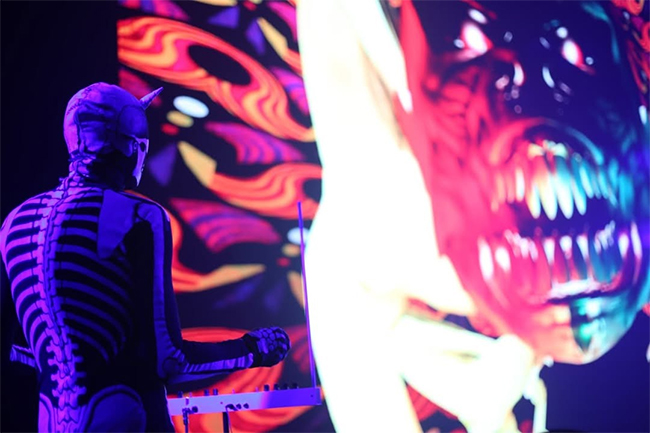
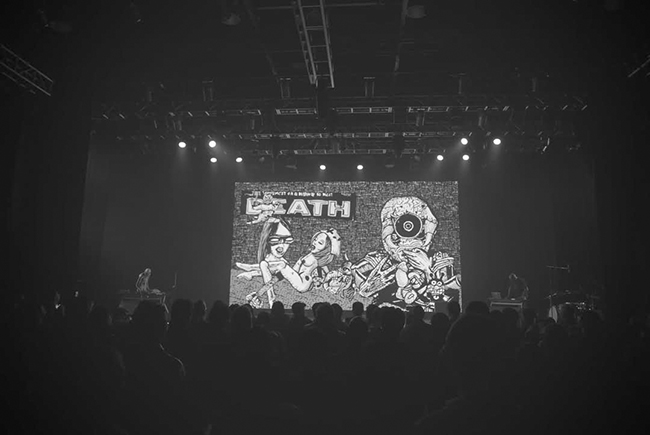
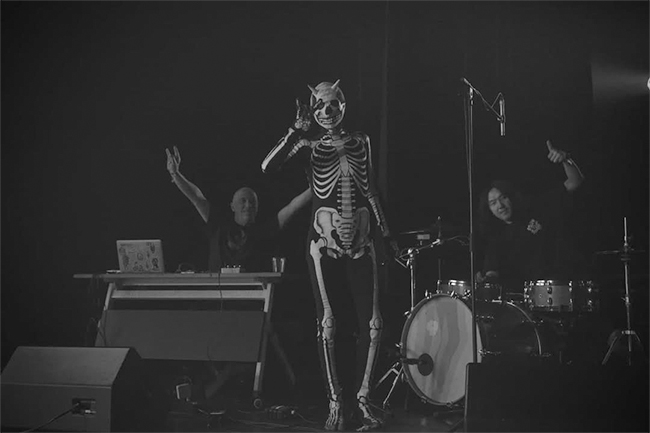
Exnun Live at ‘Milyon Fest’ Kilyos 2022
“…Somehow, that’s also cool because “Nutshell Studies Of Unexplained Death” comes across as very anti-commercial and powerful, and the production is so well done that the noise attacks hit the auditory canal forcefully and cause pain…” -Legacy Magazin
The foundations of EXNUN were laid by bassist and vocalist Can Temiz in 2018 as a project that blends many different genres of metal on the axis of hardcore punk and death metal. In 2019, their first album “Decomposition Of An Infant Soul” was released. Album drow a lot of attention in the Turkish local scene and had been critically acclaimed by the Turkish reviewers.
One of the songs from that album called “Rape of God” has choosen by the Canadian YouTube channel Banger TV viewers to be the theme song for Banger TV show “Overkill Global” by a landslide. The band took its final form with the participation of Ozan Çam (Kozmik Yıkım) on guitars and vocals in 2019, Ersin Çağlayan (Radical Noise) on guitars and vocals in 2020, and Aberrant Engin (Burial Invocation, Diabolizer) on drums in 2021.
Kritikzine Röportajı 2023
First extract from “Nutshell Studies of Unexplained Death” 2023, Time To Kill Records
l’énodation, acrylique sur papier de couleur, 300×220
On le voit, les dessins d’Alexios Tjoyas nous plongent dans l’univers du merveilleux, du surnaturel, de ce qui dépasse nos connaissances rationnelles. Osons le mot : s’appuyant sur leur pouvoir de fascination, ils font le pari de leur propre vertu magique ! L’artiste n’attend pas tant de nous que nous les comprenions dans leurs moindres détails ou que nous les interprétions par le truchement de telle ou telle connaissance pré-requise, mais plutôt que nous les laissions agir.
Johan Grzelczyk, Janvier 2021 /VER(R)UE La Revue n°4
Les dessins d’Alexios Tjoyas ont cette capacité rare de concourir à la complète contemporanéité de leur médium tout en rendant, dans le même temps, hommage à sa très longue histoire. Bien qu’ils soient à l’évidence fortement nourris du passé – de l’art pariétal à la bande-dessinée, en passant par l’illustration – quelque chose en eux indique en effet de manière manifeste leur participation pleine et entière à notre époque. Peut-être cela tient-il à l’appréhension très directe, quasi spontanée que nous en avons. De tels dessins sautent littéralement aux yeux, mettant l’observateur sous l’emprise de l’énergie dont ils semblent irradier. Ils possèdent l’étonnante faculté de capter le regard, de l’aimanter et de le fasciner tout à la fois.
Réalisés à l’encre ou à la peinture acrylique sur papier, les dessins d’Alexios Tjoyas sont parfois augmentés de collages (de calques, de ruban adhésif ou de papiers de natures diverses). Le trait est irrégulier, souvent cranté, parfois même hachuré. D’autres fois, il se fait plus souple, évoluant en volutes ou en rhizomes. De l’entrelacs à la racine aux multiples ramifications, du simple point coloré à l’éclair schématisé, l’alphabet graphique de l’artiste est riche de motifs plus ou moins complexes, tantôt abstraits, tantôt figuratifs. Du point de vue chromatique, ce sont les couleurs primaires qui dominent et la palette est principalement composée de teintes chaudes et vives. Les fonds sont généralement unis ; les figures s’en détachent en amples aplats ou en traits épais de couleurs intenses et contrastées.
Outre cette facture commune à l’ensemble des oeuvres appartenant à la série des Images des Mystères, leur principale caractéristique est précisément l’omniprésence de ces figures qu’elles donnent à observer. Le chien, l’oiseau, la goutte, l’oeil, l’arbre, le cheval (et son fer), la silhouette humaine dénuée de bras (et en position de déséquilibre manifeste) ou encore le masque-visage en sont les sujets centraux, exclusifs et récurrents. Tous font en effet l’objet de plusieurs compositions les représentant en cadre serré, excluant toute forme de contextualisation, de décors ou d’actions clairement définis. Les figures et non les personnages, donc – y sont dépeintes en position généralement passive.
Elles se contentent ainsi d’être, de rayonner et de signifier par leur unique présence. (Re)présenté de la sorte, le chien est à la fois autre chose et bien plus qu’un simple chien. Sa signification excède de toute évidence la catégorie des canidés. Il est élevé au statut de symbole. Encore faut-il ajouter qu’il s’agit là d’un symbole strictement idiosyncratique, c’est-à-dire propre à son auteur et que l’on ne saurait par conséquent interpréter à la manière dont la doxa en propose généralement l’exégèse. Ici, le chien ne guide pas nécessairement les âmes vers le monde des morts, pas plus que le fer à cheval n’est supposé assurer fertilité ou porter chance. L’artiste évolue dans le registre des signes intimes. Ses oeuvres sont énigmatiques, non par défaut, mais par vocation. Elles se refusent à donner à comprendre, elles invitent à interpréter et à imaginer.
En ce sens, les figures de prédilection d’Alexios Tjoyas sont éminemment polysémiques : si elles possèdent bien à ses yeux une ou plusieurs significations, elles peuvent en revêtir d’autres à ceux de l’observateur extérieur. Face aux mystères de la vie et du monde dans lequel nous évoluons, l’artiste a la sagesse de proposer une série d’icônes opérant comme autant de supports aux hypothèses que nous sommes conviés à faire librement à sa suite et non comme prétextes à quelque croyance que ce soit. De ce point de vue, sa démarche n’est pas à proprement parler ésotérique en ce sens que les symboles qu’elle mobilise ne possèdent pas une signification donnée, connue de quelques initiés seulement. Comme le titre complet de la série l’indique – Images des Mystères (être témoin de l’inexplicable) -, ces dernières se contentent de témoigner de la dimension foncièrement énigmatique de notre coiiuiuon eu se gardent bien d’en offrir une quelconque explication.
Pareilles figures nous invitent à élaborer nos cosmogonies privées, à rêver nos propres mythes fondateurs ou annonciateurs. De fait, si comme nous l’avons déjà souligné, elles sont représentées sans aucun contexte (ni prétexte) narratif, si pour le dire simplement elles ne racontent pas d’histoire, elles ont a contrario la capacité d’en évoquer et d’en susciter indirectement.
Elles sont en ce sens comme ces jouets que les enfants aiment à manipuler afin d’inventer leur propre scénario. Allons plus loin encore. De telles icônes ne seraient-elles pas capables – plus encore que de susciter des légendes – de provoquer elles-mêmes des événements ?
Elles sont en ce sens comme ces jouets que les enfants aiment à manipuler afin d’inventer leur propre scénario.
Allons plus loin encore. De telles icônes ne seraient-elles pas capables – plus encore que de susciter des légendes – de provoquer elles-mêmes des événements ? N’ont-elles pas vocation à modifier la réalité? Du reste, ne le font-elles pas déjà dans la mesure où elles nous incitent à nous questionner à ce sujet et donc à remettre en question nos représentations du monde? Plutôt que de simples jouets, ne conviendrait-il pas mieux de les comparer à de véritables fétiches ou à des talismans ?
On le voit, les dessins d’Alexios Tjoyas nous plongent dans l’univers du merveilleux, du surnaturel, de ce qui dépasse nos connaissances rationnelles. Osons le mot : s’appuyant sur leur pouvoir de fascination, ils font le pari de leur propre vertu magique ! L’artiste n’attend pas tant de nous que nous les comprenions dans leurs moindres détails ou que nous les interprétions par le truchement de telle ou telle connaissance pré-requise, mais plutôt que nous les laissions agir. C’est en effet dans leur capacité supposée à influer sur notre façon d’être a u monde que réside leur vérité.
The Black Label Bike Club and their friends are an independent community rebelling against the system in a society that pushes us to consume and overly use technology.
by Emily von Hoffmann, Pixel Magazine 2017
Inside the Black Label Bike Club
The longest project of Julie Glassberg’s career was spent mostly in Greenpoint, jostling in the dark for a good shot of eccentric Brooklynites jousting on bikes. Dodging swaying spectators and sloshing spirits, determined to stay in the middle of the action, she became initiated into the culture of the Black Label Bike Club. An independent community of artists, students, and self-described weirdos, BLBC’s philosophy eschews technology in favor of presence, joy, and “teenage kicks.” For Polarr, I spoke with Glassberg about the project and her upcoming book, Bike Kill.
Emily von Hoffmann: Tell us about Bike Kill. How did you learn about the Black Label Bike Club, and what made you interested in following them?
Julie Glassberg: I was living in New York City when I first heard about the Black Label Bike Club.
I was having a hard time documenting another subculture and someone told me about them: a New Yorker from Alphabet City. I thought he knew them, but he would just see them once in a while cruising on their tall-bikes, so it took a lot of time and research before I was able to start. I was first interested in the sensational part, like most people, and then, I became quickly attracted to their lifestyle and realized that there was much more to explore.
I found in them values and behaviors that I was missing in fast pace New York. I focused more on their relationships and their philosophy. The Black Label Bike Club and their friends are an independent community rebelling against the system in a society that pushes us to consume and overly use technology. They are passionate, well-read and talented young people, and I was quite absorbed by their ways of taking risks and not being afraid to be hurt (whether it was physically or in life decisions). They are living now, in the moment and want to have fun without taking life too seriously.
EvH: You mentioned this was the longest project you’ve done. What was that experience like, and did you get to know your subjects well? Does it feel strange to be done, and do you still keep in touch with anyone?
JG: The experience was quite interesting for me. In documentary photo school, you’re taught to be a “fly on the wall” and not interact much with your subject. But in this kind of community, if you want the people to share their life, you have to share a bit of yours as well to establish some kind of mutual trust. It’s an exchange. Of course, spending so much time with them, a few became close friends and we are still in touch.
While I was in Japan, I made a handmade book of Bike Kill which allowed me to show the time I spent with them and gave a new life to the project; a new narrative. It’s hard to decide when you are done when you spend so much time with people. There are always situations or characters that can evolve. For me, the book is really what concludes everything. After thorough research, I found a great editor based in Italy. It was very important for me to work with the right person so that the book is an extension of the project and keeps the core spirit. I didn’t want a standard coffee table book but more a book-object, an experience for the viewer. It will be a great collaboration and the Bike Kill book will come out around the middle or end of 2018.
Julie Glassberg ‘Bike Kill’ Series
Bike Kill in Brooklyn New York, Slaughterama in Richmond Virginia, Riding Dirty in New Orleans Louisiana are the names of a few of the many regular bike events that seem to define underground bicycle culture.
EvH: What exactly is “jousting” on a bike, and what are the stakes?
JG: Jousting on a tall-bike is exactly the same as jousting on a horse in the middle ages! Except that the spear is made of PVC and a stuffed animal or foam is at the end of it. It’s not a competition made to hurt or destroy your opponent. It’s a game. It’s all about having fun. Evidently, sometimes people get hurt as the jousters take up speed and they can fall badly or get hit in a sensitive spot.
Here is an extract from a text that Mikey (a member of the BLBC) wrote for me, that explains very well the principle of the jousting events:
“Bike Kill in Brooklyn New York, Slaughterama in Richmond Virginia, Riding Dirty in New Orleans Louisiana are the names of a few of the many regular bike events that seem to define underground bicycle culture. To the uninitiated, showing up to one of these events seems to be uninhibited intoxication and the anticipation of violence. It is. But it is also more than that. The use of public space for gatherings that scream that fun can be free.
The attendees include artist students, weirdos, musicians, spectators, teenagers, twenty somethings addicted to teenage kicks, rogue scholars, travelers, artists, photographers, parents, kids… drop-outs… a small dedicated group of outsiders — and of course bicycle clubs.)”
Julie Glassberg ‘Bike Kill’ Series
B.I.K.E. ‘Be Inclusive Kill Exclusive’ Jacob Septimus & Anthony Howard, 2005
Driven by anti-materialism and a belief that the impending apocalypse will render cars useless and leave bicycles in power, Black Label Bike Club (BLBC) battles mainstream consumer culture and rival gangs for its vision of a better tomorrow.
Pulling threads from Critical Mass and the wider bike counter-culture, B.I.K.E. explores such themes as radical politics, personal artistic vision, global responsibility, relationships, group formation and, perhaps most prominently, pain and love. Destined to be a cult classic.
Julie Glassberg ‘Bike Kill’ Series
EvH: Can you tell us about the backstory behind any particular image that sticks in your mind?
JG: I remember every moment behind every single frame pretty distinctly. One I would say that was key to that project is the photograph where everyone is shooting BB Guns in the kitchen of the Chicken Hut (headquarter) in Brooklyn [below]. That is the first photograph I took of them. I met a few members of the club the weekend before in a bar of Greenpoint. Paul informed me that it was his birthday the following week-end and that I could come. I asked him “what do you like to drink?” “Tequila!” he replied.
So I showed up at the “Hut” with a bottle of tequila for his birthday and that’s when it all started really. There, I met Stinky, who became my main contact. I would meet him regularly at the bike shop where he worked, and we’d go together meet the others. His trust towards me allowed others to give me their trust as well. He’s a friend now. Mikey (in the double exposure photograph) is also a very good friend, and Ian (portrayed with his tall bike) was one of the first members of the club I met. We often talked. He’s also a talented artist. A lot of them are.
Julie Glassberg ‘Bike Kill’ Series
The one where Pablo is fixing Mikey’s bike in his shop in Greenpoint [above], Brooklyn. Each club member made a donation of an art piece for a silent auction organized to help Pablo open his bike shop. It’s an alternative solution in a society where banks have the power.
The photograph where Andrew and Ian are dancing with Racey and Lile [below]. I went there to hang out as usual. Ian took me to the rooftop and we started climbing from roof to roof. From one roof, we saw Lile and Beatrice on Guido’s Paradise’s roof (below the Chicken Hut), shooting BB Guns, so we joined them. People started showing up randomly, and next thing I know, a party was suddenly happening and they all started dancing and having fun.
Julie Glassberg ‘Bike Kill’ Series
EvH: What were some of the technical challenges you encountered when capturing these shots? Can you share any hacks you used to overcome these challenges?
JG: There were some technical challenges mainly during the jousting events. Things are chaotic, objects and liquids are flying all over the place (including substances that are dangerous for the camera) and people are pushing and throwing things. Sometimes I’d put plastic around the camera, but I usually ended up taking it off very fast as it’s really not convenient and gets in the way. Shooting the jousting in very dark places, being pushed around is more like a sport and you have to battle to get a decent shot. You anticipate, you shoot a lot, and you get a bit of luck to make it happen! There is no taking time and composing is a challenge. Also you have to watch out constantly that nothing lands in your face or on your gear as you’re focused on the jousting. It’s mayhem, like Mikey says. But it’s exciting.
EvH: Can you tell us about anything in the world (in any medium) that is inspiring you in your work right now?
JG: Cinema has always influenced me a lot. I am a big fan of David Lynch and noir movies for example. Sometimes when I take a photo, I feel like I am in a movie scene and it really inspires me. Life to me is a huge set, except with real events happening, and I go around in it with my camera to capture what I see or feel. There isn’t one truth or one reality, so I try to share my reality with honesty.
Lately I have also done a lot of art residencies. I love to meet and collaborate with various artists such as dancers, designers, composers, choreographers, performers, etc. I explore fields that are different from mine and learn new things, explore, go further. It allows me to give a new dimension to my work.
Julie Glassberg is a New York-based photographer interested in the diversity of world cultures, subcultures, underground scenes, and the misfits of society. View her work and follow her on Instagram.
Şarkı yazmak ve söylemek, derdimi içimden geldiği gibi anlatabilmek dışında pek bir amacım yok; ama benden çok iyi ‘Popçu’ olurdu.
Genç ve yetenekli bir şarkıcı, onu daha çok yayınladığı ‘Paramparça’ ve Zombienation’a dönüşmüş memleketimize ithafen kaleme aldığı ‘Yaşayan Yok’ şarkılarıyla tanıyoruz. Ölü toprağında yeşeren bir demet, betonda açan bir Lotus diyebiliriz Ceylin için.
Ceylin merhaba, seni tanımayan okurlar için kısaca kendinden bahsetmek ister misin?
Merhaba, Ceylin ben; yirmi dört yaşındayım, İstanbul’da yaşıyorum, müzik ve resim alanında çalışıyorum. Bunun yanısıra aynı zamanda maalesef bitmek bilmeyen bir öğrencilik hayatım da var, sinema okuyorum. Müzik dünyasında yeniyim ama yaklaşık iki buçuk yıldır ağırlıklı olarak uğraşıyorum.
Drum’n Bass’çısın sanırım, elektronik müzik sahnesini seviyorsun, kendini nasıl tanımlarsın, şarkıcı mı demek doğru yoksa popçu mu?
Açıkçası kendimi ‘bir şeyci’ olarak tanımlamaktan kaçınıyorum. Şu an belli bir tarzdan devam ediyor ya da edecek olmam sanırım müzik dinleme alışkanlıklarımdan dolayı, şayet bu durum zamanla değişirse sanatıma yansıyacağına da şüphe yok, bu yüzden kendimi herhangi bir kalıba sokmuyorum. Şarkı yazmak ve söylemek, derdimi içimden geldiği gibi anlatmak dışında pek bir amacım yok, ama benden çok iyi ‘popçu’ olurdu.
Paramparça (Human Scum Remix)
Illustration by Ceylin
Her alanda bir ayrıştırmaya maruz kalıyor, kendimizi ayrıştırılan durumlar içerisinde buluyoruz. Düşüncelerimizi, fikirlerimizi bile yüksek sesle dile getirmeye çekinir hale geldik!
Yerli sahnemizden beğendiğin isimler kimler?
Çok sevdiğim, saygı duyduğum başarılı dostlarım var tabii ki; listem biraz uzun… Ama genel olarak özgün her sanatçıyı beğendiğimi ve desteklediğimi söyleyebilirim, ve bu işte emek harcayan kadın müzisyenlerin hepsine de başarılar diliyorum.
İfade özgürlüğü ve demokrasi kisvesinde herkesin ağzına geleni sosyal medyaya kustuğu toksit bir atmosferde mücadele veriyoruz, sanırım sen de bir dönem bu hadsizliğin mağduru oldun ve ‘Yaşayan Yok’ isimli parçanla gereken cevabı verdin. Genç bir sanatçı olarak toplumsal eleştirin nedir?
Her alanda bir ayrıştırmaya maruz kalıyor, kendimizi ayrıştırılan durumlar içerisinde buluyoruz. Düşüncelerimizi, fikirlerimizi bile yüksek sesle dile getirmeye çekinir hale geldik! Bu durumdan yakınanların da aynısını farklı gruplara uyguladığını görüyoruz. Toplum olarak sorunlarımızı başkalarının hayatlarına müdahale etmeden, ya da zorba eleştirilerde bulunmadan çözmeyi, kendimizle sahici bir yüzleşmeyle halletmeyi öğrenmemiz gerek.
A pyschodelic illustration by Ceylin the Cat
Ceylin, Watchmk ‘Değmezmişsin’ 2025
Anlamsız, boş ve hadsiz egolar midemi bulandırıyor.
Gerek müzik dünyasında, gerek sosyal yaşamda neler asabını bozuyor?
Buna cevabım kesinlikle, ‘Ego’. Anlamsız, boş ve hadsiz egolar midemi bulandırıyor.
Özellikle Spotify ve benzeri müzik platformları neticesinde müzik dinleme alışkanlıklarının değiştiği, çeşitlendiği bir dönemdeyiz; sanatçılar albüm yayınlamaktansa single ve ep’ler aracılığıyla dinleyiciyi yakalıyor, eski döneme nazaran kıyasladığında bu durumu nasıl değerlendirirsin?
Bence hızlı single üretimi ve tüketimi çıkan ürünlerin niteliğini çok düşürüyor. İçerikten ziyade süreklilik ön planda ve emek verilmiş kaliteli işlerden ziyade birbirine benzer şarkılar, her ay yeni parça çıkaran sanatçılar türüyor, buna nazaran albüm olayına inanılmaz bir saygı duyuyorum. Biz de şuan kendi albümüm üzerinde çalışıyoruz ve umarım sene sonuna kadar çıkartabilirim.
THE CAT !!
Nacht İstanbul, 2024
Ağlamak istiyorum sayın seyirciler !!
Canlı sahne alıyor musun, seni nerede dinleyebiliriz?
Şimdilik canlı performans sergilemiyorum. Geçtiğimiz yıl yaptığımız ep’de bulunan parçaları single olarak yayınlamaya başladığımız için bütün parçaların yayınlanmasını bekliyorum. Sonrasında ise yaptığımız yeni parçalar için büyük bir lansman konser planım var.
Bu kısa ama manidar söyleşi için çok teşekkürler Ceylin, eminim müzikseverlerin de ilgisini çeker, son olarak eklemek istediğin bir şeyler varsa lütfen!
The Sound of Progress is vital watch for anyone interested in the esoteric counter-culture. It shows a movement that impacted so many at the time (and continues to do so via the albums that these artists released) and still resonates to this day. When the Test Dept. talk about the right wing establishment and how a challenge from the Left is needed they could be talking about the very days we find ourselves in now.
Made in 1988 and focusing on for artists (Coil, Current 93, Foetus, Test Dept.) The Sound of Progress finally gets the DVD reissue treatment. Restored as best as possible the film follows these musicians through performance and interviews to give a vital glimpse of a movement that still influences to this very day.
After Throbbing Gristle spewed forth their industrial ideals, a slew of bands took up the baton and charged ahead with their art. Inspired by surrealist poetry, ancient magik, and Beat authors, these artists were not here to be loved (though many of them were, and remain, highly regarded) they were here to test the boundaries of what popular music could be and what it could achieve. Eschewing punk’s rudimentary three-chord chug, these bands set their controls for the heart of the beast, challenging audiences, ripping up rule books and creating some of the most exciting music that Britain has ever produced.
The Sound of Progress captures various live performances with the most exciting being Test Dept. who are filmed in a deserted building in Amsterdam. They pummel the audience with industrial noise whilst also managing to find grooves in the storm which you as an audience member can latch on to and ride. Foetus on the hand comes across quite contrarian as Jim Thirlwell discusses in his interview the lack of image and his opposition to such things yet when he enters the stage he is draped in classic rock ‘n’ roll attire (dark sunglasses, leather jacket etc).
(c) COLD SPRING / ALEXANDER OEY 2016/1988
Reissue of classic documentary focusing on a vital sub-culture that blossomed in the mid-late eighties.
Then we have Coil. Interviewed in Peter ‘Sleazy’ Christopherson and John Balance’s home in Chiswick, and outside the studio where they were recording the classic ‘Horse Rotorvator’ album the trio (including Stephen Thrower) discuss dream diaries, the nature of interviews themselves and the process of writing. These interviews are the highlight of the film as it is a real pleasure to see the sadly deceased Balance and Christopherson speak and discuss the inner workings of the band. It is also rather bittersweet as Balance discusses the need to invoke madness whether that be through LSD or schizophrenia to create art as it “makes you stronger”. Knowing the demons he faced throughout his life, and how it would end make this section tough viewing.
The Sound of Progress is vital watch for anyone interested in the esoteric counter-culture. It shows a movement that impacted so many at the time (and continues to do so via the albums that these artists released) and still resonates to this day. When the Test Dept. talk about the right wing establishment and how a challenge from the Left is needed they could be talking about the very days we find ourselves in now.
A great film and one that is highly recommended. –Simon Tucker
John Balance, Peter Christopherson, 1985
Sistem son derece gelişkin, had safhada acımasızdı ve insan kurban edilmesine dayanıyordu. Tanrılara kanlarını sunmadıkları takdirde güneşin doğmayacağına ve dünyanın sona ereceğine inanıyorlardı. Burada da durum aynen bu, sadece her şey daha sinsice ve gizli kapaklı.
Coil, John Balance tarafından 1982 yılında, dahil olduğu ve bas, vibrafon ve çeşitli Tibet çalgıları çaldığı Psychic TV ile eşzamanlı bir proje olarak kuruldu. 1984’te Psychic TV’nin kurucularından Peter ‘Sleazy’ Christopherson’la birlikte tamamen Coil üzerine odaklandı.
Christopherson, TG ile Psychic TV’de yer almasının yanı sıra, yetmişlerin Led Zeppelin, Yes ve Pink Floyd gibi ‘süpergrup’ların plak kapaklarını yapan Hipgnosis tasarım grubunun da bir parçasıydı.John Balance daha önce Current 93’te David Tibet ve Fritz Haaman ile çalışmıştı. Coil’in Scatology albümünde, ikiliye Clint Ruin ve Virgin Prunes’dan Gavin Friday katıldı. Coil aynı zamanda Derek Jarman’ın yönettiği The Angelic Conversation filminin müziklerini yaptı, Tainted Love için yaptıkları yorumun videosu New York’taki Çağdaş Sanat Müzesi’nde uzun süre gösterildi. Coil 1986’da Boyd Rice ile kısa bir uzunçalar, 1987’de de Horse Rotorvator adlı uzunçaları çıkardı.
Coil ‘The Sound of Progress’ Photo Gallery, 1985
Coil nedir?
Sleazy: En basit ifadesiyle, müzik çalışmalarımızdır. Müzikten başka şeyler de yapıyoruz, ama müzikle yaptığımız deneyler için bu ismi kullanıyoruz. Temelde ben ve John’dan ibaret, lakin başkalarının yardımlarına da başvuruyoruz. Bu anlamda, sanırım kuruluşu ve dayanışmacı yönü itibariyle Psychic TV’ye benziyor. Coil (sarmal; gürültü patırtı, hengame; bobin) aynı zamanda bir şifredir. Gizli bir evrenselliktir. Bütün olarak mevcut olmayan bir şeye ilişkin bir anahtardır, bir büyü, bir sarmaldır. Dişi bir dairenin etrafındaki yılan SHtsidir. Bir çifte sarmaldaki kasırgadır. Elektrik ve elementlerdir, atonal ses ve yabani şiirdir. Saplantılar için bir araçtır. Kabbulah ile Khaus’tur. Thanatos ile Thelema’dır. Başmelekler ile Deccallerdir. Hakikat ve ince eleyip sıkı dokumaktır. Tuzaklar ve yolunu şaşırmadır. Çocuksu, asli itaatsizliktir.
Coil ismi nereden çıktı?
Sleazy: İrticalen seçtim, sonra bunun aslında gürültü anlamına geldiğini öğrendim. Ayrıca sarmal, elektrik bobini ve ….. gibi anlamlara geldiğini öğrendim. Sarmal döngüsel bir mikro/makrokozmik biçimdir. DNA’lardan sarmal samanyollarına dek. Asli bir semboldür. Minik ve hoş bir sözcük.
Kullandığımız Kara Güneş Isadore Ducasse’nin Maldoror’undan gerçeküstücü bir semboldür. 10 şuası var (5×2). Coil esasen bir ikilidir ve beş Horus’un sonsuzluğunun, yani şu ânın [şimdiki zamanın] rakamıdır. Mevcut sonsuzluğun sembolleri ve işaretleriyle tamamen uyumlu müstesna bir mitolojimiz var. Bunun kamu önündeki imajımızın önemli bir parçası haline gelmesinin gerekliliğine inanmıyoruz; yoksa yanlış yorumlamalar, gereksiz ve yanlış taklitler ortaya çıkabilir. Sükûnet ve gizlilik. Nihayetinde, yeni çağa en çok uygun düşen Horus imgesi parmağı dudaklarında duran ‘fatih çocuk’ imgesidir, sükûnetin işaretidir.
‘Scatology’ (dışkıbilim) albümünün isminin ardında ne yatıyor?
Sleazy: Tıbbi anlamda dışkıbilim insan bokuna duyulan saplantıdır ya da eski usül sözlüklerin ediğince, “Hayvani isteklere ve temel güdülere ilişkin bir saplantı”dır. Yani bu ikisinin bir birleşimidir.
Niye bunu albüm isminde kullanacak kadar önemli gördünüz?
Sleazy: ‘Scatology’ eğlenmek için dinlenebileceği gibi, albümdeki parçaların isimleri normalde biraz edepsiz bir şekilde insanların dikkatini cezbetmeye çalışır, aynı esnada, albümün havasını biraz olsun çıtlatır. Bence iyi bir isim, albümdeki şarkıların çoğu, ya sözleriyle ya da havalarıyla, en temel insani güdülere gönderme yapıyor. Gayet uygun görünüyor. ‘Salvador Dali’nin Ağza Alınmaz İtirafları’nda Dali’nin “Götdeliğinin Hümanizmi” ile dediği şeydir.
Coil ‘The Sound of Progress’ Photo Gallery, 1985
“…örgütlü kilise insanları kontrol etmek ve kendi siyasi hedeflerini yaygınlaştırmak üzere ayinlere ilişkin bilgisini istismar eder. Şurası kesin ki bu ülkede son bin yılda kilise kâr ve insanların üzerindeki kontrolünü artırmak üzere siyasi bir makina olarak çalışıyor. Kanımca kilise liderlerinin konumlarını bu şekilde istismar etmesi çok acı verici, çünkü Kuzey İrlanda’da, Güney Amerika’nın tamamında, İspanya’da ve Uzak Doğu’nun çoğunda pek çok insanı s*kip attılar.”
Ayinler sizce niye önemlidir?
Sleazy: İnsanların çoğunun hayatı anlam katan şeylerden yoksun. Biraz burnu büyükçe gelecek belki ama, kanımca bire bir gündelik ihtiyaçlara karşılık gelmeyen şeyleri yapmanın ve bir yandan da diğer ihtiyaçları temin etmenin verdiği tatmin, kesinlikle bunu denemelerinin başka insanlara da ilginç geleceğini bana düşündürtüyor. Diğer insanların nasıl yaşaması gerektiğini düşünürken, dinlerin yaptığı gibi “Şunu yapmalısın” gibi şeyler söylemek yerine, ancak kendinizi örnek olarak alabilirsiniz.
Ayinin bunu uygulayan kişiler tarafından tasarlanması önemli midir?
Sleazy: Zannetmiyorum, milyonlarca kişi katolik ayinlerinden istifade ediyor.
J Balance: Ya da Japon çay ayinlerinden. Zen felsefesine göre her an bir anlama gelir. Kanımca bu çok daha zengin bir yaşam tarzı, üstelik onlara kim ve nerede olduklarına dair bir farkındalık sağlıyor. Oysa Batı’daki ayinler, özellikle de Avrupa ve İngiltere’dekiler kilisenin tekelinde. Oysa insanlar her daim bazı ayinleri uyguluyor; İngilizler ruh çağırma, uzgörü ve nazar gibi saplantılara sahiptir. Bütün bunlar vardır ve uygulanmaktadır, ama niyeyse insanlar bunlardan utanç duyar ve kilise tarafından temsil edilmeyi yeğler. Kanımca bunun nedeni kilisenin güç ve servete dayalı pek şaaşalı gösteriler yapan zengin bir örgüt olmasıdır.
Japon Çay Ayini gibi şeyler kilisenin düzenlediği ayinlerden ne anlamda farklıdır?
Sleazy: Bireyde yarattığı etki açısından aralarında pek bir fark yoktur. Farkları şudur; örgütlü kilise insanları kontrol etmek ve kendi siyasi hedeflerini yaygınlaştırmak üzere ayinlere ilişkin bilgisini istismar eder. Şurası kesin ki bu ülkede son bin yılda kilise kâr ve insanların üzerindeki kontrolünü artırmak üzere siyasi bir makina olarak çalışıyor. Kanımca kilise liderlerinin konumlarını bu şekilde istismar etmesi çok acı verici, çünkü Kuzey İrlanda’da, Güney Amerika’nın tamamında, İspanya’da ve Uzak Doğu’nun çoğunda pek çok insanı s*kip attılar.
J Balance: Çok aşikar bir örnek olan Azteklerde, toplumun tamamı dili ve güneşin batmasını nasıl önleneceğini bilen rahiplerin kontrolü altındaydı, böylelikle nüfusun her bir bireyi üzerinde mutlak bir kontrol sağlamışlardı. İnsanlar belli şeyleri yapmazlarsa öleceklerine inanıyordu. Sistem son derece gelişkin, had safhada acımasızdı ve insan kurban edilmesine dayanıyordu. Tanrılara kanlarını sunmadıkları takdirde güneşin doğmayacağına ve dünyanın sona ereceğine inanıyorlardı. Burada da durum aynen bu, sadece her şey daha sinsice ve gizli kapaklı.
Ayinin enerjisi kişinin içinden mi çıkar yoksa başka kaynaklardan elde edilebilir mi?
J Balance: Nereden geldiği pek de önemli değildir. Mesele iş görmesi, gücün çağırılabilmesi, üretilmesidir, bunu kullanabilir, manipüle edebilir, yönlendirebilirsiniz, dolayısıyla nereden çıktığını bilmeniz gerekmez.
Niye insanların çoğu bir ayini ya da büyüyü şeytani bir şey olarak görür?
Sleazy: Bilinmeyenden duyulan korku. Temelde bunun nedeni kilisenin ayin yapan diğer insanları denetimlerine yönelik bir tehdit olarak görmesidir.
J Balance: Bir tekel olarak kalmak isterler, bu yüzden diğer her şey kötü veya şeytanidir, bunlara bulaşırsanız cehenneme postalanırsınız. En basitinden Hristiyanlık propagandası. İngiltere’de paganlık güçlü köklere sahiptir ve kilise her daim bunu yok etmeye çalışmıştır. Başta pagan tapınaklarını etkisizleştirmiş, ardından buralarda kiliseler inşa etmiş, sonra da cadıları yakmış ve dini yasaklar uygulamıştır. Bunu yok edemeseler de insanları pagan mirasından uzaklaştırmak üzere hakir görme ve korkutma yöntemlerine başvurmuştur. Şeytan Pan, Cernos, kalkık aletli tanrılar gibi fallik, ne iyi ne kötü doğa tanrılarının Hristiyanlığa bir uyarlanışıdır sadece. Hristiyan kilisesi cinselliğe hep mesafeli yaklaşmıştır; alttan alta yürüyen paganlık ise tamamen bastırılamadığı için yaşamasına göz yumulmuştur. Şeytan pagan cinselliğinin bir temsilidir, Hristiyan unsurlar işe karışmasına rağmen insanları cezbetmesinin nedeni budur.

Sleazy: Şu sıra altmışlar ve yetmişlerdeki serbestliğe,özellikle de cinselliğe karşı sağcı bir tepki söz konusu. On yıl zarfında kiliseye yönelik ilgide bir canlanma başlarsa hiç şaşırmam.
Sizce Coil sahnede TG’den ciddi şekilde farklılaşacak mı?
Sleazy: Tabii, canlı çalmakta sorun şu ki her şeyin üç aşağı beş yukarı o ân orada yapılması gerekiyor. Ne var ki TG’de hiç kimse gerçek anlamda harbi müzisyen değil. Bu da temelde sizin seçeneklerinizi sahnede neler yapabileceğinize indirgiyor. Önceden hazırladığınız kayıtlara bel bağlayabilir, elinizden gelenin en iyisini icra edebilir ya da misafir müzisyen davet edebilirsiniz. Lakin bu seçeneklerin hiçbiri bana makul gözükmüyor. TG’nin tam olarak yaptığı sahnede elinden geleni yapıp, tamamen yeniden üretilebilir ve kulağa ilginç gelecek sesler üzerinde çalışmaktı. Artık öyle bir noktaya gelmiştik ki tıkandık ve gruptan ayrıldık.
1983’te Psychic TV ile çıktığımız konserlerde de TG’den çok fazla ileri gidemedik. İyi bir müzisyen olan, doğru dürüst gitar çalabilen Alex vardı grupta, ama iyi müzisyenlerle verdiğimiz konserler bile onların kişisel eğilimlerini yansıtır olmuştu. Dolayısıyla Psychic TV konserleri sonuçta mesela Velvet Underground’a benzemeye başladı, ki bu bana pek de bir ilerleme gibi gelmiyordu.
J Balance: Konserde ilginç fikirler oluşsa da, bunlar kabalaşıyor ve gürültü etkeni çok öne çıkıyordu, sonuçta fikirler fazlasıyla sulandırılıyordu. Demek istediğim albümleri zaten dinlemiş insanlar için sorun yoktu, derdimizin farkındaydılar, lâkin durum belli bir fikre dayalı bir çeşit kontrollü gürültüden pek öteye geçemiyordu. Üzerinde kafa patlattığında durum makuldu belki, ama yanlış olan bir şeyler vardı.
Sleazy: Hiç konser vermedik çünkü sahnede neyi nasıl yapacağımızla ilgili sorunu çözememiştik. Pek çok grubun yaptığı gibi biz de sırtımızı hazır kayıtlara dayayabilirdik, fakat insanlar cidden o yoğun atmosferi, o adrenalini istiyor, bunu hazır kayıtlarla sağlayabilir miyiz bilmiyorum.
Throbbing Gristle’ın arkasında yatan amaç sizce neydi?
Sleazy: İnsanların fiziksel olarak tepki vermelerini sağlamanın gerçekten mümkün olup olmadığını görebilmek. Ayrıca entelektüel ve sanatsal tutkularımıza yeni bir biçim vermeye uğraşıyorduk, çünkü bundan önce hiç müzik yapmamıştık. Ayrıca eğlenmek ve düzüşebileceğimiz gençlerin ilgisini çekmek. İnsanlar genelde niye grup kurarsa aynı gerekçeler bizde de geçerliydi. (gülüyor)
İşitilemeyen ses diye bir şey var mı gerçekten?
Sleazy: Efendim? (gülüyor) Bütün o muhabbetin arkasında yatan kuram şu, eğer bir şeyi çok düşük bir seviyede ya da geriye doğru çalarsanız, ya da ekranda anlık görüntüler verirseniz, bilinçaltı bunları alır ve anında tepki verir. Ama bunun işe yaradığına dair elimde hiçbir kanıt ya da bilgi yok. Rolling Stones’un ‘Their Satanic Majesty’s Request’ albümünde, gizlenmiş ve ancak geriye doğru dinlendiğinde duyulan “Şeytana Katıl” falan gibi bir şeyler denildiği söylenir. Yani bence bunların hepsi zırvalığın daniskası.
J Balance: Kayıt ve çoğaltım kalitesi açısından albümler henüz çok kabalar, bunlarla bilimsel deneyler yapmak henüz mümkün değil. Kanımca holophonics çok daha ilginç. Stevo büyük bir üçkağıt çevirmekle suçlandı, bu sistemi geliştiren Zuccarelli de öyle. Holophonics sayesinde bilinçaltına hitap eden atmosferik sesler üretebildik, bir odanın veya bir mağaranın mekansal sınırlarının ve içindekilerin hareketlerinin hissini yansıtan özel kayıtlar elde edebildik. Lakin benliğin çok derinlerinde bir etki yarattığı söylenen işitme eşiğinin altındaki seslerle ilgili hâlâ büyük kuşkulara sahibim. Bilinçaltı, gizlenmiş mesajlar, kesyapıştırlar, endüstriyel grupların ele aldığı konular gibi şeylerin hepsi Burroughs’un ‘The Job’ ve ‘The Electronic Revolution’ından çıkıyor ve aşırı şekilde kullanıldılar… Çok da başarılı değiller. Rough Trade’in falan bütçeleriyle doğru dürüst ses araştırmaları yapmak pek mümkün değil. Sahte bir bilim havasındalar, hiçbir alakamın olmasını istemediğim tırışka bir niteliğe sahipler. Daha ziyade, bilinçli bir şekilde kararsız müzikal eğilimler içeren sapkın bir ses üreticisi olarak algılanmayı yeğlerim. Bütün bu grupların derdine tasasına saygı duyuyorum, lâkin bu olanaklılıkların saflığı ya da dayandıkları amaçlar plağa geçerken yok olup gidiyor.
Fikirlerinizin yayılması için sizce en iyi araç müzik mi?
Sleazy: Hayır, kanımca filmler ve televizyon çok daha etkili çünkü bunlar hepimizi en derinden etkiliyor. Koku ve dokunma duyularına da hitap edebilirseniz, daha da güçlü bir etki yaratırsınız.
Stüdyodaki kayıt süreciniz önceki çalışma tarzınızdan çok farklılaşabiliyor mu?
J Balance: Coil’de işin omurgasını kendimiz şekillendiriyoruz, istiyorsak başkalarıyla birlikte çalışıyoruz. PTV ise daha doğaçlamaya dayalıydı, her şey çalışmalarda irticalen ortaya çıkardı.
Sleazy: Lâkin içinde yer aldığımız PTV albümlerinin hepsi temelde şu an bizim çalıştığımız şekilde, yani önce bir ritim belirleyip ardından buna uygun düşen şeyleri üstüne ekleyerek yapıldı.
Sizce toplumu müzikle değiştirmek mümkün mü?
Sleazy: Hayır, bence müzikle hiçbir şeyi değiştiremezsiniz.
J Balance: Ama yine, mesela Crass gibi bir grup müziklerinin değil bunun yanı sıra verdikleri mesajların böyle bir etki yarattığını söyleyebilir. Ağır mesaj vermek konusunda büyük soru işaretlerine sahibiz, ama bir hayat tarzımız var ve bir sürü şeyi değiştirmek istiyorum. Kesinlikle albümleri ile hayat tarzları çok ayrı düşen Ultravox gibi değiliz. Bir albümden hoşlansanız ve bunu yapan kişilerin sizin karşı olduğunuz bir şeyler yaptığını duysanız, muhtemelen o albümü aynı gözle dinlemezsiniz.
İyi de müziğin kendine has özelliklere göre değerlendirilmesi gerekmez mi?
J Balance: Sadece şarkılara bakılarak bunun yapılabileceğini sanmıyorum. Şarkıların beli bir gerçekçilik taşıması gerekir, ki insanlar bu ikisini bağdaştırır.
Sleazy: Zor bir soru, çünkü bu ‘piyasa’nın içinde uzun yıllardır bulunan biri olarak, müziğine saygı duyduğum ama kendisine saygı duyamadığım bir sürü kişiyle tanıştım. Bu tabii onların müziğini algılayışımı etkiledi.
Şu sıra dans müziği yapıyor olmak tuhafınıza gidiyor mu?
J Balance: Dans müziği mi yapıyoruz?
Sleazy: Throbbing Gristle ‘Twenty Jazz Funk Greats’i yaptığında, burada o biçime ilişkin daha basmakalıp bir şey yapmak amaçlanmıştı, ama tam anlamıyla başarılı olmadı çünkü bunun nasıl yapılacağını bilmiyorduk. Hâlâ da bilmiyoruz, sadece biraz daha hızlı, atak, ritmik şeyler yapmak istedik. Ama kesinlikle bir dans albümü yapmak gibi bir niyetimiz yoktu, çünkü buna yeltensek eminim ortaya berbat bir şey çıkardı.
J Balance: Bu tamamen ne şekilde dans edeceğinize bağlı. Bence The Birthday Party dans müziği yapıyordu, ama bu pek diskolarda çalınabilecek tarzda bir şey değildi.
Bazı grupların etrafında gelişen kültler hakkında, misal TG ve PTV’de gündeme gelen saç kesimi ve giyim tarzı öykünmeleri hakkında ne düşünüyorsunuz?
J Balance: Koyun gibi taklit edilen her şey değersizdir.
Sleazy: Belli bir şekilde giyinip, kendi yolunda ilerlerken benzer sonuçlara varmış insanlara rastlamak başka bir durumdur. Ama sırf idölünüz ya da kahramanınız giyiyor diye bir şeyleri giymek cidden garabet bir durum, hatta biraz da sağlıksız ve azcık da zevksiz bir tavır. Mesela şu Marc Almond kopyaları, oysa Marc’ın kendisi muhteşemdir.
Bowie kopyaları da aynı. Bu ayrıca ironiktir çünkü biz PTV’deyken grubun mesajlarından biri de düşüncenin özgürleşmesi ve bu tarz şeylerden paçayı sıyırmaktı. Şu an yaptıklarına dair bir şey söyleyemem çünkü yollarımız ayrıldı, yolları açık olsun, ama şahsen bunun bir parçası olarak kalmam mümkün değildi.
Coil ‘The Sound of Progress’ Photo Gallery, 1985
Yaptıklarımızın çoğu ve hayat tarzımız muhtemelen halkın çoğuna tuhaf gelecektir, çünkü en basitinden onların alışkanlıklarının dışındadır.
Coil için imaj ne derece önemli?
Sleazy: Coil için bu tarz bir imaj oluşturmadık. Her ne kadar aşikâr bir şekilde normale pek uymayan ilgi alanlarımız varsa da, bir imaj oluşturmak gibi bir derdimiz olmadı. Pek çok açıdan bu aleyhimize oldu çünkü arada sırada söyleşi yaptığımızda insanlar cidden ne soracaklarını bilemiyor.
J Balance: Kolaylıkla PTV’den kalma malzemeleri kullanabilir, aynı tarzda çalabilirdik, fakat bazı yönleriyle hâlâ yakınen ilgilenmemize rağmen bilinçli bir şekilde bu tarzdan uzak durmaya çalışıyoruz. Her şeyden kendimizi yalıtma gayretindeyiz. Kanımca bu bir şekilde bizim imajımız haline gelebilir. Sanırım kimileri de gay oluşumuzu öne çıkarıp bizi -hep bu şekilde anılan Bronski Beat gibi bununla özdeşleştirmeye çalışabilir.
Sleazy: Bu aslında iki boyutlu nesnelere indirgenmemize izin vermememize bağlı. Cinsellik her ne kadar yaptıklarımızın önemli bir parçasıysa da, hiçbir şekilde yegâne parçası değil ve bunu bir sınırlama olarak görmüyorum.
Niye pek çok kişi TG ile PTV’nin kullandığı kafatası vb. gibi imgelerden çok rahatsız oluyor?
Sleazy: Sanırım bunun nedeni imgelemimizde farklı bir çıkış noktasına, farklı bir yoruma dayanmamız. Yani belki klişe olacak ama, tamamen metruk yerlerde kendimi evimde ve çok mutlu hissediyorum. Eğer insanların Berlin duvarı falan gibi fotoğraflardan ödleri kopuyorsa, nasıl bir yaşam sürdürdüklerini ve bundan ne diye korkacaklarını cidden kavrayamıyorum, çünkü bu imgeler bana gayet olağan gözüküyor.
Yaptıklarımızın çoğu ve hayat tarzımız muhtemelen halkın çoğuna tuhaf gelecektir, çünkü en basitinden onların alışkanlıklarının dışındadır. Muhtemelen anneme de çok tuhaf gelecektir. Duvar kağıdımız yok, her yer fare boku kaynıyor, tamamen farklı bir hayat tarzı. Ama insanların ödlerinin patlaması bunların gerçekliğinden değil bu şeyleri yorumlama tarzlarından kaynaklanıyor. Birinin sizi elinizde bir kafatası tutarken gösteren bir fotoğrafı yorumlaması kolaydır, lâkin bu sizin illa şeytana taptığınızı ya da bir ölü sevici olduğunuzu göstermez. Yanlış olan onların yaptıkları yorumlar. Annem burada yaşasa, bir süre sonra muhtemelen her şey ona çok normal gözükecek ve hoş biri olup olmadığıma dair daha gerçekçi bir değerlendirmede bulunacaktır.
Bazı gazetelerin ve medyanın yaptıkları çok tehlikeli çünkü çok kolaylarına geliyor. “Edepsiz Papaz”, “Zührevi Hastalıklar Hastanesi” falan gibi müstehcen konuları işleyerek gazete satacaklar. Lâkin müstehcenlik hep para etmiştir. Yani Boy George, Sex Pistols falan hepsi sapına dek pompalanmıştır. Ama hiçbirimiz, hatta Gen bile dikkat çekmek için edepsizlik yapmamıştır, yaptıkları doğal seyrinde cereyan etmiştir. Bu kanımca bambaşka bir şey. Metroda hiçbir alâkanız olmadığı ve muhtemelen hoşlanmayacağınız insanları gördüğümde, onlarla bir alıp veremediğim yoktur. Onlara karşı edepsizlik yapmaya bile değmeyeceğini düşünmüyorum. Sadece keşke olmasalar diye geçiriyorum içimden.
Coil hakkında bilinmesi gereken başka bir şey var mı?
Sleazy: Ayinlerin üzerinde çok durduk, bu yaptıklarımız hakkında ortaya doğru bir tablo çıkarır mı emin değilim. Çünkü bu hayatımızın bir parçasıysa da, ismimizin bunun gençler arasında yayılmasına çalışıyormuş gibi anılmasını istemeyiz. Temple Ov Psychic Youth diğerlerine ayinleri tanıtmak üzere yapılmış bir girişimdi. Hâlâ bunun bir parçası olarak anılmak istemem, çünkü insanlara nasıl yaşamaları gerektiğini söylemek benim üstüme vazife değil. Ama fikrimi sorarlarsa, söylerim.
Baba Sad by Bengi Aktar aka Murky Charade, Ankara 2023
Kükreyen vokaller, hipnotik davullar ve saç baş yolduran bass’ları ile BABA SAD, lo-fi garage stili ve punk-rock enerjisiyle dikkat çekmeye devam ediyor.
2020 yılında Dehan Kılınçarslan ve Yağız Nevzat İpek tarafından İstanbul’da kurulan grup, 2022 yılında kadrosuna Efe Sanlav’ı da dahil ederek farklı disiplinlerden sanatçılar ile çeşitli yayınlar ve performanslar gerçekleştirdiler. Müziğini “kükreyen vokaller, groovy bas dizilimleri ve hipnotik davulları birleştiren rock müzik” olarak tanımlayan ekip, punk, garage, stoner rock müzik yanı sıra gopnik tekno, psikedelik rock gibi türlerden de esinleniyor.
BABA SAD Live at Yuva, Mayıs 2024
With roaring vocals, hypnotic drum beats and hair-raising bass frequencies, BABA SAD continues to attract attention with their energetic performances built on lo-fi garage / punk aesthetics.
Founded in 2020 by Dehan Kılınçarslan and Yağız Nevzat İpek in Istanbul, the band added Efe Sanlav to its lineup in 2022 and realized various performances and shows with artists from different disciplines.Describing their music as “rock music combining roaring vocals, groovy bass lines and hypnotic drums”, the band draws inspiration from genres such as punk, garage, stoner rock, as well as gopnik techno and psychedelic rock.
Rinxlaya on the BABA SAD stage / Photo by Bengi Aktar, Ankara 2023
2023 Aralık, Ankara
Baba Sad by Bengi Aktar aka Murky Charade, Ankara 2023
The film features music by DJ Shadow. Included in the score are excerpts from Endtroducing….. and his album with Unkle, as well as original music he composed for the main theme of the film, which was released on the single “Dark Days”.
Novice filmmaker Marc Singer lived in the bowels of a midtown Manhattan railway station for two years to shoot this harrowing account of the day-to-day existence of the homeless. Shot in noirish black and white, Singer shows how society’s discarded and disenfranchised fashion a community of sorts in the sunless labyrinth of the station’s transit tunnels. Though told without narration, a dozen or so individual stories emerge. Dee (the sole woman depicted in the film) lost all her children in a house fire while she was high on crack; Ralph remains inconsolable after his five-year old’s rape and mutilation during a stint in prison. In the final reel, Amtrak sends in armed police to clean out the tunnels, citing health concerns. However, the subterranean tenets happen upon a stroke of luck, as an NYC social worker discovers a cache of previously unclaimed public housing. Featuring a sparse soundtrack by DJ Shadow, Dark Days won the Grand Jury prize for cinematography, the Freedom of Expression award, and an audience award at the 2000 Sundance Film Festival.
A cinematic portrait of the homeless population who live permanently in the underground tunnels of New York City.
Belgesele DJ Shadow da eşlik ediyor; Endtroducing….. ve Unkle ile yaptığı albümden bölümlerin yanı sıra filmin ana teması için bestelediği ve “Dark Days” single’ında yayınlanan orijinal müziklere de yer verilmiş.
Amatör film yapımcısı Marc Singer, evsizlerin gündelik yaşamlarını anlatan bu dramatik filmi çekmek için iki yıl boyunca Manhattan’ın merkezindeki bir tren istasyonunun derinliklerinde yaşar. Singer, kara mizahı andıran siyah-beyaz çekimleriyle, toplumun ıskartaya çıkardığı ve yaşam haklarından mahrum bırakılan bu insanların, istasyonun transit tünellerinin güneş görmeyen labirentlerinde nasıl bir topluluk oluşturduklarını olanca çıplaklığıyla gözler önüne seriyor ve bu ilginç azınlığın hikayelerine ışık tutuyor. Dee (filmde tasvir edilen tek kadın) kafası iyiyken bir ev yangınında tüm çocuklarını kaybetmiştir; Ralph ise hapishanede geçirdiği dönemde beş yaşındaki çocuğunun tecavüze uğraması ve sakat bırakılmasının ardından teselli bulamaz. Son sahnede Amtrak, sağlık kaygıları gerekçesiyle tünellerin temizlenmesi için mekana polis gönderir. Ve, New York’lu bir sosyal hizmetler görevlisinin daha önce sahipsiz kalmış bir kamu konutu zulası keşfetmesiyle, yeraltında yaşayanların şansı yaver gider. DJ Shadow’un müzikleri eşliğinde Dark Days (Karanlık Günler), 2000 Sundance Film Festivali’nde sinematografi dalında Jüri Büyük Ödülü, İfade Özgürlüğü Ödülü ve Seyirci Ödülü kazanmıştır.
Mais qu’est-ce que Monsieur Charavay? se demandait Etienne Cabet en 1841 lorsque le jeune Gabriel Charavay publia son journal communiste et matérialiste L’humanitaire, «le premier organe communiste libertaire et l’unique en France pour quarante ans encore» selon l’historien Max Nettlau.
Gabriel Charavay (Lyon 1818-Paris1879) a vécu 8 quai du Louvre les cinq dernières années de sa vie de libraire et d’éditeur engagé. Mort à cette adresse le 22 mai 1879, il est un ancêtre d’Antoine Paris bouquiniste et éditeur à son tour au 8 quai du Louvre près d’un siècle et demi plus tard.
G. Charavay, né à Lyon en 1818, s’était fait connaître sous la monarchie de juillet par la publication de l’Humanitaire, journal éphémère mais dont la place est de premier ordre dans le mouvement révolutionnaire.
Maurice DOMMANGET Auguste Blanqui et la révolution de 1848, Paris Mouton La Haye 1972.
Libraire et éditeur, homme politique révolutionnaire, proche de Blanqui, collectionneur, bibliographe expert en autographes, publiciste, directeur de journaux, Gabriel Charavay commence sa vie professionnelle bonnetier parmi les canuts révoltés de Lyon. Né comme Marx en 1818, il s’engagera très jeune dans la lutte politique. Il publiera des manifestes communistes et matérialistes dès l’âge de 22 ans. Combattu et traduit devant la justice par trois régimes pour société secrète, provocation à des crimes et délits, il subit leur répression pendant vingt ans. Cité devant la Cour des Pairs. Condamné politique à 23 ans. Prison à Doullens. Participe très activement à Lyon à la révolution de 1848, résiste à Louis-Napoléon Bonaparte, survit cinq ans au bagne de Belle-Île sous le Second empire, avec Barbès et Blanqui. Enfin après l’attentat d’Orsini, connaît la déportation en Algérie.
Marié à une jeune orpheline qui a vingt ans de moins que lui, il rencontre Pierre Larousse, collabore au Grand Dictionnaire universel du 19ème siècle. Associé quelques années à son frère aîné Jacques, libraire expert réputé en autographe, il s’installe à Paris dans le quartier latin où il fonde enfin une famille et des revues pour collectionneurs bibliophiles.
Les Charavay, une dynastie de libraires des XIXème et XXème siècles.
ANTOINE le père, engagé à 16 ans avec Bonaparte en Egypte. JACQUES l’Aîné, huissier, libraire ami du père d’Anatole France. JEAN bonnetier, libraire associé de ses frères.. MARIN ETIENNE archiviste réputé, expert paléographe auprès des tribunaux, témoin aux procès Dreyfus, fils aîné de Jacques et ami d’enfance d’Anatole France. EUGENE directeur du journal L’Imprimerie. NOEL fils de Jacques, GABRIELLE fille de Gabriel, héritiers du XXème siècle.
En 1944 Michel CASTAING reprend la succession des frères et fils Charavay, établie 3 rue de Furstenberg à Paris, spécialisée en lettres, autographes et documents historiques. C’est son fils Frédéric ancien professeur d’histoire, qui lui a succédé.
« Les catalogues de ventes de livres ou d’autographes des librairies et de ventes publiques, en raison de l’intérêt historique et de la qualité qu’ils présentent, ont acquis au fil des années leurs lettres de noblesse, notamment dans le domaine de l’érudition depuis les libraires parisiens de Bure et Charavay, et ont contribué à l’élaboration d’une science nouvelle, la bibliographie… Le premier catalogue de librairie conservé date de 1841, il vient d’Angleterre et émane du libraire londonien Henri G. Bohn ; pour la France notre collection commence en 1845, avec le libraire parisien Jacques Charavay. »
Archives Nationales, Introduction à l’Inventaire de la sous-série ABXXXVIII.
Du journal L’Imprimerie à Grosse victime magazine wikipedia.org/wiki/Gabriel Charavay
Espace Seven Galerie De Vos (2014)
La malédiction des peintures maudites du peintre maudit à la galerie SEVEN (2013)
Antoine Paris
LE COLONEL (2014)
A. Paris
But what is Monsieur Charavay? asked Etienne Cabet in 1841, when the young Gabriel Charavay published his communist and materialist journal L’humanitaire, “the first libertarian communist organ and the only one in France for another forty years”, according to historian Max Nettlau.
Gabriel Charavay (Lyon 1818-Paris1879) lived at 8 quai du Louvre for the last five years of his life as a committed bookseller and publisher. He died at this address on May 22, 1879, and was an ancestor of Antoine Paris, a bookseller and publisher in his turn at 8 quai du Louvre almost a century and a half later.
G. Charavay, born in Lyon in 1818, had made a name for himself under the July monarchy with the publication of L’Humanitaire, a short-lived newspaper that played a key role in the revolutionary movement.
Bookseller and publisher, revolutionary politician, close friend of Blanqui, collector, bibliographer and autograph expert, publicist and newspaper editor, Gabriel Charavay began his professional life as a hosier among the rebellious canuts of Lyon. Born like Marx in 1818, he became involved in the political struggle at an early age. By the age of 22, he was publishing communist and materialist manifestos. Fought and brought to justice by three regimes for secret society, provocation to crimes and misdemeanors, he endured their repression for twenty years. Summoned before the Court of Peers. Sentenced to 23 years’ imprisonment. Imprisoned in Doullens. Very active in Lyon during the 1848 revolution, resisted Louis-Napoléon Bonaparte, survived five years in the Belle-Île penal colony under the Second Empire, with Barbès and Blanqui. After the Orsini assassination attempt, he was deported to Algeria.
Married to a young orphan twenty years his junior, he met Pierre Larousse and worked on the Grand Dictionnaire Universel du 19ème siècle. After a few years in partnership with his older brother Jacques, a bookseller and renowned autograph expert, he moved to the Latin Quarter of Paris, where he eventually founded a family and magazines for bibliophile collectors.
The Charavays, a dynasty of booksellers in the 19th and 20th centuries.
ANTOINE, the father, enlisted at 16 with Bonaparte in Egypt. JACQUES the elder, bailiff, bookseller and friend of Anatole France’s father. JEAN BONNETIER, bookseller and partner of his brothers. MARIN ETIENNE, famous archivist, expert paleographer, witness at the Dreyfus Trials, Jacques’ eldest son and Anatole France’s childhood friend. EUGENE Director of the newspaper L’Imprimerie. NOEL son of Jacques, GABRIELLE daughter of Gabriel, heiress of the 20th century.
In 1944, Michel CASTAING took over from the Charavay brothers and Charavay, established at 3 rue de Furstenberg in Paris, specializing in letters, autographs and historical documents. His son Frédéric, a former history teacher, succeeded him.
“Over the years, book and auction sales catalogs have acquired their letters of nobility, particularly in the field of erudition. Since the Parisian booksellers Bure and Charavay, they have contributed to the development of a new science: bibliography. The first surviving bookshop catalog dates back to 1841. It comes from England, from the London bookseller Henri G. Bohn; for France, our collection begins in 1845 with the Parisian bookseller Jacques Charavay.”
« Les catalogues de ventes de livres ou d’autographes des librairies et des ventes publiques ont acquis au fil des années leurs lettres de noblesse, notamment dans le domaine de l’érudition. Depuis les libraires parisiens Bure et Charavay, ils ont contribué à l’élaboration d’une science nouvelle : la bibliographie. Le premier catalogue de librairie conservé date de 1841. Il vient d’Angleterre et émane du libraire londonien Henri G. Bohn ; pour la France, notre collection commence en 1845 avec le libraire parisien Jacques Charavay. »
Archives Nationales, Introduction à l’Inventaire de la sous-série ABXXXVIII.
Les amants tristes . Léo Ferré .
Écoute bien le chant de cet enfant maudit Que tu croiras ton mec et qui n’est qu’un mirage Oublié par ma mère au fond d’une poubelle
Léo Ferré, les amants tristes
Antoine Paris / Grosse Victime vol. 12
Peki ama Mösyö Charavay kimdir? diye soruyordu Etienne Cabet 1841’de, genç Gabriel Charavay, tarihçi Max Nettlau’ya göre “ilk özgürlükçü komünist yayın ve kırk yıl boyunca Fransa’daki tek yayın organı” olan komünist ve materyalist L’humanitaire dergisini yayınladığı günlerde.
Gabriel Charavay (Lyon 1818-Paris 1879) hayatının son beş yılında 8 quai du Louvre’da yaşamış, kendini işine adamış bir kitapçı ve yayıncıdır. Bu adreste 22 Mayıs 1879’da öldü ve yaklaşık bir buçuk asır sonra 8 quai du Louvre’da kitapçılık ve yayıncılık yapan Antoine Paris’in atasıydı.
1818’de Lyon’da doğan G. Charavay, Temmuz monarşisi döneminde, devrimci harekette kilit bir rol oynayan kısa ömürlü bir gazete olan L’Humanitaire’i yayınlayarak adını duyurmuştu.
Kitapçı ve yayıncı, devrimci bir politikacı, Blanqui’nin yakın arkadaşı, koleksiyoncu, imza konusunda uzman bir bibliyograf, yayıncı ve gazete editörü olan Gabriel Charavay, meslek hayatına Lyon’da isyan halindeki kanutlar arasında bir çorap işçisi olarak başladı. Marx gibi 1818’de doğdu ve çok erken yaşta siyasi mücadeleye katıldı. Henüz 22 yaşındayken komünist ve materyalist manifestolar yayınladı. Üç rejim tarafından gizli cemiyetler ve suç ve kabahatlere teşvik suçlarından yargılanmış ve yirmi yıl boyunca bu rejimlerin baskısına katlanmıştır. Akiller Mahkemesi’ne çağrıldı. 23 yıl hapse mahkum edildi. Doullens’de hapsedildi. Lyon’daki 1848 devriminde çok aktif bir rol aldı, Louis-Napoléon Bonaparte’a direndi, Barbès ve Blanqui ile birlikte İkinci İmparatorluk döneminde Belle-Île ceza kolonisinde beş yıl hayatta kaldı. Son olarak, Orsini suikast girişiminden sonra Cezayir’e sürüldü
Kendisinden yirmi yaş küçük genç bir yetim kızla evlendi, Pierre Larousse ile tanıştı ve 19. yüzyılın Büyük Evrensel Sözlüğü üzerinde çalıştı. Birkaç yıl ünlü bir kitapçı ve imza uzmanı olan ağabeyi Jacques’ın yanında çalıştıktan sonra Paris’in Latin Mahallesi’ne taşındı ve burada bir aile kurarak sahaf koleksiyoncuları için dergiler çıkardı.
Charavays, 19. ve 20. yüzyıllarda yaşamış bir kitapçı hanedanıdır.
Baba ANTOINE, 16 yaşında Bonaparte ile Mısır’da askere alındı. Yaşlı JACQUES, icra memuru, kitapçı ve Anatole France’ın babasının arkadaşı. JEAN BONNETIER, kitapçı ve kardeşlerinin ortağı. MARIN ETIENNE, ünlü arşivci, uzman paleograf, Dreyfus Davaları’nda tanık, Jacques’ın büyük oğlu ve Anatole France’ın çocukluk arkadaşı. EUGENE L’Imprimerie gazetesinin müdürü. NOEL Jacques’ın oğlu, GABRIELLE Gabriel’in kızı, 20. yüzyılın varisi.
1944 yılında Michel CASTAING, Charavay kardeşlerden görevi devraldı ve Charavay, Paris’te 3 rue de Furstenberg’de kuruldu ve mektuplar, imzalar ve tarihi belgeler konusunda uzmanlaştı. Eski bir tarih öğretmeni olan oğlu Frédéric onun yerine geçti.
“Yıllar geçtikçe, kitap ve müzayede satış katalogları, özellikle ilim alanında asalet mektuplarını aldılar. Parisli kitap satıcıları Bure ve Charavay’dan bu yana, yeni bir bilimin gelişmesine katkıda bulundular: bibliyografya. Günümüze ulaşan ilk kitapçı kataloğu 1841 yılına aittir. İngiltere’den, Londralı kitapçı Henri G. Bohn’dan geliyor; Fransa için koleksiyonumuz 1845’te Parisli kitapçı Jacques Charavay ile başlıyor.”
Vernissage le 7 février, expo du 7 au 27 !
Restez à l’écoute pour les dernières mises à jour !
Introduction à “L’humanitaire (1841) Naissance d’une presse anarchiste ?”
Jean-Michel Paris,2014
Depuis l’échec de Blanqui et de Barbès en 1839, la révolution, impuissante dans la rue, a surgi dans la presse.
1840 : dix ans du règne de Louis-Philippe, dix ans de bancocratie. Le mot est de Proudhon, jeune typographe inconnu, qui a produit un véritable choc éditorial : Qu’est-ce que la propriété ? Beau fracas idéologique avec cette ravageuse formule : « la propriété, c’est le vol ». Cabet, ancien procureur proscrit, ancien député, a publié anonymement Voyage en Icarie qui sera un moment la Bible des communistes. Louis Blanc, jeune journaliste pauvre, provoque avec L’Organisation du travail, un succès de librairie inespéré qui sera réédité neuf fois en dix ans, œuvre socialiste et républicaine par excellence pour des décennies.
1841, un an après le premier banquet communiste de Belleville, paraît L’Humanitaire, un journal qu’on prétend communiste mais qui est condamné par tous les périodiques communistes. Bien avant Marx, quelques philosophes des faubourgs veulent fonder une science sociale, débarrassée de toute convention bourgeoise, purifiée de tout préjugé, émancipée de toute morale religieuse.
Franchement matérialiste et même anarchiste, ce journal qui fit scandale par l’audace de ses doctrines, est un témoin original de la formation d’idéologies radicales, sous la Monarchie de Juillet. Max Nettlau le considérait comme le premier organe communiste libertaire et l’unique en France pour quarante ans encore, mais les acteurs de cette aventure scandaleuse ont été peu étudiés.
Photographie BnF
Gabriel Charavay, le gérant de L’Humanitaire, a été bonnetier, puis commis de librairie. Journaliste débutant mais sans influence à Paris selon Cabet, provincial de 23 ans, complètement inconnu, c’est-à-dire personne. Jean Joseph May, 25 ans, rédacteur en exil mais un dirigeant, était déjà connu de la justice. Fils de modestes cultivateurs, il avait publié un Traité de la culture de la pomme de terre, avant d’être condamné pour détention de poudre et de munitions de guerre. Contrairement à Marx, leur contemporain né dans un milieu cultivé, les rédacteurs et abonnés étaient des gens modestes, d’origine et de situation modestes. Artisans, ouvriers ou boutiquiers du vieux Paris, mais aussi des libres penseurs. Leur style n’était pas aussi fortement musclé que celui de Proudhon, d’ailleurs souhaitaient-ils choquer ? Dans cette affaire environ vingt hommes furent inquiétés. Arrivés dans le vieux Paris, depuis quelques mois, quelques années parfois. Des déracinés.
Alors pourquoi la prise de parole d’ouvriers inconnus a-t-elle ainsi chahuté les mentalités, sept ans avant la révolution de 1848 ? Que pouvons-nous comprendre de la condamnation quasiment unanime de ce modeste mensuel dont les moyens étaient très limités ?
La diversité des feuilles communistes, vers 1840, est sans doute l’expression de la grande variété d’expériences, de personnalités décidées à changer l’ordre social. De la révolution de juillet, disait Cormenin en 1832, est née la souveraineté du peuple, et de la souveraineté du peuple, le suffrage universel. Dans son Discours à l’association de la presse, il avait traduit un sentiment républicain qui sera de plus en plus partagé, mais aussi de plus en plus combattu. Après les Trois Glorieuses, la liberté d’opinion qui semblait garantie par la Charte, conduira de nombreux publicistes devant les tribunaux. En 1834, Cormenin lancera dans une lettre sur la liberté de la presse, cet avertissement : On persécute aujourd’hui le National, demain ce sera vous. Cormenin n’était pas un exalté des barricades. Député, ancien Maître des requêtes, officier de la légion d’honneur, conscience aiguë du Droit, il fut sans doute un exemple, force d’encouragement pour de jeunes avocats, comme Celliez, Rivierre ou Madier de Montjau qui ont été les rares défenseurs de ces ouvriers engagés. Max Nettlau n’exagère pas lorsqu’il dénonce la persécution de quelques communistes qui publiaient un périodique, au ton modéré mais résolu, sans acrimonie, et rédigé avec soin.
Interview, 27 May 2014
Deux ans d’emprisonnement en forteresse à Doullens pour Gabriel Charavay. Pour quels délits ? Fait partie d’une association illicite composée de plus de vingt personnes et déguisée à l’aide d’un journal dit l’Humanitaire, fondé dans le dessin de faciliter à des époques rapprochées et déterminées, et de cacher en même temps les réunions des communistes, dans un but évident de désordre et d’anarchie. Pourquoi employer une répression aussi brutale quand un homme veut écrire, être journaliste et collectionner des livres ? En quoi son délit était-il plus grave que celui de May, condamné en mai 1840, à un an d’emprisonnement pour détention de poudre et de munitions de guerre, aussi grave que celui de Benjamin Flotte, condamné à 2 ans, en avril 1840, pour fabrication et détention d’armes et de munitions de guerre ?
D’ailleurs quel était le Droit de cette justice ? La justice est-elle possible quand un communiste égalitaire est jugé par de riches propriétaires ? Des propriétaires qui avaient le privilège d’être électeurs, d’être élus, et qui reprochaient à des déshérités de ne pas avoir les mêmes idées, les mêmes rêves qu’eux. Le bonnetier Dauvergne, qui n’eut jamais rien, et Croissant, cet avocat du roi qui vécut toujours dans un agréable confort bourgeois, comment auraient-ils pu comprendre l’égalité, la liberté, la fraternité de la même façon ; pouvaient-ils défendre les valeurs de 1789 pour les mêmes raisons ? Philosophes des faubourgs, publicistes interdits, ces apprentis journalistes ont payé cher l’aveu de leur incrédulité, de leur rêve naïf d’une humanité sans croyances ni préjugés, enfin pacifiée.
De La Hodde, l’indicateur de la Préfecture de police, a salué, à sa manière, la mémoire de l’un d’eux : Jean Joseph May, qui est mort – le Dieu de la communauté garde son âme ! – n’était pas un homme ordinaire, puisque M. Proudhon a daigné lui prendre ses idées. Le fameux système du gouvernement anarchique, c’est-à-dire du gouvernement sans gouverneurs ni gouvernés, n’est ni plus ni moins que la propriété de feu M. May. Jean Joseph May n’a trouvé ni temps, ni tranquillité pour développer son œuvre. Persécuté par la police de Guizot, exclu de la communauté des penseurs autorisés, il est mort à Toulon (Var) le 9 novembre 1844, à l’âge de vingt-huit ans.
L’humanitaire (1841) Naissance d’une presse anarchiste ? Essai de Jean-Michel Paris, L’Harmattan, 2014.