Invisible Chains of the Economic Warfare

Jeremy Profit ‘Bank’ 2005 (Negative)

*In 1971, during president Richard Nixon rule, the monetary system was changed. According to this, the paper currency would not be backed by gold and silver; instead, it would be backed by the so-called power of U.S. government. It means that the “money” would be created in any amount arbitrary by the government and FED (Federal Reserve) partnership. This incident called Nixon Shock effected other countries and now all the governments in the world create pieces of papers with numbers on them, but no intrinsic value.

Excerpt from the book “Masters and Slaves” by Hamza Yardımcıoğlu

In fact, “money” which is in the center of all our lives is not money. We just believe so. Money has not being used in the world since 1971. We use something called fiat currency” instead, pieces of papers with no intrinsic value. The money is gold and silver and it had been so during history. For thousands of years!

Let’s say you give your coat to a dry cleaner. And he gives you a piece of paper as delivery receipt. You will give it to him the next day and take your coat back. In fact that paper has no value unless it is backed by your coat. The valuable thing is the coat. And “paper money” is like this. It has to be backed by gold and silver. And it was like this in the past. But now the monetary system in the world is totally different.

The Latin word “fiat” means “let it be done”. Some people say “let it be money” and then the so called money is created. Then it is given to business man, to workers, to house buyers, etc. as debt. So they suddenly become slaves and work for the money creators, in order to pay back that imaginary stuff. This system is totally based on illusion. In fact, there is no money there. In this monetary system which is depended on its masters’ will, these pieces of paper are suitable to be manipulated, and the manipulation is literally what is being done. The value of the so called money melts down time by time. So the peoples lose their purchasing power in each money creation. But you never hear the news about this regular creation on tv or anywhere else, although it is so important for public. You lose your savings and get poorer even without noticing, each time they create extra “money”.

Actually, money is a great invention. It makes life easier. You can store your savings within money. For example, you produce 100 liters of milk. You cannot carry that milk in your pocket. Or you cannot keep it for one year, to use it. But you exchange it with money, then you can carry and keep it as long as you want.

Money is not only good for storing your savings but it also allows you to store your energy and time which you already spent to earn it. This means money is a tool that allows you to carry your freedom in your pocket. If they take it from you by force (as tax) or with systemic delusions (inflation, floating exchange rates, interest rates, etc.), they steal your freedom. By the way, governments and the global financial elite become your masters and you become their slaves. You work all the time but you cannot accumulate money as much as you really deserve. What you earn is only enough to survive. Maybe you do not even have a house. All you earn, all your freedom leak away through invisible cracks. But you do not even know that you are a slave of the system.
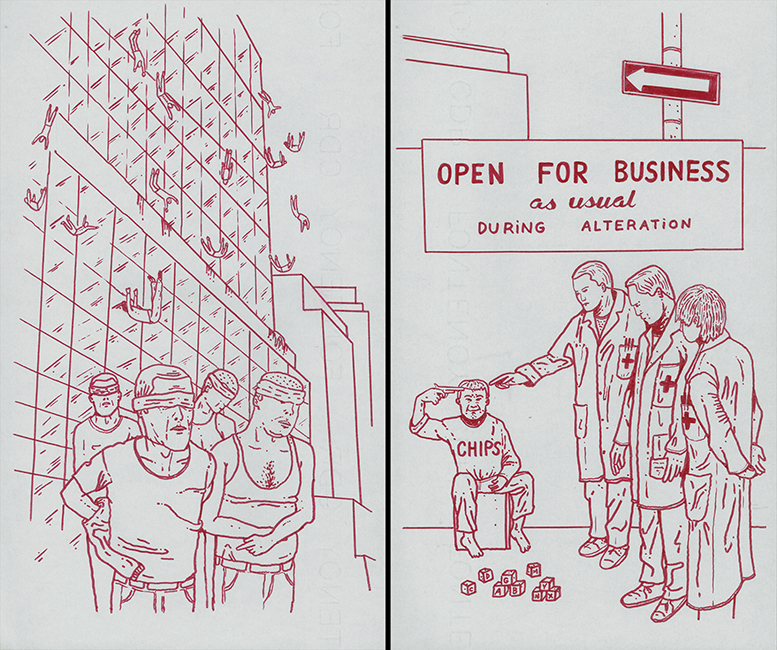

Jeremy Profit ‘Corps Qui Tombent’, ‘Open for Business as Usual’ 2004

That system continually promises you hope to keep you sleeping. It offers you easy amusements to stall you off. It is such a system that not only transforming every free born human into a slave for both visible and invisible masters; but it also make people become voluntary defenders working to keep the system alive. It makes beautiful look ugly, and makes evil look good. It motivates people to stone those who ignore dogmas, brain narcotizing ideologies and beliefs. Even if its brain washed slaves are about starve to death, they applaud for their dictators who live super luxury lives with what they steal from themselves. The voluntary slaves are jealous and hateful for the free minds that reject to obey. They want them to remain slaves just like themselves. Since the makers of the system know these psychological mechanisms very well, they like to use them.

In order to develop an alternative to the global slavery system, it is needed to recognize the present system and how it actually works. So let’s recognize…

***

The total amount of the annual goods and services production in the world is 60 trillion dollars. Whereas the papers sold in global stock markets annually are 1.2 quadrillion dollars. (AOL Media, Peter Peter Cohan article, 9 June 2010) 20 times more than the real production! So where does the 800 trillion dollar gap -this is a bubble to pop- come from and controlled by who?

Even this example alone, is a clear indicator that something is horribly wrong in the global financial system.

Fiat money is the only constant tie between states and peoples. Because those pieces of papers or digits in bank accounts, officially belong to the states indirectly. And you always have to use them. So the fiat money is like an invisible rope tying people to their states. It is not like gold and silver. Because precious metals have intrinsic value, independent from states. They are acceptable anywhere in the world without requiring an official legitimization. So a monetary system other than gold/silver standard, is a kind of centralization of power which is no good. So, if money is a rope in the hands of states, that tying their people; we can say that peoples are the puppets and the states are the puppeteers.

What is money and how does a financial system work?

***

Before the invention of money, there was barter. But it was a difficult method for trading. Because both parties should have demanded the product of the other party.

Let’s say:

Person A has a sheep and he wants to exchange it with a donkey.

Person B has grain and he wants to exchange it with a sheep.

Person C has a donkey and he wants to exchange it with grain.

In this case, any two of them cannot exchange their goods. Because one demands the other person’s good, but that other person does not demand his customer’s good. Only in the case that three of these people accidentally gather all together, and three of them makes a deal, then the goods can be exchanged.

Also the value of goods to be exchanged was not equal all the time and they were not able to give change to their customers.

So ancient people used pieces of gold and silver for trade in different periods of history. Because they had intrinsic value as precious metals since they were used as jewels. They played role as a mediatory unit. But gold and silver were not still money. Because they did not have standard weight. According to the recorded history, Lydians invented money in 7th century BC. They melted gold and silver together and molded them in a standard size and weight. Now gold and silver turned into money. And it helped the trade to grow faster.

This was how the monetary system started. It lasted for thousands of years. Money helped a lot to the societies on trade, development and getting civilized.

After centuries, in 1913, “FED” the central bank in the US, was founded and the seeds of the monetary system called fiat which the whole world uses today was planted. Prior to that, there was not a central bank in the US.

There was not even income tax in the US until that time. Simultaneously with FED, income tax law was issued. So the secret and indirect partnership between banks and governments over slaves was set up.

Before the establishment of FED, the US dollars used to represent gold and silver. It means that the dollars were gold and silver cheques. But after the establishment of FED, the ratio between the printed dollars and the gold in the treasury was reduced to 40% instead of 100%. This means if there were 100 units of gold in the treasury, then they could print dollars as if there were 160 units of gold.

In the later stages, this ratio would fall to zero and FED would be able to print unlimited amount of so called money. By this way, rising inflation could transfer the melted purchasing power of people to the creators of the system, in a magical way.

In 1944, one of the most important events of slavery history took place in New Hampshire in the US. Representatives of 44 ally countries of the World War II gathered in a conference and signed a paper called the Bretten Woods Agreement. According to it, the common foreign currency reserve unit for all these countries would be US dollars. And the exchange rate of dollar would be fixed as “1 ounce of gold is equal to 35 dollars”. So the US started to export dollars to the world countries in an indirect way. The world countries started to stock their foreign currencies in US dollars, in their treasuries. A currency backed by 40% of gold and 60% of the US willpower.

In 1971, the tie between dollars and gold was completely abolished during the rule of US president Richard Nixon. Now the US dollars were pieces of paper back by 100% of US willpower. So the Bretten Woods Agreement was abolished but the system was continued in practice, though. Even today almost all countries in the world keep their foreign currency reserves in US dollars. And also all the countries print fiat money just like the US. Their economy gets troubled each time they print new money, and give it to their people as debt via banks. Then the inflation comes up and the savings of peoples melt down. 

For example: If there are 20 dollars in circulation in an economy; and if the total assets of that economy is 10 kilos of grain; then 1 kilo of grain will cost 2 dollars. If you print 20 dollars more and put them in circulation, although the grain production does not rise, than 1 kilo of grain will now cost 4 dollars. Although there are 20+20=40 dollars in that economy, it is not grown; the value of that economy is still 10 kilos of grain. Someone who has 2 dollars loses the half of his purchasing power; now he can buy only half kilo of grain instead of 1 kilo.

The global financial crisis of 2008 was an example showing the world that all the kings are naked. Just like in the story of “the emperor’s new clothes”. According to that story:

“Once upon a time, there was an emperor who was only interested in good clothes. He was so in love with it that he did not care much for anything else. One day a few conmen appeared and told him that they were excellent weavers and that they could make the most beautiful fabric in the world. It didn’t take long to get the Emperor’s attention. They told him they made fabrics of wonderful samples and colors with a specific feature. They were invisible to anyone who was stupid or incapable of doing his job.

The conmen ordered some of the finest materials and secretly they sold them to get the money. To fool the Emperor and his servants they started to weave but there was nothing. The Emperor sent him most loyal servants to check up on them. When they saw that they can’t see the alleged fabric, they were scared that they’ll get fired for being stupid or incompetent to do their jobs. That is the reason why they lied that they saw magical fabrics.

In the end, the Emperor decided together with many helpers to see the fabrics and see how the weavers work was going. Everyone who accompanied him was afraid to come off as a stupid person so they admired the fabric that wasn’t there and advised the Emperor to put that nothing on himself. The conmen showed him the cape, pants, and the coat but they were actually empty handed.

The Emperor took all the clothes off of himself and the conmen dressed him in the invisible clothes. The Emperor started a procession where his servants walked behind him with their hands raised to hold the cape. Everyone admired him and his new clothes until one boy yelled that ‘the Emperor had no clothes on!”


Who really controls the world? There are many theorist to who or what controls the world, in this shocking rare interview Rob & David debate who controls the world money, governments & the world.

The credits that FED recklessly released in the US -most of them were mortgage credits- were being sold in stock markets all around the world as receivable papers. This is unbelievable but true. Debts were being sold. They were in circulation among the broker companies each time adding profit margin on them. The so called value of these papers representing the receivables of imaginary money, eventually increased multiple times and turned into a huge bubble. When people realized that these debts were not actually receivable, it was too late. Then the bubble popped. Then they created more and more so called money to fix the problem. In the following four years, the US printed five times more amount of money (4 trillion dollars) than the amount it had printed during the whole US history (800 billion dollars). But in fact it didn’t fix anything; all they did was creating another bubble which is much bigger than the previous one. And they are still creating money out of nothing. Also the other big economies are doing the same thing.

Nothing in the universe becomes absent when it exists, or vice versa either; things transform, they change their state. The same mentality can be applied to the economies too. When you lose your money/freedom because of economic crisis and inflation, it goes to some other people. When you were able to buy 1 kilo of grain with your 2 dollars in that 10 kilos grain economy in the first place, then you get able to buy half kilo, and then 100 grams, and finally only 1 gram. This is what’s happening in the monetary system in the world today.

The operations of central banks, effect every person’s life on earth today. So we should understand these structures, to see what is actually happening.

Central banks are generally private corporations, which are not even belonged to the states, just like FED. The governments give bonds (debentures) to central banks. A bond is debt pledge of a government. In response to this, the central bank prints money with the amount of bonds, and release that money into circulation. The way they do it is giving that money as credit (debt) with an interest rate, to people. When this so called money is taken by people as debt, it saves a real value. Because now there are slaves working and producing real value for the bank and the government. The state and the bank pretend as if they have real money in their hand. They feed with the energy of slaves laboring for them. What they simply do is just trickily organizing slaves to labor.

The centralized control of money is centralization of power. But gold and silver which are real money in all around the world, are independent from central banks. Because they have intrinsic value.

Fiat monetary system is the invisible chains on the necks of slaves. They don’t see the chains tying them, so they think they are free. The longer your chains are, the further you can go. In other words the more money you have, the more free you become.

We have discussed the mechanism of the global shadow kingdom which turned into a great monster in the last century, as it had never managed to be so big and wild previously in history. The slavery system has been continuing for thousands of years but it is now the greatest of all times. Its huge size is also its weakest point. Its greed made it so inflated and it’s about to pop. Now the next thing is just masses to see that all the kings are naked.

The above mentioned finance bubble will pop in the near future, maybe in a few years. And the world will have to confront the greatest economic collapse ever. All the economies which experimented fiat monetary system in history, eventually collapsed with having a hyper-inflation. Yuan Dynasty in China in XI. Century; England in XII. Century; France in XVIII. Century, etc… They all experimented fiat system and shared the same destiny in the end.

Now the present system is about to expire and running towards a hyper-inflation which is the dead end. No government and no bank can create money out thin air forever. Because when the purchasing power of people, falls under the level of starvation, the system inevitably collapse with causing chaos.

The next collapse will probably happen in two stages. A global bond crisis will take place and the state will have to print much more money. Then people will think that everything is getting alright, but shortly after the dead end will suddenly appear with hyper-inflation.


Zeitgeist: Addendum (2008)

The slaves of world will have a chance for freedom when the day of collapse arrives and wakes people from their deep sleep unpleasantly. If they cannot use this chance, the masters this time, will be those who possess information. And the others will most probably be slaves who are implanted with micro-chips…

The previous fiat experiments were all on local scale. But this time it will be on global scale, since dollar is a common foreign currency reserve unit around the world, and the gears of the system are connected globally. Also the bubble is inflated in a crazy way. When it pops, the whole world will be in a great depression. Worldly renown economists like Mike Maloney, Jim Rickards and many more also write about the same inevitable scenario in their books with mentioning numbers, formulas and how destructive it will be. When the present system collapses, a new economy model will probably be imposed. And this will most probably be something called “informationism” which means that the production will be based on information instead of capital. Those who control the information technologies will organize the production in the age of information. The slaves of world will have a chance for freedom when the day of collapse arrives and wakes people from their deep sleep unpleasantly. If they cannot use this chance, the masters this time, will be those who possess information. And the others will most probably be slaves who are implanted with micro-chips…

Excerpt from Hamza Yardımcıoğlu ‘Masters and Slaves’ 2017

Ne Tanrı Ne Efendi, Bir anarşizm tarihi / Ni Dieu Ni Maître, Une histoire de l’anarchisme

Ni Dieu ni maître, une histoire de l’anarchisme

İlk gösterimi 2017 yılında ‘Coğrafyalararası Anarşist Film Festivali’nde yapılan, orjinal adı “Ni Dieu ni maître, une histoire de l’anarchisme” olan Tancrède Ramonet’in yönettiği ‘Ne Tanrı Ne Efendi – Anarşizmin Tarihi’ belgeselinin Türkçe altyazılı ilk bölümü. Belgesel, Sinoplu Diyojen’den Pierre-Joseph Proudhon’un “Mülkiyet Nedir?”ine ve İspanya Devrimi sonunda Barselona’nın düşüşüne, Japonya’dan Amerika’ya ve bir çok coğrafyaya uzanan anarşizmin hikayesini iki bölüm halinde aktarıyor. Tarihsel-politik boşluklara rağmen, Anarşizmin ilk ortaya çıkışını zaman-dizin bakımından ele alması ve Anarşist hareketin tarihine, aktörlerine dair görsel ve informatif kaynaklar sağlaması açısından kusursuzluğunu koruyarak, izleyiciye önemli ve zengin bir bilgi kaynağı oluşturduğunu söyleyebiliriz.

Sosyal Savaş ve ‘MOACM’ın katkılarıyla

 La Volupté de la destruction (1840-1914)

‘Né du capitalisme, frère ennemi du communisme d’état, l’anarchisme n’a eu de cesse de souffler son vent de justice et de liberté sur le monde. Et si certains libertaires purent se changer en criminels, jouant du revolver ou faisant parler la dynamite, on oublie qu’ils furent nombreux à proposer des alternatives et initier les grandes révolutions du XXe siècle.

À partir d’images d’archives inédites, de documents oubliés, d’entretiens exclusifs avec les plus grands spécialistes du mouvement ouvrier, ce film en deux parties raconte pour la première fois l’histoire de ce mouvement qui combat depuis plus de 150 ans tous les maîtres et les dieux et qui, de Paris à New York, de Tokyo à Buenos Aires, n’en finit pas de faire trembler le monde.’

1. “La Volupté de la destruction (1840 – 1914)” (87′)

2. “La Mémoire des vaincus (1911 – 1945)” (87′)

La Mémoire des vaincus (1911-1945)

Ni Dieu ni maître, une histoire de l’anarchisme est une série de documentaires réalisée par Tancrède Ramonet et diffusée depuis 2016. Deux premières parties sont parues, La Volupté de la destruction (1840-1914) et La Mémoire des vaincus (1911-1945). La suite, Des Fleurs et des pavés (1945-1969) et Les Réseaux de la colère (1965-2012) est achevée, sa sortie prévue initialement pour septembre 2021 a été repoussée à la fin du 1er trimestre 2022. Des projections publiques de l’intégrale ont été organisée dont une à Saint Etienne le 7 juin 2022.

NI DIEU NI MAITRE

Du manifeste fondateur de Pierre-Joseph Proudhon en 1840 (Qu’est-ce que la propriété ?) à la chute de Barcelone en 1939, Tancrède Ramonet retrace, en images, un siècle d’histoire mondiale du mouvement anarchiste, du collectivisme libertaire à l’anarcho-syndicalisme, en passant par la propagande par le fait.

ni dieu ni maitre histoire anarchisme


PISTOL: Live For the Music, Die For the Revolution

“The six-part biopic, titled Pistol directed by Danny Boyle and is based on Steve Jones’s 2018 memoir, Lonely Boy.”

Henüz proje aşamasındayken yazmıştım: Punk dizisi izlemek istiyorsanız biraz daha sabretmeniz gerekecek, Danny Boyle’un Sex Pistols’ın hikâyesini anlattığı “Pistol”ı geliyor, diye.

Ve “Pistol” sonunda geldi. Ortama düşen ilk üç bölümü bir oturuşta izledim ve hemen kısaca yorumlayayım. En başta Danny Boyle’un hakikaten olağanüstü bir işçilik sergilediğinin altını çizeyim. Nevi şahsına münhasır kurgu tekniklerini ustalık kullanarak punk ruhunun ortaya çıkış sürecini, 70’ler sonu Britanya’sını belgesellere taş çıkartacak biçimde görselleştirmeyi başarmış. Hikâyesine müzik kliplerinden, haber bültenlerinden cut-up görüntüler ekleyerek “Pistol”un gerçekçilik hissini de ikiye katlıyor Boyle. Görüntü ve sanat yönetmenliğinin kusursuza yakın olduğu dizide, döneme has pek çok detay incelikli bir yaklaşımla kendine yer buluyor. Kısacası işin teknik kısmı gerçekten muhteşem ve en önemlisi tam manasıyla punk.

“Pistol”un sorun olarak tarif edebileceğimiz tek yanı, anlattığı hikâyenin ziyadesiyle taraflı olması. Sonuçta Sex Pistols’ın öyküsü bütün grup üyelerinden ziyade -dizinin adından da anlaşılacağı üzere- tek bir Pistol’ın, yani Steve Jones’un bakış açısından aktarılıyor. Neticede dizinin kaynak aldığı eserin yazarı da o. Lakin bu durum Boyle’un objektifliğine zarar veriyor ve punk tarihine mal olmuş olaylar ciddi bir tarafgirlikle ekrana yansıyor. John Lydon’ın daha dizi gösterime girmeden neden küplere bindiğini izledikten sonra idrak ediyoruz. Boyle, Lydon için deli dâhi portresi çizmeye soyunmuş lakin ortaya fazlasıyla karikatürize bir karakter çıkarmış. Neticede Sex Pistols’ın kimliğinin en önemli parçası olan Lydon, dizi boyunca yarı embesil bir tip olarak ortalıkta geziniyor, maalesef.

Çok uzatmadan bağlayayım, ben böylesi kusurlarına rağmen “Pistol”ı çok beğendim. Özellikle Malcolm McLaren’ın dandy tarzı aşırılıklarının yansıtılışına -kendisinin dizide en sevdiğim karakter olduğunu belirteyim-, bir dövüş performansı gibi görselleştirilen konser sahnelerine, toplum nezdinde gözden çıkarılan, uyumsuz olarak kodlananların modern bir isyan hareketi olarak dalga dalga yayılan punk ruhunun kaynaklarına dair yapılan isabetli vurgulara bayıldım. McLaren’ın hedeflediği radikal yıkıcılığın David Bowie ve Alice Cooper gibi pop idollere duyulan hayranlık ekseninde bir araya gelen gençler içinde nasıl geliştiğini, Sex dükkânının süreçteki önemli rolünü canlı ve etkileyici bir dille gözler önüne seriyor Boyle. Punk’ın ortaya çıktığı andan itibaren sahiplendiği anti-hippi eğilim de layığıyla ekrana yansıtılıyor.

Sonuçta, “Pistol”ı mutlaka izlemenizi öneririm. Televizyon tarihine geçecek nitelikte bir çalışma olduğunu göreceksiniz.. Yine de kendimi, keşke Danny Boyle, John Lydon’ı kıskandığı ayan beyan ortada olan Steve Jones’un anılarına bu kadar bağlı kalmasaydı da, ona haksızlık yapmasaydı, daha iyi olmaz mıydı, demekten alıkoyamıyorum!

Gökhan Gençay / Uyumsuzlar Fraksiyonu


“Pistol” vesilesiyle altını çizeyim.

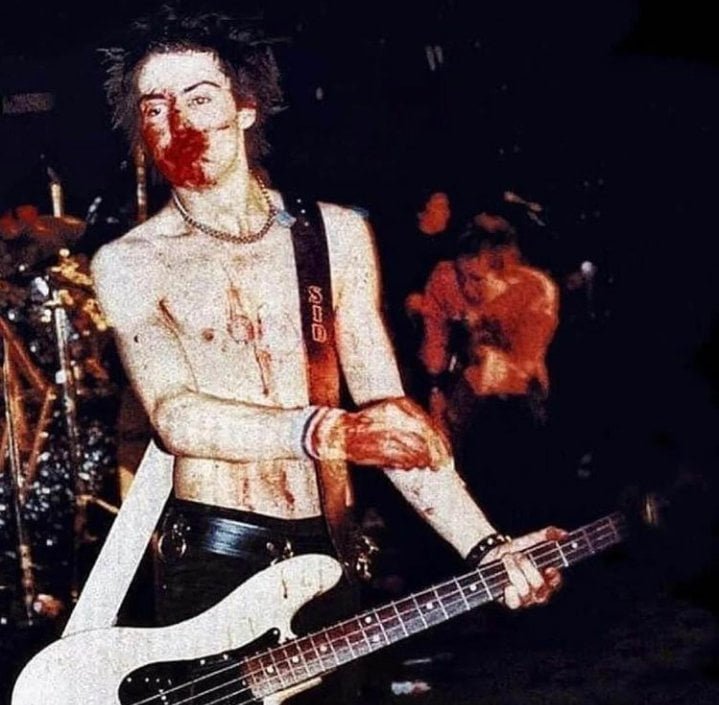
Sid Vicious’u neden mi seviyoruz?

Çünkü müzik dünyasında sadece virtüözlerin sahneye çıkabileceği, yalnızca onların müzik yapabileceği kuralını güle oynaya yıktı. Bas gitarla nota basmayı bilmeden elinde bas gitarla Sex Pistols konserlerinde grubun asli bir üyesi olarak yer aldı. Güzellik ideolojisine yanıt olarak sahnede kendini jiletledi, kanını ve tükürüğünü seyircilerle paylaştı. Provokasyonu toplum karşıtı bir savaş stratejisi olarak popüler kültürün gündemine soktu. Düzeni yıkamasa da kendisini tam manasıyla yıkmayı başardı. Yetmez mi?!


Sid Vicious ‘My Way’

Bir Resim Yapacağız Birlikte Modern: 2/5BZ

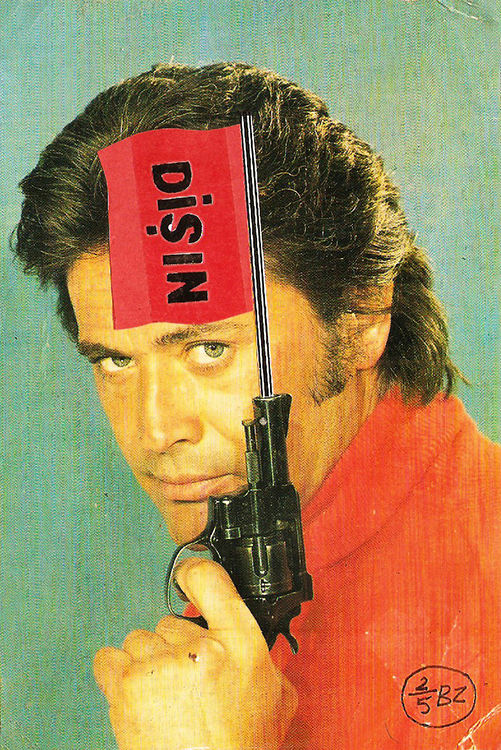
2/5BZ ‘Dişın’ grafik müdahale (date unknown)

Yeşilçam’ın arka bahçesinde yürüttüğü faaliyetleri sebebiyle egzotiksiz büyüyen 2/5bz adlı gözelleştirme derneğinin, demoralize yöntemini kullanarak modern resme yansıttığı çalışması. ( 1991 – 2011 )

“ Yaptığı resmin tuvaline, yazdığı makalesine, fıkra ve şiirlerine, sanatına yansıtarak destek verenler de var. “

Bir resim yapacagiz birlikte… modern…

Saptırma yaparak, kendine göre gerekçeler uydurarak, makulleştirerek teröre destek veriyor.

Belki resim yaparak, tuvale yansıtıyor. Şiir yazarak şiirine yansıtıyor.

Doğrudan çalışmasına, yazısına, sanatına konu yaparak demoralize etmeye çalısıyor.

Terörün arkadan dolanarak, arka bahçede yürüttüğü faaliyetler – ki arka bahçe İstanbul’dur, İzmir’dir, Bursa’dır, Viyana’dır, Almanya’dır, Londra’dır, Washington’dur, her neyse…

Çağın gereği. Ne kadar sivil toplum kuruluşumuz varsa, o kadar demokratik bir ülkeyiz. vakaa bu.

Ama oraya da sızmak lazım terör açısından.
sızılır, sızarsınız, sızmışlardır.

Masum dernektir, bakmışsınız güzelleştirme derneği, bakmışsınız kültür derneği, bakarsınız eğitim derneği, bakarsınız bir think tank kuruluşu.

Düşünce üretim merkezi. silahlı terör değil.

Bir başka ayağı daha var. Psikolojik terör var. Bilimsel terör var. Terörü besleyen arka bahçe var.

Bir başka ifadeyle sanatına konu yaparak… Belki resim yaparak tuvale yansıtıyor….

Bir resim yapacağız birlikte… modern…

Vicdani Cinnet Kurbanı
REMAKE REMIX RIPOFF TURKISH REMAKES AND COPYCULTURE OF CINEMA


Interviewed 4.5.2013

‘hayatta muvaffak
belinde oynak’

Serhat Köksal’la muhalif sanat üzerine

Osman Odabaş’ın 2012 senesinden hazırladığı “1990 Sonrası Türkiye’de Çağdaş Sanatta Politik Görüntü ve Eleştiri” başlıklı doktora tezinden alıntıdır :

Türkiye’de eleştirel/ muhalif bir kültür yapılanması var mı? Yoksa bu bir avuç insanın çabalamasından mı ibaret?

Serhat Köksal: Öncelikle, “eleştirelliğin biçimi ve bo­yutu bu kadar önemli midirden başlayayım. “Eleştirel/ muhalif kültür yapılanması” ile “bir avuç insanın çabala­ması” birbirinin ikâmesi, önkoşulu yahut zıttı mıdır? Eğer “bir avuç insanın çabalaması”nın “eleştirel/ muhalif kültür yapılanması”nın önkoşulu yahut gerekliliği olduğu düşü­nülüyorsa, buna pek katılmadığımı söylemeliyim. Aynı şe­kilde, “yapılanma”nın sürdürülebilir olma gerekliliği bulunduğunu da düşünmüyorum -bu, süreksiz, pekâlâ bir avuç muhalif insanı oluşturabilecek bir “yapılanma” da ola­bilir. Mesela, 2010’da Berlin’de bir sirk çadırında gerçekleştirdiğimiz ve “Urban Jealousy / Kentsel Kıskançlık” başlıklı bağımsız Gezici Tahran Bienali’nin performans sa­natçılarından bir kısmının katıldığı bir program olan “Urban Lousy / Kent Berbat”ın çağrı metninde de dediği­miz gibi, bu, zaman zaman birleşip, zaman zaman dağılan bir “yapılanma”dır. Kendiliğinden, zaman zaman birleşip zaman zaman dağılma hali, “yapılanma”nın dönüşebile­ceği kurumsallaşma ve dolayısıyla evcilleşme tehlikesinin de bertaraf edilmesine yarar. Fakat, elbette, bu kastettiğim muhalefet etmenin tek biçimi yahut kuralı da değildir. Bana kalırsa, muhalif kültür geleneği ve bunun nasıl manipüle edildiği / unutulduğu/ unutturulduğu, muhalif/ eleş­tirel tavrın nasıl bir biçimde olduğundan, nasıl bir biçim alacağından daha önemli bir nokta. Bu coğrafyada, halktan yana, kurulu düzene, muktedirlere karşı olmanın, bu mu­halefeti mizah da dahil çeşitli araçlarla hayata geçirmenin bir izi var. Bu iz, yine muktedirler tarafından manipüle edilen, unutturulan bir iz. Mesela, karşımıza iktidarın maskotu, milliyetçi kahraman, köyün şaklabanı, hatta yoğurt markası olarak çıkabi­len Nasreddin Hoca, aslında halktan yana, mizahı kullanarak iktidara karşı duran bir muhalif. Ayrıca, öyle görünüyor ki, bu coğ­rafyada çeşitli yerlerde, farklı zamanlarda, baskıya karşı ortaya çıkan ve Hoca’ya atıfla anlatılan fıkra­ların bahsettiğim “kendiliğinden toplanıp dağılan muhale­fet etme biçimi” ile de ilişkisi var. Bu izi takip etmek, bu tecrübeyi bilmek ise, her şeyden önce, her şeyi yeniden de­şifre etmekle, keşfetmekle vakit kaybetmenin ve muktedir­lerin yemlerini yutmanın önüne geçiyor -ki, baskının arttığı ve dolayısıyla bu yemleri yutmamanın çok daha önemli olduğu bir dönemden geçiyoruz.

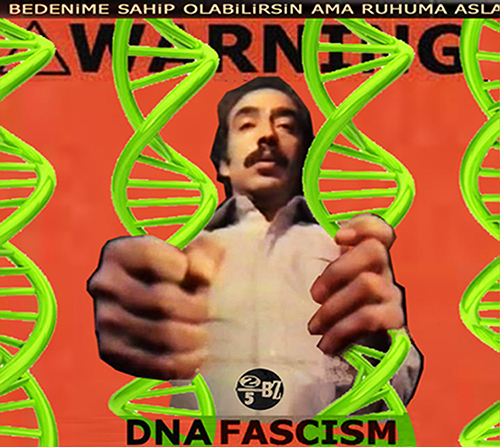
Serhat Köksal ‘DNA Fascism’ grafik müdahele

Başka bir kültür, dünya, sistem istemek ve iktidar odaklı, otoriter yaptırımlara muhalif durmak neyi gerektiriyor?

Muktedirlerin attığı yemlere karşı tetikte durmayı gerekti­riyor ve elbette cesur olmayı… Muktedirlerin attığı yem­lere karşı tetikte durmakta, yukarıda bahsettiğini muhalefet çabasından, bu izlerin bilgi ve tecrübesinden beslenmenin ve bu çabanın nasıl manipüle edildiği, unutturulduğu üzerine kafa yormanın önemli olduğunu düşü­nüyorum. Bu çabanın muktedirlerin çıkarlarına göre yeniden imâl edildiği, muhalefetin piyasaya ancak tehlike­sizce yahut tehlike geçince verildiği bir ortamdayız. Üs­tüne üstlük, devamlı kabuk değiştiren baskı, giderek ağırlaşan bir şekilde, mesela, iyiliksever parıltılarla dona­tılmış gözyaşları, vicdan bombaları olarak üzerimize gel­meye devam ediyor. Bu da bir dönemeçtir. Bu dönemeçte. Aziz Nesin’in “Bu bir dönüm noktasıdır. Bir dönemeçten geçiyoruz. Bu dönemeçte kişilikler zayıflar ve kişiliksizleşirler” cümlesi de aklıma gelmiyor değil. Dikkatli olalım ve yemleri yutmayalım derken de, aslında neye ihtiyacımız olduğunu yeniden gözden geçirmek, hep “daha fazla’sını istemekten vazgeçmek, vazgeçerken de, yapıcı olma zorun­luluğunu bir yana bırakıp yıkımı da göze alma cesaretini göstermek lâzım diye düşünüyorum.

Senin yaptıklarına, Foucault’nun parrhesia kavramı, yani sanat aracılığıyla iktidara, güç odaklarına doğrudan hakikati, görmek istemediklerini göstermek, gerçeği dile getirmek ve “toplumsal muhalefette bağımsız bir ses olmak” di­yebilir miyiz?

Bunu bu kavramlarla değil de daha yalın kelimelerle yapsak daha iyi, Bu ağır akademik referanslarla süslü kavramsallaştırmaların in­sana hem vakit kaybettiren hem de insanın zihnini başka iktidar bi­çimlerine bağlayan bir tarafı var. Muhalefeti seçkin bir akademik dil, seçkin bir referans çerçevesi peşine düşmeden, basit bir dille yapmak daha doğru. Çoğu zaman bu akademik dil ve bu akademik dilin bir üst referans çerçevesi ola­rak üretilmesi, bahsettiğim muha­lefet geleneğinin manipülasyonundan / unutturulmasından, bu muhalefet geleneğinin bıraktığı izin üstünün örtülmesinden çok da farklı değil. Meselenin özünü kaçırıp biçimin ve şık gönder­melerin peşine düşen, bunu da muhalefet etme adına yapan, okulun rendesinden parası ve vakti çalınarak geçmiş, aklı karışık okumuş cahillerden olmamak lâzım.

Kendi İşlerini politika ve sanat ilişkisi üzerin­den nasıl değerlendiriyorsun?

Politika ile sanat arasında ilişkiler tarif etmenin, iktidarı ve politikayı teorize et et bitmeyen bir şeye dönüştürmek, daha da fenası, bunun üzerinden en muhalif zeminlerde dahi, orada duy­mayı beklemeyeceğiniz bir iktidar dili üretmek ve bunun içinden, insanların zihinlerini ve eylemliliklerini kapatmaya çalışmak gibi bir riski var zannediyorum. Böyle olunca da, akademik boğuntunun demin bahsettiğim sorunları dışında, iktidarın dilinden, sanatı politikanın taşe­ronu yahut şık duran vitrinine dönüştürme gibi bir sorun ortaya çıkıyor. Nitekim, bu bir yanıyla, tam olarak neyi eleştirdiği belli olmayan bir dil yaratırken, diğer yanda da asıl eleştirilmesi gere­ken şeyi bir hokus-pokus ile gözden kaybediveriyor. Bol bol eleştiri yapılıyor da, mesela, bunun ekonomik zemini gözden kaybediliveriyor.

Bunu da görmek gerekiyor. Bu iki itirazın birbirini beslemesi bana çok daha doğru ve beklenmedik gelişmelere açık geliyor Bu çerçe­vede, itirazımı, kendi dilim içinde, çeşitli araçlar kullanarak söylemeye gayret ediyorum, içinde yaşadığımız, iktidarın bas­kısını çeşitli araçlarla artırdığı bu dönemde, iktidarın, akademik bo­ğuntuların da dahil olduğu yemle­rine karşı geliştirilecek itirazın bazen “kör gözüme parmak’’ açık­lığında olması gerektiğini düşünü­yorum. Bu türden bir muhalefet tehlikesiz bir iş değil, iktidar canını yakacak ve devşiremediği türden muhalefeti ortadan kaldır­maya yönelik olarak çok ağır bedeller ödetmek için elinden geleni yapıyor.

Yahut ekonomik zeminden kaynaklanan itiraz, kendine-sivil bir toplumculuk içinde eritiliyor. Muhalefet, kerameti kendinden menkul bir üst-dil içerisinde, iktidarın işine yarayacak şekilde sulandırılıyor. Mesela, 1 Mayıs için dahi, “keşke işveren örgütleri de burada olsa’’ yahut “Türkiye’nin bütün renkleri burada” dangalaklığının etkisi altında kalmak ve mesela, “seneye de tek konuşmayı eski bir işçi lideri olarak Başbakan yapsın” gibi bir hezeyan içine girmek mümkün. At izi, fena halde it izine karışıyor. Bu türden bir karışıklığa, en basit gerçeklerin dahi görülmemesine yahut çarpıtılmasına karşı da, Aziz Nesin’in büyük bir heyecanla “bunları görmemek için insanın toplumsal gözünün kör olması lâzım” deyişi aklıma geliyor. Zaman zaman cin­nete de dönüşebilen bir itiraz / muhalefet / eleştiri hali, sadece yemleri, tuzakları bol zihinsel çerçevelerden beslenmiyor, bunun hayatta somut ve ağır koşullardan kaynaklanan bir karşılığı var

Sanat ve eleştiri üzerinden kendini tanımlar­ken, yakın hissettiğin bir ideolojiden bahset­mek mümkün mü? Sitüaşyonistler gibi sanat yapıtı fikrine de karşı mısın mesela? Yani, poli­tikanın estetize edilip sanat yapıtı olarak öne sürülmesindense, sanatı alternatif bir politika üretmek için bir aracı, bir araç mı görüyorsun?

Sanat yapıtı bu kadar tanımlı, belirli bir şey olmamalıdır -yani, ne“politikanın estetize edilip sanat yapıtı olarak öne sü­rülmesi” ne de “sanatı alternatif bir politika üretmek için araç / aracı olarak kullanmak”gibi kesin ve keskin ayrımlar doğru. Sanat yapıtı denilen şey tama­men “tanımlanamazlık” etrafın­dan inşa edilmelidir demek istemiyorum, ama bir o kadar da belirsiz, tanımlanamayan bir ta­rafı, duygusu vardır bence. Ay­rıca, sanat yapıtını katı bir çerçevede tanımlayıp sanatçıyı bir sanat yahut düşünce akımına yamayarak yaptığımız işi, “rek­lam”ı teorisyenler, küratörler, sanat eleştirmenleri eliyle yapılan, “ambalaj de­ğeri” belli, piyasada gideri olan “mal’a yahut ha­lihazırda patenti alınmış bir “mal”ın Türkiye bayiliğine dönüştürme fikri çok rahatsız edici.

Sitüasyonizmle macerama gelince, seneler önce, Türkiye’de ilk defa Sitüasyonizm özel sayısı yapan bir sanat dergisi benden iki sayfa istemişti. Hazırlayıp teslim ettim, ama işi yeterince Sitüasyonist bulmamışlar olacak ki, sümenaltı ettiler. Ben de böylelikle Sitüasyonizme yaman­maktan son dakikada kurtuldum.

Güncel sanat kurumsallaşma altında zoraki bir politik tavır sergiliyor, eleştirinin hakikati değil de, kurumlar tarafından öne sürülen simülasyonuyla yüz yüzeyiz gibi. Senin yaptığın işler ve yer aldığın projeler bunun tam karşısında duru­yor, bunu nasıl icra ediyorsun?

Bu işleri / projeleri yapmayı bilmek ve istemek, ısrarcı olmak ve yaptığın işe inanmak gerekiyor. Yine de, yaşama koşullarından dolayı istediğini hayata geçiremeyebiliyorsun. Şanslıydım ki, ‘90’larm başlarından beri ürettiklerimi birtakım kurumlara ait sergi salonu yahut onun türevi “al gülüm ver gülüm art camialarına” muhtaç olma­dan insanlara ulaştırabildim. Üretilen demo ka­setler, posterler, dergiler arkadaşlarımın dükkânları vasıtasıyla ve posta yoluyla insanlara ulaştı, Türkiye’deki ve dünyadaki meraklıları, bu işleri bu şekilde elde etti. Sözünü her şeye rağmen ve samimiyetle, bağımsız bir şekilde söyle­mek isteyen sanatçılarla yapılan grup projelerinin de önemli olduğunu düşünüyorum. Dünyadan 650 sanatçının katıldığı, İstanbul, Berlin ve Belgrad’da konaklayan ve o şehirler­deki arkadaşlarımızın desteğiyle bağımsız ortamlarda gerçekleşen Gezici Tahran Bienali de böyle bir deneyimdi. Zübük dergisinde 1962’de yayınlanan bir reklamda dalga geçildiği gibi, “hayatta muvaffak, belinde oynak!” olmayan, gerçek, samimi, gözükara bir muhalefete ve bu türden muhalefeti dile getiren sanatçıya, bugü­nün ağırlaşan koşullarında çok ihtiyaç var. Dola­yısıyla, yine aynı reklamda yazıldığı gibi, “Hocasız olarak iki ayda belinizi 120 derecelik demokratik biçime sokabilirsiniz” isteğinin yakı­nından geçmeden, çok büyük sonuçlar bekleme­den, bireysel yahut kolektif olarak, herkesin gücü, sınırları, çapı dahilinde ve bunları zorlaya­rak, sözünü bağımsız bir şekilde söylemeye devam etmesi gerektiğini düşünüyorum.

Bugün bienaller Türkiye’de güncel/ çağdaş sanat piyasasının temel dinamiklerini oluşturu­yor. “En politik bienal bu”, “en eleştirel sergi bi­zimki” gibi söylemler medyada sık sık yer alıyor. Dünyada yeniden yükselen politik, eleşti­rel, muhalif duruşlar, toplumsal değişimler üze­rine yeni bir kültür endüstrisi inşa ediliyor. Eleştiri, merkezi bir otorite tarafından tanımla­narak piyasaya sürülüyor. Bu konu hakkında fi­kirlerin nedir?

Kültür ve sanat kurumları bu sürecin ve küresel­leşen sanat piyasasının kapı bekçiliğini yapıyor. Yani, sanatçının samimi eleştirisini olumluyormuş gibi görünerek sistemin dilini başka bir noktadan yeniden üretiyor. Böylece, doğrudan sansür yerine, daha dolaylı bir mekanizma işle­tilmiş oluyor -sanatçının eleştirisi, kurumun bakış açısı içinde zararsızlaştırılıyor, sanatçının dili ehlileştiriliyor. Bunun içinde, sanatçının eleştirisinin normalleştirilmesi de var, sanatçı­nın işinin küresel bir pazarda satışa uygun egzo­tik mal haline getirilmesi de.

“Direnistanbul” kapsamındaki, Siemens’teki ya da 2/5bz projelerindeki İşlerin kurumsal bir hi­maye sisteminin içine girmeden, onun dışında durarak geliştirilen eleştirel tutuma örnek. Yap­tığın o işleri sen nasıl tanımlıyorsun?

Bu eleştirel tutumu sürdürmenin ve kurumların cevabının hayattaki karşılıkları üzerinde dur­mak gerekiyor. Demin söylediğim gibi, kültür ve sanat kuramlarının işi doğrudan sansüre vardır­madan içeriği ve dili normalleştirmek / ehlileş­tirmek gibi bir işlevi var. Fakat, gayet nötr bir dille, isim verme­den, teorik yapılabilecek bir eleştiriyi, sorunun asli olabilecek unsurlarını, can alıcı noktalarını “kör gözüme parmak” yaptığında, sistemin “demokratik” ve “çok­sesli” kurumlarının gerçek yüzü ortaya çıkıyor. Mesela, 2009’daki Beğenal projesi için, birçok gazete ve televizyon röportaj istediğinde, demeçlerimiz yerine işlerimiz, ör­neğin, yaptığımız poster görünsün istemiştik. Röportaj için peşi­mizde koşanlar bu isteğimi önce onayladılar, sonra “başka bir anlam yüklü kurum logolarını, isimlerini gösteremiyoruz, çünkü üstlerimiz bizi işten atmakla teh­dit etti” noktasına gelindi. Yahut, bir kurum hedef alındığında, o kurumun medyada köşe kapmış sözcülerinin saldırılarına maruz kalındı. Fakat, Beğenal’e ve 2009’a gelmeden de enerji boru hatlarının kültürel diyalog zorlamalarıyla ilişkisi, uluslararası sermayenin köprü kurmayla ilgisi ve büyük sanat etkinlikleriyle bağlantısı, şehirlerin markalaştırılma çabaları üzerine, uzun süredir çeşitli ülkelerde performanslar ya­pıyorum. İstanbul’da da, Direnistanbul’dan önce, Gözel Geceler kapsamında böyle etkinlik­ler düzenliyordum. Mesela, 2007’deki “Bugün Bienal ve 2010 için Ne Yaptın” böyle bir etkin­likti. “Bienalleri niye sadece Kültür Bakanlıkları, büyük sanat vakıfları veya modern çağdaş hol­dingler yapar” sorusuna cevapla 2008’de gerçek­leştirilen Gezici Tahran Bienali de bu kapsamda sayılabilir. 2009‘daki IMF-Dünya Bankası toplantılarından önce de, neoliberal dönüşüme ve bu dönüşümün cici vitrini olarak aynı döneme denk gelen Bienal’e dikkat çekmek için Beğenal’i gerçekleştirdik. Hatırlanırsa, açılışı 12 Ey­lül’e denk getirilen 2009’daki Bienal ve etrafındaki tartışmalar, emek üze­rindeki baskıyı bir tarafa bıraka­rak, “12 Eylül ile hesaplaşıyoruz” diyen ne idüğü belirsiz bir “demo­kratikleşme’yi yahut kendine-sivilliği her şeyin çaresi olarak gören bir zihniyetin de doğuşu gibiydi. Bu zihniyet 2010’da “Yetmez ama Evet” şiarıyla karşımıza geldi ve zihin bulandırmanın, zemin kay­dırmanın neredeyse etiketi oldu. Buradan hareketle, asıl dokunul­ması gereken bir başka nokta da, sistemin ve sistemin kuramlarının ürettiği, henüz kurumsallaşmamış yapılar ve bu yapılar eliyle dola­şıma sokulan gayrı-aklî /gayrı-ahlâkî düşünme biçimleri. Bu düşünme biçimleri, tartışma gö­türmeyecek şekilde ahlâklı ve akılcı olarak sunu­luyor ve insanların düşünme biçimlerini devşirerek, GDO’lu ürünler gibi mutasyona uğ­ratıyor. En alternatif alandan anaakım medyaya kadar “sızan” / “sızdırılan” ve benim “libertür ka­fası” dediğim düşünme biçimi de bu.

Serhat Köksal ‘Siemens Savaş Aletleri’ afiş uygulama, 2005

Siemens Sanat Galerisindeki tank işini ve ser­gide olanları anlatabilir misin?

25 Ocak 2005’te Siemens Sanat Galerisi’nde sergi kapsamında bir sunuş yapmak için davet alıyo­rum, Ön konuşmada sergiye galerinin duvarla­rına posterimi yapıştırarak katılacağımı beyan ediyorum. Sunuş bu posterle sınırlı değil, ayrıca bir saat boyunca çeşitli videolarım gösteriliyor ve sunuş günü, hazırladığım bu özel posterin sekiz- dokuz tanesini Simens Sanat Galerisinin duvar­larına yapıştırıyorum. Posterin başlığı “Siemens Savaş Aletleri Sergisi”, Leopard tanklarını ve ay­rıca bunların elektronik düzeneğini üreten Siemens’ın dijital kültür içindeki yerini göstermeye çalışan posterde Leopar tankı Fındıklı Simens Sanat Galerisinin önünde duruyor. Bana göre, böyle bir sunuş Siemens’in kendisi tarafından bile gelecek vakitlerde yapılabilecektir, “bakın biz ne kadar açığız” mantığıyla. Oraya gelen kit­leyle bir kaynaşmamız oluyor. Bu yaptığım pos­teri isteyenlerle, web sitemi alıp kontaktta kalmak isteyen yeni insanlarla tanışıyorum. Ama sunuş sonunda çok ilginç bir tepkiyle karşılaşıyo­rum. Küratör arkadaş diyor ki: “Galerinin mü­dürü yaptığın poster nedeniyle zor durumda. Posteri ve galerinin içinde bu posterle ilgili çekti­ğin videoyu hiçbir yerde yayınlayamazsın. Sie­mens’in adının kapatılması lâzım. Adam işten atılacak. Çok şeker bir adam, iki çocuğu var…” Acı ve komik bir tepki. Halbuki, serginin katoloğunda ve dvd’sinde yer alması için hazırlamıştım o posteri. Hatta, olayın ilk dakikalarında serginin yardımcı küratörü de posterleri video kamerasına çekmişti, kendi dvd katalogları için. Üzülüyorum, küratör benim işimi destekleyeceğine olayı kapat­maya çalışıyor. Ben de en sonunda rüşvet olarak Leopar tankı istiyorum onlardan…

2/5BZ John Peel 1st January 2003

don’t forget to check for more at

2/5BZ


Czech Anarcho Hardcore Punk Scene Report (1999)

What do you know about the Czech Republic? Probably not too much, so here are few geopolitical facts: it is situated in the middle of Europe, with 10 million inhabitants; it originated in 1993 (before, it was part of Czechoslovakia, which split into 2 separate states). There is 1 city with a population over 1 million (Prague), and a few cities with a population of several hundred thousand people (Brno, Ostrava, Plzeň)…). From 1948 ’til 1989, the nation lived under the iron fist of a socalled “Communist” regime that turned the state into one big concentration camp. After some years of a rightwing “economy at any cost” government recently came an equally arrogant social democratic (left) government. The country is currently suffering a recession caused in part by widespread corruption in government and business. Enough for a beginning? I hope so.

Filip / Insane Society Recs. 1999


Czech Scene Report, Insane Society Recs. 1999

Although there were some alternative activities before 1989 as well, they were only marginal and weak, because of the ruling regime’s repression. From November 1989 onwards, we can speak of the rise of anarchist, ecological, animalrights and similar movements and of course also of hardcore and punk music.

The anarchist movement’s activities began mainly in Prague, but they slowly reached other towns as well. C.A.S. (the Czech Anarchist Association), which was formed shortly before the November “revolution”, has organised several demonstrations in Prague, mostly against racism (after 1989, there was a boom of the naziskinheads movement over here), but also against the National Exposition, which cost a lot of money and was surrounded with financial machinations. Some of these demonstrations led to violent conflicts with Nazis and the police, who were of course on their side. The Nazi skinheads started to be a real threat directly after 1989; their popularity was constantly rising; in line with the nation’s general hidden racism and intolerant mentality (especially against the biggest ethnic minority here Gypsies). Also, the most popular skinhead band, “Orlik”, hit the music charts and they easily managed to sell more than 100.000 records. Lately they were replaced by more outspoken and more “hardcore” types of nazi bands, who weren’t so wellknown, but still had an influence on young Nazis. In spring ’90, there was a flood of racist attacks on Gypsies, blacks, etc., in Prague and in the northwestern part of the country. These were the first victims of the new Czech fascism, and the number of such attacks is higher every year. Anarchists were the first ones who took a stand against Nazis, back in these times, when police, the media, and politicians absolutely ignored the problem. It took them 7 years and more than 25 murders to make them realise it and do something about it (the turning point was the murder of a Sudanese student in Prague in autumn ’97, though the passivity of the police towards Nazis’ actions is still relatively high in some areas).

Back at the beginning of the 90’s, the anarchist movement was based mostly around the magazine A-KONTRA, which was issued more or less regularly, with a print run of several thousand copies, and was distributed throughout the country. It stopped publishing after several disputes in the editorial collective in ’95, but there are now some hopes of resurrecting it. A-KONTRA faced several state repressions and one of their editors was even charged for attempted murder of the leader of the Czech Communist Party the police lied that he had confessed to it, but later he was found innocent and the police had to apologize to him and to pay damages. AUTONOMIE was another magazine, founded in’93, and later the people around it formed the A.F. (Anarchist Federation), which had several branches, but didn’t last very long. AUTONOMIE stopped publishing in 96.

Czech Scene Report, Insane Society Recs. 1999

In 1995, the C.S.A.F. (CzechSlovak Anarchist Federation) was founded, and began publishing SVOBODNA MYSL (“Free Mind”) magazine. After a dispute in ’97, the C.S.A.F. continued under this name, but some of the former members left it and formed the Federation Of Social Anarchists (F.S.A.), with their own magazine called SVOBODNA PRACE (“Free Labour”). SVOBODNA MYSL changed its name to EXISTENCE, which is now the new magazine of C.S.A.F. The reason for the dispute was the typical conflict in anarchist movements everywhere the conflict between the “true anarchist”, promoting class war and anarchosyndicalist approach, here represented by F.S.A., versus the approach of the more “autonomous” anarchists, less ideological, more open to other alternative movements (mostly squatting and ecological activities), represented by C.S.A.F. Both organisations are based in Prague, but they have several branches around the country. Besides publishing their quarterly magazines, they organise different actions and demonstrations F.S.A., who is a member of the International Workers Association, has organized demonstrations against unemployment and syndicalist propagation work among workers, while C.S.A.F. has set up solidarity demos/street theatres for the Zapatistas, and antifascist demonstrations and has participated in some squatting activities.

KONFONTACE is a new magazine in newspaper format published by former editors of AUTONOMIE. It comes out every 2 months and manages to get the attention of “normal” people outside the anarchist ghetto. It’s quite radical and in it you can find wellwritten articles on police repression, the media, elections, etc.

Besides C.S.A.F. and F.S.A., there is another active anarchist group, called AKTIVITA CABARET VOLTAIRE, an informal anarchopunk group, based in the northwestern part of the Republic. They publish ‘zines, do distribution, organise and participate in different actions, and do a lot of support activities for the anarchist movement (such as money collections, etc.). You can get more precise information on all of these anarchist organisations directly from them contact information is at the end of this scene report.

Czech Scene Report, Insane Society Recs. 1999

Squatting:

Although the first squatting attempts took place already at the very beginning of the 90’s, the first relatively longterm and successful squat started in March 1992 the SOCHORKA squat in Prague on pplk. Sochora street 28. It was a typical apartment house, squatted by the anarchists around A-KONTRA magazine.

Despite an attack of cca 150 Nazi skinheads in December ’92 and a subsequent police eviction, it was resquatted shortly after eviction and managed to exist until September 97. The inhabitants left it after an agreement with the local council that they will get a new place for their activities (they got the new place in the end, but it’s in very bad condition now; there are plans to do something like a “Free University” there). The SOCHORKA squat was the centre of anarchist activities for a long time; it was the home of the A-KONTRA editorial staff and printing press and also contained a small gig place in the basement.

Czech Scene Report, Insane Society Recs. 1999

LADRONKA: the most famous Czech squat last year it celebrated 5 years of existence. This old fortress from the 17th century, situated in the Prague suburbs, was squatted in August ’93 by people related to AUTONOMIE. LADRONKA faced eviction several times, but after massive protests and demonstrations, the city gave up the idea of selling it to real estate speculators, and now there haven’t been any eviction threats for a long time. The squat has hosted a large number of gigs, exhibitions, rave parties etc. and is a very important place for the Czech autonomous movement. The adress is Tomanova street 1, in the Brevnov quarter, and the building is situated in the middle of a park. Some of the recent gigs included Varukers, Detestation, Cripple Bastards, Hellkrusher etc.

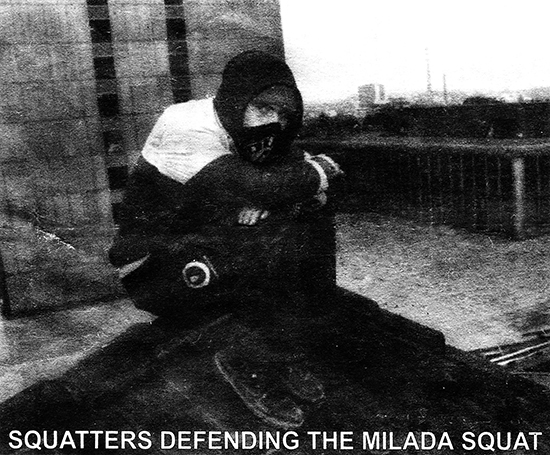
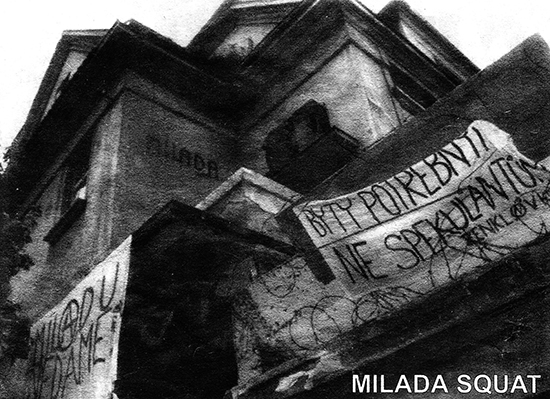
Squatting is not very widespread over here, particularly because of the very tough sentences that you can face if you try it (a large fine or up to 2 years of imprisonment), but also because there doesn’t seem to be enough active people willing to gather together to do it, with the exception of the bigger cities. In summer ’97 a group of people in Prague squatted a new house ZENKLOVKA on Zenklova street. They made agreements with the owner that they could use it until its demolition, but after pressure from the police (their antiextremist branch), the owner changed his mind and agreed to let the police to evict the squatters. After some nonviolent resistance (ocupation of the roof), the squat was evicted in the beginning of ’98. The same group of people later found a new building, and so on May 1st ’98 the MILADA squat was founded, in the Holesovice quarter near a railway station and student campuses. It’s old villa, scheduled for demolition. Squatters have made some minor repairs and opened the bar. There were several police and security agency attempts to evict them in October (again, after their agreement with the owner, police pressured him, convincing him that they found hard drugs in the squat). When the same nonviolent tactic was used to defend the house, the cops finally gave up, and MILADA is still going strong. You can get more information about its current situation from the C.S.A.F. contact adress. There was a squat in Brno from August ’til November ’97, when the house was violently attacked by police. Squatters were beaten down and had guns pulled on them, and in the end cops locked them all in one room and then threw a tear gas projectile inside. Meanwhile, they managed to destroy/steal most of the furnishings. The second day, the squat was definitively evicted.

Czech Scene Report, Insane Society Recs. 1999

There are several other places in Prague for punk and alternative activities the PROPAST punk pub (Lipanska 3, quarter Zizkov) there is also small record shop near from here BASS RIOT STORE (Chvalova 8), the UTOPIE autonomous cafe (Wenzigova/Lublanska street corner, Nove Mesto quarter) and the 007 CLUB (Strahov Hill, among the university campuses). There used to be a socialcultural centre called BLACK HAND, which was quite wellknown worldwide, but from the beginning of its existence in ’93, it had lot of problems with the local authorities, and it never attracted the wider attention of the people. The centre closed down in ’97 and later was demolished, there’s now a very nice concreteparking lot in its place…

Animal rights and ecological activities, over here are mostly official and mainstreamoriented they aren’t very radical at all. They do some useful activities, but most of them have clearly distanced themself from any autonomous or anarchist activities, because they fear for their public reputation. They have chosen instead to cooperate with politicians; they give advice on which party to vote for in the elections, and so on. Summer blockades of the construction site for the Temelin nuclear power plant were one of the few examples of good cooperation between anarchists and ecological activists. These went for several years, but have now stopped. The general “step backwards” in the strategy of these organisations has also something to do with the policy of their funding most of their income comes from foundations established by the European Union or other official sources, who don’t like to see very radical activities. You can find more honest and more “grassroots” groups; the problem is that they are too small and they lack finacial resources. In the animal rights field, the most active are probably SVOBODA ZVIRAT (“Freedom for Animals”) and ANIMAL S.O.S., who both organise info stands, demonstrations, petitions, exhibitions, etc. against several forms of animal abuse. Brno is home to NESEHNUTI (“The Unmoved”, more officially the “Independent Social Ecological Movement”), which works in the human and animal rights fields, and is also active against a planned motorway, which will spoil an important recreation area in Brno. The Czech chapter of EARTH FIRST! was established some months ago in Prague. They put out an Action Update newsletter and also plan to have an internet site. There are some other smaller groups working on these issues spread all across the country, often working on local problems.

Czech Scene Report, Insane Society Recs. 1999

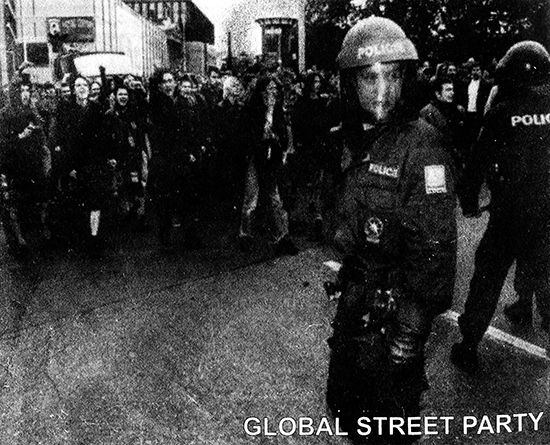
Last year saw 2 street parties, which were among to the Czech autonomous movement’s biggest actions ever. The GLOBAL STREET PARTY took place 16.5.98 in Prague, organised by EARTH FIRST!, C.S.A.F., and other groups as a protest against world globalisation and against the city’s unsustainable traffic situation it is plagued by cars and pollution. The action was attented by cca 3.000 people and started peacefully, until the demonstration went onto Prague’s most important traffic artery and blocked it. Cops tried to stop the demonstration, but they were fought back and had to escape. A cop car was turned over, and some other were smashed with bricks. Then part of the march headed to the city centre, where the McDonalds’ and Kentucky Fried Chicken restaurants were attacked, causing big damage to their property. The police, who at first weren’t able to handle the situation at all and let the people riot, then arrived in big numbers and went absolutely mad. They beat up lot of people, including innocent passersby. In their obvious “nobrain style”, they couldn’t pick up the actual rioters, but arrested mostly those demonstrators who didn’t manage to escape. The arrested people went through several punishments and beatings and were thrown to jail for about 2 weeks, but in the end they were released, because the cops couldn’t charge them with anything. The GLOBAL STREET PARTY made headlines in the mass media for many days and caused public discussions about globalisation, police brutality, the problems of young people, etc. Also, a special antidemonstration police squad was formed.

A LOCAL STREET PARTY was organised 3 months later,-this time with cca 4.000 participants. It started in a park, with a rave party, info booths with alternative press materials, etc., and the march was shorter this time, with a route avoiding the possible conflict points, such as the abovementioned restaurants. It must be said that this time police showed up in all force, with thousand of cops readied and several dozen plainclothes cops among the demonstraters themselves, some of them dressed as punx. These “masked” cops tried to provoke some action that would give a reason to attack, but they weren’t successful. The demonstration went OK, without large conflicts, the only exception being the march of cca 100 people on a McDonalds’ restaurant after the official end of the demonstration finally the plainclothes pigs managed to provoke a few confused punx who were immediately arrested after their first attempt to break the police line. If you are interested in seeing pictures from both parties, check out the lidskaprava.cz site on the internet.

No need to say that no action was taken against the cops who beat up and humimilated the people after the GLOBAL STREET PARTY. Police brutality against anarchists and punx is already something common over here, after several wellknown cases such as the beatings of protestors against the Velka Pardubicka Steeplechase in ’92, the raid on the Propast punk pub in ’96, and the attack on the demonstration against police brutality in ’97 (which, ironically, was supposed to commemorate the Propast raid). The “antiextremist branch” of the Czech police is investigating not only the anarchist and autonomous movement, but also the official ecological organisations like GREENPEACE, which led to an international scandal a few years back. Cops and nazis are surely the biggest threat to punx like everywhere. As a reaction on widespread naziskinheads movement, the Czech version of Antifascist Action ANTIFASISTICKA AKCE (A.F.A.) was formed some time ago, they do newsletter called “Akce” (previously “Antifa News”), but otherwise aren’t very active.

Czech Scene Report, Insane Society Recs. 1999

Hardcore Punk Scene:

OK, OK, so now definitely something about the music. Now, at the beginning of 1999, there is really a good and strong hardcore/punk scene, but first let’s look a bit into the history of the Czech punk/HC scene. The first punk bands started over here in the beginning of the 80’s (A 64, ENERGIE G, ZIKKURAT, etc.) and slowly the scene started to grow. During the 80’s and especially at the end of 80’s, when the opression by the regime wasn’t as strong as before, there were more and more punk bands, such as F.P.B., VISACÍ ZÁMEK, PLEXIS, H.N.F., Z.N.C. etc. and later also first hardcore bands (TELEX, P.S., SUCIDAL COMMANDO, S.R.K., MICHAEL’S UNCLE, KRITICKA SITUACE, etc.). In these times, punk was in the deep underground, gigs were illegal, bands had problems with the authorities and it was absolutely impossible to release a record (the first official Czech punk record was a 7″ by VISACÍ ZÁMEK in ’88!). Punx always used to have problems with cops, in school and at work, because of their appearance. Some of them were sentenced for “crimes” such as “having a negative stance towards socialist system” or even “propagation of fascism”, etc. Society and especially the media looked on punk as a tool of Western imperialism, smuggled into our country to spoil the young people. Since 1989, all this has changed, and punk has reached a wider range of young people, official media, and record labels, and these old bands have started to release their first records (mostly on new commercial labels, but there was hardly anyone thinking about that back in 1990 here). Luckily, some new and fresh DIY labels, zines, bands, gigs, etc. also emerged soon, and the scene became more political and DIYoriented. Thanx to people like KRITICKA SITUACE singer Robert, Martin (MALARIE RECORDS) or Bergamo (and his Black Hand agency), the foreign punk/HC bands (Nausea, Murphys Law, Inferno, Chaos U.K., No Means No, Concrete Sox, Gorilla Biscuits etc. in the first years, and then tons more) started playing gigs here, and a relatively strong and independent scene was built.


Kritická Situace 9. 10. 1992 Praha Strahov 007

So, who is who in current Czech HC/ Punk?

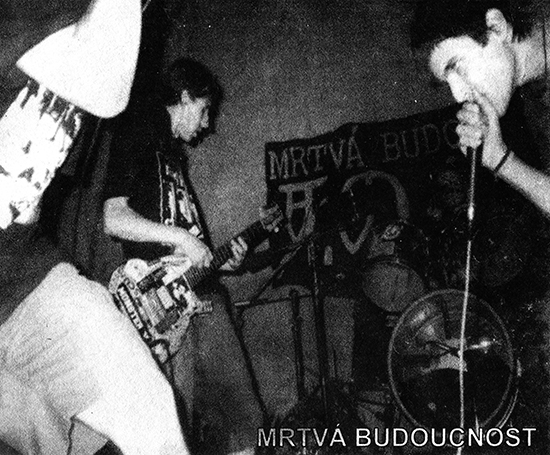
Let’s start with grindcore, which recently is quite popular over here. The trio MALIGNANT TUMOUR is playing a mix of grind/mincecore in the vein of Agathocles and Regurgitate, now with political lyrics. They have about 5 split EP’s and one split CD + tons of tapes out and have also played on festivals in Belgium and Germany. Future plans include a full CD and some more split EP’s. From the same city (Ostrava) as M.T. come CEREBRAL TURBULENCY (they have progressed from death metal to pure grindcore), P.T.A.O. (exSOCIAL DEFORMITY, heavy megabassed grind/noise, a split EP with Japanese Final Exit is out) and PURULENT SPERMCANAL (gore grind in the vein of Gut/Impetigo). It seems that this town is the capital of grind! Other grinders TWISTED TRUTH, influenced by old N.D., who just recently released a split EP with ROT on Fudgeworthy Records and plan 2 more split EP’s with MALIGNANT TUMOUR and WARSORE. INGROWING (exPLASTIC GRAVE, who released a split 7″ with Agathocles), one of the most popular bands in death metal/grind territory, have a split CD and a split EP out, some new releases out soon. NEGLIGENT COLLATERAL COLLAPSE do weird grind/industrial mixes, sometimes with the help of a computer, some tapes out, their drummer did a Czech grind core encyclopedia on the internet! GRIDE, from the southwestern part of the Czech Republic, do a killer mix of extreme hardcore and grind with great sociopolitical lyrics, they call their music “power gride core” and so far have done 1 split EP w/LIES AND DISTRUST and a split LP with M.B.. They have also played some gigs abroad. Besides the split EP, GRIDE also share a drummer with LIES & DISTRUST, who play classical scandiinfluenced crust core with growling vocals. L&D also plan a split EP (w/ EXEKUCE) and a split LP in Brazil later in ’99. Two other cool crust bands are located near the Polish border HOW LONG? (a split EP out, another planned) and R.A.F., both play dual voc crust butchery, R.A.F.even include a trumpet! This area is also home to HIBAKUSHA, DISNEY and ZRADCE RASY, all playing the crusty shit too. Another raw crustpunx EXEKUCE (based around the “Propast” punk pub) are one of the few bands currently playing in our capital Prague, with a split EP due out sooner or later. Brno is home to MRTVA BUDOUCNOST, fastasfuck dualvoc extreme core with 3 split EP’s. They have a split LP w/LEFT IN RUINS (on Six Weeks Rec.) and another one w/GRIDE (collaboration of Insane Society, View Beyond and other labels), future plans include an 8″ flexi in the U.S. and huge pile of compilations. M.B. did some touring abroad too. Also continuing the tradition of the extreme HC style (Hellnation fans take note!) are PANGS OF REMORSE from the Western part of the country, they did a split EP and a German tour with M.B. back in’96, but haven’t been very active since this time. Some new vinyl (probably with S.O.K. a mix of thrash/grind/HC + whatever… with 100% crazy lyrics) may come out sooner or later. Crust/grind/extreme HC is already wellestablished here with most bands of this style already going strong for long years. One of the brandnew additions to the family are MINDLOCK, producing some cruel sounds in the Sore Throat vein.

Original Source:

> CZECH SCENE REPORT.PDF