Who is Ana Mendieta? brings the story of its eponymous central character into the public eye once again as a graphic novel detailing her career as an artist and her unsolved death.
John Reed/ therumpus.net
In 1951, Theodore Adorno asserted that “every work of art is an uncommitted crime.” The claim is powerful, not just in its insight, but in its exclusion of creative works made in the service of normative values. Propaganda, pop culture, are omitted by Adorno’s criteria.
2010’s Girls to the Front: The True Story of the Riot Grrrl Revolution, by Sara Marcus, set the tone for the 2011 documentary !Women Art Revolution (a film by Lynn Hershman) and MOMA’s 2011 rescreening of The Heretics (directed by Joan Braderman). The two films reassert the influence of women artists, ’60s forward, rekindling a revolution—not just feminism but a wholesale social insurgency—that is remembered in the haze of whitewash. Given our own era, heavily dominated by corporation and consumerism, the reminder is life itself: the revolution was going down, it was underway.
The difficulty: bringing radical thinking and radical works of art to the mainstream. Mainstream distribution—the arts are no exception—requires a product that’s market and advertising friendly. If a work of art eludes market value, longevity falls to the discretion of historians, academics, and popular opinion; Sotheby’s has no vested interest.
Anima, Silueta de Cohetes (Firework Piece) Movie • 1976
Caro Caron, Who Is Ana Mendieta? (Blindspot Graphics) 2011
Caro Caron’s drawings do not only illustrate Christine Redfern’s controversial story: they construct a real system of annotations which allow us to feel the indignation that the suspicious death of Ana Mendieta can arouse. The figures of women illuminate the main story and form like footnotes which enrich the text with sensations rather than references and manage to make us take this less and less obvious side step which reveals to what extent paternalism and ordinary sexism are scandalous. Caro Caron’s style creates an atmosphere of carnival nightmare that is ultimately much more adequate to reality than reality itself, filtered by an ideology that we are most often incapable of pinning down.
MSVU Art Gallery, 2012
XIA is a responsive system in which visitor’s presence triggers different emotional stages of a projected virtual character. In a darkened gallery space, on a luscious, luminous carnation ground, a velvety black charcoal bloom is both the setting and the trace of a captive’s struggle.
Body Tracks foregrounds the life and art of Ana Mendieta (1948-1985), whose career exemplifies feminist art practices of the 1970s and the backlash against that movement in the mid 1980s. Curator Christine Redfern shows that issues raised in the 1970s by artists like Mendieta continue to preoccupy contemporary artists. Included are a video, Anima (1976) by Ana Mendieta, an interactive video performance by Philomene Longpre,Xia (2011), and the original drawings from the graphic novel Who is Ano Mendieta? written by Christine Redfern and illustrated by Caro Caron.
Caro Caron ‘Who Is Ana Mendieta?’ 2011
In Who is Ana Mendieta?, the Feminist Press seeks popular opinion through the graphic novel. The newly released title launches a series, Blind Spot, that will invoke (in the words of the press release) “the spirit of revolutions past.” The cleverness of the vehicle is twofold: the use of broadly appealing comic and true crime elements; the direct appeal to a youthful audience seeking alternatives in the limited category of graphic books. Hill & Wang (Macmillan Publishing), with recent graphic biographies of Malcolm X, Trotsky, Ernesto “Che” Guevara, and “The Beats,” paves the way for radicalism in graphic non-fiction. The Blind Spot series, if Who is Ana Mendieta? is representative, brings dynamism and creative kicks to the graphic biography, which is all too often academic and artistically lackluster.
Mendieta, a New York feminist artist native to Cuba, is an obvious standard-bearer. Her prescient “earth-body” works—live sculpture, performance and documentation—feature her own body and the natural world. (New York University hosted an exhibition of Mendieta’s projects, “Where is Ana Mendieta?” in October of 2010.) Mendieta’s concerns and interests—alternative creative modes, the mysticism and magic of close-to-the-soil religions, the biological essence of life—are firmament to today’s arts world; a major retrospective of Mendieta’s 70 films is inevitable.
Mendieta’s ranging, decaying, breathing projects are counterpoint to the works of Carl Andre, with whom she shared a tempestuous six-year relationship. If Mendieta’s maximal projects didn’t quite have a market solution (what to sell?), Andre’s minimalism offered the perfect entrepreneurial explanation: less costs more. In 1985, the couple on the brink of divorce, Mendieta mysteriously fell from the window of Andre’s 34th-floor apartment. While Andre was acquitted of her murder in 1988, Mendieta’s controversial death crystallizes the political position of the Blind Spot series. The question, the history untold—whatever the answer—is where we begin.
Illustrated by Caro Caron, and scripted by Christine Redfern, Who is Ana Mendieta? resists passing judgment on Andre. Rather, the book looks at the death and scandal in the larger context of an art world and culture not nearly self-aware enough. The infuriating failings of the police are indicative of an establishment simultaneously self-righteous and inept. Mendieta, as an artist, had made her own body, prostrate, the subject of her documentary investigations—film and photograph. In a nauseating irony, the performance artist’s scene of death wasn’t photographed by the forensic team.
In this video CamiiW is talking about body artist Ana Mendieta.
Providing salient interview fragments and facts, Who is Ana Mendieta? is unhindered by a reductive “story.” Even Harvey Pekar, in his Hill & Wang graphic treatment of The Beats: a Graphic History, was force-fit into the narrative assumptions of the A&E biography: artist suffers, artist redeemed through recognition, artists suffers, etc. The model is in itself an arm of conservative propaganda: creativity is unhappiness, a sin that must be punished, or relieved through broad cultural acceptance; the artist must conform. The subtle insurgence of Who is Ana Mendieta?, and presumably the Blind Spot series, is the co-option of the pulp journal, which allows for a dissemination of information without a preordained moral.
In last year’s Graphic Woman, Hillary Chute explores 21st century autobiographical comics by women. Chute traces a weave of aesthetics and politics, which, with the dissolution of the American Comics Code in 2010, will only increase in the graphic category. With its considered construction and vivid reportage, Who is Ana Mendieta? heralds a better possible future, for the graphic book, for the arts, for the record of history, and for the revolution.
‘Türkiye’nin ilk ve tek Cyberpunk dergisi’ ibaresiyle yayın hayatına atılan NEON NEXUS dergisi, geçtiğimiz aylarda çıkardıkları deneme sayısının ardından dopdolu bir ikinci sayıyla Ocak ayında kitapçılarda olacak.
Derginin yazar kadrosu bayağı geniş. Kapaktan kimlerin yer aldığını okuyabilirsiniz. Yeni sayının giriş öyküsü olan “Tik Tak!”ı bendenizin kaleme aldığını da belirtir, NEON NEXUS’a kayıtsız kalmamanızı hatırlatırım. William Gibson’a selam olsun! –Gökhan Gençay
İnternet Çağında Dergicilik: Roket, Neon Nexus ve Orm Fantastik Buluşması 2024
‘Antares, X- Bilinmeyen, Atılgan, Nostromo, Davetsiz Misafir… Türkiye, zamanında pek çok bilimkurgu dergiciliği girişimine sahne oldu. Ancak bu topraklarda bilimkurgu dergiciliği, bir nevi rüzgâra karşı koşmak demekti. Kimi birkaç adım atıp pes etti, kimi ise gücünün son damlasına kadar direndi. İnternetin hayatlarımıza girişiyle birlikte dergiciliğin bittiğini söyleyen de var, çok masraflı ve zahmetli bir iş olduğu için pek cesaret edenin çıkmadığını ileri süren de…Şartlar ne olursa olsun, bu uğurda çabalayanlar hep vardı, bundan sonra da var olmaya devam edecek.’
NEON NEXUS
Ve bir an geldi, şimdiki zaman onarılmaz bir şekilde ruhunu sakatladı.
Daha sonra tüm hızımızla geleceği beklemeye başladık. Tahayyüllerimizde geleceği kurgularken, gerçek sıra dışı bir mekanizmaya bağlandı. Medeniyet onarılmaz bir şekilde uçurumun kenarına geldi, Artık geleceği bekleme sporuna katkı sağlamamız gerekti. Geleceğin karanlık sokaklarına ışık tutmak gerekti. Şimdi sizlerin ellerinde bir harita gibi duruyor.. Bir şişenin içine bırakılmış kehanet gibi. Hala aynı dilin konuşulduğunu umarak olasılıklar okyanusunda sallana sallana yol alıyor. Karanlık kurgular ile geleceğin gerçeğini değiştirmeyi umuyoruz. Felaket tebliğimizin esas sebebi budur. Cyberpunk türde ülkenin tek yayını olmamızı işte bu sebebe bağlıyoruz. Umudumuzu yitirdik. Bu sebeple kolları sıvadık. Bu yayın tüm zaman dilimlerinde “Yalnız Değilsin” yayınıdır. Keyifli okumalar dileriz. Gelecekte bol şanslar.
“Bir şeyler yaptım ve boşa gitti. Bu tür şeylerden dolayı motivasyon eksikliğim zaten vardı. Bir şeyler yapıyordum,release olmuyordu. Sonra da birden cörk diye grup bitti. Ulan, birden grup yok oldu, uçtu! Çünkü Can PC aldı, sebep de bu yani! Ben de, “Bu muymuş?” dedim. Ben scene’i çok daha, kardeşlik, dostluk falan olarak algıladığım için, bir anda adam PC alıp grubu nasıl dağıttı, anlamadım.” –SKATE
Ben Commodore’umu 80’li yılların sonlarına doğru aldım. 2008’deyiz, Commodore’dan kopmadım, hâlâ devam ediyorum. Anlattılar ya, “Aldık, kaldırdık makineyi,” diye, bende hiç olmadı o. 1994’te Commodore’la paralel olarak PC girdi hayatıma ve o da bir tarafta duran bir makineydi benim için, ki halen öyledir (gülüyor). Benim için PC bir tarafta duran bir makinedir. Onunla iş yapıyorum, eğlencem Commodore’la. Benim başıma gelen olay şu: Bizim Ascreaus diye bir grubumuz vardı. Ben Ascreaus’ta gayet mutluydum; şu anda hâlâ Ascreaus’taydım, ayrılmazdım yani. Benim çocukluk arkadaşım Can (Caisson) ile birlikte aynı apartmanda oturuyorduk. Her şeyiyle süper, dört dörtlük bir gruptu. Ben 1994 yılında PC aldım. Hiçbir şey olmadı benim için, PC duruyor kenarda, bazen oyun oynuyorum falan… 1997-98 gibi Can, PC aldı. (O, bizim grubun lideriydi. Organizasyon işinden o sorumluydu. Swap‘i en çok o yapardı. Derginin editing‘ini o yapardı. Birçok proje ondan çıkardı. O zorlardı millleti.)
Can, PC’yi aldığı gün Commodore’u attı kenara! Öncelikle kenara koydu gerçekten. Yani Commodore’un olduğu yere PC’yi koyup, Commodore’u arkaya küçük bir masaya koydu. Ben gittiğimde kabloları bağlanmamıştı. Şaşırdım, ben bağladım, kurcalamaya başladım. Bir süre sonra da kaldırdı. Adam Beşiktaş Bilgisayar’ın bütün oyun arşivini satın almıştı. Commodore’u bırakınca binlerce disket, hardware, şunlar bunlar, bilmemne hepsini bana hediye etti, “Ben artık bunlarla uğraşmam,” diye ve bir anda grup bitti abi! Ascreaus bitti! Ben, “Hassiktir!” oldum. O zaman ben de aynı hisse kapıldım. Dedim, “Scene bitti! Scene diye bir şey kalmadı!” Daha doğrusu benim çevremde scene ile uğraşan adam kalmadı. Yani herkes dağıldı. Herkes dağıldıktan sonra da ben bir nefes aldım. Şu yüzden: Bana bazı adilikler de yapılmıştı. Mesela bizim coder‘ımız ayrıldı. O sırada disk dergisini o çıkarıyordu. O ayrılınca Can, “Abi derginin kodunu sen yaz,” dedi. “Tamam,” dedim, bodoslama bir şekilde derginin arayüzünü ve editörünü kodladım. Sonra coder geri geldi, “Gerek kalmadı,” dedi bana. Böyle canımı sıkan şeyler oldu. Bir şeyler yaptım ve boşa gitti. Bu tür şeylerden dolayı motivasyon eksikliğim zaten vardı. Bir şeyler yapıyordum, release olmuyordu. Sonra da birden cörk diye grup bitti. Ulan, birden grup yok oldu, uçtu! Çünkü Can, PC aldı; sebep de bu yani! Ben de, “Bu muymuş?” dedim. Ben scene‘i çok daha, kardeşlik, dostluk falan olarak algıladığım için, bir anda adam PC alıp grubu nasıl dağıttı, anlamadım.
Sonra İstanbul Üniversitesi’ne girdim, Astronomi ve Uzay Bilimleri’ne. Şemseddin ve Kürşad da (Endo’yla Hydrogen) orada – biri matematikte, biri de astronomide benden iki sınıf yukarıdaydı. Onlarla basket sahasında karşılaştık. Daha önce de Vigo’nun evinde karşılaşmıştık. Bunlar dedi, “Aaa abi tanıdın mı bizi?” Ben ilk başta tanımadım. Sonra, “Aaa tamam tamam, hatırladım,” oldu. Onların Phobia diye bir grupları vardı, ama grup dediğim, kendi başlarına evde bir şeyler yapmışlar, scene‘den bağımsız olarak bir scene yaratmışlar üç kişi arasında (gülüyor)! Hiçbir release‘leri yok. Tam birer scener‘lar aslında, ama scene‘in içinde değiller gibi bir durum söz konusu. Artık, “Bir grup kuralım, bir şeyler yapalım,” denildiği zaman, başta Vigo destek oldu onlara. Sonra da dedi ki, “Phobia olacağına, siz Bronx olun, Bronx olarak devam edin.” Onlar ilk başta başladılar, ben sonra katıldım. Bana basket sahasında dediler ki, “Biz Bronx’u tekrar kurduk. Sen de gel, hep beraber takılalım.” Şimdi, Ascreaus bitmiş, açıkta kalmışım zaten. Hatta şöyle söyleyeyim: Aradan altı ay mı ne zaman geçti, çok da geçmedi ama ben kod yazmayı unuttum! Bu neydi, şu neydi hatırlayamadım. Beynim switch‘i indirmiş altı ay içinde. 1998 yılında switch tekrar kalktı ve biz 2000-2001 gibi güzel release‘ler yapmaya başladık. 1999 yılında Bronxy diye bir dentro yayınladık. 2000’de magazine çıktı (64 Times). Üzerine bir sürü stuff yaptık. 2002 yılında 7DX parti serisine başladık. ilk başta ‘Bronx Party’ diye geçiyordu. Sonra 2004 yılında oluşum değişti, vesaire… Ama sonuç olarak çok ilginç bir şekilde PC döneminde bırakan adamlar, dağılan gruplar yüzünden kendimi Bronx’ta buldum!
Glance ‘Snapshot’ C64 Demo. Released at Breakpoint 2010 – Ranked:1st
“I always believed that if the scene dies as we know it, some other “unknown” people will start making demos “somewhere else” (maybe calling demos “real-time calculated graphics” or using some other terminology). They will start sharing what they do with each other. In time they’ll want to meet with each other. They are going to organise meetings. When they got together, some of them will like each other and boozing will start. Also competitive souls will push them to make competitions. Result is the scene again just like we know it. Scene is a part of human evolution, you can’t get rid of it.”
Interview with Skate
Published in Vandalism News #53 Performed by Jazzcat, 2010
In this edition of World of Demos we examine the profile of one of the creators of Snapshot. Introducing one of the fresh personalities in the world of scene demos, he is the main man behind the winning demo from Breakpoint 2010 and has recently joined Plush. He hails from Türkiye and is one of the main organisers of the 7DX event-series.
We take a look at the person behind the handle and uncover some interesting facts…
Please welcome SKATE…
Jazzcat: What do you like to do in real life?
Skate: I was working too hard lately almost doing nothing except programming some commercial stuff but luckily it’s about to change in a few months and I’ll find more free time, lose some weight, spend some time with my family. In short, I’m planning to get back to life.
My favourite thing to do is skateboarding (well, sex doesn’t count right?). My handle comes from skateboarding which is quite obvious I guess. I’m also an electro guitarist. Recently I bought an Ibanez RG3550MZ Prestige and nowadays I’m practicing to gain my guitar control back.
My other favourite things are playing basketball, watching DVDs with my wife, playing with my kid, teaching him skateboarding and other dangerous stuff for his age.
Jazzcat: Who or what was your first encounter with the scene?
Skate: I had already met with Atari 800XL and Commodore 64 and I’d had a beginning level basic programming knowledge before I first met with the world of scene. I was too young, not even 10. My brother started writing game solutions for a local game magazine called “64’ler” (don’t mix with 64’er, “ler” indicates plural form in Turkish, like 64’s) and thanks to my brother, I found a chance to meet with some guys from the crack scene in Türkiye who were writers of that magazine or visiting ‘Beşiktaş Bilgisayar’ which was a computer store belongs to the wife of the magazine’s boss.
64’ler Dergisi, #51, 1992
Summer Assembly ’99, 1999 yılında İzmir’de Analog grubu tarafından düzenlenen Türkiye’nin ilk scene partisidir.
Bubba ‘n’ Stix, Core Design, 1994
Türk Demoscene Tarihçesi. Konuk : Endo/Glance
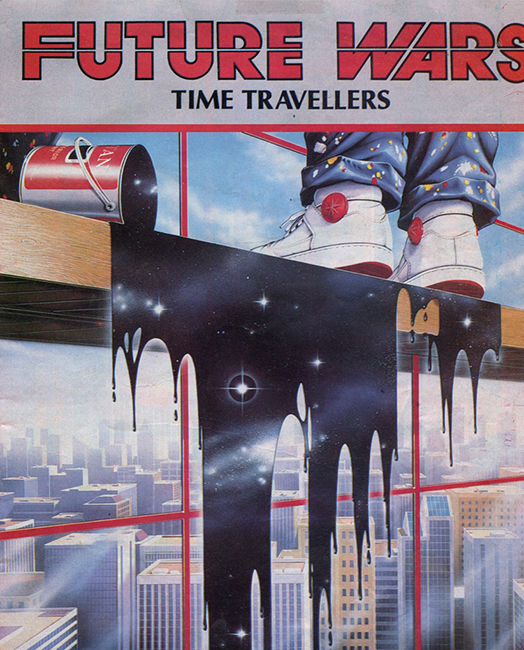
‘Future Wars’ Delphine Software, 1989
Jazzcat: Tell us how you got involved…
Skate: My oldest friend Can (Caisson/Ascraeus) and I wanted to build a scene group. There was only one problem. We didn’t have enough knowledge. I had drawn an ugly ‘Thunders’ logo which was the name I’ve chosen for the group but I wasn’t able to code an intro yet. Ripping and using game tunes was ok (or was it?) but we definitely needed a hand about coding. Mert Hekimci (Turk/Accuracy later known as Digahole/Onslaught) was our hero. He coded our first intro using my lame logo. He also gave me some source codes of him and by examining these sources; I improved my basic (understanding basic components of programming) and also officially met with 6510 assembler.
Jazzcat: Living by Glance showed some real team work, reflecting on this demo now almost 5 years later, what are your feelings towards it?
Skate: That “was” a real team work and I don’t think we could finish it with absence of a single member who was involved. My feelings are not too complicated. I feel relaxed and happy. It’s my best work in my scene history. We are all proud of it. I also feel very lucky. Because without correct team members like (in alphabetical order) Datura, Endo, Hydrogen, Nightlord and Norvax, I would never be able to finish and release a demo like that.
5 years… 5 long years. That period was painful, specially the last 4 years. From 2005-2006 everything was ok. Because we had released Living, our first demo in 2005 and we were happy about it.
Our goal was to make a better demo. We discussed a lot of demo concepts and we decided to make one of them. We failed! Then we choose another alternative demo Project(which meant to be released at X 2006), we failed again. That wasn’t a good sign and all of us were disturbed about this. You can read more details on Snapshot’s note file. From 2007 to 2010 were the hardest times for Glance.
Jazzcat: Winning Breakpoint 2010 with Snapshot, now how did that feel?
Skate:Breakpoint is not a Commodore 64 only party like X but it is (was : ( ) the biggest scene only event. So, it was very important for us. We were even ready to release our demo out of any compos to get rid of the burden but while we had the chance, we wanted to win Breakpoint as a consolation prize of 5 years of work. I was the only member who couldn’t go to the BP 2010 so, I don’t know the feeling of being there when they announced the winner. I just jumped (almost hitting my head to the ceiling ;)) in front of BP-TV, that’s all.
Jazzcat: Snapshot, what did you feel you did well and what could have been improved?
Skate: I’m very comfortable with my parts except one. I wasn’t able to add the walking tiger to the water reflection part and it was really easy to add, I had many free cycles left. It would improve the effect quality a lot since walking tiger would reflect to the water as well. Hydrogen had drawn the animation, everything was going fine. But I decided to leave the group and for a while I didn’t do any improvement for my parts. When I returned on the keys, this part was already linked and there was no memory space left. Of course we could solve it if we didn’t have 100 other higher priority problems to solve…
My goal was to make some original, never seen before parts and I think I succeeded. Thanks to Norvax and Nightlord we already had some world records so my support was mainly the world firsts. I’ll keep trying to surprise the audience.
Once a scener, always a scener !
Commodore 64’de swap yapanların çoğu 80 sonları 90 başlarında yok oldu, 90ların sonlarına doğru da tamamen kaybolup gittiler sanıyorsanız bir daha düşünün. 2010 yılında hala snail mail swap yapanlar var çünkü!
Never let the scene die !
Jazzcat: You left the local group element and joined up with Plush. How did this happen? A dream comes true?
Skate: Well, story is a little bit different. First of all, all members of Glance are my very, truly close friends and we love each other. I know some of them for 12-13 years and we built a game company together (R.I.P ;)), we organised and still organising parties (7dx party series), we played games together, we visited other member’s weddings, child births etc. So, I wouldn’t leave Glance under normal circumstances. There is a proverb here “kol kirilir, yen icinde kalir” (don’t bother to translate it, it’s something like “keep it in the family” but a little bit deeper). So, I don’t want to share all the details. What I can tell you is problems started after BP 2009. We went there, couldn’t finish the demo in time and returned empty handed. After that, I tried to make some changes on the demo like changing the outdated IRQ loader but we couldn’t have an agreement.
One of my effects “infinite zoomer” was already beaten by HCL a year ago and I didn’t want to wait for other surprises. I had coded the water reflection effect two weeks after Living released in 2005. I just wanted to my codes to get on the surface in shorter than 4-5 years. That’s the main reason I left Glance. It doesn’t mean Glance will not release a demo in a short period. I just don’t want to risk it. None of us are that young anymore (even I was the youngest member of the team).
After sending my good bye mail to Glance, Hydrogen asked me not to make an official announcement of leaving Glance until the release of Snapshot. I updated my CSDB profile but didn’t say a word to global scene. Only it’s discussed on local Turkish forums.
It took another one year for me to gain my freedom. When I got my freedom, I contacted with two groups Chorus and Plush. Chorus told me they wanted to stay as a Hungarian team but Plush (with 16 German only members) accepted me as their first international member. I already knew Krill and Cosowi personally and I had contact with Dow Jones in the 90s. So, I didn’t feel as a complete stranger. They know how to welcome new members. Plush has very friendly members. It helped me with the adaptation period. In Plush’s mailing list, they decided to talk in English from now on just because of me. I’m really thankful for the sacrifices they’ve made for me.
You may think that Plush wasn’t that active lately, either. So, why did I choose them? First of all, I knew they were planning to be active again. We have talked on this subject with Krill at X and BP. Also, I was not trying to find the most active group and placed in their member list for nothing. Instead, I wanted to be a fresh blood, help them to accelerate, be a true member of the group. That’s what I’m trying to do now.
7D6 Demo Party 2006, İstanbul
“We never had an entrance fee. All 7DX Demo Parties are free. Strange isn’t it? How does this happen? First a few parties were easy. We had around 30-40 visitors. But now we have 160+ visitors which means we need some sponsors.”
Jazzcat: You have been one of the main organisers of the 7DX-events in Turkey. Can you tell us a bit about this party and what is involved?
Skate:7DX Demo Party series started in 2002. Before that, all I remember was the Summer Assembly ’99 which held in Izmir (Thanks to Analog group). After Summer Assembly we haven’t seen any scene related activity. Hydrogen/Glance gave us the idea of making our own party for keeping the scene alive & together in Turkey. He also found the name 7D2 which was the hexadecimal equivalent of the year 2002. That’s why our party name is counting each year. Last year we made 7D9 (with 160+ visitors) and this year we’ll organise 7DA in December 2010 (exact date is not certain yet).
When we first started organizing 7DX parties, there was no Glance. We were all Bronx members. So, first 3 parties 7D2, 7D3 and 7D4 are known as Bronx parties. That’s changed after we left Bronx and built Glance. Core organiser team members are Hydrogen/Glance, Datura/Glance, Endo/Glance and myself (all ex-Bronx members). In time, Spritus/Resident, Bakkada/Demodojo, Beast/Crescent, Norvax/Glance and Compec Club (a Bogazici University Computer Engineering Club) joined the organisation team. This year Caisson/Ascraeus (my oldest friend remember?) will be in the organisation team as well. He was responsible for last year’s web site design and a lot of other visual works.
We never had an entrance fee. All 7DX Demo Parties are free. Strange isn’t it? How does this happen? First a few parties were easy. We had around 30-40 visitors. But now we have 160+ visitors which means we need some sponsors.
Our biggest sponsor is “S-Mart” company. Company owner M. Fatih Kilic is also a scener (Mfk/Bronx). They are the ones who are responsible of Pandora console, a possible scene platform. We have some other scener involved sponsors like ‘eksisozluksozluk.sourtimes.org’ which ran by Arteffect group (Ssg, Fatalica etc.). Also Beast/Crescent is our media sponsor as well as an organiser who runs darkhardware.com.
2009’s 7D9 party was held in Bogazici University – Istanbul/Turkey on the 19th and 20th of December.
We don’t have a huge scene (never had) like Germany, Holland, Sweden, Norway, Finland, Poland etc. Our scene is smaller and to be honest we are not effective enough in the global scene. If you love the scene, if you love your country, what would you do? We are organising 7DX Demo Parties as a step.
Are 7DX Demo Parties the only scene parties in Türkiye? Yes and no. Currently (and unfortunately) yes, but in 2006 and 2007, Nightshift parties are organised by Nightlord/Glance and Vigo/Bronx as a second friendly party in Turkey. But unfortunately Nightshift is discontinued. I still have some hope for new Nightshift parties. Any other Turkish parties are welcome too of course.
As final words about 7DX Demo Parties, for many years I thought organizing a demo party is the best way to improve Turkish scene. That’s right but we have all seen it’s not enough alone. We need more global successes like Snapshot. Hereby, I call all my Turkish scener friends to make a killer demo and kick some ass.
Edge of Disgrace By Booze Design. Released at X 2008
“I don’t agree with EoD being the major inspiration for us “to continue” with Snapshot. I know it’s written like that in the note file but personally I don’t completely agree with it. It’s not that I don’t appreciate the demo, I just don’t believe EoD was our main inspiration. If I need to pick a demo of Booze, Royal Arte has a bigger role for me.“
Jazzcat: Edge of Disgrace seems to be a major inspiration for you to continue with Snapshot. What would you say to other people who seem to be intimidated by that demo?
Skate: Edge of Disgrace is an amazing demo and it’s one of the biggest milestones in C64 history. If you read the note file of Snapshot, you’re going to see a special section for Edge of Disgrace.
But personally EoD didn’t affect me that much about Snapshot. There are two reasons. First of all, I’ve finished (or started) most of my effects which are used in Snapshot long before EoD is released. Many transition parts are coded by Norvax, Endo etc. So, if we are talking about Snapshot, EoD affected me for beating one of my effects.
I think if EoD was never released, we might have weaker transition parts in Snapshot. EoD helped us to take a better care about the linking quality of the demo. But I don’t agree with EoD being the major inspiration for us “to continue” with Snapshot. I know it’s written like that in the note file but personally I don’t completely agree with it. It’s not that I don’t appreciate the demo, I just don’t believe EoD was our main inspiration. If I need to pick a demo of Booze, Royal Arte has a bigger role for me. Don’t forget that it’s just my opinion, I’m not talking for the other members of Glance.
For other groups/sceners who think EoD is a hard to beat demo, I’d say they’re damn right. But it should never stop them for trying. EoD is close to perfection, we all know that. But also it has weak points like using too much plasmas and zoomers. I’d go for alternative effect ideas (that’s what we did at Snapshot actually). That’s the only way you can make a demo as good as EoD. If you try to “improve” HCL’s effects (specially plasmas and zoomers), you don’t have much chance I believe. HCL is evil! As a coder, I don’t want to make comments for graphics and soundtrack. EoD is very strong because it combines high quality code, graphics and music. That’s the way rest of the scene should follow. And yes, that’s the hardest way.
Jazzcat: X2010 will possibly be an opportunity to compete against the likes of Crest, FairLight, Booze Design, Offence and many more. I guess that is a good goal but you might feel you don’t want to repeat what happened at Breakpoint 2009 again with not-quite-making-it?
Skate: I’ll be at X 2010 with a demo, ready to compete against those groups. I never underestimate anyone but of course when making a demo, my aim is taking the first place. But to be honest, I’d prefer to loose against a demo like “Meet Crest” instead of winning. After all, I’m a big Crest fan!
About being not able to finish a demo like what happened at BP 2009… This may repeat at some point but for X 2010, there is no doubt a demo which contains my effects will be in the compo. I don’t want to make more spoilers, I think this is clear enough.
A little demonstration of Skate’s Kinect4C64 project, 2011.
Jazzcat: Please feel free to send some greetings, special messages or words of wisdom out to the C64 world…
Skate: First, thank you for this opportunity. I want to send greetings in two categories. Scene related and non-scene related.
My scene related greetings go to:
– Digahole: You are the man who is responsible for all of this. Without you I could be a shoe salesman. Thank you for giving me a hobby + a profession.
– Hydrogen, Datura and Endo: You three walked the longest path with me in the scene. You have a special reserved part in my heart. Thank you for everything guys.
– Nightlord, Norvax: Maybe we had a shorter history together but working with you guys were amazing. I feel so lucky. I learned and still learning a lot from you.
– Turbo, Vigo: Most respected sceners in Turkey. You two should never stay away from the scene. As long as you are there, we know the scene continues.
– Spaztica: One of the oldest farts I know. Thanks for keeping the scene spirit and running tr-demo scene forum all these years.
– Caisson: You are the one who was there from the beginning. We shared a lot of things together. Thank you my friend.
– Arcane, Aegis, Hades, and Madhead: You are the other important names for me from the 90s.
– Spritus: As one of my best friends, I give you the “best scener of all times” award. Ok, that was a little exaggerated.
– Plush Team: Thank you guys for accepting me as your first foreign member. I’ll do my best to make extraordinary demo parts for you. I know you got bored from “normal”.
I salute all of my friends from the scene. I’m sorry I couldn’t write all of you one by one.
My non-scene related greetings go to:
My wife Ceyda, my son Kaan, my brother Umur and rest of my family. They supported me all these years for everything.
Jazzcat: Thanks for your time! One last question, will the scene ever die do you think?
Skate: Hehe, a funny question. I always believed that if the scene dies as we know it, some other “unknown” people will start making demos “somewhere else” (maybe calling demos “real-time calculated graphics” or using some other terminology). They will start sharing what they do with each other. In time they’ll want to meet with each other. They are going to organise meetings. When they got together, some of them will like each other and boozing will start. Also competitive souls will push them to make competitions. Result is the scene again just like we know it. Scene is a part of human evolution, you can’t get rid of it.
Jazzcat: See you at X2010 I hope – any last words?
Skate: Yes, I’ll be there and I’m very excited about it. I know it’s going to be huge!
Hereby I invite all sceners to 7DA Demo Party which will be held in Istanbul / Türkiye in December of 2010. It’s going to be the 9th 7DX Party. Don’t forget to follow 7dx-party.org. English site will be up in a few months.
That’s it I guess. Thank you for this nice interview with well prepared questions.
[Kaczynski’nin bu makalesi Green Anarchy dergisinin Bahar 2002 tarihli 8. sayısında yayınlanmıştır.] Özgür Hayat’ın 15 Eylül 2002 tarihli 10. sayısında yayımlanmıştır.
1.Bu Makalenin Amacı.
Bu makalenin amacı, insan çatışmasının çok basit bir ilkesine, tekno-endüstriyel sistemin düşmanlarının dikkate almaz göründükleri bir ilkeye dikkat çekmektir. Söz konusu ilke, herhangi bir çatışma biçiminde, eğer kazanmak istiyorsanız, düşmanınızın yaralanacağı yerine vurmanız gerektiğidir.
“Yaralanacağı yerden vurmak”tan bahsettiğimde illaki fiziksel darbelere ya da fiziksel şiddetin başka herhangi bir biçimine gönderme yapıyor olmadığımı açıklamak zorundayım. Örneğin sözlü tartışmada “yaralanacağı yerden vurmak”, iddialarınızı rakibinizin pozisyonunun en zayıf olduğu noktaya yöneltmeniz anlamına gelir. Başkanlık seçiminde, “yaralanacağı yerden vurmak”, seçimle ilgili hayati olayları barındıran durumları rakibinizden kazanmanız anlamına gelir. Ben yine de, bu tartışmayı yürütürken fiziksel çarpışmayla benzerlikler kuracağım, çünkü bu daha etkili ve açık bir yol.
Birisi size yumruk attığında, kendiniz onun yumruğuna vurarak savunamazsınız, çünkü onu bu yolla yaralayamazsınız. Kavgayı kazanmak için yaralanacağı yerden vurmanız gerekir. Bu da demektir ki, yumruğun ardına geçmeli ve o kişinin bedeninin duyarlı ve zayıf yerlerine vurmalısınız.
Bir kereste şirketine ait bir buldozerin evinizin yakınındaki ormanı yıktığını ve sizin de onu durdurmak istediğinizi farz edin. Toprağı yaran ve ağaçları alaşağı eden, o buldozerin kepçesidir ama kepçeye bir balyoz indirmek zaman kaybı olacaktır. Eğer balyozla kepçe üzerinde uzun ve zorlu bir çalışma yürütürseniz, ona kullanılmaz hale gelecek zararı vermeyi başarabilirsiniz (1). Fakat buldozerin geri kalanıyla kıyaslandığında, kepçe görece ucuz ve kolay yenilenebilirdir. Kepçe, yalnızca, buldozerin toprağa vurmak için kullandığı “yumruk”tur. Makineyi yenmek için “yumruğun” ardına geçmeniz ve buldozerin hayati parçalarına saldırmanız gerekir. Örneğin motor, radikallerin iyi bildiği araçlarla, az bir zaman ve çaba harcayarak tahrip edilebilir.
Bu noktada, kimseye bir buldozeri tahrip etmesini tavsiye etmediğimi vurgulamalıyım (kendi malı olmadığı sürece). Ya da bu makaledeki herhangi bir nokta, herhangi türden illegal bir faaliyeti tavsiye ediyor gibi de yorumlanmamalıdır. Ben bir mahkumum ve eğer illegal faaliyeti özendirecek olsaydım, bu makalenin hapishanenin dışına çıkmasına izin bile verilmezdi. Buldozer benzeşimini kullanıyorum, çünkü bu açık ve etkili; ve aynı zamanda radikaller tarafından takdir edilecektir.
2.Teknoloji Hedeftir.
‘Çağdaş tarihsel süreci belirleyen temel değişken(in) teknolojik gelişme tarafından sağlandı’ğı (Celso Furtado) genel olarak kabul edilir. Teknoloji, dünyanın mevcut durumundan – geri kalan her şeyden daha fazla – sorumludur ve dünyanın gelecekteki gelişimini kontrol edecektir. Bu yüzden ortadan kaldırmamız gereken “buldozer”, modern teknolojinin ta kendisidir.
Çoğu radikal bunun farkındadır ve bu nedenle görevin tekno-endüstriyel sistemin tümünü yok etmek olduğunu anlamaktadır. Ama malesef, sistemi yaralandığı yerden vurma gerekliliğine çok az dikkat edilmiştir.
McDonald’s ya da Sturbuck’s ı tarumar etmek anlamsızdır. McDonald’s ya da Sturbuck’s i iplediğim için söylemiyorum. Birisinin bunları dağıtıp dağıtmaması umurumda değil. Fakat bu, devrimci faaliyet değildir. Dünyadaki tüm fast-food zinciri yok edilse bile tekno-endüstriyel sistem sonuçta asgari düzeyde bir zarara uğrayacaktır, çünkü sistem, fast-food zinciri olmadan da rahatlıkla yaşamaya devam edebilir. McDonald’s ya da Sturbuck’s a saldırdığınızda, yaralanacağı yerden vuruyor olmuyorsunuz.
Bundan birkaç ay önce Danimarkalı genç bir adamdan mektup aldım. Genç adam tekno-endüstriyel sistemin yok edilmesi gerektiğine inanıyordu, çünkü – söylediği gibi – “Böyle devam edersek ne olacak?”. Bununla birlikte, göründüğü kadarıyla onun “devrimci” faaliyeti kürk çiftliklerine baskın yapmaktı. Bu faaliyet, tekno-endüstriyel sistemi zayıflatma aracı olarak, tamamen kullanışsızdır.
Hayvan özgürlükçüleri kürk endüstrisini tamamen yok etmekte başarılı olsalar bile, sisteme hiç zarar vermiş olmayacaklar çünkü sistem kürkler olmadan da mükemmel bir şekilde işleyebilir.
Vahşi hayvanları kafeslere tıkmanın dayanılmaz olduğuna ve bu uygulamaya son vermenin soylu bir amaç olduğuna katılıyorum. Fakat başka soylu amaçlar da vardır: trafik kazalarının önüne geçmek, evsizler için barınak sağlamak ya da yaşlıların yolda karşıdan karşıya geçmesini sağlamak gibi. Yine de yeterince aptal olmayan kimse bunu devrimci faaliyetle karıştırmaz ya da bunların sistemi zayıf düşürecek şeyler olduğunu sanmaz.
3.Kereste Endüstrisi İkincil Bir Sorundur.
Başka bir örneği ele alırsak, aklı başında olan kimse, gerçek vahşi hayat gibi bir şeyin tekno-endüstriyel sistem var olmaya devam ettiği sürece hayatta kalabileceğine inanmaz. Çoğu çevreci radikal, bunun sistemin çöküşü için neden ve umut olduğu konusunda hem fikir. Fakat pratikte, tüm yaptıkları kereste endüstrisine saldırmak. Kereste endüstrisine saldırmalarına kesinlikle hiçbir itirazım yok. Aslında bu, kalben yakın hissettiğim bir sorundur ve radikallerin kereste endüstrisine karşı kazandıkları başarılardan keyif alıyorum. Buna ek olarak, burada açıklama ihtiyacı hissettiğim nedenlerle, kereste endüstrisine karşı çıkmanın sistemi yıkma çabalarının bir öğesi olması gerektiğini düşünüyorum.
Fakat kereste endüstrisine saldırmak sisteme karşı çalışmak için kendi başına etkili bir yol değildir; hatta pek mümkün olmasa da, radikaller dünyanın her tarafındaki keresteciliği durdurmayı başarsalar dahi, bu, sistemi alaşağı etmeyecektir. Ve vahşi hayatı kalıcı bir şekilde kurtaramayacaktır. Politik iklim er ya da geç değişecek ve kerestecilik yeniden başlayacaktır. Kerestecilik dirilmese bile, vahşi hayatın yok edileceği ya da yok edilmese de uysallaştırılacağı ve evcilleştirileceği başka olaylar olacaktır. Madencilik ve maden araştırmaları, asit yağmuru, iklim değişiklikleri ve türlerin nesillerinin tükenişi vahşi hayatı tahrip ediyor; vahşi hayat – diğer şeylerin yanı sıra, hayvanların elektronik takibi, nehirlerin planlı üretilen balıklarla doldurulması ve genetik müdaheleye uğramış ağaçların dikilmesini kapsayan yollarla – yeniden yaratım, bilimsel çalışma ve kaynak yönetimi aracılığıyla uysallaştırılıyor ve evcilleştiriliyor.
Vahşi hayat yalnızca tekno-endüstriyel sistemin yok edilmesiyle kalıcı bir şekilde korulanabilir ve sistemi kereste endüstrisine saldırarak yok edemezsiniz. Sistem kereste endüstrisi ölse de kolaylıkla ayakta kalabilir, çünkü odun ürünleri sistem için faydalı olsa da, gerekirse başka malzemelerle değiştirilebilir.
Sonuç olarak, kereste endüstrisine saldırdığınızda sisteme yaralanacağı yerden vuruyor olmuyorsunuz. Kereste endüstrisi yalnızca, sistemin vahşi hayatı tahrip ettiği “yumruk”tur (ya da yumruklardan biridir) ve aynı yumruk yumruğa kavgada olduğu gibi, yumruğa vurarak kazanmazsınız. Yumruğun ardına geçmeli ve sistemin en duyarlı ve hayati organına vurmalısınız. Tabii, barışçıl protestolar gibi yasal araçlarla.
4.Sistemin Dayanıklı Olmasının Nedeni.
Tekno-endüstriyel sistem, sözde “demokratik” yapısı ve sonuçtaki esnekliğine bağlı olarak, olağanüstü derecede dayanıklıdır. Diktatoryal sistemler katı olmaya eğilimlidirler; sisteme isabetli bir şekilde zarar verecek onu zayıflatacak toplumsal gerilimler ve direniş inşa edilebilir ve bunlar devrime yol açabilir. Fakat “demokratik” sistemde, toplumsal gerilim ve direniş tehlikeli bir şekilde inşa edildiğinde, sistem bu gerilimleri güvenli bir seviyeye çekmek için yeterince esner ve yeterince uzlaşır.
1960’larda insanlar, daha çok büyük şehirlerimizin havasındaki görünür ve koklanabilir pislik kendilerini fiziksel olarak rahatsız etmeye başladığı için, çevre kirliliğinin ciddi bir sorun olduğunu fark ettiler. Çevre Koruma Ajansı’nın kurulmasına ve sorunun azaltılması için önlemler alınmasına yetecek kadar protesto baş gösterdi. Tabii ki, kirlilik sorunlarımızın çözülmekten çok çok uzak olduğunu hepimiz biliyoruz. Ancak halkın şikayetlerinin durulmasını ve sistem üstündeki baskının birkaç yıllığına azalmasını sağlayacak müdahaleler yapıldı.
Bu nedenle, sisteme saldırmak bir lastik parçasına vurmaya benziyor. Çekiçle bir darbe bir döküm demiri tuzla buz edilebilir çünkü döküm demir katı ve kırılgandır. Fakat lastik parçasını ona hiç zarar vermeden yumruklayabilirsiniz çünkü esnektir: Protestonun önünde size yol verir, protestonun gücünü ve önemini yitirmesine yetecek kadar… Sonra sistem geri seker.
Bu yüzden, sisteme yaralanacağı yerden vurmak için, sistemin geri tepmeyeceği, sonuna kadar savaşacağı konular seçmek zorundasınız. Çünkü ihtiyacınız olan, sistemle uzlaşmak değil, ölüm kalım mücadelesidir.
5.Sisteme Kendi Değerlerine Göre Saldırmak Yararsızdır.
Sisteme onun teknolojik-temelli değerlerine göre değil, sistemin değerleriyle uyuşmaz olan değerlere göre saldırmak kesinlikle esastır. Sisteme onun değerlerine göre saldırdığınız sürece, sistemi yaralanacağı yerden vurmuş olmazsınız, sistemin yol vererek ve geri teperek protestonun altını boşaltmasına izin vermiş olursunuz.
Örneğin, eğer kereste endüstrisine öncelikle ormanlara su kaynaklarını ve yeniden yaratım fırsatlarını korumak için gerek duyulduğu temelinde saldırırsanız, sistem kendi değerlerinden taviz vermeden protestonun içini boşaltmak için zemin sağlar: Su kaynakları ve yeniden yaratım sistemin değerleriyle tamamen uyumludur ve eğer sistem esnerse, su kaynakları ve yeniden yaratım adına keresteciliği kısıtlarsa, o halde yalnızca kendi değerler kodu için taktiksel olarak geri çekilmiş olur, yoksa stratejik bir bozguna uğramış olmaz.
Mağdurlaştırma konularını (ırkçılık, cinsiyetçilik, homofobi ya da yoksulluk gibi) öne sürerseniz, sistemin değerleriyle çatışıyor ve hatta sistemi esnemesi ve uzlaşması için bile zorluyor olmazsınız. Doğrudan sisteme yardım ediyor olursunuz. Sistemin en bilgeli destekleyicileri, ırkçılık, cinsiyetçilik, homofobi ve yoksulluğun sisteme zararlı olduğunun farkındadır ve bu nedenle sistemin kendisi mağdurlaştırmanın bu ve benzeri biçimleriyle savaşmaya uğraşır.
“Sweatshop”lar (2), düşük ücret ve berbat çalışma koşullarıyla bazı şirketlere kar getiriyor olabilir, ama sistemin bilge destekleyicileri işçilere daha uygun davranıldığında bir bütün olarak sistemin daha iyi işlediğini çok iyi biliyorlar. Sweatshop’ları konu edindiğinizde sistemi zayıflatmıyor, onu güçlendiriyorsunuz.
Çoğu radikal, ırkçılık, cinsiyetçilik ve sweatshop’lar gibi gereksiz konular üzerine odaklanmanın cazibesine kapılıyorlar, çünkü bu daha kolay. Sistemin taviz verebileceği ve Ralph Nader, Winona La Duke, işçi sendikaları ve diğer tüm pembe reformculardan destek görebilecekleri bir konu seçiyorlar. Belki sistem baskı altında biraz geri adım atacak, eylemciler çabalarının belli bazı sonuçlarını görecekler ve bir şeyler başardıkları gibi tatminkar bir illüzyon elde edecekler. Fakat gerçekte, tekno-endüstriyel sistemi yok etmek yolunda hiç ama hiçbir şey başarmış olmayacaklar.
Küreselleşme konusu teknoloji sorunuyla tamamen ilgisiz değildir. “Küreselleşme” adı verilen ekonomik ve politik tedbirler paketi, ekonomik büyümeyi ve sonuçta teknolojik ilerlemeyi teşvik ediyor. Yine de, küreselleşme önemi az olan bir konudur ve devrimciler için iyi seçilmiş bir hedef değildir. Sistem küreselleşme konusunda zarar görmeden zemin sağlayabilir. Küreselleşmeyi aslında sona erdirmeden, protestoların içini boşaltmak amacıyla küreselleşmenin olumsuz çevresel ve ekonomik sonuçlarını hafifletebilir. Hatta sıkıştığında, küreselleşmeye toptan son vermek için uğraşabilir bile. Büyüme ve ilerleme yine de sürecektir, sadece biraz daha düşük bir düzeyde. Ve küreselleşmeyle savaştığınızda sistemin asıl değerlerin saldırmış olmuyorsunuz. Küreselleşme karşıtlığı, işçiler için uygun ücretleri muhafaza etmek ve çevreyi korumaktan hareket ediyor ve bunların her ikisi de sistemin değerleriyle tam anlamıyla uyumludur. (Sistem, kendi çıkarı için, çevresel bozulmanın çok ileri gitmesine izin veremez.) sonuçta, küreselleşmeyle savaştığınızda sistemi gerçekten yaralandığı yerden vurmuş olmuyorsunuz. Çabalarınız bir reformu teşvik edebilir, fakat tekno-endüstriyel sistemin alaşağı edilmesi amacı için faydasızdır.
6.Radikaller Sisteme Kesin Sonuç Getiren Noktalardan Saldırmalıdır.
Tekno-endüstriyel sistemin imhası doğrultusunda etkili çalışmak için devrimciler, sisteme kendisinin zemin sağlamaktan çekineceği noktalarda saldırmalıdır. Sistemin hayati organlarına saldırmalılar. Tabii, “saldırı” sözcüğünü kullandığımda fiziksel saldırıya gönderme yapmıyorum, yalnızca yasal protesto ve direniş biçimlerinden söz ediyorum.
Sistemin hayati organlarına örnekler şunlardır:
A. Elektrik gücü endüstrisi. Sistem tamamen elektrik gücü şebekesine bağımlıdır.
B. İletişim endüstrisi. Telefon, radyo, televizyon, e-posta ve benzerleri aracılığıyla hızlı iletişim olmadan sistem hayatta kalamaz.
C. Bilgisayar endüstrisi. Hepimiz biliyoruz ki, bilgisayarlar olmadan sistem çabukça çöker.
D. Propaganda endüstrisi. Propaganda endüstrisi, eğlence endüstrisini, eğitim sistemini, gazeteciliği, reklamcılığı, halkla ilişkileri ve aşağı yukarı tüm politika ve akıl sağlığı endüstrisini kapsar. Sistem, insanlar yeterince yumuşak başlı ve uyumlu olmadıkları ve sistemin onlarda ihtiyaç duyduğu alışkanlıklara sahip olmadıkları sürece işleyemez. İnsanlara bu tür düşünme ve davranışları öğretmek propaganda endüstrisinin işlevidir.
E. Biyoteknoloji endüstrisi. Sistem (bildiği kadarıyla) ileri biyoteknolojiye henüz fiziksel olarak bağımlı değil. Bununla birlikte, kendisi için kritik bir öneme sahip olan Biyoteknoloji konusu üzerinden karşıtlığa yol vermeye katlanamaz. Bunu birazdan tartışacağım.
Tekrar: Sistemin bu hayati organlarına saldırdığınızda, bunlara sistemin değerlerine göre değil, sistemin değerleriyle uyuşmaz olan değerlere göre saldırmanız zorunludur. Örneğin, elektrik gücü endüstrisine çevreyi kirlettiğinden hareketle saldırırsanız, sistem elektrik üretmenin daha temiz yöntemlerini geliştirerek protestonun içini boşaltabilir.
Hatta daha da beteri, sistem tamamen rüzgar ve güneş enerjisine geçebilir. Bu durum çevresel tahribatı azaltmak için çok işe yarayabilir ama tekno-endüstriyel sisteme son vermez. Ya da sistemin esas değerleri için bir bozgunu temsil etmez. Sisteme karşı herhangi bir şey başarmak için, bir ilke olarak, elektriğe bağımlılığın insanları sisteme bağımlı kılması zemininde, elektrik gücü üretiminin tümüme saldırmalısınız. Bu, sistemin değerleriyle bağdaşmaz bir zemindir.
7.Biyoteknoloji Politik Saldırı İçin En İyi Hedef Olabilir.
Politik saldırı için bekli de en umut verici hedef Biyoteknoloji endüstrisidir. Her ne kadar devrimciler azınlıklar tarafından tatbik edilse de, genel nüfustan bir derecede destek, sempati ya da en azından rıza gelmesi yararlı olur. Bu tür bir destek ya da rıza kazanmak politik eylemin hedeflerinden biridir. Politik saldırınızı, örneğin, elektrik gücü endüstrisine yoğunlaştıracak olursanız, radikal bir azınlık dışındakilerden destek almak aşırı derecede zor olacaktır, çünkü çoğu insan yaşama tarzlarındaki değişikliklere direnir, özellikle de onları rahatsız eden değişikliklere. Bu nedenle, çok azı elektrik kullanımına son vermeyi isteyecektir.
Fakat insanlar henüz kendilerini ileri biyoteknolojiye elektriğe olduğu kadar bağımlı hissetmiyorlar. Biyoteknolojiyi yok etmek hayatlarını radikal bir şekilde değiştirmeyecek. Aksine, biyoteknolojinin süre giden gelişmesinin hayat tarzlarını dönüştüreceği ve uzun zamandır var olan insan değerlerini sileceği insanlara gösterebilir. Böylece radikaller, biyoteknolojiye meydan okurken, insanın değişime yönelik doğal direnişini kendi lehlerine seferber etmeyi başarabilirler.
Ve Biyoteknoloji sistemin kaybetmeyi göze alamayacağı bir konudur. Sistemin sonuna kadar savaşmak zorunda kalacağı bir konudur, ki ihtiyacımız da tam olarak bu. Fakat –bir kez daha yineleyecek olursam- biyoteknolojiye sistemin kendi değerlerine göre değil, sisteminkilerle bağdaşmaz olan değerlere göre saldırmak zorunludur. Örneğin biyoteknolojiye öncelikle onun çevreye zarar verebileceği veya genetik müdahaleye uğramış yiyeceklerin sağlığa zararlı olabileceği üzerinden saldırırsanız, sistem zemin sağlayarak veya uzlaşarak –örneğin, genetik araştırmalarda yüksek gözetim ve genetik müdahaleye uğramış mısırlarda özenli tahlil ve denetimi ortaya koyarak- saldırınızı hafifletecektir. İnsanların endişeleri böylece azalacak ve protesto sindirilecektir.
8.İlke Olarak Tüm Biyoteknolojiye Saldırılmalıdır.
Böylece, biyoteknolojinin şu yada bu olumsuz sonucunu protesto etmek yerine, (a) biyoteknolojinin canlıların tümüne hakaret olduğu; (b) sistemin eline çok fazla güç verdiği; (c) binlerce yıldır var olan temel insan değerlerini radikal bir şekilde dönüştüreceği; ve sistemin değerleriyle bağdaşmaz olan benzer gerekçeler dayanarak, ilke olarak modern biyoteknolojinin tümüne saldırmalısınız. Bu tür saldırıya karşılık, sistem karşılamak ve savaşmak zorunda kalacaktır. Aşırı düzeyde esneyerek saldırıyı hafifletmeye kalkışamaz, çünkü biyoteknoloji tüm teknolojik ilerleme girişimi için çok merkezidir ve sistem, esnediğinde taktiksel bir geri çekilme yapıyor olmayacak, değerler kodunda büyük bir stratejik bozguna uğruyor olacaktır. Sistemin bu değerleri yavaş yavaş yıpratılacak ve kapı, sistemin temellerini yaracak sonraki politik saldırılar için açılacaktır.
Doğru, ABD Temsilciler Meclisi yakın zamanda insan kopyalamanın yasaklanması yönünde oy kullandı ve en azından bazı kongre üyeleri bunun için doğru gerekçeler gösterdiler. Okuduğum gerekçeler dinsel terimlerle çerçevelenmişti, fakat söz konusu dinsel terimler hakkında ne düşünürseniz düşünün, bu gerekçeler teknolojik olarak kabul edilemez gerekçelerdi. Ve önemli olan da bu. Bu nedenle, kongre üyelerinin insan kopyalama üzerine yaptıkları oylama, sistem için hakiki bir bozgundur. Fakat bu, çok ama çok küçük bir bozgundu, çünkü yasaklanmanın kapsamı çok dar –biyoteknolojinin ufacık bir bölümü etkilendi- ve zaten yakın gelecekte insan kopyalama sistem için az bir pratik faydaya sahip olacak. Fakat Temsilciler Meclisi’nin hareketi, bunun sistemin zayıf bir noktası olduğunu ve biyoteknolojinin tümüne yönelik daha geniş bir saldırının sisteme ve onun değerlerin büyük bir zarar verebileceğini akla getiriyor.
9.Radikaller Biyoteknolojiye Henüz Etkili Bir Şekilde Saldıramıyor.
Bazı radikaller biyoteknolojiye politik veya fiziksel olarak saldırıyorlar, ama bildiğim kadarıyla biyoteknolojiye karşıtlıklarını sistemin kendi değerlerine göre açıklıyorlar. Yani temel şikayetleri, çevresel yıkım ve sağlığa zarar riskleri.
Ve biyoteknoloji endüstrisine yaralanacağı yerden vurmuyorlar. Yeniden fiziksel çarpışmayla benzerlik kurarsam, farz edin ki kendinizi dev bir ahtopota karşı savunmak zorundasınız. Ahtapotun dokunaçlarının ucuna vurarak etkili bir şekilde savaşamazsınız. Kafasına saldırmak zorundasınız. Faaliyetlerini okuduğum kadarıyla, biyoteknolojiye karşı çalışan radikaller hala ahtapotun dokunaçlarının ucuna vurmaktan daha fazla bir şey yapmıyorlar.
Sıradan çiftçileri genetik müdahaleye uğramış tohumları ekmemeleri konusunda ayrı ayrı ikna etmeye çalışıyorlar. Fakat Amerika’da binlerce çiftlik var, bu yüzden çiftçileri ayrı ayrı ikna etmek, genetik mühendisliğiyle savaşmak için aşırı derecede verimsiz bir yol. Biyoteknolojik işle uğraşan araştırmacı bilim adamlarını ya da Monsanto gibi şirketlerin yöneticilerini biyoteknoloji endüstrisini terk etmeleri konusunda ikna etmek çok daha etkili olacaktır. İyi araştırmacı bilim adamları özel yetenekleri ve kapsamlı eğitimleri olan insanlardır, bu nedenle yenilerini bulmak zor olur. Aynısı, şirketlerin yüksek yöneticileri için de geçerli. Bunların birkaçını biyoteknolojiden uzaklaşmaları yönünde ikna etmek, biyoteknolojiye, bin çiftçiyi genetik müdahaleye uğramış tohumları ekmemesi konusunda ikna etmekten çok daha fazla zarar verecektir.
10.Yaralanacağı Yerden Vur.
Sisteme politik saldırı için biyoteknolojinin en iyi konu olduğunu düşünmekte haklı olup olmadığım tartışmaya açıktır. Fakat bugün radikallerin, enerjilerinin çoğunu teknolojik sistemin ayakta kalmasıyla hemen hemen hiç ilgisi olmayan konulara harcadıkları tartışmasız. Hatta doğru konuyu işaret ettiklerinde bile, yaralanacağı yerden vurmuyorlar. Bu yüzden radikallerin küreselleşme üzerinde öfkeli tepinmeler yapmak için sonraki dünya ticaret zirvesine koşturmak yerine, üzerine düşünmek için zaman ayırmaları gereken şey, sisteme gerçekten yaralanacağı yerden nasıl vuracakları olmalıdır. Yasal yollarla tabi…
_____
(1) Vurguların tümü Kaczynski’ye aittir. (2) Sweatshop: İşçilerin düşük ücret karşılığında, kötü koşullarda uzun mesaiyle çalıştığı iş yeri.
Il est temps de commencer à donner plus de place à la musicalité noise de Pakito Bolino, que la plupart d’entre nous connaissent pour ses peintures, dans les pages de notre magazine. Merci beaucoup à Pakito Bolino d’avoir partagé avec nous ce savoureux bruit âpre qu’il a interprété lors du vernissage de l’exposition Pol-Edouard à la Friche la Belle de Mai, Marseille.
Rituel pour invoquer les démons de la 5ème dimension
BoLİNOiZ !!
Méditation Cabal Profonde
Devil on da beat !!
It’s time to start to give more space to the noise musicianship of Pakito Bolino, whom most of us know for his paintings, in the pages of our magazine. Thank you so much to Pakito Bolino for sharing this tasty harsh noise with us that he performed at the opening of the Pol-Edouard exhibition at Friche la Belle de Mai, Marseille.
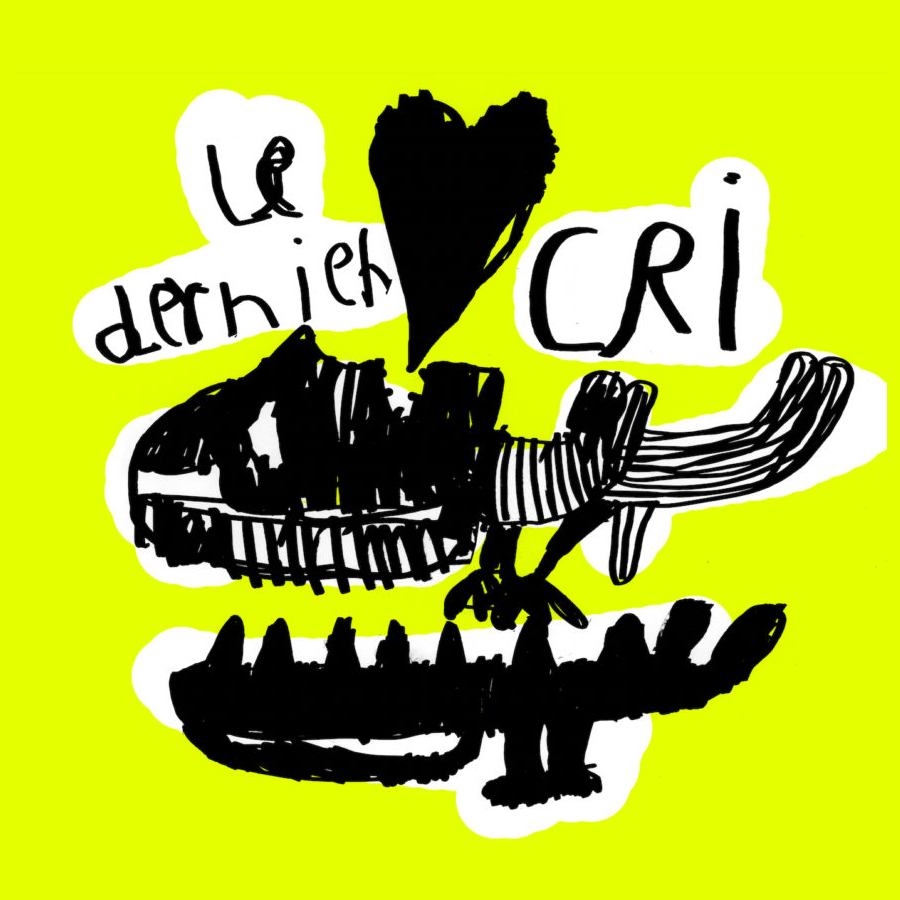
Pakito Bolino is a French artist, draftsman and publisher, born in 1964 in Nîmes. After studying at the School of Fine Arts in Angoulême, Pakito Bolino moved to Paris where he founded in 1993 the Le Dernier Cri editions in Ris-Orangis after having trained in the screen printing workshop. In 1995 the Éditions du Dernier Cri set up shop in Marseille, at the Friche la Belle de Mai. Pakito Bolino is the author of many works (graphics, sound, animations…) mainly published in Dernier Cri. He is also a musician, videographer and curator. To date, he has published more than 440 artist books, more than 200 posters, two magazines (Le Dernier Cri, Hôpital Brut), records and 5 animated films.
Kapreles, drawing for Hopital Brut 9
LES RELIGIONS SAUVAGES: Bonus, 2004
HOPITAL BRUT
ALERTE ROUGE / RED ALERT TODAY
FAIT A LA MAIN PAR LES ESCLAVES DU DERNIER CRI / HAND MANUFACTURED BY DERNIER CRI SLAVES
QUELQUES ANNÉES DE CRISES MYSTIQUES PLUS TARD / A FEW YEARS OF MYSTIKAL CRISIS LATER
MÉDIA PARIA-CULTURCIDE
L’HOPITAL BRUT VOMIT SON CORTÈGE DE CAS CLINIKES / HOSPITAL VOMIT FINALLY ITS CORTEGE OF CLINICAL CASE
LE MAL GAGNE!/ EVIL GAINS !
PROPAGATION DU TRAIT SUTURE / VACUUM INNOVATION IS A LIE
L’ADULATION À LA NOUVEAUTÉ EST UN MENSONGE FIN DE SIÈCLE
HOPITAL BRUT N’OBTIENT QUE CE QU’IL CHIE / HOSPITAL BRUT OBTAINS ONLY WHAT HE SHITS
HOPITAL BRUT CROIT EN L’ACTION PURIFIGRAFIKE / HOSPITAL BRUT BELIEVE IN THE GRAFIK PURIFIACTION
HOPITAL BRUT ÉLIMINE LES TACHES D’AUTOCENSURE / HOPITAL BRUT ELIMINATES THE SPOTS FROM SELF-CENSORSHIP
TSUNAMI D’IMAGES DERNIER CRI ! HOPITAL BRUT N’A PAS A ETRE BEAU / HOSPITAL BRUT DOES NOT HAVE HAS TO BE NICE
C’est la guerre des amazones, désirent-elles vraiment tuer tous les hommes de ce monde ou juste leur faire peur ?
TRIPLE IMPAKT!
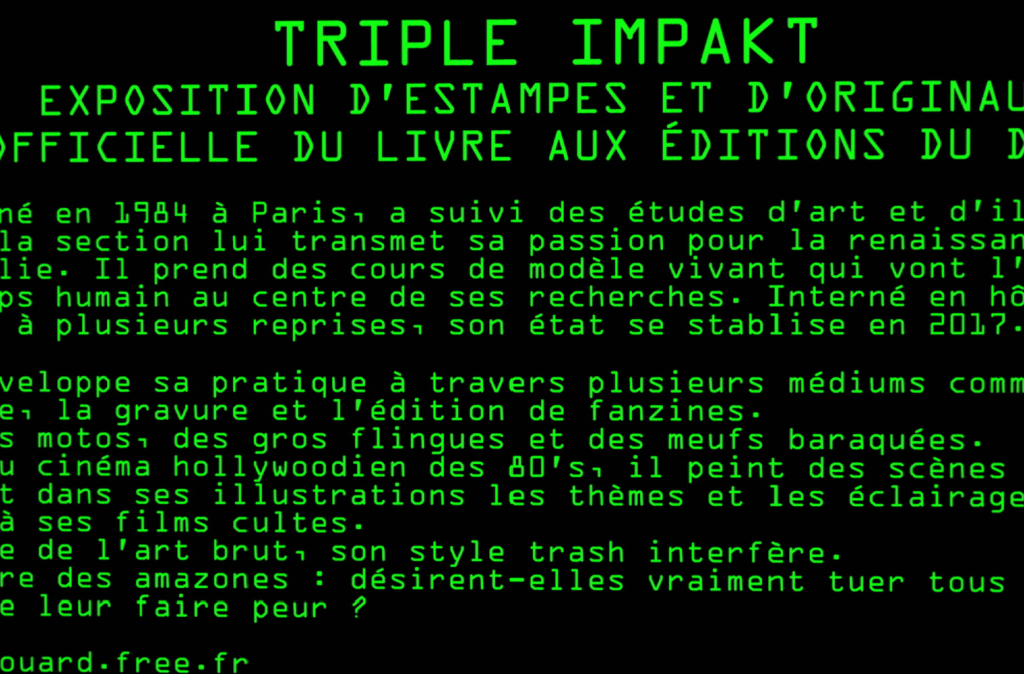
Pol-Edouard, Exposition d’estampes et d’originaux Sortie officielle du livre aux éditions du dernier cri
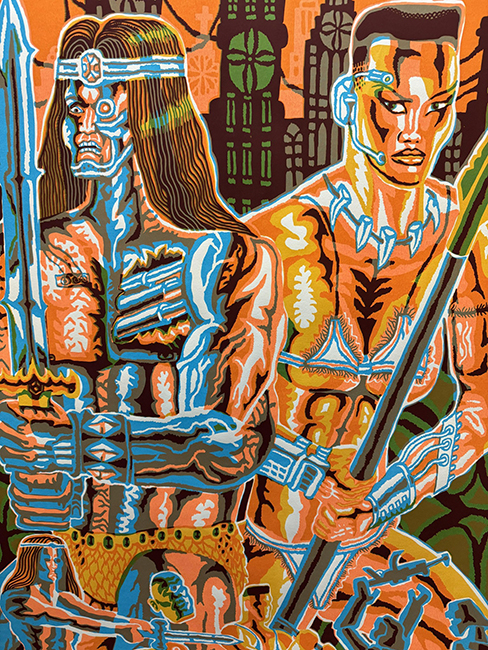
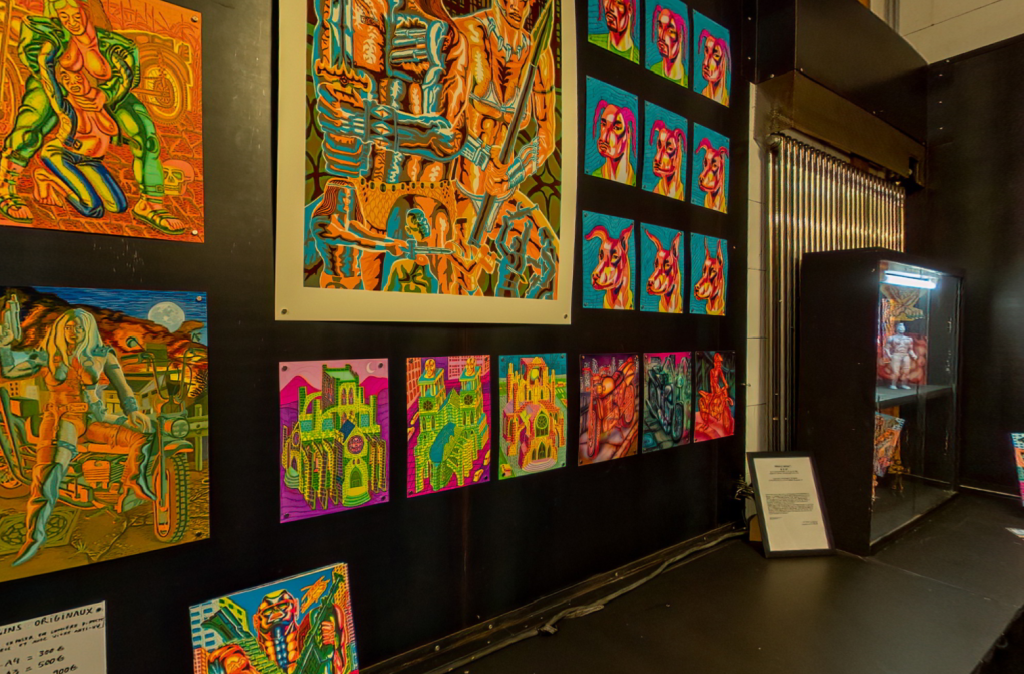
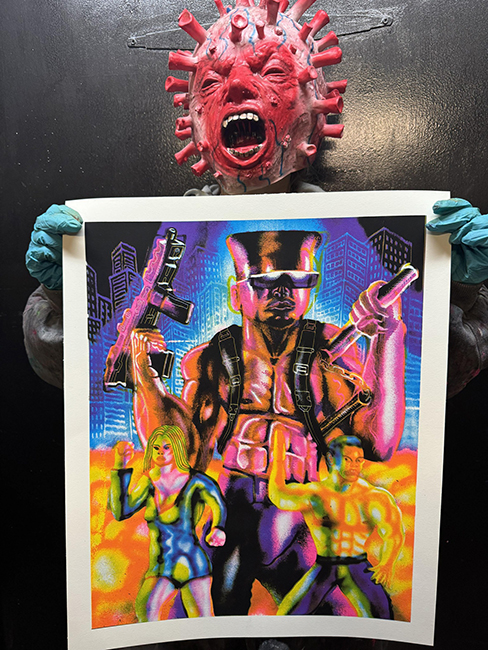
Pol-Edouard, né en 1984 à Paris, a suivi des études d’art et d’illustration. Le directeur de la section lui transmet sa passion pour la renaissance lors d’un voyage en Italie. Il prend des cours de modèle vivant qui vont l’influencer à placer le corps humain au centre de ses recherches. Interné en hôpital psychiatrique à plusieurs reprises, son état se stabilise en 2017. Depuis, il développe sa pratique à travers divers médiums comme la peinture, la sérigraphie, la gravure et l’édition de fanzines.
Il dessine des motos, des gros flingues et des meufs baraquées. S’inspirant du cinéma hollywoodien des années 80, il peint des scènes d’action. Il réintroduit dans ses illustrations les thèmes et les éclairages multicolores en référence à ses films cultes. Dans la lignée de l’art brut, son style trash interfère. C’est la guerre des amazones, désirent-elles vraiment tuer tous les hommes de ce monde ou juste leur faire peur ?
Fin septembre à la Friche de la Belle de Mai chez l’infatigable Pakito Bolino.
TRIPLE IMPAKT!
TRIPLE IMPAKT!
POL EDOUARD, LDC Edition 2023
Pakito Bolino, 1964 Nîmes doğumlu Fransız sanatçı, ressam ve yayıncı. Angoulême Güzel Sanatlar Fakültesinden mezun olduktan sonra serigrafi alanında kendini geliştirir ve 1993 yılında Paris’e taşınarak Ris-Orangis’te atölyesini ve kendi markası olan Le Dernier Cri’yi kurar. 1995 yılında ise Marsilya’da Friche la Belle de Mai‘de LDC için bir mağaza açar. Pakito Bolino, ağırlıklı olarak Dernier Cri’den yayımlanan birçok eserin (grafik, müzik, animasyon…) yaratıcısıdır. Aynı zamanda müzisyen, kameraman ve küratördür. Bugüne kadar 440’tan fazla sanatçı kitabı, 200’den fazla afiş, 2 adet antoloji (Le Dernier Cri, Hôpital Brut), bir çok plak ve 5 animasyon filmi yayınlamıştır.
The curious will study light and shadow throughout the book. The duration of the study is your lifetime.
The magician without an eye with the mind and spirit, with the vastest experiences fermented by the connection to honesty and innocence, will only plant the seeds of illusions, sprouting to delusions, giving the fruit of heartbreak.
That is maybe why Eve shouldn’t have eaten the apple. Not because she sinned but rather was too oblivion to know there was an evil witch in the far waste. (Referencing both Miyazaki and Snow-white.)
Knowing now its antidote is repairing and expanding the heart, not going bitter and turning into a dark magician.
‘Don’t look back in anger’ (Oasis echoes from age13).
Who is the more powerful magician is the game of this world it seems. Lately, not thinking a lot about future has been my new concoction. This concoction is different each time because ‘The past is a foreign country: they do things differently there’ (L.P. Hartley). It’s a different language I spoke too. I have to make a new one everytime and it require collecting and recreating the elements again in the updated circumstances of now. The harvest is different each year. One year sweeter, another year smaller, depending on the conditions of the environment, water, air, sun, earth.
Nature is the grimoire you need to obtain by making the big 360 round explorations and find it all in you over and over. The cynical and cyclical search behind and under everything and everyone, every word and emotion, to seek the very truth from every perspective possible, past and future, for the strong and rightful desire to connect, only to find your desire not to be what you need, but merely a trip, a game all along, to understand serendipity beyond the compound of dictionaries.
Leaving an idea, an emotion, a person, in the head is as real as it gets. Until you wake up and realise it’s a dream. An idea is all in your head, it is a dream. And they can reoccur. And you might still take a trip to that foreign country once in a while to see what was behind that rock.
But afterall. I am a human. And I will keep desiring. And that’s alright!
Lumineh, March 2024
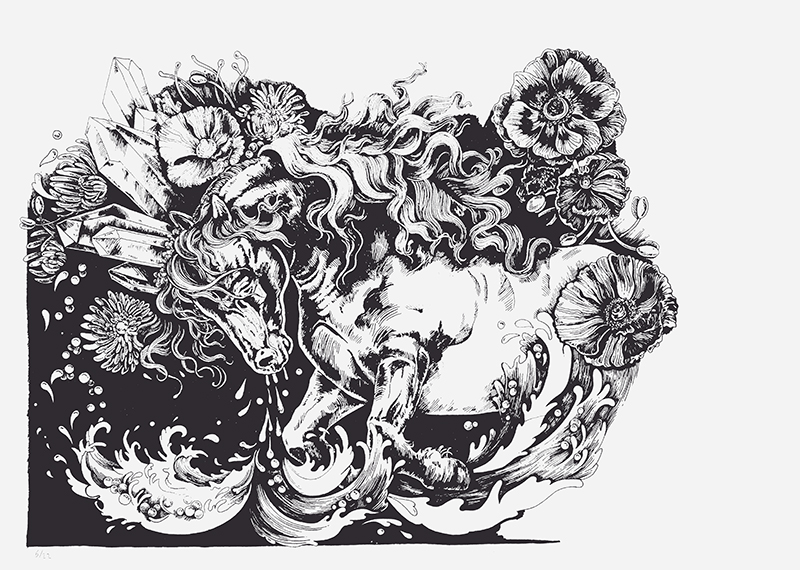
Lumineh ‘Exploding Nature’ Serigraphie signed and numbered, 2024
One of our favorite artists Mine Sübiler aka Lumineh, recently announced that she opened an online shop for her art lovers. And we wanted to share this good news with you. Lumineh is a young artist who has lived in touch with nature since her childhood and transferred this mysterious personality to her drawings. She continues to fascinate us not only with her paintings, but also with her lifestyle, her performances, the diaries she writes and her perspective on life. And don’t miss this unique opportunity to own some pieces of Lumineh! Let her magic take over you, you will feel the hum of the northern forests in your soul as a psychedelic threaphy and feel ready to open a new page in your life.
Lumineh ‘Black Beauty’
CREATURES OF THE NIGHT
In her compositions, which she sometimes works on large scales, the artist invites us to an enchanted forest. Despite her very simple technique, the mystery is everywhere for the watchful eye. In her paintings, it is possible to come across a fox hiding in the bushes at any moment, a snail hovering over mushrooms in a different dimension, and a skull accompanying the wings of a huge butterfly among mysterious plants. In Sübiler’s paintings, time loses its classical meaning and exhibits a ‘Singularity’ that goes back to antiquity along with the place it belongs to. In this endless struggle of black and white magical powers, animals guide us; sometimes this is hidden in the silence of an owl, and sometimes in the gaze of a dog. If we know how to listen, we will see them talking to us.
Yüksek enerjili sahne performanslarıyla dikkatlari üzerine çeken Hipersona’nın temelleri 2018 yılının Nisan ayında Ankara’da atıldı. Önceki gruplarının 2018 yılının başlarında dağılmasından sonra pes etmeden müziğe devam etmek isteyen ikiz kız kardeşler Bilgesu Ünalan (Vokal-Gitar) ve Bengisu Ünalan’ın (Bas gitar-Geri vokal) yeni grup kurma fikirleriyle Hipersona kuruldu. Sonrasında davula Burak Cengiz geçti. Birçok festivalde sahne alan Hipersona, albüm kayıtları için 2018 Temmuz ayında İstanbul’da stüdyoya girdi. Burak Yıldırım prodüktörlüğünde kayıtları tamamlanan şarkıların mix ve mastering’i ünlü prodüktör ve davulcu Alen Konakoğlu tarafından Los Angeles’da yapıldı.
Hipersona – Satellite
Grup, Arpej Yapım etiketi altında yayınladıkları Uyan Artık isimli EP’si ve Geri Dön isimli parçası ile iyi bir çıkış yakaladı. 2019’da Milyon Fest ve 21. Rock Station Fest dahil birçok festivalde ve konserde sahne alan grup, Ağustos ayında İstanbul’da tekrar stüdyoya girdi ve 3 yeni parça kaydetti.
Industrial Workers of the World, Pittsburg 1975 (brochure)
Johan Kugelberg has more than 30 years of experience in the U.S. entertainment and art industries. From 1990 to 1994, he was the General Manager for Atlantic Records subsidiary Matador Records and a marketing and A&R executive for Def American Records from 1994 to 1997. He was the curator of the punk/rock sale at Christie’s in 2008, the first major auction sale devoted to punk. In addition, he has served as a curator and consultant in pop culture fields for auction houses including Christie’s and Phillips de Pury.
As an archivist, he has created comprehensive collections in the fields of punk, hip hop, and counterculture, focusing on printed works, ephemera, photography, and book arts. Currently, he is the owner and curator of Boo-Hooray, an archival processing company and project space in Manhattan.
Over his career Johan has curated more than 100 exhibits and written 42 published books. His book on the early history of hip hop was nominated for the NYPL Books for the Teen Age award 2008, and his book on the Velvet Underground won the Foreword silver medal for music 2010. Beauty Is in the Street was nominated for the London Design Museum 2012 Designs of the Year Awards. Johan has lectured and taught at Yale, Cornell, University of Wisconsin,Emory, UVA, Pace,Concordia University Montreal, Ohio State and MOMA PS1.
Kugelberg’s works have featured at Financial Times, New York Times, The New York Post, London Times, The Independent, The Creative Review, Rolling Stone, Dazed & Confused, Paris Match, and The Guardian.
Industrial Workers of the World, Pittsburg 1975 (brochure)
Johan Kugelberg, ABD müzik ve sanat endüstrilerinde 30 yıldan fazla deneyime sahiptir. 1990’dan 1994’e kadar Ahmet Ertegün’ün kurmuş olduğu Atlantic Records’a bağlı kuruluş Matador Records’un Genel Müdürlüğünü yapmıştır.
2008’de Christie’s’deki ilk punk/rock müzayedesinin küratörlüğünü yapmıştır. Bir arşivci olarak punk, hip hop ve karşı kültür alanlarında basılı eserler, efemera, fotoğraf ve kitap sanatlarına odaklanan kapsamlı koleksiyonlar yaratmaya devam etmektedir. Halen, New York merkezli arşiv ve proje alanı olan Boo-Hooray’ın kurucusu ve küratörüdür.
Kugelberg, kariyeri boyunca 100’den fazla serginin küratörlüğünü yapmış ve 42 kitap yayınlamıştır. Hip-hop’un erken tarihi üzerine yazdığı kitabı 2008 NYPL Books for Teen Age ödülüne aday gösterilmiş ve Velvet Underground hakkındaki kitabı 2010 müzik dalında Foreword Gümüş Madalyası’nı kazanmıştır. Yale, Cornell, VVisconsin Üniversitesi,Emory, UVA, Pace, Concordia Üniversitesi Montreal,Ohio Üniversitesi ve MOMA PS1 gibi önemli eğitim kurumlarında ders vermiştir.
Johan Kugelberg’in çalışmaları Financial Times, New York Times, The New York Post, London Times, The Independent, The Creative Revievv, Rolling Stone, Dazed & Confused, Paris Match, Nouvelle Observateur, The Guardian gibi yayınlarda yer almıştır.
Johan Kugelberg, Jonah Freeman ve Justin Lowe ile birlikte Rastlantısal Orman sergisi ve serginin ardında yatan hikayeyi anlatıyor.
21st Century Book Collecting and Archiving
Johan Kugelberg
As time continues to munch on us like so many sesame bread sticks, the collecting habits of the younger generation affect the dealer habits of the older. It is always difficult to identify value and worth and historical/cultural significance in the tempora and mores that you yourself were a part of, or aware of, or ignorant of, as they co-existed with your particular inability to step twice into the same stream. As you are stepping in, other waters are ever flowing past you, and the ephemera of your time are as ephemeral. You were an accomplice in throwing stuff away, hence making the stuff ephemeral, or for that matter, an accomplice in making certain books of your time rare as you weren’t buying them.
For my generation of collectors (born in the sixties/seventies), the vigor, humors, and passions of the years surrounding our very birth become infused with potency. We feel our skills as players of knock-out ping-pong with Chronos, Ananke, and Mister Kairos is dependent on our ability to recognize and acknowledge significant artifacts of the times and days we are living through, even if we were in diapers at the time. Having just missed out on something due to date of birth, place of birth, or socio-economical-cultural-educational surroundings sure brings added MSG to the consumption of cultural goods.
My generation is able to disperse with the usual stratifications of hi- and lo-brow, driving previous generations nuts as their hard-earned accumulated knowledge was nulled and voided during the second half of the 20th century by a new and financially improved great unwashed, namely their very own sons and daughters. What the greatest generation accomplished (and how they de facto saved our collective asses) was busy-bodily taken for granted by the boomers, whose rhetoric laid claims that what they were building was a new society that was an alternative to the old. With 20/20-hindsight one can pop one’s monocle yelling “Hooey!” as we remember Mark Williams’ words in A Day In The Life:
There was never an alternative society, was there? Because if there was, there would have to be an alternative currency, and alternative property laws and so on. The alternative society was a misnomer: there was an alternative culture, but there was never an alternative society.
Some of us spend a lot of time sifting through the cultural residue of all the frantic activity of the second half of the 20th century. When I first saw punk ephemera at the ABAA Antiquarian Book Show a few years back, I remember thinking that someone was trying to finish sewing up an ermine fur by incorporating some alley cat, but by the time the second thought came around I was going “Great! About time!” It actually fit in pretty well; as Punk started happening-what-45-odd years ago, the timeline of the commencing of commerce certainly coincides not-at-all by coincidence with the similar span in time from the cultural eruption of Dada/Surrealism or, The Beats, or Japanese post-war photography books. Afterwards, the game is on to hardcore selling & collecting & exhibiting and all that…
In this video, Johan Kugelberg, alongside Ian Svenonius, gives us further insight regarding the exhibition Random Forest: A Reading Room
Genç sanatçının anlatısal yeteneği için ‘On parmağında on marifet’ desek yeridir. Resim, fotoğraf ve sinemaya olan tutkusunu müziğiyle harmanlayan bir şarkıcı Ezgi.
2007 yılından beri kendi bestelerini söyleyen ve ses tasarımında kendi melodilerini yaratırken vokallerde synthesizer, akustik piyano ve yarı dijital/ analog enstrümanlara ses kaydı yapan Ezgi İrem, Sorbonne’daki eğitimini tamamladıktan sonra 2016 yılında davet aldığı İstanbul Devlet Tiyatrosu’nda yeteneklerini sergilemeye başlar; iki yıl boyunca ‘Çehov Makinesi’ ve ‘Narnia Günlükleri’nde oyunculuk, Tiyatro 9 tarafından sahneye konulan ‘Eksiği Var Fazlası Yok’ oyununun ise solistliğini yapmıştır. Çeşitli dizi, film ve reklam filmlerinde oyunculuğunu sergileyen Ezgi İrem, halen birçok farklı projede şarkıcı, söz yazarı, oyuncu ve dansçı olarak çalışmaktadır.
Ezgi İrem Mutlu ‘Bir Vars’ 2023
‘She’s a jack of all trades’. Ezgi is one of the modern talents who blends her passion in painting, photography and cinema with her music.
Interdisciplinary artist born in Istanbul. First stepped into music professionalism in a children’s album as a soloist when she was nine years old. In addition to her musical experience, she graduated from Sorbonne Paris 3 Theater department license and master program as a comedian and writer. Since 2007, Ezgi Mutlu has been conducting her own compositions with her own productions, not using samples but creating her own melodies, sound design, and vocals playing synthesizers, acustic piano as well as recording sound on half digital and digital softwares. The originality and natural way of art is the most important expression in her life journey. She currently works as a singer, songwriter, actress, and dancer in lots of different projects.
Haziran ayında Fête de la Musique’in 40. yıl dönümüEdith Piaf, France Gall, Gainsbourg, Boris Vian, Charles Aznavour ve Enrico Macias’ın Fransızca şarkılarını seslendiren Ezgi İrem Mutlu, salgın döneminde de boş durmamış. Pandemi nedeniyle çevrimiçi olarak yapılan Akbank Kısa Film Yarışması’nda jüri, “Birbirinden farklı sinemasal anlatıların gücünü başarıyla harmanlayarak sadece ama sadece bugüne ait bir film ortaya koyması sebebiyle” değerlendirmesini yaparak 429 eser arasından Ezgi İrem Mutlu’nun “Darağacında Eldivenler” adlı kısa film çalışmasını ödüle layık bulmuştur.
Şu sıralar da “Baraka” adlı yabancı bir filmde savaş muhabiri rolünü canlandırıyorEzgi İrem. Böylesi eşsiz bir sesi ve yeteneği izleme fırsatını kaçırmayın derim. Bizden söylemesi.
From Commodore 64s smuggled across the Iron Curtain to cracked games on cassette tapes sold at flea markets, floppy disk swapping via postal mail, hacked phone booths connected to US BBSes, and copy parties packed to capacity, Stamps Back tells the story of how teenagers in Hungary ignited a computing revolution in the 1980s with illegally copied video games from the West, and began the Hungarian demoscene.
Stamps Back, the 5th episode of the Moleman documentary series, is a 144-minute film about the golden age of Hungarian video gaming and the formation of the Hungarian demoscene in the 80s and 90s, which you can watch for free on YouTube. More than 76 hours of interviews were conducted for the film, which is a true document of the Hungarian home computer life in the 80s and 90s. You can now get this 76-hour material with English subtitles together with the film in a special Blu-Ray edition + downloadable image file format. Furthermore, as the second part of Moleman, which shows the state of the demoscene in 2012, can be considered a sequel to the Stamps Back, we have also added this film to the special edition, which now represents 3 50Gb Blu-Ray discs full of video game and demoscene content. If we reach the stretch goal, a 4th disc will be added to the edition, which will contain a selection of the best Hungarian intros and demos of the past 40 years in video format.



















 LÖPÇÜK