
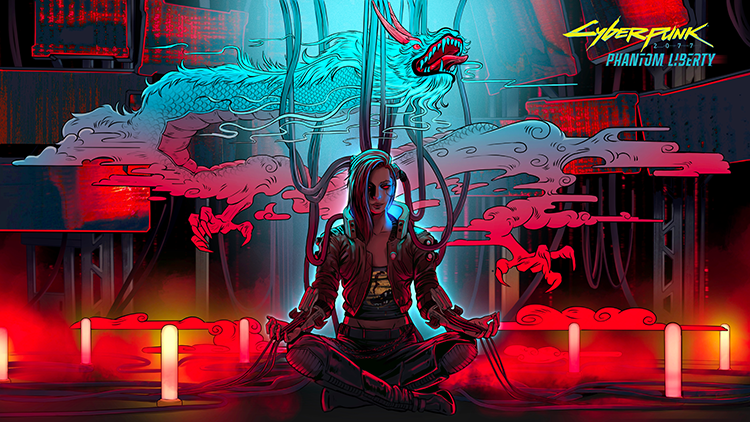
“And modern war is a cyborg orgy, coded by C3I, command-control-communication-intelligence, an $84 billion item in 1984’s US defence budget.”
Science, Technology, and Socialist-Feminism in the
Late Twentieth Century
Donna Haraway, 1985
A Cyborg Manifesto _ Part 1
This essay is an effort to build an ironic political myth faithful to feminism, socialism, and materialism. Perhaps more faithful as blasphemy is faithful, than as reverent worship and identification. Blasphemy has always seemed to require taking things very seriously. I know no better stance to adopt from within the secular-religious, evangelical traditions of United States politics, including the politics of socialist feminism. Blasphemy protects one from the moral majority within, while still insisting on the need for community. Blasphemy is not apostasy. Irony is about contradictions that do not resolve into larger wholes, even dialectically, about the tension of holding incompatible things together because both or all are necessary and true. Irony is about humour and serious play. It is also a rhetorical strategy and a political method, one I would like to see more honoured within socialist-feminism. At the centre of my ironic faith, my blasphemy, is the image of the cyborg.
A cyborg is a cybernetic organism, a hybrid of machine and organism, a creature of social reality as well as a creature of fiction. Social reality is lived social relations, our most important political construction, a world-changing fiction. The international women’s movements have constructed ‘women’s experience’, as well as uncovered or discovered this crucial collective object. This experience is a fiction and fact of the most crucial, political kind. Liberation rests on the construction of the consciousness, the imaginative apprehension, of oppression, and so of possibility. The cyborg is a matter of fiction and lived experience that changes what counts as women’s experience in the late twentieth century. This is a struggle over life and death, but the boundary between science fiction and social reality is an optical illusion.
Contemporary science fiction is full of cyborgs—creatures simultaneously animal and machine, who populate worlds ambiguously natural and crafted. Modern medicine is also full of cyborgs, of couplings between organism and machine, each conceived as coded devices, in an intimacy and with a power that was not generated in the history of sexuality. Cyborg ‘sex’ restores some of the lovely replicative baroque of ferns and invertebrates (such nice organic prophylactics against heterosexism). Cyborg replication is uncoupled from organic reproduction. Modern production seems like a dream of cyborg colonization work, a dream that makes the nightmare of Taylorism seem idyllic. And modern war is a cyborg orgy, coded by C3I, command-control-communication-intelligence, an $84 billion item in 1984’s US defence budget. I am making an argument for the cyborg as a fiction mapping our social and bodily reality and as an imaginative resource suggesting some very fruitful couplings. Michael Foucault’s biopolitics is a flaccid premonition of cyborg politics, a very open field.
By the late twentieth century, our time, a mythic time, we are all chimeras, theorized and fabricated hybrids of machine and organism; in short, we are cyborgs. This cyborg is our ontology; it gives us our politics. The cyborg is a condensed image of both imagination and material reality, the two joined centres structuring any possibility of historical transformation. In the traditions of ‘Western’ science and politics—the tradition of racist, male-dominant capitalism; the tradition of progress; the tradition of the appropriation of nature as resource for the productions of culture; the tradition of reproduction of the self from the reflections of the other—the relation between organism and machine has been a border war. The stakes in the border war have been the territories of production, reproduction, and imagination. This chapter is an argument for pleasure in the confusion of boundaries and for responsibility in their construction. It is also an effort to contribute to socialistfeminist culture and theory in a postmodernist, non-naturalist mode and in the utopian tradition of imagining a world without gender, which is perhaps a world without genesis, but maybe also a world without end. The cyborg incarnation is outside salvation history. Nor does it mark time on an oedipal calendar, attempting to heal the terrible cleavages of gender in an oral symbiotic utopia or post-oedipal apocalypse. As Zoe Sofoulis argues in her unpublished manuscript on Jacques Lacan, Melanie Klein, and nuclear culture, Lacklein, the most terrible and perhaps the most promising monsters in cyborg worlds are embodied in non-oedipal narratives with a different logic of repression, which we need to understand for our survival.1
The cyborg is a creature in a post-gender world; it has no truck with bisexuality, pre-oedipal symbiosis,unalienated labour, or other seductions to organic wholeness through a final appropriation of all the powers of the parts into a higher unity. In a sense, the cyborg has no origin story in the Western sense – a ‘final’ irony since the cyborg is also the awful apocalyptic telos of the ‘West’s’ escalating dominations of abstract individuation, an ultimate self—untied at last from all dependency, a man in space. An origin story in the ‘Western’, humanist sense depends on the myth of original unity, fullness, bliss and terror, represented by the phallic mother from whom all humans must separate, the task of individual development and of history, the twin potent myths inscribed most powerfully for us in psychoanalysis and Marxism. Hilary Klein has argued that both Marxism and psychoanalysis, in their concepts of labour and of individuation and gender formation, depend on the plot of original unity out of which difference must be produced and enlisted in a drama of escalating domination of woman/nature.2 The cyborg skips the step of original unity, of identification with nature in the Western sense. This is its illegitimate promise that might lead to subversion of its teleology as Star Wars.
The cyborg is resolutely committed to partiality, irony, intimacy, and perversity. It is oppositional, utopian, and completely without innocence. No longer structured by the polarity of public and private, the cyborg defines a technological polls based partly on a revolution of social relations in the oikos, the household. Nature and culture are reworked; the one can no longer be the resource for appropriation or incorporation by the other. The relationships for forming wholes from parts, including those of polarity and hierarchical domination, are at issue in the cyborg world. Unlike the hopes of Frankenstein’s monster, the cyborg does not expect its father to save it through a restoration of the garden; that is, through the fabrication of a heterosexual mate, through its completion in a finished whole, a city and cosmos. The cyborg does not dream of community on the model of the organic family, this time without the oedipal project. The cyborg would not recognize the Garden of Eden; it is not made of mud and cannot dream of returning to dust. Perhaps that is why I want to see if cyborgs can subvert the apocalypse of returning to nuclear dust in the manic compulsion to name the Enemy. Cyborgs are not reverent; they do not re-member the cosmos. They are wary of holism, but needy for connection—they seem to have a natural feel for united front politics, but without the vanguard party. The main trouble with cyborgs, of course, is that they are the illegitimate offspring of militarism and patriarchal capitalism, not to mention state socialism. But illegitimate offspring are often exceedingly unfaithful to their origins. Their fathers, after all, are inessential.
I will return to the science fiction of cyborgs at the end of this chapter, but now I want to signal three crucial boundary breakdowns that make the following political-fictional (political-scientific) analysis possible. By the late twentieth century in United States scientific culture, the boundary between human and animal is thoroughly breached. The last beachheads of uniqueness have been polluted if not turned into amusement parks—language tool use, social behaviour, mental events, nothing really convincingly settles the separation of human and animal. And many people no longer feel the need for such a separation; indeed, many branches of feminist culture affirm the pleasure of connection of human and other living creatures. Movements for animal rights are not irrational denials of human uniqueness; they are a clear-sighted recognition of connection across the discredited breach of nature and culture. Biology and evolutionary theory over the last two centuries have simultaneously produced modern organisms as objects of knowledge and reduced the line between humans and animals to a faint trace re-etched in ideological struggle or professional disputes between life and social science. Within this framework, teaching modern Christian creationism should be fought as a form of child abuse.
Biological-determinist ideology is only one position opened up in scientific culture for arguing the meanings of human animality. There is much room for radical political people to contest the meanings of the breached boundary.3 The cyborg appears in myth precisely where the boundary between human and animal is transgressed. Far from signaling a walling off of people from other living beings, cyborgs signal disturbingly and pleasurably tight coupling. Bestiality has a new status in this cycle of marriage exchange.

Late twentieth-century machines have made thoroughly ambiguous the difference between natural and artificial, mind and body, self-developing and externally designed, and many other distinctions that used to apply to organisms and machines. Our machines are disturbingly lively, and we ourselves frighteningly inert.
The second leaky distinction is between animal-human (organism) and machine. Pre-cybernetic machines could be haunted; there was always the spectre of the ghost in the machine. This dualism structured the dialogue between materialism and idealism that was settled by a dialectical progeny, called spirit or history, according to taste. But basically machines were not self-moving, self-designing, autonomous. They could not achieve man’s dream, only mock it. They were not man, an author to himself, but only a caricature of that masculinist reproductive dream. To think they were otherwise was paranoid. Now we are not so sure. Late twentieth-century machines have made thoroughly ambiguous the difference between natural and artificial, mind and body, self-developing and externally designed, and many other distinctions that used to apply to organisms and machines. Our machines are disturbingly lively, and we ourselves frighteningly inert.

Who cyborgs will be is a radical question; the answers are a matter of survival. Both chimpanzees and artefacts have politics, so why shouldn’t we?
Technological determination is only one ideological space opened up by the reconceptions of machine and organism as coded texts through which we engage in the play of writing and reading the world.4 ’Textualization’ of everything in post-structuralist, postmodernist theory has been damned by Marxists and socialist feminists for its utopian disregard for the lived relations of domination that ground the ‘play’ of arbitrary reading.5 It is certainly true that postmodernist strategies, like my cyborg myth, subvert myriad organic wholes (for example, the poem, the primitive culture, the biological organism). In short, the certainty of what counts as nature—a source of insight and promise of innocence—is undermined, probably fatally. The transcendent authorization of interpretation is lost, and with it the ontology grounding ‘Western’ epistemology. But the alternative is not cynicism or faithlessness, that is, some version of abstract existence, like the accounts of technological determinism destroying ‘man’ by the ‘machine’ or ‘meaningful political action’ by the ‘text’. Who cyborgs will be is a radical question; the answers are a matter of survival. Both chimpanzees and artefacts have politics, so why shouldn’t we (de Waal, 1982; Winner, 1980)?
Modern machines are quintessentially microelectronic devices: they are everywhere and they are invisible. Modern machinery is an irreverent upstart god, mocking the Father’s ubiquity and spirituality.
The third distinction is a subset of the second: the boundary between physical and non-physical is very imprecise for us. Pop physics books on the consequences of quantum theory and the indeterminacy principle are a kind of popular scientific equivalent to Harlequin romances6 as a marker of radical change in American white heterosexuality: they get it wrong, but they are on the right subject. Modern machines are quintessentially microelectronic devices: they are everywhere and they are invisible. Modern machinery is an irreverent upstart god, mocking the Father’s ubiquity and spirituality. The silicon chip is a surface for writing; it is etched in molecular scales disturbed only by atomic noise, the ultimate interference for nuclear scores. Writing, power, and technology are old partners in Western stories of the origin of civilization, but miniaturization has changed our experience of mechanism. Miniaturization has turned out to be about power; small is not so much beautiful as pre-eminently dangerous, as in cruise missiles. Contrast the TV sets of the 1950s or the news cameras of the 1970s with the TV wrist bands or hand-sized video cameras now advertised. Our best machines are made of sunshine; they are all light and clean because they are nothing but signals, electromagnetic waves, a section of a spectrum, and these machines are eminently portable, mobile—a matter of immense human pain in Detroit and Singapore. People are nowhere near so fluid, being both material and opaque. Cyborgs are ether, quintessence.
There might be a cyborg Alice taking account of these new dimensions. Ironically, it might be the unnatural cyborg women making chips in Asia and spiral dancing in Santa Rita jail whose constructed unities will guide effective oppositional strategies.
The ubiquity and invisibility of cyborgs is precisely why these sunshine-belt machines are so deadly. They are as hard to see politically as materially. They are about consciousness— or its simulation.7 They are floating signifiers moving in pickup trucks across Europe, blocked more effectively by the witch-weavings of the displaced and so unnatural Greenham women, who read the cyborg webs of power so very well, than by the militant labour of older masculinist politics, whose natural constituency needs defence jobs. Ultimately the ‘hardest’ science is about the realm of greatest boundary confusion, the realm of pure number, pure spirit, C3I, cryptography, and the preservation of potent secrets. The new machines are so clean and light. Their engineers are sun-worshippers mediating a new scientific revolution associated with the night dream of post-industrial society. The diseases evoked by these clean machines are ‘no more’ than the minuscule coding changes of an antigen in the immune system, ‘no more’ than the experience of stress. The nimble fingers of ‘Oriental’ women, the old fascination of little Anglo-Saxon Victorian girls with doll’s houses, women’s enforced attention to the small take on quite new dimensions in this world. There might be a cyborg Alice taking account of these new dimensions. Ironically, it might be the unnatural cyborg women making chips in Asia and spiral dancing in Santa Rita jail8 whose constructed unities will guide effective oppositional strategies.
So my cyborg myth is about transgressed boundaries, potent fusions, and dangerous possibilities which progressive people might explore as one part of needed political work. One of my premises is that most American socialists and feminists see deepened dualisms of mind and body, animal and machine, idealism and materialism in the social practices, symbolic formulations, and physical artefacts associated with ‘high technology’ and scientific culture. From One-Dimensional-Man (Marcuse, 1964) to The Death of Nature (Merchant, 1980), the analytic resources developed by progressives have insisted on the necessary domination of technics and recalled us to an imagined organic body to integrate our resistance. Another of my premises is that the need for unity of people trying to resist world-wide intensification of domination has never been more acute. But a slightly perverse shift of perspective might better enable us to contest for meanings, as well as for other forms of power and pleasure in technologically mediated societies.

From one perspective, a cyborg world is about the final imposition of a grid of control on the planet, about the final abstraction embodied in a Star Wars apocalypse waged in the name of defence, about the final appropriation of women’s bodies in a masculinist orgy of war (Sofia, 1984). From another perspective, a cyborg world might be about lived social and bodily realities in which people are not afraid of their joint kinship with animals and machines, not afraid of permanently partial identities and contradictory standpoints. The political struggle is to see from both perspectives at once because each reveals both dominations and possibilities unimaginable from the other vantage point. Single vision produces worse illusions than double vision or many-headed monsters. Cyborg unities are monstrous and illegitimate; in our present political circumstances, we could hardly hope for more potent myths for resistance and recoupling. I like to imagine LAG, the Livermore Action Group, as a kind of cyborg society, dedicated to realistically converting the laboratories that most fiercely embody and spew out the tools of technological apocalypse, and committed to building a political form that actually manages to hold together witches, engineers, elders, perverts, Christians, mothers, and Leninists long enough to disarm the state. Fission Impossible is the name of the affinity group in my town. (Affinity: related not by blood but by choice, the appeal of one chemical nuclear group for another, avidly.)9
- See Zoe Sofoulis (n.d.). ↩︎
- See Hilary Klein 1989. ↩︎
- Useful references to left and/or feminist radical science movements
and theory and to biological/biotechnical issues include Bleier 1984, 1986;
Harding 1986; Fausto-Sterling 1985; Gould 1981; Hubbard et al. 1979; Keller
1985; Lewontin et al. 1984. See also Radical Science Journal (which became Science as Culture in 1987): 26 Freegrove Road, London N7 9RQ; and Science
for the People, 897 Main Street, Cambridge, Massachusetts 02139. ↩︎ - Starting points for left and/or feminist approaches to technology and
politics include Cowan 1983, 1986; Rothschild 1983; Traweek 1988; Young
and Levidow 1981, 1985; Weisenbaum 1976; Winner 1977, 1986; Zimmerman
1983; Athanasiou 1987; Cohn 1987a, 1987b; Winograd and Flores 1986; Edwards
Global Electronics Newsletter, 867 West Dana Street, #204, Mountain
View, California 94041; Processed World, 55 Sutter Street, San Francisco,
California 94104; ISIS, Women’s International Information and Communication
Service, P.O. Box 50 (Cornavin), 1211 Geneva 2, Switzerland; and Via
Santa Maria Dell’Anima 30, 00186 Rome, Italy. Fundamental approaches to modern social studies of science that do not continue the liberal mystification
that all started with Thomas Kuhn include Knorr-Cetina 1981; Knorr-Cetina
and Mulkay 1983; Latour and Woolgar 1979; Young 1979. The 1984 Directory
of the Network for the Ethnographic Study of Science, Technology, and Organization
lists a wide range of people and projects crucial to better radical
analysis, available from NESSTO, P.O. Box 11442, Stanford, California 94305. ↩︎ - A provocative, comprehensive argument about the politics and theories
of “postmodernism” is made by Fredric Jameson (1984), who argues
that postmodernism is not an option, a style among others, but a cultural
dominant requiring radical reinvention of left politics from within; there
is no longer any place from without that gives meaning to the comforting
fiction of critical distance. Jameson also makes clear why one cannot be
for or against postmodernism, an essentially moralist move. My position
is that feminists (and others) need continuous cultural reinvention, most
modernist critique, and historical materialism; only a cyborg would have
a chance. The old dominations of white capitalist patriarchy seem nostalgically
innocent now: they normalized heterogeneity, into man and woman,
white and black, for example. “Advanced Capitalism” and postmodernism
release heterogeneity without a norm, and we are flattened, without subjectivity,
which requires depth, even unfriendly and drowning depths. It
is time to write The Death of the Clinic. The clinic’s methods required bodies
and works; we have texts and surfaces. Our dominations don’t work
by medicalization and normalization anymore; they work by networking,
communications redesign, stress management. Normalization gives way to
automation, utter redundancy. Michel Foucault’s Birth of the Clinic (1963),
History of Sexuality (1976), and Discipline and Punish (1975) name a form of
power at its moment of implosion. The discourse of biopolitics gives way to
technobabble, the language of the spliced substantive; no noun is left whole
by the multinationals. These are their names, listed from one issue of Science:
Tech-Knowledge, Genentech, Allergen, Hybritech, Compupro, Genen-cor,
Syntex, Allelix, Agrigenetics Corp., Syntro, Codon, Repligen, Micro/Angelo
from Scion Corp., Percom Data, Inter Systems, Cyborg Corp., Statcom Corp.,
Intertec. If we are imprisoned by language, then escape from that prisonhouse
requires language poets, a kind of cultural restriction enzyme to cut
the code; cyborg heteroglossia is one form of radical cultural politics. For cyborg
poetry see Perloff 1984; Fraser 1984. For feminist modernist/postmodernist cyborg writing, see HOW(ever), 971 Corbett Avenue, San Francisco,
California 94131 ↩︎ - The U.S. equivalent of Mills and Boon. ↩︎
- Baudrillard 1983 and Jameson 1984 (page 66) point out that Plato’s
definition of the simulacrum is the copy for which there is no original, i.e.,
the world of advanced capitalism, of pure exchange. See Discourse 9 (Spring/
Summer 1987) for a special issue on technology (cybernetics, ecology, and
the postmodern imagination). ↩︎ - A practice at once both spiritual and political that linked guards andarrested
antinuclear demonstrators in the Alameda County Jail in California
in the early 1980s. ↩︎ - For ethnographic accounts and political evaluations, see Epstein1993;
Sturgeon 1986. Without explicit irony, adopting the spaceship earth/whole
earth logo of the planet photographed from space, set off by the slogan “Love
Your Mother,” the May 1987 Mothers and Others Day action at the nuclear
weapons testing facility in Nevada nonetheless took account of the tragic
contradictions of views of the earth. Demonstrators applied for official permits
to be on the land from officers of the Western Shoshone tribe, whose territory
was invaded by the U.S. government when it built the nuclear weapons
test ground in the 1950s. Arrested for trespassing, the demonstrators argued
that the police and weapons facility personnel, without authorization from
the proper officials, were the trespassers. One affinity group at the women’s
action called themselves the Surrogate Others; and in solidarity with the
creatures forced to tunnel in the same ground with the bomb, they enacted a
cyborgian emergence from the constructed body of a large, nonheterosexual
desert worm. I was a member of that affinity group. ↩︎

Donna Haraway



 LÖPÇÜK