Müjde: Vaat Edilmiş Hüzün, Yarım Kalmış İnsanlık

Alphan Eşeli ‘Müjde’ 2022, Mubi

“Müjde”, kırmızı çizgilere basan fakat ayağına bulaşan boyayı her iki tarafa taşıyan bir film ve müjde vermekten ziyade hüzün vaat ediyor…

Haydar Ali Albayrak

Alphan Eşeli’nin tam da fırtınaların koptuğu bir ortamda yayınlanan orta metraj filmi “Müjde”, bir süredir MUBI seçkisinde yer alıyor. Bir göçmen erkek ile buruk bir kadının aşkını işleyen film, Suriyelilere tepkinin nefret düzeyine ulaşıp göçmen politikasının “bekle gör” noktasına terk edildiği, etnik çatışma fayında sürekli enerji biriktiği bir dönemde insancıl bir yaklaşım sunma iddiasında…

Evinden Yurdundan Edilenler Buluşursa

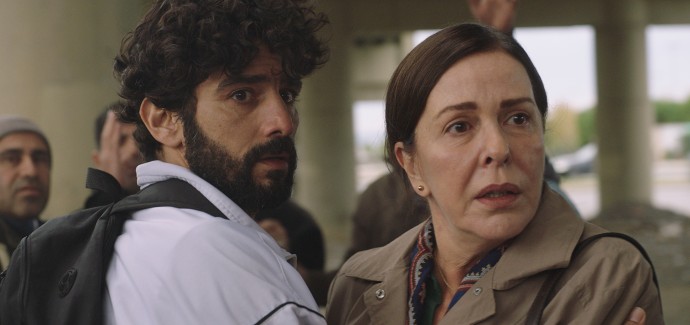
Filmi değerlendirmeye geçmeden konusunu kısaca anmakta yarar var. Açgözlü bir müteahhidin evine talip olduğu Müjde (Lale Mansur), oğlu Okan’dan uzakta, bir başına yaşamaktadır. Anlaşmalar yapılıp evi boşaltma vakti geldiğinde nakliye işini verdiği Mustafa’yla birlikte Suriyeli amele pazarına giderek işçi seçen Müjde, içlerinde İngilizce bilen Sayyid’i de alarak eve döner. İletişime aç Müjde ile Sayyid (Salim Kechiouche) ortak bir noktada buluşup kısa sürede yakınlaşırlar. 

Taşınma esnasında Okan’ın arkadaşı Engin, işçilerin ensesinde boza pişirirken bir yandan ayrımcı ve aşağılayıcı davranışlarıyla Müjde’nin vicdanını uyandırmıştır. Müjde ile Sayyid arasında filizlenen sevgiyi ise nice engel ve yanlış anlamayı takiben bir yıkım beklemektedir.

Orta Metraja Mesafemiz

“Müjde”yi yazmaya filmin süresinden başlamak istiyorum çünkü öykünün işlenişine dair ilk kırılmalar bu meseleye ilişkin. Öncelikle orta metraja seyircimizin alışkın olmadığını söylemeliyiz. Kısa ve uzun metrajlar kendi klasmanında değişen süreleriyle biçimsel bir standart oluşturmuşken “Müjde”de karşımıza çıkan 48 dakikalık öykü aktarımını ancak 90’larda izlediğimiz televizyon dizilerinden hatırlıyoruz. 2000’ler ile birlikte televizyona hâkim yayın anlayışı, anlatıları sündüre sündüre ilkin 90 dakikaya, daha sonra 150 dakikalara kadar taşıdı. Dolayısıyla 48 dakikayı günümüzde sadece çevrimiçi platformların ideal bölüm süresi olarak izliyoruz. Ancak bu 48 dakikanın platform matematiğine uygun tasarlandığı hesaba katılırsa başlı-sonlu bir öykülemeye aykırı kaçıyor.

“Müjde”nin ilk ve bana kalırsa en önemli handikabı hassas konusundan ziyade süresinin seyircimizce yadırganması. Hâlbuki Eşeli, filmin çatışmasını yöneterek klasik anlatıyı, ölçüsünde tutturmayı başarmış. Çıkış noktası (kentsel dönüşüm), buluşma/rastlaşma (Müjde ile Sayyid’in bir araya gelişlerinin yaşamın olağan seyrinde sırıtmayacak bir düzlemde verilmesi), zaman atlaması (kafede Suriyeli düşmanlığının boca edildiği masanın peşi sıra karşılaştığımız “çıplaklık”), pamuk ipliğine bağlı saadeti bozan yolculuk fikri ve final… Elbette bazı bölümlerin hızlı geçildiği söylenebilir. Çiftin arasında sevginin nasıl yeşerdiğini gözlemleyemiyoruz. Pansuman sahnesi var ama yetersiz… Yine Sayyid evden ayrıldıktan sonra karşımıza çıkan kısım çok açıklayıcı değil. Buna karşın 80 dakikayı rahat görebilecek bir filmin yarım saat kadar hafifletilmesi teknik bir inceliğe işaret etmekte…

Amele Pazarından Kafeye Filmin Artı ve Eksileri

Artık filmin politik planına ve sanatsal yaklaşımına değinebiliriz ki anlatıyı büyük ölçüde vermek istediği mesaj yönlendirmekte. Bu bağlamda “Müjde”, propaganda niyeti taşımasa dahi günün sonunda fazla köşeli bir film olarak dikkat çekiyor. Bu köşeler temele döşenmiş naif aşk öyküsünün inandırıcılığını zedelerken aynı zamanda eleştiri oklarına davetiye çıkarıyor. Politik doğrultunun filme olumsuz yansıdığı, dinamizmi kırdığı sahne şüphesiz kafe sahnesi… Müjde ile arkadaşları bir masada altın gününe benzer bir toplaşma düzenlediklerinde bolca kek böreğin yanı sıra bir önyargı sağanağına yakalanıyoruz ve dedikodu basitliğinde anılacak türden salvolar yerini nefret suçuna bırakıyor. Şermin (Banu Fotocan) başta olmak üzere tüm kadınlar ağız birliği etmişçesine yabancı düşmanlığını köpürtüyorlar. Bu arada bu kadınlar gerçekten varlar ve yaygınlar, abartılmış falan değiller. Filmi izledikten sonra bir toplu ulaşım aracında kahramanı tam da bu kadınlardan olan bir olaya rastladım. Orta yaşlı kadın eşiyle birlikte otobüsün arkasına kadar geldi ve iki genç erkeğin neşeli bir biçimde oturduğunu görünce ne eksik ne fazla şu cümleleri sarf etti: “Bu Suriyelilerden bıktık, kendi otobüsümüzde ayakta kalıyoruz. Yayıla yayıla oturmuşlar!” Daha sonra gençlerin Suriyeli olmadığını öğrendik, kadın ise çirkefliğini sürdürdü tabii… Bir yandan gençlere sataşmayı ihmal etmezken diğer yandan Suriyelilerin ülkeyi mahvettiği yönündeki nutkunu da kesmedi.

Filme dönersek, demin andığımız sahneden devam edelim. Müjde, kendi “özel” durumundan ve elbette vicdanından dolayı önyargı yağmuruna karşı çıkışlar sergileyip “madem ülkeyi bu kadar seviyorsunuz, oğlunuzu neden Avrupa’ya gönderdiniz” gibisinden itirazlar getiriyor. İşaret ettiği ikiyüzlülük son derece geçerli ve yaygın fakat Müjde’nin yaşadığı ilişki itibariyle duygular biraz daha öne çıkarılamaz mıydı? Soruyu daha temiz sorarsak: 60’ından sonra yeniden aşkı ve ilgiyi tadan bu kadının yaşadığı tedirginlikten argümanlarla desteklenmiş bir politik söylem nasıl doğuyor? Üstelik sezaryen de değil bildiğimiz, sağlıklı bir doğum! Yahut bu noktada Müjde’nin de çoğunluk gibi düşünmesini ve hatta davranmasını, sessiz kalıp sinmesini, sinmeyecekse de duygusallığa sıkışmasını bekliyoruz. Belki Müjde aklıselimin ve adaletin sesi olarak sadece ırkçıların değil ırkçı olmayan fakat “ev sahipliği” hakkından da caymayan “demokrat” kesimlerin ikilemini de teşhir ediyor. Belki biz fazla niyet okuyor, eseri fazla didikliyoruz ancak her halükarda gündelik yaşamın gerilimiyle filmden alacağımız mesajı filtrelediğimiz söylenebilir.


Ödüllü yönetmen Alphan Eşeli’nin imzasını taşıyan kısa film Müjde, 16 Mart’ta uluslararası film platformu MUBI’de global lansmanını yaparak dünya çapında ilk kez izleyicilerle buluştu. Lale Mansur ile Alphan Eşeli, ‘Müjde’yi ve yeni projelerini T24’te Muammer Brav’a anlattı.

Abasız ve Amasız Bir Göçmen Politikası Mümkün Mü?

Bu noktada teknik bakımdan sınıfı geçen ve geçişleri başarıyla sağlayan filmin belli bir politik plana sadık kalarak başka bir deyişle “çok taraflı” bakarak duru anlatım fırsatını teptiği görülüyor. Müjde’nin yoğurduğu malzeme ele avuca sığmaz türden… Bu malzeme bir yanıyla göçmenlerin durumunu tartışmaya açarken diğer yandan onlara yaklaşımı da gözler önüne sermekte… Irkçılık dediğimiz şey ise o sert görüntüsü ardında çağımıza ayak uyduran müthiş bir esneklik barındırıyor. “Bunu söylemek/yapmak ırkçılıksa ben de ırkçıyım” gibi çözüm üretmektense sorunu büyütmeye yarayan basiretsiz önermelerin yanı sıra “göçmen politikasını eleştirmek de ırkçılık (mı) oldu” utangaç şemsiyesi altına girilerek pek konforlu bir ırkçılık (elbet kendine kondurmadan hatta çoğu zaman farkına dahi varılmadan) yapılabiliyor. “Müjde” bu çatışmaya şüphesiz malzeme vermiş, bu yangına benzin sıçratmış. Fakat filme yöneltilen “tek taraflılık” eleştirisi haksız sayılmaz. “Müjde”ye, siyasi söylemi öne çıkan, siyasi rüzgâra eşlik eden işlerin ısmarlama olduğuna dair yargıyla yaklaşmayıp eseri iyi niyetli kabul ediyorsak “meseleyi tüm cepheleriyle ele alsa daha iyi olmaz mıydı” sorusunu sormamız gerekiyor. Süresi buna engel değil, bir film neticede tercihleri üzerinde yükselir. İşçi pazarı sahnesi ne kadar gerçekçi ve etkileyici ise kafe sahnesinin bir o kadar yavan kaldığını görüyoruz. Bu da şaşırtıcı değil çünkü pazar sahnesi Suriyelilerin yoksul kesiminin sefaletini, uğradıkları sömürüyü açıkça ortaya koyuyor. Kralın çıplak kaldığı bir sahne bu. “Suriyeliler asgari ücretten fazla nakdi yardım alıyor” iddiasını çürüten, en azından doğru dürüst destek görmeyen, insani koşullardan uzak yüz binlerce Suriyeli olduğunu gözümüze sokan bir sahne…

Nedir ki kafe sahnesinde kadınların doludizgin ithamları alabildiğine basit (sonuca dönük) duruyor. Üstüne bir de kolaya kaçılıp televizyon yorumlarından faydalanılınca göçmen düşmanı çizgi alabildiğine kaba hatlarla, bir anlamda toplumsal dinamikler göz ardı edilerek çekiliyor. Dahası erdiğimiz sonucun bir evveli yok. O finali, kafe sahnesinde, Engin’in çiğ davranışlarında, televizyon programında ve toplamında sistematik bir ötekileştirme ile temellendiren Eşeli’nin filminde açıklamadan ziyade hükme yönelerek peşin yargıya peşin yargı cevabı veren, sahaya sırt dönen bir yaklaşım seziliyor. Sayyid tutuklanıyor, adaletsizliğe uğruyor. Göçmenlerin durumu olağan şüpheliyi geçmiş, her suçun suçlusu’na dönüşmüş haldeler. Yoksul Suriyeliler abasız olmalarına karşın “tepesine binilecekler” listesinde en baştalar, biliyoruz ancak “Müjde”de bu gerçek soyut kalıyor ve haksız suçlamalarla pekiştirilen sokaktaki (ilişkilerin, hayatın içindeki) düşmanlık sokak dışında bir yerden, kafe sahnesinde görece “durumu iyi” kadınlardan, yine televizyon ekranlarında siyasetçilerin ağzından gerekçeleniyor. Göçmenlere bakış daha özenli işlenebilirdi.

Filmin En Geç Politik Sahnesi: Sayyid’in Yüzünde Yanıp Sönen Çakar

Alphan Eşeli, film boyunca toplumu ve toplumu manipüle eden siyasetin aygıtlarını elden geçirirken devlete nihayet finalde geliniyor. Sayyid gözaltına alınıyor, polis otosunda, yüzünde yanıp sönen ışıklar, hüzünle oturuyor. Bu sahnede artık tastamam devleti görüyoruz. İlginçtir; Yeşilçam’da da devlet çoğun finalde zuhur eder, haksızlıkları ortadan kaldıran ve suçluyu yakalayan bir pozisyona yerleşir. Eşeli’nin filmindeyse zamanlama tutsa dahi bu kez tam tersi bir rolde, haksızlığı tamamlayan, bir bakıma “alınmış günahı” yargıya taşıyan, “vebale giren” konumda… Siyasetin göçmen politikası üzerinde belirleyici şiddetini finale saklamak (bir kez daha) tercih olmakla beraber filmdeki insani iddiayı da hafifletmiş. Zira bir ülkede mülteci dramı yaşanıyorsa toplumdaki yaklaşımın kökenini evvela kurumsal düzeyde, diğer bir deyişle dikenli telleri diken ellerde aramak gerekiyor. Dikenleri batıranlar, ötekileştirme ve nefreti yayanlar toplumun çeşitli kesimleri olsa bile o kazıkları çakıp o telleri çekenlerin aslan payı yadsınamaz. “Müjde”, ilkin dikenli tellere takılanları öykülemiş, sonrasında telleri göstermiş. Hal böyle olunca politik planının azizliğine uğramış.

Karakterlerine baktığımızda ise Müjde’nin Türk kahvesi ve sigara içen, kek börek yiyen “yurdum orta sınıf kadını” kompozisyonunu yalın hatta bir yönüyle şematik aktaran filmde Sayyid’in kökü dışarıda tedirginliğini aynı sadelikte izlemiyoruz. Müjde alabildiğine seyrelirken Sayyid, karakteri gereği kendini açmaktan sakınıyor. Bu durum oyunculuklara da yansımış. Mansur ile Kechiouche’nin performansları ilişkiyi, tamamlayan değil, aksine iten bir noktaya taşımış ki bu durum yönetmenin finaline hizmet ediyor doğrusu.

“Müjde” için sözü noktalarken başarılı bir orta metraj olduğunu yinelemeli, anlatısı yönünden ise siyaset ve mesaj verme baskısı altında yalpaladığını belirtmeliyiz. Kırmızı çizgilere basan fakat ayağına bulaşan boyayı her iki tarafa taşıyan bir film “Müjde” ve müjde vermekten ziyade hüzün vaat ediyor, insanın çatışmalar, sürgünlerle yarım kalmış öyküsünü sessiz sakin anlatıyor. Oysa hayat çok daha hızlı ve kara haberlere gebe…

Haydar Ali Albayrak’ın Mayıs 2022’de Gazete Duvar‘da yayımlanan makalesinden alıntıdır.
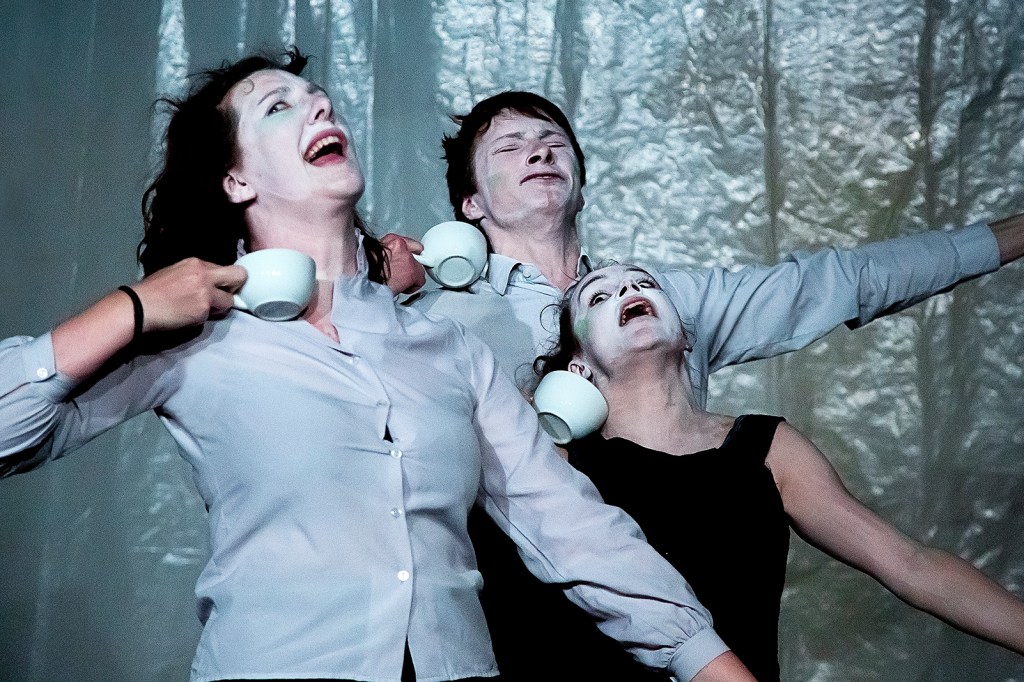

Şiirsel Beden ‘Le Corps Poetique’ CLOUT THEATRE

THE VARIOUS LIVES OF INFINITE NULLITY

ÇİVİ GİBİ YERE ÇAKILAN KADIN

Acayip meraklı bir yaşlı kadın pencereden aşağı düş­tü, çivi gibi yere çakılıp parçalara ayrıldı.

Başka bir yaşlı kadın pencereden sarkıp ilkinin kalın­tılarına bakmaya başladı, ama o da, acayip meraklı oldu­ğundan, çivi gibi yere çakılıp parçalara ayrıldı.

Daha sonra bir başka yaşlı kadın pencereden yere ça­kıldı, sonra bir başkası, derken bir başkası.

Artık altıncı yaşlı kadın pencereden yere çivi gibi ça­kılırken onları seyretmekten bana gına gelince, kör bir adama örme şal verildiği söylenen Maltsevski’nin dük­kânında aldım soluğu.

– Daniil Harms


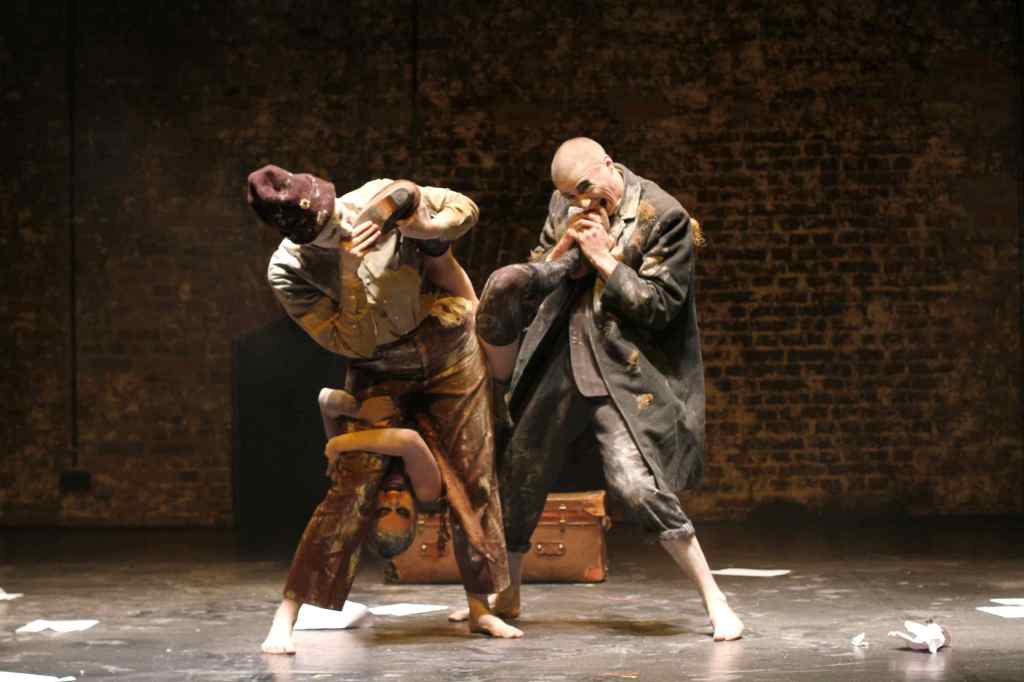
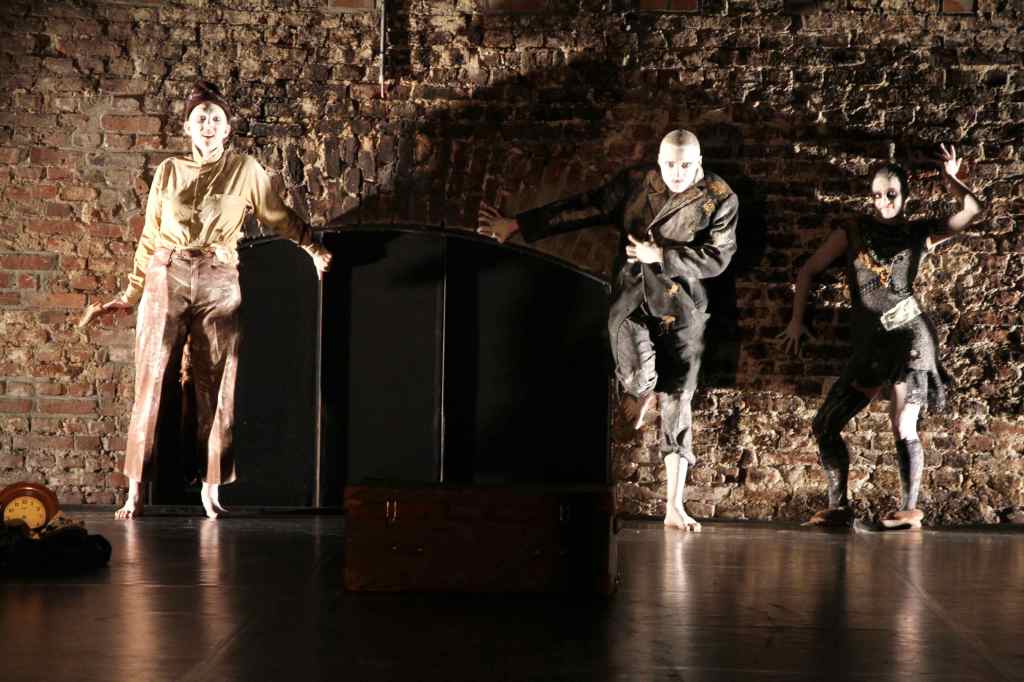
Clout Theatre – How A Man Crumbled

Clout, İstanbul ve Londra’da yaşayan ve çalışan ödüllü bir tiyatro grubu. Rusya, Fransa, Türkiye ve İskoçya’dan katılan üyelerle uluslararası bir izleyici kitlesine hitap eden fiziksel açıdan cesur bir tiyatro olmaya çalışıyor. Absürd mizah, şiddet, dağınıklık ve görsel şiire başvurdukları işleri, yüce şeyler kadar anlamsızlıkları da kapsıyor.

Paris’teki Ecole Jacques Lecoq Tiyatro Okulu’ndaki tanışıklık ve orada geçirilen yıllar, zamanla tüm bu işlerin habercisi oldu.

Şu anki çekirdek kadroları Sacha Plaige ve Mine Çerçi’den oluşuyor. Her biri, kendine münhasır dünyaları ve performans tarzlarıyla tiyatroya çok farklı açılardan yaklaşıyorlar. Bu dünyalar, birbirlerine ters düşseler de absürde, gerçekdışıya, groteske, uygunsuz ve şaşırtıcı olana doğru eğilimlerinin dehşet verici ve garip olanla birlikte gündelik hayatla buluşmasını sağlıyor. En büyük arzuları ise şimdiye kadar sahnede görülmemiş işlere imza atmak.

Sahne aldıkları yerler arasında (birkaç tanesi) Moskova’daki Meyerhold Merkezi, Maschinenhaus Essen, Londra’daki Battersea Sanat Merkezi, İstanbul Büyükşehir Belediyesi Tiyatrosu ve Edinburgh’daki Summerhall yer almakta.

clout-theatre.com


Clout Theatre – How A Man Crumbled
Nota Bene 2017

Nota Bene Yayınları tiyatro dizisinden Jacques Lecoq imzasıyla yeni bir kuram kitabı:

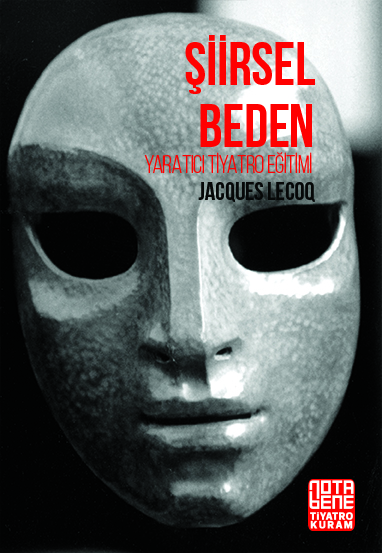
Şiirsel Beden: Yaratıcı Tiyatro Eğitimi

Daha önce Beliz Güçbilmez’den Çöl Oyunu ve Zana Kılıç’tan Değirmen/Aş oyunlarını basan yayınevi Mine Çerçi’nin çevirdiği Jacques Lecoq’un “Şiirsel Beden/Yaratıcı Tiyatro Eğitimi” kitabıyla alana katkısını sürdürüyor.

“Şiirsel Beden”, çağdaş tiyatronun en önemli isimlerinden Jacques Lecoq’un 1956 yılında Paris’te kurduğu okulda verilen tiyatro eğitiminin temel ilkelerini, hedeflerini, yöntemlerini konu alıyor. İkinci Dünya Savaşı’ndan sonra Fransa’da beden eğitimi dersleri veren ve spor aracılığıyla bedenin nasıl hareket ettiğini araştıran Jacques Lecoq, sonraki yıllarda İtalya’da keşfettiği commedia dell’arte, mim ve diğer hareket biçimlerinden etkilenir ve Paris’e geri döndüğünde bu biçimleri öğrencilerle birlikte araştırmaya devam edeceği okulunu açar. “Şiirsel Beden”de Jacques Lecoq, mimden akrobasiye, nötr maskeden mimodinamiğe, larva maskelerden karakter maskelerine ve karşı maskelere, hikaye anlatıcılığından melodrama, bufonlardan tragedyaya, insanlık komedisinden clowna ve absürde okuyucuyu okulun pedagojik yolculuğuna çıkarıyor.

Doğaçlama, oyun, maske, hareket ve jeste bakışını, kendi tiyatro anlayışını kitap boyunca okuyucuyla paylaşan Jacques Lecoq, kitabın üçüncü bölümünde mimar Krikor Belekyan ile ortaklaşa kurduğu ve bünyesinde deneysel senografi çalışmaları yapılan Hareket Çalışmaları Laboratuvarı (LEM) hakkında kısa bir bilgi veriyor. Kitabın son bölümü, dünyanın çok farklı yerlerinden gelen sayısız öğrencinin okulu bitirdikten sonra sanatsal yolculuklarına ne şekilde devam ettiklerini ele alıyor. Çevirisini Jacques Lecoq Uluslararası Tiyatro Okulu’ndan 2011’de mezun olmuş Mine Çerçi’nin yaptığı kitap, editör Beliz Güçbilmez’in ifadesiyle, Stanislavski metodunun Amerikan versiyonuyla, demek ki zaten yanlış çevrilmiş, yanlış anlaşılmış ve açıkça Amerikanlılaştırılmış versiyonu üzerine kurulu oyunculuk eğitiminin belirleyici olduğu Türkiye’de bedene nakşolmuş izlere dönerek, en çok bedenle hatırlamayı öğrenerek yeniden başlamak isteyenler ve tiyatro sahnelerinde yaratıcı bir soluk arayanlar için olağanüstü bir kılavuz niteliğinde.

Şiirsel Beden: Yaratıcı Tiyatro Eğitimi


Clout Theatre – How A Man Crumbled

Formed in 2012, Clout Theatre met and trained at Lecoq in Paris. They made their first show rehearsing in Paris squats and this grimey aesthetic has formed the foundations of all their work. Although their performance style contains strong influences from their training, they have carved out their own theatrical language and now make work heavily reliant on the visual, grotesque and strange. 

With members from Russia, France and Turkey, they strive to make physically bold theatre for an international audience. Using absurd humour and visual poetry, their work deals with the sublime and the ridiculous in equal measure. Their approach is atmosphere-based and seeks a coherence between visual elements, acting style and non-traditional narrative.


Clout Theatre combine Lecoq physical theatre and the absurdist tones of Daniil Kharms to bring you a visceral and bizarre adaptation of How A Man Crumbled. A Fringe hit in 2012, the cast returned to Summerhall in Spring 2013 for a special run of the show.

The core members of Clout Theatre are Sacha Plaige and Mine Cerci.

They have performed in China, France, Germany, Turkey and Russia and are now based in London.

Nominated Total Theatre Award 2012 & 2013, Darkchat Award 2015
Winners  Audience Award Physical Fest 2012, OneStop Arts Audience Award 2013

clout-theatre.com

Welcome to the Bizarre Theatre of VAVA !

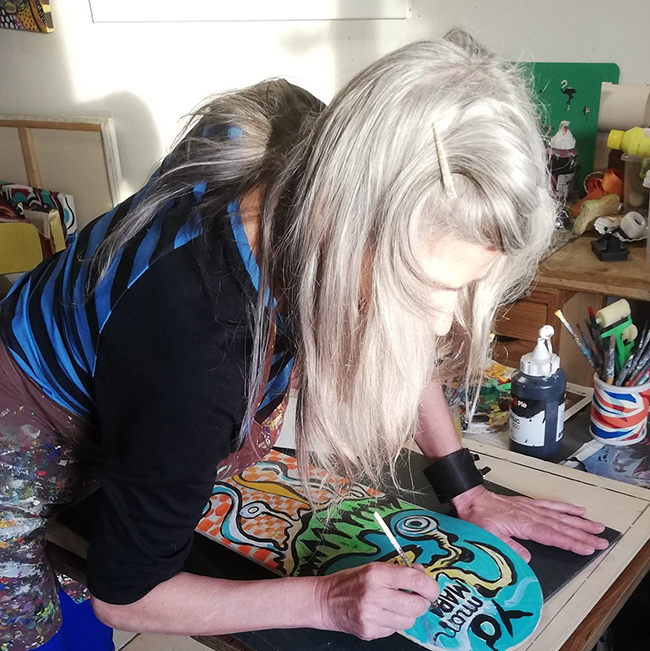
VAVA at work!

Vava (Valerie Sury) was born in 1966 in Laval, France. From 1997 to 2003 she opened an experimental art venue called Zoobizarre focused on underground culture in Bordeaux: a scene for international and local bands, a gallery with a library, performances, art vidéo and concerts.

In 2003 she moved to Montreal and lived there until 2009. She again opened a structure equal to the Zoobizarre in France. She plays the local Montrealer and American scene. In parallel she pursues her artistic career and carries out a new art project “Art Kill Texas” comprising 11 pieces, these paintings were greatly inspired by her trip at the 2005 Music Festival South by SouthWest in Austin, Texas. Back home in Montréal she used her sketchings from the festival to create a silkscreen art book. From this art book emerged 36 x 36 inch paintings. She was currently shown in different galleries in Canada and USA.

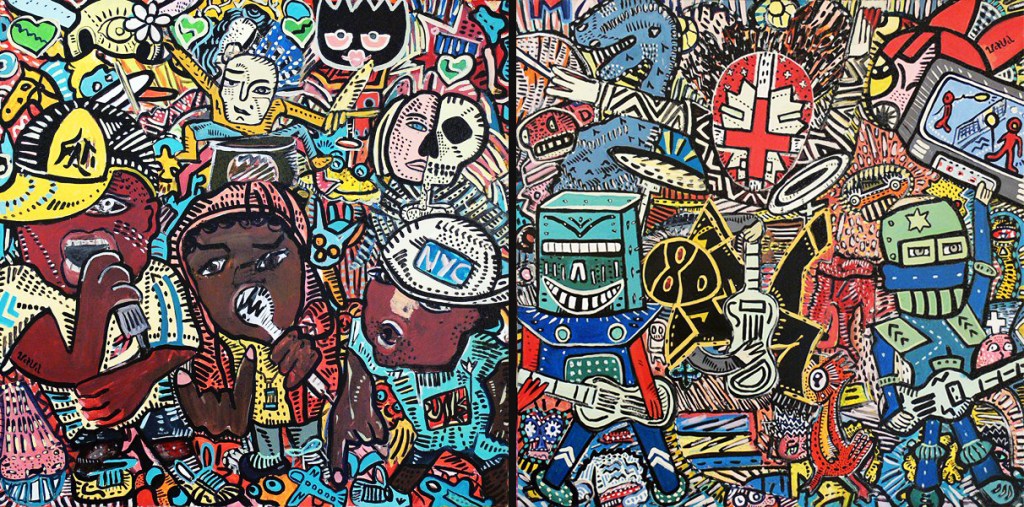
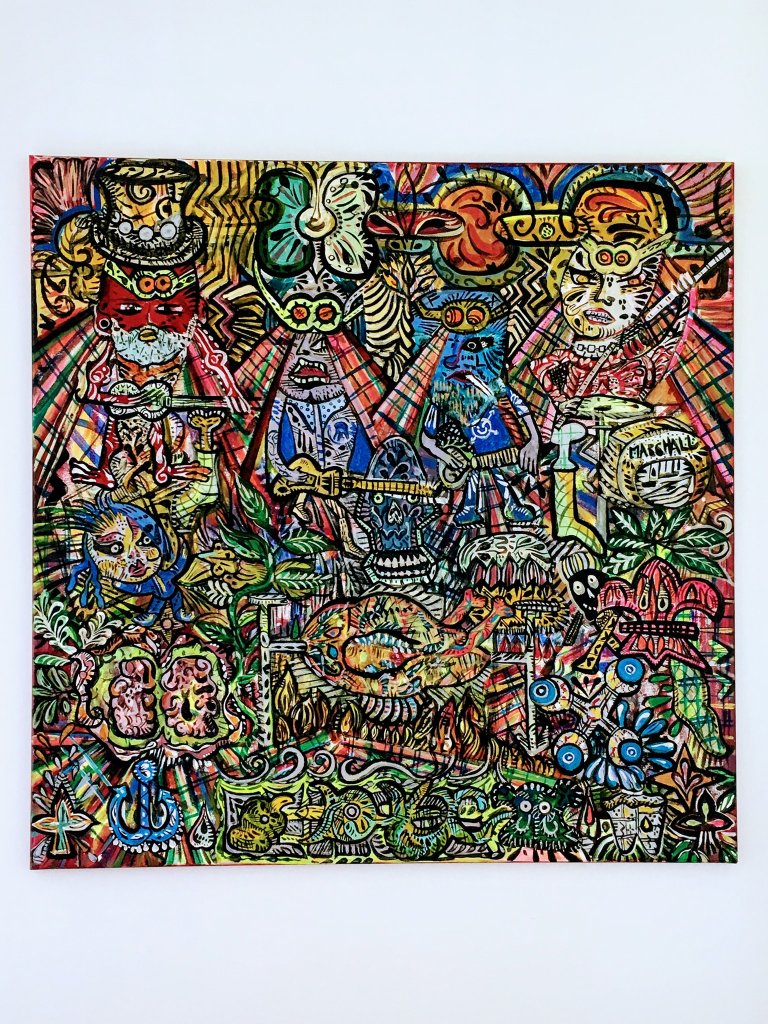
left: Corns Gang (ex-Unicorns), right: ‘Helmet’ 90cm x 90cm acrylic on canvas, ‘Art Kill Texas’ Series, 2006 -Ask For Price-
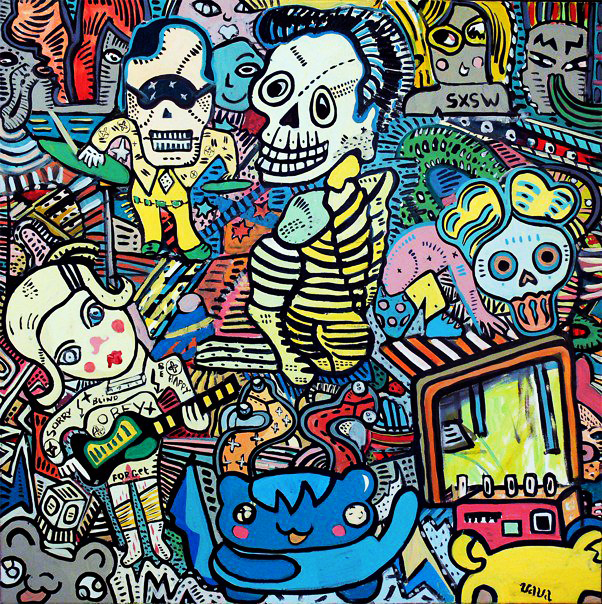
Maximo Park, 90 cm x 90 cm, acrylic on canvas, 2006 -Ask For Price-

Vava (Valérie Sury) est née en 1966 à Laval, France. De 1997 à 2003, elle ouvre un lieu d’art expérimental appelé Zoobizarre axé sur la culture underground à Bordeaux : scène de groupes internationaux et locaux, galerie avec bibliothèque, performances, vidéo d’art et concerts.

En 2003, elle s’installe à Montréal et y habite jusqu’en 2009. Elle ouvre à nouveau une structure équivalente au Zoobizarre en France. Elle joue sur la scène locale montréalaise et américaine. En parallèle elle poursuit sa carrière artistique et réalise un nouveau projet artistique « Art Kill Texas » comprenant 11 pièces, ces peintures ont été grandement inspirées par son voyage au Music Festival South by SouthWest en 2005 à Austin, Texas. De retour à Montréal, elle a utilisé ses croquis du festival pour créer un livre d’art en sérigraphie. De ce livre d’art ont émergé des peintures de 36 x 36 pouces. Elle est actuellement exposée dans différentes galeries au Canada et aux États-Unis.

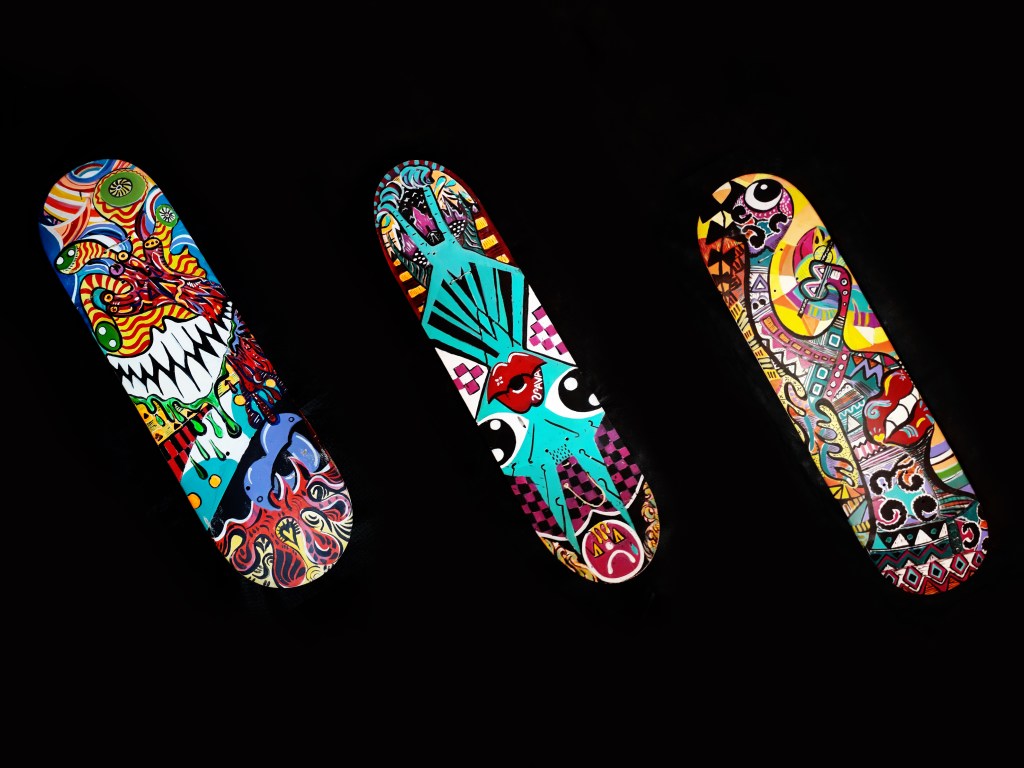
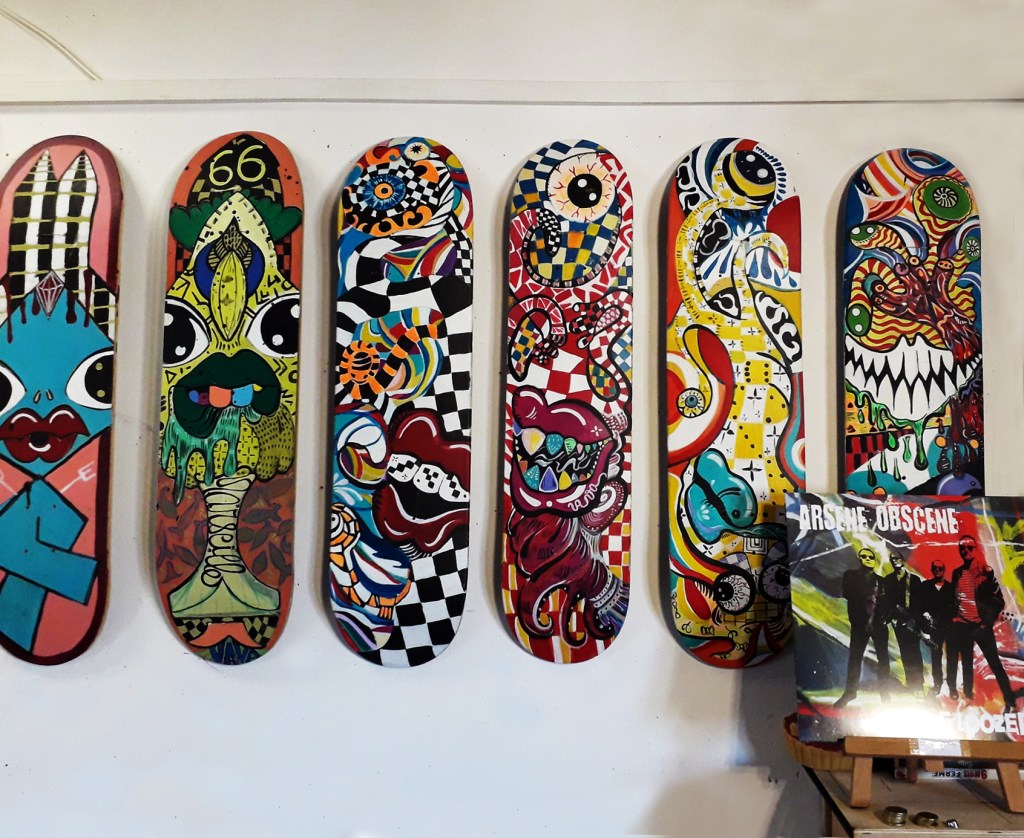
De retour en France, elle vit à Marseille. Elle est diplômée d’une licence de céramiste décoratrice puis d’une licence d’animation culturelle. Elle est choisie pour être artiste résidente pendant 3 mois dans le lieu artistique Buropolis ouvert dans un bâtiment abandonné. Vava crée un nouveau projet artistique “Skate Parasyte” comprenant une nouvelle série de peintures sur le thème du surf plus plus d’une douzaine de peintures réalisées sur skateboard.

En 2022 Vava vit actuellement à Marseille où elle travaille comme travailleuse artistique dans un centre social et donne des ateliers artistiques.

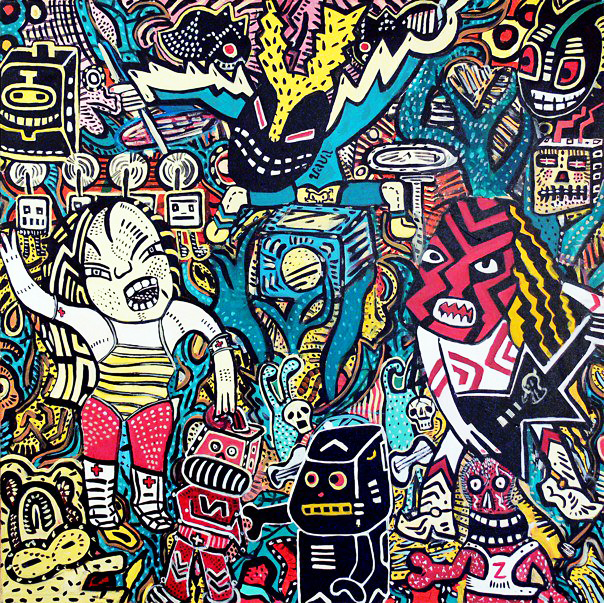
Gossip, 90 cm x 90 cm, acrylic on canvas, ‘Art Kill Texas’ Series, 2006 -Ask For Price-

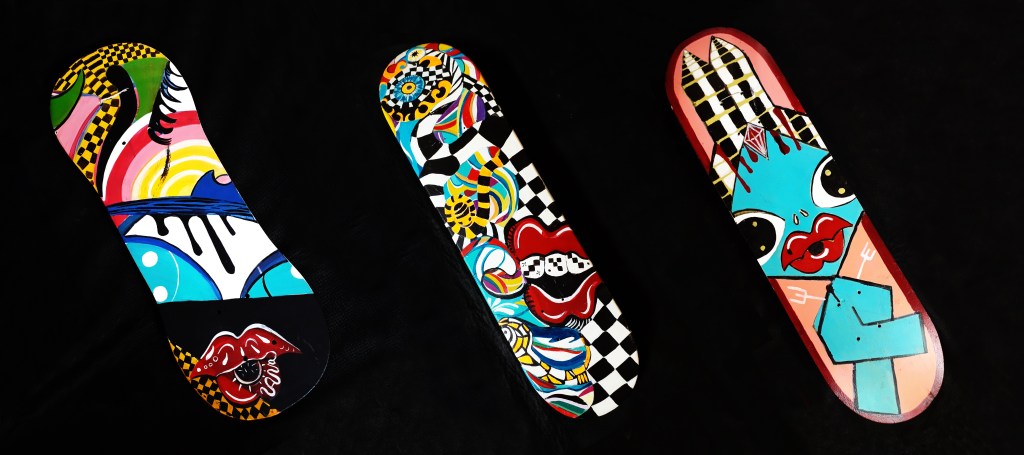
Back in France she lives in Marseille. She graduated from a ceramic decorator licence and then a cultural animation licence. She is chosen to be an artist resident for 3 months in Buropolis artistic place opened in a derelict building. Vava creates a new art project “Skate Parasyte” comprising a new series of paintings on the theme of surfing plus more than a dozen paintings made on skateboard.

In 2022 Vava currently lives in Marseille where she works as an artistic worker in a social center and gives artistic workshop.


VAVA “Skate Parasyte” Series, original paintings on board, 2022
VAVA Style !!

SK8 PARASYTE

VAVA SKATEBOARDS

SEXY AND SMART !!

VAVA “Skate Parasyte” Series, original paintings on board, 2022

VAVA SURY artiste plasticienne présente sa toute dernière collaboration artistique sous forme d’un clip vidéo autour de son exposition intitulée “Trecento”

VAVA ‘Peinture’ 2021

View from the artist’s atelier
SK8 PARASYTE: View from the artist’s workshop

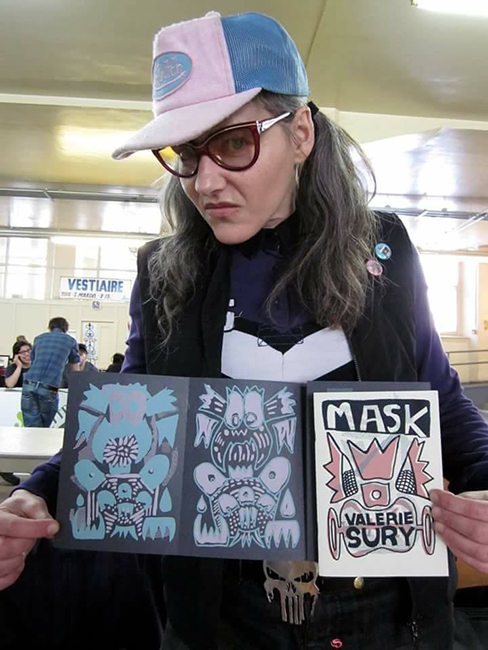
Valérie Sury with her works
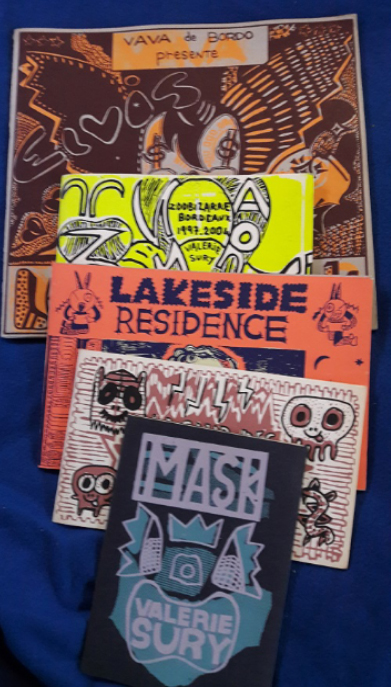
Books by VAVA

French artist Vava is a painter, illustrator, autor, sculptor. She studied in Nantes Fine Art School with complementary courses from Montpellier Fine Art School. During “Itinéraires d’artistes Forum” organized by the French Aquitaine Regional Council her sketchbooks were awarded a special distinction by the jury. At the same occasion the Rotary Club buys her a portfolio comprising illustrations, silkscreen prints with etching inclusions. In 2000 she’s chosen to be part of an artist residency at Lakeside studio in Michigan USA. Her works are further shown in full at the Lakeside Gallery. Some of these artwork from this exhibit plus some new pieces are put together a year later in a joint exhibit specially organized for the March Gallery in Chicago. Her paintings and papier mâché dolls carry the intensity linked with Art Brut through complex compositions and meticulous application of textures and colors. Her acrylic paintings sometimes borrow the idea of ex-voto paintings using contemporary pop iconography taken for the most part from popular culture, some of her works show a strong influence from the cartoonesque world of Asian Manga, Mexican popular and global subculture. Working on papier mâché let’s Vava create her forms quickly taking on quirky figurative shapes reminiscent of Niki de St Phalles or Louise Bourgeois. It is tempting to describe Vava’s silkscreen art books as artsy and edgy comics. The result is challenging visuals, at times almost childish, as well a mix of French and English views giving a unique perspective on American experience and French artistic influences.

Vava Attacks !!

communication:

facebook: valerie.sury

instagram: vava


LMG’s Epitaph Project and the Experience of 1 Participant Out of 365

Epitaphe numéro 338, P.P né le 19 octobre 1963 à Blois, Loir-et-Cher. 30x30cm, LMG, 2015.

« Today there is nothing left of the awareness that everyone has or should
have that their end will come soon, there is nothing left of the solemn public
nature of the very moment of Death. What used to be known is now hidden.
What used to be solemn is now evaded. (…) Daring to speak about Death,
accepting Death in our social relationships can’t be part of our daily life any
longer, if you do so you cause an exceptional, outrageous and always dramatic
situation. Death used to be a familiar figure and moralists had to make it
hideous in order to cause fright; today, the mere mention of Death will cause
an emotional tension at odds with the steadiness of daily life. »

Philippe Ariès, Essays on the history of death1

When LMG, an artist whom I discovered a few years ago, launched her epitaph project, I volunteered to be one of the first contributors. LMG is an «Agrégé » teacher in fine arts and a Parisian artist who also devotes some of her time to writing short stories and plays. She launched the Epitaph project in May 2011 when she asked the first participants to write a letter about their future death, explaining that she would «translate » their messages into drawings. She first contacted relatives, relations and colleagues and the project grew from there till she received letters from total strangers and from all over the world. Her goal is eventually to receive 365 letters from people writing about their future
death. She has produced 240 Epitaph drawings so far.

Being aware that Death, the enigmatic reaper, can be a terrifying or at least a difficult prospect to consider especially in today’s sanitized societies where even talking of Death can be considered rude, LMG has based her artistic project on a « gift for gift » procedure: the participants write about their death, which brings them to question and visualize it in a prospective manner, indeed the artist intends to place the participants in a situation where they can face and confront their death, something that cannot be done a-posteriori.

Epitaphe numéro 271, G.P né le 9 juin 1972 à Martigues, Bouches-du-Rhône, 30x30cm, LMG, 2014.

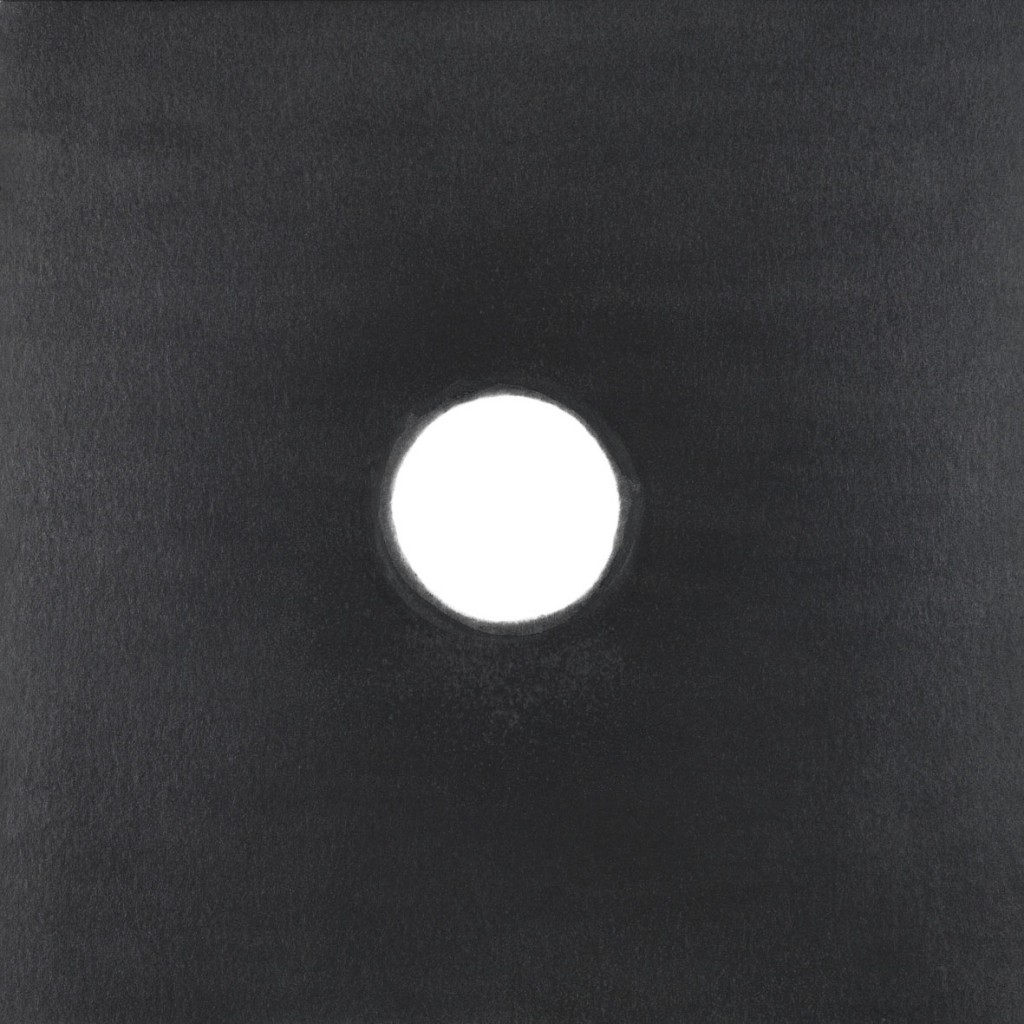
In the first stage, LMG receives the letters – prospective obituaries or wills – in which the participants describe their final departure, the artist insists on receiving real letters, not emails although she has accepted two audio-recordings from paralyzed and illiterate participants. She has received letters from Japan, Belgium, Lebanon, the USA, Morocco, Norway, Italy, Israel. In the second stage, after reading, rereading and sometimes translating the letters into French, the artist produces a black lead drawing on a 30 by 30 cm sheet of paper which is then glued to a backing. All the drawings have got the same size and are done on similar heavy-weight white paper sheets; the artist only uses charcoal, black lead, a kneaded rubber and a fixative. But the similarity stops there: each drawing is treated as the unique expression of the original letter, both in its content and its appearance, so each drawing also has unique plastic characteristics. Superimpositions, hatching, blanks, stains, etc reveal the artistic gesture which in turn is linked to the visual aspect-not just the text- of the letter. Take Epitaph n°19: the letter LMG received was full of crossed-out words, corrections, extra annotations so that the drawing also expresses this with little strokes and hatching. Epitaph n° 131 is a black post-card with a stain in its middle, so the stain plus the message on the card initiated a drawing with a blank in its center; the artist even pays attention to such details as the color of the ink, the type of paper that has been used, the style of the writing, the shape of the envelopes, etc.

Epitaphe numéro 131, S.B née le 20 aout 1966 à Nancy, Meurthe-et- Moselle, 30x30cm, LMG, 2013.

Under each drawing you can see a title plaque on which are mentioned the initials, date and place of birth of the writer. In the eyes of the artist confidentiality is essential, neither the full names nor the messages in the letters will be published; this confidentiality enables all kinds of people from all walks of life, nationalities, origins or socio-economic backgrounds to take part without having to respect specific established writing norms or to use learned and grammatically acceptable forms. This accounts for the great variety of the texts that have been received and treated, some with lots of crossed-out words and spelling mistakes, others looking very neat and methodical, they can be brief or long, there are haikus, dialogues, puzzles, soliloquies, various qualities of paper and colors of ink have been used. This serial project can be seen as a syntactic variation on the theme of Death. LMG’s series of visual interpretations tends to show that Death is a polymorphic entity rousing a variety of feelings in those who stop and contemplate it. At the beginning of the project in May 2011 not very many people volunteered to send their prospective vision of their death but after a couple of months the word of mouth effect as well as LMG’s appeal through Epitaph invitation cards and her website proved efficient so that she received more and more participations as the months passed.

Epitaphe numéro 14, A.C.F, née le 21 juin 1966 à Paris. 30x30cm, LMG, 2011.

After I received such a card it took me quite a while before I could actually decide whether I really wanted to write about my future death and send one of the first contributions (Epitaph n°3). I first reacted like what Philippe Ariès describes in the incipit, that is «talking about Death, should it be one’s own, simply is not done ». Mulling over the issue for a few days, I eventually realized that I had never seen anybody actually give their last, not even my grandparents or my parents. I was abroad for professional reasons when my father died; as for my mother, even though she spent the last months of her life at my home as she was terminally ill and aware of her state and I can remember Death hovering in the house all that time, I was not near her bed when she actually « passed away »; so perhaps my own death would also be the first one I would actually see – but from within – and here was a colleague and artist who was giving me the opportunity to choose my death, invent it, write about it and somehow rehearse it and hopefully master the dread it can cause when we stop and think about our tragic destiny. I finally understood that there was nothing unhealthy in the project, that it was a « gift for gift» process, finally that my text did not have to be about a painful, lengthy, horrendous death, I was not one of those Londoners in the plague year of 1665 dreading to be caught by the pestilence, I had time to consider the type of death I wanted2.

As far as I knew I was still in good health, indeed if I wished to do so I could write about an ideal death, an easy, painless and sudden death and also a death when I would die on my own without any staging of the deed or final shaking of hands and rending of hearts. After a while, my husband also decided he wanted to contribute so that in the next few days the most unusual conversations took place: « Have you produced your death? » « I know you’re busy but don’t forget your death ». I finally decided that the death I yearned for and wanted to write about was to take place in a garden on a summer day; I was lying in a deck-chair reading The Battle of Life3. At one point I went into the house and put the kettle on to make some tea that I poured into my favorite china cup with a pattern of oak leaves and tiny golden stars; then I settled outside into the deck chair again and started sipping that tea when IT happened.

Epitaphe numéro 3, A.D née le 14 avril 1952 à Dieppe, Seine-Maritime. 30x30cm, LMG, 2011.

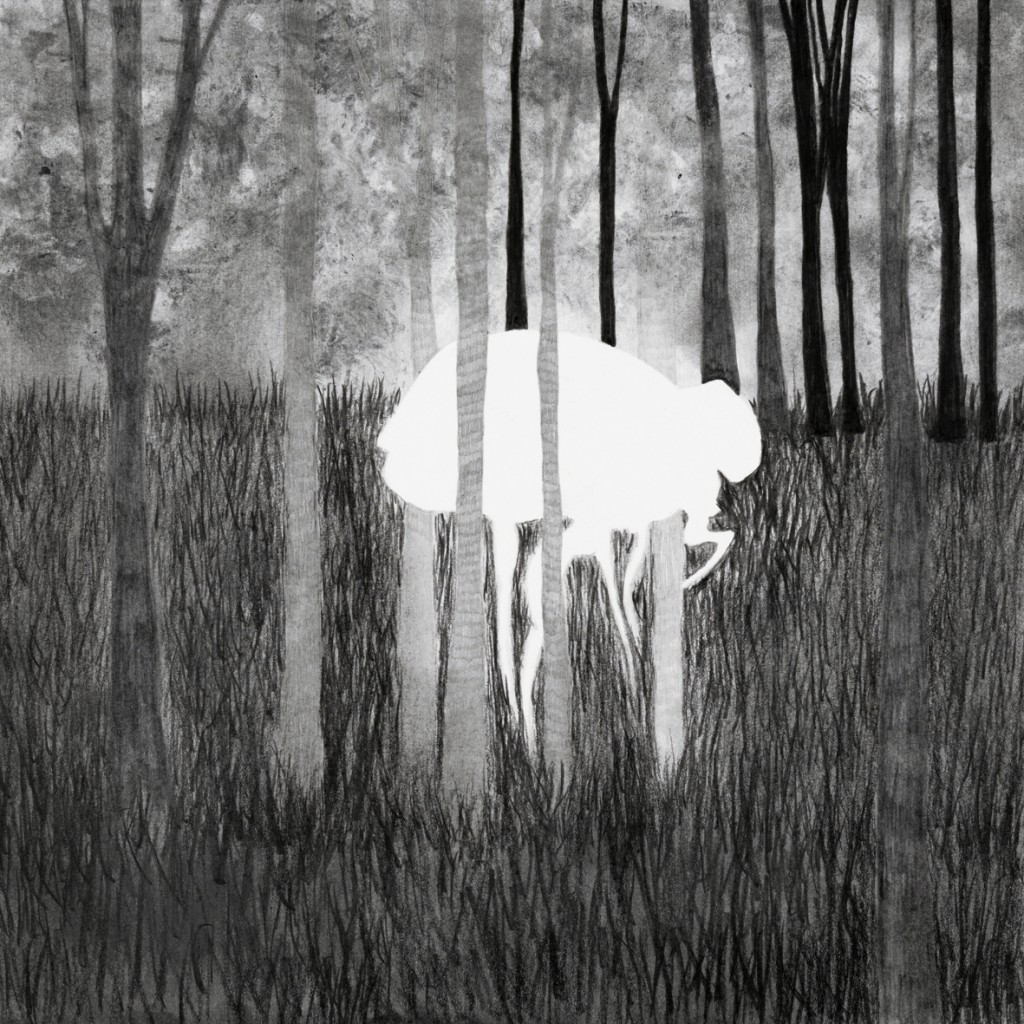
Now if you look at Epitaph n°3 carefully, you will notice that LMG has not drawn what I have not talked about and do not consider of paramount importance: dying a «good » death in order to save my soul, leaving the living behind, the funeral rituals, the decaying cadaver and its aftermath as «food for worms 4»; she has discarded what she considered irrelevant or not very meaningful details such as the deckchair or the novella I was reading; the lying figure on the ground could be anybody, male or female, this silhouette is so lightly drawn, so blurred that the body has nearly disappeared already, the arms are absent, the torso and womb seem to have mingled with the two oak leaves at the bottom or to have been sucked up by them and the feet are resting on another leaf , like a huge natural cushion ; the twig of oak leaves is upside down in the same way as the world of the deceased went upside down the minute she/I died ; besides the leaves fill up about half of the sheet thus symbolizing the hold and strength of nature as a whole as opposed to the smallness and gone substance of one of its elements, the blurred body. The motif of the oak leaf, which was a minor aesthetic detail in my mind when I wrote the Epitaph, has been given an important symbolic and perhaps spiritual meaning by LMG; the same can be said of the star motif on the cup rim: The seven stars in the top part can symbolize the flight of the human senses from that body with a possible hint at a journey towards the quintessence. Although I would define myself as an agnostic, I find the symbols of the powerful oak (resilient, all-absorbing Nature) and that of the travelling stars (the dying five senses but also the five vital elements) very comforting.

Epitaphe numéro 111, V.D née le 12 décembre 1979 à Paris, 30x30cm, LMG, 2013.

I consult LMG’s website regularly and sometimes contemplate Epitaph n°3 or how LMG has managed to give a cosmic dimension to what was merely a mortal’s wish for a swift death. I also follow her project as a whole and now have some favorites among the 240 Epitaphs that she has « translated » into drawings so far. I hope that LMG’s Ars Moriendi5 has also helped the other participants confront their unavoidable death, master it in advance and learn to loosen their hold on life when the time comes; LMG’s on-line project also enables them to enjoy looking at the graphic interpretations of their own wishes and also the wishes from other participants and to be caught in a web of comparisons and inferences. There is no reason why the pendulum movement of LMG’s EPITAPHS project should cease soon.6

Anne Dupré

______________________

  1. Philippe Ariès, Essays on the history of death in the western world from the middle ages to today, Seuil, 1975, p.170
  2. Daniel Defoe, A journal of the London Plague Year, first published by E.Nutt, 1722
  3. Charles Dickens, The Battle of Life, first published in 1846 by Bradbury and Evans. This novella was the fourth Christmas story in a series of five. In the first part, a fierce battle takes place, that scars the place for centuries, and yet, after many generations the battle becomes an obscure, blurred memory and life thrives again.
  4. « Food for worms », from Hamlet by William Shakespeare, Act IV, scene 3, lines 21-27 in which Hamlet explains that fat king and skinny beggar alike will be devoured by worms when their time comes.
  5. Ars Moriendi or art of dying: The expression was first used in 1408 by French theologian Jean Charlier de Gerson. He defined it in a treaty Opusculum tripertitum de praeceptis decalogii, de confessione et de arte moriendi. Gerson’s precepts to die a Christian death became commonly used by the clergy with the ailing and the dyingin the 15th century.
  6. LMG’s website: lmg-nevroplasticienne.com