Depuis, c’est quasi comme dans la chanson : le monde est une vraie porcherie, sauf que les porcs se comportent comme des hommes, de l’élevage en batterie à des milliers de tonnes de morts !
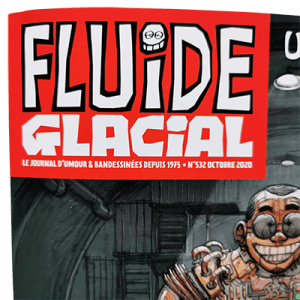
Thomas BERNARD / Fluide Glacial
Si j’écris aujourd’hui, c’est que je ne peux plus fermer ma gueule. Mais comme nul ne prête l’oreille à un bougre qui couine, je préfère étaler ma douleur sur ce papier, qu’au moins mes parents me lisent et me viennent en aide… Pa’, Ma’, me voilà victime d’une terrible malédiction ; je vois des gros cochons à tous les groins de rue ! Tout ça parce que j’ai ânonné trois fois ce nom damné devant un pot de rillettes… Bathori ! Bathori ! Bathori ! Depuis, c’est quasi comme dans la chanson : le monde est une vraie porcherie, sauf que les porcs se comportent comme des hommes, de l’élevage en batterie à des milliers de tonnes de morts !
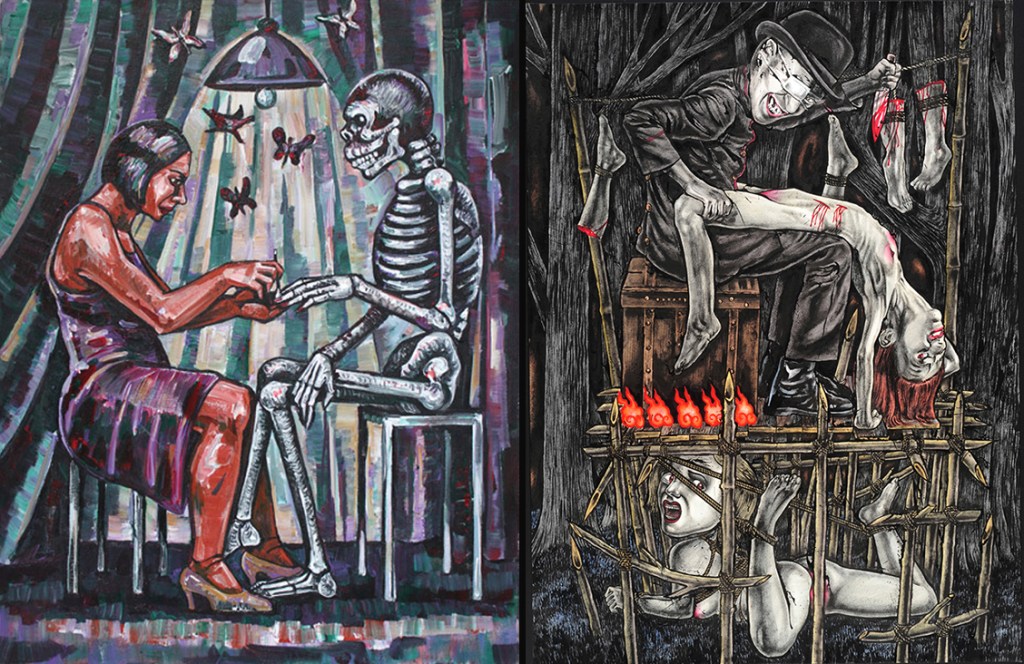
Si on ne lui fait pas d’offrandes via paypal ou si on ne l’adjure pas sur facebook, inutile d’interviewer Martes Bathori ; ce scélérat répond aux questions uniquement par des bobards. Mieux vaut alors compulser son vieux wikipedia pour connaître l’effroyable vérité : bien que d’apparence séduisante et d’un maintien plein de dignité, il serait l’esprit le plus dissolu et crapuleux que la France n’est jamais connu. Descendant d’une célèbre comtesse sanglante, Martes serait le premier de sa lignée a avoir troqué sa manivelle intestinale et sa poire d’étouffement pour des instruments de tortures bien plus vicieux : la peinture, la sculpture, la céramique et bien-sûr, la bande-dessinée !
La légende raconte que, alors minot, révulsé par la visite scolaire d’un élevage intensif de gorets, il jura de venger le monde animal de la tyrannie prédatrice de l’Homme. Dès lors, son génie machiavélique se mît au service d’une satire anti-spéciste où la chair à saucisse prend le pouvoir et dont le nihilisme rigolard confirme l’adage : « Si tout est bon dans le cochon et bien dans l’humanité, tout est à jeter ! »
Bathori 2020
Comme pour réussir une terrine, Bathori mixe dans son art les meilleurs morceaux de la pop culture; science fiction vintage (La Ferme des Animaux, La Planète des Singes, L’Île du Dr Moreau), l’érotisme sadique de l’Ero Guro et l’expressionnisme teuton d’un Otto Dix boosté aux ecstas. Ses doigts fourchus maîtrisent toutes les techniques que le démon Halouf met à sa disposition et ses synapses irriguées par la sauce gribiche font de lui le pape du récit en jus de boudin.
Ce n’est pas pour rien si un culte lui est rendu dans les milieux interlopes de l’underground international ; tous les amoureux de l’art le vénèrent. Mais, ses fidèles, trop flemmards pour lui bâtir un autel, préfèrent encore lui acheter un de ses livres 100 % very bad tripes (Les Requins Marteaux, The Hoochie Coochie) ou une œuvre licencieuse dans une galerie de basse extractions.
Since then, it’s been almost like the song says: the world is a pigsty, except that pigs behave like humans, from battery farming to thousands of tons of death!
Thomas BERNARD / Fluide Glacial
If I’m writing today, it’s because I can’t keep my mouth shut. But as no one lends an ear to a squealing bugger, I prefer to spread my pain on this paper, so that at least my parents will read me and come to my aid… Pa’, Ma’, here I am, the victim of a terrible curse; I see fat pigs at every street corner! All because I muttered that damned name three times in front of a jar of rillettes… Bathori! Bathori! Bathori! Since then, it’s been almost like the song says: the world is a pigsty, except that pigs behave like humans, from battery farming to thousands of tons of death!
If you don’t make offerings to him via paypal or adjure him on facebook, there’s no point in interviewing Martes Bathori; this scoundrel only answers questions with lies. It’s best to consult his old wikipedia to find out the dreadful truth: despite his attractive appearance and dignified bearing, he’s the most dissolute and villainous mind France has ever known. A descendant of a famous bloody countess, Martes is said to be the first in his line to have traded in his intestinal crank and choking bulb for far more vicious instruments of torture: painting, sculpture, ceramics and, of course, comics!
Legend has it that when he was a young boy, disgusted by a school visit to an intensive pig farm, he swore to avenge the animal world from the predatory tyranny of Man. From then on, his Machiavellian genius was at the service of an anti-speciesist satire in which sausage meat takes power, and whose laughing nihilism confirms the adage: “If everything is good in the pig and good in humanity, everything is to be thrown away!”
Revivez l’échange avec Martes Bathori, auteur de BD. 2021
As if he were making a successful terrine, Bathori’s art mixes the best bits of pop culture; vintage science fiction (Animal Farm, Planet of the Apes, Island of Dr Moreau), the sadistic eroticism of Ero Guro and the Teutonic expressionism of an ecstasy-boosted Otto Dix. His forked fingers master all the techniques that the demon Halouf puts at his disposal, and his synapses irrigated by gribiche sauce make him the pope of storytelling in juice.
It’s not for nothing that he’s worshipped in international underground circles; he’s revered by all art lovers. But his followers, too lazy to build him an altar, still prefer to buy one of his 100% very bad tripe books (Les Requins Marteaux, The Hoochie Coochie) or a licentious work in a low-grade gallery.
“The most important aspect for me is to create something with my hands, for the dopamine rush I get when I can see and feel the result.”
Erdreich is an independent art studio run by Resa Macourek, a multidisciplinary artist from Vienna, Austria, who creates unusual drawings and accessories, and so now it’s time to get to know this talented woman.
Hello Resa, would you like to tell us a little bit about yourself for readers who don’t know you? In addition to being an illustrator, you also do very interesting gothic designs, how long have you been doing this, what kind of work have you done as Erdreich so far, what kind of path have you followed.
I’m an artist from Lower Austria but based in Vienna for the last ten years. Beside a whole bunch of other creative projects, “ERDREICH” is one of the most consistent ones. I started it in 2017 while I was in jewelry college. First it was just jewelry, mostly pins and necklaces, now it is a wider range of jewelry and also prints and some other stuff.
VAMPYR III necklace (small). newsilver, hand-etched with acid.
A piece of jewelry should be made to be worn or it loses a little bit of meaning.
Do you have an academic education or are you a self-taught artist?
After I finished my fashion design studies, I knew it wasn’t the right thing for me. So I attended a college that offered a field of studies that combined jewelry design and fine arts and got my arts diploma there. During my time at the college I fabricated more experimental and unwearable art jewelry. Some of these pieces were shown at multiple exhibitions. One is actually starting this month in Seoul at the Museum of Art Craft. Creating such pieces was fun but my approach is that a piece of jewelry should be made to be worn or it loses a little bit of meaning.
In every other discipline I am working in I am self-taught. Since I can remember I was crafting with every imaginable material and till today I am still trying to do new stuff all the time. Most recently I started to learn embroidery.
When we look at your work, we encounter a designer, even a fashion-designer rather than an illustrator. How do you position yourself in terms of your work?
With so many projects going on it is hard to put a name on it. I would consider myself more of a craftsperson. The actual designing takes the smallest part in my working process. The most important aspect for me is to create something with my hands, for the dopamine rush I get when I can see and feel the result.
When we look at your illustrative works, design products and presentations, we see that you create a very different, gothic world of your own. Do you have a brand or a dream project that you are trying to create with this in mind?
Not really, the most things that I draw or how I present my work in photos happen spontaneously and intuitively without a vision in my mind. The classical gothic aesthetic bores me slightly out so there must always be a little bit of weirdness and humor beside the dark elements.
Häexenmilch Tattoo Atelier – Vienna
Creepy & Funny Sketches by Erdreich
Erdreich Jewelry
“I would consider my jewelry as genderless. I have female, male and non-binary customers. The types of products I’m creating are all sizeless so there are no limitations regarding body shapes.”
In which direction is your current working principle more?
I have been practicing automatic drawing almost every day for the last couple of years. I just let my hands do their thing without knowing what the result will be. It is very relaxing for the mind. First I was a little afraid to show these drawings because they are far from perfection and unfiltered from my subconsciousness. But people seemed to like them and also wanted to get them tattooed. So that led me to do more tattoos recently. I started with hand poked tattoos some years ago for fun and mostly on myself or friends. You can find them under the name “häexenmilch” on Instagram. I am excited and happy every time someone decides to wear my permanent jewelry on their body.
On one side there is also an economic aspect I have to keep in mind. People are willing to spend a lot more money on tattoos than on jewelry. And on the other side it is a much more social thing to tattoo someone than sitting alone in my crafting dungeon.
Another passion of mine is lino printing. I print on paper as well as fabric so the prints can be worn as patches. I also feel the importance of wearability there too.
Artist at Work !!
Most of my designs are drawn by myself, it’s mostly animals, monsters, bones or jackalopes. Sometimes I also use motifs from ancient woodcuts or etchings that I love.
As Erdreich, what kind of materials do you work with in your design products, would you like to talk a little bit about the technical aspects of your work and the content of the creations you create?
When I used to do crazy art jewelry I used all kinds of unusual materials like my own teeth, animal or human bones, insects and parts of Barbies I found in the trash. In the last couple of years I almost exclusively worked with non-precious metals like copper, brass or new silver. The technique I’m using is chemical etching which is originally used for decorating armors and weapons and later for intaglio printing.
It is a long and labor-intensive process. I start with a sheet of metal which is covered in an acid-resistant ground, then the motif is carved in reverse by hand with an etching-needle. After the acid bath, the sheet is cleaned and the piece is cut out, filed, soldered and polished.
With all the modern technical possibilities like laser cutting/printing, cnc milling etc. I could easily produce pieces much faster and in an easier way but as I said I love working with my hands. It’s much more satisfying than letting a machine do the work. So every piece is unique and not just a soulless industrially produced piece of metal. In comparison to precious metals the ones I’m using are recycled and much more environmentally friendly and affordable.
Most of my designs are drawn by myself, it’s mostly animals, monsters, bones or jackalopes. Sometimes I also use motifs from ancient woodcuts or etchings that I love.
Artist at Work !!
Erdreich Productions !!
“So every piece is unique and not just a soulless industrially produced piece of metal. In comparison to precious metals the ones I’m using are recycled and much more environmentally friendly and affordable.”
I guess you are designing something for men as well as women’s accessories, what awaits us in the upcoming period.
I would consider my jewelry as genderless. I have female, male and non-binary customers. The types of products I’m creating are all sizeless so there are no limitations regarding body shapes.
At the moment I rarely create new pieces if so, then mostly for myself, on demand or for markets. Jewelry wise I’m waiting for the muse to visit me. But I like my stuff too much myself to give up making jewelry completely.
Vampire in her sleep
Exciting moments from the workshop…
“Mixing things together that seem to be opponents is not the most easy thing to do but it creates irritating and interesting outcomes.”
Between Life and Death: Erdreich Jewelry
Beware! Erdreich Jewelry
Erdreich Jewelry
Erdreich 2024 Collection
Erdreich Jewelry
Let’s talk about your aesthetic world! You have a dark and gothic style, but I don’t know how you manage to transform it into a modern form by blending it with interesting colors and a creepy sense of humor; what inspires you, are you really a melancholic and gothic woman or is it just an attitude you use in your art?
It is a 100% expression of my personality. Like I said I do the things that I do out of intuition and authenticity is very much important to me. I am in a constant cycle of change and that deflects on my art. So there is the more funny, colorful, cute and silly part of me existing next to the dark, depressive, creepy, more extreme or even repulsive part. Sometimes they are equally coexisting, sometimes one of the parts is more dominant. Mixing things together that seem to be opponents is not the most easy thing to do but it creates irritating and interesting outcomes. Which I prefer over nice or pretty things.
My biggest inspirations are nature and decay. Always been fascinated with death since I was a child. While other kids played with dolls or something I dug out some bones from the ground. A visit to the local graveyards is a mandatory thing to do when I visit a new place. I also feel very blessed to live in a city with one of the biggest and most beautiful graveyards in Europe. A lot of my jewelry photos were taken at the Vienna Central Cemetery.
Also I am a huge fan of folk horror which is the perfect combination of the two things.
“I do feel the importance of leaving the planet as unscathed as possible with what I am doing.”
Erdreich while resting in her coffin… : )
How are you with fashion, are there any brands you follow?
After I finished fashion school I completely lost interest in producing or keeping up with fashion. I couldn’t ignore the fact that this branch is extremely unsustainable and superficial. For the most part I am wearing vintage or second hand clothes and of course band shirts.
Do you think that small-scale ateliers and arts & crafts culture provide an alternative to big brands?
That would be a beautiful thought but I don’t think so. They are important for the big brands to copy from. But with something made on a smaller scale, by hand, often by one-person businesses comes a certain price, which is absolutely fair to ask for, but sadly not affordable for most of the people. But I love being in a DIY scene which gives me the opportunity to trade art with other awesome artists.
Erdreich Jewelry
Erdreich Jewelry
So, you say that the real creative potential lies in these amateur souls?
I would say that a lot of artistic potential cannot be fully reached because many people simply do not have the resources and do not come from affluent backgrounds. The most creative and talented people I know don’t know how to do something with their gift or can hardly navigate in this capitalistic system.
But real art (the same with music) has to come from a place of suffering in some form, in my opinion.
Can we talk about labor exploitation or a class struggle here?
I come from a lower-middle-class family, which has been financially unstable for most of the time, yet I have had the privilege of always receiving support from my parents, even though they probably would have preferred a path with less struggle. Others have much higher systemic barriers that prevent them from equitable access to artistic careers. To afford my creative pursuits, I have also always had to do lousy low-wage work. But I’d rather work in a shitty job and do my craft in my freetime than let my creativity be exploited by a company.
Isn’t there anything that bothers you about big brands getting rich from youth trends?
My opinion on this is ambivalent. On one hand, I think it’s good that larger brands are now engaging with diversity, which can definitely help marginalized groups by making them visible. On the other hand, there is, of course, the problem that many companies simply appropriate without giving recognition or credit, and they excessively profit financially from it. But I do not know anything about youth trends at the moment to be honest.
From your presentation photos, I think you are a nature friendly person, do you have a worldview that influences your designs and art?
I grew up in the countryside so nature plays a big part in my life. The translation of “ERDREICH” is “soil” or “ground”. I do feel the importance of leaving the planet as unscathed as possible with what I am doing.
Isn’t there a chance we can reverse the perspective in favor of DIY Culture?
My view on this is rather pessimistic, so in general I would say no. I think it’s too late. But DIY culture provides an important safe space for those who are searching for refuge. Even in a culturally rich city like Vienna, not much value is placed on the less commercial part of the cultural scene or a low-threshold access to institutions or education.
Erdreich Jewelry at Punk Market, 2022
As Erdreich, where and at what kind of events do you mostly offer your products for sale, and what should those who want to reach you do?
On a few occasions a year I am selling my jewelry and prints at some art or DIY markets in Vienna. Besides that I am taking requests on Instagram or doing story sales from time to time.
Erdreich Jewelry
That Barbarella pose with one of the Hirnplatzt t-shirts is really cool, your friends I guess? I know them from the comics they publish and I was surprised to see you. How are you with music, what do you listen to?
Thanks! I actually don’t know Hirnplatzt personally just through instagram. Music and especially live music is the most important thing to me. I listen to a broad spectrum of genres, mostly extreme stuff like metal, punk, hardcore, noise but I also love folk, blues, German rap and some of the most obscure stuff imaginable. I am always digging for new artists and styles.
Are you into occultism or black metal? If you have any (old or new) bands from the Austrian Black Metal scene that you would recommend to us, we would love to hear about them.
I’m drawn to occult stuff but rather regarding the aesthetical then the spiritual aspect. I wouldn’t consider myself a spiritual person. Black metal has been a huge thing for me since I was a kid. I still remember the life changing day on which I bought my first Darkthrone record almost 20 years ago. That genre had and still has a big influence on me. I always gravitated towards extreme art.
I’m really glad that we have a small but vital underground scene in Austria. There are many good bands, especially those who are rooted in the punk scene. Hagzissa is one of my favorites, they have such a strong musical and aesthetic concept. It’s always a joy to see them performing on a stage. Some other good ones that come to my mind are Kringa, Peace Vaults, Parasite Dreams, Ara, Weathered Crest, Circle of Shadows or Witch Ghetto.
and the vampire retreats to her coffin…
Thank you very much for participating in the interview, it’s exciting to get to know you and your art works, we also thank you for sharing your knowledge and vision with us.
Toute l’oeuvre de Blanquet est une ode à la vie organique, dans ses délices comme dans ses supplices, pour l’amour à mort du corps et de la vie à perte de vulves ! Comme quoi, même la chair torturée reste à jamais savoureuse, surtout quand elle est rissolée au beurre de cavité.
Thomas BERNARD / Fluide Glacial 2020
L’art de Stéphane Blanquet agrippe les paupières et plonge les châsses trop chastes dans l’abîme gluante des désirs inavouables, ceux qui, refoulés tout au fond depuis l’enfance, dégénèrent en créatures perverses accros à une trop concupiscente cruauté. Moi même, j’ai bien galéré pour remonter à la surface et témoigner aux lecteurs de Fluide de cette odieuse odyssée du vice qui se déroule à la Halle Saint Pierre en toute impunité.
Depuis des lustres, les bas fond de notre cervelle servent de barbotière à Stéphane Blanquet. Faut dire qu’en bon céphalopode à roulettes, nul besoin pour lui de divan ou de scaphandre chimique pour patauger dans les limbes ; ses multiples tentacules lui suffisent amplement. Grâce à elles, il peut traquer l’inspiration au crépuscule, terré dans les trous et les anfractuosités de nos âmes.
Chacun de ces appendices est indépendant et lui permet de bâtir un univers aussi exubérant que glauque sans jamais s’engluer les ventouses dans le pathos. BD suintantes, photos et illustrations macabres, publications touffues, films d’animations en soins intensifs, tapisseries de baveux,, céramiques moites et peintures licencieuses à toucher du bout de la langue… Toute cette charpie fumante s’agglutine dans sa tanière en attendant une mauvaise occasion pour nous sauter au visage!
Le moindre centimètre carré de ses oeuvres grouille de détails crus. Les couleurs vibrent au rythme d’un débit de carnes et les noirs sont si profonds qu’ils vous aspirent l’oeil comme des boyaux sans fin. Les scènes représentées semblent tirées de comptines fredonnées par des enfants fous autour de charniers … Au premier coup de narine, ça schlingue le désespoir !
Blanquet (Détail de l’étude) Hologramme – Anaglyphe
« Dans les têtes de Blanquet », une exposition-choc à la Halle Saint Pierre
Blanquet (Détail de l’étude) Hologramme – Anaglyphe
‘Les leçons d’anatomies chimériques’ Une création de Stéphane Blanquet et de Angélique Friant sur une musique de Uriel Barthélémi. De la Marionnettes à Charleville Mézieres, 2023
Blanquet (Détail de l’étude)
Les cris sous la peau, dans Professeur Cyclope, 2014
“Si ça ne coule pas, que ça ne dégouline pas, ça ne m’intéresse pas”
Pourtant sous ce magma de charogne libidineuse palpite bien plus que la verge des asticots. De ces paysages en viscères écarlates, suinte une cascade inépuisable dont le plus sec des gosiers sait qu’il ne touchera jamais le fond de la cyprine. Toute l’oeuvre de Blanquet est une ode à la vie organique, dans ses délices comme dans ses supplices, pour l’amour à mort du corps et de la vie à perte de vulves ! Comme quoi, même la chair torturée reste à jamais savoureuse, surtout quand elle est rissolée au beurre de cavité.
Stéphane Blanquet’s art grips the eyelids and plunges the overly chaste into the slimy abyss of unavowable desires, those that, repressed deep down since childhood, degenerate into perverse creatures addicted to an overly concupiscent cruelty. I myself had a hard time coming to the surface to tell the readers of Fluide about this odious odyssey of vice that takes place at the Halle Saint Pierre with total impunity.
Stéphane Blanquet has been wading in the depths of our brains for ages. As a cephalopod on wheels, he doesn’t need a couch or a chemical suit to wade through limbo; his multiple tentacles are more than enough. Thanks to them, he can track down inspiration at dusk, burrowing into the holes and crevices of our souls.
Each of these appendages stands on its own, allowing him to build a universe that is as exuberant as it is creepy, without ever getting stuck in pathos. Oozing comics, macabre photos and illustrations, thick publications, animated films in intensive care, slobbery tapestries, sweaty ceramics and licentious paintings to touch with the tip of your tongue… All this steaming lint clumps together in his lair, waiting for the wrong opportunity to blow up in our faces!
Every square centimetre of his work is teeming with raw detail. The colours vibrate to the rhythm of a carne flow and the blacks are so deep that they suck your eye in like endless guts. The scenes depicted seem to be taken from nursery rhymes hummed by crazed children around mass graves… At the first nostril stroke, it stinks of despair!
Meeting: Gary Panter & Stéphane Blanquet / Directed by Ludovic Cantais, Galerie Martel, April 2011
“If it doesn’t drip, I’m not interested.” -Blanquet
Yet beneath this magma of libidinous carrion pulses much more than the maggots’ rod. From these landscapes of scarlet viscera oozes an inexhaustible waterfall that the driest of gullets knows will never touch the bottom of the cyprine. Blanquet’s entire oeuvre is an ode to organic life, in all its delights and torments, for the love of the body and life to the point of death! As if to prove that even tortured flesh remains forever tasty, especially when browned in cavity butter.
magasin de proximité
Buy it at the Halle Saint Pierre, in all the good bookstores or on blanquet.com
– you can also subscribe for the whole collection !! –
l’ensemble de la collection est disponible (pour un prix réduit) lors de la souscription
Car si l’époque est vulgaire, c’est surtout que derrière son culte du divertissement, elle dissimule mal la violence des dominants.
Question popote graphique, ça va faire un bail que notre bon vieux Moolinex a troqué ses pales roulllées pour une paire de chaînes à vélo. Alors, oubliez les fines purées conceptuelles et le velouté pop-fadasse habituel, la tambouille qu’on sert ici tient plus de la graille de taulards que du rata pour becs fins.
Aux enfants de la chance qui n’ont pas connu la France de Giscard, des H.L.M. et du Punk, Moolinex aurait tant à raconter. Né en 66 du côté de Nogent, celui que sa mère appelait encore Jean-Phi obtient haut la main un C.A.P. petite frappe, option coup bas. Aussi précoce que féroce, le mec comprend vite que le plan de vie qui lui est promis reste assez basique : école > caserne > usine > cimetière. Du cou p, à la question « comment ne pas crever d’ennui avant la mort?», la réponse est simple: prendre sa carte à l’internationale du R.M.I. et rejoindre le seul prolétariat qui vaille encore le coup: lefanzinat.
Depuis, c’est avec l’enthousiasme criminel d’un délinquant juvénile qui aurait troqué son cran d’arrêt pour des pinceaux que Moolinex braque la culture populaire hexagonale et détourne l’esprit gaulois à des fins forcément immorales. Pif poche, 45 tours, Babar, Malabar, broderies et points de croix…Tout ce que le prolo remise à la cave ou au grenier, Moolinex le passe sous sa dent creuse et le recrache en pleine lumière, dans notre gueule.
Adepte des chicanes sur le circuit de l’édition alternative – des Requins Marteaux (Inculte Mur, Flip & Ffopi) à L’Association (H.L.M.) en passant par Le Dernier Cri (tes Carnets de l’Art Pute) et Cornélius (Tattootoo) – Moolinex s’autorise aussi quelques sorties de route musicales en compagnie des Magnetix. Mais ça reste encore dans les galeries que son «Art», auquel il accole volontiers l’adjectif de « Pute », bastonne le plus. Barbouilles criardes XXL, installations méchamment kitch, patch ou tatouages idiots, ses œuvres, où sarcasme hilarant et humeurs noires se tirent la bourre, font de lui le champion toute catégorie du choc esthétique sans constat à l’amiable.
Ennemi secret Moolinex !
Antisociaux de tous les pays, unissez-vous!
En quelques années de vie de chien, Moolinex aura pris du galon. De guerre lasse, certaines institutions, autrefois frileuses à exposer ce genre de trublions, se sont enfin résolues à lui déballer le tapis rouge. Tant pis si certains tordent le nez devant un dessin porno ou un canevas à la devise provoc du genre « En tant de paix la chair à canon brûle des voitures ».
Comme tous les artistes visionnaires, Moolinex sait que la prochaine lutte des crasses finira dans un bain de sang. Car si l’époque est vulgaire, c’est surtout que derrière son culte du divertissement, elle dissimule mal la violence des dominants.
Thomas BERNARD, Fluide Glacial 2019
Resource: Fluide Glacial 2019
Une exposition de Moolinex ‘Inculte Futur’ 2018
Inculte Futur : une exposition de Moolinex
Une exposition de Moolinex ‘Inculte Futur’ 2018
Moolinex est un artiste complexe, un génial touche à tout au talent polymorphe. Musicien, il joue aussi bien avec le groupe Magnétix qu’en performer solo. Plasticien, il est à la fois peintre, dessinateur, sculpteur, tapissier… Piochant allègrement dans la BD et le cinéma populaire, l’art outsider, l’imagerie rock ou des références plus conceptuelles, Moolinex ébauche puis rectifie inlassablement les contours d’un monde singulier où collages, découpages, peintures, dessins, assemblages et canevas sont mis au service d’une iconographie ironique et distanciée. Ses travaux ont été publiés par Le Dernier Cri avec la fameuse série des « Art Pute Carnets », l’Association, United Dead Artists, Les Requins Marteaux et le magazine Ferraille dont il est l’un des fondateurs.
For if the age is vulgar, it is above all because behind its cult of entertainment, it poorly conceals the violence of the dominant.
When it comes to graphics, it’s been a while since good old Moolinex swapped his rolled blades for a pair of bicycle chains. So, forget the fine conceptual purées and the usual pop-fadasse velouté, the stuff we serve up here is more like convict graille than rata for the finicky eater.
Moolinex has so much to tell the lucky kids who never knew the France of Giscard, H.L.M. and Punk. Born in Nogent in ’66, the man his mother still called Jean-Philippe graduated with a C.A.P. in petty crime. As precocious as he was fierce, Jean-Philippe soon realized that the life plan he was promised was pretty basic: school > barracks > factory > cemetery. So, when asked “How can I avoid dying of boredom before I die?”, the answer is simple: join the R.M.I. and join the only proletariat worth a damn: the Fanzinat.
Moolinex 2018
Since then, with the criminal enthusiasm of a juvenile delinquent who’s swapped his switchblade for paintbrushes, Moolinex has been turning the spotlight on French popular culture, hijacking the Gallic spirit to immoral ends. Pif poche, 45s, Babar, Malabar, embroidery and cross-stitching… Everything that the working-class man puts away in the cellar or attic, Moolinex puts under his hollow tooth and spits out into the light, into our mouths.
In just a few short years of dog’s life, Moolinex has come into its own. Some institutions, once reluctant to exhibit this kind of troublemaker, have finally decided to roll out the red carpet. So much the worse if some turn up their noses at a pornographic drawing or a canvas with a provocative motto like “In times of peace, cannon fodder burns cars”.
Like all visionary artists, Moolinex knows that the next dirty war will end in a bloodbath. For if the age is vulgar, it is above all because behind its cult of entertainment, it poorly conceals the violence of the dominant.
Tu pointes bien à l’usine de nuit ? Je travaille de nuit en HLM, réveil 16h, café jusqu’à 20h,l’embauche, jusqu’à 7h30, puis je réveille Florence l’agent d’entretien, c’est les deux douze.
Quelle usine ? La mienne, Moolinex, une vraie galère ! Tout à la pogne !
Tu fabriques des choses ? Ouais pas mal, mais je me fais aider quand je trouve des types plus pauvres que moi et complètement paumés, souvent des potes, des zonards de mon quartier. Ils bossent sur les canevas, je leur fais les modèles… ça les calme. J’ies paye jamais, je leur file un tee-shirt, un auto-collant, une de ces merdes qu’on me refile tout le temps. Des fois je passe une soirée avec eux.
Depuis combien de temps ? Un ou deux ans… C’est la crise, au moins j’exploite français. Que des types en rupture de banc, des jeunes en attente du RMI, c’est le côté social de l’entreprise.
Tu es né ? Le 15 août 77, c’est facile, le matin de la mort du King, mais pas à Memphis, à Nogent sur Marne… Si j’étais né onze ans plus tôt, à la même heure, j’aurais été Lion et cheval de feu dans les signes chinois… C’est le coup de pas d’bol.
Tu as une ou deux filles, non ? Une… Elle a neuf ans, elle travaille à l’usine chez Georges Brassens, l’école primaire.
Tu es autodidacte ? Oui, un vrai crétin.
Tes influences principales ? La loi de la cantine…
Tu détestes Picasso et penses que c’est un escroc ? Je n’ai rien contre les riches morts.
Considères-tu tes actions dans les bistrots, nu avec ta bite dans les verres de bières comme des performances artistiques spontanées ? Avec ma bite, j’bois à l’oeil, mais avec la bouche.
Le nom du gang de mobylettes dont tu fais parti ? Les Vipères, mais c’était avant mon accident de poney, la meule c’est fini pour moi. J’aide à la comptabilité, je taille des crayons, ça aide les gars du club.
Quels sont les buts du club ? C’est un Mob’s Club à vocation scientifique, un travail de recherche axé sur le modèle 103 Peugeot. Nous développons en parallèle des actions de soutien aux devoirs, aux veuves de guerre et aux orphelins. Pour ça, on fait des démonstrations de mob, on organise des goûters ou bien on se casse des caisses de vin sur le ventre. Et avec le fric on peut aider des plus petits que nous.
Qui en fait partis ? Y’a les gars du club et moi.. Rox, Rouky, Georges, Marcelo, Louky, Fanny, Peinture et Tommy (la meuf du club), on est tout un tas de types. Et il y a aussi Looch Vibrato qui joue dans les Magnetix, du bon garage à mob’s avec Aggie Sanora, on a enregistré un disque ensemble sur le label Nasty (KCMC & the Magnetix Just my pleasure and I).
Moolinex a publié Flow Pow, avec Deluxe et quatre comix et demi dont les Flip, Flopi et Ump International chez les Requins Marteaux. C’était il y a longtemps, après au DC (Dernier Cri éditions), Noeud, Mariocarnet, Art Pute 1, 2, 3, 4, 5 et l’édition Pute de Luxe (receuil). Il a aussi participé aux trois films d’animation du collectif DC.
FANZINAT – Passion et histoires des fanzines en France (2022)
Les fanzines sont des publications artisanales animées contre vents et marées par des fanatiques de cultures de niches voire underground. Assurément, ils constituent une forme bien singulière – pourtant méconnue – de la presse et de l’édition. Le film raconte l’histoire du fanzinat en France en allant à la rencontre de celles et ceux qui l’ont faite et qui la font encore. Science-fiction, bande dessinée, mouvements musicaux punk ou rap, graphisme, sport, tatouage, enjeux de société… La variété des causes et des thématiques embrassées par les activistes du fanzinat paraît sans limite. Une leçon de passion.
Un film documentaire de Laure Bessi, Guillaume Gwardeath et Jean-Philippe Putaud-Michalski.
Podcast FANZINAT – fanzines et microédition en France Episode 06
You have a night job in a factory, right? I’m working night time in HLM [Habitation a Loyer Modere – low rent income housing ed. rem.], alarm clock 4 pm, coffee until 8 pm, nightshift until 7.30 am, then I wake Florence up, the maintance woman. It’s the two 12 hours shift.
Which factory? Mine, Moolinex, a true pain in the ass! All hand made!
Do you manufacture things? Yes, quite a lot, but I’m assisted by people poorer than I or completely lost, often friends, bums from my neighbourhood. They work on the canvas, I make the layout… so they calm down… I never pay them, I give them a t-shirt, a sticker, or some of the shit people give me all the time… Sometimes I spend one evening with them.
Since how long? One or two years. It’s the economical crisis, at least I’m exploiting french people. It’s the people who have fallen through the cracks, young people on hold for social help. This is the social aspect of my business.
When are you born? On August the 15th in 1977, easy, it’s the same morning the King died, but not in Memphis, in Nogent sur Marne… If I had been born eleven years earlier, in the same hour, I would have been Lion ascendant Lion or Firehorse in the Chinese Astrology. I’m doomed.
You have one or two daughters, right? One, she is nine years old. She works at the George Brassens factory, a primary school.
Are you autodidact? Yes, a real cretin!
Which are your influences? The law of the school canteen…
You hate Picasso, and think he’s a crook? I have nothing against rich dead people.
Mooline 2016 (30×30 cm)
Moolinex 2014
Do you consider your actions in bars, when you’re naked hanging your dick in beer glasses, as a spontaneous artistic performance? With my dick I drink for free, but through my mouth.
What is the name of your moped gang? “Les Viperes”, but this was before my pony accident, now the moped thing is over. I help with accounting, sharping pencils, helping the guys out.
What are the goals of the club? It’s a moped club with a scientific goal. Our work is centered around the 103 Peugeot model. Parallell to this, we’re developing a school support centre for kids, widows of war and orphans. We organize moped demonstrations, snacks and we also break boxes of wine on our stomachs and with that money we’re able to help the younger ones.
Who is part of it? The guys of the moped club and me… Rox, Rouky, George, Marcelo, Louky, Fanny, Peinture and Tommy (the chick of the club). A bunch of pals. Looch Vibrato, who’s playing guitar in The Magnetix. A good old moped garage band with Angie Sonora. We just recorded a vinyl on the Nasty Records KCMC & The Magnetix Just me my pleasure and I.
Moolinex ‘Inculte Futur’
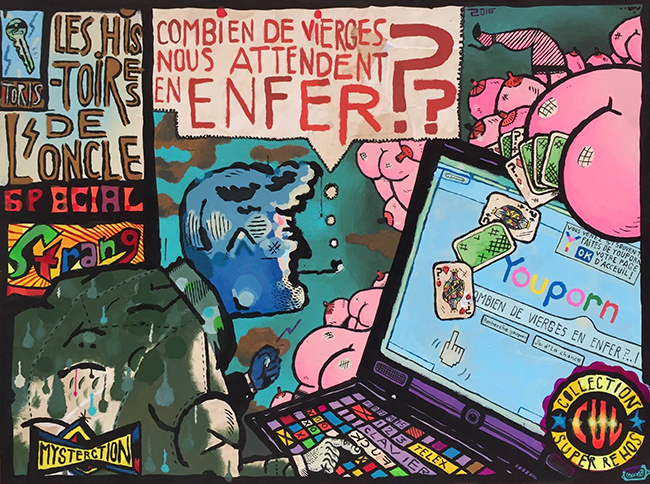
“Combien de Vierges Nous Attendent en Enfer?”
Moolinex also published Flow Pow with Deluxe as well as four and a half comic books. Including Flip et Flopi & Ump International at the publisher Les Requins Marteaux. But that was a long time ago. Then he published at DC (Dernier Cri edition) Noeud, Mariocarnet, Art Pute Carnet 1, 2, 3, 4, 5 and the book Pute de Luxe. He also appears in three collective DC animation movies.
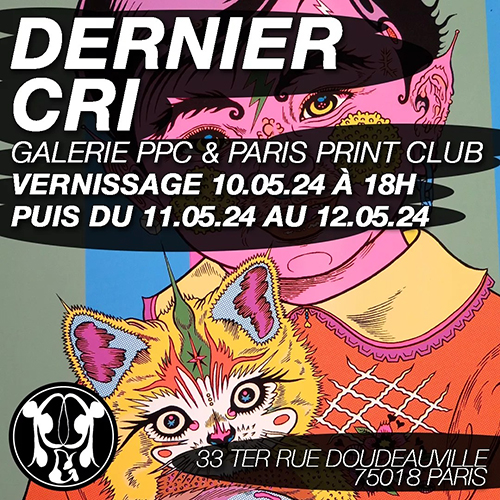
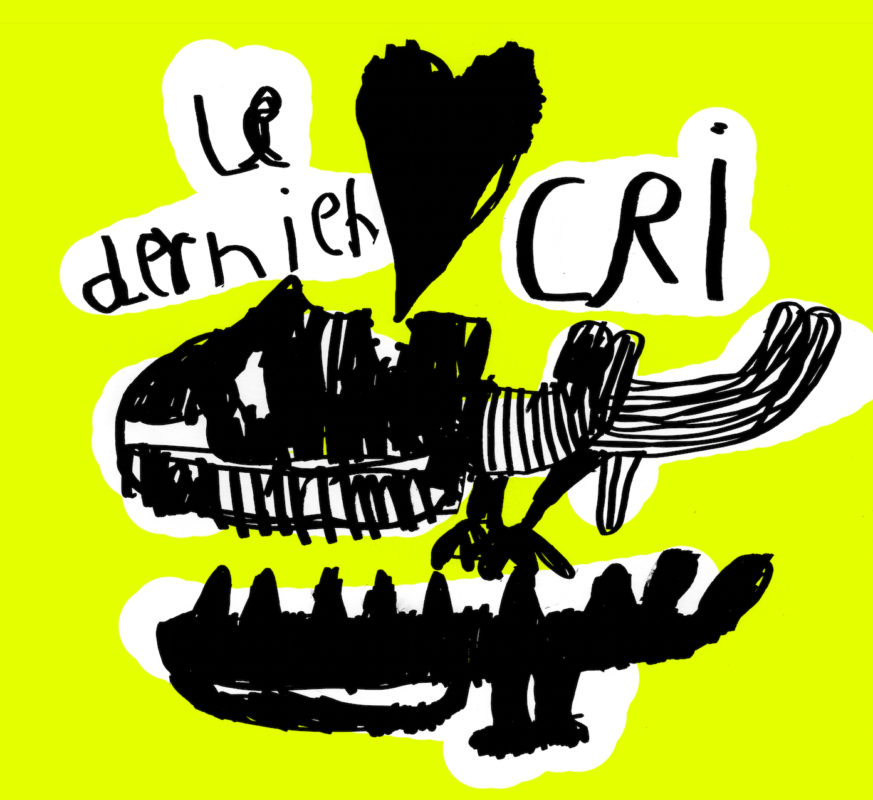
Nous Organisons un Week-end D’exposition et de Ventes de Productions du Dernier Cri
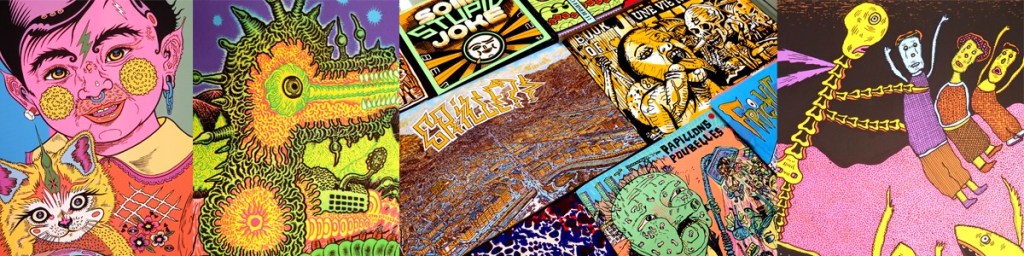
Le Dernier Cri est à la fois un atelier de sérigraphie et une maison d’édition et se consacre depuis 1993 à l’édition et à la diffusion de travaux imprimés d’artistes du milieu underground français et international. Grâce à la réalisation frénétique d’un nombre considérable de livres d’artistes, de zines et de posters en sérigraphie il perpétue le graphzine depuis des décennies. Ça va donc être déjanté et haut en couleurs.
Avec des oeuvres de Mat Brinkman, Mark Beyer, Tetsunori Tawaraya, Jiro Ishikawa, Kerozen, Sam Rictus, Andy Bolus, Daisuke Ishiba, Ocampo Manuel, Ota Keiti et beaucoup beaucoup d’autres.
la galerie du Paris Print Club 33 ter rue doudeauville 75018 Paris Métro chateau rouge
Horaires :
Vendredi 10 mai 18h-21h Samedi 11 mai 13h-19h Dimanche 12 mai 13h-18h
Le Dernier Cri au Paris Print Club
Expo éclair, Le Dernier Cri at the Paris Print Club
On May 11-12, 2024
We’re organizing a weekend of exhibitions and sales of Le Dernier Cri productions.
Le Dernier Cri is both a silkscreen workshop and a publishing house, and since 1993 has been dedicated to publishing and distributing printed works by artists from the French and international underground. Thanks to the frenetic production of a considerable number of artists’ books, zines and silkscreen posters, it has been perpetuating the graphzine for decades. So it’s going to be crazy and colorful.
With works by Mat Brinkman, Mark Beyer, Tetsunori Tawaraya, Jiro Ishikawa, Kerozen, Sam Rictus, Andy Bolus, Daisuke Ishiba, Ocampo Manuel, Ota Keiti and many others.
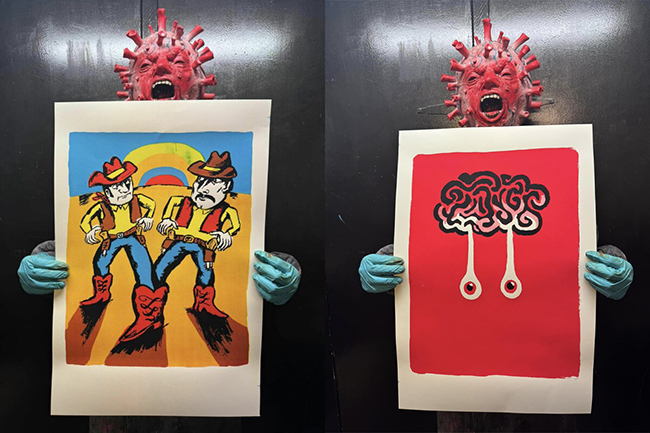
MUZO ‘Cowboys’ & ‘Self Portrait’ 50x70cm Posters by LDC
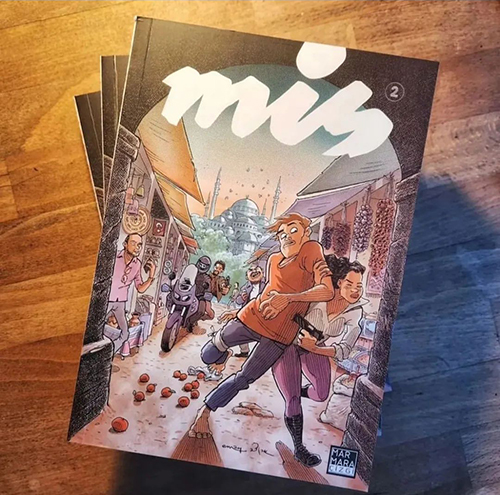
Yurdumuzun en yoğun, en zengin en çeşitli içeriği, en çok çizeri ve en çok öyküyü barındıran çizgi roman dergisi Mis, aynı zamanda Ethereum blok zincirinde benzersiz bir şekilde çizilen ve oluşturulan dijital koleksiyonlardan oluşan, NFT destekli bir topluluk olarak macerasına devam ediyor.
Bir dönem tirajı 1 milyonu bulan dergilerin tirajı TV ile düşüşe geçse de okuyucu kaybı açısından en büyük düşüş internet ile gerçekleşmiştir. Sosyal medya platformlarının herkes tarafından kullanılan birer popüler mecra haline gelmesiyle birlikte basılı çizgi roman ve mizah dergisi yayıncılığı okuyucu kaybetmiştir. Kimi internet kullanıcısının dergilerde çıkan çalışmaları eser sahiplerinden izinsiz şekilde online çevrelere yüklenmesi de okuyucu sayısında düşüşe neden olmuştur. Birçok dergi bu dönemde kapanmak zorunda kalır. Yayın hayatı sonlanan popüler dergiler arasında mizah dergisi Penguen, çizgi roman dergileri L-Manyak ve Hortlak da vardır.
Ünlü mizah dergisi Penguen 2017 yılında son sayısını yayınlayarak okuyucuya veda ederken okuyucuya bir mesaj bırakır. Mesajda, derginin kapanma nedeninin ardında yatan tiraj düşüşü, dergide yayınlanan çalışmaların bazı internet kullanıcılarının eser sahiplerinden izinsiz şekilde web siteleri veya sosyal medya platformlarından bunları paylaşarak haksız gelir elde etmeleri, okuyucunun dergide çıkan işleri sosyal medyada gördüğü için dergi satın almayı bırakması gibi konulara dikkat çekilmiştir.
Dünyada ve ülkemizde kan kaybeden basılı yayıncılık, eser üreticilerini sosyal medya ve Patreon benzeri platformlara yönlendirdi. Yıllardır Türkiye’nin en çok satan dergilerinde çizen isimler kişisel sosyal medya hesaplarından, çevrimiçi dergi uygulama ve web sitelerinden veya Patreon benzeri bağış platformları aracılığıyla eserlerini okuyucu ile buluşturmaya başladı.
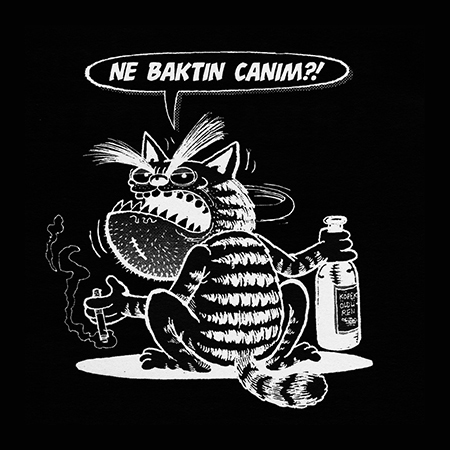
Sosyal medyayı etkin bir biçimde kullanan çizer listesi oldukça uzun sözü edilen çizerlerden en çok ön plana çıkan isimler ve kullandıkları platformlara bakacak olursak; Emrah Ablak oluşturduğu “karikafilm” formatını kişisel instagram hesabından, Serkan Altuniğne okuyucuları tarafından oldukça sevilen “Bobo” bant serisini instagram, patreon hesapları ve çevrimiçi dergisinden, Yılmaz Aslantürk uzun yıllardır çizdiği “Otisabi” öykülerini patreon hesabından, “Kötü Kedi Şerafettin“in yaratıcısı Bülent Üstün,objeart çalışmalarını instagram hesabından hayranları ile paylaştı.
Emrah Ablak ‘Gece Treni’ Haziran 2023
Emrah Ablak’ın yanı sıra kadroda Ergün Gündüz, Bülent Arabacıoğlu gibi birçok usta çizer de eserleri ile “Mis” aracılığıyla okurla buluşuyor.
“Eski tadı kaybetmeden yenisini inşa etmemiz gerekiyor. NFT çabamız da bunun bir sonucu.”
Bir NFT Çizgi Roman Dergisi olarak Mis Dergi
Türkiye’nin popüler çizerleri Mayıs 2022 tarihinde bir dergi çıkardı. Derginin başında uzun yıllardır mizah dergilerinde karikatür ve çizgi öyküler çizen, mizah yazıları kaleme alan “Jamal” ve “Tübitak” isimli çizgi serinin ana karakteri Bayram Efendi gibi unutulmaz karakterlerin yaratıcısı usta çizer Emrah Ablak yer aldı. Ablak, 2022 yılında webrazzi isimli web sitesine verdiği röportajda NFT ve basılı medya ile ilgili şu sözleri belirtir: …Eski tadı kaybetmeden yenisini inşa etmemiz gerekiyor. NFT çabamız da bunun bir sonucu…
2022 yılında yayın hayatına başlayan Mis Dergi geleneksel ile moderni, usta çizerler ile genç çizerleri bir araya getirerek son yıllarda kan kaybeden Türkiye dergiciliği için bir umut ışığı olmuştur. Webrazzi’ye verdiği röportajda NFT teknolojisi üzerine “bugün bu gördüğümüz henüz buzdağının görünen kısmı” diyen Emrah Ablak, dergideki diğer çizerler ile birlikte 600 sayfalık bir yenilikçi örnek sunmuştur.
Derginin basılı versiyonu Marmara Çizgi tarafından basıldı. Bu versiyonun geliri derginin masrafları için kullanıldı. ‘Mis’in NFT formatı ise Kanada’da yaşayan NFT grubu olan Pogzi Tech tarafından dijital ortama taşındı. Derginin 1. sayısının 2000 adet çıkan baskısı Cartoon İstanbul sırasında tükenir ve ilk sayının ikinci baskısı hızlı bir şekilde okuyucuyla buluştu. Derginin NFT formatına Mis Dergi web sitesinden ulaşabilirsiniz.
Deniz Cansever / UP XIV, #13 Nisan 2016 / SUB YAYIN
Ekstrem metalci geçmişini ve serseriliklerini çok iyi bildiğimiz, Anima İstanbul emekçisi ve geçtiğimiz Şubat ayında gösterime giren Kötü Kedi Şerafettin filminin yardımcı yönetmenliğini üstlenen Burcu Baki, yoğun temposuna aldırmadan (zaten başka seçeneği yoktu) UP XIV’ün film süreci ve özel hayatına yönelik sorularını cevapladı.
Burcu açıkçası bu film sürecinde uzun süredir seni bir aşağı bir yukarı Kadıköy yokuşlarında inip çıkarken gördükçe sonlara doğru endişelenmeye başlamıştık. Umarız şu an iyisindir. Bu geniş zaman aralığının özetini sormak ve senden papara yemek niyetinde değiliz ama az buçuk, bir şeyler merak ediyoruz tabi, kaşıntıdan olsa gerek. Bu projeye nasıl dahil oldun, neler yaptın, ne yedin ne içtin biraz anlatabilir misin?
Merhabalar, öncelikle ben projede çalışmaya başlayalı 2 yıl oldu. Filmin süreci ise senaryonun finalize edilmesi ve storyboard çizimlerinin başlamasıyla aşağı yukarı 4 yıl önce başladı diyebiliriz. Anima İstanbul’da yıllardır çalışıyorum ve çalışanların büyük bir kısmı da arkadaşım. Yıllardır beraber çalıştığımız arkadaşım Can Deniz Şahin filmin uygulayıcı yapımcılığını yapmaya başlayınca; “Kötü Kedi Şerafettin’i yapıyoruz, sensiz olmaz” dedi, böylece ben de çalışmaya başladım. Filmde yardımcı yönetmenlik yaptım. Filmin her alanında yurtdışındaki örneklerine oranla az kişi olarak çalıştığımız için, çok yoğun bir çalışma süreci geçirdik. Dolayısıyla size çok yorgun görünmüş olabilirim ama güzel bir yorgunluktu.
Türkiye’de animasyonla alakalı ya çok ilgilenmeyip içine giremediğimizden ya da cidden kayda değer bir şey olmadığından popüler bir olaya rastlayamadık. Olanlara da bakıyorsun, tarih ve ahlak tornasından geçirilen ve çeşitli mesajlarla çocuk beyni yıkayan programlardan ya da yine biz izlemeye kalksak arızaya bağlayacağımız çalışmalardan öteye geçemiyor. Bizce Şerafettin bunlara karşı hem sert bir tokat gibi oldu hem de aslında yapım, içerik, pr, sunum ve gişe anlamında da birçok hususta yeniliğe imza attı ve etkileri sürecekmiş gibi gözüküyor, ne diyorsun hem içerik hem başka projeler açısından bir başlangıç mıdır bu?
Şerafettin bahsettiğiniz alanların hepsinde bir dönüm noktası oldu. Suratımıza kapanan bir çok kapıyı açacak ve özellikle animasyon yapmak isteyen insanların cesaretlenmesini sağlayacak. Bu Anima İstanbul için de geçerli, yeni projeler için biz de cesaretlendik ve nasıl ilerlememiz gerektiğini daha iyi biliyoruz artık. Ayrıca bu film yurtdışına açılmamız için de bir dönüm noktası olacaktır.
Çizgi Roman Yolculuğu: Bülent Üstün & Kötü Kedi Şerafettin (2016)
Şerafettin filmin başından sonuna bir “sofra” kurmaya çalışıyor aslına bakarsan, her türlü aksiliğe rağmen o sofraya oturmak, içmek, cigara dönebilmek önemli bir olay ve tabi huzurunda kaçmaması lazım. Bizde de mesela o var, cepte beş kuruş varsa eğer masaya akıtıyoruz, “adap rakı” göndermesinden hareketle çokta o işin adabıyla ilgilendiğimiz söylenemez vs. Senin sofra (ya da bar ya da ev her neyse), içki ve Şerafettin üçgenin nasıl peki?
Sofra bizim için bir hayat biçimi. Biz “hadi buluşalım” demiyoruz, “hadi rakı içelim” diyoruz. Şerafettin’in de böyle bir karakter olması da benimsenmesini, sevilmesini sağlayan temel noktalardan biri.
90’lı yıllarda doğal olarak (yaşın gereği dersek pot kırmayız umarım) çokça vakit öldürdün. Müzik, kültür, yaşam olarak o atmosferden hızla uzaklaşan bir dönemin tam ortasındayız ve Şerafettin tam da bu garip günlerde perdede bizleri karşılıyor. Aynı zamanda şunu görüyorsun, Şero Cihangir’de kendi alanını bi’ anlamda muhafaza etmeyi başarabilmiş ama öte yandan gittikçe değişen ve sinsileşen bir kültürle de mücadele etmek durumunda kalıyor. Seni bu zaman turu nasıl etkiledi peki?
Genel olarak negatif bir etkisi oldu. 90’lardaki rahat sosyal hayatımızı özler olduk. Ülkemiz hızla yaşanamayacak bir yer haline geldi. Şero Cihangir’de alanını muhafaza etmeyi başarabilmiş olabilir ama ne yazık ki biz edemedik. Ben de iş dolayısıyla yıllarca Cihangir’de yaşamış biriyim ama bir yerden sonra hızla bozulduğunu görüp ben de kendi mahalleme geri dönüş yaptım. Geçen hafta iş için Taksim çevresi ve Cihangir’deydim. Görsel çirkinlik, insanların insanlıktan çıkmış olması, şehrin kötü kokusu ve sürekli sizi paralize eden gürültü, gerçekten de bütün duyularınızla bulunduğunuz ortamdan tiksinmenizi sağlıyor. Oldukça üzücü bir zaman turu diyebilirim. En kötü tarafı da bu çirkinliğin bütün ülkeye yayılıyor olması.
Cihangir’de Bir Gece…
Bir önceki sorudan yola çıkalım; Şerafettin ortalama iki ya da üç kuşağın hayatına girdi, kimsenin elinden düşürmediği bir çizgi karakterden, önü alınamayan hatta bazen günlük hayatımıza, dilimize, hal ve tavırlarımıza, tişörtlerimize sıçrayan bir fenomene dönüştü. Bu sert ve tavizsiz moruk, punk’ından muhafazakarına kadar benimsendi. Herkesi çeken olay neydi bu noktada?
Şerafettin’in her şeye başkaldıran bir karakter olması, herkesi olmasa da birçoğumuzu kendine çekti. İnsanların yapmak isteyip de yapamadıklarını yapan, söylemeye cesaret edemediklerini söyleyebilen serseri bir karakter… Aslında kötü olmasına rağmen filmde de kendini sevdirmeyi başarabiliyor.
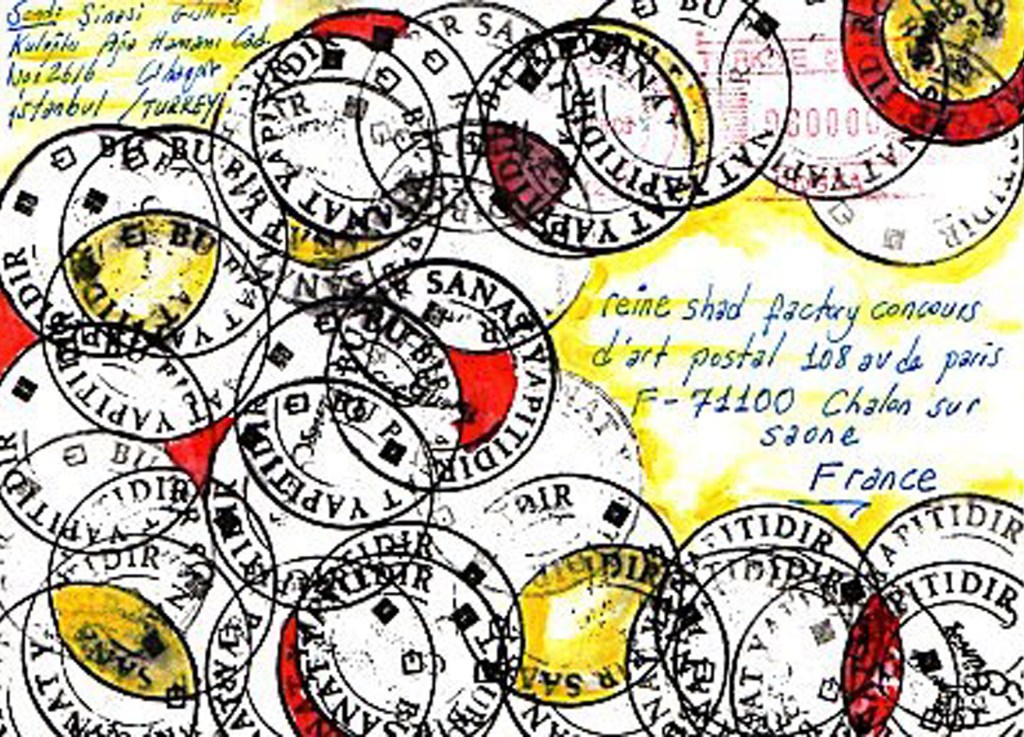
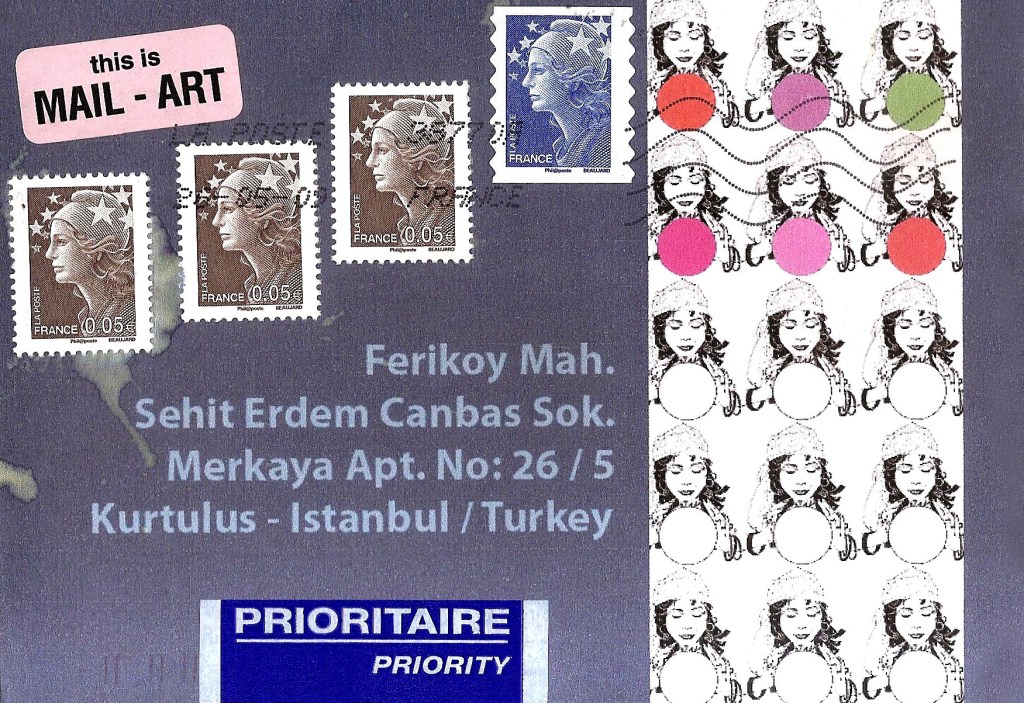
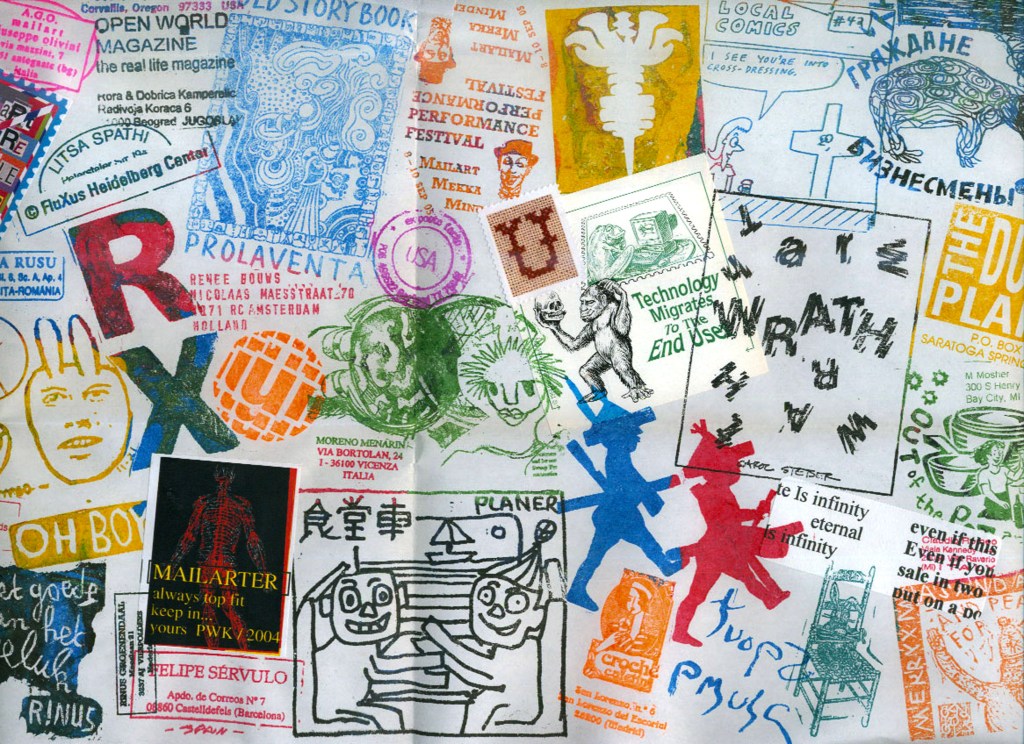
Posta sanatı, yaratıcı olan herkesin katılabileceği uluslararası bir ağdır. Posta sanatı bir deney, dışavurum, işbirliği, iletişim, özgürlük ve eğlence sanatıdır.
Şinasi Güneş
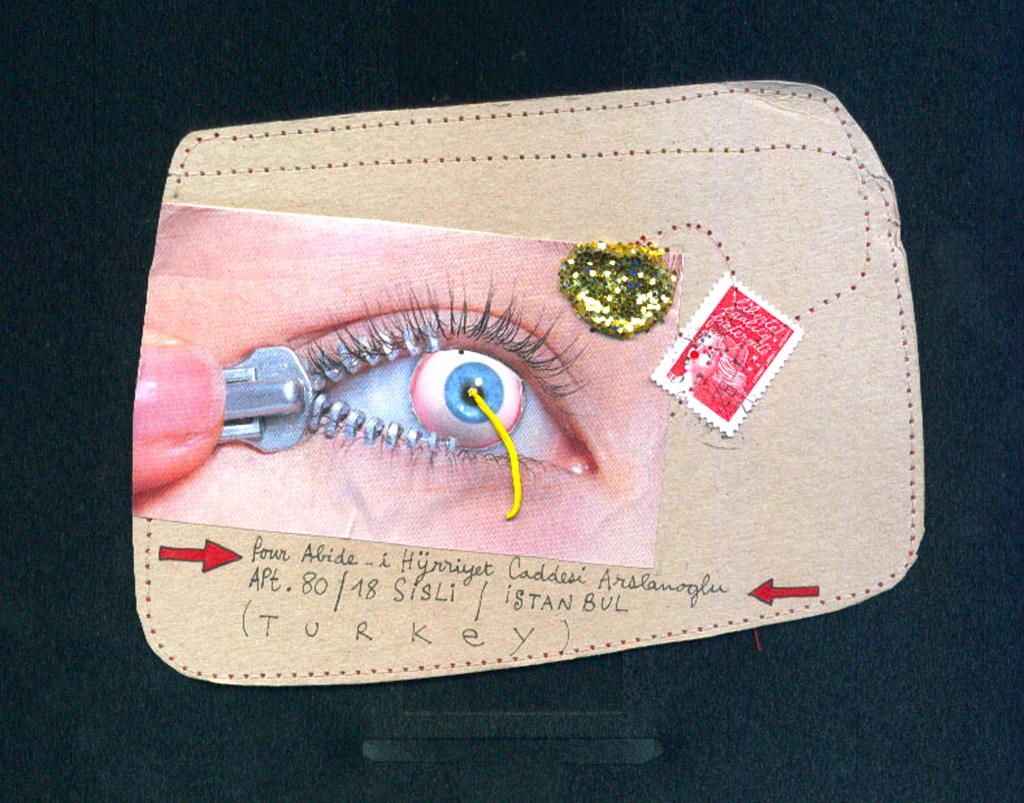
Mektup ile yollanabilen herhangi bir sanat objesi posta sanatının ilgi alanına giriyor. El yapımı kartpostallar, fotokopiler, bilgisayar baskıları, kolajlar, resimler, çizimler, çeşitli nesneler, kısaca istediğiniz her şey. Gönderilen her türlü posta sanatı objeleri elemeye tabi olmadan sergilenirler. Yapıtlar satılık değildir. Geri gönderilmezler. Fakat tüm katılımcılara, fotoğraf ve sanatçı listesi gibi dökümanlar yollanır. Posta sanatı, sanatı, tüketici zihniyetinden ve galeri monopolünden arındırmayı hedefleyen bir sanat hareketi olarak tanımlanır.
Posta Sanatı Tarihi
Posta sanatçıları sanat postasının başlangıcı için esprili bir iddiada bulunurlar. Bu iddia Kleopatra’nın kendisini, sarıldığı bir halıyla Julius Caesar’a sunmasıdır. Oysa bildik anlamda o dönemde bu ne bir posta ne de sanat ile ilişkilendirilebilir. Olay bugüne taşındığında güncel sanat mantığı dizgesinde performans sanatı ve posta sanatının bir türevi olarak değerlendirilebilir. Ki bu ekstrem bir örnektir ve nihayetinde bir pula ve adres bilgilerine ihtiyaç vardır.
1955 yılında Ray Jhonson “moticos”ları üzerine çalışmaya başladı.
1960’da Jhonson ilk “nothing/hiç” çalışmasını yaptı.
Johnson önemli bir post -sürrealizm ve pre – pop kolaj sanatçısıdır. Johnson aynı zamanda New York Correspondance (Posta) okulunun kurucusu ve Correspondance sanatının (Mail Art olarak da bilinir) orijinal başlatıcısıdır. Bu sanat, bir şekilde geleneksel posta servisi ıle yaygınlaşan uluslararası disiplinler formudur.
O kendi kolajlarını kompleks aktivite spektrumlarının bir parçası olarak gördü ki; bu aktiviteler çizimleri, mektupları, telefon görüşmelerini, performans sanatını, şiiri ve gerçek yaşamı içermekteydi. Bütün bunlar Zen ve Tao’nun bir dokunuşu ile noktalanmaktadır.
Johnson, Fluxus, Happenings, Neo-Dada, Judson Dance Church ve 1960, 70, 80’ lerdeki diğer intermedia aktivitelerine katılan bir çok sanatçının çağdaşı olduğundan, uluslararası avangardizmin değişimine faydalı olmuştur. Bunu yaparak ellinin üzerinde ülkedeki genç sanatçılar arasında istemeden bir kült kişilik haline gelmiştir.
Fluksus güzel sanatların dışında başladı. Ve bu hareket artistik geçmişi olmayan insanları içeriyordu. Fluksus posta sanatını etkiledi. Fluksus sadece teknik ve ideolojik yönüyle değil doğasıyla da posta sanatını etkiledi.
‘Damga’ by Şinasi Güneş
‘Çingeneler’ by Isabelle Vannobel, Fransa
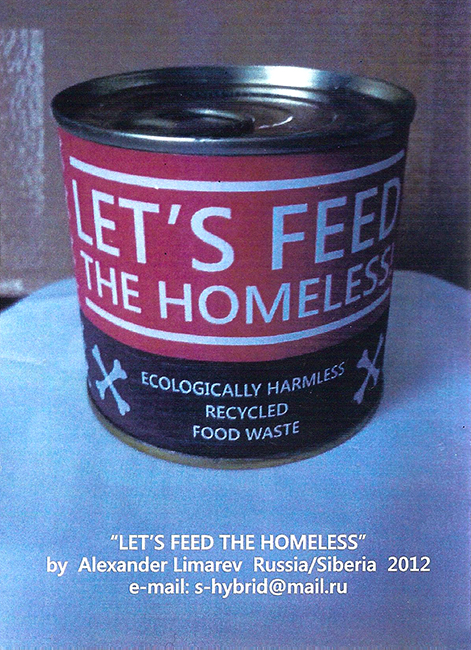
Alexander Limarev ‘Evsizler’ Rusya
Posta sanatı sosyo-kültürel ve politikdir. Cinsellik, ekoloji, teknoloji, feminizm gibi konularda karşı duruşuyla vardır. Kapitalizm karşıtı çalışmalar sık sık kullanılır. Mektuplaşma halkası giderek büyüdü. Posta sanatı 1970’lerin başında, performans, video gibi diğer medyalar ve yeryüzü sanatı ile birlikte çıktı ve uluslararası bir nitelik kazandı.
1986’da Bağımsız Dünya Posta Sanatı Kongresi düzenlendi, posta sanatçılarının bir birleriyle tanışmaları ve düşüncelerini paylaşmaları açısından teşvik edici oldu. 500’den fazla sanatçının katılımıyla 80’nin üstünde toplantı 35’e yakın ülkede düzenlendi. İnternetin gelişmesini beklemekle değil kültürler arası iletişimi yaygınlaştırmak, canlandırmak için posta sanatını arzulamak, onu görünür kıldı. Bu açık ilişki potansiyeli, heyecan barındırmakta fakat onun, kanıksanmış sonucu, bazı beklenilen yeni sanat akımlarından daha ziyade arkadaşlık ilişkilerini geliştirdiğinin görülmesidir.
‘Gözetleme’ by Giorgio, Fransa
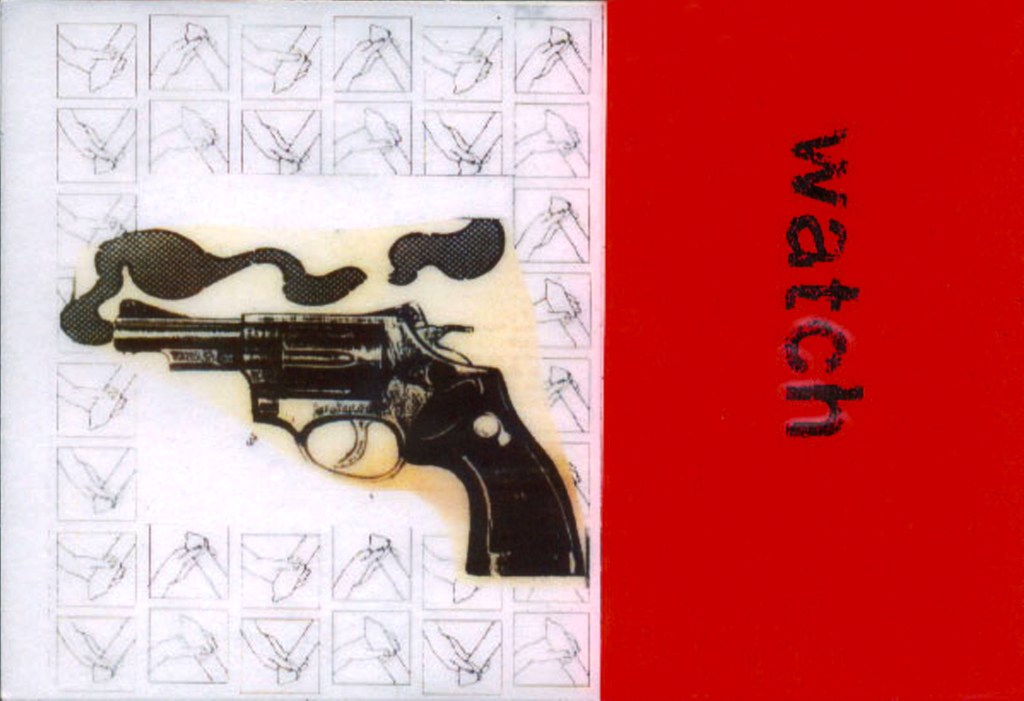
Gözetleme ‘Silvio de Gracia’ Arjantin
Posta sanatı gerçekten çağın ruhunu yakalamış oldu.
1988’de Uluslararası Posta Sanatçıları Birliği (IUOMA) kuruldu. Dünyanın birçok ülkesinde üyesi olan bir posta sanatçıları insiyatifidir. Bugün halen etkinliğini sürdürmektedir.
1990’ların başında internet ile birlikte geleneksel sanat postası sanatçıları “Sanat Postası Şebekesi” (Mail Art Network) hareketini oluşturdular. Bağımsız kavramsal bir ağ’dır.
40 yıldır, 50 ülke civarında Mail Art, hızla Johnson’un orijınalleriyle aynı doğrultuda yol almaya devam ediyor. Bununla beraber bire bir uyumlulukta devam etmektedir ve “ Uyumlu Bir Akşam Yemeği” gibi uyumlu diğer işler network yoluyla yayılmaya ve hedefinden sapmadan” kendin yap-ses kayıtlarıyla desteklenerek Punk Rock’ın gelişiminde de rol oynamış, buna ilham vermiştir. Aslında mail art bir hareket olarak farzedilebilir. Bir başka hareket asla bu kadar yayılmamış ve uzun sürmemiştir.
Ryosuke Cohen ‘Beyin Hücresi‘ Japonya
Bazı posta sanatı projeleri
Ryosuke Cohen’in Brain Cell-Beyin Hücresi Projesi 1985’te başladı. 1998 yılına gelindiğinde 400’den fazla yayına ulaşılmıştı. Robin Crozier’in Memo(random)/Memo(ry) projesi 1980’li yılların başında başladı, “ekle ve gönder” yönergesi üzerine kuruluydu.
Ryosuke Cohen’in Beyin Hücresi projesini tanıtacak olursak;
Beyin Hücresi
Ryosuke Cohen 1984’te posta sanatı yapmaya başlıyor. Şimdiye kadar kesintisiz devam eden bir proje gerçekleştirdi. Bu projenin adı “beyin hücresi” idi. Bu proje, en üstün global ağ ideallerinin bir göstergesidir.
Cohen Avrupa’da bilinmeyen bir teknikle, çok renkli A3 posterlerin baskısını alır. Bu yöntemin çalışmalarını plastik mühür (posta sanatçılarını heyecanlandıran önemli plastik mühürlerdir.) bir logo ya da bir imgeler fragmanı ile ona gönderir. O bunu alır ve parlak renkler dizgesi içinde 40 ya da 50 farklı imajla birlikte, sticker’lar ve plastik mühürlerle yeniden yapılandırır ve elde ettiği ne varsa ona geri gönderir. O, 84’ten bugüne bunu sürdürür, tümüyle “sonsuz ağ”ın olağanüstü imajlarından oluşan yüzlerce poster birikir. “Global Beynimizin” her bir “hücre”si her biri otonom, sanatçıların seçimi olan imajları gösterir.
‘Fundamentalizm’ by Clemente Padin, Uruguay
Posta sanatçıları
Ray Johnson
Guy Bleus
Mark Bloch
Hans Braumüller
Al Williams
Crackerjack Kid
Snowflake
John Held Jr.(not to be confused with illustrator John Held Jr.)
Not: Bu yazı “Posta Sanatı” kitabı’ndaki Posta Sanatı Tarihi, Bazı Posta Sanatı Projeleri ve “ebenzin.com” daki Mail Art, Ray Jhonson başlıklı yazılarımın harmanlanmasından oluşmuştur.
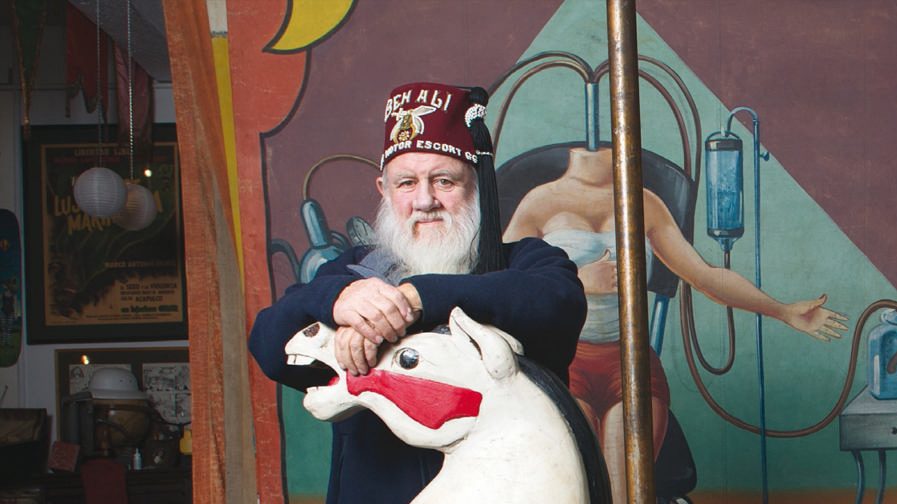
Longtime publisher Ron Turner of Last Gasp lets the red wine spill and herds some very wild cats
Interview by Eric Reynolds
Portrait by Joe Brook
Juxtapoz magazine, March 2015
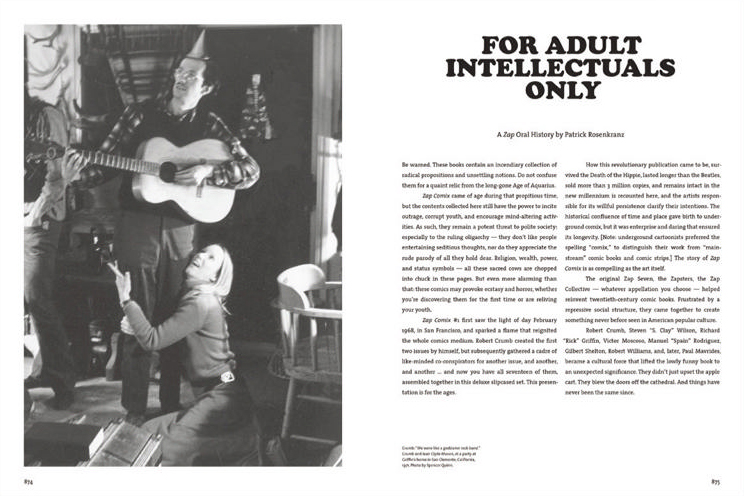
This winter saw the culmination of one of the great bodies of work of the past half-century: a deluxe, boxed-set collection from Fantagraphics Books of all seventeen issues of the legendary underground comic book series, Zap Comix, founded by Robert Crumb in 1968.
Zap Comix, which Crumb eventually expanded into an artist collective that included his peers Robert Williams, Gilbert Shelton, Victor Moscoso, Rick Griffin, Spain Rodriguez and Paul Mavrides, can legitimately claim a greater influence over the art form of comics than virtually any other, short of possibly MAD magazine. Though it has had a variety of publishers over the years, no one published the title for longer than San Francisco legend Ron Turner, whose Last Gasp Eco-Funnies remains a focal point for the underground comics movement, the San Francisco countercultural scene, and the West Coast lowbrow art movement, some 45 years after its founding.
Turner’s larger-than-life personality and Zelig-like relationship to his beloved hometown warrants a biography of its own. He can tell stories about people as diverse as Charles Manson, Norman Schwarzkopf, the Reverend Jim Jones and Lee Harvey Oswald. Many credit/blame him with a Bambino-like curse that has kept his city’s beloved Forty-Niners from winning a Super Bowl over the past two decades. But, on the occasion of The Complete Zap Comix, Fantagraphics Books Associate Publisher Eric Reynolds spoke to Turner specifically about his relationship with the influential comix anthology and his history of publishing underground comics.
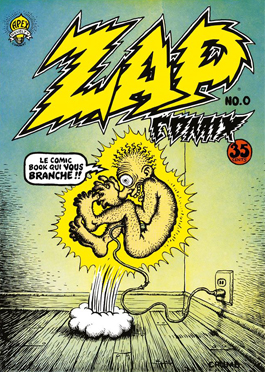
Zap Comix
Eric Reynolds: You were a graduate student at San Francisco State University when you founded Last Gasp Eco-Funnies in 1970. Can you tell us more about that period?
Ron Turner: I was studying allergies and emotions at Kaiser Hospital. I was finishing up my master’s degree in experimental psychology. The only problem was. we were in the midst of the longest student strike in U.S. history at SF State.
My roommate, Roger Alvarado, was head of the Third World Liberation Front, and every day we were out on the picket line being attacked by members of the police force on our little 19-acre campus. Roger looked a lot like Che. Myself and my then-girlfriend Fran Ryan were very political.
We were also involved in the first ecology center. To help fund it, I came up with an idea to make an underground comic with ecology themes and have them sell it to pay for the printing and artists. I strong-armed a bunch of dealers in Berkeley to loan the money for printing and royalties. It worked, and within three months we had a book, Slow Death Funnies #1. Crumb agreed to do what turned out to be a two pager. Also, I got Gilbert Shelton to do a page. I was, by that, time living in Berkeley and had all the Slow Death guys over. I learned to ban drinks in the room where the original artwork was. Some were careless (or jealous) of the others and would almost intentionally spill red wine on a page.
Zap Comix covers by Robert Crumb & Robert Williams
How did you get connected with the comics community?
Don Donohue and noted beatnik poet Charles Plymel printed the first Zap. and then Crumb moved it to Print Mint, which was run by two couples. Bob and Peggy worked at the poster store on Haight, and Don and his wife, Alice, were at the frame shop on Telegraph in Berkeley.
We knew Bob and Peggy Rita (of the Print Mint, publisher of Zap #0 and #1) because of our common connection to the Farm Workers Union. Fran had headed up the lettuce boycott and worked as Cesar Chavez’s secretary. We were members of a group called the Committee of Returned Volunteers. You had to have spent at least two years in a volunteer capacity in a foreign country (Peace Corps, American Friends Service Committee, etc.) We became the translators of cultural imperialism to the anti-Vietnam War movement.
Book excerpts from The Complete Zap Comix Courtesy of Fantagraphics
You must have been familiar with Zap by this point?
I first read Zap at a New Year’s party around the end of ’68. I was completely stoned and the comic brought back my childhood fascination with that art form. I reread it for hours. I discovered Gary Arlington was a source [for this underground material] and went to his store in the Mission. It was a place that never changed over 40 years—stacked to the ceiling with comic books and artwork, although in the early days, seven or eight people could move around in there. Gary seemed to be a “true believer,” although later he became more delusional and thought he was Christ on a mission. That didn’t stop us from becoming friends. In early ’70, when I was putting together Slow Death #1, I had paid Don Donahue (who printed the first Zap) and Arlington the princely sum of $25 each to put them on retainer. They liked the sound of that.
I first met Crumb at Gary Arlington’s store. I let Crumb know that my dad had given me a lot of 78 records and he was over in a flash to look through them. I think I just gave him the records. My dad had been a country and western disk jockey in Bakersfield back in the late ’50s and ’60s and was involved in that business till his death in the ’80s.
Soon thereafter. I got Crumb interviewed on KPFA, the Pacifica station in Berkeley. He drew a pic of himself by a radio mike, sweating so profusely that the liquid was up to his calves. I took him to lunch and all he wanted was a hamburger. He was already a superstar in the counterculture and I felt honored to be in his presence. I visited him up in Potter Valley with his first wife, Dana. She passed last year. Crumb would retire after dinner to a little shack and was drawing Eggs Ackly and the Vulture Demoness. I was blown away on how fast he could fill in the panels: he obviously had the script down in his head.
At what point did Last Gasp stop being a side project to fund the ecology center and/or other social movements, and become your primary vocation or passion?
The first Slow Death appeared in time for a dozen friends and myself to get to college campuses around the Bay Area and hawk them on the lawns during the first Earth Day in 1970. In order to get rid of the garage-busting amount of boxes containing 20,000 comix, I had to contemplate distribution. I had beaten the draft and was fervently anti-war, and felt that I had been given a two year pass to do something. I always wondered about the concept of distribution. It seemed so mysterious. Also. I had some drug dealers to repay.
I was moving in more comic book circles and my radical college friends were not embracing the kinds of comix I was beginning to leave on their kitchen tables. The ecology center would only take ten copies at a time and not call when they ran out. Comix were not what a lot of people at the time felt were a proper item in a bookstore.
Our Committee of Returned Volunteers was continuing to be involved in various social justice issues. Trina Robbins asked me to visit to see a comic she was putting together called It Ain’t Me, Babe. It was the same name as a woman’s radical newspaper published in Berkeley by a collective. Trina did a cartoon strip called Belinda Berkeley in that paper. Women’s liberation was big at the time. The comic seemed a natural. So I said yes and paid Trina for it. Our third publication was Skull Comics #2. Jaxon [a.k.a. the cartoonist Jack Jackson], who was a partner at Rip Off Press, brought it to me. It had a great Gilbert Shelton cover and fantastic horror stories. The horror genre always seemed to have enough social activism in the form of morality tales and the unmasking of human foibles to interest me, so I gladly said yes. I still don’t know why Rip Off didn’t publish it themselves.
Before the end of the year, we had Slow Death #2 ready to go. We did the first front-to-back, wrap-around cover. After the first printing, it needed color, and so the second was done, and 100 copies were done on silver paper. I signed and numbered them and gave most of them away to the various artists. The next year. I had paid back the “investors,” and then was asked to be in a partnership by one of the investers. This is when it became a vocation.
Zap Comix covers, Courtesy of Fantagraphics
The first two issues of Zap were published by the Print Mint, and you came in soon thereafter, I believe. How did that come about?
By 1970, Zap #1-4 had been printed, and having found the xerox copies of Crumb’s first Zap, it was added as #0 to keep artistic continuity. Posters were the big art movement of the social order of the ’60s and ’70s. Comix hitchhiked with the posters to head shops. At one time, there were over 40,000 head shops nationwide. Comic stores began, and another source of sales opened up.
Somewhere around ’75, Crumb confided in me his unhappiness with Print Mint. He was complaining about them not paying him all he was owed. I offered to print up Zap #0 and #1. He took the first two issues of Zap away and I began publishing them. The Print Mint was having a hard time, perhaps it was a decline in the [rock] poster business, I don’t know. But I needed the comix, so I proposed that one of us pay the printer and one of us pay the artists. They agreed, but the deal fell apart and Zap became a Last Gasp title in full by ’76-’77. There was no bad blood [between Last Gasp and Print Mint], although I’m sure Print Mint wasn’t happy. I think the contract stipulated 12% of the retail price for royalty. When a new issue came out, the guys got all their money up front.
By 1980, there were over 30 national distributors. Head shops, comic shops and a few alternative book stores were buying comix. As I sold more and more copies of Zap, it was apparent that it had become the premiere [underground] comic book, with [Gilbert Shelton’s] Freak Bros, a close second. Had Zap come out regularly, I’m sure it would have been no time before an issue could have gone close to a million-copy release, but as Crumb once said, one of the differences between undergrounds and above-grounds was that undergrounds were never on a regular schedule.
How does it feel to see it collected now, after all of this time?
I’m glad the book got done. After publishing it for almost 40 years, it’s great to see it in such a lush, robust presentation. I just wish that Spain Rodriguez and Rick Griffin would have lived to see this fine compendium of their work. I am humbled to have had a small part in the Zap artists’ careers. These guys were and are amazing.
“Every artist is a different universe and art is not reality. And they are not perfect moral philosophy, life is complicated and human beings are very complex.” –Emilie Ouvrard
E²/ Sterput gallery is located in the city of Brussels and, unlike other spaces dedicated to the exhibition oriented to the search for names or fashion trends, E²/ Sterput focuses on the elusive, complex but always stimulating underground or visionary art with the objective to give it a specific space for circulation and exhibition. Founded and directed by Emilie Ouvrard, the gallery began as a traveling project where different expressions were mixed : visual arts, music, publications etc. Aware of the need for a space, Emilie founded in 2013. E²/ Sterput develops the non-profit associative artistic space model, allowing various activities to take place in her space and for the community to get to know and actively participate of the project. In addition to the exhibitions that take place there, there are workshops given by different guest artists, talks and the edition of multiple originals and art publications. Many of the artists we love and admire have passed through E²/ Sterput: Pakito Bolino, Mavado Charon, Nils Bertho, Antoine Bernhart, Daisuke Ichiba and many more. We were able to talk to Emilie through email this past May, here we reproduce the conversation.
–Leonardo Casas / Tinystar Magazine 2020
Emilie Ouvrard & Gonzine
Tinystar Magazine: When and how your involvement in art begins; were you always been working in Belgium?
Emilie Ouvrard: As a child, as many children, I spent a lot of time with my mum making drawings and creating art. My mum was working half time for her children and she enjoyed doing creative workshops with us. Maybe my love for art starts with this, I don’t really know. I was in high school and I got interested in children books. I found some really nice publications featuring beautiful artists. And I met some friends in art courses with parents involved in the arts. Which was not at all where I came from. All this was new and interesting for me. After I graduate from high school, I left my parents place in the west of France to go to live in Montpellier, in the south of France. I went to the university to study anthropology and other stuff. In this city where Mattt Konture is living who is really a great artist. Also, I used to go to a bookshop close from my apartment to buy some comix, and there I saw some fanzines Mattt Konture was made with some of his friends. I had never saw something like that. I found it really wonderful, so I bought it. And I bought many other of his fanzines, too. I became quite a fan of his works. Right after that, I discovered Le Dernier Cri and their beautiful handmade books full of colors in a book fair in Montpellier. I found some bookshops selling them in Paris and one in Montpellier. So I started making a collection of the books and posters of the artists I liked. And I discovered many other publishers and artists in the bookshops I used to go in Montpellier and in Paris (when I went there to see some friends). After university, we decided to move to Brussels, where I still live and where I created the project E²/ Sterput. I created this project in 2013 because I couldn’t find all the underground art publishers and artistic works I liked. I thought it was a lack for a city like Brussels. I was missing all the art I liked. I wanted to bring it there in my city Brussels. So I created the association with a friend because we had the opportunity to get a small room for six months in a cultural art center called Recyclart. So we organized one exhibition each month with a lot of concerts. I don’t know how I survived. It was very intense. Because all this work I do with the project E²/ Sterput is as a volunteer and I work at a regular job in an office in public administration four days a week. After the first six months at Recyclart, we were a traveller gallery organizing exhibitions in different places in Brussels : studio printer, underground cinema and cafe. And during this travelling period we also organized two big festivals with exhibitions, concerts, workshops… until we started looking for, and finally, found a place to stay for a not too expensive rent.
Behind The Masks : Boris Pramatarov & Sophie Ung
“Our goal is to show underground and non conventional art and share it with the people.” –Emilie Ouvrard
Could you tell me something about the first art show ever you worked on?
The first show/ exhibition I worked on was in the room at Recyclart with the E2 / Sterput project (just called Gallery E² at that time). It was an exhibition of three artists: Elzo Durt, Mathieu Desjardins and FSTN. I didn’t know anything about organizing an exhibition. But I am a good organizer and I love art. Elzo Durt is a very famous artist in Brussels, so a lot of people attended for this first show and It was really fun.
Could you please explain us to the concept of ‘Gallery of art associative’?
The project is associative. I don’t really know if the meaning in English is the same as in French. Associative means that it is non lucrative and non professional. It is a project you do with passion as a volunteer. Professional gallerists work in art sells. Their goal is to make money selling art. They also decide which art is main and recognized art. Our goal is to show underground and non conventional art and share it with the people. But artists need money to eat and live. So we take in charge all the fees of the exhibition and the exhibited work can be sell. For the money, we take 20% on the sell and we also ask for grant/ subvention from the city/ region/ state. With that money, we can pay the rent, pay train ticket for the artists, organize creative workshops (on donation for the people and paid for the artist). The public money goes back to the people and to the artists through our art project.
Anne Van der Linden ‘Manucure’ & Antoine Bernhart
“They want to throw the artist in jail, but they don’t even try to understand or know the artist!” –Emilie Ouvrard
Were you, by that time, looking to display a specific art movement/ art style? Tell us about the E² curatorial activity and how were the artists started to display at the space.
For the curatorial work, I just display the artists I like. It is just my tastes. Tastes that have been built by all the publishers, books, artists I met in all the book shops and galleries I’ve attended to, and now, also, with internet. I don’t hide all my influences. For now it is just me organizing and deciding the gallery’s calendar of the exhibitions. But I will change the running of our project to go to something more collective. Because we are now twenty volunteers at E². Some of them are just happy to be here, to open the gallery to the public once a month or to spend a nice time with the friends, but others are great artists or great collectors and they want to get more involved in the gallery’s calendar design. And I want the project to live after and without me. I want the project to be able stand on its own.
Exposition : Gea & Stu Mead (March 2020)
E² éditions
“Many people are afraid and not interested in buying a book or an artwork as the same price as they consume cell phones like crazies?!” –Emilie Ouvrard
What kind of experience is to open artists like Daisuke Ichiba, Gea and Stu Mead to public ?
Daisuke Ichiba is quite general public; almost everybody likes his work and find it very beautiful. And Japan is on fashion in Europe. Gea also, her work please a lot of people and she is a girl, so she can treat subjects that some people won’t allow from men. Stu Mead it is more complicated. Because of the subject, and also because of the style (and because he is a man). The public is sometimes really closed and far from art. They are more in illustration and graphic design, which is not the same as art; and they mix them. And sometimes they don’t understand the complexity of the human being, its fears, its craziness, its our own demons… They think they know what is GOOD and BAD and if they see BAD in art, they don’t understand. They want to throw the artist in jail. But they don’t even try to understand or know the artist. They think they are the great avengers of the perfect moral philosophy of the world. Every artist is a different universe and art is not reality. And they are not perfect moral philosophy, life is complicated and human beings are very complex.
Éditions et distro
Le projet E² s’exprime également à travers l’édition de livres d’artistes imprimés et façonnés à la main à Bruxelles en série limitée. Un ouvrage est publié à l’occasion de chaque exposition. La distro E², zone de distribution de micro-édition, présente une fine sélection de créations artistiques variées : fanzines, livres, affiches, et autres productions issues du DIY et de ses acteurs.
For each art show the gallery publishes an edition, today is very rare for art galleries – at least around here to do so – what it means to you to use this printing language?
Yes, we do publish a book and some cards/ posters for each exhibition. We started at the end of the first six months at Recyclart because we had some money left and we love books and we met a nice screen-print printer. So we thought it was a nice souvenir to make a book of all those exhibitions. – The artist gets some copies, so he can sell them or do what he wants. It is a way to thanks the artist and to give him a souvenir and a retribution.
The people who can’t afford an unique artwork can buy a signed book. It is like an artwork. We love books as many people and this is a big pleasure to make a book and share it with other book lovers. It is like a souvenir of the exhibitions. In Brussels we’re working with some printers we know. We always work with the same printers. One of the volunteer at the gallery is a great graphic artist and he works on all the books. The printers print the books and we get at the print studio to make the final work (binding, cutting…). It is a local work with nice people we know. We also sell them in few bookshops and galleries in Belgium, France, USA and Japan.
Is there any art show displayed at E² that had raised some controversy / scandal?
Three times we got some messages telling us that this art is BAD, that we “should remove the paintings”, that is not “acceptable”. But is not something that happens very often and we can’t say it is a scandal. It just happened three times with Antoine Bernhart, Anne Van Der Linden and Stu Mead.
Panos : Art Carceral Chicano
Do you consider important the creation of a network of like-minded artist/ galleries today?
Yes I think so but i am not sure. It depends of the size of the network and how it is created? I enjoy meeting new artists and galleries and publishers. But most of the time, in our days, I meet them on facebook and instagram but I hate facebook and instagram.
In some realms of the art world, the future of an artwork depends on having a good agent. What is the reality for an artist working on a more underground level?
I think artists in underground level have many different ways to approach their works. Do they want/ need to make money with their art? Do they want to get famous or do they want to stay in the underground? I think it is sad that there is almost no galleries among the associative, non lucrative underground project like us (impossible to make money) and the very rich art dealer/ gallerist. I think, this is a historical fact, sad but true : art is for the riches. We should think again about the place of art in the society and we have to change it at all levels, politics and people. Why many people are so afraid and not interested in buying a book or an artwork as the same price as they consume cell phones like crazies?! And why cultural politics don’t give more space to the art for the society?