Industrial Workers of the World, Pittsburg 1975 (brochure)
Johan Kugelberg has more than 30 years of experience in the U.S. entertainment and art industries. From 1990 to 1994, he was the General Manager for Atlantic Records subsidiary Matador Records and a marketing and A&R executive for Def American Records from 1994 to 1997. He was the curator of the punk/rock sale at Christie’s in 2008, the first major auction sale devoted to punk. In addition, he has served as a curator and consultant in pop culture fields for auction houses including Christie’s and Phillips de Pury.
As an archivist, he has created comprehensive collections in the fields of punk, hip hop, and counterculture, focusing on printed works, ephemera, photography, and book arts. Currently, he is the owner and curator of Boo-Hooray, an archival processing company and project space in Manhattan.
Over his career Johan has curated more than 100 exhibits and written 42 published books. His book on the early history of hip hop was nominated for the NYPL Books for the Teen Age award 2008, and his book on the Velvet Underground won the Foreword silver medal for music 2010. Beauty Is in the Street was nominated for the London Design Museum 2012 Designs of the Year Awards. Johan has lectured and taught at Yale, Cornell, University of Wisconsin,Emory, UVA, Pace,Concordia University Montreal, Ohio State and MOMA PS1.
Kugelberg’s works have featured at Financial Times, New York Times, The New York Post, London Times, The Independent, The Creative Review, Rolling Stone, Dazed & Confused, Paris Match, and The Guardian.
Industrial Workers of the World, Pittsburg 1975 (brochure)
Johan Kugelberg, ABD müzik ve sanat endüstrilerinde 30 yıldan fazla deneyime sahiptir. 1990’dan 1994’e kadar Ahmet Ertegün’ün kurmuş olduğu Atlantic Records’a bağlı kuruluş Matador Records’un Genel Müdürlüğünü yapmıştır.
2008’de Christie’s’deki ilk punk/rock müzayedesinin küratörlüğünü yapmıştır. Bir arşivci olarak punk, hip hop ve karşı kültür alanlarında basılı eserler, efemera, fotoğraf ve kitap sanatlarına odaklanan kapsamlı koleksiyonlar yaratmaya devam etmektedir. Halen, New York merkezli arşiv ve proje alanı olan Boo-Hooray’ın kurucusu ve küratörüdür.
Kugelberg, kariyeri boyunca 100’den fazla serginin küratörlüğünü yapmış ve 42 kitap yayınlamıştır. Hip-hop’un erken tarihi üzerine yazdığı kitabı 2008 NYPL Books for Teen Age ödülüne aday gösterilmiş ve Velvet Underground hakkındaki kitabı 2010 müzik dalında Foreword Gümüş Madalyası’nı kazanmıştır. Yale, Cornell, VVisconsin Üniversitesi,Emory, UVA, Pace, Concordia Üniversitesi Montreal,Ohio Üniversitesi ve MOMA PS1 gibi önemli eğitim kurumlarında ders vermiştir.
Johan Kugelberg’in çalışmaları Financial Times, New York Times, The New York Post, London Times, The Independent, The Creative Revievv, Rolling Stone, Dazed & Confused, Paris Match, Nouvelle Observateur, The Guardian gibi yayınlarda yer almıştır.
Johan Kugelberg, Jonah Freeman ve Justin Lowe ile birlikte Rastlantısal Orman sergisi ve serginin ardında yatan hikayeyi anlatıyor.
21st Century Book Collecting and Archiving
Johan Kugelberg
As time continues to munch on us like so many sesame bread sticks, the collecting habits of the younger generation affect the dealer habits of the older. It is always difficult to identify value and worth and historical/cultural significance in the tempora and mores that you yourself were a part of, or aware of, or ignorant of, as they co-existed with your particular inability to step twice into the same stream. As you are stepping in, other waters are ever flowing past you, and the ephemera of your time are as ephemeral. You were an accomplice in throwing stuff away, hence making the stuff ephemeral, or for that matter, an accomplice in making certain books of your time rare as you weren’t buying them.
For my generation of collectors (born in the sixties/seventies), the vigor, humors, and passions of the years surrounding our very birth become infused with potency. We feel our skills as players of knock-out ping-pong with Chronos, Ananke, and Mister Kairos is dependent on our ability to recognize and acknowledge significant artifacts of the times and days we are living through, even if we were in diapers at the time. Having just missed out on something due to date of birth, place of birth, or socio-economical-cultural-educational surroundings sure brings added MSG to the consumption of cultural goods.
My generation is able to disperse with the usual stratifications of hi- and lo-brow, driving previous generations nuts as their hard-earned accumulated knowledge was nulled and voided during the second half of the 20th century by a new and financially improved great unwashed, namely their very own sons and daughters. What the greatest generation accomplished (and how they de facto saved our collective asses) was busy-bodily taken for granted by the boomers, whose rhetoric laid claims that what they were building was a new society that was an alternative to the old. With 20/20-hindsight one can pop one’s monocle yelling “Hooey!” as we remember Mark Williams’ words in A Day In The Life:
There was never an alternative society, was there? Because if there was, there would have to be an alternative currency, and alternative property laws and so on. The alternative society was a misnomer: there was an alternative culture, but there was never an alternative society.
Some of us spend a lot of time sifting through the cultural residue of all the frantic activity of the second half of the 20th century. When I first saw punk ephemera at the ABAA Antiquarian Book Show a few years back, I remember thinking that someone was trying to finish sewing up an ermine fur by incorporating some alley cat, but by the time the second thought came around I was going “Great! About time!” It actually fit in pretty well; as Punk started happening-what-45-odd years ago, the timeline of the commencing of commerce certainly coincides not-at-all by coincidence with the similar span in time from the cultural eruption of Dada/Surrealism or, The Beats, or Japanese post-war photography books. Afterwards, the game is on to hardcore selling & collecting & exhibiting and all that…
In this video, Johan Kugelberg, alongside Ian Svenonius, gives us further insight regarding the exhibition Random Forest: A Reading Room
In the thirty-two-page booklet that accompanies Gary Panter’s Limited Edition vinyl Jimbo doll, the artist includes a number of design notes and sketches that he sent to the sculptors at Yoe! Studios who crafted the maquette. According to these notes, Jimbo is six heads high; he should look more like Tubby from the Little Lulu comic book series than the warrior/adventurer Conan; and ideally he would come across as something between a toy by Bullmark, the Japanese company that produced soft vinyl Godzilla toys in the 1970s, and the more recent vinyl toys designed by Yoe! Studios based on old Kellogg’s cereal characters. In one of the longest exchanges recorded in the book, Panter takes an entire page to comment on the design of the doll’s penis, which on the original clay model ‘seemed a little high.’ With reference to classical figure drawing, Panter approaches the problem with a series of sketches, noting that if the penis sticks out too much ‘it will always be a joke,’ but that if it’s too little ‘guys will rib him at the gym.’ In the end, the artist has his way, and the Jimbo doll, limited to only 750 units, is produced with a prominent phallus, contained by a plaid loincloth held in position with a rubber band, and an unnatural pink paint colour that recalls, as the closing photo in the book points out, the colour scheme used on one of the many Hedora vinyl figures produced in Japan. In all then, the Jimbo doll knowingly melds hyper-masculinity, nostalgic collector culture, punk rock aesthetics, and Japanese toy monsters into one item. All of these elements meet at a critical juncture between the comics world and the art world. In other words, the Jimbo doll triangulates the precise status of comics art within the matrix of art and entertainment worlds. Indeed, the movement of Panter and his art through various circulatory regimes offers a significant opportunity to assess the contemporary status of comics as art.
Panter, of course, is one of the most controversial of contemporary American cartoonists, and the reception of his work is often polarized. Writing in the PictureBox-produced catalogue of Panter’s paintings in 2008, the Los Angeles-based contemporary artist Mike Kelley argued that ‘Gary Panter is the most important graphic artist of the post-psychedelic (punk) period’ and further that ‘Gary Panter is godhead.’ Contrast that with the comments of Andrew D. Arnold, longtime comics critic for Time magazine, who derided Panter’s comic book Jimbo in Purgatory as the worst comic book of 2004 because it was ‘no fun’ and subsequently elaborated on that comment in a letter published in The Comics Journal: ‘I think Jimbo in Purgatory fails because it denies its audience a key function of its form: readability . . . Jimbo in Purgatory cannot be read in any involving way. It can only be looked at … Were Jimbo in Purgatory presented on the walls of a gallery, rather than a book, it would be inarguably remarkable. But in its chosen form, with the pretense of a story and characters but no reasonable entrée into them, the book fails in spectacular fashion.’Arnold’s disdain for works that blur the boundaries of the gallery art world and a literary-minded comics world may be more widely shared than Kelley’s exuberant celebration of the genre-busting cartoonist, but it is a poor conceptual match for an artist who claims that ‘I’m aware of Picasso from beginning to end, just as I am aware of monster magazines and Jack Kirby. The intersections between them, in line, form, and populism provided the foundation for my artistic beginnings,’ and ‘I make the rules of the game that becomes my art.’
Gary Panter
‘All this stuff is mashed together in my brain in a vein marked: Ultrakannootie, hyper-wild, ultra-groovy, masterfully transcendental beauty stuff.’ Gary Panter
Jimbo #02
Raw Magazine vol 1 Issue 1‘Panter’s Playhouse’ by Richard Gehr
Raw Magazine issue 2.
Gary Panter
In the comics world, Panter is known as a significant progenitor of ‘difficult’ works and is the most public face of a ratty aesthetic that he pioneered and which has subsequently been adopted by artists affiliated with the small cutting-edge art cooperative Fort Thunder and with contemporary comics anthologies like Kramer’s Ergot and The Ganzfeld. One of the most important avant-gardists in American comics, Panter began contributing comics featuring Jimbo to the Los Angeles punk ’zine Slash in 1977, and soon thereafter self-published his first comic book, Hup. In 1981, Panter began publishing in Art Spiegelman and Françoise Mouly’s avant-garde comics anthology RAW with the third issue, for which he also provided the cover. Jimbo stories appeared in subsequent issues, and in 1982 Raw Books and Graphics published their first one-shot, a collection of Jimbo material on newsprint with a cardboard cover and duct-tape binding. Two years later, Panter published Invasion of the Elvis Zombies, the fourth RAW one-shot. At the time, Panter was working on a long-form graphic novel, Cola Madness, for a Japanese publisher, but that work was not published in English until 2000. The first of Panter’s Dante-inspired Jimbo works, Jimbo: Adventures in Paradise, was published in 1988 by Pantheon. At the time, the artist was best known for his work as the designer on the long-running children’s television series Pee-Wee’s Playhouse (1986–91). From 1995 to 1997 he published seven issues of Jimbo with Zongo Comics, a company owned by his friend and Simpsons creator Matt Groening. This series reprinted Panter’s earlier Dal Tokyo magazine strips and also launched his Divine Comedy material that was collected by Fantagraphics as Jimbo in Purgatory (2004) and Jimbo’s Inferno (2006).
Raw Collection
Gary Panter (1987)
For all of his work in the comics world, Panter remains, as Arnold’s comments suggest, a somewhat marginal and liminal figure in the field. Panter himself has stated, ‘I still feel like a visitor to comics, but it’s a place I keep returning to in order to tell my stories.’ Significantly, in addition to his comics work, Panter has maintained a career as a painter, with dozens of solo and group exhibitions to his credit, and works as a commercial illustrator. His paintings display the influence of his generational compatriots (Keith Haring, David Wojnarowicz, Jean-Michel Basquiat, and Kenny Scharf), as well as figurative artists of the 1960s (Eduardo Paolozzi, R.B. Kitaj, Öyvind Fahlström, Richard Linder, and Saul Steinberg), artists with a love of popular culture (H.C. Westermann and Jim Nutt), psychedelic-era collage artists (Wes Wilson, Rick Griffin, Victor Moscoso, Alton Kelley, and Stanley Mouse), and the underground comics movement of the 1960s and its key figures such as Robert Crumb. By incorporating the examples of these extremely heterogeneous influences, ranging from lowbrow popular culture to esteemed modernist artists, Panter positioned himself, as he himself suggests, on the cusp of postmodernism, collapsing the distinctions between high and low culture. Despite these affinities with contemporary gallery painting, he told critic Robert Storr, ‘I think I’ve always been a wannabe in the art world’ because he was too shy to participate in much of the social scene that exists in that particular field. Thus, while he may be the outsider star in the less consecrated field of comics, Panter remains, by his own admission, merely marginalized in the field of gallery art. Examining the entirety of Panter’s creative output, as the PictureBox-published catalogue of his work does, foregrounds the fact that his work across a number of creative fields is the product of a singular vision, even as that work occupies very different positions in each field. The fact that his reputation varies as his work circulates in different regimes is a stark reminder of how status in one field significantly impacts reputation in others.
RAW v2 #3 (1991)
RAW: Low Culture for Highbrows
The subtitle for the final issue of RAW, ‘High Culture for Lowbrows,’ sought to sum up the position occupied by artists like Gary Panter. Yet it can be convincingly argued that the historical relations between the comics world and the art world indicates that editors Art Spiegelman and Françoise Mouly inverted their key terms. For all intents and purposes, the primary audience for RAW was never lowbrow comics fandom; rather it was a world of cultivated art world highbrows. Michael Dooley argued in The Comics Journal that RAW ran the risk of ‘becoming the darling of the yuppie hipsters’ that sought in this comics anthology an outlet for cutting-edge, low-culture graphics. The istinction is not merely semantic, since it highlights the way in which the magazine is conceptualized and valued by its audience. Circulating in the art world more than the comics world, RAW’s audience was primarily an art world audience ‘slumming’ in the bleeding-edge margins of punk graphics. It was most assuredly not a magazine looking to bring a certain intellectual and cultural cachet to the lowbrow, juvenile audience long affiliated with the dominant American comic book traditions.
RAW v1 #4, 1982
Reagan Speaks for Himself
Charles Burns
Best known as the venue in which Spiegelman serialized Maus, his award-winning autobiographical comic book, RAW was launched in 1980, four years after the death of Arcade, the late-era American underground anthology edited by Spiegelman with Bill Griffith.RAW’s first volume, comprising eight issues, was self-consciously at odds with both the mainstream American comic book tradition dominated at the time by superhero comics, and the underground’s sex and drugs countercultural sensibility. This difference was most strikingly marked by the magazine’s size, which owed a debt to Andy Warhol’s Interview and other publications targeting New York’s fashionable class. RAW was an oversized (10½” × 14″) magazine format ranging from thirty-six to eighty pages. Most issues carried a full-page ad for the School of Visual Arts, at which Spiegelman taught and some of the contributors studied, on their back cover, and later issues featured a series of small ads in the interior but were otherwise free from the taint of commerce. The first volume performed well outside of comics networks, including in record stores, and quickly sold out its print run of 5,000 copies. By the third issue, the print run had been expanded to 10,000. Several issues in the first volume contained notable features, including bound-in booklets for ‘Two- Fisted Painters’ and the individual Maus chapters by Spiegelman, as well as for ‘Red Flowers’ by Yoshiharu Tsuge. Other ‘collectables’ included Mark Beyer’s City of Terror bubblegum cards in #2, a flexi-disc of Ronald Reagan speeches in #4, and a corner torn from a different copy of the same magazine in issue #7. Although the indicia claimed it would be published ‘about twice a year,’ after the second issue RAW was, in actuality, published annually until 1986, when it went on hiatus. The anthology returned in 1989. The second volume of RAW was published by Penguin Books as a series of three smaller digest-sized (6″ × 8½”) anthologies of more than 200 pages. The later volume was entirely free of ads and circulated in both comic book stores and traditional book retailers. The second volume, by virtue of working with a publishing giant, had sales as high as 40,000 copies per issue and circulated as a Book-of-the-Month Club selection.
Mark Beyer ‘City of Terror’ bubblegum cards from Raw Magazine 02
Raw Magazine Issue 3
Art Spiegelman ‘Maus’ 1982
RAW focused on three types of comics: the historical avant-garde, contemporary international avant-gardes, and the American new wave comics sensibility, the last of which it largely came to define. Of these, historical works were clearly the least evident although in some ways the most important. The first issue of RAW contained a 1906 Dream of the Rarebit Fiend strip by Winsor McCay printed across two pages in which a suicidal man dreams of jumping from a bridge, only to bounce off the water and into the arms of a waiting police officer. Subsequent issues contained comics by the nineteenth century French caricaturist and satirist Caran D’Ache (Emmanuel Poiré), Milt Gross, Fletcher Hanks, Basil Wolverton, Gordon‘Boody’ Rogers, Gustave Doré, and, on two occasions, George Herriman. These selections allowed the editors to position RAW within a particular comics lineage that was at once international, highly formalist, and, given the interests and reputation of mid-century cartoonists such as Wolverton, Rogers, and Hanks, irreverently outside the mainstream of American comics publishing.
Autobiography illustrated by Bruno Richard
The international aspect of RAW was considerably more pronounced than its historical component, with a large number of non-American artists featured in every issue. Artists such as Joost Swarte, who provided two of eleven RAW covers, Jacques Tardi, Javier Mariscal, Kamagurka and Herr Seele, and Ever Meulen appeared regularly in the pages of the magazine. These artists, whose work clearly derived from the clear line style associated with Hergé, even as they radically reworked that style in their own unique ways, foregrounded a cosmopolitan comics heritage. At the same time, the aggressively pictorial work of the Bazooka Group (Olivia Clavel, Lulu Larsen, Bernard Vidal, Jean Rouzaud, Kiki and Loulou Picasso), Caro, and Pascal Doury pushed the magazine towards a highly self-conscious outsider aesthetic rooted equally in the poster art of the French punk music scene and situationist graphics. These works, which included some of the most non-traditional pieces ever published in RAW, situated the new wave graphics that the magazine championed as nothing less than a transnational movement. A similar effect was achieved when, in the seventh issue, RAW included Gary Panter in its special Japanese comics section (featuring work by Teruhiko Yumura, Yosuke Kawamura, Shigeru Sugiura, and Yoshiharu Tsuge) because his tote bags, drinking mugs, notebooks, and T-shirts are made and sold in Tokyo, and ‘he is the only RAW artist to have a snack bar in a Japanese department store named after him.’
RAW v2 #3 (1991)
RAW v2 #3 (1991)
Panter was not only an important linkage to the Japanese artists associated with the influential arts manga Garo, but was arguably the artist, aside from Spiegelman, most closely associated with RAW. Of course, Spiegelman himself, and many of the RAW cartoonists (Robert Crumb, Justin Green, Kim Deitch, S. Clay Wilson, Bill Griffith, and Carol Lay) were products of the underground comics movement of the 1960s and early 1970s, and many had published in the seven issues of Arcade. Nonetheless, RAW was perhaps best known for helping to launch the careers of a significant number of post-underground cartoonists, several of whom had been Spiegelman’s students and colleagues at SVA, including Drew Friedman, Mark Beyer, Kaz, Jerry Moriarty, Richard McGuire, Mark Newgarden, Ben Katchor, Charles Burns, Chris Ware, Sue Coe, Richard Sala, Robert Sikoryak, and David Sandlin. Of this generation, none was more integrated with RAW than Gary Panter, whose first work appeared in the pages of, and on the cover of, the third issue. One of only three artists to produce two covers for RAW,Panter published work in eight of the eleven issues, much of it featuring Jimbo, and authored two of the RAW published books.
BLAB!
‘I was SEDUCED! RAPED! I say more like KIDNAPPED, MOLESTED, and FOREVER PERVERTED! They poisoned a generation. I’M A LIVING TESTIMONY!’
Blab! Comics as Illustration
In several ways, not the least of which is the roster of artists that it supports, Blab! is an heir to the RAW project. Created by Monte Beauchamp in 1986, the same year as the final issue of RAW ’s first volume, Blab! is almost the inverse of RAW. The first seven issues (1986–92) were published in a small book format not unlike the size and shape of the second volume of RAW, but, starting with the eighth issue (1995), it expanded to a larger (10″ × 10″) format that would better accommodate Beauchamp’s growing interest in the relationship of comics, illustration, and contemporary design. Unlike RAW, which demonstrated a remarkable aesthetic purity over its run and an extremely consistent and singular editorial vision, Blab! has changed considerably over its more than two decades of publication. The first, self-published, issue was a nostalgic Mad fanzine. Opining from its opening pages that comics aren’t as good as they were in the 1950s when Bill Gaines was the publisher of EC Comics, Beauchamp recalled the earliest of organized comics fanzines when he reiterated the traditional fannish history concerning the damage done to the American comic book industry by Fredric Wertham and the ‘accursed comics code.’ 18 The rest of the issue was taken up by a series of written reminiscences about Mad from key figures in the underground comics movement, each testifying to the seminal influence that the satirical magazine had on the development of their thinking (Robert Williams: ‘I was SEDUCED! RAPED! I say more like KIDNAPPED, MOLESTED, and FOREVER PERVERTED! They poisoned a generation. I’M A LIVING TESTIMONY!’). The second issue was similar to the first, featuring an article on the Mars Attacks trading card set, a comic by Dan Clowes lampooning Fredric Wertham’s book The Show of Violence, and more written appreciations of Mad, this time from key figures in the emerging American new wave and alternative comics tradition, including RAW contributors such as Jerry Moriarty, Charles Burns, Mark Marek, Lynda Barry, and, of course, Gary Panter. Panter’s statement of influences in this issue (which include, among many others, Mad, Famous Monsters of Filmland, Piggly-Wiggly bags, Robert Crumb, Rick Griffin, Robert Williams, the Hairy Who, Henry Darger, toy robots, Jack Kirby, Claes Oldenburg, Walt Disney, George Herriman, and Pablo Picasso) was one of his earliest published statements about the diversity of influences, both high and low, that have structured his particular aesthetic point of view. Nonetheless, Panter, who published on only two other occasions in Blab! is not the major cross-over figure from RAW to Blab! With its third issue, now published by Kitchen Sink Press, the magazine became more evenly split between publishing comics by a mixture of new wave creators (Burns, Clowes, Richard Sala), underground artists (Spain), and outsider painters (Joe Coleman), alongside fanzine articles (Bhob Stewart on Bazooka Joe, and underground creators on the influence of Crumb). By the fifth issue (1990) the comics completely dominated the pages of the magazine, while the occasional essay or short fiction piece filled out the pages. Thus, over the first five years of its publication, Blab! elaborated a particularly forceful historical teleology that posited Mad as the root of American comics transgression and creative flowering, suggesting that it directly flowed into the undergrounds of the 1960s and that the new wave cartoonists of the 1980s were the obvious heirs to each of these legacies.
The original first issue of Blab Magazine is a tribute to EC comics by the original underground cartoonists they inspired!
BLAB
Having laid this foundation through its written articles, Blab! began the process of positioning itself as the specific heir to the traditions that it championed with its eighth issue (1995). Given a larger publishing format and better-quality paper, Beauchamp transformed Blab! into a showcase for new wave comics working at the intersection of commercial illustration and cutting-edge narrative forms. The eighth issue, in addition to work by regularly appearing cartoonists such as Sala, Spain, Chris Ware, and Doug Allen, reproduced celebrity magazine illustrations by RAW alumnus Drew Friedman and featured contributions from Gary Baseman, an illustrator significantly influenced by Panter.Baseman returned as the cover artist for the ninth issue (now published by Fantagraphics Books, after the bankruptcy of Kitchen Sink Press) and provided the end papers for the tenth, as he became a regular fixture in the magazine. Over the course of the next several years Blab! increasingly cultivated appearances by artists who, like Baseman, were loosely affiliated with the lowbrow painting movement influenced by Panter. Mark Ryden painted the cover for the eleventh issue, whose contents included work by the Clayton Brothers, Laura Levine, and Jonathon Rosen.Tim Biskup debuted in the twelfth issue, and Camille Rose Garcia and RAW alumnus Sue Coe both became regular contributors starting with the thirteenth.
Around this time Blab! became increasingly less interested in traditional narrative comics and much more aligned with cartoony tendencies in illustration and non-traditional approaches to comics storytelling (exemplified by the work of Finnish cartoonist Matti Hagelberg and Swiss cartoonists Helge Reumann and Xavier Robel). While classically formatted comics continue to persist in Blab! in the work of Greg Clarke, Steven Guarnacia, Peter Kuper, and others, the magazine is increasingly dominated by works that would, by the normative definitions of comics discussed in chapter 1, be deemed ‘not comics’ for their unusual wordimage balance, lack of panels, absence of storytelling techniques, and other general weirdness. To this end, contemporary-era Blab!, even more than RAW, has pushed the boundaries of the comics form and helped to expand the conception of what constitutes legitimate avenues of expression in the comics world.
BLAB!
This tendency is even more pronounced in the books published by Blab! Beginning in 2005, Blab! like RAW before it, began publishing stand-alone books in a branded series. Significantly, the first of these, Sheep of Fools, featured the art of Sue Coe alongside the text of Judith Brody. Coe was firmly associated with RAW and had published two of the RAW one-shots, How to Commit Suicide in South Africa (with Holly Metz) and X(with Judith Moore). Similarly, the fifth Blab! book, Old Jewish Comedians, featured the work of RAW contributor Drew Friedman. Significantly, neither of these books would be classified as comics by traditional definitions of the form offered by critics and estheticians like Scott McCloud, despite the fact that each features the work of artists long affiliated with the comics industry, and both are published by a leading comic book publisher (Fantagraphics). Indeed, other books in the series do little to address the traditions of the field. Shag: A to Z by Shag ( Josh Agle) and David Sandlin’s Alphabetical Ballad of Carnality are each postmodern alphabetical primers, while Walter Minus’s Darling Chéri is a collection of softcore erotic drawings with a loosely attached text. The remaining books in the series, Struwwelpeter by Bob Staake and The Magic Bottle by Camille Rose Garcia, each draw on the illustrated text tradition more closely affiliated with children’s books, although their sexualized and violent adult content means that neither of these falls comfortably into that category. Thus, by rejecting the dominant formal traditions of comics, the books cement the transformation undertaken by the Blab! project, marking a particular historical lineage that culminates in the intersection of comics, art, and commercial illustration popularly known as lowbrow art. Ultimately, through the rejection of normative conception of comics, while remaining rooted in an ironic countercultural sensibility, Blab! positions a comics avant-garde through the embrace of what, in the world of painting, is known as lowbrow.
Genç sanatçının anlatısal yeteneği için ‘On parmağında on marifet’ desek yeridir. Resim, fotoğraf ve sinemaya olan tutkusunu müziğiyle harmanlayan bir şarkıcı Ezgi.
2007 yılından beri kendi bestelerini söyleyen ve ses tasarımında kendi melodilerini yaratırken vokallerde synthesizer, akustik piyano ve yarı dijital/ analog enstrümanlara ses kaydı yapan Ezgi İrem, Sorbonne’daki eğitimini tamamladıktan sonra 2016 yılında davet aldığı İstanbul Devlet Tiyatrosu’nda yeteneklerini sergilemeye başlar; iki yıl boyunca ‘Çehov Makinesi’ ve ‘Narnia Günlükleri’nde oyunculuk, Tiyatro 9 tarafından sahneye konulan ‘Eksiği Var Fazlası Yok’ oyununun ise solistliğini yapmıştır. Çeşitli dizi, film ve reklam filmlerinde oyunculuğunu sergileyen Ezgi İrem, halen birçok farklı projede şarkıcı, söz yazarı, oyuncu ve dansçı olarak çalışmaktadır.
Ezgi İrem Mutlu ‘Bir Vars’ 2023
‘She’s a jack of all trades’. Ezgi is one of the modern talents who blends her passion in painting, photography and cinema with her music.
Interdisciplinary artist born in Istanbul. First stepped into music professionalism in a children’s album as a soloist when she was nine years old. In addition to her musical experience, she graduated from Sorbonne Paris 3 Theater department license and master program as a comedian and writer. Since 2007, Ezgi Mutlu has been conducting her own compositions with her own productions, not using samples but creating her own melodies, sound design, and vocals playing synthesizers, acustic piano as well as recording sound on half digital and digital softwares. The originality and natural way of art is the most important expression in her life journey. She currently works as a singer, songwriter, actress, and dancer in lots of different projects.
Haziran ayında Fête de la Musique’in 40. yıl dönümüEdith Piaf, France Gall, Gainsbourg, Boris Vian, Charles Aznavour ve Enrico Macias’ın Fransızca şarkılarını seslendiren Ezgi İrem Mutlu, salgın döneminde de boş durmamış. Pandemi nedeniyle çevrimiçi olarak yapılan Akbank Kısa Film Yarışması’nda jüri, “Birbirinden farklı sinemasal anlatıların gücünü başarıyla harmanlayarak sadece ama sadece bugüne ait bir film ortaya koyması sebebiyle” değerlendirmesini yaparak 429 eser arasından Ezgi İrem Mutlu’nun “Darağacında Eldivenler” adlı kısa film çalışmasını ödüle layık bulmuştur.
Şu sıralar da “Baraka” adlı yabancı bir filmde savaş muhabiri rolünü canlandırıyorEzgi İrem. Böylesi eşsiz bir sesi ve yeteneği izleme fırsatını kaçırmayın derim. Bizden söylemesi.
Asırlardan beri saran kurtçukları fosillerimizi Yığılmanın alfabesiyle doğmayan ölü dilleri
Büyüyüp diplere sızan, kara bir suyun laneti İlerler buharlaşana dek azar azar çoğalarak gökyüzüne
Doğurduğumuz ışıkta suskun çocukların şarkısı, Karanlıkların ortasında bir yıldız kadavrası
Kuşkuların sessiz çığlıklarını hapseden bir atom bombardımanı Saklar içinde berfin olmuş umutların çoğalan karıncalarını Hareket ettirir çevrimi dışarı içeri, işbirliğinin emeğini sürer dünyada hükmünü yitirmiş iyiliğin başkentini kurmak için
İnsanlık atlasında nefesten cana aşktan canana katılan her köşeyi içine katar dolaşır kazanılan kalpleri
Bellekte bilgi fırtınası hatıralarda dalga dalga çok Beyninin boşluklarında bir beliren bir yok
Korsan gemisine koymuş çalıp insanlık hazinesini, Yanlış topraklara yolculuğa zorlamış rehin kalmış sizi,
Bengi döngüde yaşama kilitli kalmış bir kapıda İnsanca düşlerine bir türlü anahtar bulamadığın muamma
Huzurlu gölgelerin anısına adanmış masumun sevgisi Tan seli gibi görünen hareli içinin varılmamış ötesi
Adım adım üzerimize yürüyen acılarda kimin izleri kalmış Mutluluğu gelir diye bekleyen birisi adını hep lanetle anmış
2017-İzmir Erkut Tokman
Erkut Tokman ‘Kaligrafik Şiir’ 2023
İki ateş arasındaki postula
‘Scylla ve Charybdis’
“(…) Erkut Tokman’ın şiirsel kategorileri şiir geleneklerimizin tam tersi yönünde kurgulanmış, hem gerçekçi hem hermetik üslupların bir aradalığından oluşan bir tat taşır…”
“(…) Bebek bir çağ, ihtiyar, tüketilmiş bir zaman frekansının içinden doğacaktır. Bu esnada şair Erkut Tokman’dan bir ses duyulur. Son şiir kitabından sayfalar açılmış çağa özgü çağrı, şair tarafından başlatılmıştır… Çağrı önemlidir. O aramayı, soru sormayı, yazdığı sürece sürdürecektir. Belki keşfetmenin skalasıyla sarılmış, belki zamanın ve mekânın deneysel çevresiyle uyum/uyumsuzluk mood’udur bu şairce ses…”
“(…) Bilinmez derinliklerden gelen estetik imge, şairin yerel, bireysel, mitsel simgelerine bürünerek toplumsal düzenin yeni dayanakları olduğu kadar yazın tarihinin en yeni ifadesi olmaya adaydır. Kısaca bu şiirlerde şair bize yepyeni kavramsal bir dünyanın kapılarını açar…”
“(…) Erkut Tokman yazınında olduğu gibi şair bireysel mitolojisini yaratır…”
“(…) Bu bağlamda Erkut Tokman şiiri; Türk Edebiyatında şimdiye dek varolan, akımların içinde yer alan ya da almayan şairlerden daha farklı, daha taze, daha yenilikçidir. Ne Garip’ciler gibi öyküsel bir şiir yazar ne de İkinci Yeni’nin olgunlaşmamış metafiziğini onaylar ne de Toplumcu Gerçekçiler gibi sert imgeler kullanır, ne de 80’ler şiiri tadında mesmerik öğelerle yol alır…”
Dünyanın rahmine kan düştüğünden beri Ruhum kırmızı
Yokluktan geliyorum Bir boşluğun içinde bekliyorum Gövdeme düşen bu eşkin ışığı tanımıyorum
Dünyanın rahmine kan düştüğünden beri Sana sormak istiyorum Neden ruhum kırmızı?
Önce gözlerim yoktu biliyorum Göremiyordum ne karanlığı ne de her ne ise İlerliyordum görmeden ve ona doğru Duygu sessiz bir çığlığa saklı Sana sormak istiyordum Neden ruhum kırmızı?
Sen susuyordun, Önce bir sesin yoktu, cevapsız Boşlukta bekliyorken, İçimizde adım adım bir kırmızı Sanki en eski zamansızlıktan Bir varlığı taşıyarak, ilerliyordu Sana hep sormak istiyordum Neden ruhum kırmızı?
Sana gelemiyordum Yokluktan sana yürümek için Ayaklarım yoktu Kuzguni bir boşluğu dolaşıyordu Işığa sormak istediğim soru Neden ruhum kırmızı?
Oysa dilim yoktu Konuşamıyordum yokluğunu varlığın gibi Dünyanın rahmine kan düştüğünden beri Bir insanın kırmızı soluğu Doğru hissedegeldiği Boşlukta bir dili kavrıyordu Sana sormak için Neden ruhum kırmızı?
Dokunmak istiyordum sonra yeniden Boşluğa ve sana, oysa ellerim yoktu Sana söyleyecek bir şeyim de Yoktu ne düşüncem, ne sözcüklerim Bir çığlık büyüyordu, içinde ben Gövdeme hapsolmuş dönüyordum Dünyanın rahmine kan düştüğünden beri Dilsiz de biliyordum gideceğim yeri
Kavrayan ne bu boşluğu Kırmızı bir yalnızlık mı yutan kırmızıyı? Sormak istiyordum Ama yoktum Yoktum… Yokken de ilerliyordum Bilmek istiyordum gerçeği Dünyanın rahmine kan düştüğünden beri.
“Düşledikçe nefes alıyoruz ve yaşıyoruz; düşlerimiz ve heyecanlarımızdır biraz da bizi hayata bağlayan.”
Beril Acar genç bir yetenek, onu daha çok kısa filmleri ve rol aldığı dizi filmler ile tanıyoruz, aynı zamanda çeşitli müzisyenlere eşlik ettiği vidyo klipleri ve canlı performanslarıyla da dikkat çekiyor.
Beril merhaba, seni tanımayan okurlar için kısaca kendinden bahsetmek ister misin?
Elbette, soğuk bir Ocak ayının yirmi üçünde 1993 yılında İstanbul’da Özel Göztepe Yeşilbahar Hastanesi’nde dünyaya buyurdum. Küçüklüğüm, ergenliğim, ‘çocukluğum’ halen Üsküdar’da geçiyor. Kadıköy Anadolu Meslek ve Meslek Lisesi’nde grafik/fotoğraf bölümünde analog fotoğraf eğitimi aldıktan sonra bütün serseriliğimle çalışma hayatına atıldım. Hayatım bir şeyleri merak etmekle, sevgiyle yaşamak ve özen göstermekle geçiyor. Merak ettiği yolda çalışmaya ve ilerlemeye gayret eden, sadece huzurlu olmak isteyen ama Dünya’nın hiçbir zaman öyle olmayacağını da dürüstçe her gün kendine dillendirerek yaşantısına devam eden biriyim.
Seninle Sühan Sürmeli’nin ‘İrrrtibatta Kalalım’ sergisinde tanışmıştık… fakat ekranlarda seni hep ‘kötü kız’ rollerinde görüyoruz, neden böyle?
Harika bir deneyim ve sergiydi, bende hala hatıralarda o değerli gün. ‘Cinderella’ kadar masalsı mıyım bilmiyorum ama birazLeyla olduğumu itiraf etmeliyim… Oyunculuğum neden böyle; çünkü “her iyinin içinde bir kötülük, her kötünün içinde de bir iyilik vardır”.
Genç bir oyuncu olarak şu ana kadar ne tip işlerde çalıştın?
Kategorize etmek zor aslında; çok fazla reklamda oynadığım için belli bir kategoriye dahil edemiyorum kendimi. Sanırım kalben hissettiğim bütün rollerde olabilirim. Anne rolü dışında… Oralara daha gelemedim sanırım. Umarım hayatımın bir noktasında karşıma daha fazla kara mizah oynama fırsatı çıkar, biraz da bu yönümü denemek istiyorum.
Beril Acar, Vakkorama photo shooting by ’74 Studio, 2014
“mutsuzluktan da beslenen biriyim.”
Film oyunculuğun ile yer aldığın commercial (reklam) işlerindeki oyunculuğu -mesleki açıdan- birbirinden ayırıyor musun? Yoksa her ikisi de sanatçılığın bir parçası mı?
Ayrım yapmak zor, kamera karşısında olduğum her an oyunculuğumun bir parçası, bütün alanlar kendine göre değerli benim için. Son bir iki senedir kamera arkasında da bulunuyorum (prodüksiyon, video/fotoğraf çekimlerim ve asistanlık yaptığım işler, cast sorumlusu, kostüm/styling asistanlığı). Sanatın farklı alanlarında nefes almayı seviyorum.
Daha çok ne tip işler sana heyecan veriyor? Sinema filmi, reklam, müzik klibi…
Ayrım yapma konusunda berbat biriyim. Çünkü hepsinin içinde heyecanlanıp merak ettiğim konular var, heyecanlanıp merak etmiyorsam zaten o işin içinde bulunmuyorum açıkcası.
Peki senin açından hangisi cezbedici? Para mı, oyunculuk mu?
Oyunculuk elbette; para gelip geçici ya da kalıcı, bilemeyiz; ama oyunculuk her zaman hatıralarda.
Bir Adam Bi Kadın ve Diğer Şeyler (2016)
Good Morning My Love
“Kadın yönetmenlerle çalıştığım bütün işler hayatımın bir köşesinden beni afiyetle yerler ve hepsinin yeri ayrıdır.”
Yurtiçinde henüz gösterime girmemişyeni bir kısa filminiz olduğuna değindin, bizlere biraz bu yapımdan bahseder misin?
“Günaydın Sevgilim” kısa filmimiz Gökşin Doğa Egesoy’un yazıp yönettiği bir duygu karmaşası durumu; herkesin içindeki o deli fişek hali, burnumuzun dibindeki bireyi, ruhumuzun derinliklerini ve benliğimizi iliklerine kadar sarsarak anlatan bir film. Filmde partnerim Alican Öztürk’ün de yeteneği sayesinde yapamayacağımız bir şey yoktu açıkcası. Yurtdışında birçok ödüle layık görülen yapım, henüz ülkemizde festivallerde gösterime girmedi, hedefimiz 2024.
Geçtiğimiz günlerde Kız Başına’nın düzenlediği ‘Başka Bir Dünyadan’ isimli karma bir sergi üzenlendi, etkinliği ziyaret eden bir sanatçı olarak yorumlarını alabilir miyiz?
Daha fazla kız başımıza sergiler yapmamız gerektiğini düşünüyorum.
Şükran Moral’ı sevdiğini dile getiriyorsun, onu senin için ayrıcalıklı kılan nedir?
Kanında dolaşan serseri ruhu.
Berilice nakış koleksiyonundan örnekler, 2016
“Türkiye’de insanların ‘el emeği göz nuru’ işlerden pek anladığını da düşünmüyorum açıkçası, geleneksel sanatlarımızın köklü bir dalı olmasına rağmen nakış işlemelere halen bilinçsizce bakıyor insanlar.”
Nakış işleriyle de uğraşıyorsun, Berilice isimli bir atölyen var ve gerçekten el emeği göz nuruharikalar yaratıyorsun. Ne zamandan beri bu tekstil işleriyle uğraşıyorsun, nerelerde sergiliyorsun, meraklıları bu işlere nasıl erişebilir?
Herkesin kendine göre bir meditasyon şekli var, benimkisi de nakış işlemek. Keşke beynimde değil de gerçek, kapısı olan bir atölyem olsaydı da büyük işlere girişebilseydim. Hayat mücadelem beni birçok farklı iş alanına sürüklediği için bu alan bazen buğulu tarafa kayıyor; mutsuzum bu durumdan ama neyse ki mutsuzluktan da beslenen biriyim, ve nakışın en sevdiğim kısmı tabii ki işine göre taşınabilir olması. İstediğim her yerde nakış yapabilirim, yeter ki o anı eskisi gibi yakalayabileyim. Türkiye’de insanların ‘el emeği göz nuru’ işlerden pek anladığını da düşünmüyorum açıkçası, geleneksel sanatlarımızın köklü bir dalı olmasına rağmen nakış işlemelere halen bilinçsizce bakıyor insanlar. İşin estetiği ve harcanan emeği görmekten uzaklar. İnsanların bu sığlığı beni kendi dünyamda nakış işlemeye daha çok motive ediyor; çoğu insanın bu sanatı anlayacak kapasitesi olmadığına da eminim ve bu sebeple eleştirilerinden de uzak tutuyorum kendimi. Yaptığım sanatı anlayan insanların gelip benimle iletişime geçmesi benim için yeterli.
Berilice 2020
Berilice at work
Handmade Textiles
Modayla aran nasıl, takip ettiğin markalar var mı?
Kendimi -kendim gibi- hissettiğim rahat kıyafetler üzerimde olduğu sürece modanın benim için hiçbir önemi yok.
Küçük ölçekli atölyelerin ve arts & crafts kültürünün büyük markalara bir alternatif oluşturduğunu düşünüyor musun?
İki alan da kendi yağında kavruluyor bir şekilde. Ben genelde cebime ve tarzıma uygun giyinmeyi tercih ediyorum. Fiyat açısından küçük markaların büyük markalardan aşağı kalır bir yanı yok, hatta kimi zaman daha pahalı olduğunu bile düşünüyorum. Moda severler için çok farklı alanlara açılan bir mevzu.
Özellikle sosyal medya dolayısıyla görünülürlüğün fazlasıyla ön planda olduğu tuhaf bir çağda yaşıyoruz, medyatik işlerde çalışan biri olarak bu durumu kendi açından nasıl değerlendiriyorsun?
Doğru zamanda doğru görünürlülükte olmak, gerisi bomboş.
Beril Acar ‘Kafam ve Ben’ photo. by Lina Irem Arditty (2020)
“Asıl tutkum sanat; hangi alanda çalışıp-üretiyorsak ordayım.”
Genç bir oyuncu olarak kendini sanatçılığın neresinde görüyorsun, önümüzdeki süreçte ne tip projelerde yer almak istersin, hayallerin var mı?
Benim göbek adım DÜŞ. Düşledikçe nefes alıyoruz ve yaşıyoruz; düşlerimiz ve heyecanlarımızdır biraz da bizi hayata bağlayan. Çok fazla düşüncem var, uçsuz bucaksız ve aydınlık. Çiçek Çocuk ile yaşattığımız müzik projem DÜŞ videosu için traji komik bir şekilde halen para bulmaya çalışıyorum. İlk hedefim onu gerçekleştirmek. Oyunculuğumu daha kreatif alana çevirirsem yazarlık derdim. Bir süredir yazmaya çalıştığım bir kitabım var. Bittiği zaman okunursa eğer onu yaşatmak için elimden geleni yapmaya hazırım. Bir de şöyle işlerime, zihnime, düşlerime güvenen biri çıksa da benim uygulayıcı yapımcım olsa, DÜŞLER işte…
Yerli veya yabancı sinemacılardan kimleri seviyorsun, daha çok ne tip filmler izlersin?
Kesinlikle Ari Aster. Ne eskilerde ne yenilerde sanki hep vardı aramızda bir Ari Aster. Her filmi izlerim, hatta IMBd puanı 4.7’lerde olan filmlerin bende ayrı bir yeri olduğunu düşünüyorum. -Dandik olduğunu düşündüğümüz filmlerin kendini izletme harikalığı- demek istiyorum ben buna. En çok korku filmleri izlemeyi severim. Gündelik hayatta rastlamadığımız duyguları hissettiren filmler önceliğimdir.
Asıl tutkun sinema mı, oyunculuk mu?
Asıl tutkum sanat, hangi alanda çalışıp, üretiyorsak ordayım.
Bugünlerde üzerinde çalıştığın, paylaşmak istediğin yeni bir proje..?
“Denge” üzerine yazdığım bir performansım var. Onun üzerine çalışıyorum ve bir yandan da bir diziye cast direktörlüğü yapıyorum.
Beril Acar, İstanbul, 2018
Bizleri kırmayıp söyleşiye katıldığı için çok teşekkürler Beril, sevenlerine iletmek istediğin birşeyler varsa lütfen.
Video animation by Colin Raff (From last days of Longest Night Festival, 2023)
Last days of Longest Night Festival (2023)
Video animation by Colin Raff (From last days of Longest Night Festival, 2023)
NOFEST 2023
TURBULATOR
Exposition d’estampes imprimées pendant le projet européen Turbulator dans les différents ateliers partenaires. Un projet européen : Creative Europe Culture « TURBOLATOR » – generator of turbulent art brut practices Le Dernier Cri participe a participé à un programme de coopération et d’échanges européen intitulé « TURBULATOR » qui regroupe quatre structures oeuvrant dans les domaines de la diffusion, création et formation artistique :OFICINA ARARA (Porto, Portugal) / LA S GRAND ATELIER(Vielsalm, Belgique) / NOVO DOBA (Belgrade, Serbie) / LE DERNIER CRI (Marseille, France). Répondant à un concours à échelle européenne, ce projet s’est déployé sur quatre ans à partir d’octobre 2018 / novembre 2023. Dans chaque pays, ont eu lieu des conférences (autour des structures invitées et des échanges réalisés), des ateliers visant à partager les différentes compétences et savoir-faire de chacun et des rencontres qui se sont déroulées successivement souvent au sein de festival de micro édition. Pour clore ces événements, en octobre 2023, une exposition a eu lieu à NOVO DOBA (Serbie), une derniére étape donne à voir certaines de ses productions dans l atelier du dernier cri .
NOFEST 2023
Novo doba festival – Turbulator (Beograd 4. – 8.10.2023.)
NOFEST 2023
NEWS LETTER october NOFEST 2023
BUY BOOKS AND PRINTS !!!
Maki, Sylvain Bureau, Alexio Tjoyas and more…
Fin septembre à la Friche de la Belle de Mai chez l’infatigable Pakito Bolino.
THERE’S AN ENERGY THAT EXISTS INSIDE JOSE PARLA BOTH CAPTIVATING AND INVITING. IT’S EVIDENT IN HIS EVERYDAY MANNER AS HE MEETS AND GREETS THE NEIGHBORHOOD PEEPS. AND IT’S METICULOUSLY SPLATTERED ACROSS HIS PAINTINGS WITH A HAND STYLE SO TIGHT IT’LL SNAP A CALLIGRAPHER’S QUILL.
It’s an energy that developed in the streets of Miami in the 1980s when hip-hop was also captivating and inviting. Now this energy’s internalized and thankfully materialized in Jose’s artwork as an elevated sense of an era both still here and long gone. If you were to succeed in deciphering the geography of his work, you would unleash a maze of memories linked to a Spanish-speaking kid growing up in Miami, running the name Ease across its walls, and dedicating his craft to bringing the outside in.—Joey Garfield
Interview by Joey Garfield / Portrait by Rey Parlá,Juxtapoz Dec. 09 / Video additional by IST’74
Joey Garfield: First off, tell me about your new show, Reading through Seeing.
José Parlá: That’s the title of my latest exhibition that took place in May in Hong Kong at the Ooi Botos Gallery in the Wan Chai district. The new paintings use calligraphic words to carry the meaning hidden within the gestural components in my work. The tangled words aren’t easily understood, even legible, most of the time. With the concept of Reading through Seeing I’m inviting the viewer to read the works through feeling, a different type of seeing, rather than just reading something literally.
I get what you’re saying. On a literal level reading is done through seeing, but personally as someone who’s a more visual learner, I feel I would have done much better in school if there was an emphasis on seeing more than reading.
We assume that all reading is done by following and interpreting the words in front of us, but in the language of visual arts the rules change, especially when a vernacular semi-abstract language is what we’re looking at.
It’s like looking at art by reading between the lines. I remember in art school my professor said that there’s a higher percentage of art students, more than business students for example, who are more likely to fail math classes like algebra and calculus because artists think geometrically.
José Parlá ‘Dance Dance Dance’ 2008
“Looking back I feel we did everything right by doing it wrong.”
Aha! That makes perfect sense. Geometry was the class I sucked at the least. When you were a kid were you a good student, what was hard for you? The academics or the hallways?
I was a good student when I wasn’t breaking rules, but I enjoyed breaking rules so much that I spent a lot of time hanging out in the hallways. Looking back I feel we did everything right by doing it wrong.
Oooh. I got to write that one down. When did you come here trom Puerto Rico?
My family moved to Miami from Puerto Rico in 1983.
Why has your work been described as being abstract novels?
In my paintings I write about subjects that have meaning from my own life. Like one of my pieces, Brothers Back to Back, is about my brother and I growing up in the 80s in the cily of Miami.
José Parlá ‘Brothers Back to Back’ 2006
Break down a painting like Brothers Back to Back.
I made Brothers Back to Back in 2006 and it took me a few months to make it. After a year of recollecting stones and experiences about the times that were most influential to me and my brother for making art, I decided to write or paint the piece like I’m writing in a diary. From left to right I began to write in a chronological manner the memories of growing up in Miami.
The words and sentences are layered over and over in order to privatize the words written similar to how a diary is pnvate of one’s thoughts. I think the painting has this intimacy in its locked, interwoven palimpsest of stories.
There are stories in it from how we got started doing art to how many times we came close to death.
My brother and I have been making art since we were kids, and while I painted Rey Parlá took photos of everything around us. We formed a lot of ideas together that come from good times and hard times alike. One day a gang from around my area surrounded our small crew while we were hanging out at their park drawing In our black books. When we looked up, we saw they had weapons.
It was at least 30 people, and one guy was ready lo jump us when his leader said, “Stop, these guys are artists.” From that point on the gang allowed us to use their park to do our art, as long as we didn’t bring any other gangs around.
They even offered us protection in exchange for art, like painting denim jackets or their girlfriend’s names or whatever. So there are stories like that in the painting, and also a story about me getting shot one night…
José Parlá ‘Black Out of Moving Syntax’
Huh?
There’s a story about police dogs attacking me. and the whole painting I made while playing a loop of a soundtrack I compiled of the music I grew up with.
Wait, Jose—wait—pause. You got shot? Who’d That’s a brother back to back, shoot you?
When I was 15 years old, one night my parents were going to a wedding and asked my brother and me to stay home. “Don’t go out,” they said, but did we listen? Hell no! Tuff Cew from Philly was playing a concert that night and we couldn’t miss that.
Actually, I never found out who did it, but I’m sure the people I caught a bullet from weren’t aiming at me. I was coming out of the concert that night and there was already chaos in the parking lot of the Hot Wheels Roller Skating center and things got out of control; fights, broken windows, people running, and the next thing I know my shoe looked like it exploded!
Where did you get shot?
In my foot.
That’s a low bullet path.
Yeah, well, I was running. I didn’t realize I was shot until I got far enough away to stop running so fast. Then they put me in a car, my brother put his Adidas jacket around me, and we went to the hospital. I remember telling him, “Yo, you’re going to ruin the jacket.” because I was bleeding everywhere.
That’s a brother back to back.
Yeah. That’s one of many episodes in the Parlá brothers story; it’s layers of stories for years.
Some aren’t so dramatic, some are about chilling, but sometimes I focus on the really cazy ones that stand out more in my mind.
The third pick of ’74SHORTS is ONE: Union of the Senses by JOSÉ PARLÁ.
ONE: Union of the Senses, a powerful and timely short experimental documentary film about painting with the same title: ONE: Union of the Senses by Cuban American artist José Parlá.
The film is inspired by Parlá’s centerpiece mural that now spans a staggering 27 meters in length and 4 meters high at the World Trade Center. Starring the people of New York as well as the painter himself, the film was screened at the 6th Annual Istanbul International Arts & Culture Festival (IST. Festival).
The film documents the painter’s gestures, ideas of unity, and creative process on location in his studio, as well as the artist traversing the city of New York and on-site, as he adds the final touches before concluding the painting’s installation.
This documentary evokes a combination of memories, history and a sense of place, yet looks towards the future by celebrating the diversity of the five boroughs of New York. Parlá states that it is his personal love letter to the city where he uses the full spectral abilities of the lens to view the daily life of New Yorkers, their resilience, and the strength to constantly create new meanings for the future.
José Parlá ‘Miami Can-Do, Hustle and Flow’, 2008
It’s great you can remember stuff so vividly with dates and being able to look back and document visually. Is that what you mean by segmented realities?
One ot my shows m 1999 in Atlanta, Georgia, was titled An Experimental Introduction to a Segmented Reality. The name comes trom a Super 8 experimental film my brother Rey made in 1991.
I later made Segmented Realities a concept tor my paintings. I would photograph walls and use the viewfinder to crop a section ot wall.
From those photos I’d make paintings. Not photorealist replications, but just use them as inspirations. By framing a part of the wall you can see that the image goes way beyond the frame. My paintings don’t only exist within the rectangle or square of the frame, the composition goes beyond that.
So it keeps going and going?
It’s saying it’s part of something much larger. It isn’t confined. Each story’s connected to another. Some are mine; some are the world’s stories that I’m experiencing.
I know you like to use corroding material and actual pieces of walls, but are you using it as reference only or using it actually in your work?
Both. I’m looking at a pile of posters right now that I’ve been collecting over Ihe years. Some of it ends up reused onto my painting after I manipulate it and some I keep as I find them and frame them as ready-mades. I once collected a bunch of tiles I found in the Canal Street subway station in Chinatown and brought all those tiles back to the studio and made a huge installation to exhibit along with Italian artist Mlmmo Rotella (RIP).
What’s a corroded element that you like to recreate? Like say rust?
Rust or the color of rust? I’ll paint it with acrylic or oils and mixed media. A lot of the sluff I recreate I didn’t learn from art school or any other artist or anything. I’ve been panting for a long time so I’m familiar with all kinds of materials from just being around paint. You can play around a lot to get the colors of rust in many different ways, as well as textures to make colors work together in ways I could never imagine.
At the end of the day what I’m doing is painting what may look like weather damage or deterioration by using paint, sometimes using elements of real pieces from walls that also carry the maamng of its location. As in a painting I made in 1999 titled Pell Street.
José Parlá – ISTHMUS: Gestures Connecting Two Lands
A mini-documentary on the renowned Cuban-American artist José Parlá’s residency at ISTANBUL’74, which has culminated in his first-ever exhibition in Turkey, inspired by the word “ISTHMUS,” and consisting of a new body of works on paper, paintings, sculptures and ceramics that pay homage to a culture of masterful calligraphers in world history.
I wanted to give some attention to the scribe part or calligraphy style, that’s the flavor. Well, it’s all flavor, but it’s a very unique part of the painting.
I tell stories with my calligraphy style and sometimes I’m working with stream of consciousness metamorphosis. It’s a sort of a loose abstract poetic line, sometimes musical and lyrical as I paint with very loud music around me. I’m using the linear form of writing and the emotion of the story as a gesture that carries meaning inside of a painting that can be viewed as abstract or hyperreal; either way it’s up to the viewer. It’s an element of what happens. You know when you write your signature, sign a check, or a letter? Within the penmanship is a lot of personality and attitude. You know psychologists try to analyze a signature and can tell if you feel proud, sad. or schizophrenic.
What would people say of you?
I don’t know. I change up the style depending on the mood I’m in. I paint in every kind of mood I’m in because I feel each must be recorded. The signature as gesture is what gives it the flavor that you were just talking about. Whether you are a photographer or a sculptor, a painter or a filmmaker like yourself, your life experience will give the particular signature ot the slyle to your body of work.
José Parlá ‘Note Two Zero Two’, 2008
Since this is The Barnstormer Issue, how was your experience with the crew painting collaboratively?
Painting collaboratively for me started way before the Barnstormers because writers collaborate. You go out with, like, four or five guys. One guy is a lookout, you may be standing on one guy’s shoulders, and he’s filling in the bottom while you’re filling up the top. You collaborate in sketchbooks, etc. Collaborating has been a part of my artwork from the beginning of becoming an artist.
The first time I met the Barnstormers was at the Smack Mellon space in DUMBO, Brooklyn. Wo Condition is Permanent was being filmed. David Ellis was there with Mike Ming. Che Jen, Rostarr, and a few people. I walked in with Chris Mendoza while we were pushing my old bike with a flat tire. They invited us to paint, and the next day we were in there as part ot the project. It was the year 2001 and it was an incredible time. This was just before 9/11. It was prophetic somehow. Everyone was making great stuff on that project from Jest, Steven Powers to Faile and many more.
The collaboration was only just starting at that point in a heavy way. We made trips together from New York to Puerto Rico to Los Angeles and Japan.
Esteemed artist José Parlá and Next Academy founder Levent Erden in a informative and dynamic discussion on Parlá’s practice and the new body of work presented at ISTHMUS, at ISTANBUL’74.
Parlá and Erden discussed everything from the beginnings of the artist’s practice with the writing crews of Miami and his multi-layered approach involving a dialogue with the cities and urban spaces he works in, to being inspired by calligraphy and various scripts, symbols and glyphs as well as dance and music.
I think the first time we officialy met was working on that wall up in Binghamton, New York.
I had jusl gotten back from Japan and flew like 14 hours. I got home and jumped on the bus with the rest of the guys. The work had already started so I painted a little bit. but chose to hangout more and sleep under a tree. A lot of people were pretty drunk and getting crazier every minute. That was an insane trip! Good meeting you, man.
What’s up with you now and what are you looking forward to?
These days I’m working harder than ever. Things are very busy so I’m painting everyday to prepare a solo show at London’s Elms Lesters Painting Rooms for 2010. I’m happy to be experimenting with sculpture and ceramics like The Japanese Bizen-yaki or making thirteenth century English slipware. I’m having fun with my colors, the paintings are changing and growing the more I travel to places like Tibet or Colombia, which really inspire changes in my painting process.
Coming up in the next few months I’m part of a group show during Art Basel with OHWOW Gallery in Miami. I’m also taking part in the Stages exhibition in New York wilh the Lance Armstrong’s LIVESTRONG Foundaton and Nike to fight cancer. That’s happening at Deitch Projects in Soho, and also with OHWOW at a downtown Miami location.
The New Grand Tour exhibition, which I was a part of in Hong Kong and Beijing, is also coming to NY this summer at the Bryce Wolkowitz Gallery in Chelsea. The show will feature Deanne Cheuk, Rey Parlá, Davi Russo, Suitman, Rostarr, and myself.
Hazal Döleneken on stage at Zorlu Psm, İstanbul, 2023
Hem enstrüman hem kompozisyon anlamında kendini keşfe çıkmış bir müzisyen Hazal. Geçtiğimiz 16. İstanbul Bienali’nde sahnelediği ışık-ses enstalasyonuyla sadece müzikle değil sanatın pek çok alanında etkin olduğunu ispatladı.
Deniz Ülkütekin‘in Cumhuriyet Gazetesi için 2019 yılında sanatçıyla yaptığı söyleşiden:
Bize kendini kısaca tanıtabilir misin?
Ailem müzik ve sanatla ilgili insanlardı. Yedi yaşımdayken çocuk korosundaydım. Konserlerde sololar söylerdim. Carmen Operası’nda sözleşmeli sanatçı olarak iki sene opera temsillerinde çalıştım. Ortaokulda 9 Eylül Devlet Konservatuarı’nda piyano kursiyeri oldum ve aynı konservatuarın trombon bölümünde liseden mezun oldum. 2010’da Amsterdam Konservatuvarı ve Lahey Kraliyet Konservatuarı’nda trombon bölümlerinde okudum. Bu dönemde caz ve yeni müzik yaklaşımları üzerine çok şey öğrendim ve heyecanlandım. Aynı dönemde beste yapmaya başladım.
Hazal Döleneken on stage w/ Cava Grande at Zorlu Psm, İstanbul, 2023
Hazal Döleneken (photo by zep_offline) 2023
Hazal Döleneken
Magic Itself
Hazal Döleneken was born in Turkey, 1991. Hazal studied High school’s Degree in classical trombone in Dokuz Eylül Conservatory and Bachelor’s degree in Conservatory of Amsterdam and Royal Conservatory of The Hague with Peter Saunders and Raymond Munnecom. She is currently studying composition, production and performance at Bilgi University Music Department where she’s a Full Scholarship.
She’s made several installations that collaborated with Digital Experience Collective and has exhibited them at several museum and galleries including the PortIzmir Triennial (2013), Amber Technology and Art Festival (2014), Contemporary İstanbul (2015), and her own compositions are performed at .Lup, MultiAid Fest, Youth Composition Fest, (2016 İstanbul), 5th Electroacoustic and Contemporary Festival at ‘Conservatorio Di Musica’ (Italy 2015)
The movie that she composed the music ‘Flying to Deep’ which won the ‘Honorable Mention’ at the ‘International Photography Awards’ , United States and ‘ Is Black’s Mourning Blue’ won ‘Incentive Mention’ in Berlin Fashion Film Festival.
She give concerts with with several important musicians, bands and orchestra, such as Koninklijk Orchestra and ensembles, Tolga Tüzün, Şenol Küçükyıldırım ‘scape album’ , improvisation bands.
She is currently working on her own music, improvising with trombone and vocal, composing acoustic, electroacoustic pieces and making installations for multidisciplinary projects by using Max Msp. She is currently member of Digital Experience Collective of Art (new media art collective) and Sonospheria: the acoustic ecology project where she makes a projects based on bio art.
Müzikal yolculuğuna şu sıralar Cava Grande ile devam eden Döleneken, solo albüm hazırlığında.
Hollanda’dan geri dönünce ne yaptın?
Hayatımı değiştirme kararı aldım. Klasik trombon okumayı bıraktım. Bilgi Üniversitesi müzik bölümüne birincilikle kabul edildim. Enstrümantasyon, performans ve prodüksiyon üzerine eğitim aldım. 2017’de MIAM bestecilik bölümüne burslu kabul edildim, yüksek lisansımı bitirmek üzereyim.
Cava Grande ile İstanbul Caz Festivali’nde sahne aldınız. Gruptan ve gruba nasıl dahil olduğundan söz eder misin?
Tan Tunçağ benim Portecho zamanlarından beri severek takip ettiğim bir müzisyen. Bir gün “Cava Grande’de trombon ve synth çalmak ister misin?” diye sordu. Ben çok heyecanlandım ve kabul ettim. İlk konserlerimizden biri Tan, ben ve Yağız Nevzat İpek ile beraber çaldığımız, görselleri Miray Kurtuluş’un yaptığı Sonar Festivali’ydi ve harika geçti. O zamandan beri de beraber çalmaya devam ediyoruz. Cava Grande elektronik müzik projesi olmasının yanında, akustik enstrümanları ve uçucu melankolik yapısıyla etkileyici bir proje. Özellikle bu seneki caz festivali harikaydı.
Görüntü ve sesler 2/11/18 tarihli Salon İKSV konserinde kaydedilmiştir.
Aynı zamanda Brek isimli bir grupta da yer alıyorsun…
Brek bestelerin Berk Sivrikaya‘ya ait olduğu solo bir proje. Brek kendi karanlığı ve aydınlığıyla dalga geçmeyi becerebilen synth ağırlıklı bir müzik. Grupta, Deniz Braderin, Yağız Nevzat İpek ve Dehan Kılınçarslan ile beraber çalıyoruz. Hepsi, birlikte müzik yapmaktan heyecan duyduğum çok yakın yakın arkadaşlarım, suç ortaklarım.
“Natura” exhibited by at the -MSGSÜ Istanbul Painting and Sculpture Museum on September 28, Saturday at the 16th Istanbul Biennial “Seventh Continent”
“Kendi dili dışındaki tüm dillere yabancılaşan, doğanın dilini unutan insanlara, doğanın dilinin bir tercümesini sunan bu performans, aynı zamanda anneannelerimizin bitkilerin kendilerini dinlediği, onlarla konuştuğu yönündeki mitlerini de bir anda gerçek bir zemine taşıyordu.”
“Dadans’ın su temelli performansları ve sanatçı Serkan Tarcan’ın Kanal İstanbul rotasında başlattığı İki Deniz Arası çalışması kapsamında başlayan yürüyüş hareketi gibi pek çok paylaşım oldu. Su programının son konuğu ise genç bir besteci ve yeni medya sanatçısı olan Hazal Döleneken idi.
Döleneken, Natura isimli performansına bir masanın üzerine yerleştirilmiş, herkesin evinde bakabileceği birkaç saksı bitkisini sulayarak başladı. Arkasında bulunan ekranda gördüğümüz dijital renk oyunları başlangıçta hiçbir şey ifade etmezken, yavaş yavaş başlayan höpürtü sesleri dikkatleri üzerine çekti. Sanatçı saksıların içine yerleştirdiği minik ses kayıt cihazları yardımıyla saksı bitkilerinin suya kavuştukları anın sesini izleyici ile buluşturuyordu Her biri farklı bir ses veren bitkiler, ses vermeye başladıkları anda adeta can kazanıyorlardı. Doğanın bir parçası olduğunu endüstrileşmeden beri unutan, doğayı karşı bir kutupta algılayarak onunla bir kavga içinde olan modern insanın, ancak kendi varlığını ve canlılığını tanıdığı gerçeğine bir cevap gibi olan performans, şimdi izleyiciyi saksı bitkilerinin sesi yardımıyla, bitkilerin canlılıklarına ikna ediyordu.
Kendi dili dışındaki tüm dillere yabancılaşan, doğanın dilini unutan insanlara, doğanın dilinin bir tercümesini sunan bu performans, aynı zamanda anneannelerimizin bitkilerin kendilerini dinlediği, onlarla konuştuğu yönündeki mitlerini de bir anda gerçek bir zemine taşıyordu. Sanatçı, Natura’da doğayla bütün bağı kopmuş, yeşili ancak kent peyzajlarında dekoratif bir unsur olarak gören kent sakinleri ile, evlerinde biraz yeşil ihtiyacıyla bakmaya başladıkları ev bitkilerinin canlılığı üzerinden ve yaşamın başladığı yer olan su aracılığıyla bağlantı kuruyor. Bitkilerin suya kavuştukları an çıkardıkları sesleri, elektronik müziğe entegre ettiği performansını ise insan ve insan dışını şiirsel bir anlatımla bir araya getirdiği bir müzik kolajıyla (mix) sona erdiriyordu.“
Kaynak: Görünüm 2021, Hazal Aksoy, Kocaeli Üniversitesi GSF Dergisi #10
Trombon, klavye ve synth gibi enstrümanlara ses veriyorsun, ayrıca vokal de yapıyorsun. Profesyonel olarak müziğin bu kadar çeşitli alanlarında yer almanın sebebi nedir?
Müziğe, sanat disiplinlerine, hatta geri kalan bütün disiplinlere bütüncül bir yerden bakmayı, aralarındaki doğal ilişkiyi keşfetmeyi seviyorum. Daha çok profesyonel olmak ve önüne koyulan notayı en iyi şekilde çalmak ile ilgili kişisel bir derdim vardı. Ben en iyi olmak değil, kendim gibi olmayı ve yaratıcı olabileceğim alanlar yaratmayı arıyordum. Özgürce hareket etmek için çocuk gibi basit yaklaşmak gerekiyor, bir taraftan enstrümanına hakim olmak için binlerce şey okuyup kendini teknik anlamda geliştiriyorsun. Hata yapmaya cesaret edip, emek verip, denize bıraktığın her şey bir gün karşına balıklar, sualtı ağaçları gibi türlü türlü güzellikler, fırsatlar olarak çıkıveriyor. Ektiklerimi biçiyorum sanırım.
The Belt: Pluton’ a Ağıt; Pluton’un sürekli sınıf değiştirmesine ve gezegenlikten çıkarılmasına tepki olarak ortaya çıkmış görsel ve işitsel bir performanstır. Uzay boşluğunda başlayıp giderek içselleşerek iç dünyamızda sonlanır. Bu sırada Pluton bizden çok uzakta hala dönmektedir.
Yeni medya içerikli, interaktif yerleştirmelerle, ulusal ve uluslararası sanat organizasyonlarında yer aldın. Bu çalışmalarından da bahseder misin?
Yeni medya adı gibi yeni; bilimin, rakamların, hayal gücünün, teknolojinin, metafiziğin, sanatın ve insan faktörünün bir arada olduğu bir alan.
DECOL sanat kooperatifini; Ahmet Said Kaplan, Cihan Çankaya ve Mert Uzbaşlı ile beraber kurduk. Digilogue’un düzenlediği Alt City İstanbul Residency’e kabul edildim… Şimdi Talin Büyükkürkciyan ve Tolga Tüzün ile doğaçlama bir performans hazırlıyoruz.
HARAKA by Hazal Döleneken Hakan Gündüz Heterotopia Exhibition Contemporary İstanbul 2017
Şu sıralar solo bir albüm hazırlığındasın. Bizleri nasıl bir albüm bekliyor?
Evet, kendimi bildim bileli hayalini kurduğum şey kendi oyunumu yaratmaktı. 2009 yılında bir albüm kapağı çizdim. Bir sürü şey biriktirdim. Disiplinlerarası, bir taraftan hayatta etkilendiğim müzikler kadar basit, öte yandan denemekten korkmayacağım kadar cesur, hiçbir şey olmak zorunda olmayan, dönüşebilen bir yer arıyorum. Elektronikleri ve akustik enstrümanları içeren; benim vokal yapıyor ve muhtemelen bazı enstrümanlar çalıyor olduğum bir proje olacak.
Bu sene İstanbul Bienali’nde de bir işin yer alacak değil mi?
Benim için çok heyecanlı bir olay, İstanbul Bienali “Bir Buçuk Kollektif”in düzenlediği kamusal alan projesi kapsamında bir performans gerçekleştireceğim. Kendi işimi tasarlıyorum; detay veremiyorum ama 28 Eylül saat 13.00’te Haliç Tersanesi’nde sergileyeceğimi söyleyebilirim. İstanbul Bienali’nin bende geçmişten gelen önemli bir yeri var; davet edilmiş olmaktan ve içinde yer almaktan dolayı mutluyum.
“Gibi”nin erkekleri buralılar, bizdenler ama hasar almışlar. Gençlikleri tükenmiş, yaşama dair hevesleri budanmış, “küçük şeylerle mutlu olma” ihtimalleri gasp edilmiş. Mesela Yılmaz, hiç parası olmamasını on lirası olmasına yeğliyor. Ne denir? Her çıkışın bir inişi oluyor. Dolar iki lirayken gidilen Erasmuslar’dan artık sadece yamyamlar geliyor! “Gibi” işte tam da bu yokuş aşağı gidişin dizisi… Ağlanacak halin komedisini kırıp dökmeden yapıyor, bağrımıza saplı tespitleri cımbızla çekip alıyor.
Haydar Ali Albayrak, Mart 2022
“Gibi”, ilk sezonuyla platform komedilerine damga vururken “Exxen’in en iyisi” olarak dikkat çekiyordu. İkinci sezonunda seyircisini artıran, öte yandan çevrimiçinin doğasına aykırı bir biçimde sadakat görüp hatırı sayılır bir “hayran kitlesi” toplayan dizi, entelektüel açıdan tartışılmaya, toplumsal karşılığı irdelenmeye başladı. Bir anlamda “olay haline geldi” diyebiliriz “Gibi” için. Öyle ki geçtiğimiz günlerde siyasi parti lideri Meral Akşener iktidara seslenirken dizinin ilk sezonunda geçen “yılgın hoşgörü” ifadesini kullandı. Bununla birlikte aforizmalarından bölüm öykülerine, “Gibi”nin her yere çekilip her duruma uyarlanabildiğini ve toplumun birçok kesiminde karşılık bulduğunu görüyoruz. Hem genç seyirciyi yakalayıp hem alt metni zengin bir anlatı tutturmak kolay iş sayılmaz; dolayısıyla başarısını salt esprilerine, komedi anlayışına dayandırmak da yetersiz kalacaktır. Bu ilgiyi ilk elden mizahımızda önemli bir eksiğin kapatılmasına, samimiyetin yeniden yakalanmasına bağlayabiliriz. Komedilerin acısı tatlısıyla insanımızı yansıttığı 90’ları anımsattı bize “Gibi”. Soluk renklerine rağmen başardı iletişim kurmayı ve politik özünü satır aralarına saklayan ancak “neysek oyuz” tavrından da milim şaşmayan bir çizgide güldürdü. İçimizi ısıtmasa da hani en azından elini omzumuza attı, yanağımızdan bir makas aldı.
Yokuş Aşağı Yerli ve Milli Ya Da Güngören Düşerken
Peki, “Gibi”yi “Gibi” yapan nedir? Özellikle “toplumsal bir olay” kılan unsurlar neler? Basit görüntüsünün ardında nasıl bir hazine yatmakta? Sonda söyleyeceğimi başta söyleyeyim: “Gibi” başarılı çünkü genç kuşakların enerjisini paylaşırken aynı zamanda Recep İvedik şahsında ifade bulan bir çizginin yenilgisini duyuruyor, “İvedik’in, İvedikler’in devri” kapandı mesajı veriyor. Bu mesajı başka bir boyutuyla “Zengo” filminde de almıştık. “Zengo”, niyetinden bağımsız olarak siyasi iktidarın kendi içindeki dönüşümünü, çekişmesini ortaya koyuyor, İvedikler dünyasında sivrilip zenginleşen Zengo’lara yoğunlaşıyordu. “Gibi” ise meseleyi “taraf hassasiyeti” sergileyerek İvedik söylemi gölgesinde güneşini arayan orta sınıf alışkanlıklar üzerinden yorumluyor.
Recep İvedik karakteri ilk üç filmdeki toplumsallığını serinin devam öykülerinde yitirirken dahası Şahan Gökbakar sembolik olarak bindiği iktidar gemisinden inerken, rüzgârın yönünü doğrulayan “Gibi” de çağı yakalayarak İvedik’te cisimleşmiş “tek adam”ın güçten düştüğünü, aşırı erkekliğin fanusuna kısılıp hamamlarda türkü söyleyebildiğini, en nihayetinde kendi söyleyip kendi dinlediği gerçeğini bildiriyor. Yani kabaca söylersek mizahımızın uzun süre (toplumsal etkisi bakımından) lokomotifi olan İvedik’in gidip yerine Yılmaz ve İlkkan’ın, sonrasında Ersoy’un gelmesi erkeklik sınırlarında dahi olsa çoğulcu bir zemin arayışına yorulabilir. Zira “Gibi” az çok bir çatışmanın ürünü… Belki bir konsensüs karikatürü…
Yilmaz and Ilkkan are two friends who are constantly fighting each other. Their greatest feature is always being able to do something that will turn their ordinary lives upside down.
Peki, “güldürürken düşündürme” efsanesi “Gibi” için geçerli mi? Olaylar, tavırlar akılda kalıyor mu? Bu “biz” vurgusundan öte bizi bize gösteriyor, bir şeyler öğretiyor mu?
Tabii bu noktada dizinin “yerli ve milli” söylemini müthiş bir iştahla parodileştirdiğini görüyoruz. Recep İvedik öykülerinde bir Güngören çocuğu zirveye çıkıyor, badireler atlatıyor, finalde kendi çevresine, yaşam pratiğine kavuşuyordu. Su akıp yatağını buluyordu. Yeşilçam’dan itibaren benimsenen bir olay örgüsüydü bu. Kahramanı yükseltip kazandığı başarının ardından yeniden halkın arasına katan yapımcılar büyük şehirlerde ekmek arayan veya taşrada kaderine razı gelmeyen seyirciyi böyle kavramaktaydı. İvedik de “fakir ama gururlu” delikanlılar gibi yükseliyor, işler başarıyor, tekrar mahallesine, kurulu düzenine dönüyordu. Böylece mahalleler karışmıyor, sınırlar korunuyordu. İlk öykülerinde daha sade ve düzen karşıtı bir tipleme çizen İvedik giderek yerli ve milli bir haset kuşanmıştı. Buna karşın Yılmaz ile İlkkan hamasetin iflasını duyururken yerli ve milli bir yenilgiyi dışa vuruyor, 90’ların spor haberlerine nazire yaparcasına “yenildik ve ezildik” diyorlar. Sınıfsal bağlamda “ezilenlerin zaferi” biçiminde sunulan ve Başakşehir, Çukurambar gibi elit ucubeler yaratan yerli ve milli söylemi bugün üniversite mezunu işsiz gençlerin yılgınlığında, öfkesinde ufalanıyor.
“Gibi”nin erkekleri buralılar, bizdenler ama hasar almışlar. Gençlikleri tükenmiş, yaşama dair hevesleri budanmış, “küçük şeylerle mutlu olma” ihtimalleri gasp edilmiş. Mesela Yılmaz, hiç parası olmamasını on lirası olmasına yeğliyor. Ne denir? Her çıkışın bir inişi oluyor. Dolar iki lirayken gidilen Erasmuslar’dan artık sadece yamyamlar geliyor! “Gibi” işte tam da bu yokuş aşağı gidişin dizisi… Ağlanacak halin komedisini kırıp dökmeden yapıyor, bağrımıza saplı tespitleri cımbızla çekip alıyor.
Ablaklık ile Abdallık Arasında: Yılmaz’ım Ya!
“Gibi”nin topluma açılan bir diğer penceresiyse Yılmaz’ın yüzü! Feyyaz Yiğit herhangi bir kalıba sığmıyor, sığdıramıyoruz. Bizdenliğin temsili… Boş boş bakıyor, yeri geldi mi köpürüyor. Gayet pragmatist bir yaklaşıma sahip ama ilkelerinden ödün vermiyor! Ahlakına düşkün, koşullar aleyhine işlemedikçe… Bir soyunma odasında bir dolu insanla mahsur kaldığında yıllar evvel sattığı kemerin izini sürecek kadar ortamdan soyut, daha doğru bir deyişle gamsız yahut hasta odasında yaşlı kadınlardan meydana gelen bir seyirci kitlesine tekvando gösterisi sunduracak kadar pervasız. Daima burnunun dikine giden, bencillikten öldü ölecek bir adam… Öte yandan gelenekçi: “İbana iban denir” onun kitabında! Flört etmek için kişiliğini ayaklar altına almaz ama gerektiğinde direksiyonu libidosuna bırakır. Takıntılı, şüpheci, patavatsız, harbi delikanlı! Ona (çoğu zaman) sırtınızı dönebilirsiniz fakat fazla yüz göz oldu mu memnun kalmazsınız muhabbetinden! Sıkar, üzer, yorar… Cenazenize gelen bakkal Yılmaz… Bir market kasiyeri adınızı dahi bilmezken ardınızdan dedikodu yapan, sizi sizden iyi tanıyan bir bakkal…
Toplumumuzun zihinsel ve eylemsel ortalamasını yansıtan bu çelişkili karakterinin ötesinde olayları çözmek için hüner sergileyen yine o… Zor durumda kalınca her mimiğine işlemiş ablaklığını ince zekâsıyla aşıyor, her bölüm taşı gediğine koyuyor. Aforizmaları, akıl yürütmeleri genelde ondan duyuyoruz. Hoca da durur mu, yapıştırıyor cevabı!
Gibi ‘Poster’ Exxen
Feyyaz Yiğit ile Aziz Kedi’nin kaleme aldığı, Ömer Sinir’in yönettiği “Gibi” geleceğe taşınacak mı? Bir iz bırakacak mı yoksa dönemini yakalamış, güçlü gözlemlerinin mükâfatını almış bir iş düzeyinde mi kalacak?
Nasreddin Hoca nasıl göle maya çalıyorsa Yılmaz da büyücüye öyle inanıyor! Ya tutarsa! Diğer bir bölümde, bu kez kara büyü fikrine karşı çıkarken “Kimsenin hiçbir şey bilmediği yerde bir insan her şeyi bilebilir” diyerek cehalete savaş açıyor veya “ne düşünüyorsun” sorusuna felsefi çıkarımlarda bulunup çemkirebiliyor. Yılmaz kallavi bir üniversiteden mezun bir moleküler biyolog karşısında yükseldikçe yükselip serbest düşüşe geçeceği sıra İvedikvari bir hüzünle hayat okulundaki başarılarından bahis açan bir adam. Yersiz özgüveninden gayrı kaybedecek şeyi olmayan, küçük hesaplar yapıp büyük oyunlar bozan bu adam “dünyayı beş büyük aile yönetiyor” itirazının nispeten sosyalleşmiş, medeniyete ermiş bir versiyonu ve madalyonun diğer yüzünde sorunları pratik zekâsıyla aşarak yozlaşmış bir bilgeliğin de karşılığı… Kahve köşelerinin, dükkân önlerinin hassas terazisini orta sınıfın masasına çarpan, öte yandan o meşhur Anadolu kerametini mahalle aralarına taşıyan bir az süper kahraman! Tilkiler dönüyor, okey taşları birbirine karışıyor, pelerinini vatkalı diktirmek isteyen Yılmaz’ın kafasında…
Geyikte Yeni Dalga: Çıkılamayan Videolardan Spotlar
“Gibi”nin toplumu yakalamakla beraber genç kuşaklara bu denli hitap edişinin ardında çağın iletişim yöntemlerini kullanması yatıyor. Sosyal medyada zamanımızı çalan videolar, bir dönem okul sıralarında dalgasını geçtiğimiz “bu bilgi gerçek hayatta ne işimize yarayacak” sorusunu boşa düşürdü. Artık “bizi hiç ilgilendirmeyen” zilyon saniye görüntü ile muhatap oluyoruz. Daha acısı bu saçma sapan görüntüler “gerçek hayatımızın bir parçası” haline geliyor, ömrümüzü tastamam dolduruyor. Diş fırçalarken kaybettiğimiz süre “komik video” izlerken kaybettiğimiz sürenin yanında hiçleşiyor. Elbette hesap kitap söz konusu… Videolar öyle yerden kesilip yapıştırılıyor ki art arda defalarca izliyor, izlemek durumunda kalıyoruz. “Gibi”nin aforizma veya geyik muhabbeti içeren videoları da öyle… Dizinin hayranları (yahut reklamcıları) tarafından spota taşınan bu videolar, bu “içerikcikler” sosyal medya kullanıcısını “çıkamadığı” bir video ile, sonsuz bir fragman ile baş başa bırakıyor.
Dizinin diyalogları bu tuzak videolara uyum sağlamakta… Geyik muhabbetini sıradanlaştıran, deyim yerindeyse “halka indiren” bir tarzı var “Gibi”nin. Kaldı ki bu tarzı onu kolay tüketilir ve bir kez daha “bize yakın” kılıyor. Yılmaz-İlkkan-Ersoy triosu bizi temsil ettikleri duygusunu gündelik yaşamda geyik çevirerek pekiştirirken “Gibi” hayatın herhangi bir yerinden başlayıp herhangi bir yerinde devam ediyor ve başa dönüyor. Doğrusu bu durum çağımızın kısırlığı ile bağdaştırılabilir. Hani pencereden baktığımızda göğü görmemiz normal ama gökyüzünden bakınca neden pencereyi görelim!
Hacıyatmaz-Matruşka Koalisyonu İkinci Sezonunda
“Gibi”, ikinci sezonunda da çizgisini sürdürerek yine gündelik yaşamın içinden sesleniyor. Saçma olay ve çıkışları rutine karşı bir itiraz olarak değerlendiren, bu yönüyle dengeyi bozmaya gayret eden dizi diğer taraftan ise ayakların yerde kaldığı hacıyatmazvari bir üslup tutturmuş, kültürel, politik ilişkileri iç içe geçirmişti. Bir açıdan, üslubuyla hacıyatmazı, işlediği temalarla matruşka bebekleri andırıyordu. İkinci sezonda bu anlatısal zenginlik korunurken absürt olayların ilişkilere daha çok yansıdığını ve metinlerin olgunlaştığını, böylelikle “Gibi”nin giderek dizi kimliğine büründüğünü görüyoruz. “Çaça ve Cosplay” bölümü bu değişime iyi bir örnek… Olaylardan ziyade iletişim ve gruptaki sorunlar öne çıkmakta.
Güncellenmiş “Gibi”de Yılmaz’ın vatkalı ceket gibi tuhaf arayışları, arzularından ziyade tuhaf durumlar karşısındaki konumuna şahit oluyoruz. Arada “Gelin Başı”, “Eşref Hidayet Gürdal Kültür Merkezi” vb. çıkışlar gelse dahi ilk sezona göre daha defansif bir Yılmaz ve “Gibi” izlediğimiz söylenebilir. “Vücutçu Yalvaç”, “Kuki”, “Sokak Röportajı” ve “İki İçi Dışı Bir Kişi” gibi bölümler de bu savunma halinin özeti olmuş adeta. Oysa ilk sezon ilk bölümde Yılmaz ile İlkkan zorla “kokariççi” açmanın eşiğine gelirken bile ofansif bir anlayış benimsemiş, “ezik” figürünün altını “sıradan güruhlar”a ve çoğunluğun isterisine karşı koyarak çizmişlerdi. İkinci sezonda yılgın bir hoşgörüyle mağduriyetlerini pekiştirdikleri, sevgiyle karışık acıma duygusunu tatlı tatlı kaşıdıkları bir seyirden söz edebiliriz. Yanı sıra “Gibi” ikinci sezonunda üç mağdur erkek dizisi haline gelirken “çıkıntılık yapan” kadın karakterlerin de -“Resimdeki Ünlü” bölümünü saymazsak- geri çekildiği anlaşılıyor. Hatırlarsanız ilk sezon Yılmaz birçok bölümde kendisiyle (öyküdeki var oluşu gereği) zıtlaşan bir kadın karaktere rastlıyor, yenene veya mağrur bir yenilgi tadana kadar cebelleşiyordu. Hatta her bölüm değişen kadın karakterler ne kadar göründükleri fark etmeksizin bir İlkkan, bir Ersoy kadar ağırlığa sahiplerdi.
Şartlar aksi yöne gelişseydi, Yılmaz (Feyyaz Yiğit) ve İlkkan (Kıvanç Kılınç) rollerini Ersoy (Ahmet Kürşat Öçalan) dışında bir tipleme ile söz gelimi güçlü kadınlarla paylaşsaydı “Gibi” dar bir kitleye seslenmek durumunda kalır, ilk sezon yarattığı cazibeden yeterince verim alamazdı. Çünkü erkeklik, yenik erkeklik gibi meseleler günümüz siyasi koşullarından, toplumsal atmosferinden bire bir besleniyor. Dizi erkeğin kaybını, yenilgisini öne sürdükçe “küskün gerçekliği”ni kabul ettiriyor ve bir anlamda “Recep İvedik”in düşüşünü de temellendiriyor.
Dialogger’ın yeni bölümünde Cem Mumcu’nun konuğu Exxen’in Gibi dizisinin yıldızı Feyyaz Yiğit. Eğlenceli ve tam 41 dakikalık bir sohbet sizleri bekliyor.
Ethemler Arkadaşımız, Kutaylar Yiğenimiz! Bu Mahalle, Bu Çember Bizim!
Yazıyı toparlarken bir noktaya daha değinmek istiyorum. “Gibi” şüphesiz topluma dair bir malzemeden hareket ediyor. Yakası açılmadık deyimler, minibüs arkası yazıları, anlatım bozuklukları dizinin bir nevi cephaneliğine dönüşmüş durumda… “Bizden” meseleleri ele alırken mevcut duruşumuzu, tepkilerimizi “absürt” bulabileceğimiz bir esneklikte, abartarak değerlendiriyor. Dizide kahramanlarımızın başından geçen olaylarla gündelik hayatta sık karşılaşmasak dahi günün sonunda Ethemler bizim arkadaşımız, Kutaylar bizim yeğenimiz… Bu mahalle, bu çember bizim!
Peki, “güldürürken düşündürme” efsanesi “Gibi” için geçerli mi? Olaylar, tavırlar akılda kalıyor mu? Bu “biz” vurgusundan öte bizi bize gösteriyor, bir şeyler öğretiyor mu? Feyyaz Yiğit ile Aziz Kedi’nin kaleme aldığı, Ömer Sinir’in yönettiği “Gibi” geleceğe taşınacak mı? Bir iz bırakacak mı yoksa dönemini yakalamış, güçlü gözlemlerinin mükâfatını almış bir iş düzeyinde mi kalacak? Bu sorunun cevabını elbette zamana bırakmalı fakat mizahın, koşullarından var olduğu ölçüde kendi koşullarını da yarattığını, suyun her zaman dosdoğru akmayıp yatağını değiştirebildiğini unutmayalım. Kim bilir, bakarsınız yirmi sene sonra bir dizi gelir ve “Gibi”deki hisleri uyandırır. O vakit “Gibi” de başlı başına bir samimiyete kavuşmuş olur ve Ethem Whatsapp grubundan ayrılır!
Sara Di Pancrazio is an Italian photographer and video maker who lives in Rome. She studied at IED (Rome and Milan) and from that moment she started working as assistant for filmmakers/photographers. Her cinematic style influence’s starts from her cinema’s studies, in particular from Dario Argento and David Lynch. She was born as photographer and she started publishing on some magazines like “Nakid Magazine”, “Assure Magazine”, “To Be Magazine”. Her first short film “AS GARDENS NEED WALLS” (June, 2022).”
‘As Gardens Need Walls’ by Sara Di Pancrazio, 2022
Roma’da yaşayan İtalyan fotoğrafçı ve film yapımcısı Sara Di Pancrazio, IED’de (Roma ve Milano) öğrenim gördükten sonra çeşitli sinema ve fotoğraf sanatçılarının asistanlığını yapmıştır. ‘Doğuştan fotoğrafçı’ olduğunu iddia eden genç yetenek ‘Nakid Magazine’, ‘Assure Magazine’, ‘To Be Magazine’ gibi bir çok farklı dergiye fotoğraflar çekmiştir. Sinema alanında Dario Argento ve David Lynch’ten ilham aldığını dile getiren sanatçının Fransız ressam Van Der Linden’i konu aldığı ilk kısa filmi “AS GARDENS NEED WALLS” 2022 yılında ilk kez gösterime girmiştir.


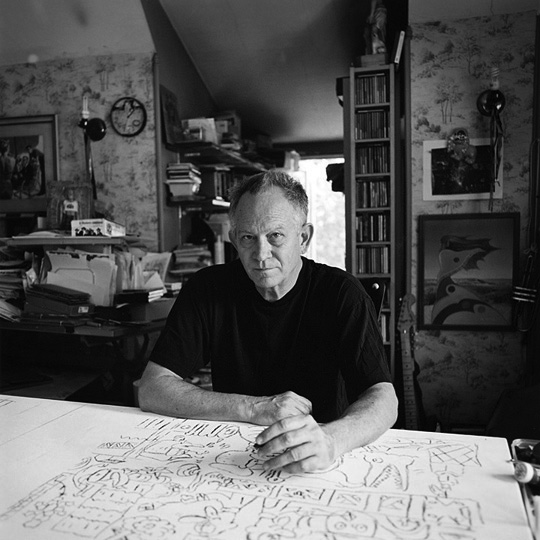
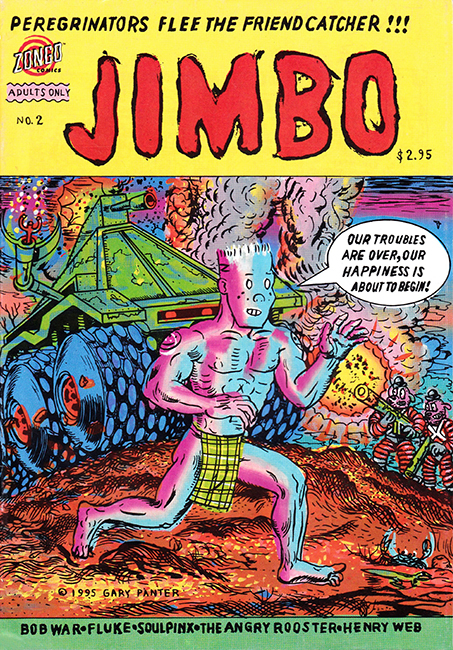


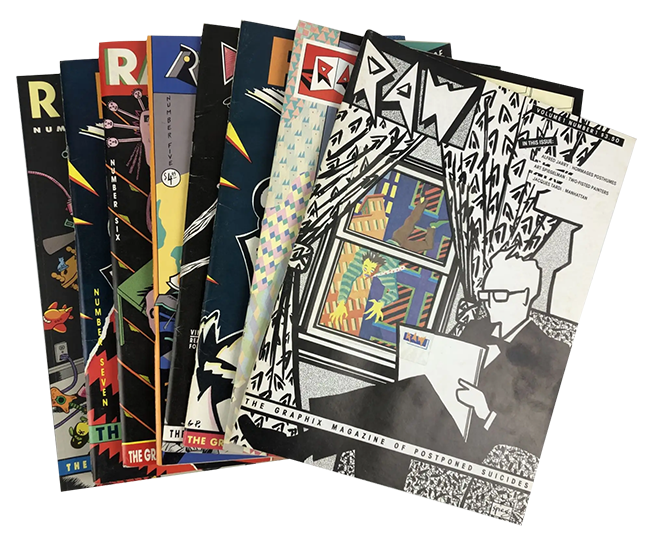
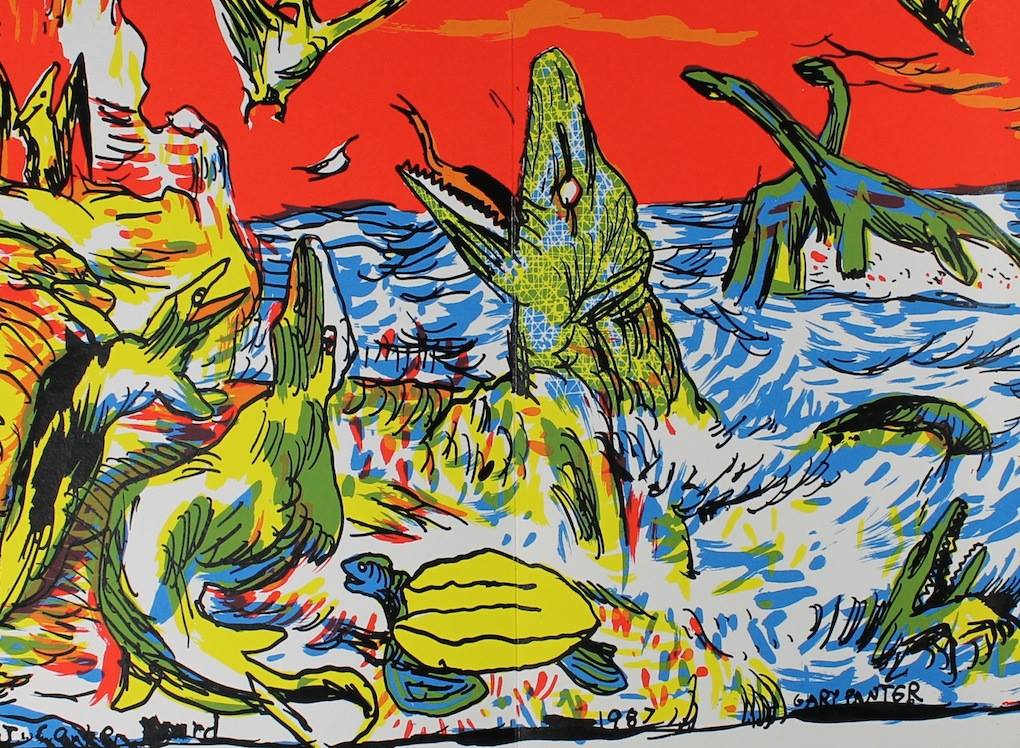


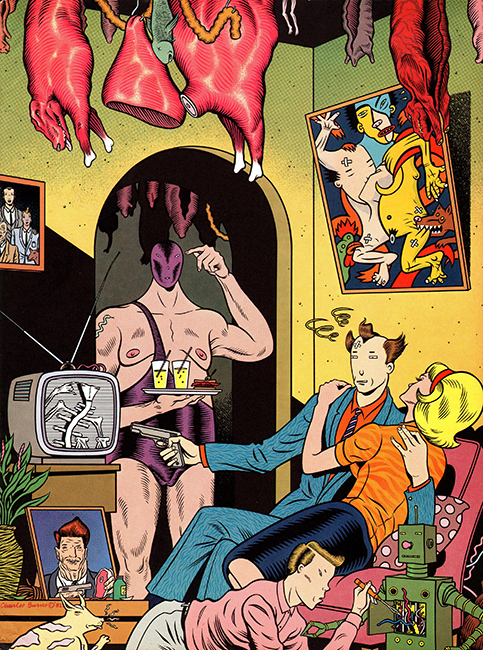


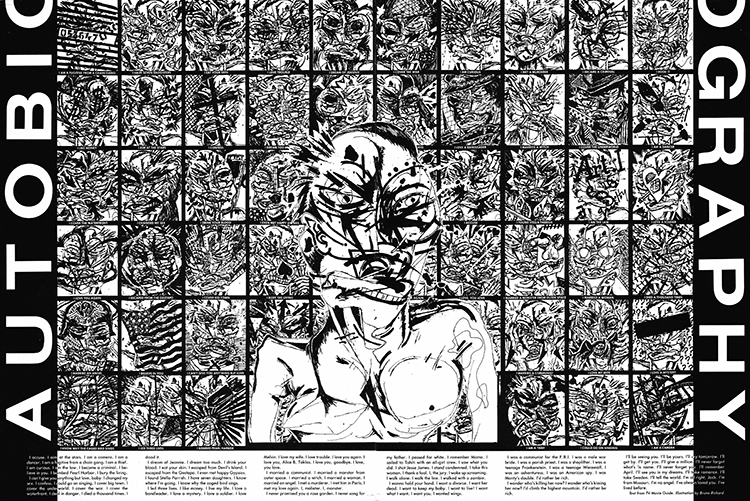

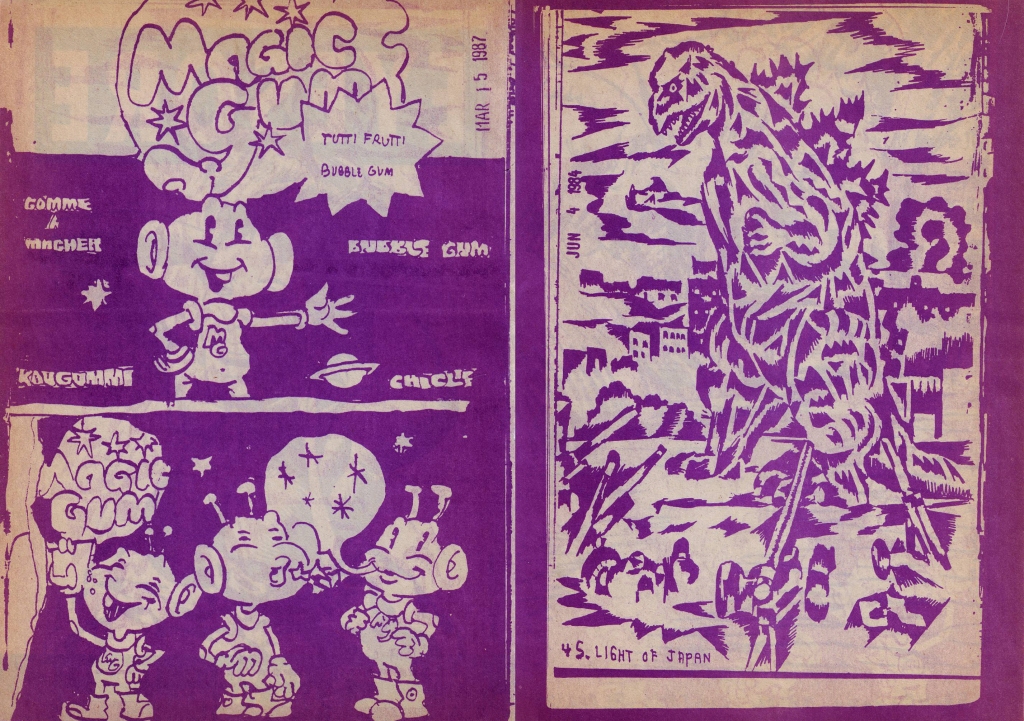

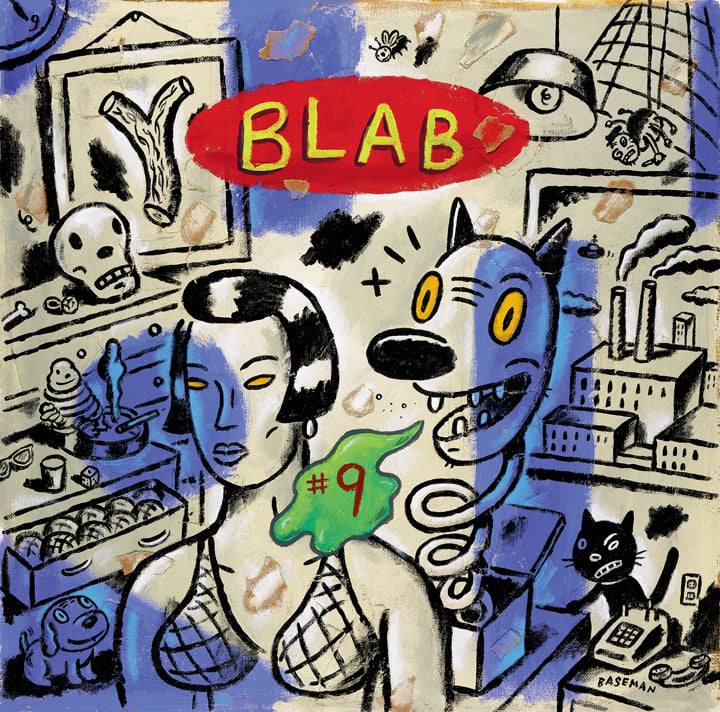

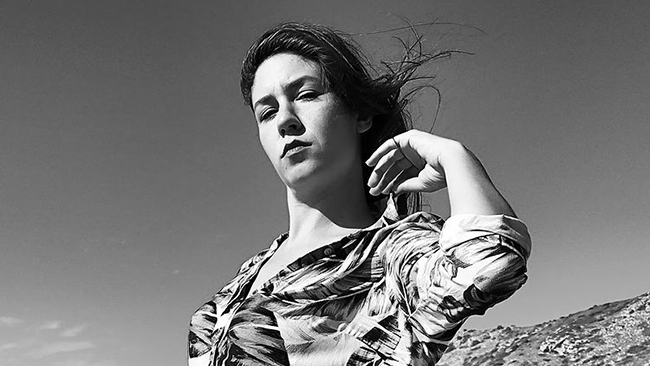
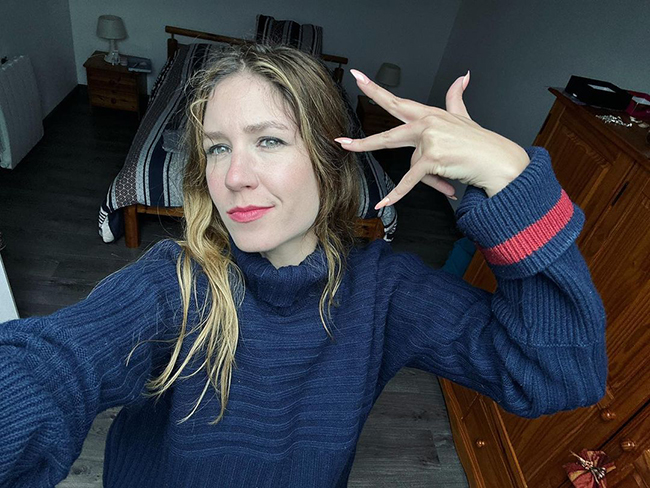



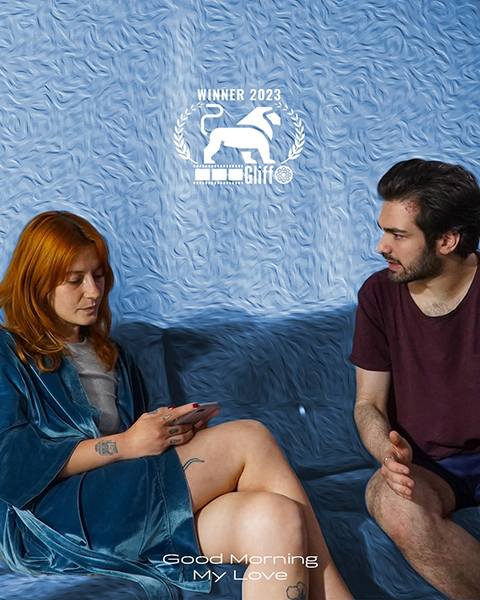

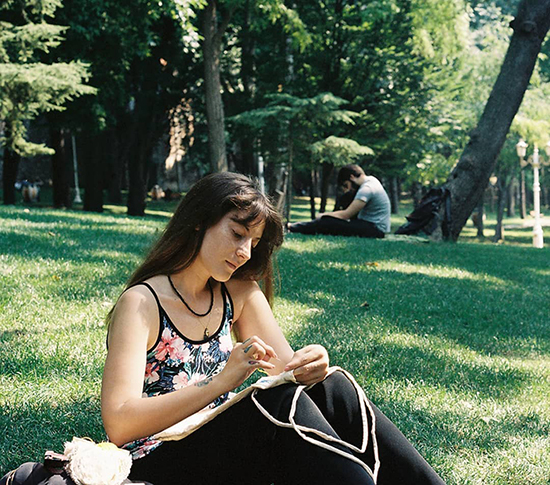


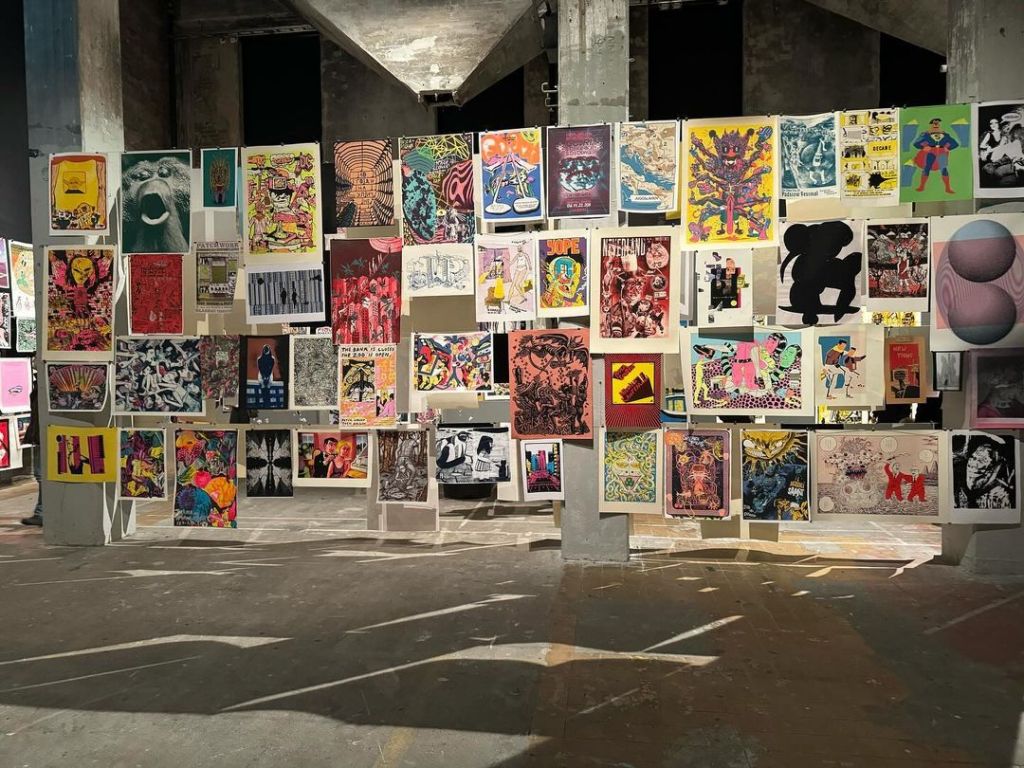

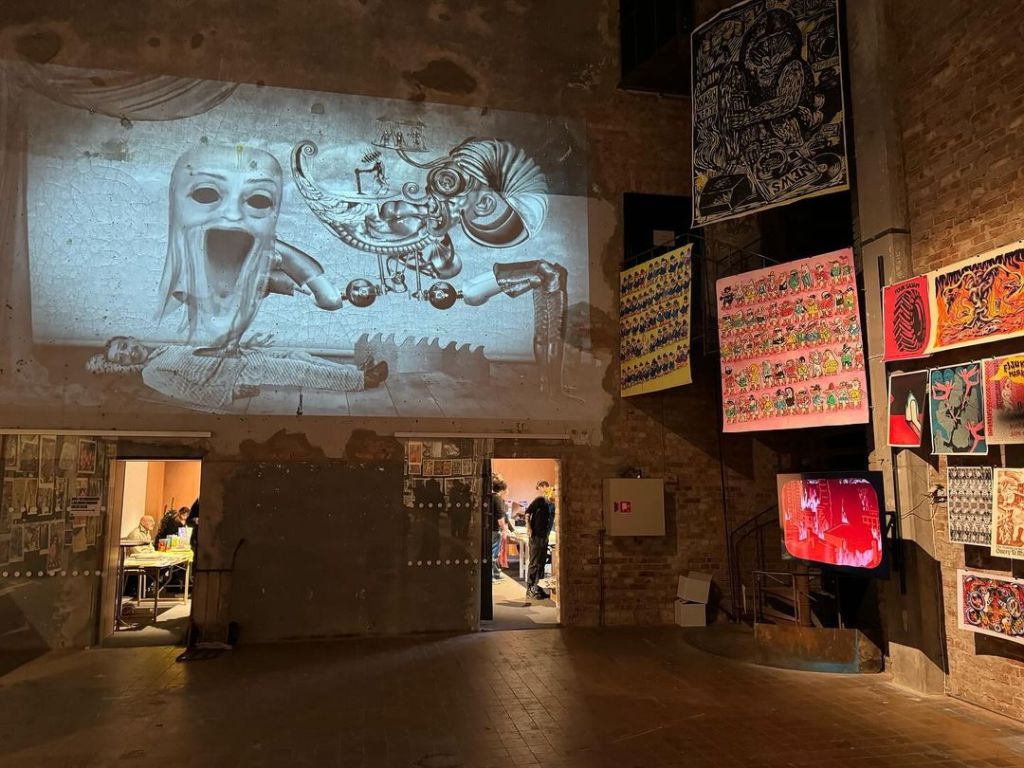


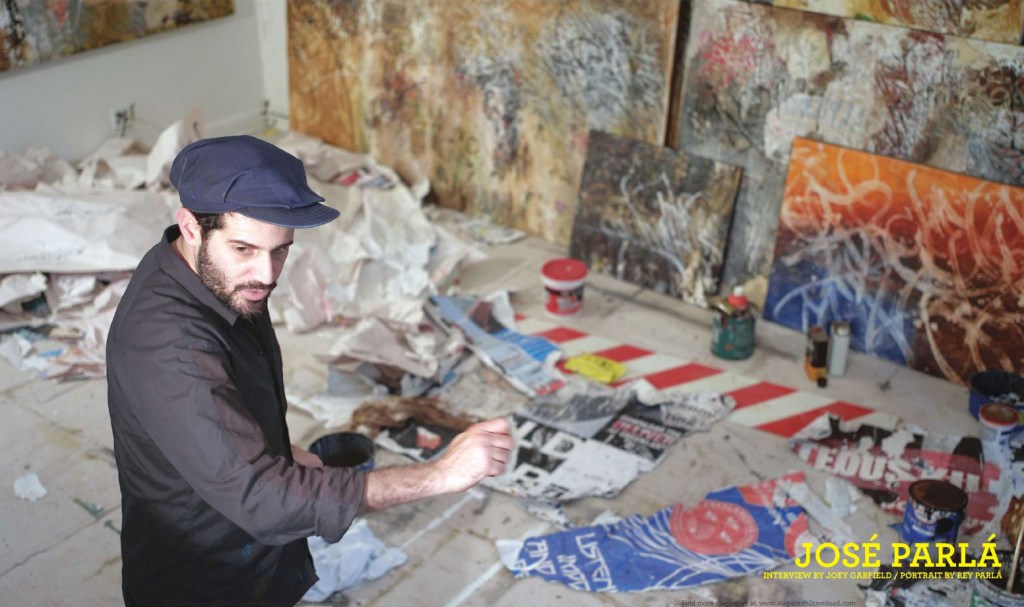


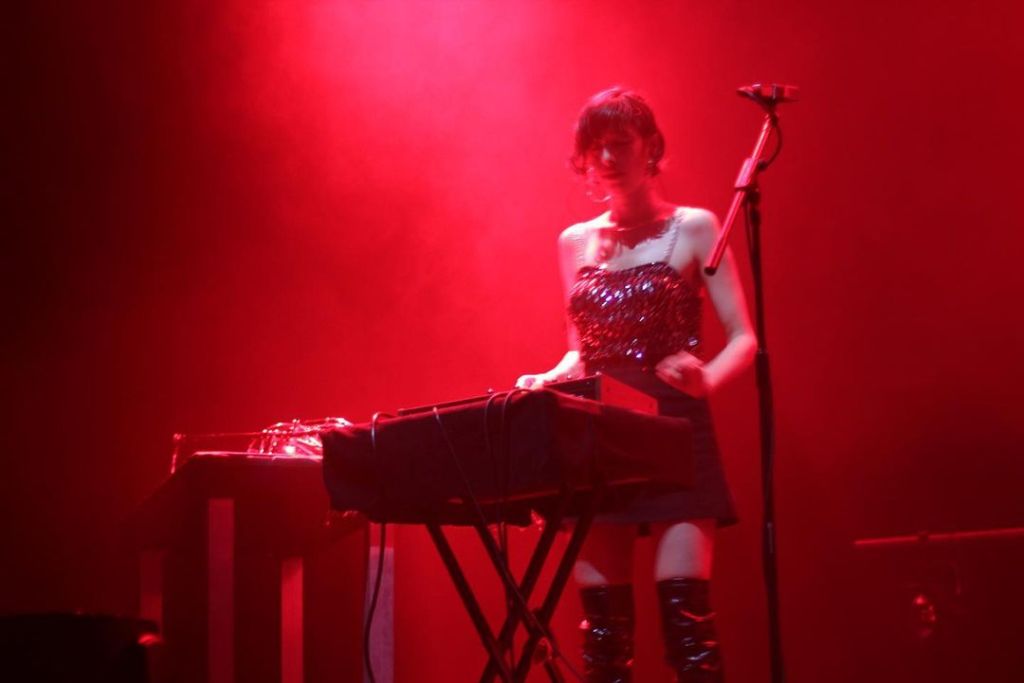

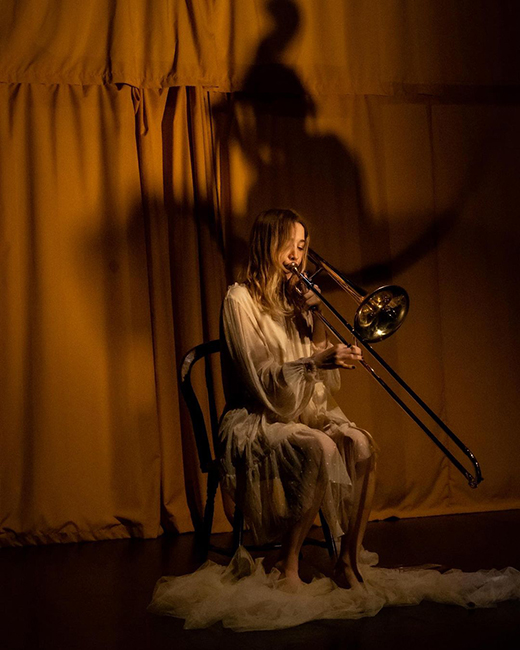


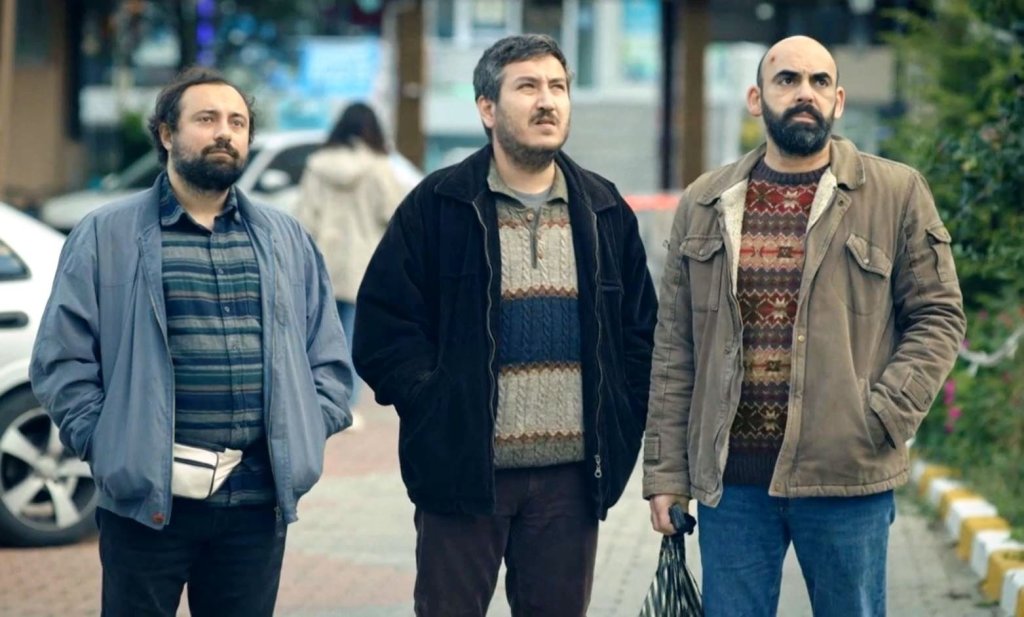

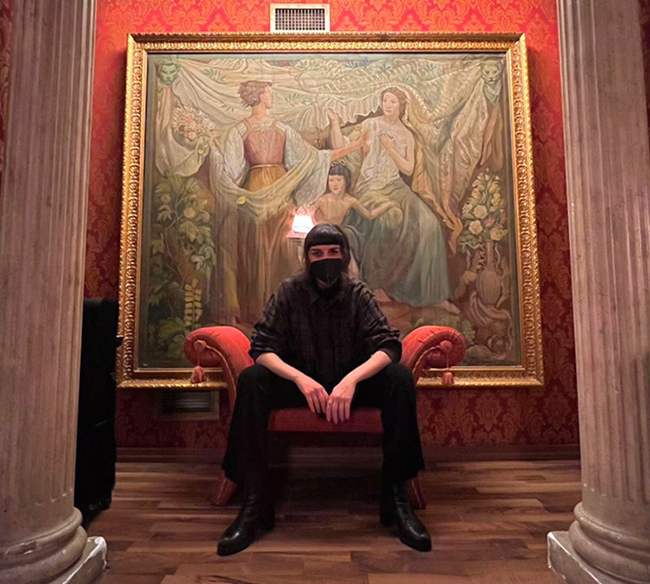
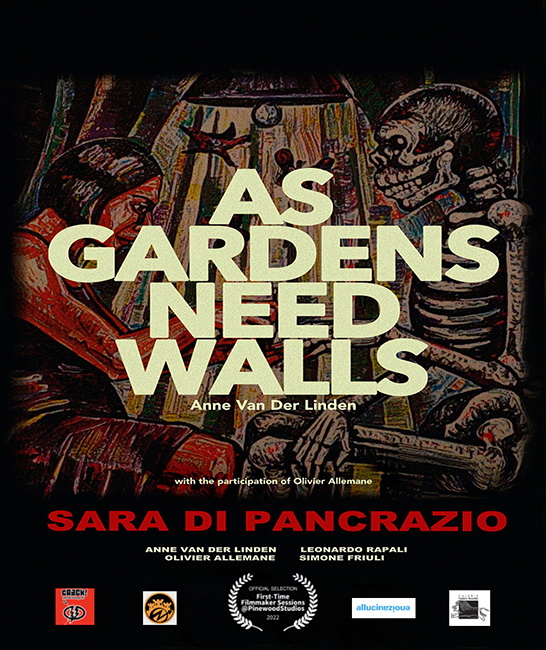
 LÖPÇÜK