

“We wanted to create something as strong as the Dada movement…” –Kiki Picasso
‘Graphzine Graphzone’ is the first in-depth study to be devoted to graphzines, the alternative to both comics and so-called contemporary institutional art that emerged in the wake of punk. While the world of the graphzine may indeed seem close to that of independent comics publishing, it takes a radical step further: graphzine producers, as good Do it yourself practitioners, favour self-production and limited print runs, experiment with different printing processes and free themselves from the constraints of traditional narrative. What unites them is undoubtedly an obsession with images (from the most conventional to the most astonishing and shocking) and a craft often carried out in a network. To retrace the history and grasp the conceptual issues of this production, the author relies heavily on the words of the men of art, a choral approach that responds to the polymorphous nature of graphzine. Starting with the pioneers (Bazooka and Elles Sont De Sortie), X.-G. Néret explores in detail this phenomenon, which was to flourish outside institutions from the 1980s onwards. A new territory was opening up, breaking with the narrative conventions of comics through the ambiguous combination of images and text. By analysing the variety of influences and forms of graphzine, including the heta-uma, the Japanese graphic art movement invented by Teruhiko Yumura, an important if subterranean source, the author draws out the essence of this practice. The graphzine reveals itself to be an art of living, the affirmation of a creative power that implies a reversal of values favouring the expression of singularities; a freedom that manifests itself as much in the experimental form as in the content, subject to no censorship other than that which the artists inflict on themselves – at the risk, for some, of seeing themselves intimidated or condemned. Sometimes with a disarming ‘insatiable innocence’, they explore territories that normalising authorities reject, particularly those relating to sexuality and death. X.-G. Néret also sees them as a powerful graphic avant-garde, in the wake of Dada, Lettrism and Situationism, helping to extend and renew ‘a secret history of the twentieth century’.
‘To make a newspaper like a work of art… To use printing, drawing, text, typographic composition and page layout as material for artistic expression.’ -Loulou Picasso
’We wanted to create something as strong as the Dada movement… -Loulou Picasso
‘We wanted to create something as strong as the Dada movement… We didn’t like traditional graphic design or galleries… We formed a micro society… We mimicked the terrorist commando… Graphic dictatorship meant doing things without asking permission.’ -Kiki Picasso
‘Of course it’s art, and far more powerful than all the impostures you see in galleries. These apparently statusless productions constantly call everything into question through the richness and quantity of the images they offer… Perhaps we’ll be criticised for lacking a bourgeois strategy. But one day our work will be seen and it will have the effectiveness of having spoken for the times.’ -Bruno Richard
‘Radical publications produced outside any editorial structure by enthusiasts’ -Pierre La Police
‘It’s like a small art exhibition in the form of a printed booklet.’ -DeePee
‘It’s an object, an object you never tire of turning the pages of. You’ve never seen pages like these.’ -Delfeil de Ton
‘Afterwards, you’ll never buy the same packet of rubbish comics you used to read.’ -Willem
‘Definitely the opposite of the apology for the commercial that’s rampant everywhere… Since we’re telling you that what these people are doing is the best in contemporary art!’ -Jean-Christophe Menu
‘To deliberately not play the game of self-censorship…’ -Fredox
‘Do it yourself! (Fredox) ‘Do it yourself if you’re not happy.’ -Kerozen

“Dada hareketi kadar güçlü bir şey yaratmak istedik…” -Kiki Picasso
‘Graphzine Graphzone’, punk’ın ardından ortaya çıkan ve hem çizgi romanlara hem de sözde çağdaş kurumsal sanata alternatif olan graphzine’lere adanmış ilk derinlemesine çalışmadır. Grafzin dünyası bağımsız çizgi roman yayıncılığına yakın görünse de, radikal bir şekilde çıtayı yükseltiyor: grafzin sanatçıları, iyi birer D.I.Y. ustası olarak sınırlı sayıda baskı yapmayı tercih ediyor, farklı baskı süreçlerini deniyor ve kendilerini geleneksel anlatının kısıtlamalarından kurtarıyorlar. Onları birleştiren şey ise hiç kuşkusuz (en gelenekselinden en şaşırtıcı ve şok edici olanına kadar) imgelere duydukları saplantı ve genellikle bir ağ (network) içinde yürüttükleri zanaattır. Yazar, bu üretimin tarihini izlemek ve kavramsal meselelerini kavramak için, grafzinin çokbiçimli doğasına yanıt veren koral bir yaklaşımla, büyük ölçüde bu sanat insanlarının sözlerine dayanıyor. Öncülerden başlayarak (Bazooka ve Elles Sont De Sortie), X.-G. Néret, 1980’lerden itibaren kurumların dışında gelişecek olan bu fenomeni ayrıntılı olarak inceliyor. Görüntü ve metnin muğlak birleşimi yoluyla çizgi romanın anlatı geleneklerini kıran yeni bir alan açılıyordu. Yazar, yeraltında da olsa önemli bir kaynak olan Teruhiko Yumura tarafından icat edilen Japon grafik sanatı akımı heta-uma da dahil olmak üzere grafzinin çeşitli etkilerini ve biçimlerini analiz ederek bu pratiğin özünü ortaya çıkarıyor. Grafzin, bir yaşam sanatı, tekilliklerin ifadesini destekleyen değerlerin tersine çevrilmesini ima eden yaratıcı bir gücün olumlanması; içerikte olduğu kadar deneysel biçimde de kendini gösteren, sanatçıların kendilerine uyguladıkları sansürden başka hiçbir sansüre tabi olmayan bir özgürlük – bazıları için kendilerini sindirilmiş ya da kınanmış görme riski altında. Bazen silahsızlandırıcı bir ‘doyumsuz masumiyetle’, normalleştirici otoritelerin reddettiği alanları, özellikle de cinsellik ve ölümle ilgili olanları keşfediyorlar. X.-G. Néret de onları Dada, Lettrizm ve Sitüasyonizm’in ardından gelen, ‘yirminci yüzyılın gizli tarihini’ genişletmeye ve yenilemeye yardımcı olan güçlü bir grafik avangard olarak görüyor.

Grafzin synthesises different cultures!
Coédition Le Dernier Cri / Editions du Sandre
“Nous souhaitions créer quelque chose d’aussi fort que le mouvement Dada…” -Kiki Picasso
“Nous souhaitions créer quelque chose d’aussi fort que le mouvement Dada… Nous n’aimions pas le graphisme traditionnel, ni les galeries… Nous formions une micro société… Nous mimions le commando terroriste… La dictature graphique, c’était de réaliser des choses sans en demander l’autorisation.” -Kiki Picasso
“Graphzine Graphzone” est la première étude approfondie consacrée aux graphzines, cette alternative, née dans le sillage du punk, tant à la bande dessinée qu’à l’art institutionnel dit contemporain. Si l’univers du graphzine peut en effet sembler proche de celui de l’édition de bande dessinée indépendante, un pas de plus est fait dans la radicalité : les producteurs de graphzines, en bons praticiens du Do it yourself, privilégient l’autoproduction et les tirages restreints, expérimentent différents procédés d’impression et s’affranchissent des contraintes de la narration traditionnelle. Ce qui les unit est sans doute l’obsession des images (des plus conventionnelles aux plus étonnantes et choquantes) et une réalisation artisanale souvent menée en réseau. Pour retracer l’histoire et appréhender les enjeux conceptuels de cette production, l’auteur s’appuie largement sur le propos des hommes de l’art, une approche chorale qui répond au caractère polymorphe du graphzine. Partant des pionniers (Bazooka et Elles Sont De Sortie), X.-G. Néret explore en détail ce phénomène qui allait foisonner en dehors des institutions à partir des années 1980. Un territoire neuf s’ouvrait, qui brisait les conventions narratives de la bande dessinée par le rapprochement ambigu d’images et de textes. En analysant la variété des influences et des formes du graphzine, parmi lesquelles le heta-uma, courant graphique japonais inventé par Teruhiko Yumura, source importante bien que souterraine, l’auteur dégage l’essence de cette pratique. Le graphzine se révèle être un art de vivre, l’affirmation d’une puissance créatrice qui implique un renversement de valeurs favorisant l’expression des singularités ; une liberté qui se manifeste tant au niveau de la forme, expérimentale, que du contenu, soumis à aucune censure autre que celle que les artistes s’infligent eux-mêmes – au risque, pour certains, de se voir intimidés ou condamnés. Ils explorent ainsi, parfois avec une désarmante “innocence insatiable”, des territoires que les instances normalisatrices réprouvent, notamment ceux qui ont trait à la sexualité et à la mort. X.-G. Néret y voit aussi une puissante avant-garde graphique, dans le sillage de Dada, du lettrisme et du situationnisme, contribuant à prolonger en la renouvelant “une histoire secrète du XXe siècle”.
“Faire un journal comme une œuvre d’art… Utiliser l’impression, le dessin, le texte, la composition typographique, la mise en page, comme matière pour une expression artistique.” -Loulou Picasso
“Nous souhaitions créer quelque chose d’aussi fort que le mouvement Dada… Nous n’aimions pas le graphisme traditionnel, ni les galeries… Nous formions une micro société… Nous mimions le commando terroriste… La dictature graphique, c’était de réaliser des choses sans en demander l’autorisation.” -Kiki Picasso
“Bien sûr que c’est de l’art, et autrement plus fort que toutes les impostures que l’on peut voir dans les galeries. Ces productions apparemment sans statut remettent tout en cause sans arrêt par la richesse et la quantité des images qu’elles proposent… Peut-être que l’on nous reprochera de manquer de stratégie bourgeoise. Mais un jour notre travail se verra et il aura l’efficacité d’avoir dit l’époque.” -Bruno Richard
“Des publications radicales produites en dehors de toute structure éditoriale par des passionnés.” (Pierre La Police)
“C’est comme une petite exposition d’art sous la forme d’un livret imprimé.” (DeePee)
“C’est un objet, un objet dont on ne se lasse pas de tourner les pages. Vous n’avez jamais vu des pages comme celles-ci.” (Delfeil de Ton)
“Après, vous n’achèterez jamais plus le paquet de bandes dessinées à la con que vous lisiez d’habitude.” (Willem)
“Résolument le contraire de l’apologie du commercial qui sévit partout… Puisqu’on vous dit que ce que font ces gens-là est ce qu’il se fait de mieux en matière d’Art Contemporain !” (Jean-Christophe Menu)
“Faire exprès de ne pas jouer le jeu de l’autocensure…” (Fredox)
Coédition Le Dernier Cri / Editions du Sandre
“Fais-le toi-même si t’es pas content.” (Kerozen)
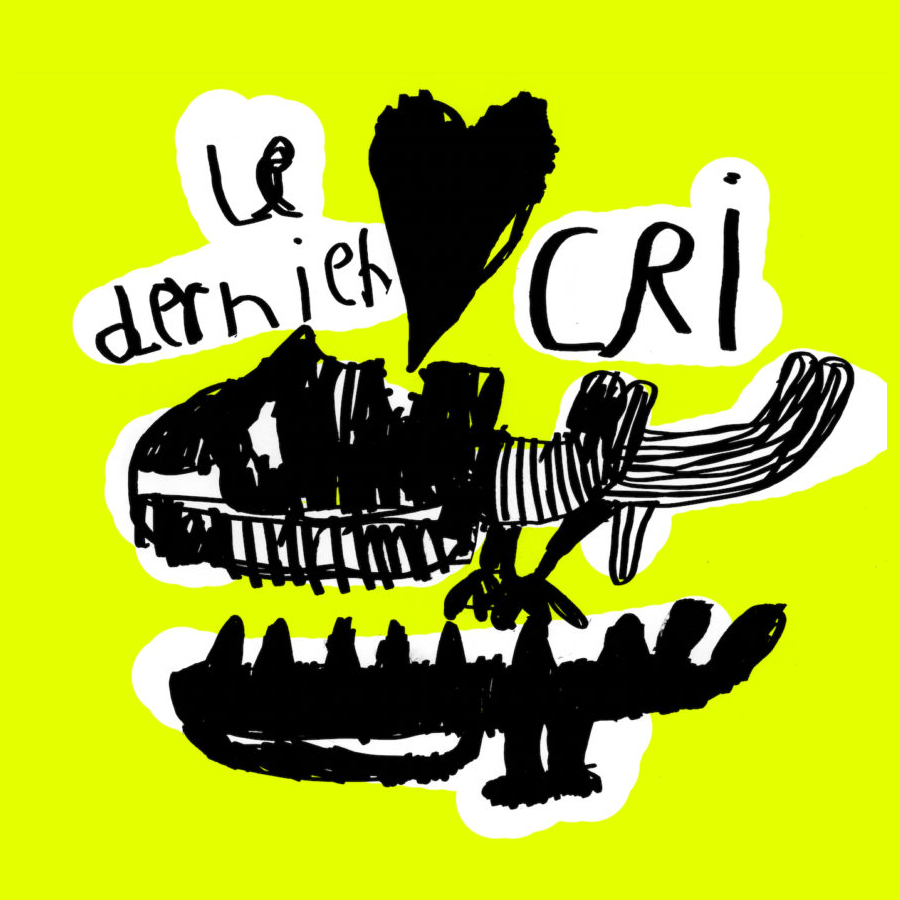
LE DERNIER CRI, 41 Rue jobin, 13003 Marseille
 LÖPÇÜK