Çünkü hayat boktan, insanlar kötü, tanrılar yok ve Grindcore çok güzel!
Klinik Şefi Anlatıyor:Demo’muz sound olarak biraz goregrind, kafa olarak grindcore ama her grind alt türüne göz kırpıyor. Demo‘yu az buçuk evirip çevirenlerden aldığımız geribildirimler de bu yöndeydi zaten. Her yönüyle çeşni güzel tutmuştu; hala demo‘daki parçaları çalıyoruz.
Rektal Tuşe düstur olarak Sapık İnek ve Kuaför Cengiz ekolünün günümüz yansımasıdır; şu da var ki bizim icra ettiğimiz gürültü, komik bir şeyler bulalım, altına dayayalım geçelim şeklinde olmadı hiçbir zaman. Adı geçen grupları da bu şekilde lanse etmek haksızlık olur, onların yeri her zaman ayrıdır, bunun dışında biz yaptığımız işin Grind’ı tam anlamıyla temsil etmesini de çok önemsiyoruz. İcra anlamında ve içerik anlamında. Özellikle son dönemde saf‘humour’ takılmadığımızı az çok takip edenler farketmişlerdir.
Bahsettiğin gruplarla kişisel olarak herhangi bir ilişkimiz yok. Ama Sapık İnek elemanları, Ankara sahnesinden tanıdığımız, saygı duyduğumuz adamlar. En son 6-7 Aralık’taki (2014) Heavy Stage konserinde gördüm Sapık İnek elemanlarını, işten güçten ve hayat sikkoluklarından sıyrılıp eski günleri ve konserleri yad edercesine orada olmaları bence güzeldi. Konser bu anlamda zaten başlı başına güzeldi.
Rektal Tuşe Live in İstanbul, Turkey 2016 – Peyote Nevizade
Bazı şeylerin cılkı çıkabiliyor ama bu demek değil ki her gün yeni, orijinal, öyle olmasa da işini çok iyi yapan onlarca grup keşfetmeyelim.
Uluslararası Yeraltı Buluşması nasıl geçti?
O konser Ankara’da yapılmış bu alandaki en iyi etkinlik olabilir. Kafasıyla, ortamıyla, katılımıyla, eğlencesiyle, her şeyiyle tam anlamıyla bombaydı. İlgi desen, beklenmedik derecede fazlaydı; metal punk grind tayfası tek bir amaçla oradaydı: Eğlenmek! Çok azıldı, içildi, eğlenildi, güzel bir dayanışma örneği olarak tarihe geçti diyebilirim. Warfuck çok iyi bir ikili, ne yaptıklarını kesinlikle iyi biliyorlar. Konser esnasında ve sonrasında internet üzerinden yaptıkları paylaşımları baz alırsak onlar da hallerinden memnundular. Merch. sattılar, samimi bir ortamda azılı bir kitleye çaldılar, içtiler vs. Ayrıca çok mütevazı herifler. Zaten tarzın duruşu gereği olması gereken de bu.
Grupların eskisi kadar ciddi olmadığını hissettim. Bazı şeylerin cılkı çıkmış gibi, sen neler söylemek istersin?
Bazı şeylerin cılkı çıkabiliyor ama bu demek değil ki her gün yeni, orijinal, öyle olmasa da işini çok iyi yapan onlarca grup keşfetmeyelim. Biraz işin içinde olmak lazım. Ben keşfedilmeyi bekleyen yüzlerce grup olduğunu biliyor, elimden geldiğince kafama uyan bir şeyler bulmaya çalışıyor ve aynı zamanda feyz alarak –her anlamda– bu işi devam ettirmeye çalışıyorum. Rektal Tuşe kesinlikle yeni işlerle sahnede olacak, az çok şu ana kadar yaptıklarımızı beğenen varsa takipte kalsınlar.
“a-politik-a” albümünü yeni dinledim. Mükemmel bir grindcore sound’u yakalamışsınız, tebrik ederim.
“a-politik-a” aslında bir mini albüm, EP yani. Kısa zamanlı albüm de diyebiliriz, nasıl adlandırırsan ama bir albüm değil. Tam zamanlı (full-lenght) bir albüm yapmak bu aralar üzerinde yoğun olarak düşündüğümüz şeylerden birisi zaten.
Teşekkürler bu arada, beğenmene sevindik. Aslında özellikle gitarlar bazında daha yüksek distortion’lı osurtucu bir ton hayal ediyorduk ama öyle ya da böyle ortaya bu çıktı. Ama iyi oldu, kayıttan, sunumdan vs. her şeyden memnunuz “a-politik-a”da. Daha da iyisini yapmak için uğraşacağız…
Söyleşiye için çok teşekkürler Klinik Şefi, Ankara’dan aktarmak istediğiniz haberler varsa lütfen!
Biz teşekkür ederiz yer verdiğiniz için. Yaptığınız iş çok iyi. Ufak bir parçası olmak bizim için zevkti. Klişe bir son yapalım: bize ulaşmak isteyenler info @ rektaltuse.tk / rektaltuse @ yahoo.com.tr ya da rektaltuse @ hotmail.com adreslerinden mail sallayabilir ya da Facebook sayfamızRektalTuse‘den mesaj atabilirler.
Ankara her zaman olduğu gibi ekstrem metal ve grindcore üretmeye devam edecek. Yeni işler için bu tarzın dinleyicileri takipte kalsın. Çünkü hayat boktan, insanlar kötü, Tanrılar yok ve Grindcore çok güzel !
“We wanted to create something as strong as the Dada movement…” –Kiki Picasso
‘Graphzine Graphzone’ is the first in-depth study to be devoted to graphzines, the alternative to both comics and so-called contemporary institutional art that emerged in the wake of punk. While the world of the graphzine may indeed seem close to that of independent comics publishing, it takes a radical step further: graphzine producers, as good Do it yourself practitioners, favour self-production and limited print runs, experiment with different printing processes and free themselves from the constraints of traditional narrative. What unites them is undoubtedly an obsession with images (from the most conventional to the most astonishing and shocking) and a craft often carried out in a network. To retrace the history and grasp the conceptual issues of this production, the author relies heavily on the words of the men of art, a choral approach that responds to the polymorphous nature of graphzine. Starting with the pioneers (Bazooka and Elles Sont De Sortie), X.-G. Néret explores in detail this phenomenon, which was to flourish outside institutions from the 1980s onwards. A new territory was opening up, breaking with the narrative conventions of comics through the ambiguous combination of images and text. By analysing the variety of influences and forms of graphzine, including the heta-uma, the Japanese graphic art movement invented by Teruhiko Yumura, an important if subterranean source, the author draws out the essence of this practice. The graphzine reveals itself to be an art of living, the affirmation of a creative power that implies a reversal of values favouring the expression of singularities; a freedom that manifests itself as much in the experimental form as in the content, subject to no censorship other than that which the artists inflict on themselves – at the risk, for some, of seeing themselves intimidated or condemned. Sometimes with a disarming ‘insatiable innocence’, they explore territories that normalising authorities reject, particularly those relating to sexuality and death. X.-G. Néret also sees them as a powerful graphic avant-garde, in the wake of Dada, Lettrism and Situationism, helping to extend and renew ‘a secret history of the twentieth century’.
‘To make a newspaper like a work of art… To use printing, drawing, text, typographic composition and page layout as material for artistic expression.’ -Loulou Picasso
’We wanted to create something as strong as the Dada movement… -Loulou Picasso
‘We wanted to create something as strong as the Dada movement… We didn’t like traditional graphic design or galleries… We formed a micro society… We mimicked the terrorist commando… Graphic dictatorship meant doing things without asking permission.’ -Kiki Picasso
‘Of course it’s art, and far more powerful than all the impostures you see in galleries. These apparently statusless productions constantly call everything into question through the richness and quantity of the images they offer… Perhaps we’ll be criticised for lacking a bourgeois strategy. But one day our work will be seen and it will have the effectiveness of having spoken for the times.’ -Bruno Richard
‘Radical publications produced outside any editorial structure by enthusiasts’ -Pierre La Police
‘It’s like a small art exhibition in the form of a printed booklet.’ -DeePee
‘It’s an object, an object you never tire of turning the pages of. You’ve never seen pages like these.’ -Delfeil de Ton
‘Afterwards, you’ll never buy the same packet of rubbish comics you used to read.’ -Willem
‘Definitely the opposite of the apology for the commercial that’s rampant everywhere… Since we’re telling you that what these people are doing is the best in contemporary art!’ -Jean-Christophe Menu
‘To deliberately not play the game of self-censorship…’ -Fredox
‘Do it yourself! (Fredox) ‘Do it yourself if you’re not happy.’ -Kerozen
Ezgi İrem Happy with her Grafzine book, what about you?
“Dada hareketi kadar güçlü bir şey yaratmak istedik…”-Kiki Picasso
‘Graphzine Graphzone’, punk’ın ardından ortaya çıkan ve hem çizgi romanlara hem de sözde çağdaş kurumsal sanata alternatif olan graphzine’lere adanmış ilk derinlemesine çalışmadır. Grafzin dünyası bağımsız çizgi roman yayıncılığına yakın görünse de, radikal bir şekilde çıtayı yükseltiyor: grafzin sanatçıları, iyi birer D.I.Y. ustası olarak sınırlı sayıda baskı yapmayı tercih ediyor, farklı baskı süreçlerini deniyor ve kendilerini geleneksel anlatının kısıtlamalarından kurtarıyorlar. Onları birleştiren şey ise hiç kuşkusuz (en gelenekselinden en şaşırtıcı ve şok edici olanına kadar) imgelere duydukları saplantı ve genellikle bir ağ (network) içinde yürüttükleri zanaattır. Yazar, bu üretimin tarihini izlemek ve kavramsal meselelerini kavramak için, grafzinin çokbiçimli doğasına yanıt veren koral bir yaklaşımla, büyük ölçüde bu sanat insanlarının sözlerine dayanıyor. Öncülerden başlayarak (Bazooka ve Elles Sont De Sortie), X.-G. Néret, 1980’lerden itibaren kurumların dışında gelişecek olan bu fenomeni ayrıntılı olarak inceliyor. Görüntü ve metnin muğlak birleşimi yoluyla çizgi romanın anlatı geleneklerini kıran yeni bir alan açılıyordu. Yazar, yeraltında da olsa önemli bir kaynak olan Teruhiko Yumura tarafından icat edilen Japon grafik sanatı akımı heta-uma da dahil olmak üzere grafzinin çeşitli etkilerini ve biçimlerini analiz ederek bu pratiğin özünü ortaya çıkarıyor. Grafzin, bir yaşam sanatı, tekilliklerin ifadesini destekleyen değerlerin tersine çevrilmesini ima eden yaratıcı bir gücün olumlanması; içerikte olduğu kadar deneysel biçimde de kendini gösteren, sanatçıların kendilerine uyguladıkları sansürden başka hiçbir sansüre tabi olmayan bir özgürlük – bazıları için kendilerini sindirilmiş ya da kınanmış görme riski altında. Bazen silahsızlandırıcı bir ‘doyumsuz masumiyetle’, normalleştirici otoritelerin reddettiği alanları, özellikle de cinsellik ve ölümle ilgili olanları keşfediyorlar. X.-G. Néret de onları Dada, Lettrizm ve Sitüasyonizm’in ardından gelen, ‘yirminci yüzyılın gizli tarihini’ genişletmeye ve yenilemeye yardımcı olan güçlü bir grafik avangard olarak görüyor.
“Nous souhaitions créer quelque chose d’aussi fort que le mouvement Dada…” -Kiki Picasso
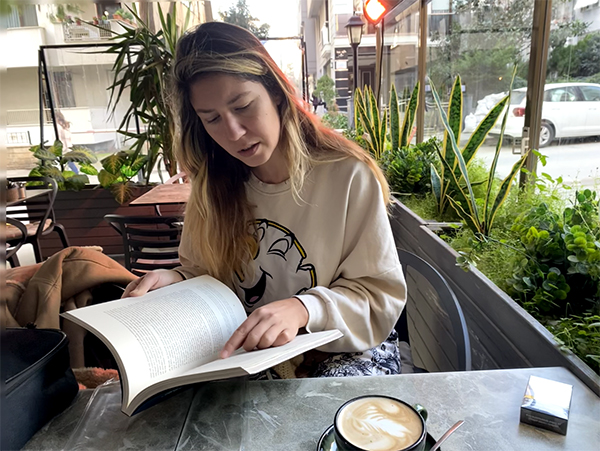
Ezgi İrem Happy with her Grafzine book, 2025 Erenköy
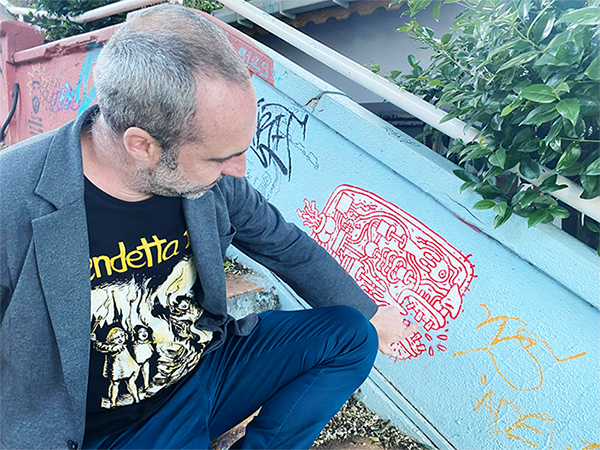
Guillaume Zorgbibe w/ Kadir Çıtak’s graff. at Moda, İstanbul
Bazooka collective, Legerement Destroy episode of L’oeil du cyclone
“Nous souhaitions créer quelque chose d’aussi fort que le mouvement Dada… Nous n’aimions pas le graphisme traditionnel, ni les galeries… Nous formions une micro société… Nous mimions le commando terroriste… La dictature graphique, c’était de réaliser des choses sans en demander l’autorisation.” -Kiki Picasso
“Graphzine Graphzone” est la première étude approfondie consacrée aux graphzines, cette alternative, née dans le sillage du punk, tant à la bande dessinée qu’à l’art institutionnel dit contemporain. Si l’univers du graphzine peut en effet sembler proche de celui de l’édition de bande dessinée indépendante, un pas de plus est fait dans la radicalité : les producteurs de graphzines, en bons praticiens du Do it yourself, privilégient l’autoproduction et les tirages restreints, expérimentent différents procédés d’impression et s’affranchissent des contraintes de la narration traditionnelle. Ce qui les unit est sans doute l’obsession des images (des plus conventionnelles aux plus étonnantes et choquantes) et une réalisation artisanale souvent menée en réseau. Pour retracer l’histoire et appréhender les enjeux conceptuels de cette production, l’auteur s’appuie largement sur le propos des hommes de l’art, une approche chorale qui répond au caractère polymorphe du graphzine. Partant des pionniers (Bazooka et Elles Sont De Sortie), X.-G. Néret explore en détail ce phénomène qui allait foisonner en dehors des institutions à partir des années 1980. Un territoire neuf s’ouvrait, qui brisait les conventions narratives de la bande dessinée par le rapprochement ambigu d’images et de textes. En analysant la variété des influences et des formes du graphzine, parmi lesquelles le heta-uma, courant graphique japonais inventé par Teruhiko Yumura, source importante bien que souterraine, l’auteur dégage l’essence de cette pratique. Le graphzine se révèle être un art de vivre, l’affirmation d’une puissance créatrice qui implique un renversement de valeurs favorisant l’expression des singularités ; une liberté qui se manifeste tant au niveau de la forme, expérimentale, que du contenu, soumis à aucune censure autre que celle que les artistes s’infligent eux-mêmes – au risque, pour certains, de se voir intimidés ou condamnés. Ils explorent ainsi, parfois avec une désarmante “innocence insatiable”, des territoires que les instances normalisatrices réprouvent, notamment ceux qui ont trait à la sexualité et à la mort. X.-G. Néret y voit aussi une puissante avant-garde graphique, dans le sillage de Dada, du lettrisme et du situationnisme, contribuant à prolonger en la renouvelant “une histoire secrète du XXe siècle”.
“Faire un journal comme une œuvre d’art… Utiliser l’impression, le dessin, le texte, la composition typographique, la mise en page, comme matière pour une expression artistique.” -Loulou Picasso
“Nous souhaitions créer quelque chose d’aussi fort que le mouvement Dada… Nous n’aimions pas le graphisme traditionnel, ni les galeries… Nous formions une micro société… Nous mimions le commando terroriste… La dictature graphique, c’était de réaliser des choses sans en demander l’autorisation.” -Kiki Picasso
“Bien sûr que c’est de l’art, et autrement plus fort que toutes les impostures que l’on peut voir dans les galeries. Ces productions apparemment sans statut remettent tout en cause sans arrêt par la richesse et la quantité des images qu’elles proposent… Peut-être que l’on nous reprochera de manquer de stratégie bourgeoise. Mais un jour notre travail se verra et il aura l’efficacité d’avoir dit l’époque.” -Bruno Richard
“Des publications radicales produites en dehors de toute structure éditoriale par des passionnés.” (Pierre La Police)
“C’est comme une petite exposition d’art sous la forme d’un livret imprimé.” (DeePee)
“C’est un objet, un objet dont on ne se lasse pas de tourner les pages. Vous n’avez jamais vu des pages comme celles-ci.” (Delfeil de Ton)
“Après, vous n’achèterez jamais plus le paquet de bandes dessinées à la con que vous lisiez d’habitude.” (Willem)
“Résolument le contraire de l’apologie du commercial qui sévit partout… Puisqu’on vous dit que ce que font ces gens-là est ce qu’il se fait de mieux en matière d’Art Contemporain !” (Jean-Christophe Menu)
“Faire exprès de ne pas jouer le jeu de l’autocensure…” (Fredox)
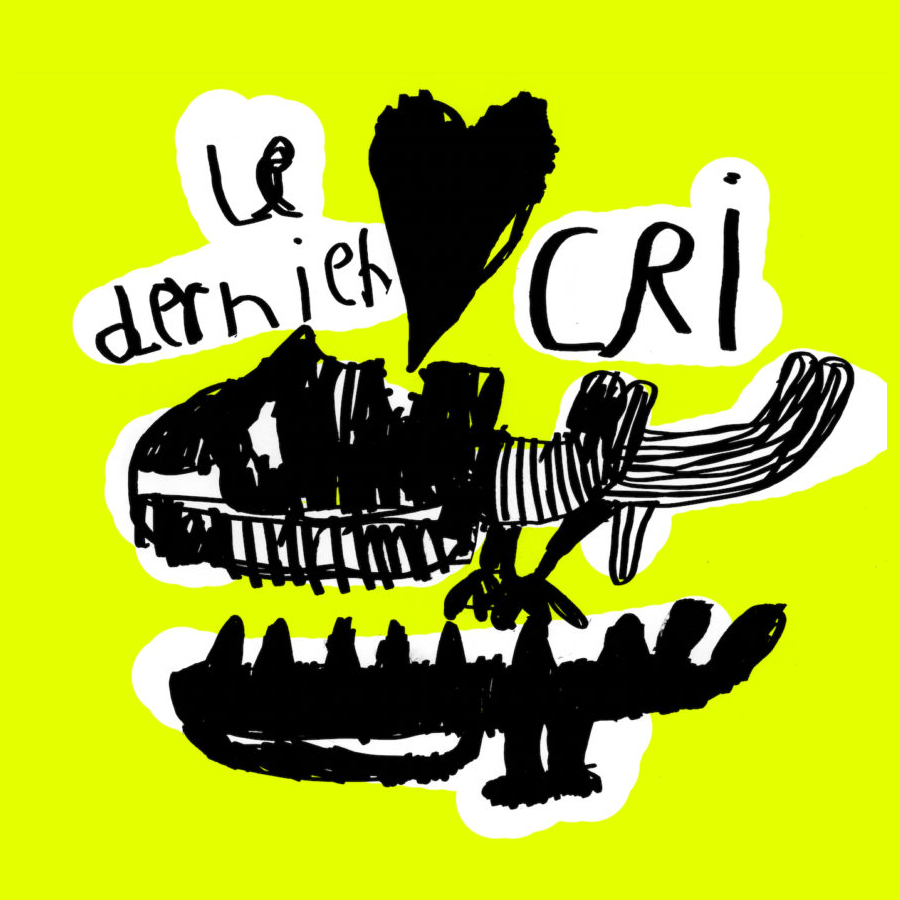
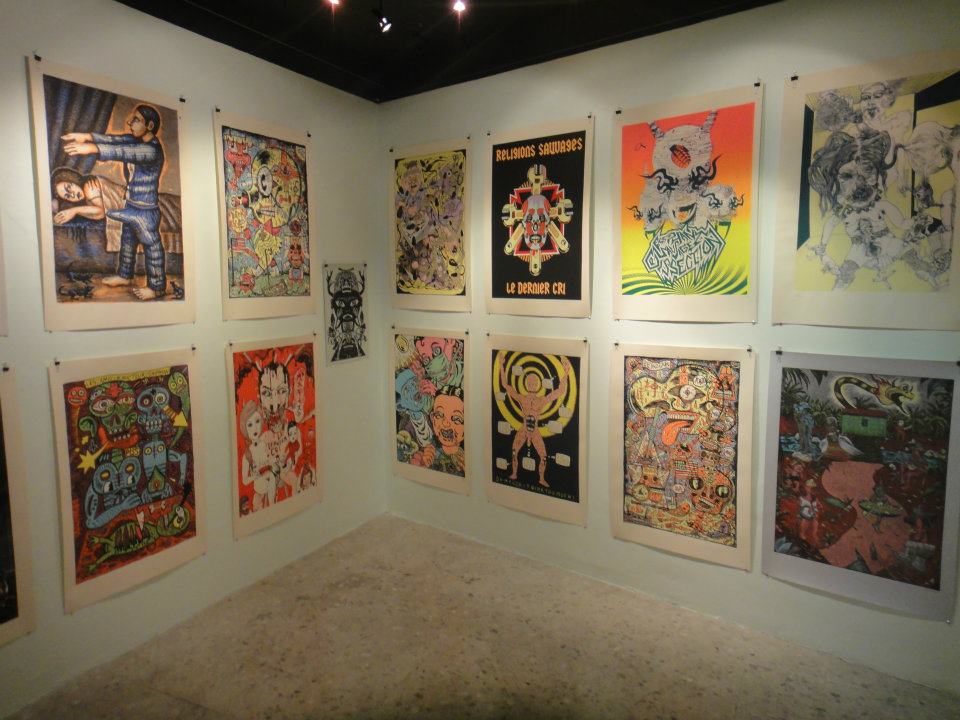
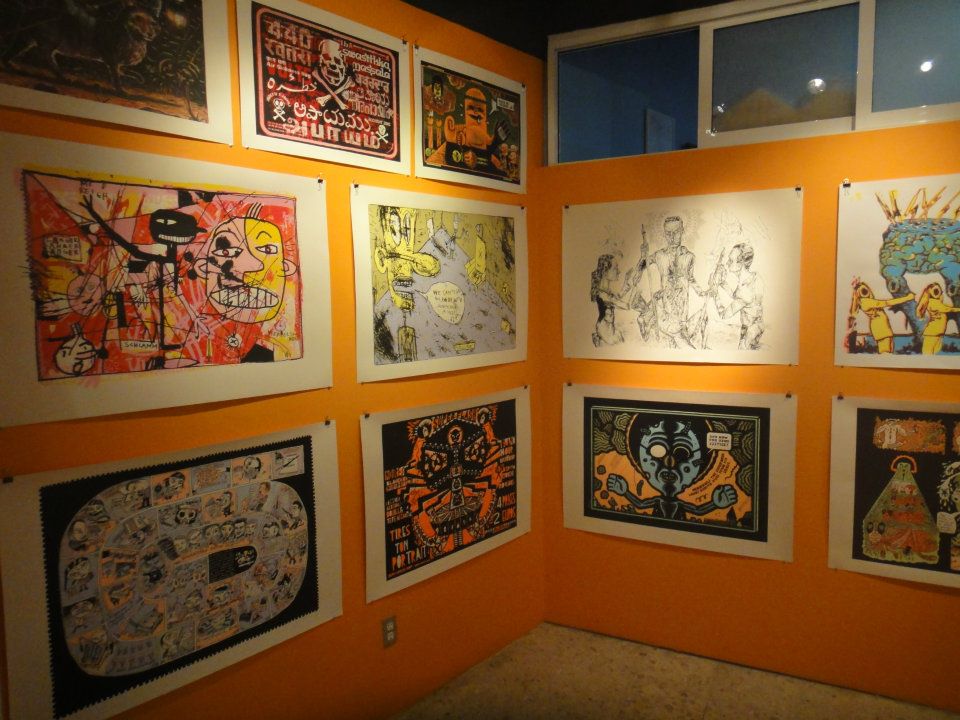
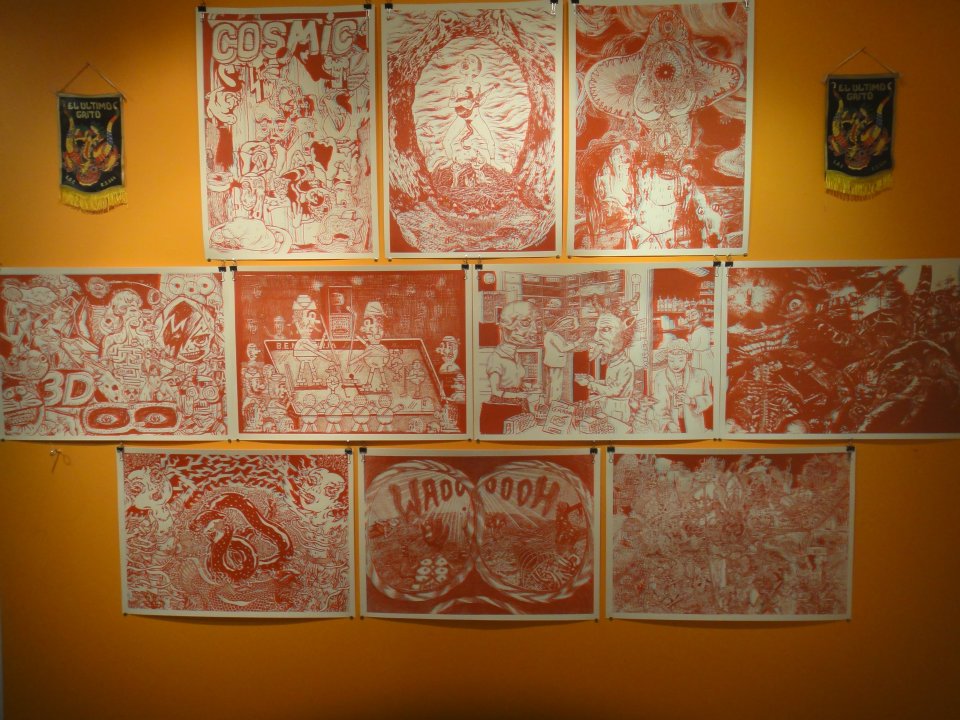
Pakito Bolino / Le Dernier CRI ‘El Ultimo Grito’ 2011
LE DERNIER CRI
By Carlos Perez Bucio / LivingArtRoom Magazine 2012
INTERVIEW WITH PAKITO BOLINO ABOUT THE EXHIBITION EL ULTIMO GRITO, FROM THE FRENCH ART COLLECTIVE LE DERNIER CRI, IN VERTIGO GALERIA.
Some years ago, a friend of mine, a plastic arts professor, introduced me to Le Dernier cri, a French collective of drawers and illustrators with a mission to populate the world with visceral, sexual, meat and homicidal images. Besides silk screen prints and limited edition books at affordable prices, they create animated pictures that luckily remind us there is life beyond Pixar. Everything is made with the highest quality standards, from the trenches of self-management.
I went to meet him on his latest visit to Mexico. Thanks to Clarisa Moura’s (director of Vertigo Magazine) intervention, I was able to talk to Pakito Bolino, high priest of Le dernier cri and his partner, draftswoman Marie-Pierre Brunel.
Le Dernier CRI ‘El Ultimo Grito’ 2011
Carlos Perez Bucio: How did this exhibit came about?
Pakito Bolino: Because of Jorge Alderete, who took a peek on my workshop two years ago, when I had an exhibition in Aix-en Provence, on a graphic novel festival. He came to check out Le dernier cri’s work, saw the walls covered with images, the books, and he told me: “as soon as we open a new space, we’ll make an exhibit”. Then, the idea was for Vertigo’s inaugural exhibition to be ours, but it was postponed, and now we are finally here, on the second anniversary of the gallery, and we are quite happy.
Carlos: Were you surprised to have so many followers and raise so much enthusiasm in Mexico with Le dernier cri?
Pakito: I believe, from a graphic point of view, there are many similarities between Le dernier cri and Mexican art, in intention, content, color. Many of the collective’s artists have Mexican popular art influences, so I’m not that surprised that our work is appreciated here.
Carlos: Le dernier cri has been working hard for 18 years now. In what context was it born?
Pakito: I studied Fine Arts in the province and, as many others, went to Paris in the mid 80’s seeking to work as an illustrator and to publish my comic books. It was a time when the editorial world was facing a decline, many comic books and graphic novels ceased to exist and the big editorial houses stopped investing. Many authors got organized, created self-publishing associations and structures; Le dernier cri was one of them. It was the first time since the 70’s that authors got organized, edited their own work as well as other artists’, since there wasn’t any support for these types of work.
Carlos: Le dernier cri has always been self sustained, which means you ve always had total freedom. Have you ever appliedfor any public subventions?
Pakito: Yes, we have applied many times for specific projects, such as our animated films. For the most recent, which was two hours long, we asked support from the PACA region (Provence-Alpes-Cote d’Azur) but didn’t got it, I think because of the fact that our work does not fit in a single category. It seems a bit comfortable for the deciding party to say that our work “is not graphic novel, not art brut, nor art, not illustration; it is a little bit of everything”, and well, it is all that at once. I think art should be that way, but these people have to classify it because there is not a whole lot of budget for this or that projects. Also, we got a modest support from the city of Marseille, which we used to rent a premise, an old factory named La Friche, which was rehabilitated as an art centre with workshops for artists, that kind of stuff. Fortunately, this support has allowed us to punctually pay the rent for many years although, since it is a modest subvention, it doesn’t help much in developing new projects.
Back to the self-sustaining subject, my idea from the start was to assemble a silk screen printing workshop, since it is a technique that allows for high-quality small number printings and, at the same time, for artists to get directly involved in the project.
Carlos: And right in time for this event, El Ultimo GRITO!, unicamente la infeccion has just been published, a compilation of images made specifically by artists celebrating Le dernier cri’s visit to Mexico. Apart from correctly digesting popular Mexican imagery, the book has certain nods towards the reality of the country today, the moment of violence. Did the information about the cartels, murders, etc. had any influence on you at all?
Pakito: Actually the only information we get from Mexico from a year back is about the drug cartels wars, we get warnings about going to certain cities because it’s dangerous. But farther along, for example, are Fredox’s images; he works with clippings from popular newspapers such as Alarma! He has come to Mexico many times and knows all about it, but we also like to play with stereotypes.
Le Dernier CRI ‘El Ultimo Grito’ 2011
Carlos: Politically, I place Le dernier cri among those who oppose globalization. There’s a sequence in the film Les religions sauvages where an American dollar passes off as a penis…
Pakito: Sure, the globalization of money, of financial markets that control the life of the people is a stupid thing. However, globalization as we do it, meetings among artists and editors from different countries, is something that should exist on a broader scale, it’s the positive side of that phenomenon. It’s a good thing that people meet, work together, create cultural bonds and find connections, since all countries of the world have a thing in common: art. You just need to take a glimpse into history, check out some of the primitive arts. We visited the pyramids yesterday. I saw sculptures of certain gods which reminded me of Asian art, and even some aspects of ancient European sculptures. It’s like carnivals, so deeply-rooted in popular culture around the globe: there are carnival costumes in Switzerland which resemble those of La diablada, in Bolivia. That’s why I try, be it on drawing or design, to find all of these links and show that there is the same essence, life, even when we draw skeletons. Skeletons are life!
Carlos: In LDC, we find artists that come from different places with different trajectories: there are youngsters and veterans, which may be a reflection of the multicultural mosaic of today’s France.
Pakito: Yes, but unfortunately there are not as many Arabian drawers as we would like (laughs). We have people from Finland, Japan, but the most common arc foreign artists who work from their countries. They have this do it yourself motivation. Like the case of Ichiba Daisuke, from Japan, who has self edited his work for the last fifteen years. I found his books before I knew him. If he had not made his books probably no one would know him. Most of the involved edit themselves, which creates links: first through books, then through animated films and the possibility of accepting resident artists in our workshop to work on impression. And there are the exhibitions, of course. In my travels, I always look for new authors that could be published in Le dernier cri. I think that, in the future, we could return to Mexico with a more ambitious project.
Carlos: Speaking of Young artists, we have Marie Pierre here. Mary, how did you approached LDC?
Maria: When I finished art school I found myself a little bit isolated. I started looking for a collective for young drawers, like LDC, to have a wider exposure; when you are on the underground, it is very difficult to find an editor. Collectives like Le dernier cri are an opportunity for young artists to show their work and publish monographic books. That motivates us to keep on working.
Carlos: I’m very happy to know that in France there are not only artists like Boltanski, Messager, Sophie Calle. Le dernier cri may be one of the best things to happen in the history of images, probably since the time of… “Picasso!”, (claims Bolino laughing)
Pakito: I agree. The problem with the art market is that we are talking about a global market. The art market is galleries that bloat the artist’s prestige, a few elected whose careers are under the gallery owner’s shadows. It has always been like that, and today is worse. For example, every day the number of galleries that take risks with new artists is reduced. They are not worried of establishing a real line, such as happened in the 1950s and 1960s. It is tougher every day.
Contemporary art is a completely incestuous medium; you finish art school, a good student, accumulate residencies around the world, while we inflate your prestige. That is how artists are bloated. We, for a change, are artists who first of all have the will to show our work through very accessible prices because we come from the book culture, from the graphic novels we could find for a few coins in newspaper kiosks. As you can see, it is not the same notion of “unique piece”, but a notion of spreading our work in the widest, cheapest way, to reach the largest number of people and have a real brain-infection effect on the masses, but doing so with intelligence.
Contemporary art is elitist; you require certain codes to be accepted in it, while our images are accessible to anyone. If you give one of our books to a guy in the street who reads Alarma!, he will get it instantly for sure. He will even laugh, because it is perfectly able to find the parody side of the matter, as in Fredox’s images. Now, the same thing in a 2 meter wide format in a gallery would not have the same effect or price. As a matter of fact, there is no gallery in the world that would allow something like that in their walls because then the system would be at risk, since the objectives are not similar. What ones understand for spreading is not the same, even when we also are willing to make some money selling our work.
Carlos: I have a friend in the art underworld who claims that a piece can be any thing, but the artist has to be handsome. Pakito: Well, McCarty is interesting when covered in shit and ketchup.
Carlos: Finally, I would like to ask you: what does a young artist needs to do to identify with LDC, to get close to you?
Pakito: He just needs to visit www. lederniercri.org and send us images of his work. That’s how I got to edit Sekitani, another Japanese artist. He first sent me an image. I asked him for more and he sent me his work from the previous two years, which nobody in his country would publish. That’s how he became a collaborator. We keep all the contact information from artists who get in touch with us, and get new images when we publish announcements for new projects. The Mexico special will include a 10% of artists that I don’t personally know.
Carlos: As far as the immediate, what will your next project be about?
Pakito: A compilation of drawings made by Mexican-american prisoners. In U.S. jails, chicanos make drawings on napkins to send to their families, who then sell them. Their aesthetics are related to that of tattoos. There’s a guy who recovered more than a hundred of these drawings, and will make an exhibition about it, while we take care of the catalog. That is true popular art prison art.
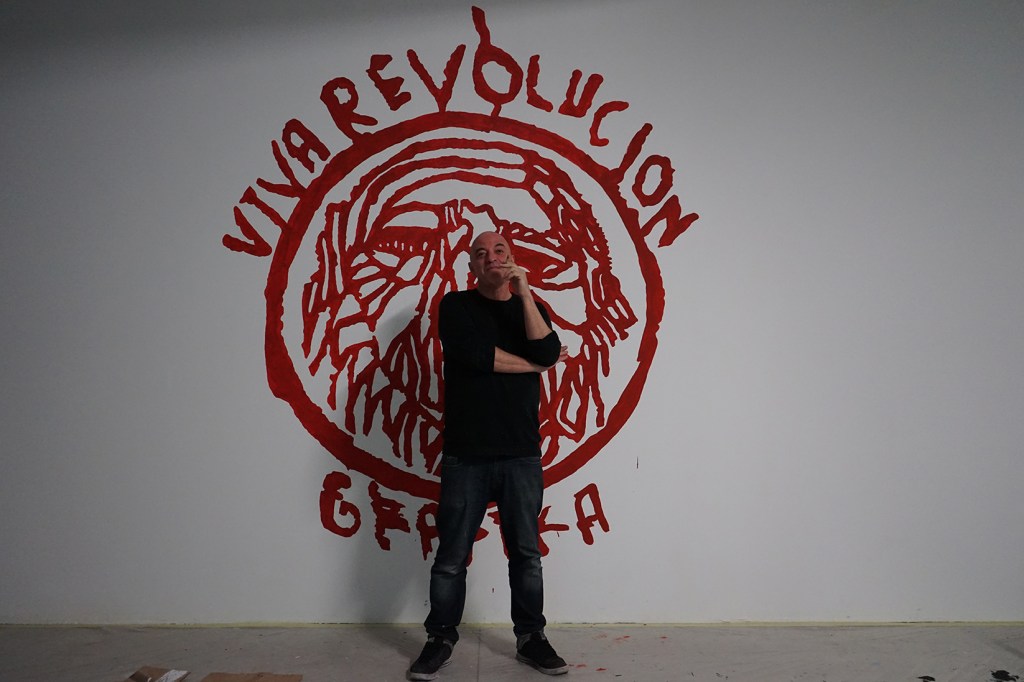
VİVA REVOLUCİÓN GRÁFİCA!
VİVA REVOLUCİÓN GRÁFİCA !
DÖRT KOLDAN GELİYOR !
Friche la Belle de Mai, Marsilya 16 Aralık 2017 – 4 Şubat 2018
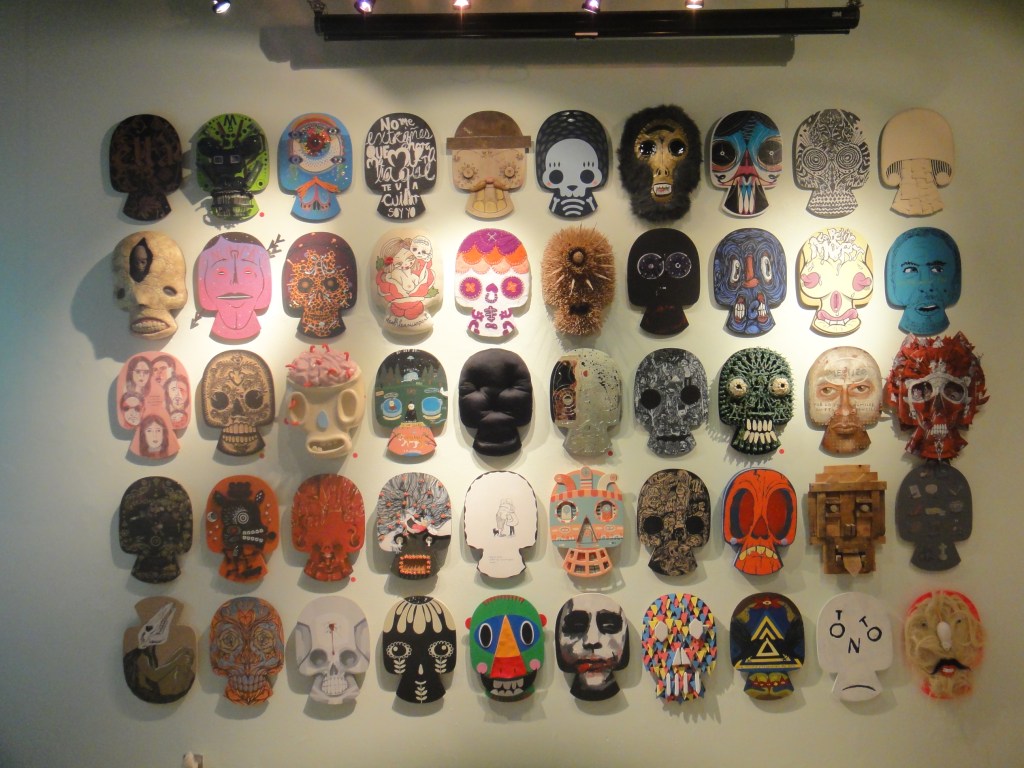
Sergi, Frédéric Langlais ve Laetitia Brochier’un özel koleksiyonlarıyla açılıyor, acaip şeylerle dolu hücrelerin kapılarının aralanmasıyla birlikte halk sanatına özgü bu büyüleyici maskelerin, nesnelerin ve heykellerin değeri yeniden anlaşılıyor. Aynı zamanda 3D projeksiyon için seçilmiş görsellerle Meksika sanatının derinlerine dalıyoruz. Öte yandan sanat koleksiyoneri ve bir lucha libre uzmanı olan Jimmy Pantera’nın bu tema çerçevesinde sergilediği az bulunur afiş, dergi ve oyuncaklardan oluşan bir enstalasyon da bizleri bekliyor.
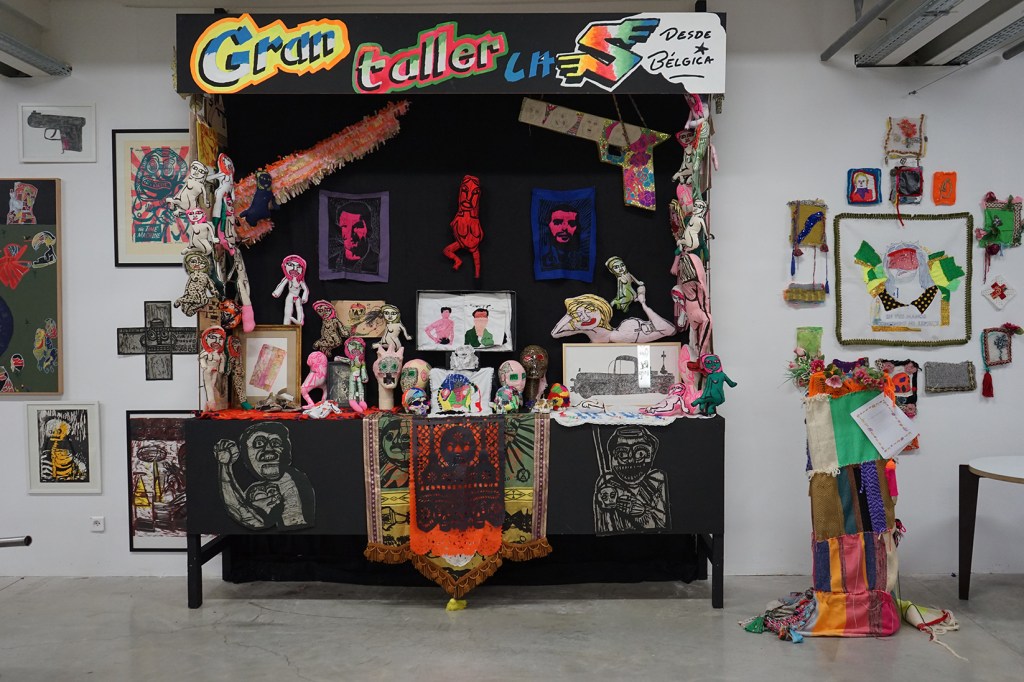
Serginin ikinci ayağı olan La “S” Grand Atelier sahnesi ise bizleri Meksika sanatının keşfine çıkartıyor. Belçika’da Ardennes Dağları’nın göbeğinde yer alan La “S” Grand Atelier, zihinsel engelli sanatçılar için birçok imkan sunmakta; bu yaratıcı atölyeler, sanat alanında profesyonel bir ekip tarafından denetlenmekte ve ortaya çıkan çalışmalar bir çok kültür-sanat alanında sergilenmektedir.
VİVA REVOLUCİÓN GRÁFİCA!
La “S” Grand Atelier Sanatçıları: Adolpho Avril, Barbara Massart, Benoît Monjoie, Dominique Théâtre, Elke Tangeten, Florent Talbot, Gabriel Evrard, Irène Gérard, Jean-Michel Bansart, Joseph Lambert, Laura Delvaux, Léon Louis, Marcel Schmitz, Marie Bodson, Marie-France Morin, Pascal Cornelis, Pascal Leyder, Philippe Da Fonseca, Régis Guyaux, Richard Bawin, Rita Arimont, Sarah Albert.
Misafir sanatçılar ve atölye animatörleri: Anne-Françoise Rouche, Anaid Ferté, Antoine Boulangé, Bertrand Léonard, Juliette Bensimon-Marchina, Fabian Dores Pais, Michiel de Jaeger, Dorothée Van Biesen, Raphaële Lenseigne, Paul Loubet, Dav Guedin, Pakito Bolino, Nicolas Clément, Alexandrine Lodé…
Serginin üçüncü ayağı ise yirmiye yakın Güney Amerikalı sanatçının yanı sıra birçok baskı atölyesinin işlerini de sergiliyor:
Meksikalı sanatçılar: Abraham Diaz, Alfonso Barrera Muñiz, Carlos Cons, Cristopher Diaz, Doktor Lakra, Federico Valdez, Fernando Arce, Haydee Nucamendi Gaona, Inari Resendiz, Israel Garcia Salcedo, José Martinez, Laura Barragán, Mario Guzmán, Oscar Camilo de las Flores, Ramon Sanmiquel, Roger Benetti, Santiago Robles, Sergio Hernandez, Taka, Toño Camuñas, Victor Palacios, Yescka, Los Lichis Kolektifi, Yope Kolektifi…
Kolombiyalı sanatçılar: Rat Trap Kolektifi, Sarcofaga.
Meksika’ya özgü baskı resim tekniklerinden biri olan gravür, benzer şekilde La “S” Grand Atelier için de önemli bir pratik. Bu nedenle sergide okyanusun her iki tarafındaki ayrıcalıklı işlerin sergilenmesi de kaçınılmazdı. Gerçekten de Oaxaca şehri, mezcal’i kadar baskı-resim alanındaki zengin kültürel mirası ile de meşhur, özellikle serigrafi, ahşap baskı, litografi ve benzeri baskı resim örneklerine, afişlere sokaklarda bile rastlamak mümkün. Bu baskı-resim geleneği, özellikle bir kaç gravür atölyesi tarafından temsil edilmektedir. Oaxaca gravür-serigrafi atölyeleri ve galeriler:
El Ojo Peludo, Siquieros Taller-Galeria tarafından yönetilen hapishane atölyesi, Taller Artistico comunitario, Cooperativa Gráfica, Taller de grabado Fernando Sandoval.
Ayrıca, Viva Revolución Gráfica! Üç Meksikalı sanatçının Dr. Lakra, Tono Camunas ve Abraham Diaz’ın Fransa-friche’te bulundukları süreçte ortaya koydukları enstalasyonu da sergiliyor.
Dr Lakra
Dr Lakra(Jerônimo López Ramírez, 1972 Oaxaca)
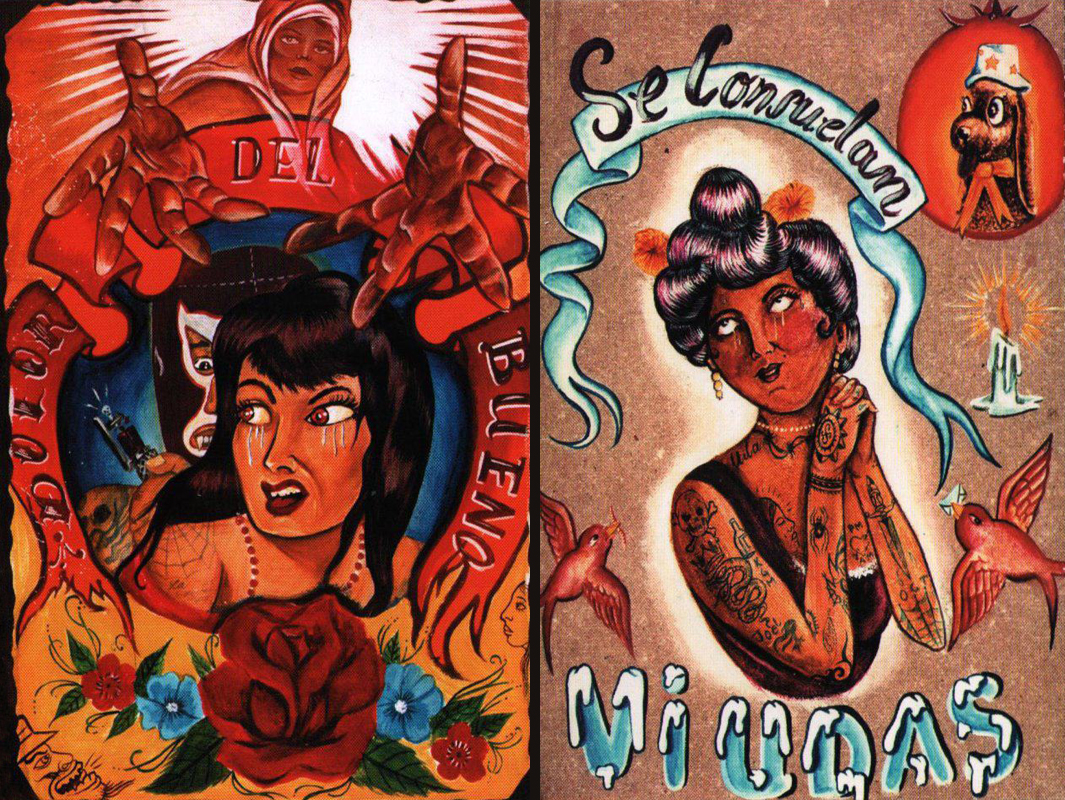
Meksika kökenli desinatör, ressam, heykeltıraş ve dövme sanatçısı olan Lakra’nın tarzı, Meksika sanatının tüm biçimlerinden esintiler taşıyor; Kolomb öncesi yöresel sanat, gangster estetiği, lucha libre sembolizmi, 1950’lerin sosyete dergilerinden manipülasyonlar… Lakra, kağıt üzerine de dövme yapmaktadır: Ünlü şarkıcıların, güreşçilerin hatta oyuncakların bile. Resimlerinde saptırma (detorne) sanatının özellikleri taşır. Sanatçı bir aileden gelmesine rağmen dövme sanatına olan tutkusu zamanla çağdaş sanata olan ilgisinin önüne geçmiş; halk sanatını, Duchamp’ın kavramlarından daha soylu bir ilham kaynağı olarak gören Lakra, Oaxaca sahaflarından ve bit pazarlarından bulduğu materyallerden kurduğu bu ilginç dünyayla sanatçılığını ispatlamıştır.
Dr. Lakra
Dr Lakra
Toño Camuñas(1967, Valencia İspanya)
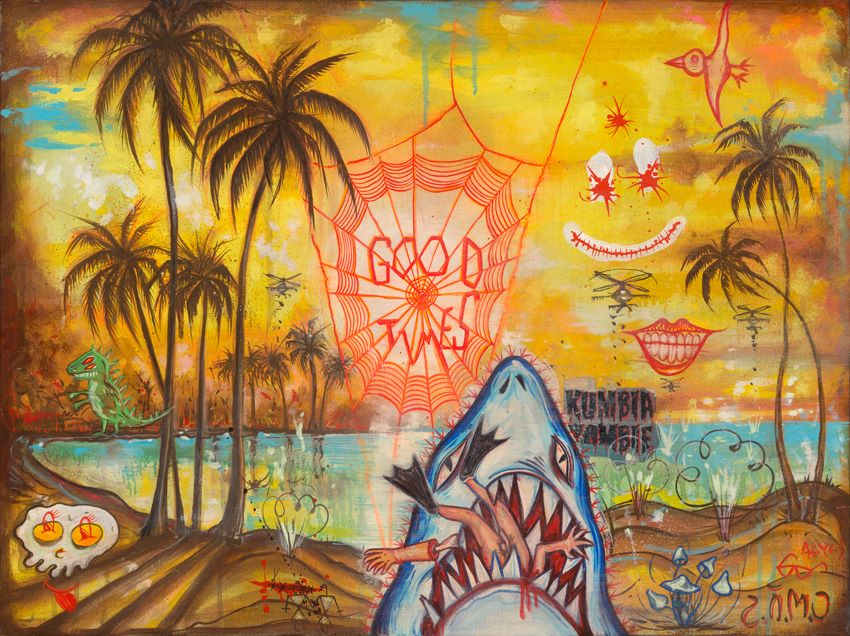
Uzun yıllar Berlin’de yaşayan göçebe ruhlu sanatçı Toño, şimdilerde Madrid ve Meksika arasında mekik dokuyor. Çizgi roman kültüründen, dövme estetiğinden, absürt karakterler ve yaratıklardan meydana getirdiği bu hayal dünyasına uçuk bir ‘şiirsel terörizm’ diyebiliriz.
Toño Camuñas
Toño Camuñas
Abraham Diaz
Abraham Diaz(1988 Meksiko)
Meksika yeraltı çizgi roman dünyasının önemli figürlerinden, genç sanatçı Abraham Diaz ise JOC DOC bünyesinde yayınladığı çizgi-romanlarla sergide yer almıştır.
Ayrıca Manuel Mathar, Gerardo Monsivais ve José Luis Rojas’dan meydana gelen Los Lichis kolektifi de eserleriyle sergide yer aldı.
Le Dernier Cri
2011 yılında Vertigo Galeri’de, ardından 2016 yılında IAGO’da (Instituto de Arte Graficas de Oaxaca) açtıkları sergilerden sonra Le Dernier Cri ilk kez kendi evinde ve Avrupalı sanatçıların orijinal eserlerini sergiliyor. Bunlar evvelki iki sergi için hazırlanmış olan ‘El Ultimo Grito’ kitabında yer alan sanatçılar. (Pakito Bolino, Reinhard Scheibner, Martes Bathori, Jiro Ishikawa, Emre Orhun, Mark Beyer, Céline Guichard, Alfons Alt, Fernando Arce…)